
Eruption Styles and Types How Do We Classify


- Slides: 20
Eruption Styles and Types
How Do We Classify Eruptions?
How Do We Classify Eruptions? • Can classify by location – Submarine, subaerial, subglacial, planetary
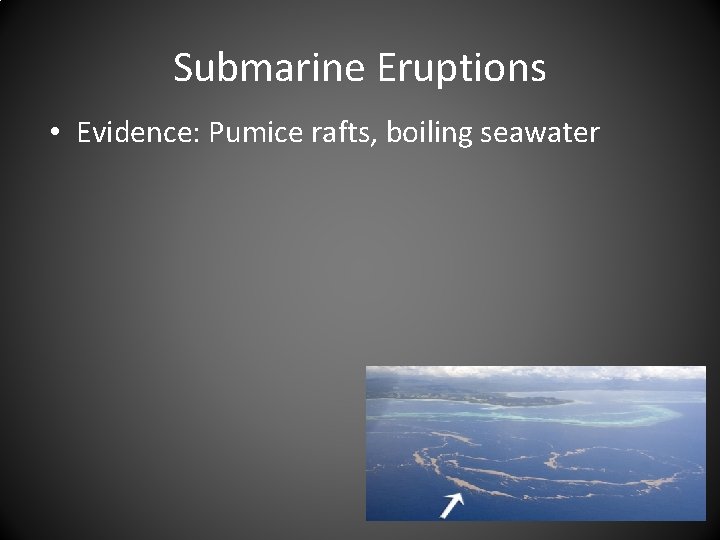
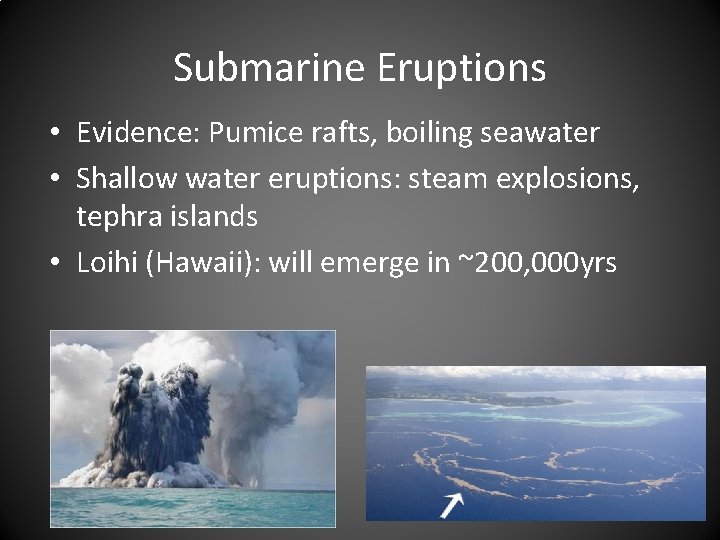
Submarine Eruptions • Evidence: Pumice rafts, boiling seawater
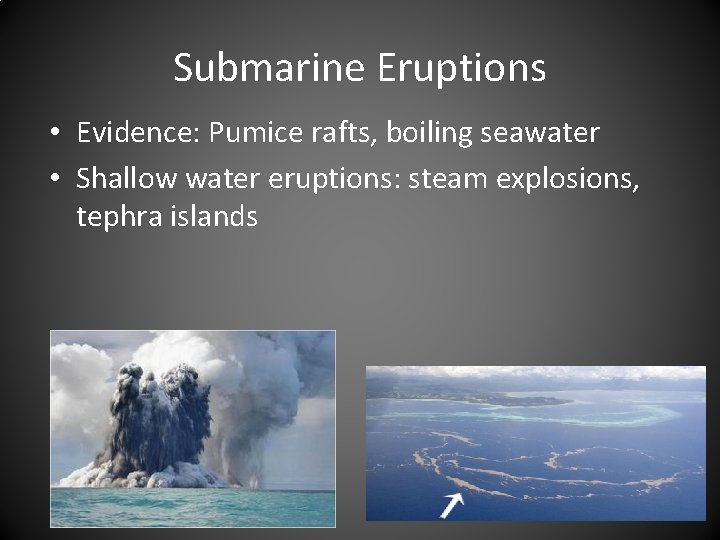
Submarine Eruptions • Evidence: Pumice rafts, boiling seawater • Shallow water eruptions: steam explosions, tephra islands
Submarine Eruptions • Evidence: Pumice rafts, boiling seawater • Shallow water eruptions: steam explosions, tephra islands • Loihi (Hawaii): will emerge in ~200, 000 yrs
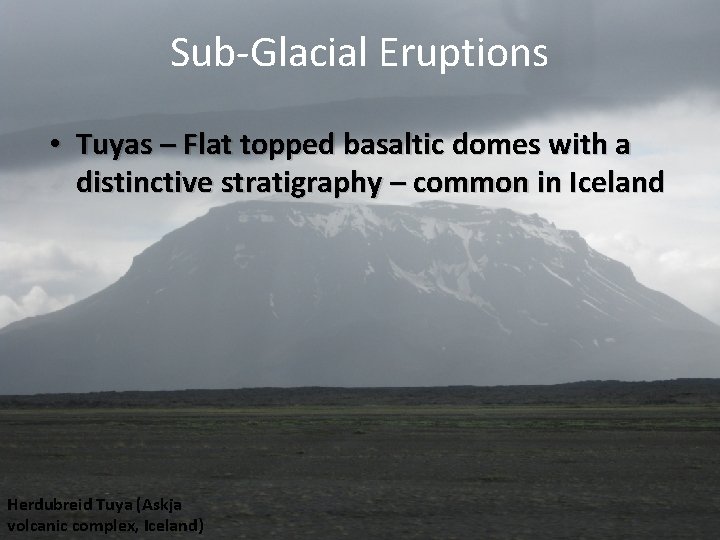
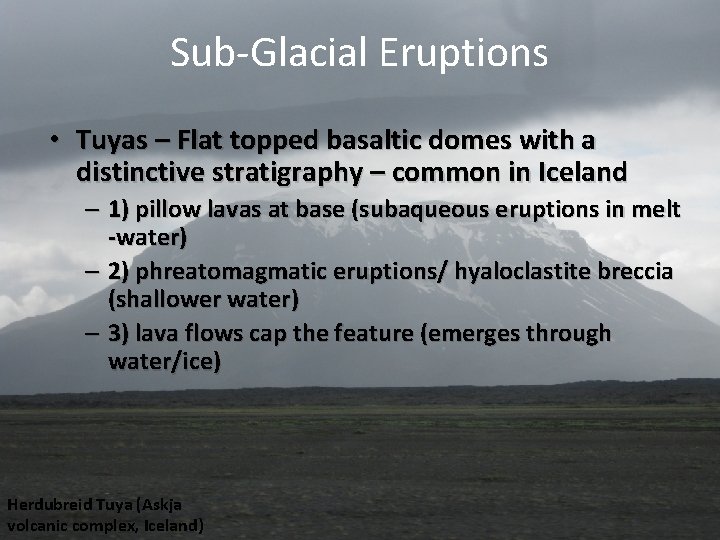
Sub-Glacial Eruptions • Tuyas – Flat topped basaltic domes with a distinctive stratigraphy – common in Iceland Herdubreid Tuya (Askja volcanic complex, Iceland)
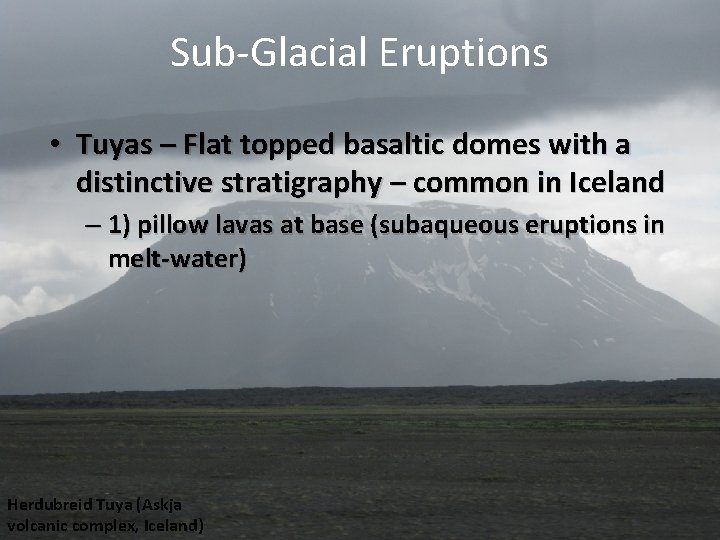
Sub-Glacial Eruptions • Tuyas – Flat topped basaltic domes with a distinctive stratigraphy – common in Iceland – 1) pillow lavas at base (subaqueous eruptions in melt-water) Herdubreid Tuya (Askja volcanic complex, Iceland)
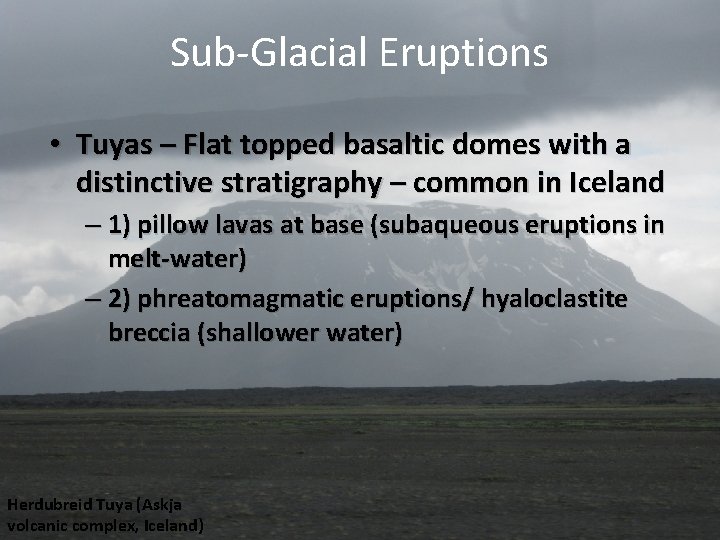
Sub-Glacial Eruptions • Tuyas – Flat topped basaltic domes with a distinctive stratigraphy – common in Iceland – 1) pillow lavas at base (subaqueous eruptions in melt-water) – 2) phreatomagmatic eruptions/ hyaloclastite breccia (shallower water) Herdubreid Tuya (Askja volcanic complex, Iceland)
Sub-Glacial Eruptions • Tuyas – Flat topped basaltic domes with a distinctive stratigraphy – common in Iceland – 1) pillow lavas at base (subaqueous eruptions in melt -water) – 2) phreatomagmatic eruptions/ hyaloclastite breccia (shallower water) – 3) lava flows cap the feature (emerges through water/ice) Herdubreid Tuya (Askja volcanic complex, Iceland)
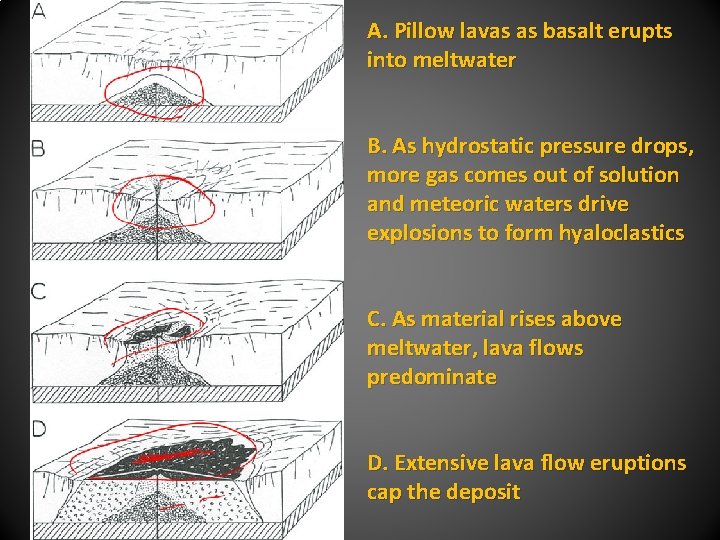
A. Pillow lavas as basalt erupts into meltwater B. As hydrostatic pressure drops, more gas comes out of solution and meteoric waters drive explosions to form hyaloclastics C. As material rises above meltwater, lava flows predominate D. Extensive lava flow eruptions cap the deposit
Sub-Glacial Eruption (Phreatomagmatic) https: //www. youtube. com/watch? v=n 6 d. Des. U Pk. Mo
How Do We Classify Eruptions? • Can classify by location – Submarine, subaerial, subglacial, planetary
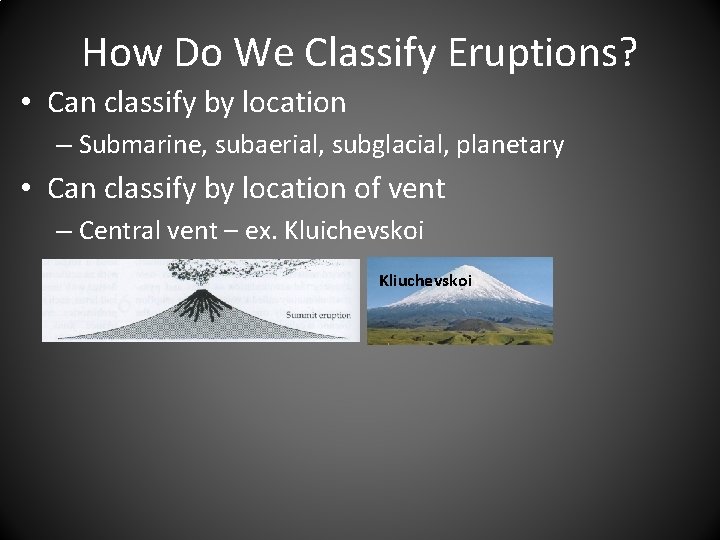
How Do We Classify Eruptions? • Can classify by location – Submarine, subaerial, subglacial, planetary • Can classify by location of vent – Central vent – ex. Kluichevskoi Kliuchevskoi
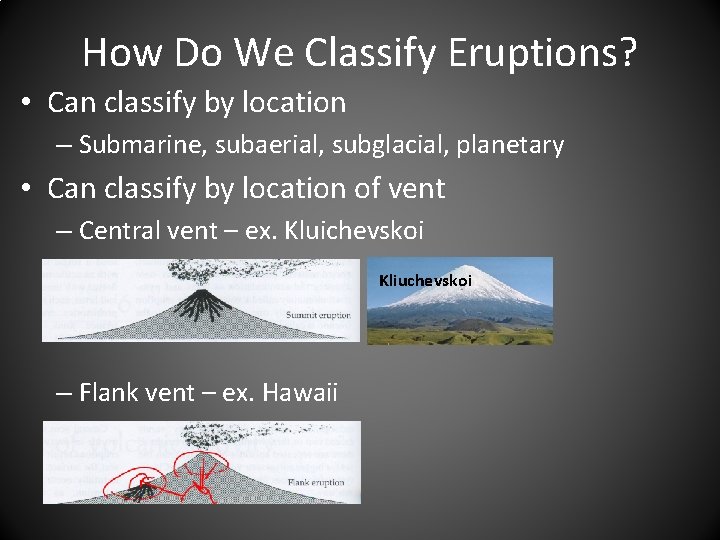
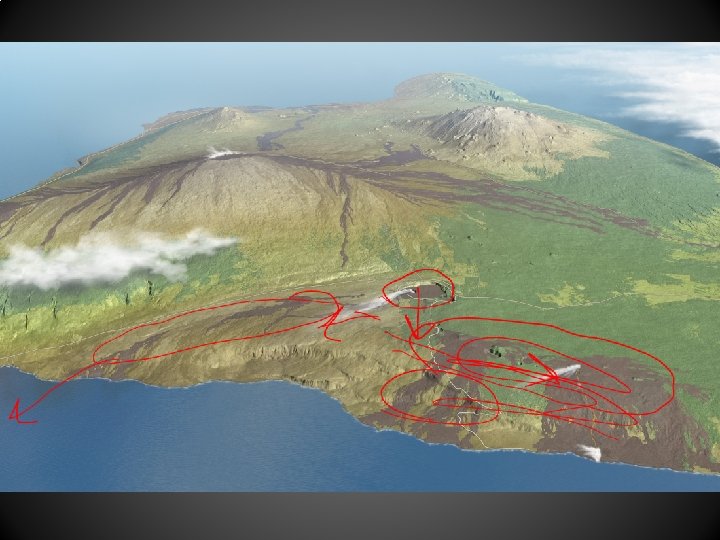
How Do We Classify Eruptions? • Can classify by location – Submarine, subaerial, subglacial, planetary • Can classify by location of vent – Central vent – ex. Kluichevskoi Kliuchevskoi – Flank vent – ex. Hawaii
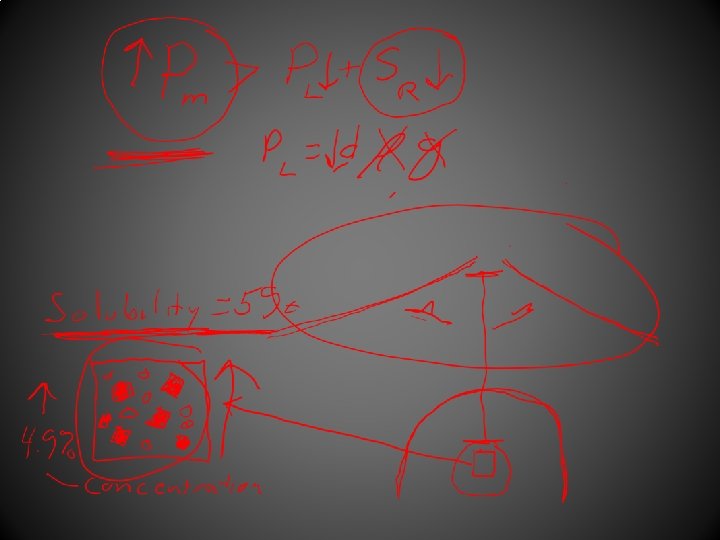
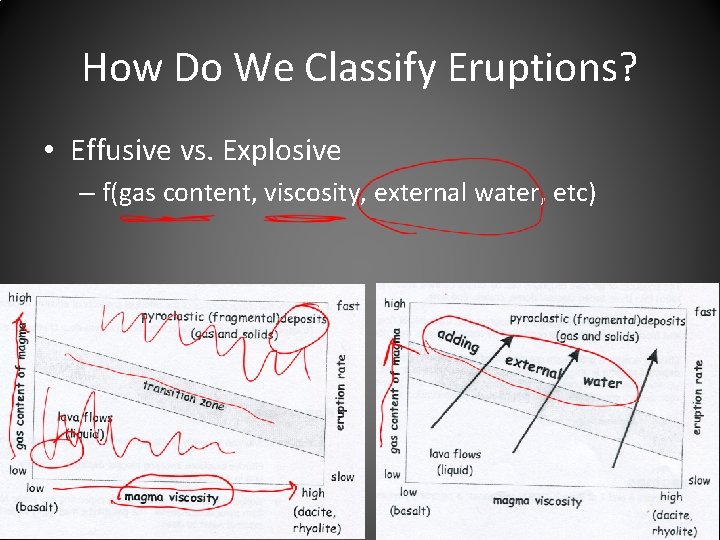
How Do We Classify Eruptions? • Effusive vs. Explosive – f(gas content, viscosity, external water, etc)
Explosive Volcanism • Rapidly expanding gas phase producing tephra (pyroclastics)
Explosive Volcanism • Rapidly expanding gas phase producing tephra (pyroclastics) • Two main classes: – Magmatic: “dry” – only dissolved gas – Phreatomagmatic: “wet” – mix of dissolved and external water https: //www. youtube. com/watch? v=r. Tn. Cs. Yh 6 w. Pg