
ERS Acute Respiratory Pandemic Course November 2017 Surge

ERS Acute Respiratory Pandemic Course November 2017 Surge Management in acute hospital care A K Simonds
Strategic objectives of a health service �Provide public with information �Contain the emergency: limit escalation or spread �Maintain critical and normal services in response to pressures during a pandemic �Protect the health and safety of personnel �Promote self-help and recovery �Maintain timely and appropriate reporting/surveillance �Restore normality as soon as possible �Evaluate response and identify lessons to be learned
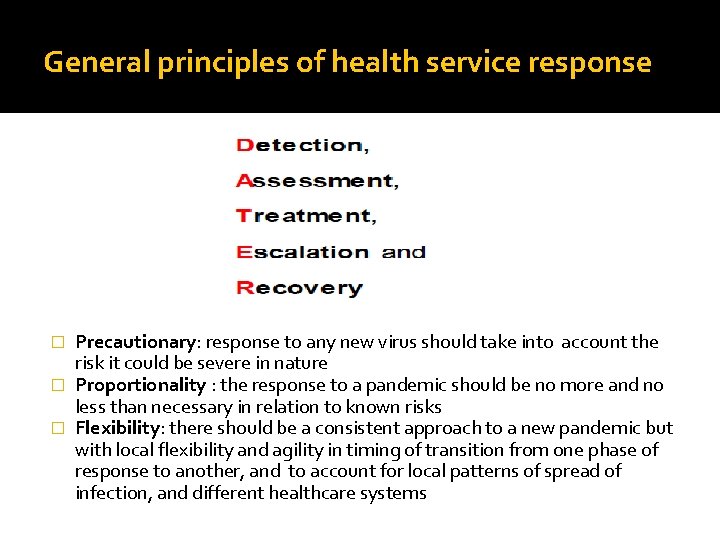
General principles of health service response Precautionary: response to any new virus should take into account the risk it could be severe in nature � Proportionality : the response to a pandemic should be no more and no less than necessary in relation to known risks � Flexibility: there should be a consistent approach to a new pandemic but with local flexibility and agility in timing of transition from one phase of response to another, and to account for local patterns of spread of infection, and different healthcare systems �
Considerations: frontline clinical care �Some scenarios assume attack rates of 35% and lethal disease in 1 -2% �Supply of antivirals, later vaccines �Requirement for hospital beds �Requirement for ICU beds �Mechanical ventilation �Triage and priority settings �Use of vaccination when available �High income v low income countries
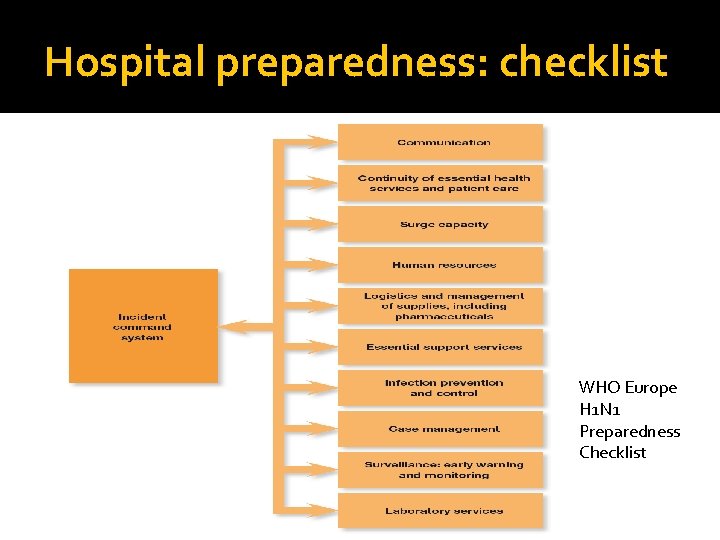
Hospital preparedness: checklist WHO Europe H 1 N 1 Preparedness Checklist
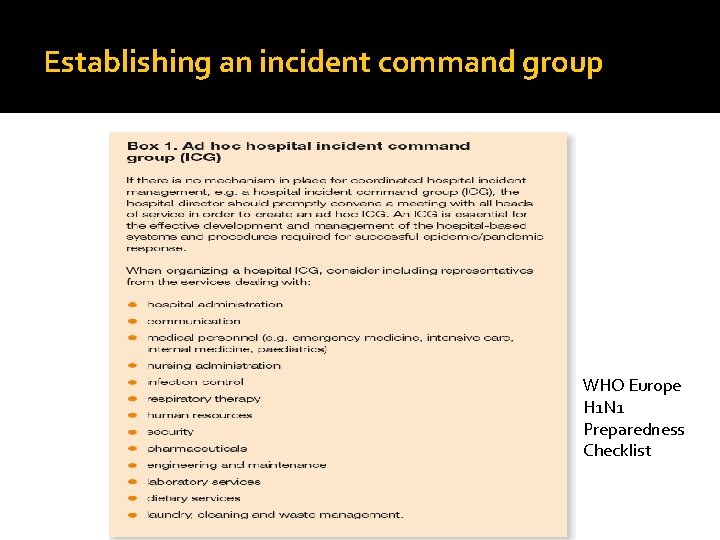
Establishing an incident command group WHO Europe H 1 N 1 Preparedness Checklist
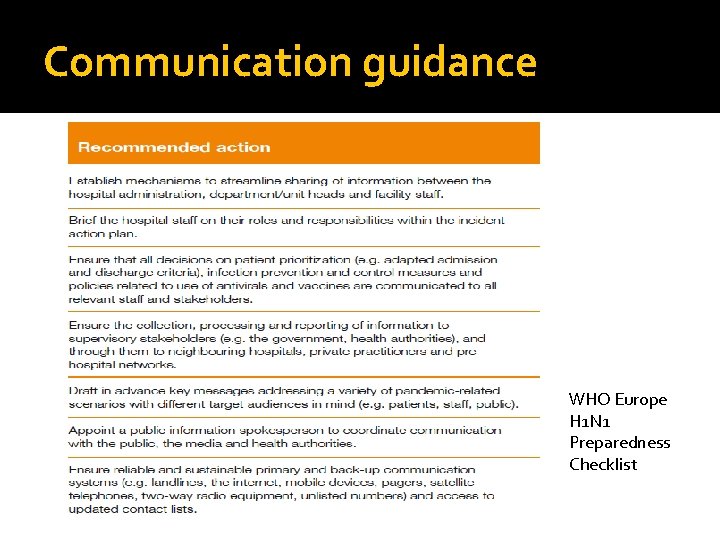
Communication guidance WHO Europe H 1 N 1 Preparedness Checklist
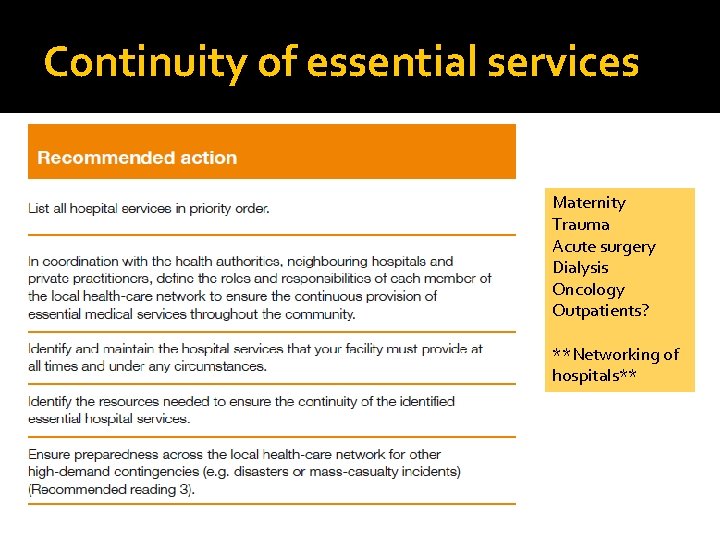
Continuity of essential services Maternity Trauma Acute surgery Dialysis Oncology Outpatients? **Networking of hospitals**
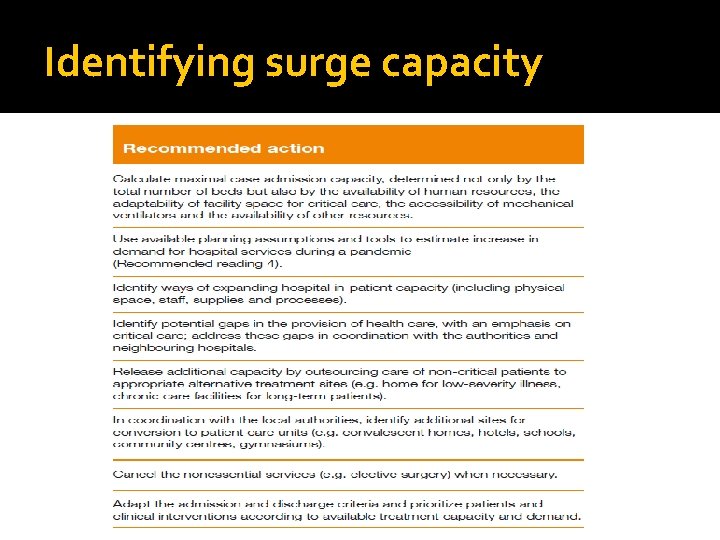
Identifying surge capacity
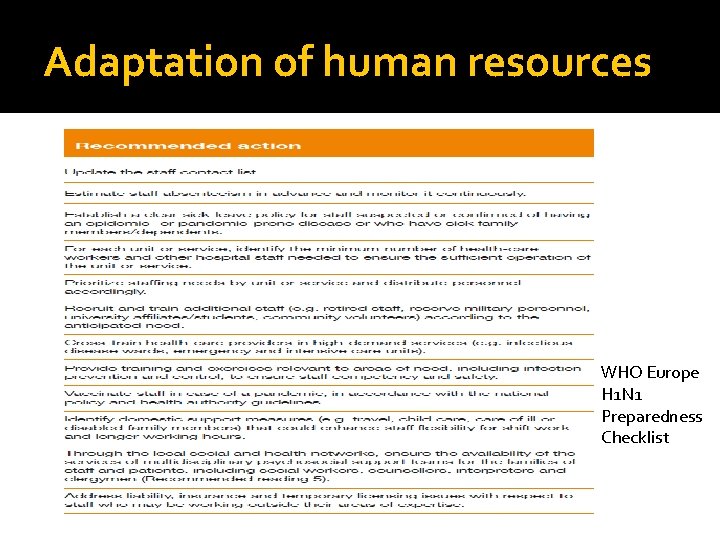
Adaptation of human resources WHO Europe H 1 N 1 Preparedness Checklist
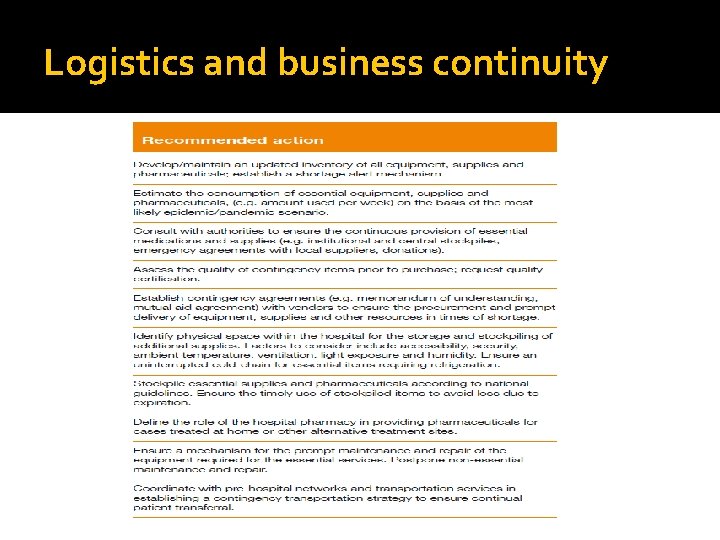
Logistics and business continuity
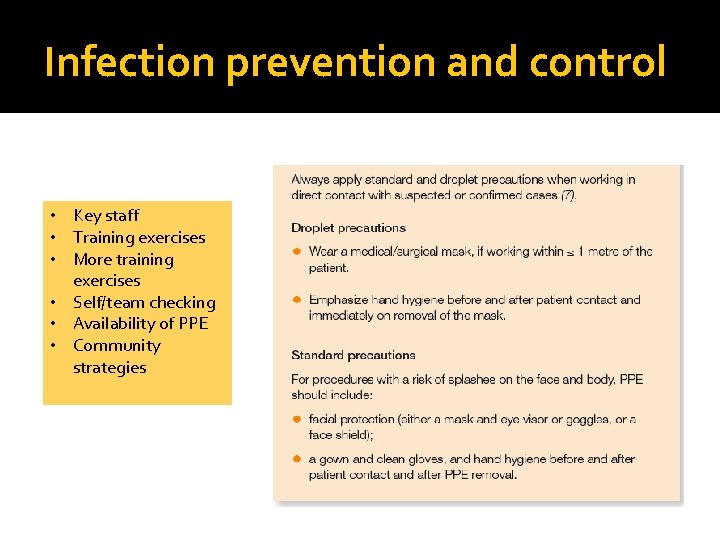
Infection prevention and control • Key staff • Training exercises • More training exercises • Self/team checking • Availability of PPE • Community strategies
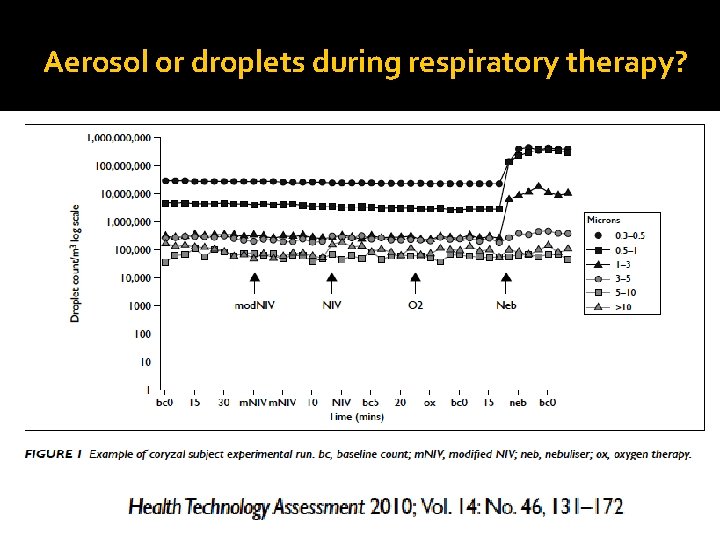
Aerosol or droplets during respiratory therapy?
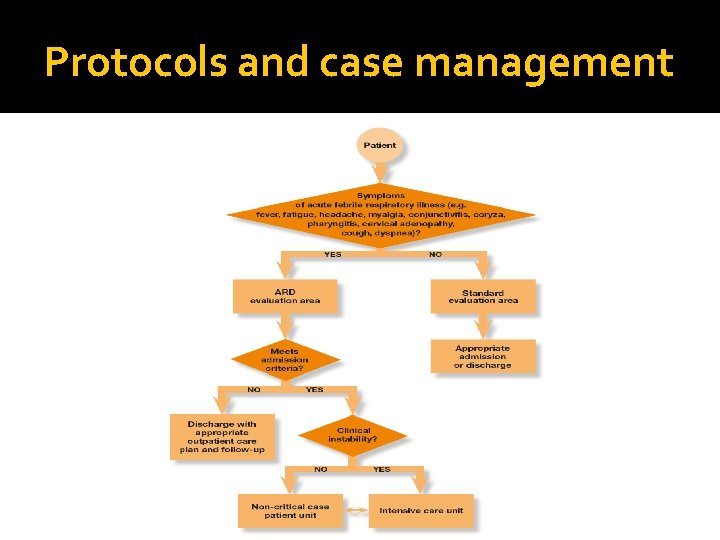
Protocols and case management
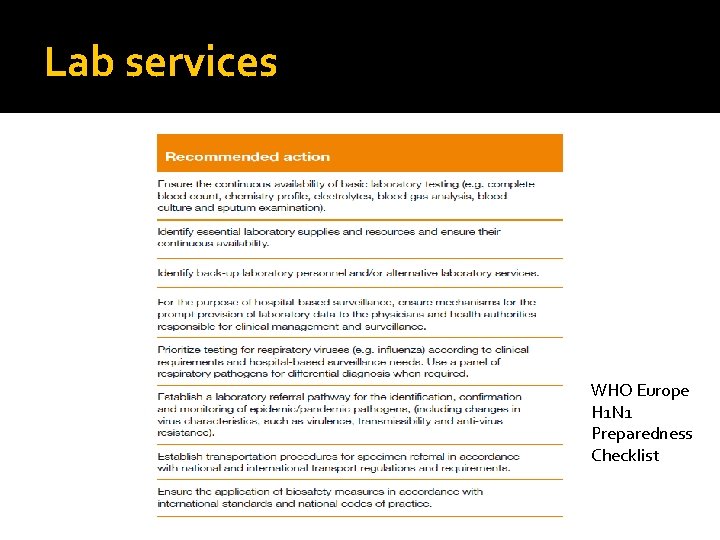
Lab services WHO Europe H 1 N 1 Preparedness Checklist
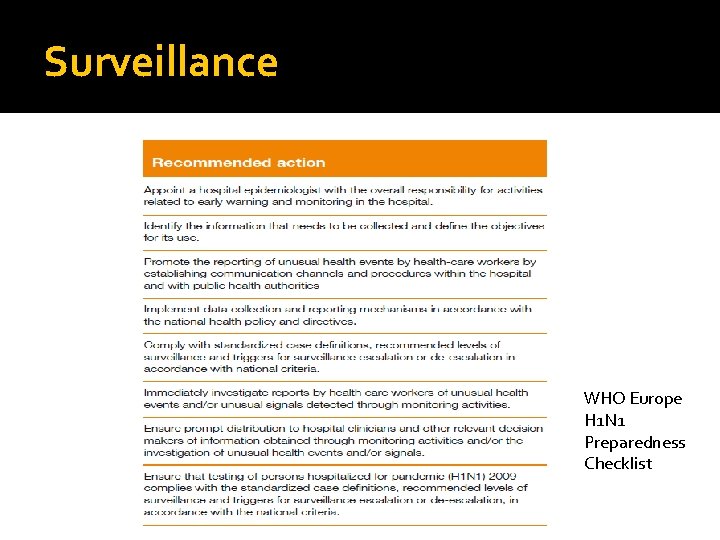
Surveillance WHO Europe H 1 N 1 Preparedness Checklist
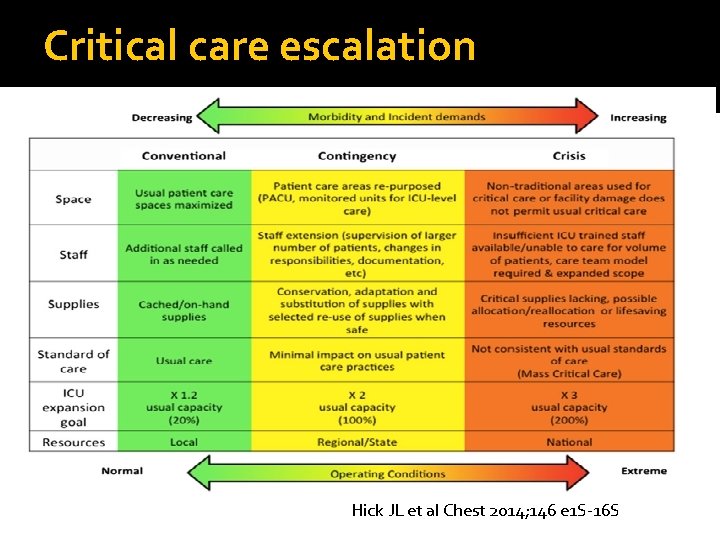
Critical care escalation Hick JL et al Chest 2014; 146 e 1 S-16 S
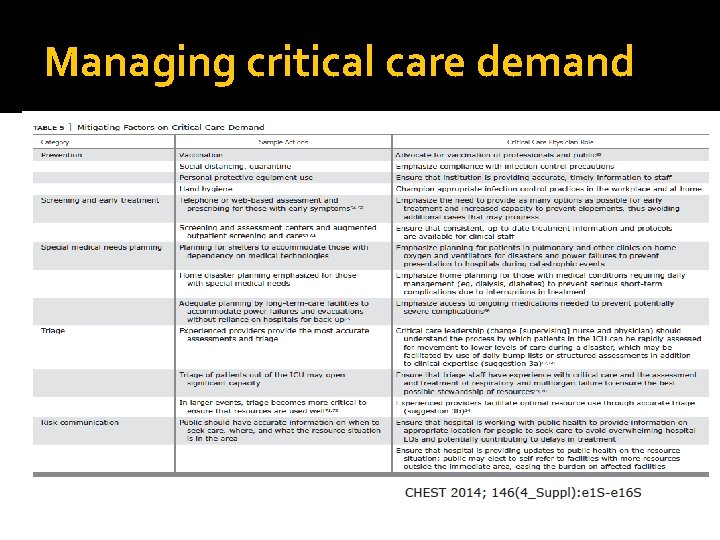
Managing critical care demand
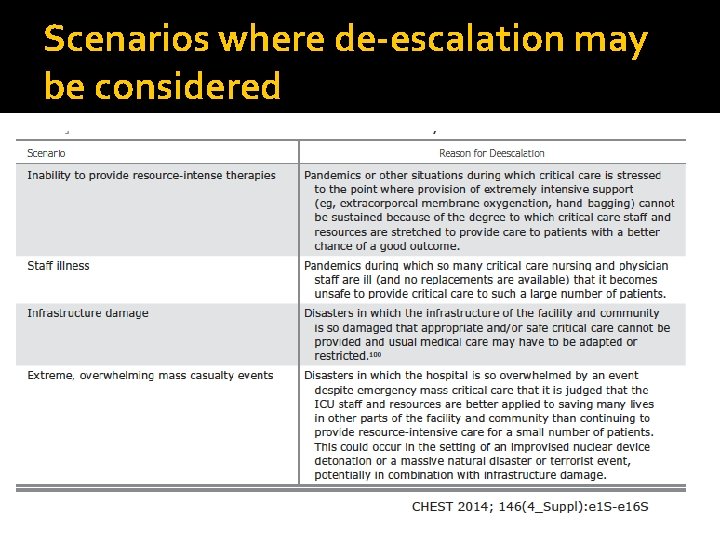
Scenarios where de-escalation may be considered
Recovery �Normalisation of services, perhaps to a new normal �Catch-up of activity scaled down for pandemic eg. elective surgery �Review of response �Address staff exhaustion, continuity �Planning and preparation for another wave �Continued targeted vaccination �Preparing for post pandemic seasonal influenza
So……. what are the considerations for your facility?
- Slides: 22