
Errors Associated with DACs ADCs 1 Quantization Error
- Slides: 7
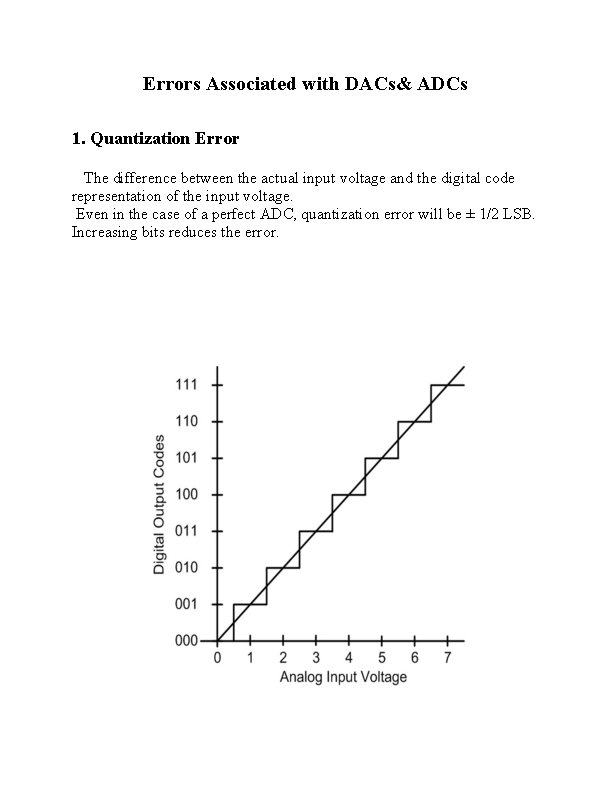
Errors Associated with DACs& ADCs 1. Quantization Error The difference between the actual input voltage and the digital code representation of the input voltage. Even in the case of a perfect ADC, quantization error will be ± 1/2 LSB. Increasing bits reduces the error.
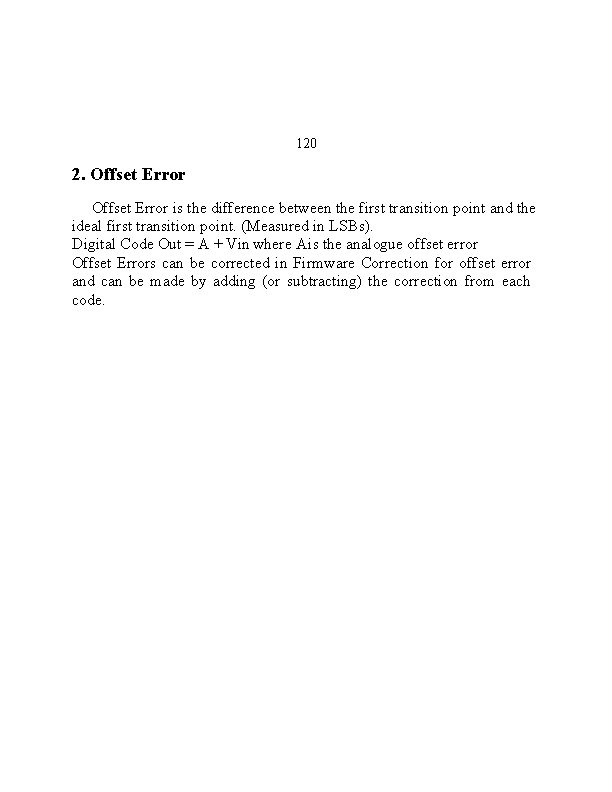
120 2. Offset Error is the difference between the first transition point and the ideal first transition point. (Measured in LSBs). Digital Code Out = A + Vin where A is the analogue offset error Offset Errors can be corrected in Firmware Correction for offset error and can be made by adding (or subtracting) the correction from each code.
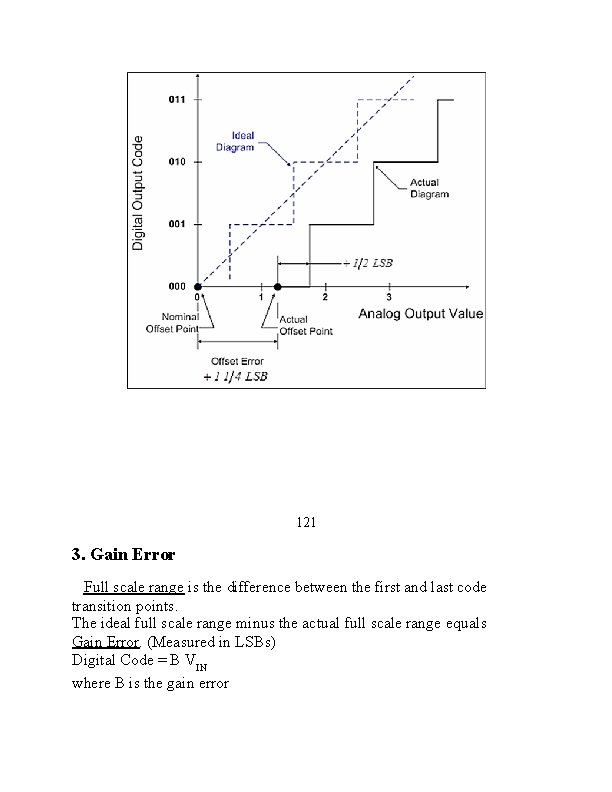
121 3. Gain Error Full scale range is the difference between the first and last code transition points. The ideal full scale range minus the actual full scale range equals Gain Error. (Measured in LSBs) Digital Code = B VIN where B is the gain error
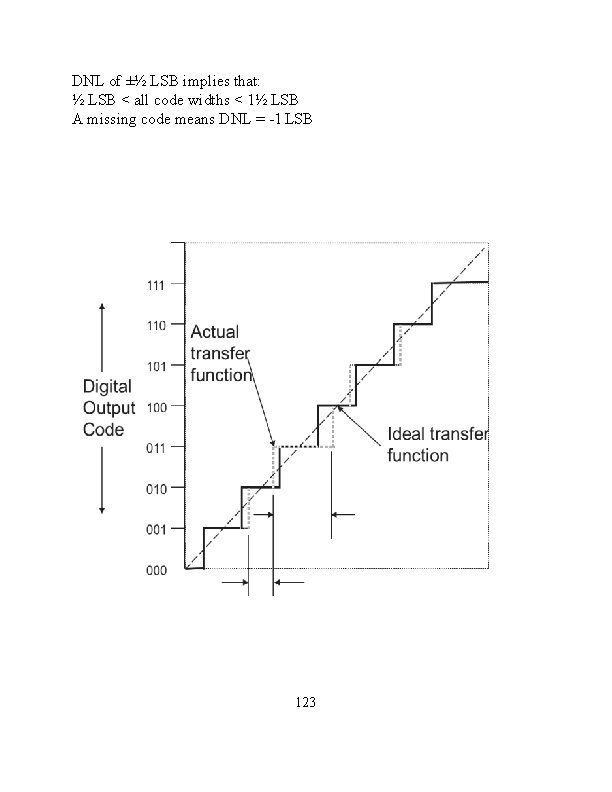
Gain Errors can be corrected in firmware Corrections for gain error and can be made by multiplying each code by the ratio of ideal to actual full scale range. 122 4. Differential Nonlinearity (DNL) Error DNL is a measure of variations in code widths from the ideal code width.
DNL of ±½ LSB implies that: ½ LSB < all code widths < 1½ LSB A missing code means DNL = -1 LSB 123
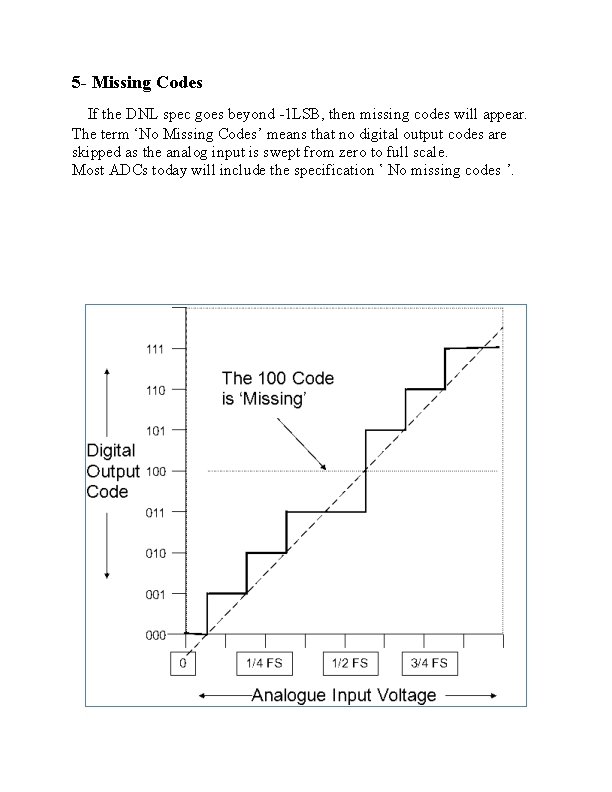
5 - Missing Codes If the DNL spec goes beyond -1 LSB, then missing codes will appear. The term ‘No Missing Codes’ means that no digital output codes are skipped as the analog input is swept from zero to full scale. Most ADCs today will include the specification ʽ No missing codes ʼ.