
Erosion Water LEARNING GOALS Describe how wind and
Erosion
Water LEARNING GOALS • Describe how wind and water erode the landscape • Identify the different processes of water erosion, such as sheet erosion, rills, gullies, tidal or wave erosion and the formation of waterfalls • Describe the processes of chemical and mechanical weathering • Describe the various impacts of water erosion making connections to real-world examples • Describe ways to prevent water erosion • Identify the different processes of wind erosion, such as suspension, saltation and creep • Describe the processes of abrasion and desertification • Describe the various impacts of wind erosion making connections to real-world examples • Describe ways to prevent wind erosion Wind
Vocabulary Erosion: The wearing away and moving of land through geologic forces such as wind and water (including ice) Weathering: The breaking down of rocks into smaller pieces/base elements Mechanical Weathering: Water putting pressure on rock through the freeze/thaw process (expand/contract) Chemical Weathering: Water dissolving some of the chemicals in rock Rill: Small-medium grooves cut into the land by moving water Gully: Large grooves cut into the land by moving water (merging rills) Desertification: Sand covers plant life, turning the area into a desert
Sediment: Rock, soil and sand that is washed out of the land by water in into rivers, lakes and oceans Land Degradation: The loss of quality in land due to erosion Abrasion: When airborne particles wear down surfaces Creep: Particles that are blown across the land, may become airborne Saltation: Particles that become airborne over moderate distances Suspension: Airborne particles are lifted into the air and carried great distances Deforestation: The removal of trees (and other plants), whose roots keep soil together
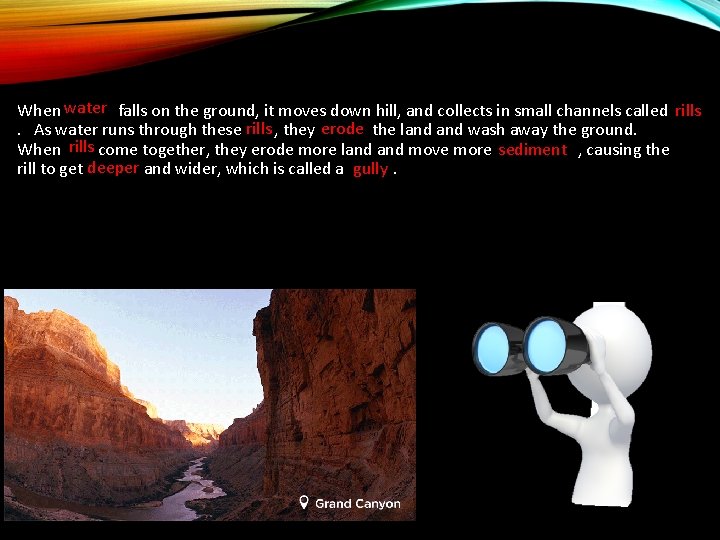
When water falls on the ground, it moves down hill, and collects in small channels called rills. As water runs through these rills , they erode the land wash away the ground. When rills come together, they erode more land move more sediment , causing the rill to get deeper and wider, which is called a gully. Watch the process of erosion

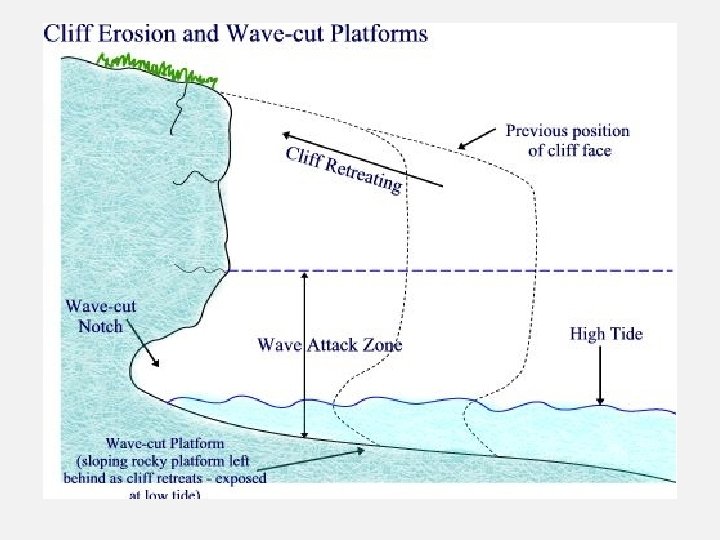
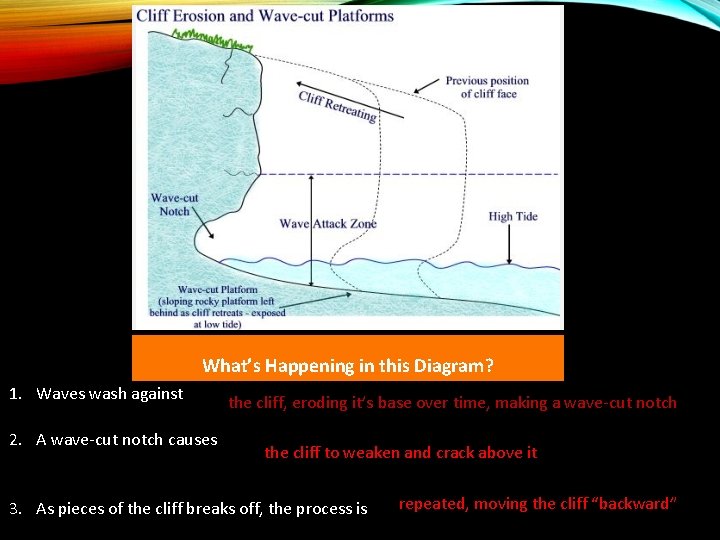
What’s Happening in this Diagram? 1. Waves wash against 2. A wave-cut notch causes the cliff, eroding it’s base over time, making a wave-cut notch the cliff to weaken and crack above it 3. As pieces of the cliff breaks off, the process is repeated, moving the cliff “backward”
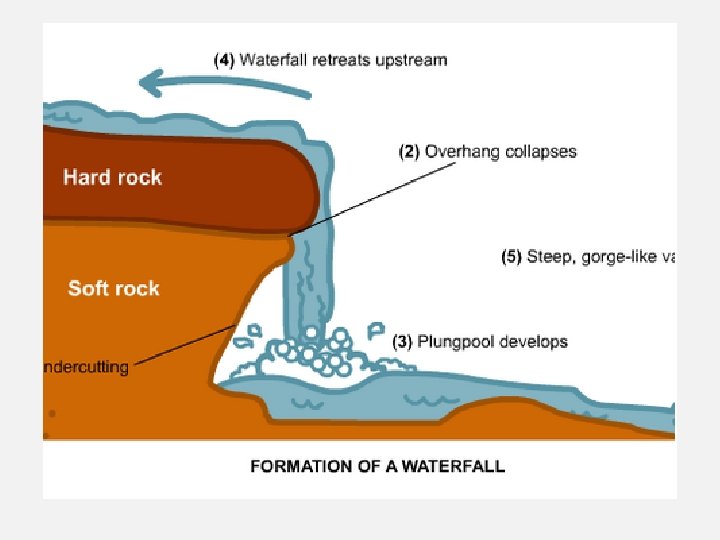
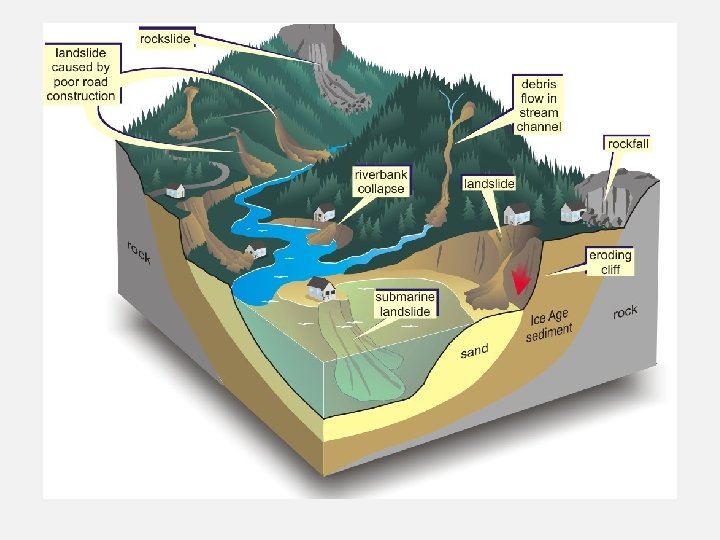
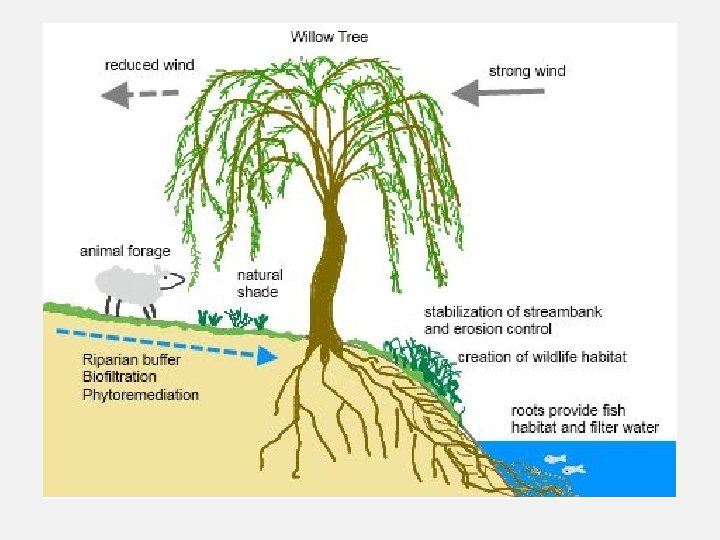
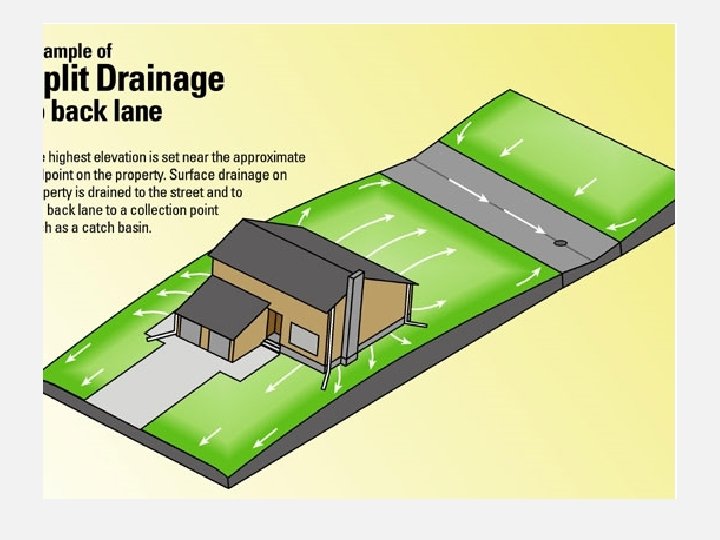
LEARNING CHECK (WATER) • Describe how wind and water erode the landscape • Identify the different processes of water erosion, such as sheet erosion, rills, gullies, tidal or wave erosion and the formation of waterfalls • Describe the processes of chemical and mechanical weathering • Describe the various impacts of water erosion making connections to realworld examples • Describe ways to prevent water erosion
LEARNING GOALS (WIND) • Identify the different processes of wind erosion, such as suspension, saltation and creep • Describe the processes of abrasion and desertification • Describe the various impacts of wind erosion making connections to realworld examples • Describe ways to prevent wind erosion
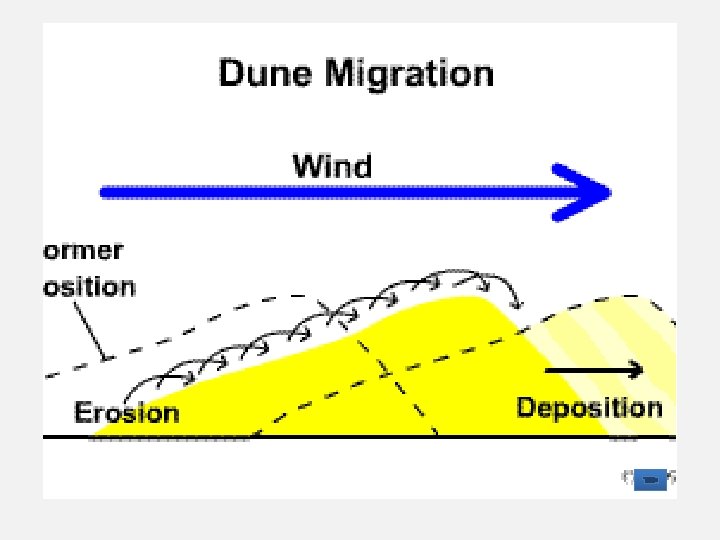
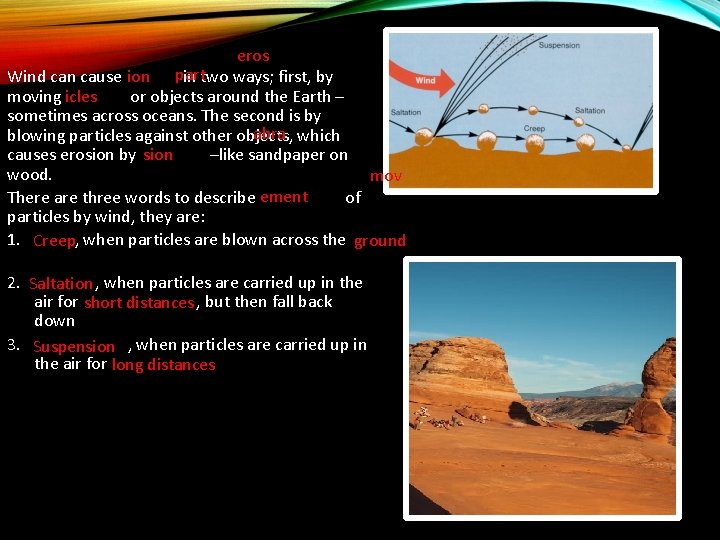
eros Wind can cause ion part in two ways; first, by moving icles or objects around the Earth – sometimes across oceans. The second is by abra which blowing particles against other objects, causes erosion by sion –like sandpaper on wood. mov There are three words to describe ement of particles by wind, they are: 1. Creep, when particles are blown across the ground 2. Saltation , when particles are carried up in the air for short distances , but then fall back down 3. Suspension , when particles are carried up in the air for long distances
Water LEARNING GOALS • Describe how wind and water erode the landscape • Identify the different processes of water erosion, such as sheet erosion, rills, gullies, tidal or wave erosion and the formation of waterfalls • Describe the processes of chemical and mechanical weathering • Describe the various impacts of water erosion making connections to real-world examples • Describe ways to prevent water erosion • Identify the different processes of wind erosion, such as suspension, saltation and creep • Describe the processes of abrasion and desertification • Describe the various impacts of wind erosion making connections to real-world examples • Describe ways to prevent wind erosion Wind
- Slides: 18