
Erosion The transport movement of sediments from one
- Slides: 29
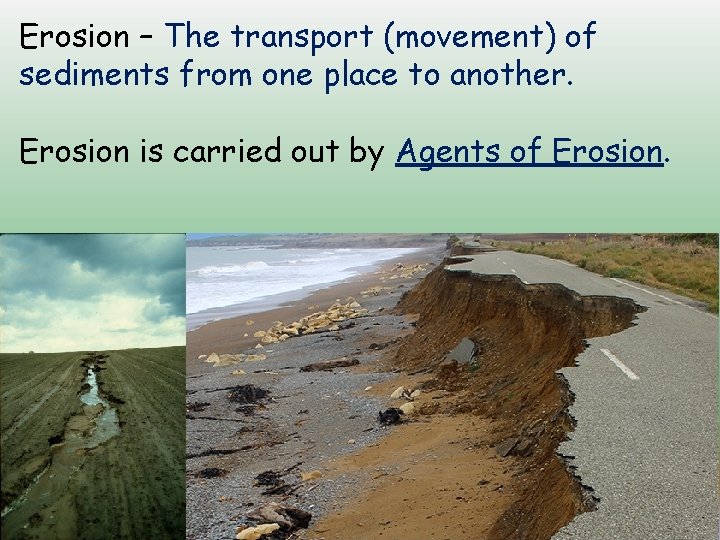
Erosion – The transport (movement) of sediments from one place to another. Erosion is carried out by Agents of Erosion.
So what are some of the……. Erosion?
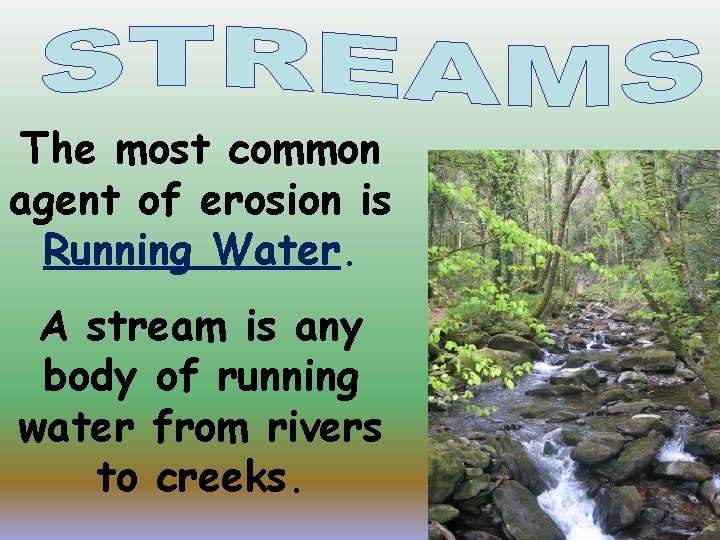
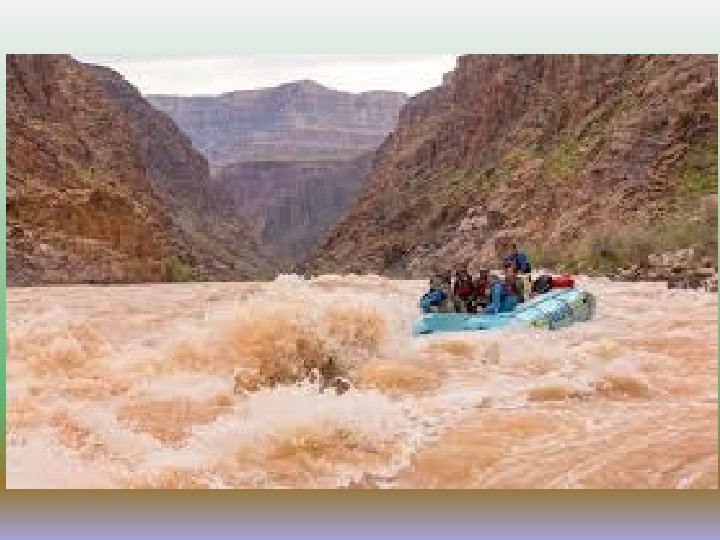
The most common agent of erosion is Running Water. A stream is any body of running water from rivers to creeks.
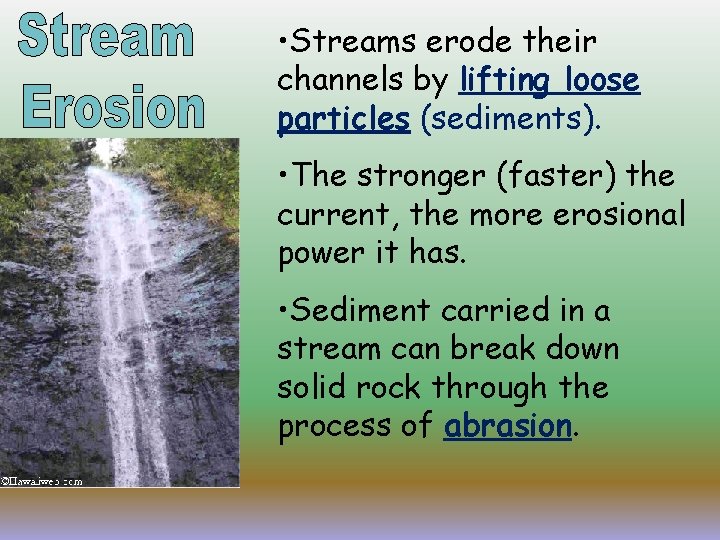
• Streams erode their channels by lifting loose particles (sediments). • The stronger (faster) the current, the more erosional power it has. • Sediment carried in a stream can break down solid rock through the process of abrasion.
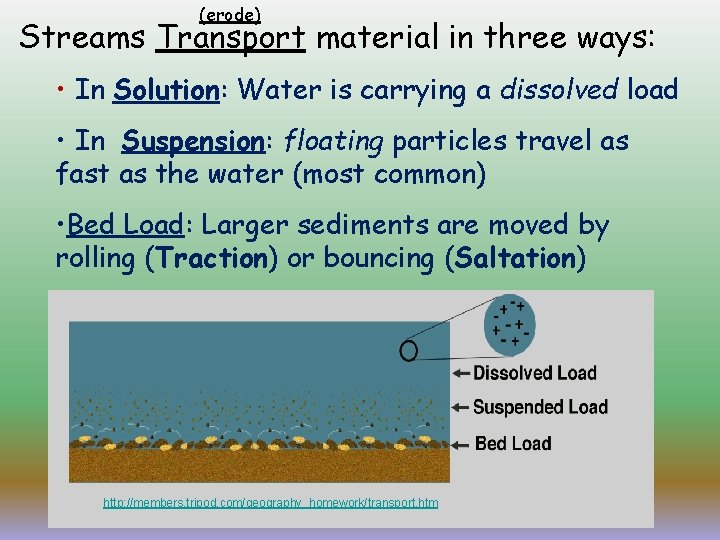
(erode) Streams Transport material in three ways: • In Solution: Water is carrying a dissolved load • In Suspension: floating particles travel as fast as the water (most common) • Bed Load: Larger sediments are moved by rolling (Traction) or bouncing (Saltation) http: //members. tripod. com/geography_homework/transport. htm
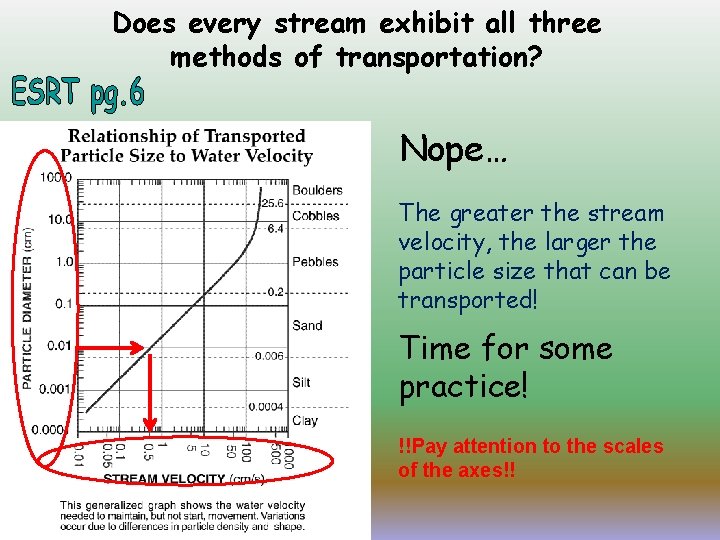
Does every stream exhibit all three methods of transportation? Nope… The greater the stream velocity, the larger the particle size that can be transported! Time for some practice! !!Pay attention to the scales of the axes!!
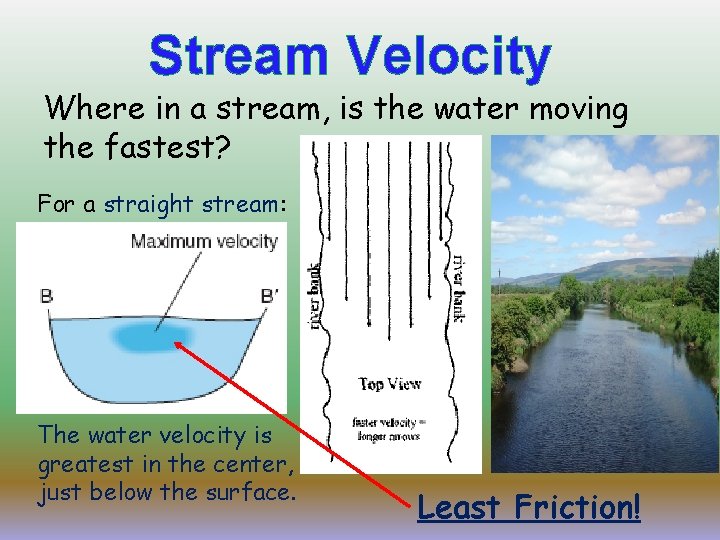
Stream Velocity Where in a stream, is the water moving the fastest? For a straight stream: The water velocity is greatest in the center, just below the surface. Least Friction!
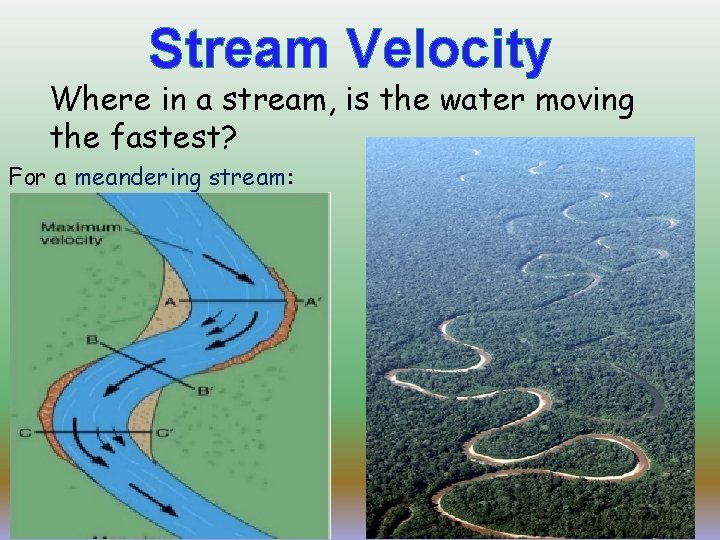
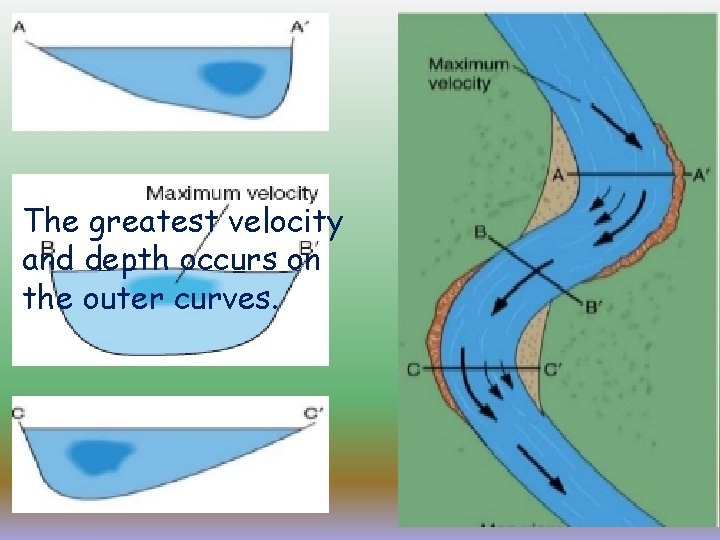
Stream Velocity Where in a stream, is the water moving the fastest? For a meandering stream:
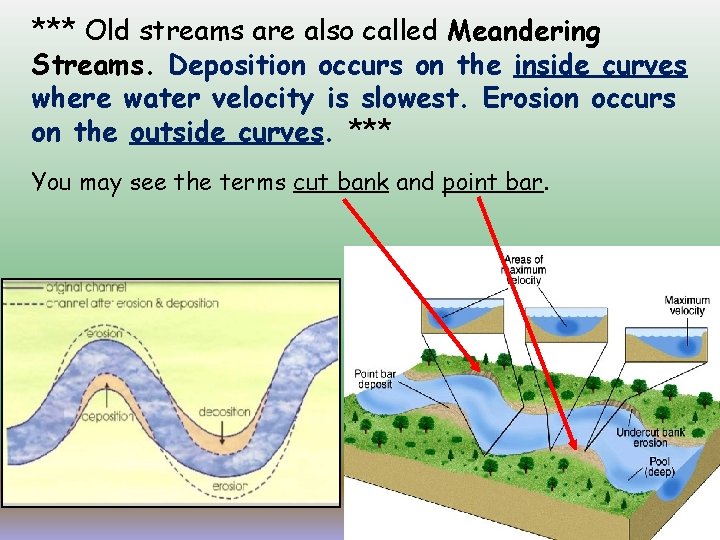
The greatest velocity and depth occurs on the outer curves.
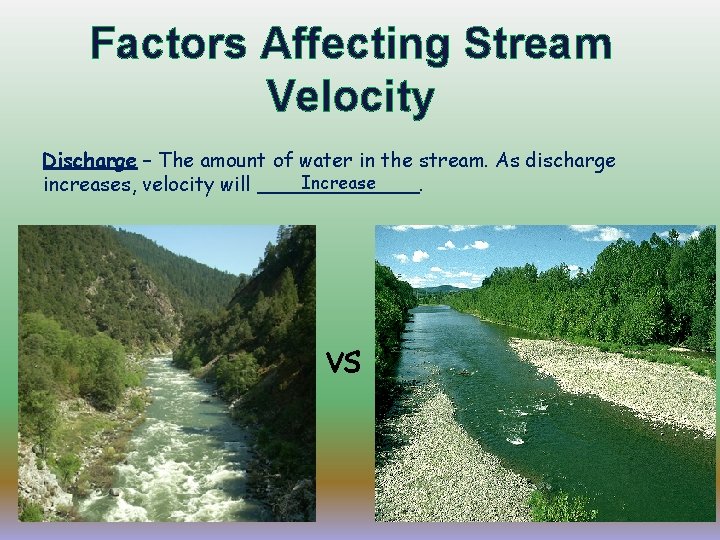
Factors Affecting Stream Velocity Discharge – The amount of water in the stream. As discharge Increase increases, velocity will _______. vs
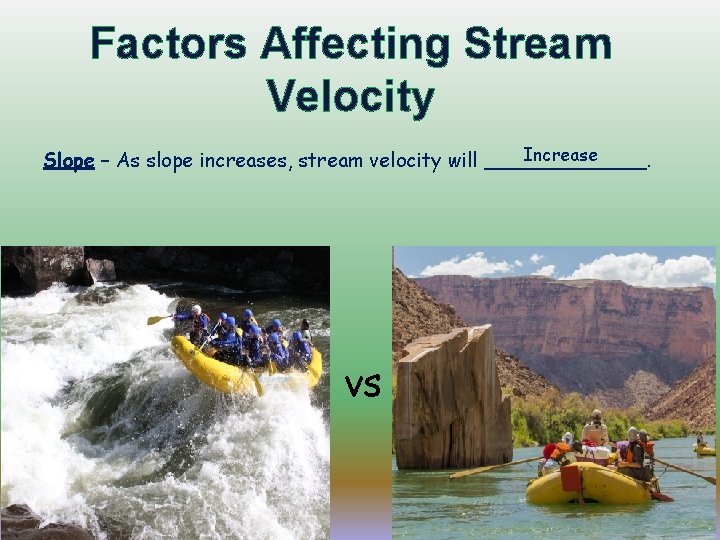
Factors Affecting Stream Velocity Increase Slope – As slope increases, stream velocity will _______. vs
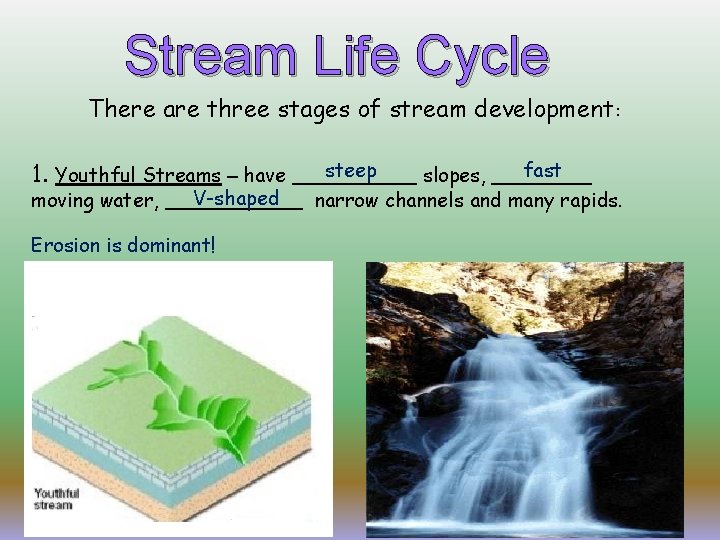
Stream Life Cycle There are three stages of stream development: steep fast 1. Youthful Streams – have _____ slopes, ____ V-shaped moving water, ______ narrow channels and many rapids. Erosion is dominant!
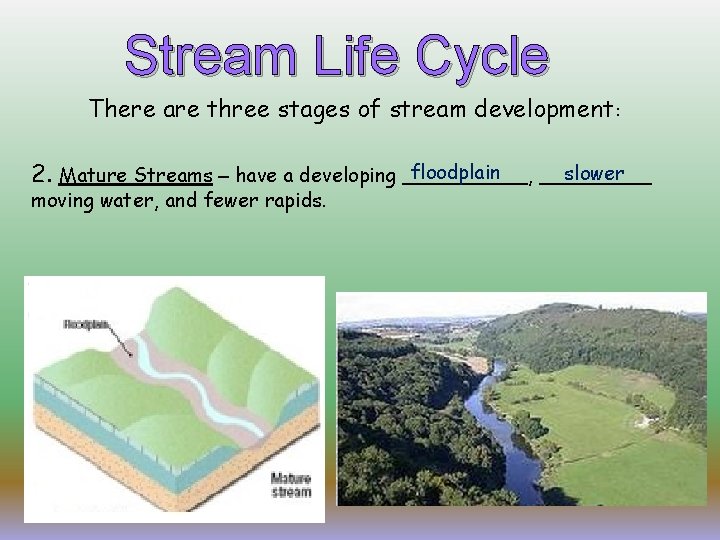
Stream Life Cycle There are three stages of stream development: floodplain slower 2. Mature Streams – have a developing _____, _____ moving water, and fewer rapids.
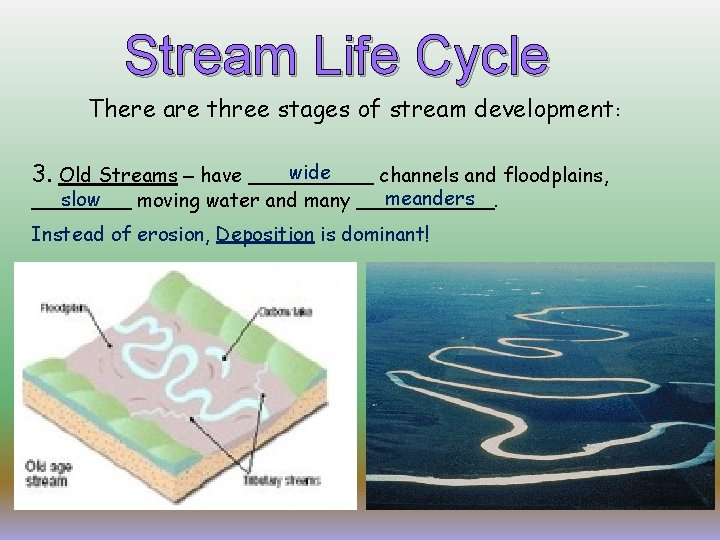
Stream Life Cycle There are three stages of stream development: wide 3. Old Streams – have _____ channels and floodplains, meanders slow ____ moving water and many ______. Instead of erosion, Deposition is dominant!
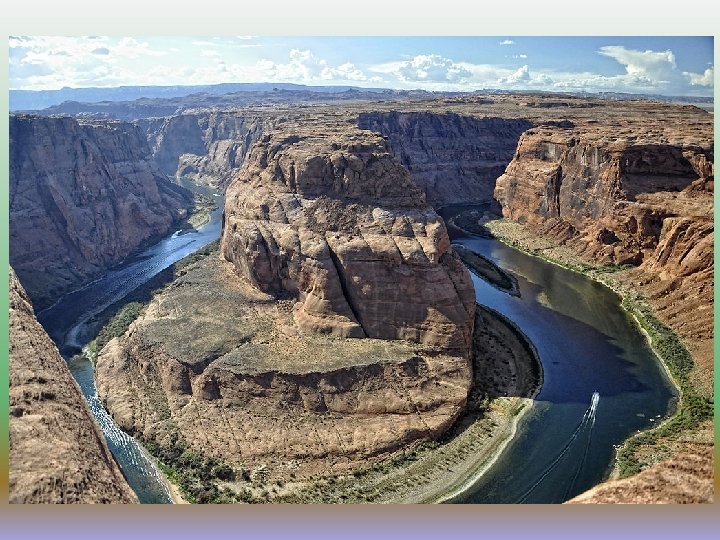
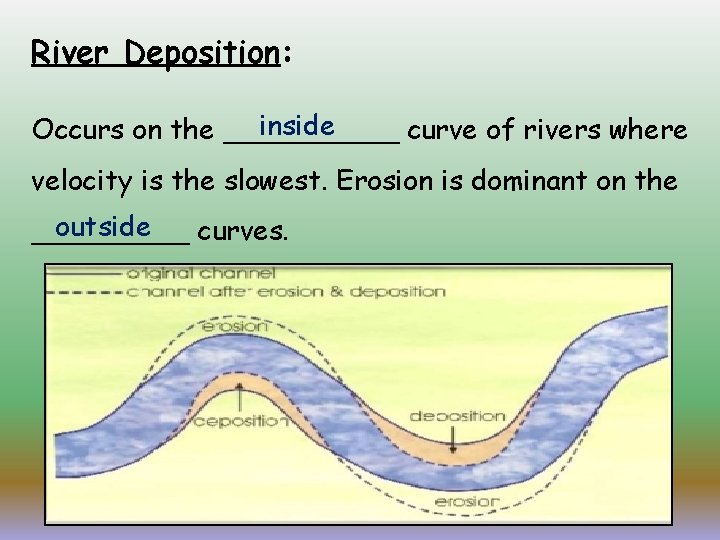
*** Old streams are also called Meandering Streams. Deposition occurs on the inside curves where water velocity is slowest. Erosion occurs on the outside curves. *** You may see the terms cut bank and point bar.
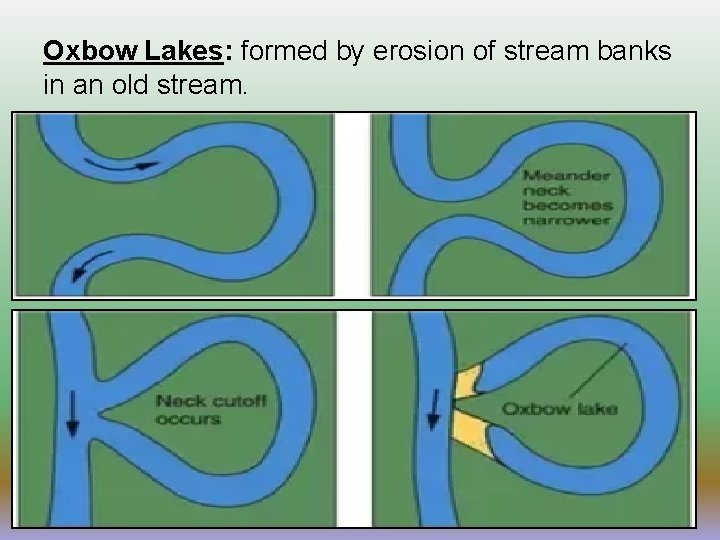
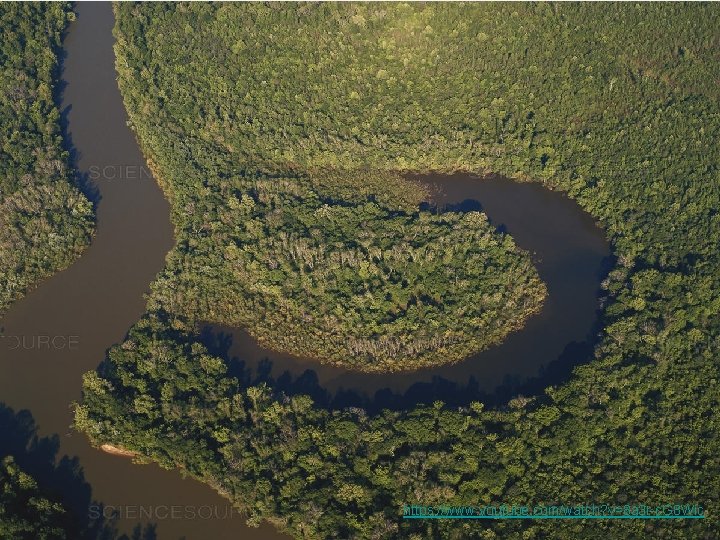
Oxbow Lakes: formed by erosion of stream banks in an old stream.
https: //www. youtube. com/watch? v=8 a 3 r-c. G 8 Wic
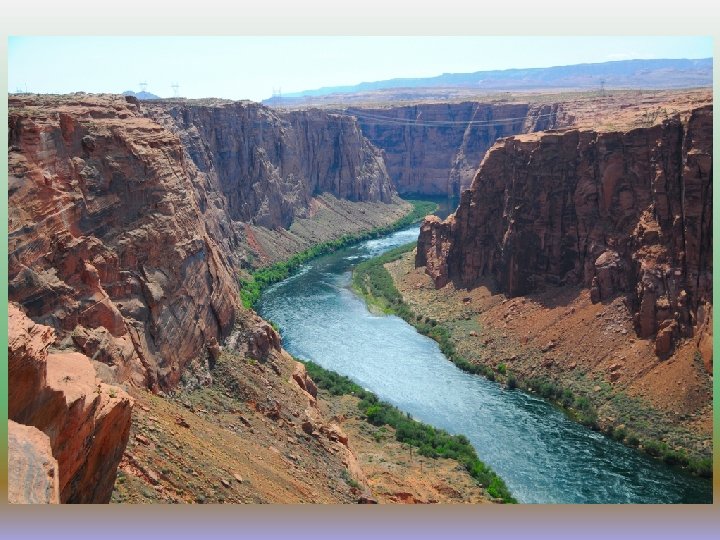
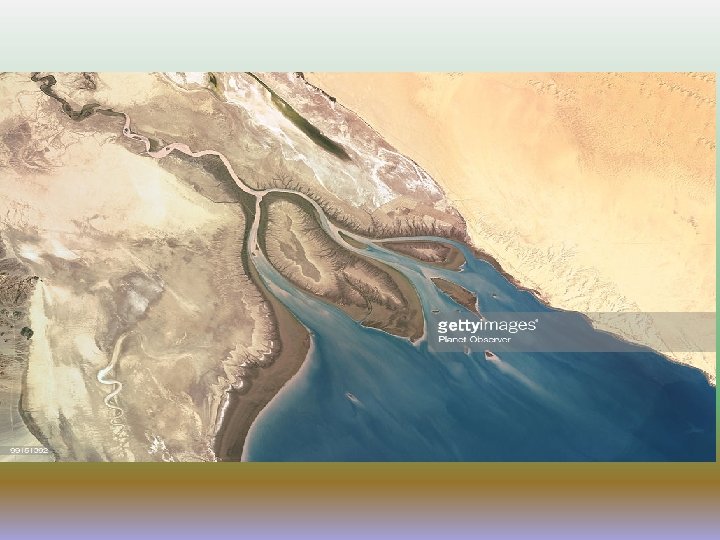
Colorado River Delta
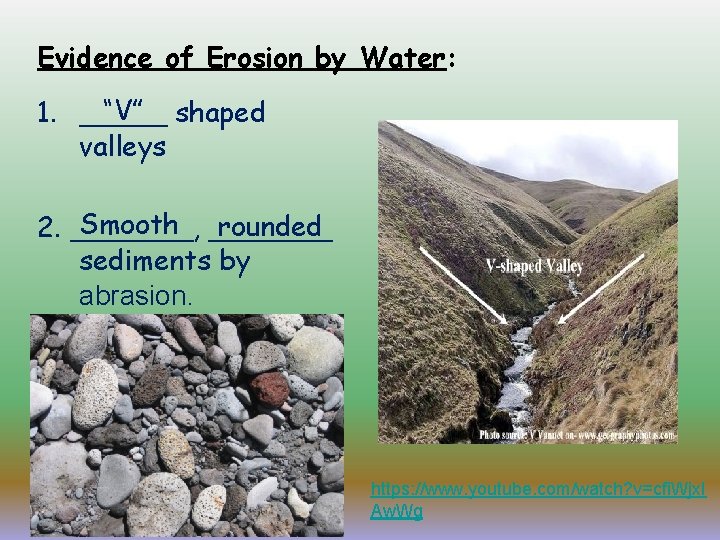
Evidence of Erosion by Water: “V” shaped 1. _____ valleys Smooth _______ rounded 2. _______, sediments by abrasion. https: //www. youtube. com/watch? v=cfi. Wjx. I Aw. Wg
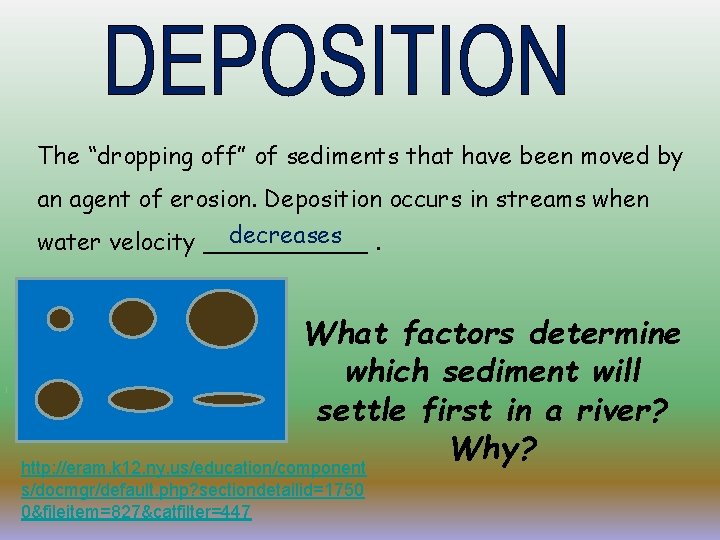
The “dropping off” of sediments that have been moved by an agent of erosion. Deposition occurs in streams when decreases. water velocity ______ What factors determine which sediment will settle first in a river? Why? http: //eram. k 12. ny. us/education/component s/docmgr/default. php? sectiondetailid=1750 0&fileitem=827&catfilter=447
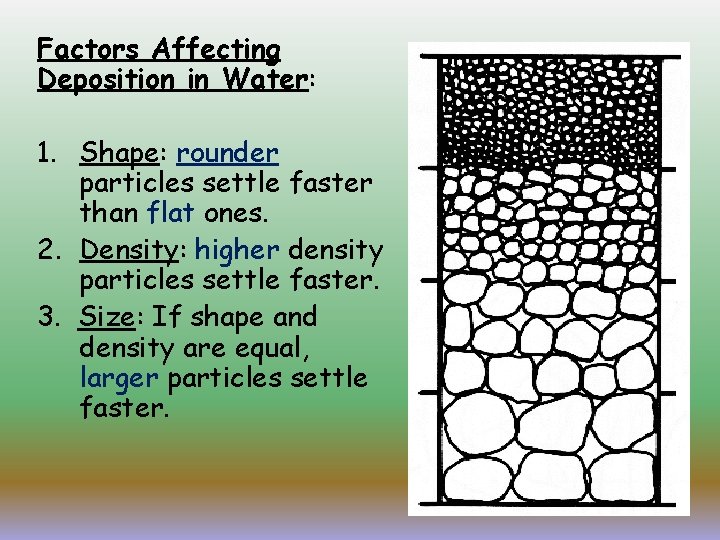
Factors Affecting Deposition in Water: 1. Shape: rounder particles settle faster than flat ones. 2. Density: higher density particles settle faster. 3. Size: If shape and density are equal, larger particles settle faster.
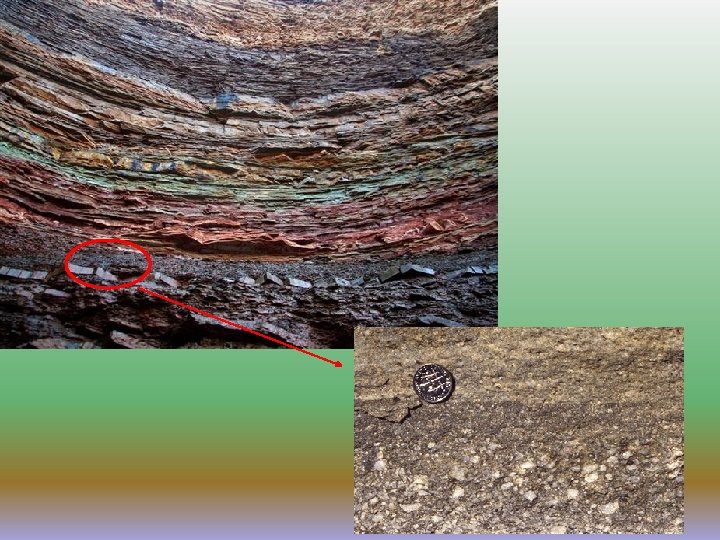
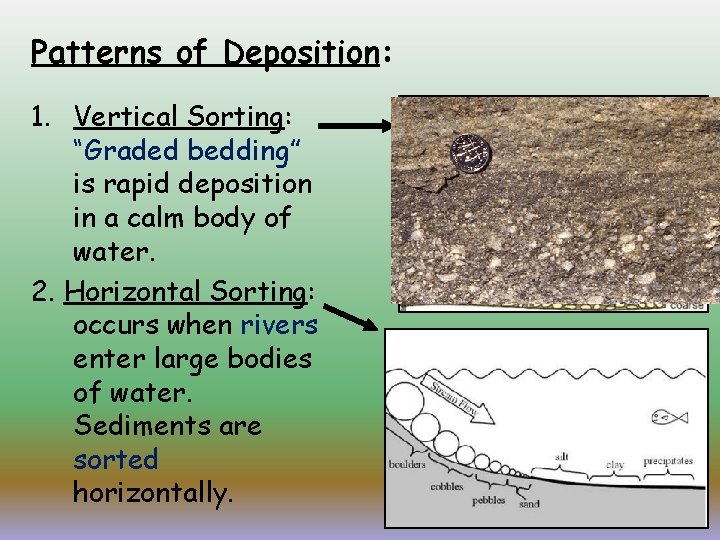
Patterns of Deposition: 1. Vertical Sorting: “Graded bedding” is rapid deposition in a calm body of water. 2. Horizontal Sorting: occurs when rivers enter large bodies of water. Sediments are sorted horizontally.
River Deposition: inside Occurs on the _____ curve of rivers where velocity is the slowest. Erosion is dominant on the outside _____ curves.