
Erosion Processes Shaping the Surface Agents of Erosion




- Slides: 54
Erosion Processes Shaping the Surface
Agents of Erosion • Wind, running water, waves, gravity, groundwater, glaciers • All except gravity are a fluid medium that can transport sediment • All remove sediment, transport sediment, and deposit sediment
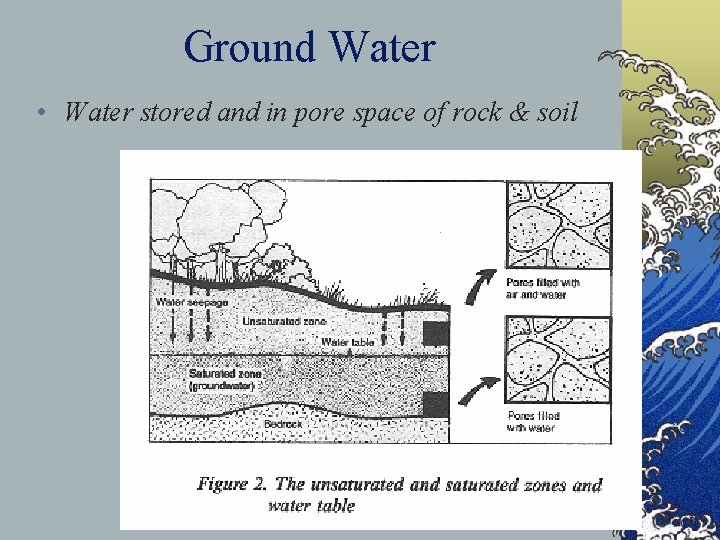
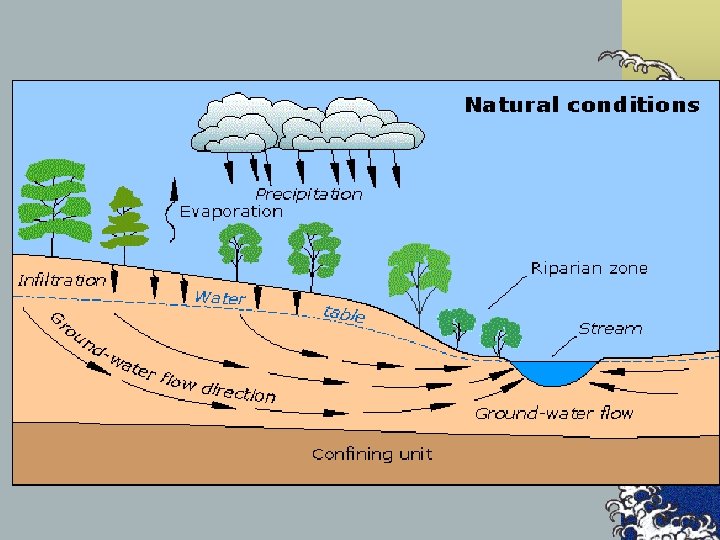
Ground Water • Water stored and in pore space of rock & soil
Erosional features • Caverns • sinkholes
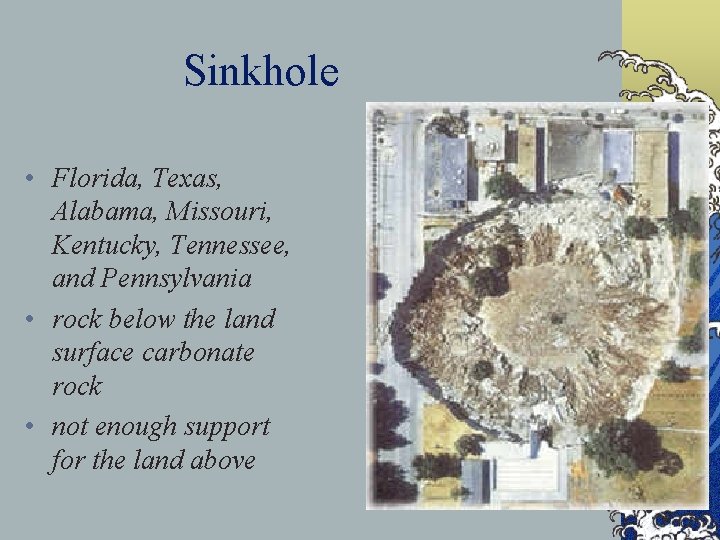
Sinkhole • Florida, Texas, Alabama, Missouri, Kentucky, Tennessee, and Pennsylvania • rock below the land surface carbonate rock • not enough support for the land above
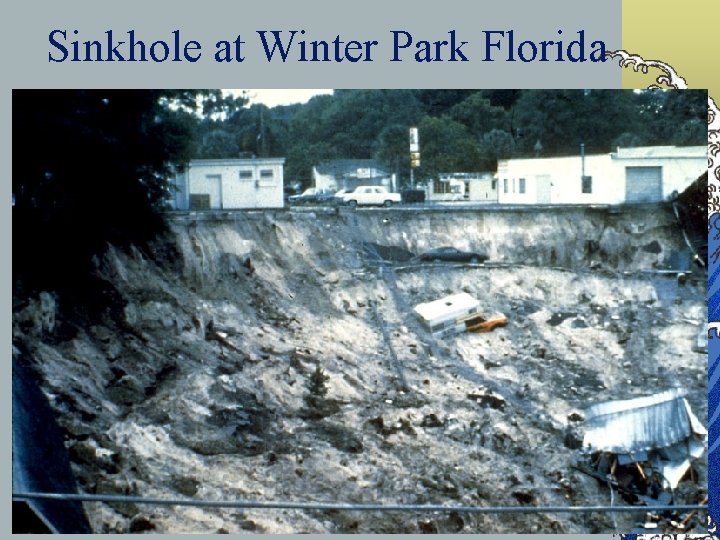
Sinkhole at Winter Park Florida
Erosion and transportation by Groundwater • Water becomes weakly acidic by interacting with air and soil • Acidic water dissolves limestone along preexisting cracks • Dissolved minerals carried in solution by groundwater • Does NOT transport solid sediment
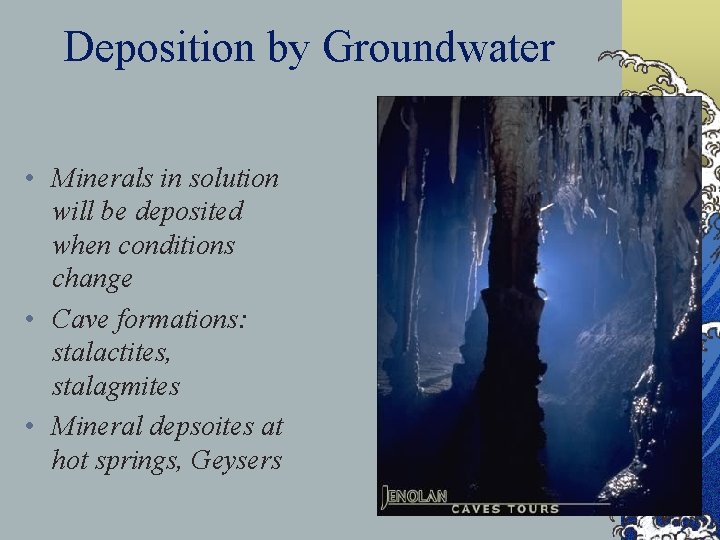
Deposition by Groundwater • Minerals in solution will be deposited when conditions change • Cave formations: stalactites, stalagmites • Mineral depsoites at hot springs, Geysers
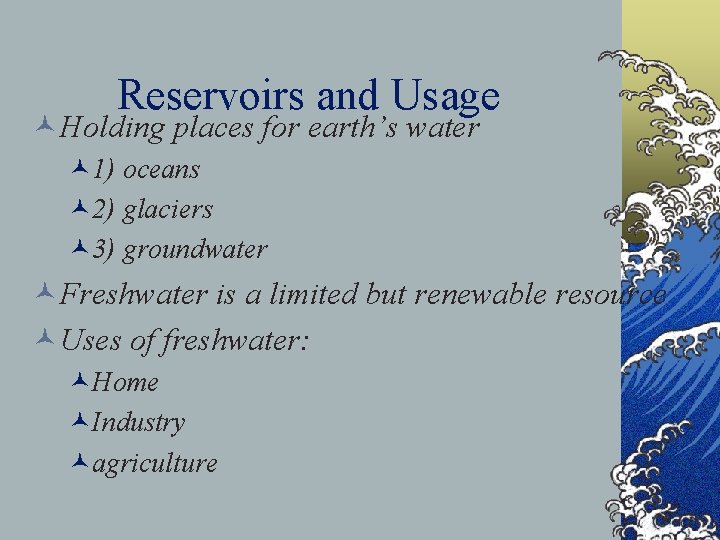
Reservoirs and Usage ©Holding places for earth’s water © 1) oceans © 2) glaciers © 3) groundwater ©Freshwater is a limited but renewable resource ©Uses of freshwater: ©Home ©Industry ©agriculture
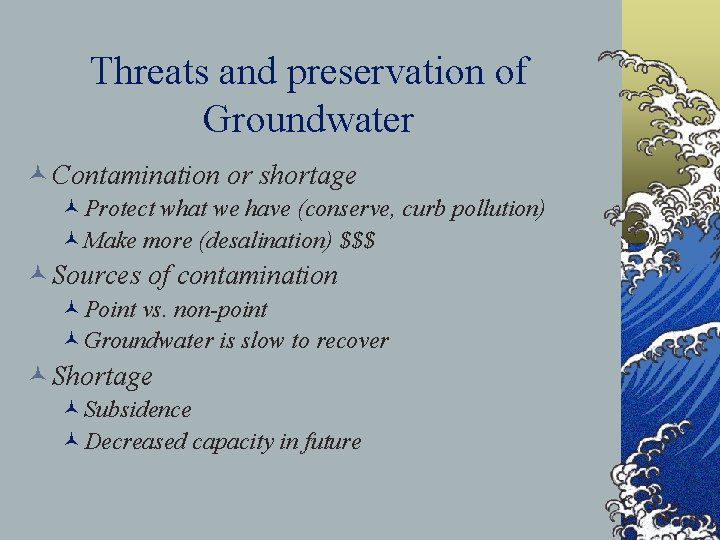
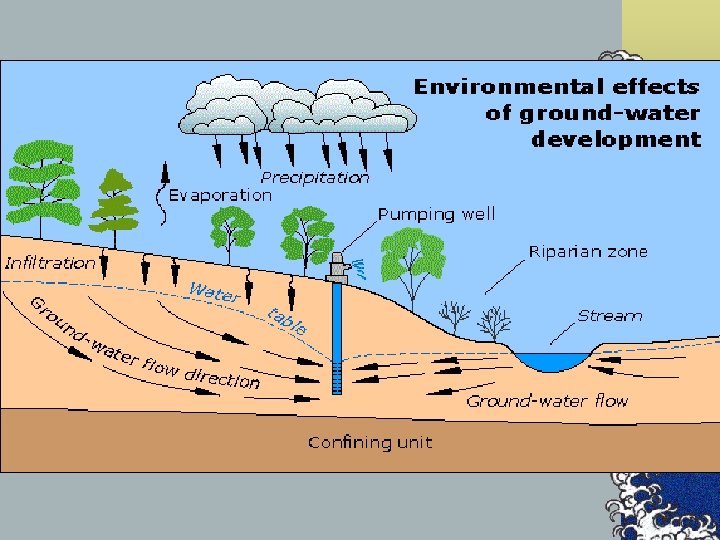
Threats and preservation of Groundwater © Contamination or shortage ©Protect what we have (conserve, curb pollution) ©Make more (desalination) $$$ © Sources of contamination ©Point vs. non-point ©Groundwater is slow to recover © Shortage ©Subsidence ©Decreased capacity in future
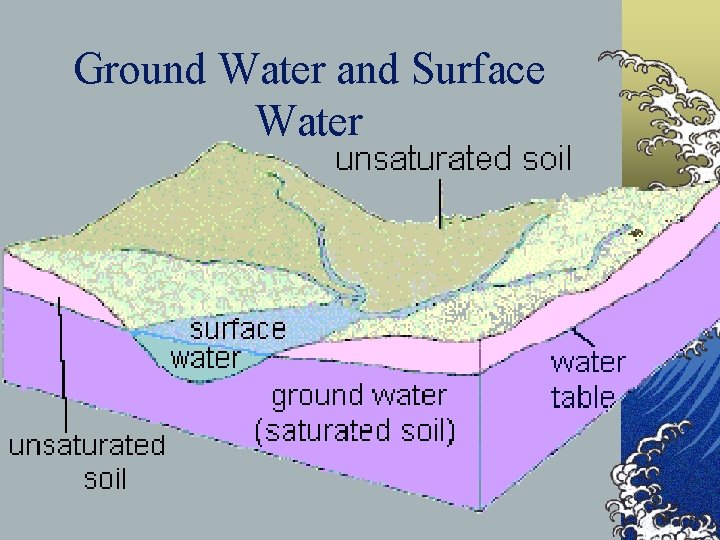
Ground Water and Surface Water
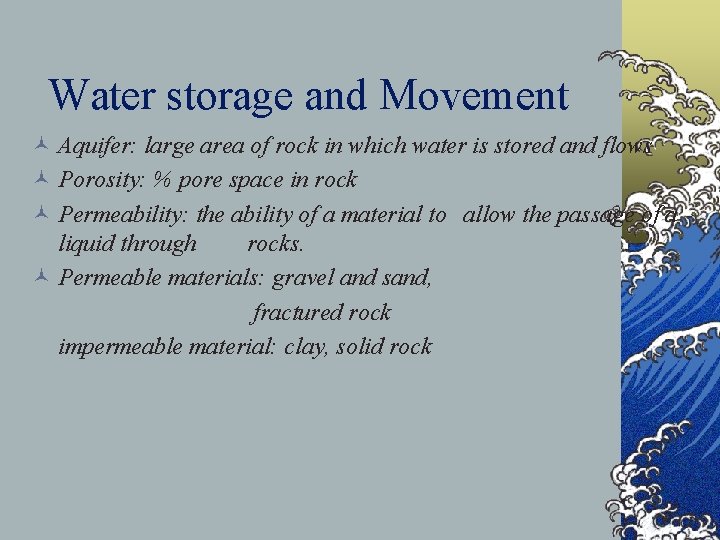
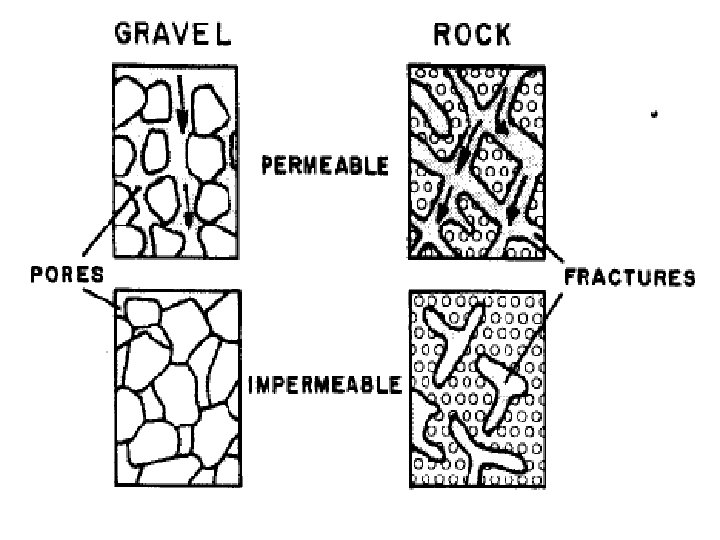
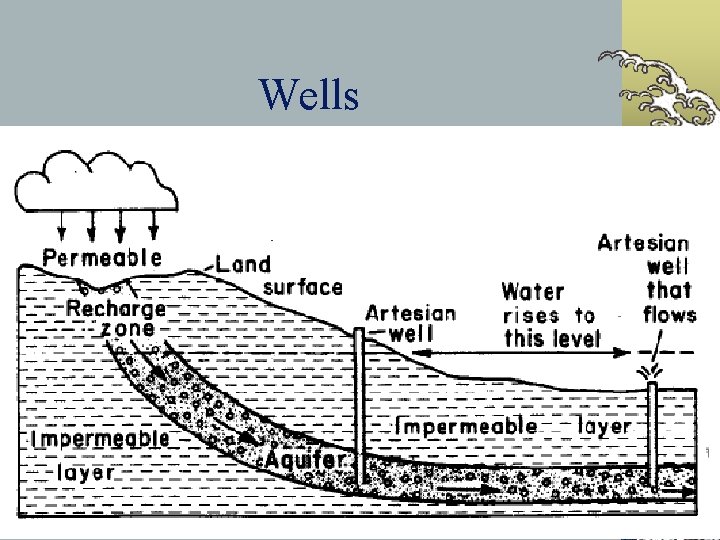
Water storage and Movement © Aquifer: large area of rock in which water is stored and flows © Porosity: % pore space in rock © Permeability: the ability of a material to allow the passage of a liquid through rocks. © Permeable materials: gravel and sand, fractured rock impermeable material: clay, solid rock
Wells
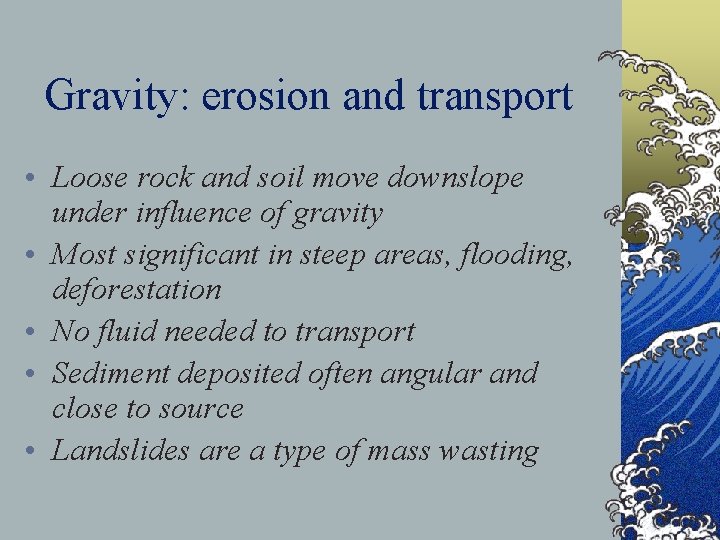
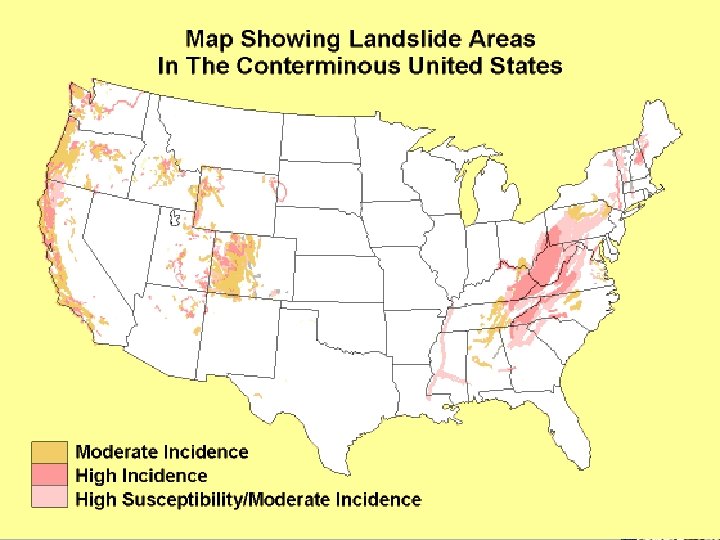
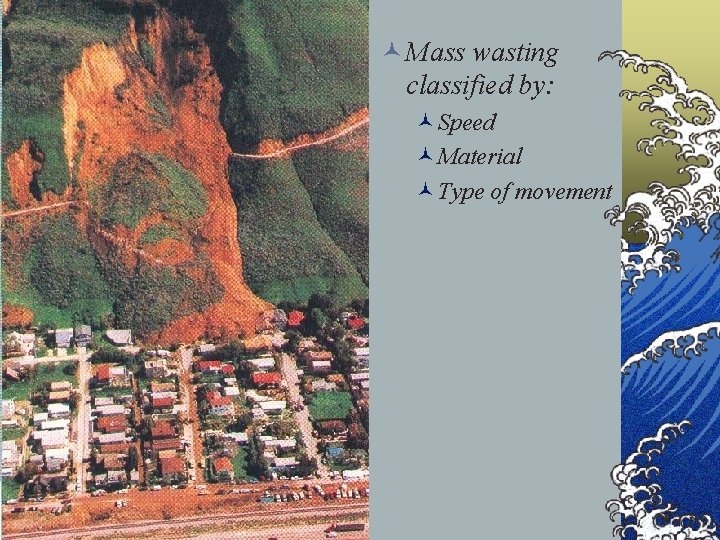
Gravity: erosion and transport • Loose rock and soil move downslope under influence of gravity • Most significant in steep areas, flooding, deforestation • No fluid needed to transport • Sediment deposited often angular and close to source • Landslides are a type of mass wasting
© Mass wasting classified by: ©Speed ©Material ©Type of movement
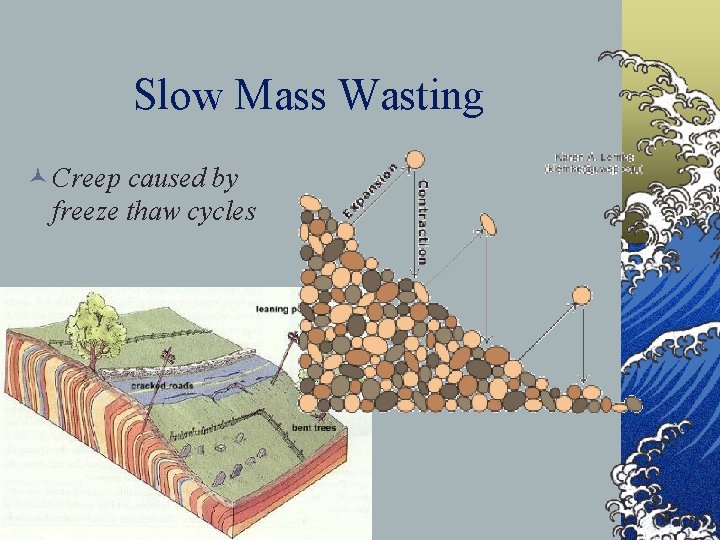
Slow Mass Wasting © Creep caused by freeze thaw cycles
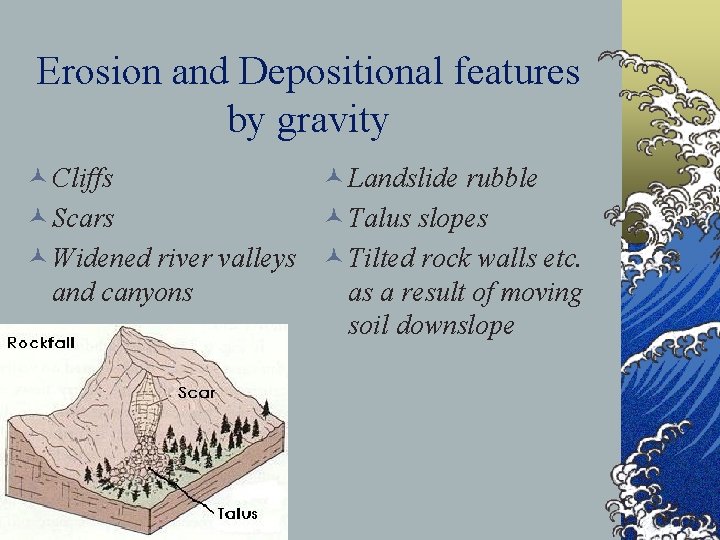
Erosion and Depositional features by gravity © Cliffs © Landslide rubble © Scars © Talus slopes © Widened river valleys © Tilted rock walls etc. and canyons as a result of moving soil downslope
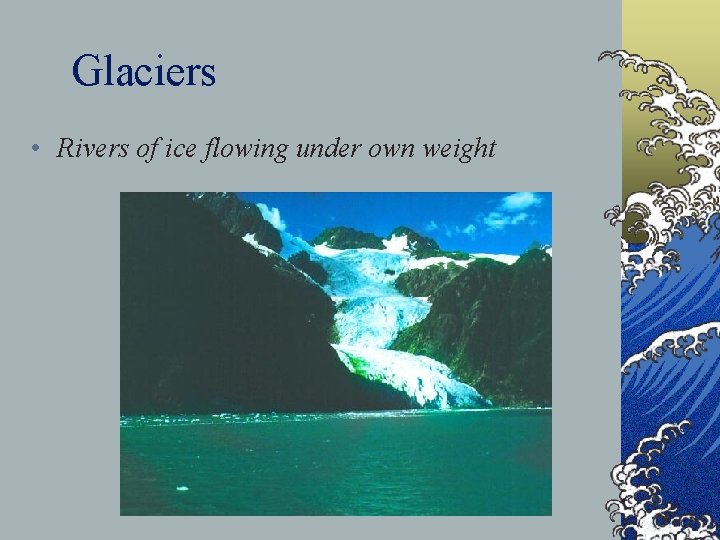
Glaciers • Rivers of ice flowing under own weight
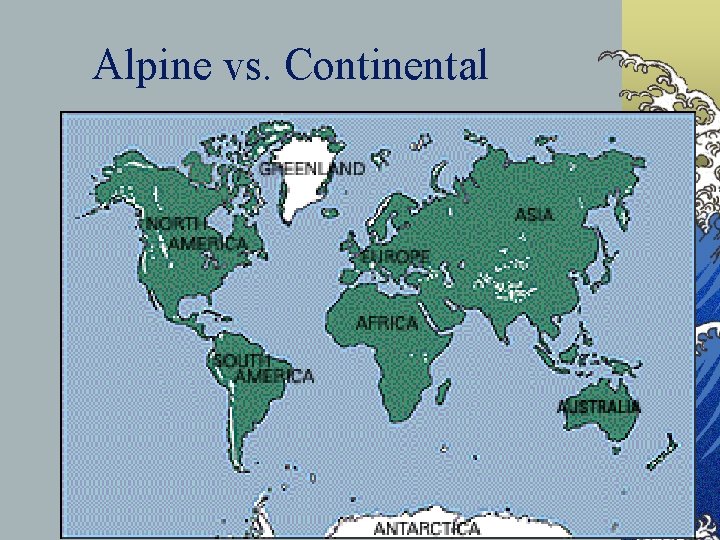
Alpine vs. Continental
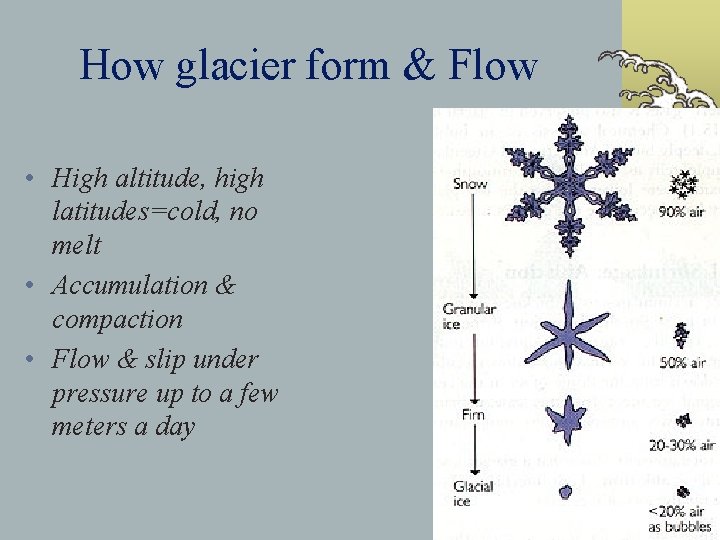
How glacier form & Flow • High altitude, high latitudes=cold, no melt • Accumulation & compaction • Flow & slip under pressure up to a few meters a day
Erosion and transportation by glaciers • Pluck loose rocks, abrasion • Transports all sediment frozen within ice as glacier grows and flows
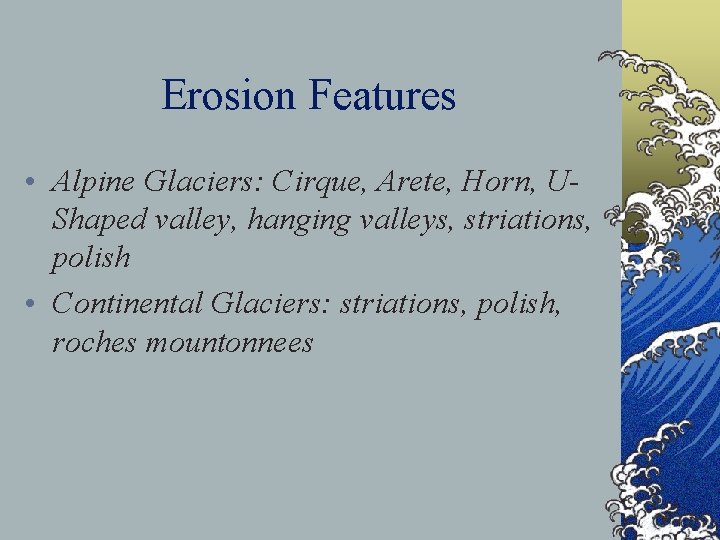
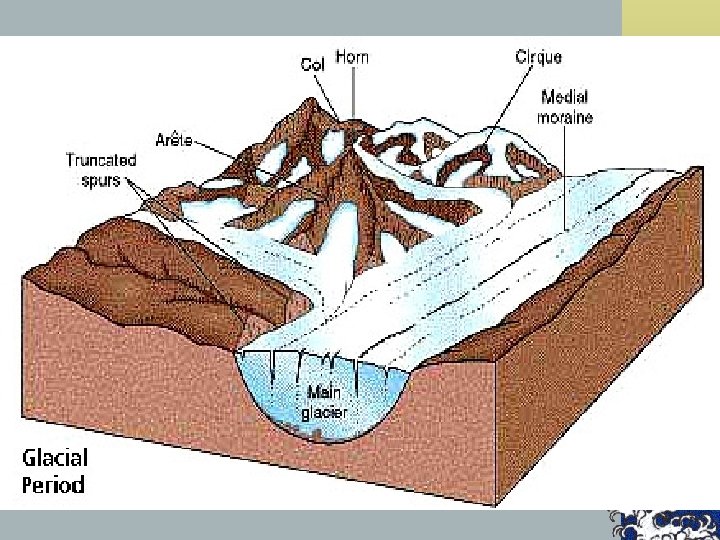
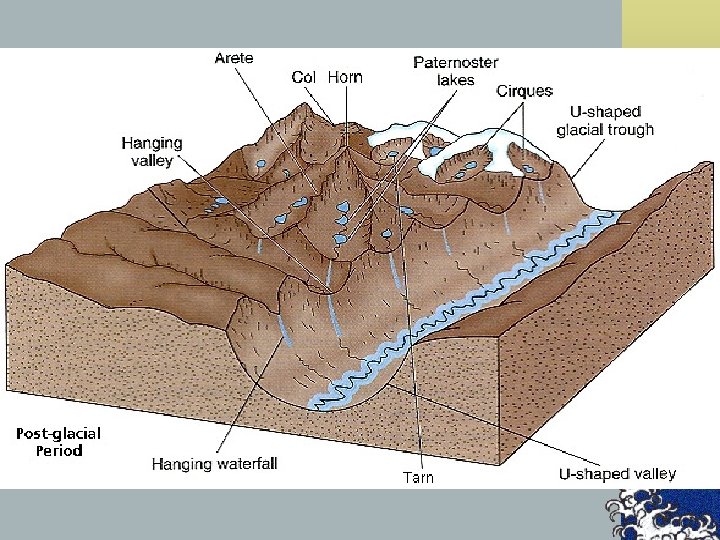
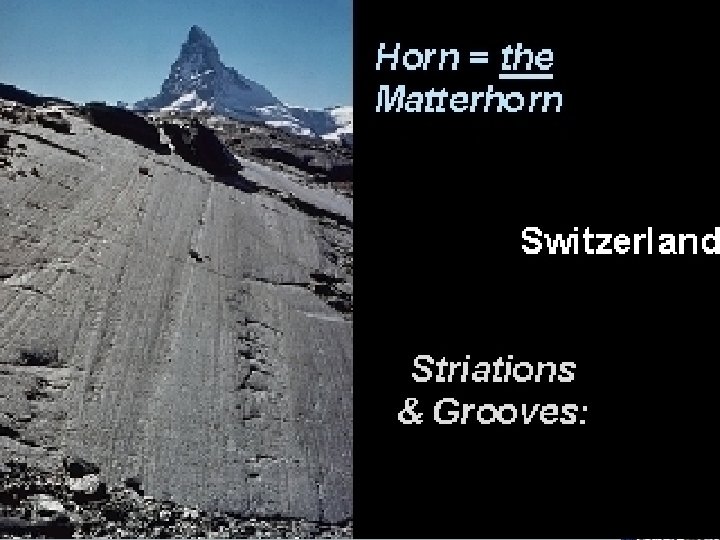
Erosion Features • Alpine Glaciers: Cirque, Arete, Horn, UShaped valley, hanging valleys, striations, polish • Continental Glaciers: striations, polish, roches mountonnees
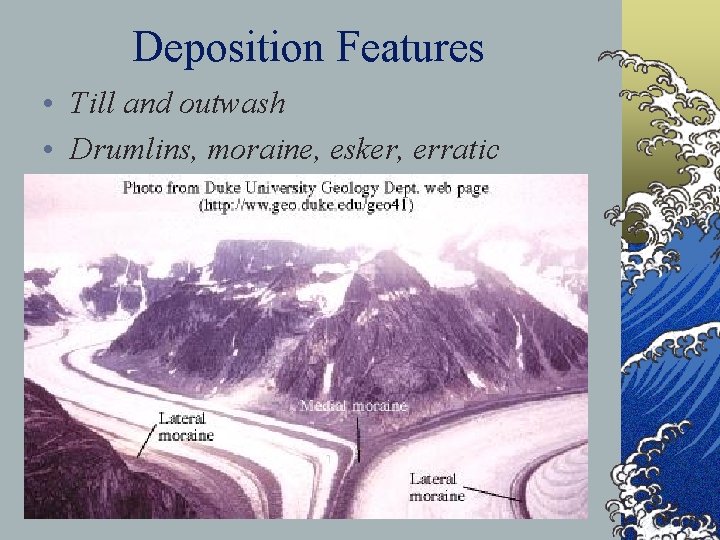
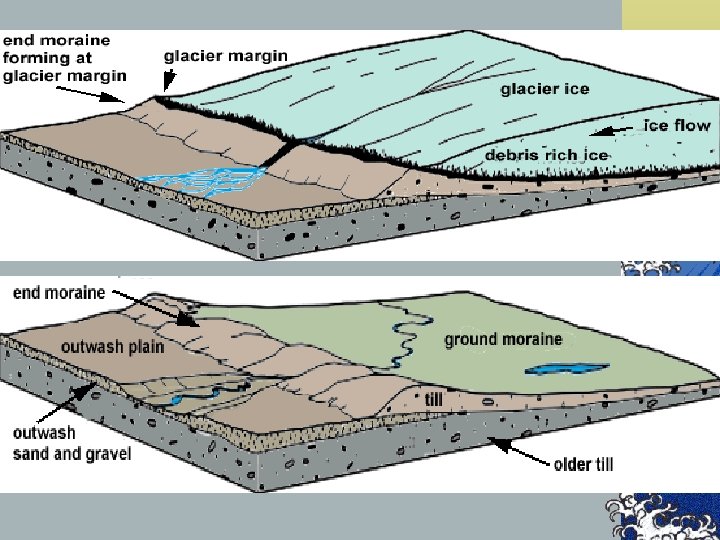
Deposition Features • Till and outwash • Drumlins, moraine, esker, erratic
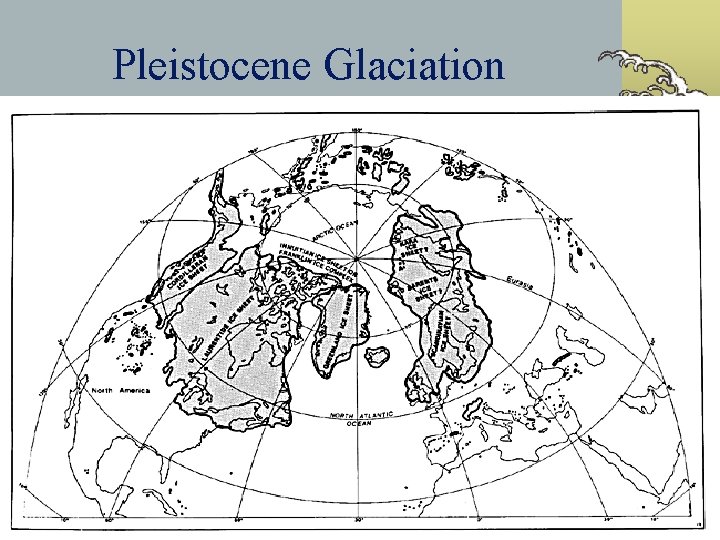
Pleistocene Glaciation
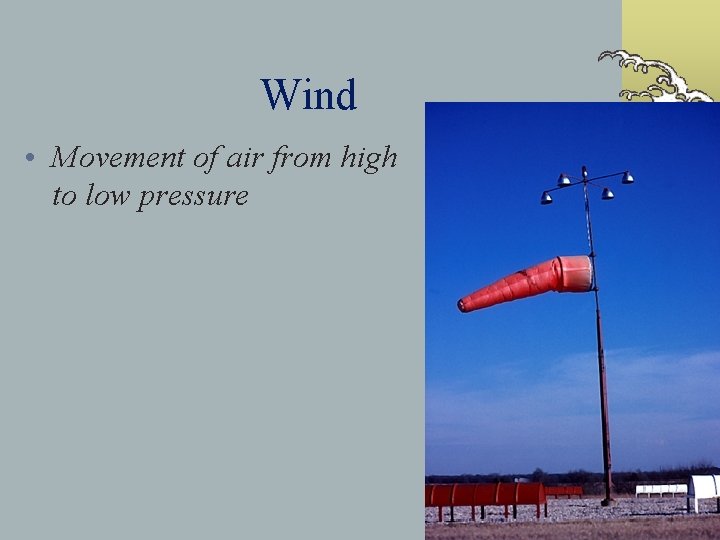
Wind • Movement of air from high to low pressure
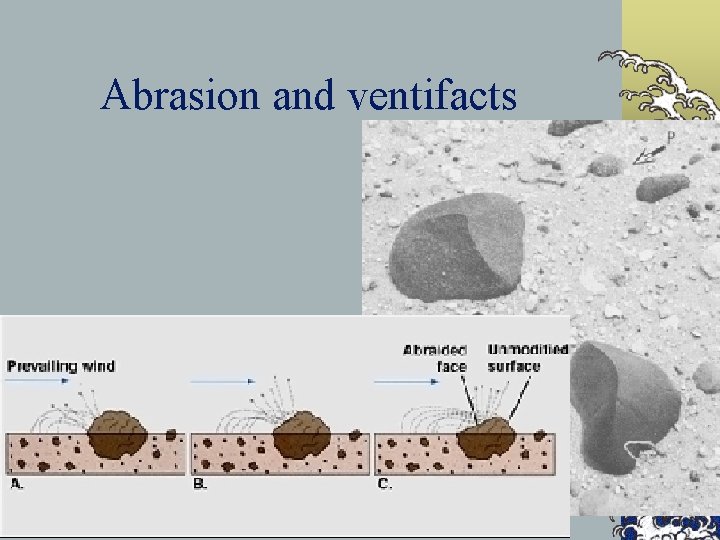
Wind Erosion • Active in dry areas with small loose sediment • Erosion through lifting small particles, abrasion (sandblasting) • Sediment can sometimes be frosted or have facets, well sorted and fine grained deposits
Erosion and Deposition Features Erosion • Desert pavement and deflation Deposition • Dunes • loess
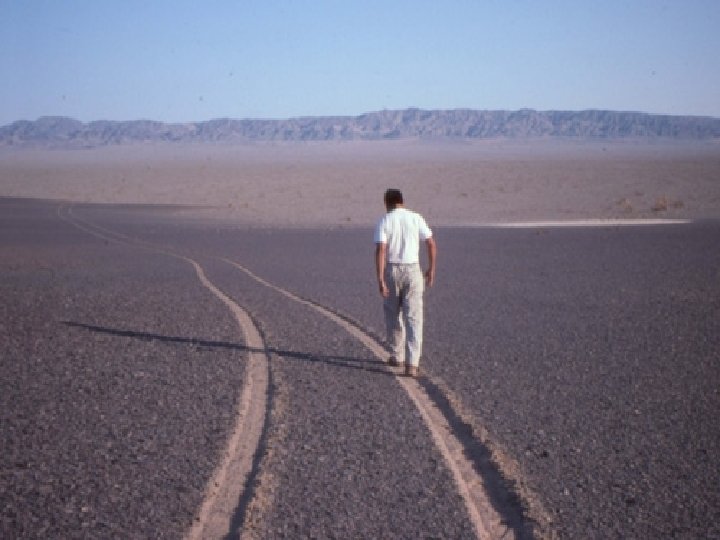
Deflation and Desert Pavement
Abrasion and ventifacts
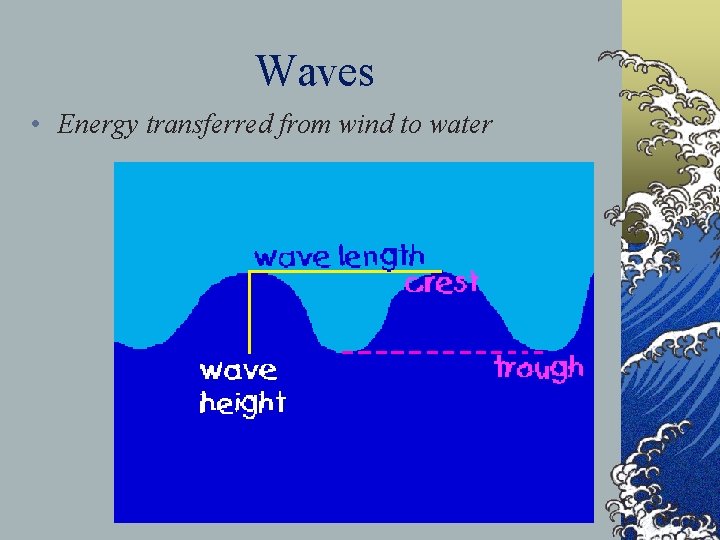
Waves • Energy transferred from wind to water
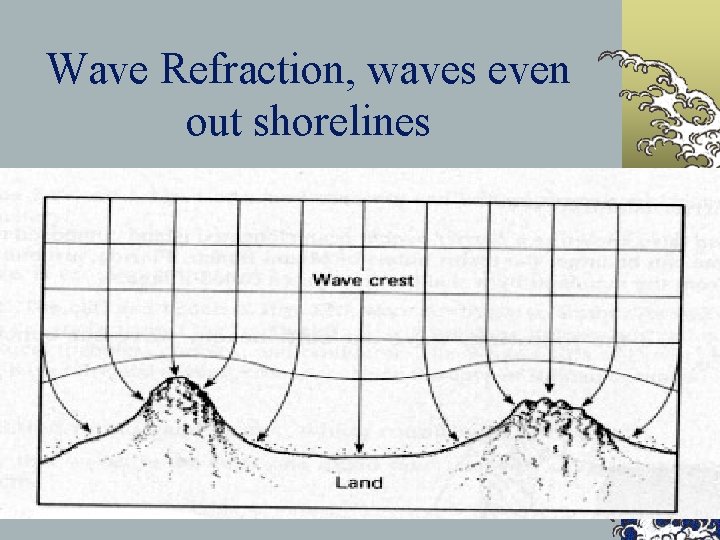
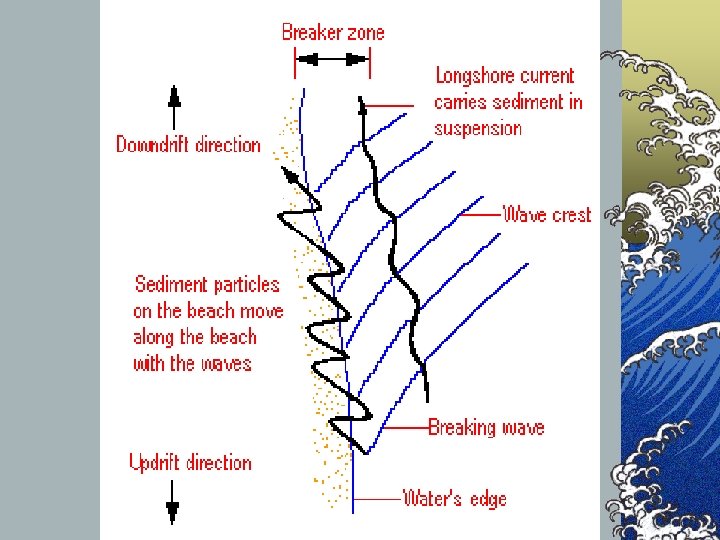
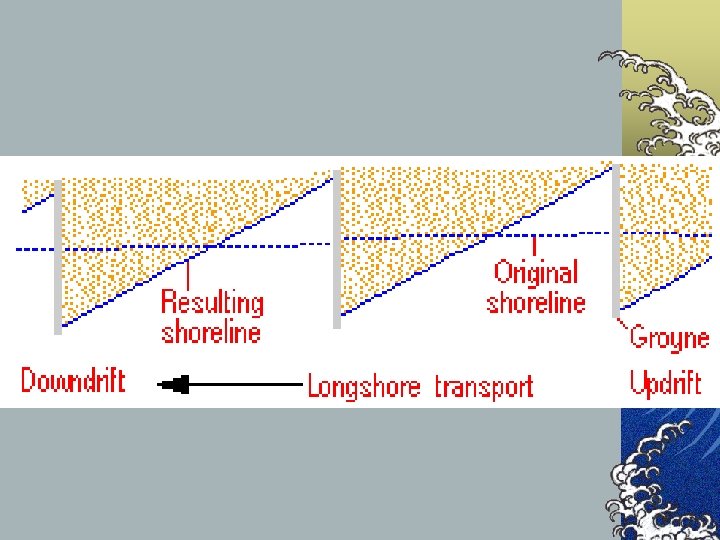
Erosion and transportation by waves • Bedrock split by water pounded in cracks • Abrasion • Wave refraction causes headland erosion, evens out coastline • Longshore currents carry sand
Wave Refraction, waves even out shorelines
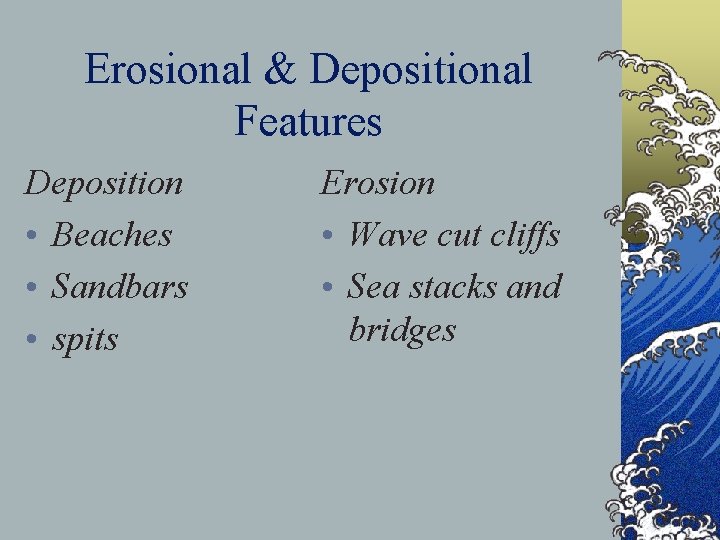
Erosional & Depositional Features Deposition • Beaches • Sandbars • spits Erosion • Wave cut cliffs • Sea stacks and bridges
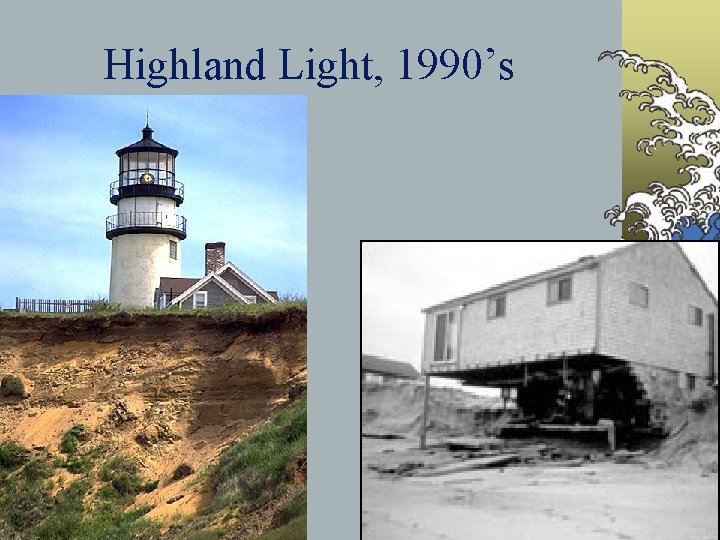
Highland Light, 1990’s
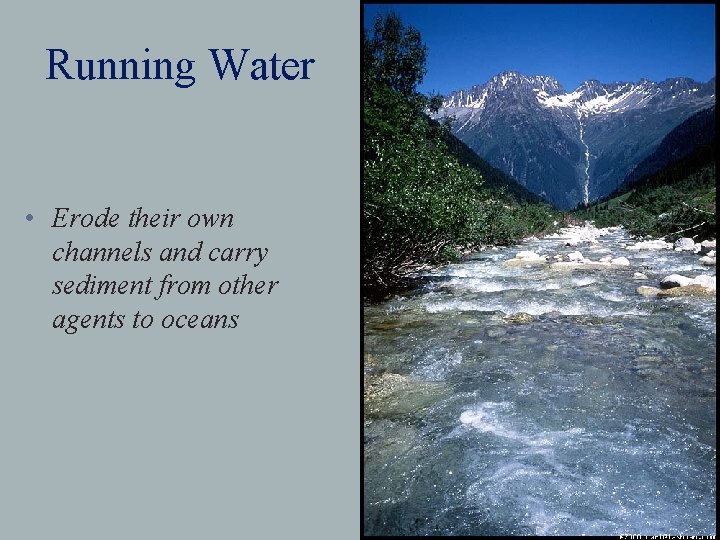
Running Water • Erode their own channels and carry sediment from other agents to oceans
Erosion & Transportation by Running Water • Erosion of stream channel by lifting of loose particles, abrasion of solid rock, dissolving of minerals • Carry material in Solution, Suspension, and as Bed load • Much of erosive work is done during flood stages and by youthful stage streams
Erosion Features • • Stream valley, canyons Cutbank Potholes Receding waterfalls
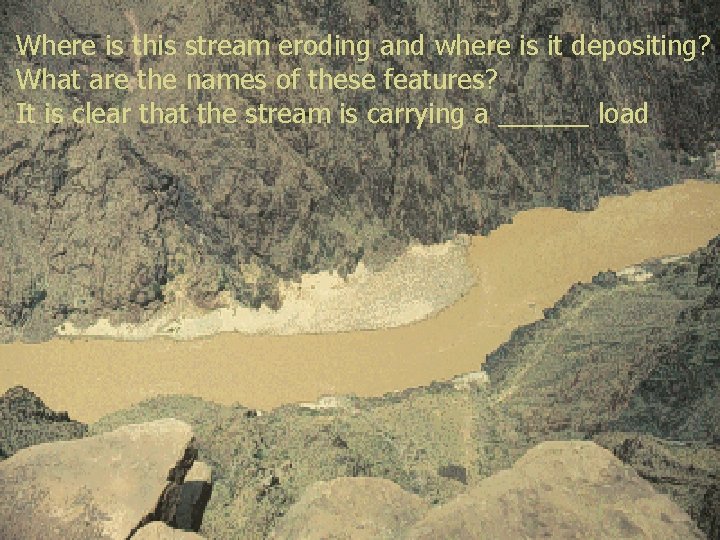
Where is this stream eroding and where is it depositing? What are the names of these features? It is clear that the stream is carrying a ______ load
Deposition by Running Water • As stream velocity drops below the critical settling velocity for a particular sediment size, that sediment settles out • Occurs as slope decreases, as river meets base level (ocean, lake etc. ) or around bends in stream where speed decreases
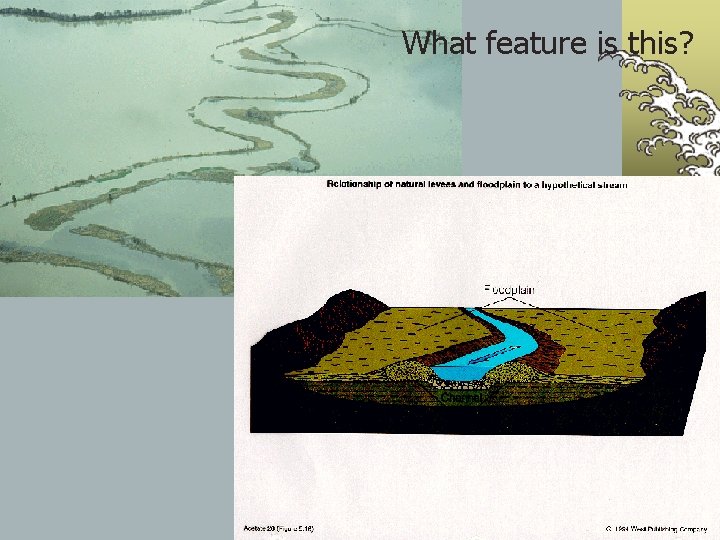
Deposition Features • Deltas • Levees • Point bars
What feature is this?