
Erosion Deposition The Wearing Down and Building Up
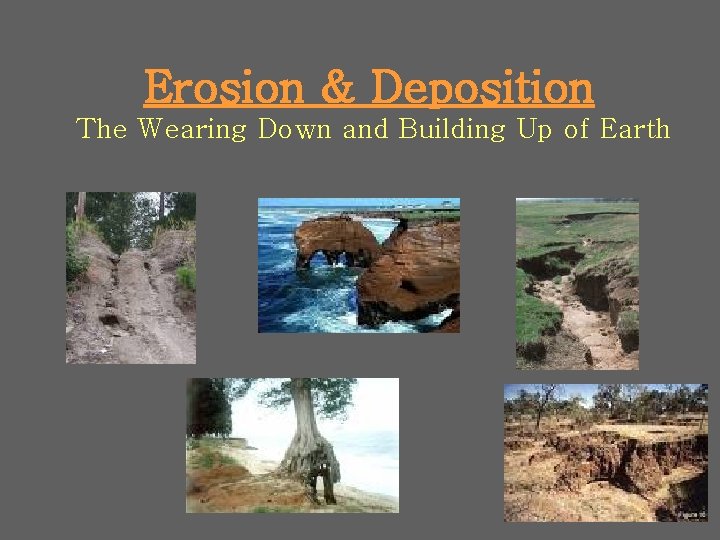
Erosion & Deposition The Wearing Down and Building Up of Earth
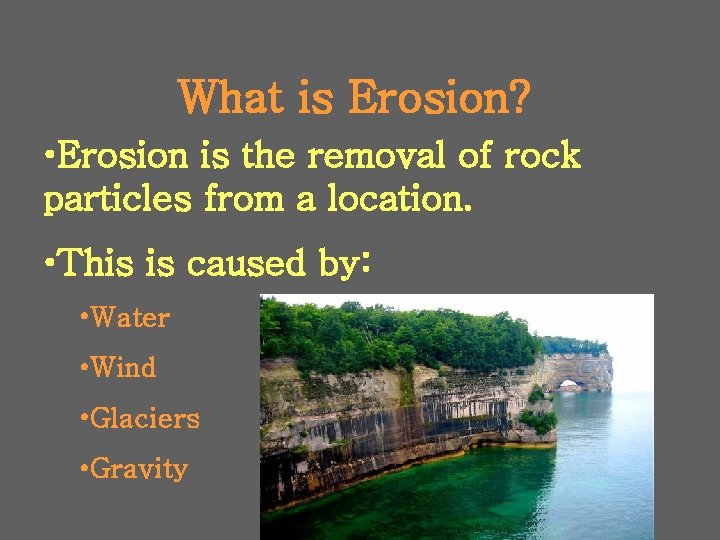
What is Erosion? • Erosion is the removal of rock particles from a location. • This is caused by: • Water • Wind • Glaciers • Gravity
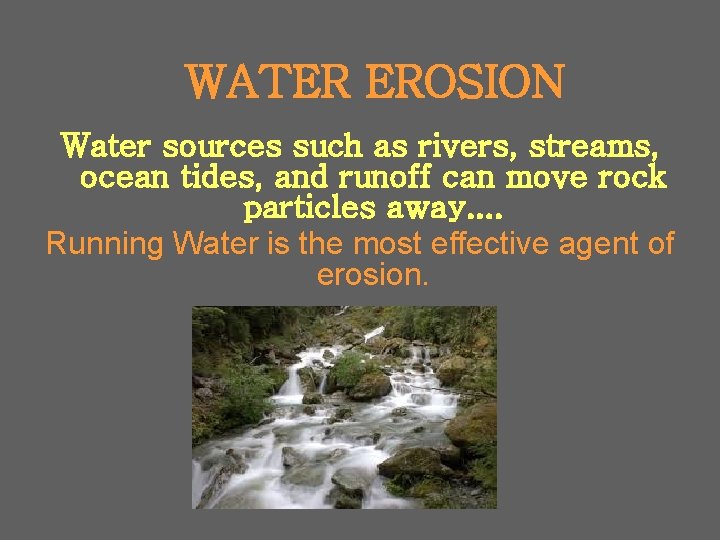
WATER EROSION Water sources such as rivers, streams, ocean tides, and runoff can move rock particles away. . Running Water is the most effective agent of erosion.
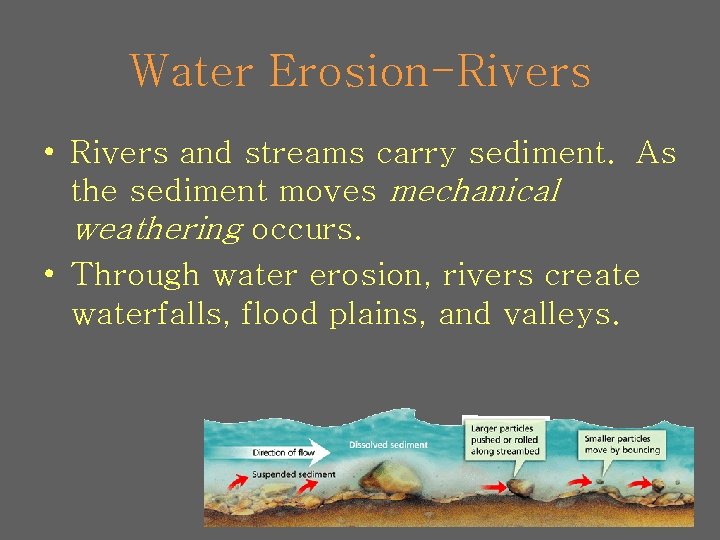
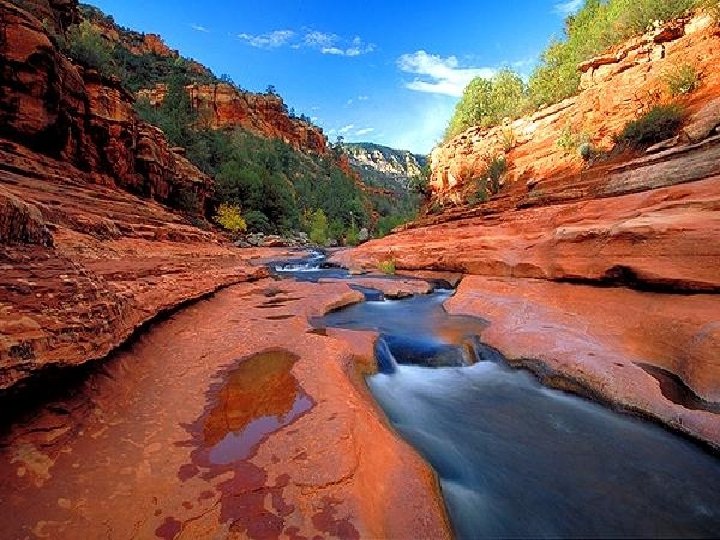
Water Erosion-Rivers • Rivers and streams carry sediment. As the sediment moves mechanical weathering occurs. • Through water erosion, rivers create waterfalls, flood plains, and valleys.
Carrying Power • Carrying Power is indicated by: – the total amount of sediment in a stream – the size of the particles being moved • The stream discharge and speed will determine the carrying power of the stream.
• Discharge is the volume of water flowing past a given point at a given time. • Speed is generally determined by the steepness, or gradient, of its bed. • A stream moving at high speed with a high discharge can carry much larger sediments than a slow moving stream. • Example: Spring time snow melting and excessive rain
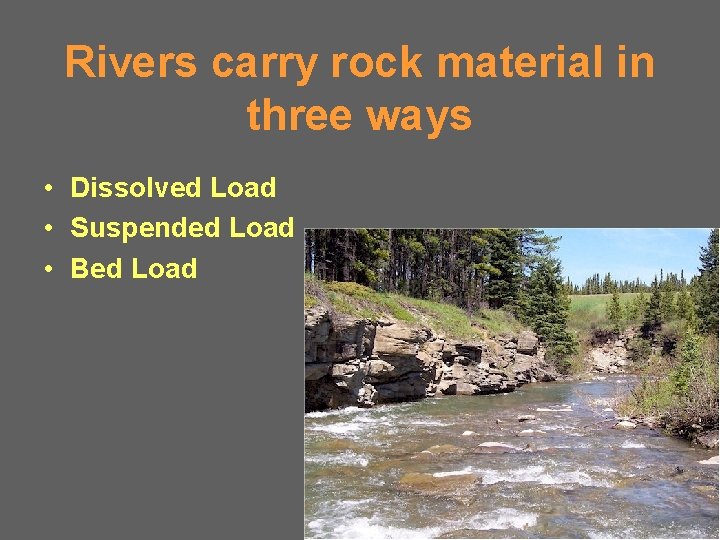
Rivers carry rock material in three ways • Dissolved Load • Suspended Load • Bed Load
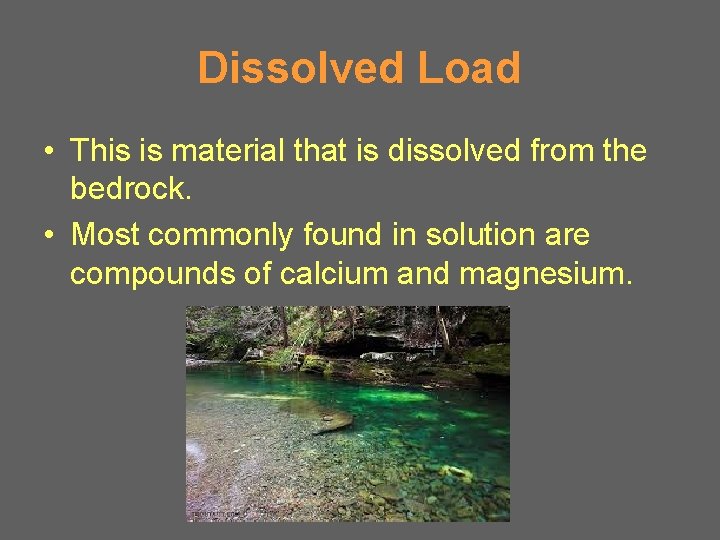
Dissolved Load • This is material that is dissolved from the bedrock. • Most commonly found in solution are compounds of calcium and magnesium.
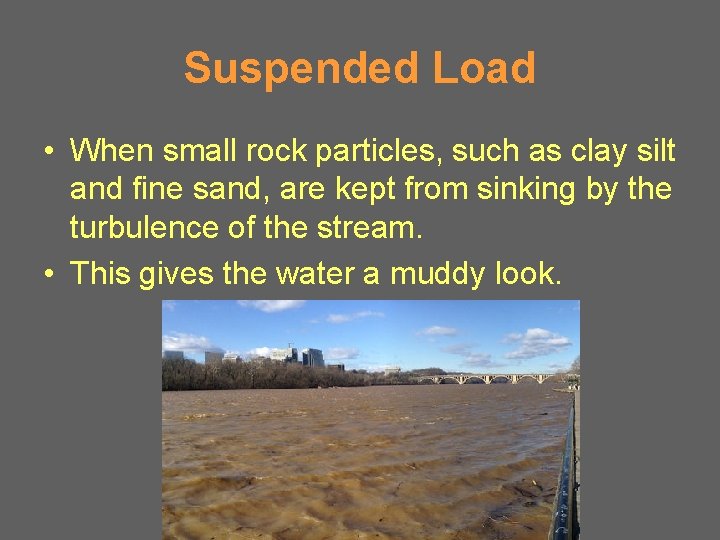
Suspended Load • When small rock particles, such as clay silt and fine sand, are kept from sinking by the turbulence of the stream. • This gives the water a muddy look.
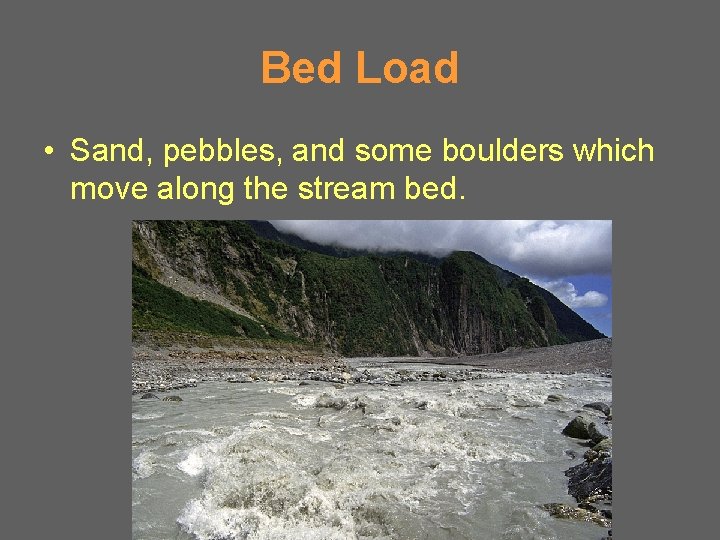
Bed Load • Sand, pebbles, and some boulders which move along the stream bed.
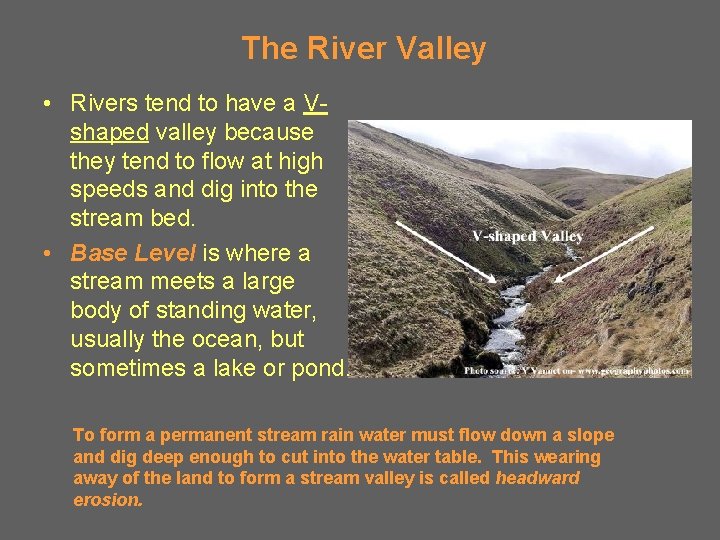
The River Valley • Rivers tend to have a Vshaped valley because they tend to flow at high speeds and dig into the stream bed. • Base Level is where a stream meets a large body of standing water, usually the ocean, but sometimes a lake or pond. To form a permanent stream rain water must flow down a slope and dig deep enough to cut into the water table. This wearing away of the land to form a stream valley is called headward erosion.
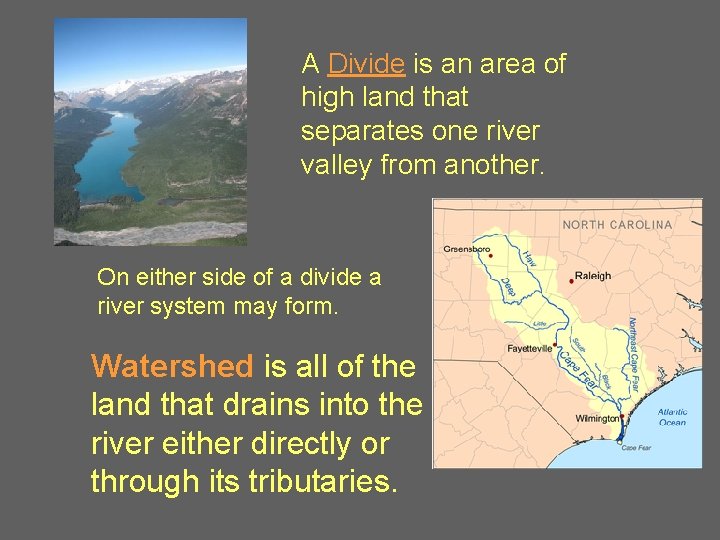
A Divide is an area of high land that separates one river valley from another. On either side of a divide a river system may form. Watershed is all of the land that drains into the river either directly or through its tributaries.
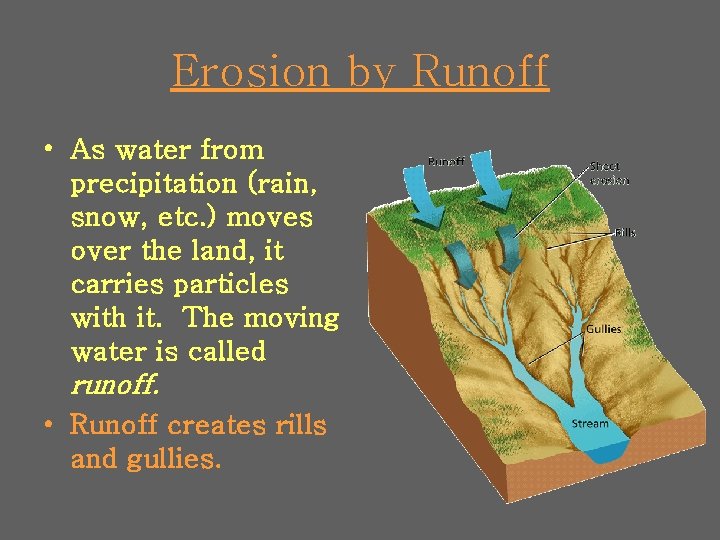
Erosion by Runoff • As water from precipitation (rain, snow, etc. ) moves over the land, it carries particles with it. The moving water is called runoff. • Runoff creates rills and gullies.
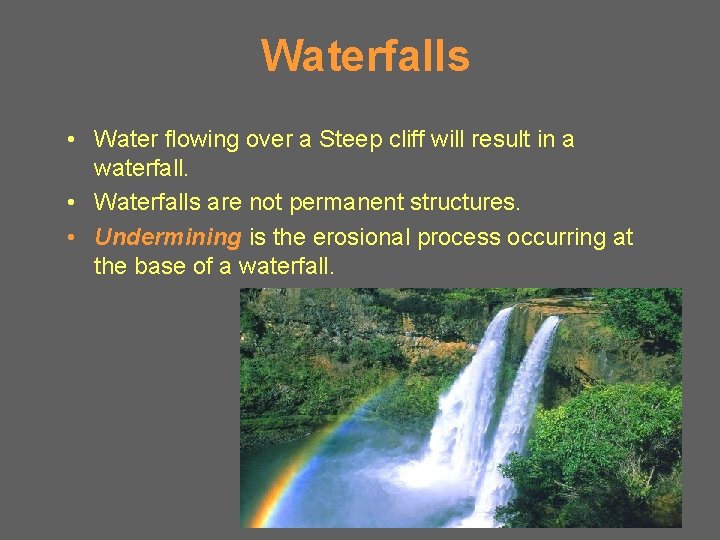
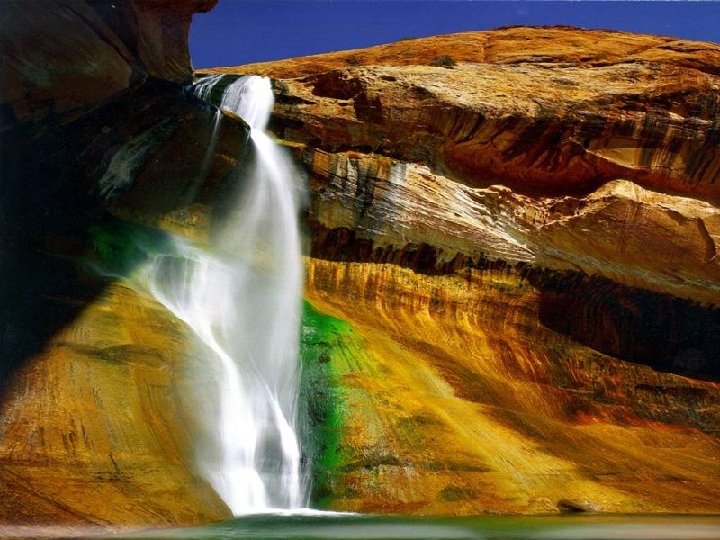
Waterfalls • Water flowing over a Steep cliff will result in a waterfall. • Waterfalls are not permanent structures. • Undermining is the erosional process occurring at the base of a waterfall.
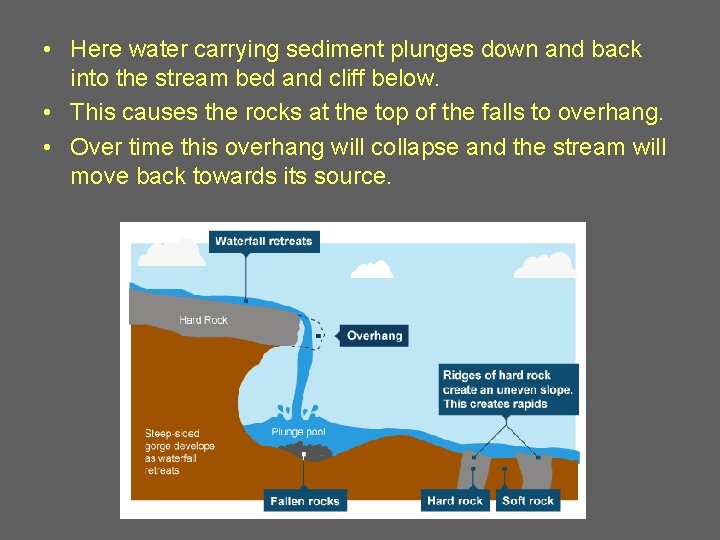
• Here water carrying sediment plunges down and back into the stream bed and cliff below. • This causes the rocks at the top of the falls to overhang. • Over time this overhang will collapse and the stream will move back towards its source.
River Deposition • Deposition occurs when a stream either decreases in speed or discharge. • This occurs when: – slope decreases – its bed widens • A decrease in discharge would occur if a river traveled through an area with low precipitation.
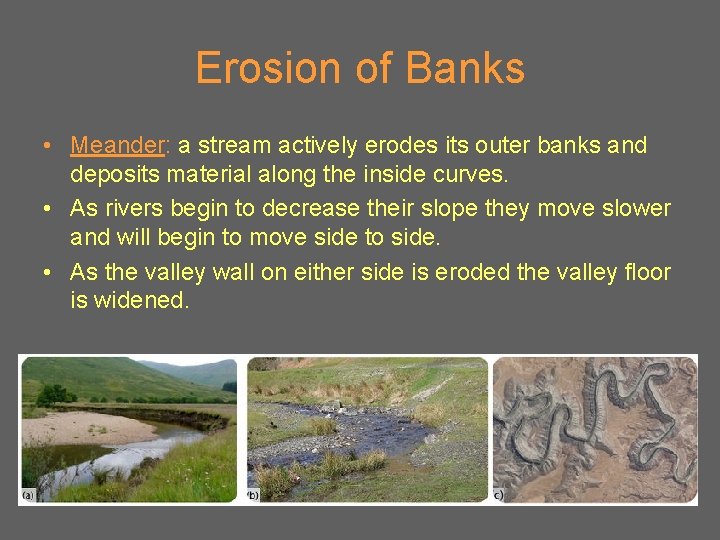
Erosion of Banks • Meander: a stream actively erodes its outer banks and deposits material along the inside curves. • As rivers begin to decrease their slope they move slower and will begin to move side to side. • As the valley wall on either side is eroded the valley floor is widened.
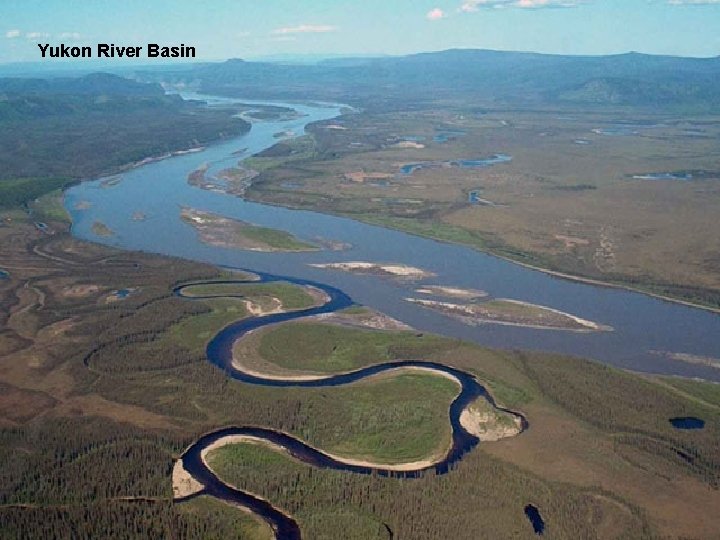
Erosion and Deposition in a River Yukon River Basin Meanders are broad curves in the river (each bend or turn) Erosion is greatest on the outside of a meander where water is flowing the fastest. (cut bank) Deposition is greater on the inside of the meander where the water flows slower. (fill bank) Oxbow Lake - Meanders can only become so large before they break through into another meander. The river then deposits mud and silt along the end of the abandoned meander. The now separated meander becomes a lake.
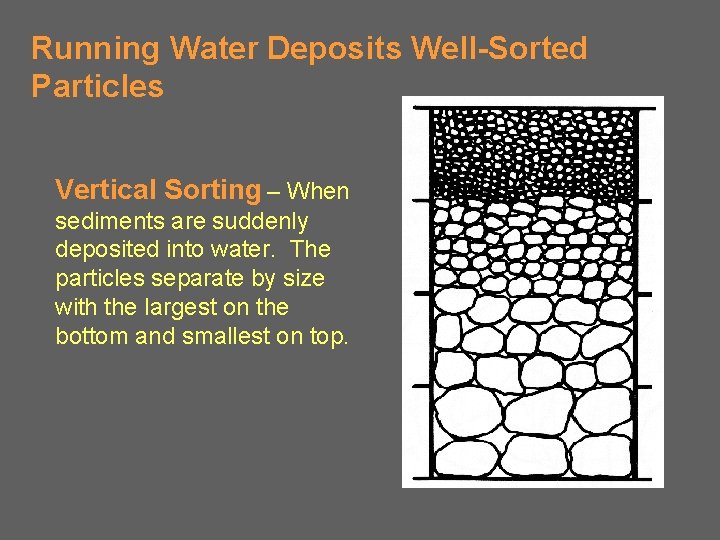
Running Water Deposits Well-Sorted Particles Vertical Sorting – When sediments are suddenly deposited into water. The particles separate by size with the largest on the bottom and smallest on top.
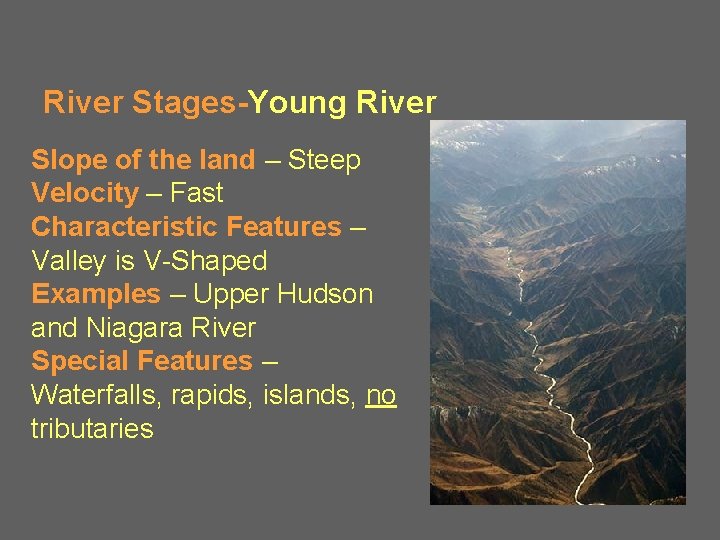
River Stages-Young River Slope of the land – Steep Velocity – Fast Characteristic Features – Valley is V-Shaped Examples – Upper Hudson and Niagara River Special Features – Waterfalls, rapids, islands, no tributaries
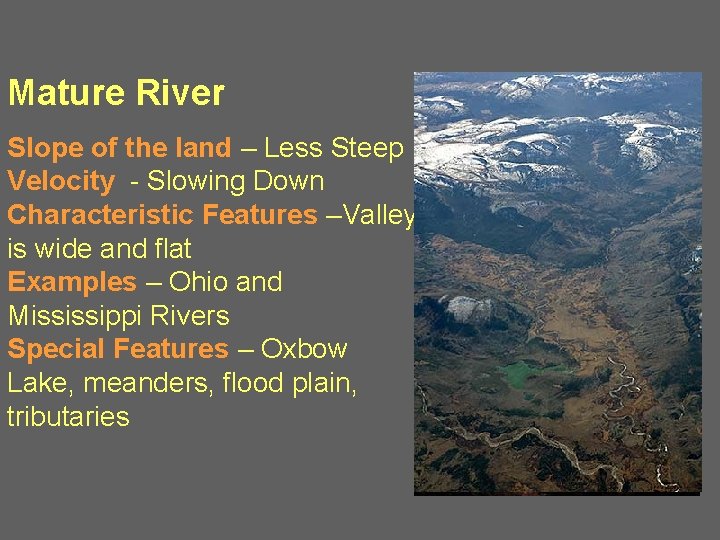
Mature River Slope of the land – Less Steep Velocity - Slowing Down Characteristic Features –Valley is wide and flat Examples – Ohio and Mississippi Rivers Special Features – Oxbow Lake, meanders, flood plain, tributaries
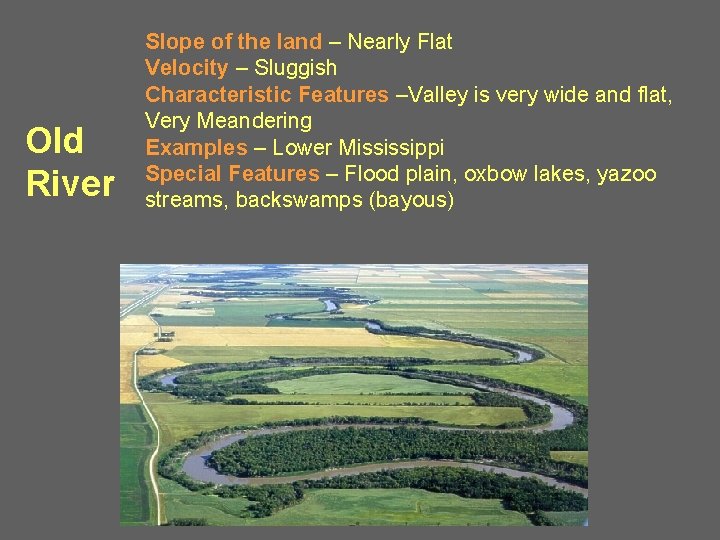
Old River Slope of the land – Nearly Flat Velocity – Sluggish Characteristic Features –Valley is very wide and flat, Very Meandering Examples – Lower Mississippi Special Features – Flood plain, oxbow lakes, yazoo streams, backswamps (bayous)
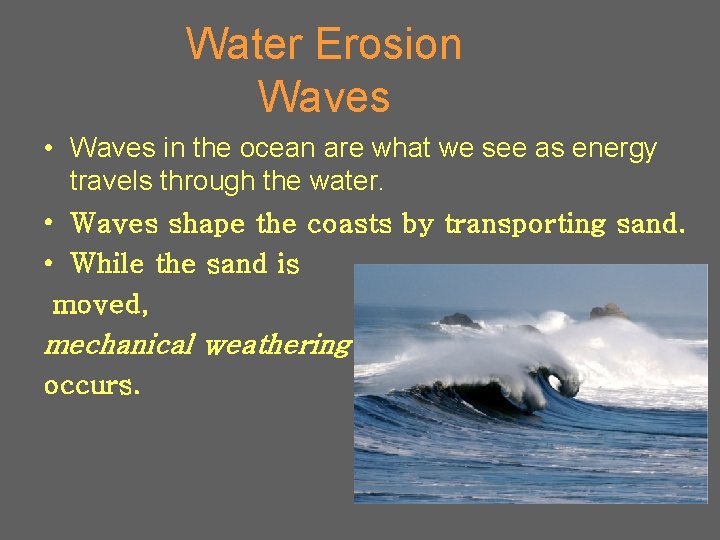
Water Erosion Waves • Waves in the ocean are what we see as energy travels through the water. • Waves shape the coasts by transporting sand. • While the sand is moved, mechanical weathering occurs.
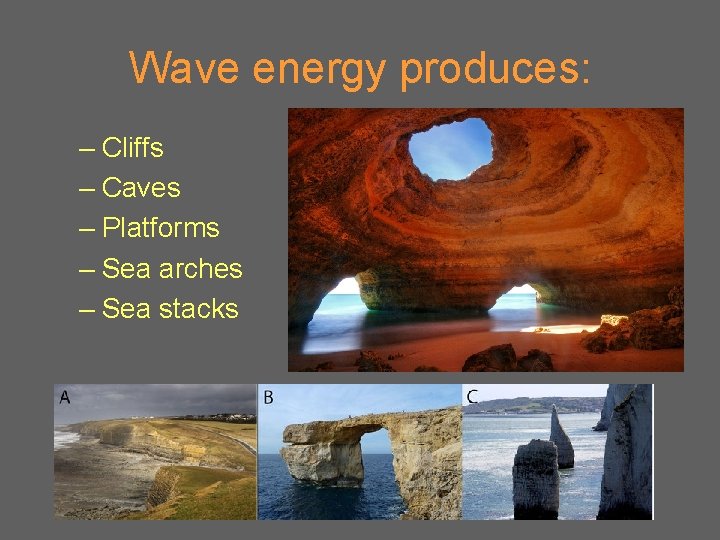
Wave energy produces: – Cliffs – Caves – Platforms – Sea arches – Sea stacks
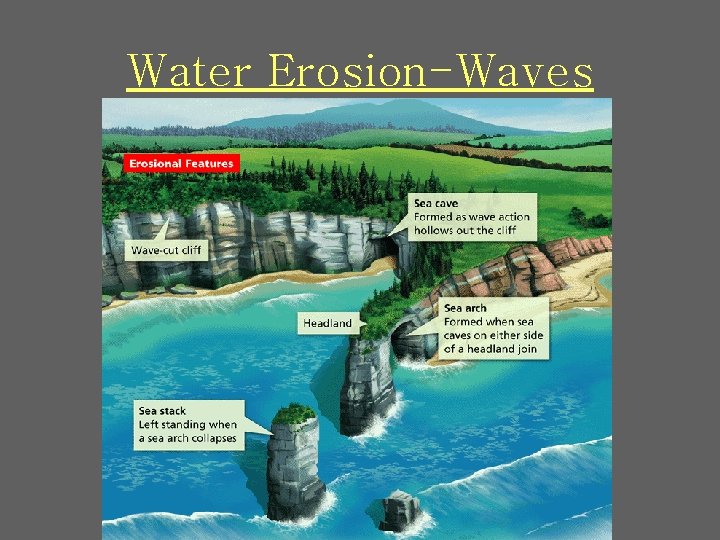
Water Erosion-Waves
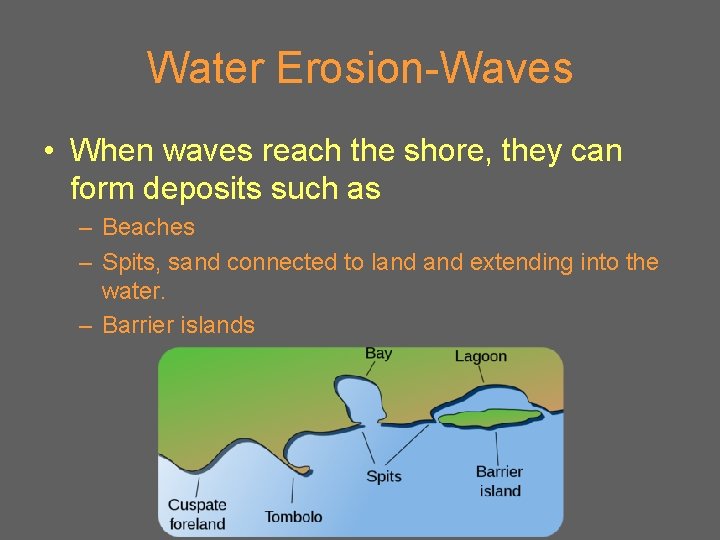
Water Erosion-Waves • When waves reach the shore, they can form deposits such as – Beaches – Spits, sand connected to land extending into the water. – Barrier islands
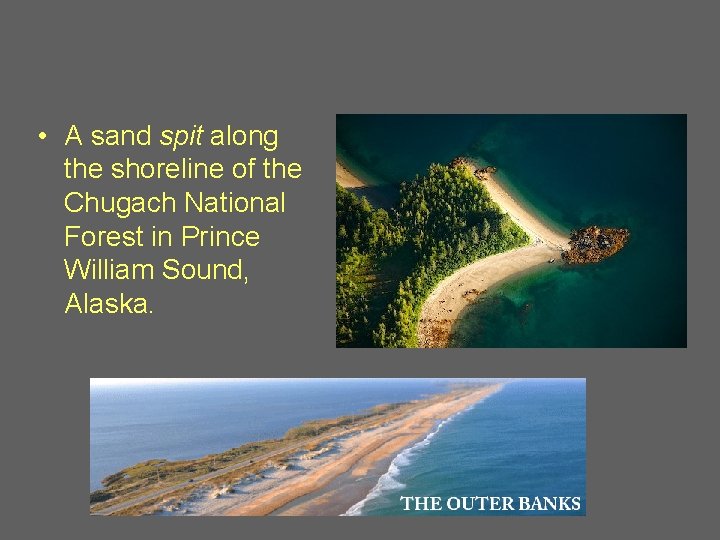
• A sand spit along the shoreline of the Chugach National Forest in Prince William Sound, Alaska.
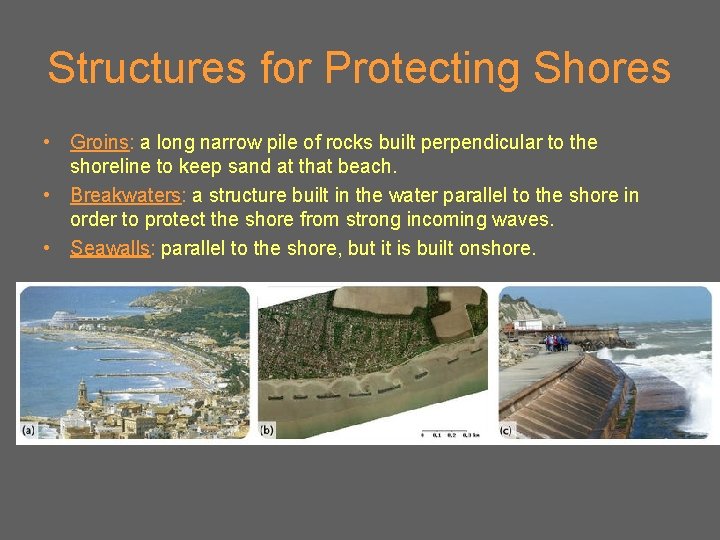
Structures for Protecting Shores • Groins: a long narrow pile of rocks built perpendicular to the shoreline to keep sand at that beach. • Breakwaters: a structure built in the water parallel to the shore in order to protect the shore from strong incoming waves. • Seawalls: parallel to the shore, but it is built onshore.
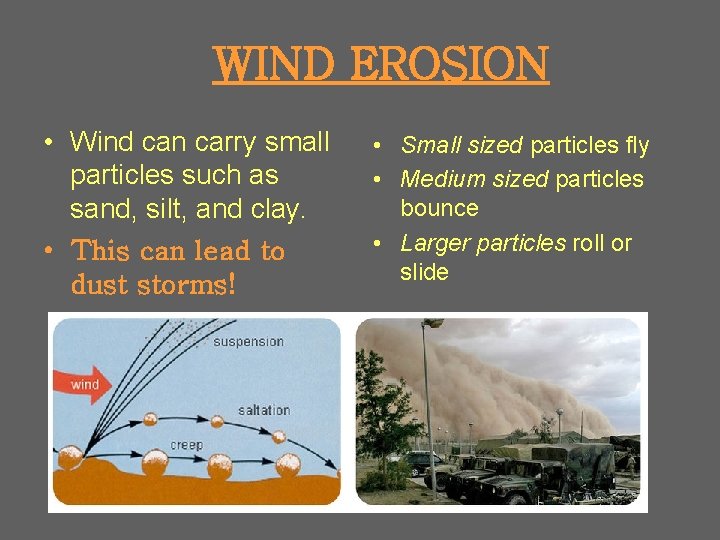
WIND EROSION • Wind can carry small particles such as sand, silt, and clay. • This can lead to dust storms! • Small sized particles fly • Medium sized particles bounce • Larger particles roll or slide
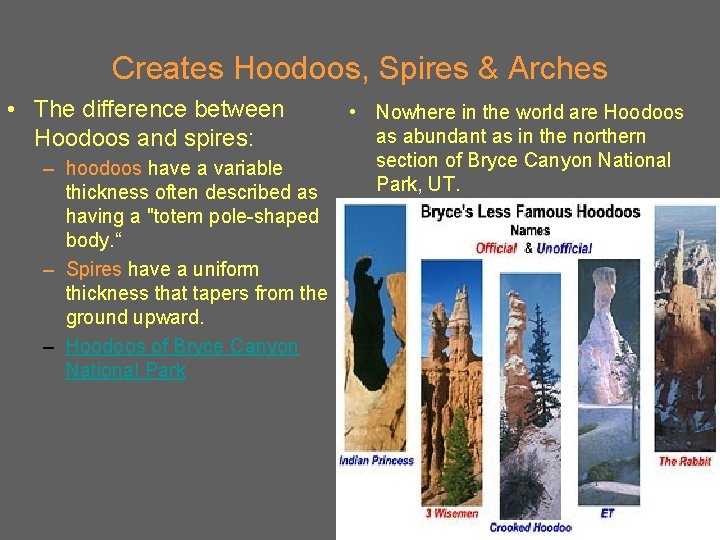
Creates Hoodoos, Spires & Arches • The difference between Hoodoos and spires: – hoodoos have a variable thickness often described as having a "totem pole-shaped body. “ – Spires have a uniform thickness that tapers from the ground upward. – Hoodoos of Bryce Canyon National Park • Nowhere in the world are Hoodoos as abundant as in the northern section of Bryce Canyon National Park, UT.
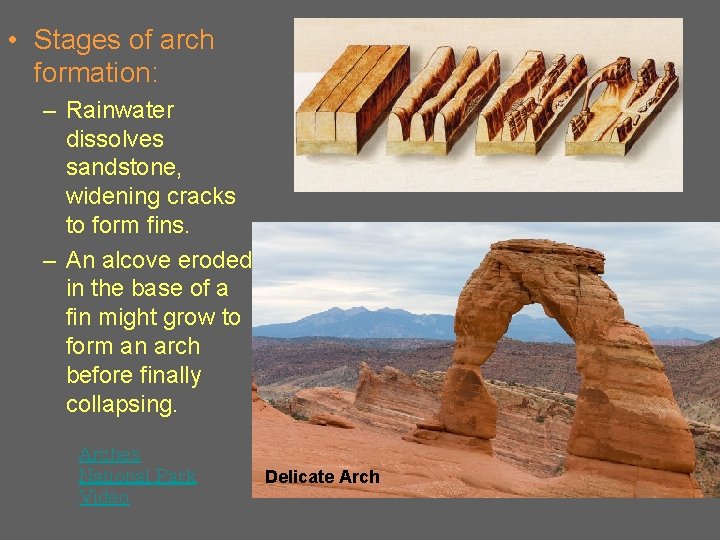
• Stages of arch formation: – Rainwater dissolves sandstone, widening cracks to form fins. – An alcove eroded in the base of a fin might grow to form an arch before finally collapsing. Arches National Park Video Delicate Arch
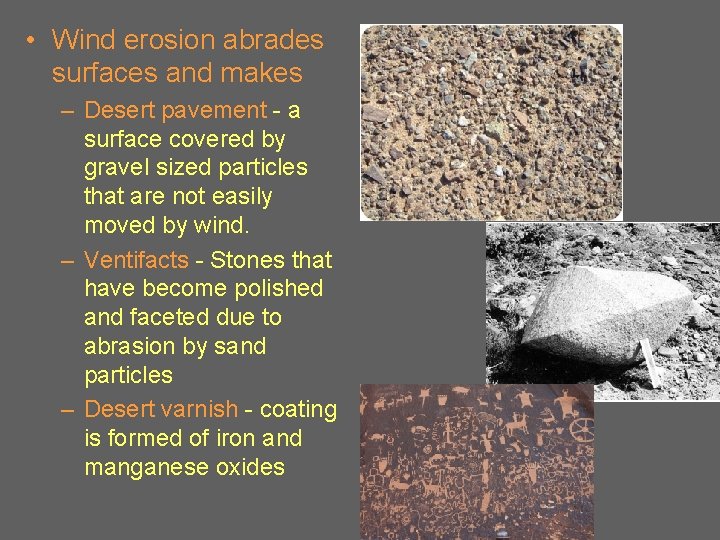
• Wind erosion abrades surfaces and makes – Desert pavement - a surface covered by gravel sized particles that are not easily moved by wind. – Ventifacts - Stones that have become polished and faceted due to abrasion by sand particles – Desert varnish - coating is formed of iron and manganese oxides
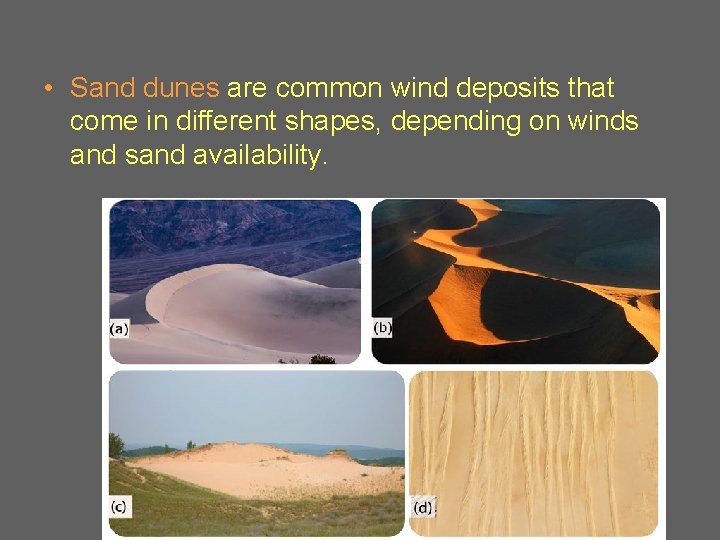
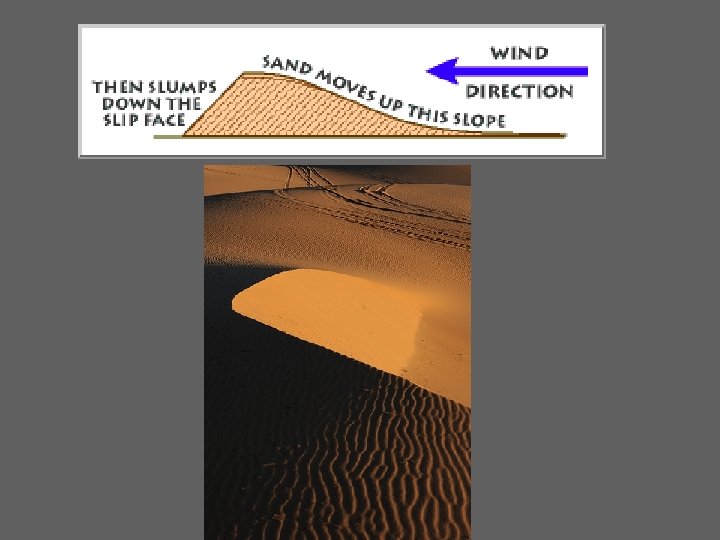
• Sand dunes are common wind deposits that come in different shapes, depending on winds and sand availability.
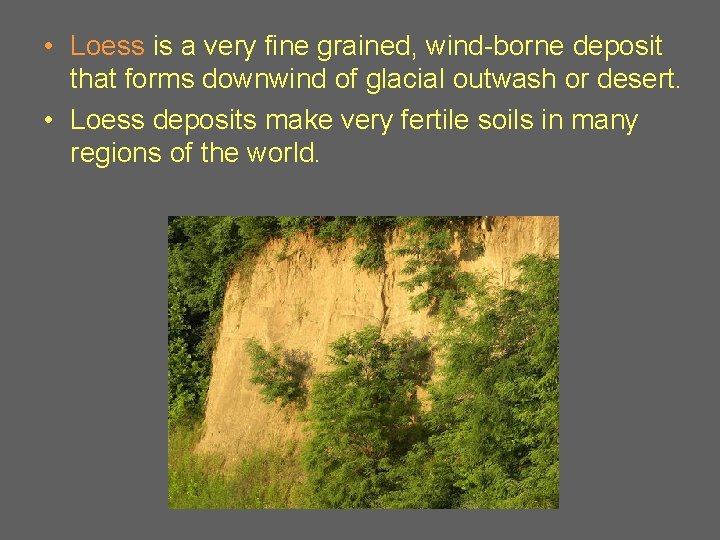
• Loess is a very fine grained, wind-borne deposit that forms downwind of glacial outwash or desert. • Loess deposits make very fertile soils in many regions of the world.
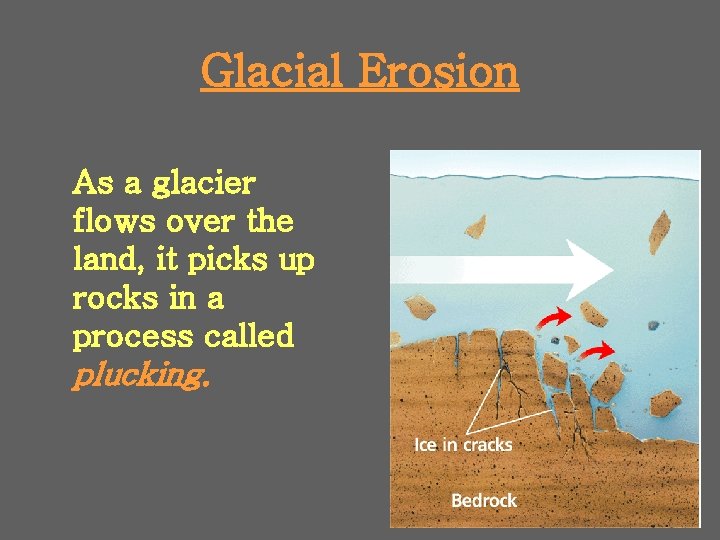
Glacial Erosion As a glacier flows over the land, it picks up rocks in a process called plucking.
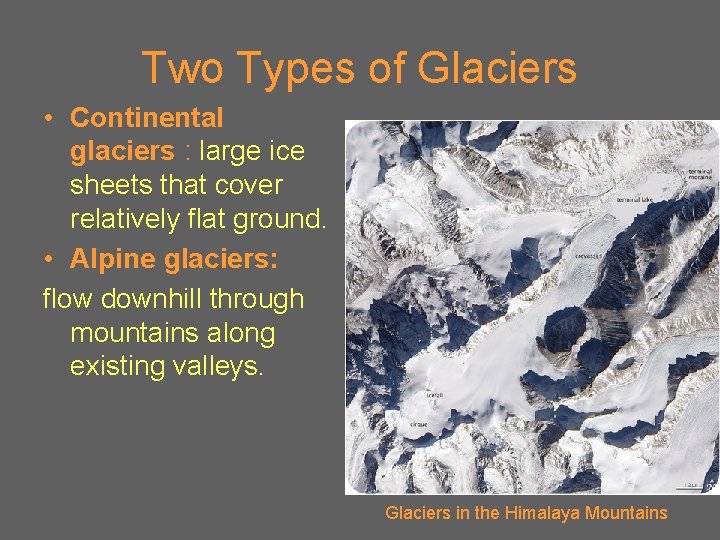
Two Types of Glaciers • Continental glaciers : large ice sheets that cover relatively flat ground. • Alpine glaciers: flow downhill through mountains along existing valleys. Glaciers in the Himalaya Mountains
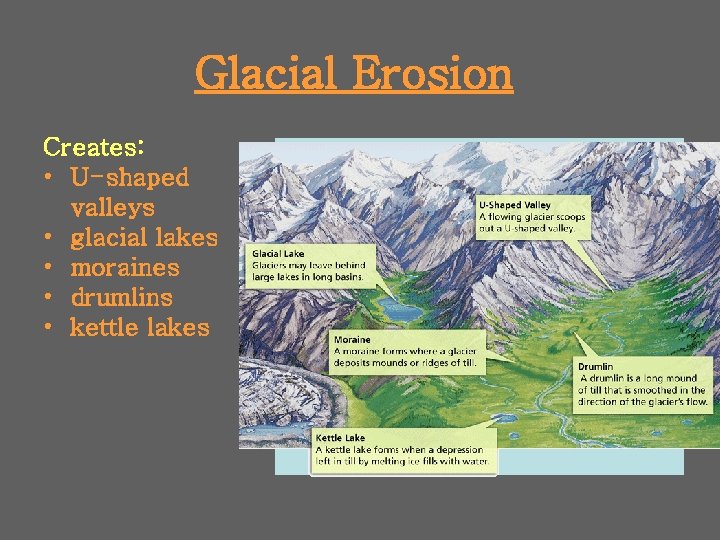
Glacial Erosion Creates: • U-shaped valleys • glacial lakes • moraines • drumlins • kettle lakes
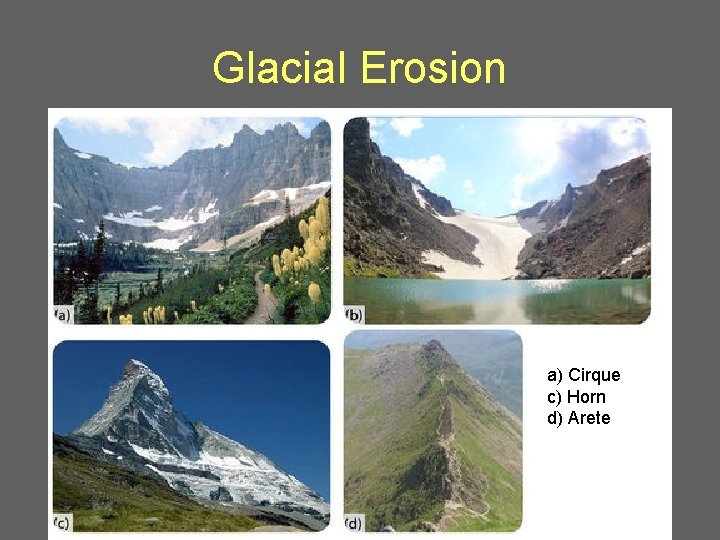
Glacial Erosion a) Cirque c) Horn d) Arete
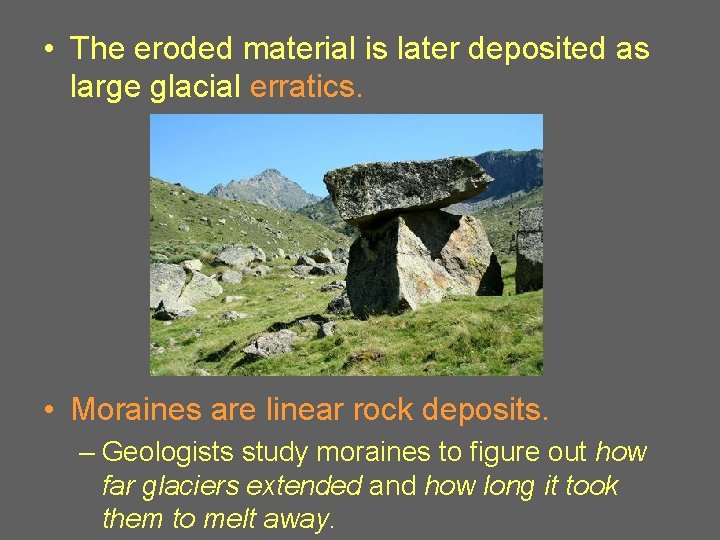
• The eroded material is later deposited as large glacial erratics. • Moraines are linear rock deposits. – Geologists study moraines to figure out how far glaciers extended and how long it took them to melt away.
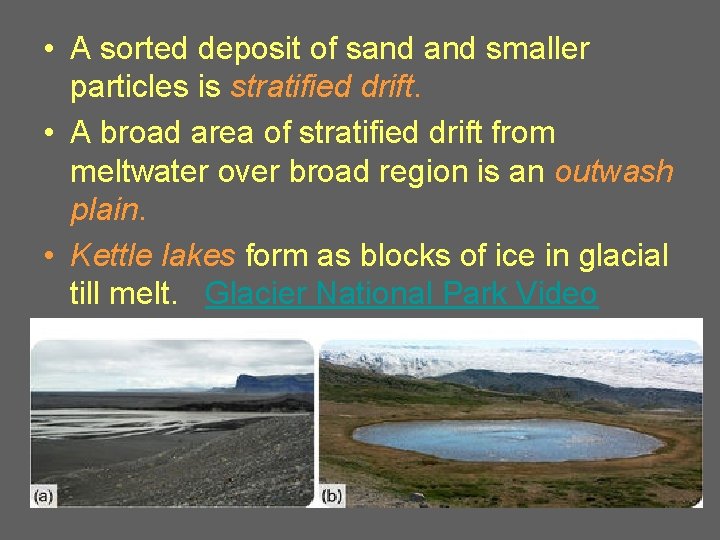
• A sorted deposit of sand smaller particles is stratified drift. • A broad area of stratified drift from meltwater over broad region is an outwash plain. • Kettle lakes form as blocks of ice in glacial till melt. Glacier National Park Video
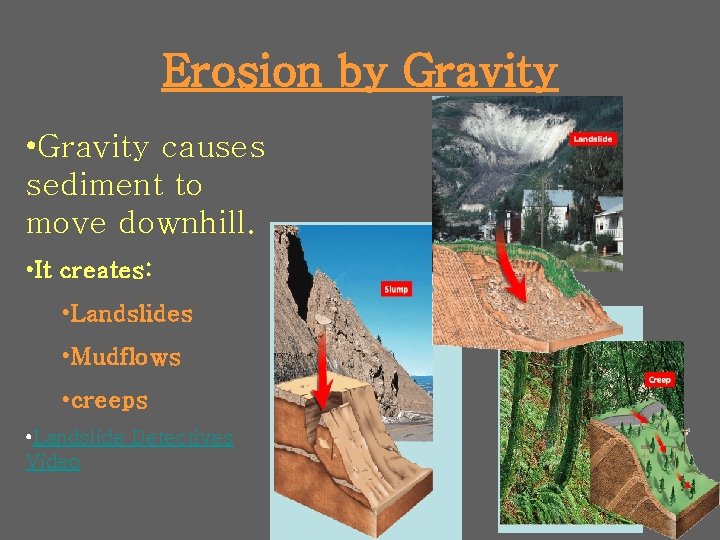
Erosion by Gravity • Gravity causes sediment to move downhill. • It creates: • Landslides • Mudflows • creeps • Landslide Detectives Video
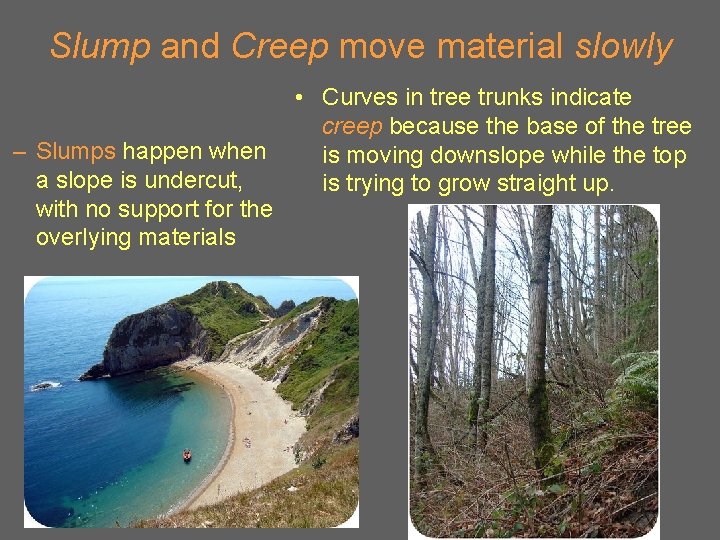
Slump and Creep move material slowly – Slumps happen when a slope is undercut, with no support for the overlying materials • Curves in tree trunks indicate creep because the base of the tree is moving downslope while the top is trying to grow straight up.
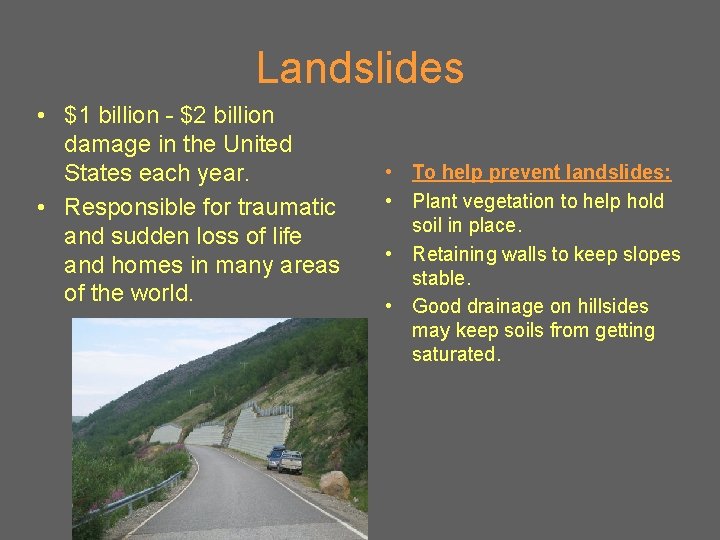
Landslides • $1 billion - $2 billion damage in the United States each year. • Responsible for traumatic and sudden loss of life and homes in many areas of the world. • To help prevent landslides: • Plant vegetation to help hold soil in place. • Retaining walls to keep slopes stable. • Good drainage on hillsides may keep soils from getting saturated.
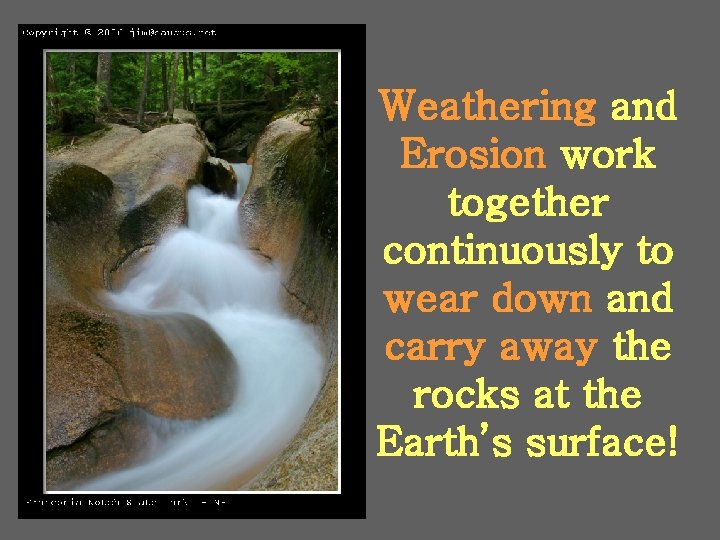
Weathering and Erosion work together continuously to wear down and carry away the rocks at the Earth’s surface!
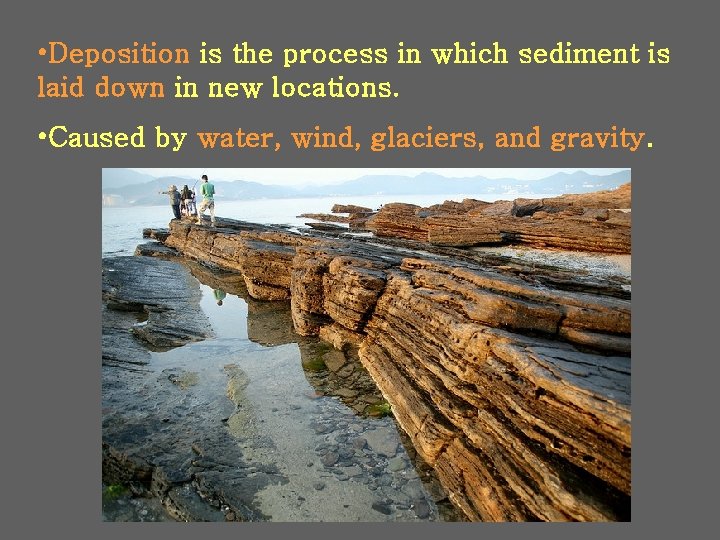
• Deposition is the process in which sediment is laid down in new locations. • Caused by water, wind, glaciers, and gravity.

- Slides: 49