
Erosion and the Formation of Landforms As a
- Slides: 9
Erosion and the Formation of Landforms
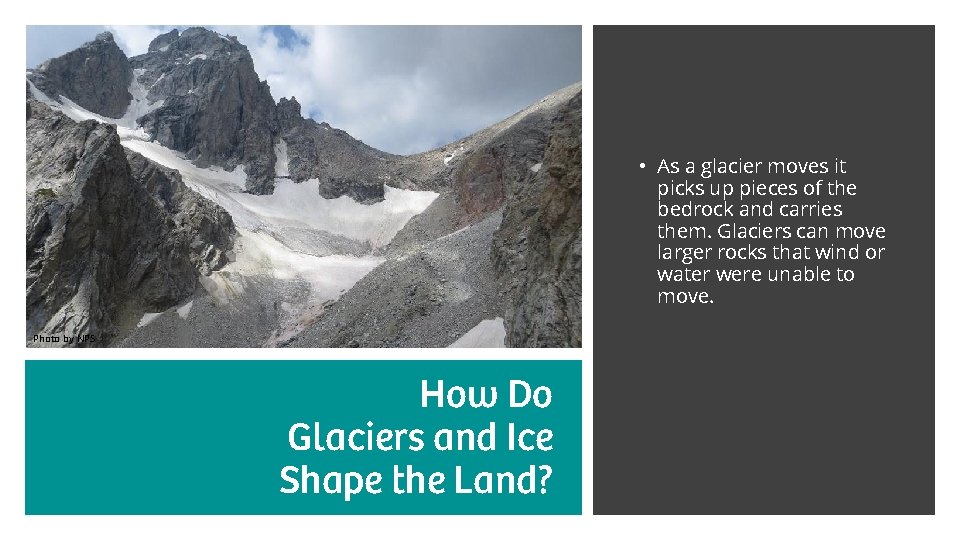
• As a glacier moves it picks up pieces of the bedrock and carries them. Glaciers can move larger rocks that wind or water were unable to move. Photo by NPS How Do Glaciers and Ice Shape the Land?
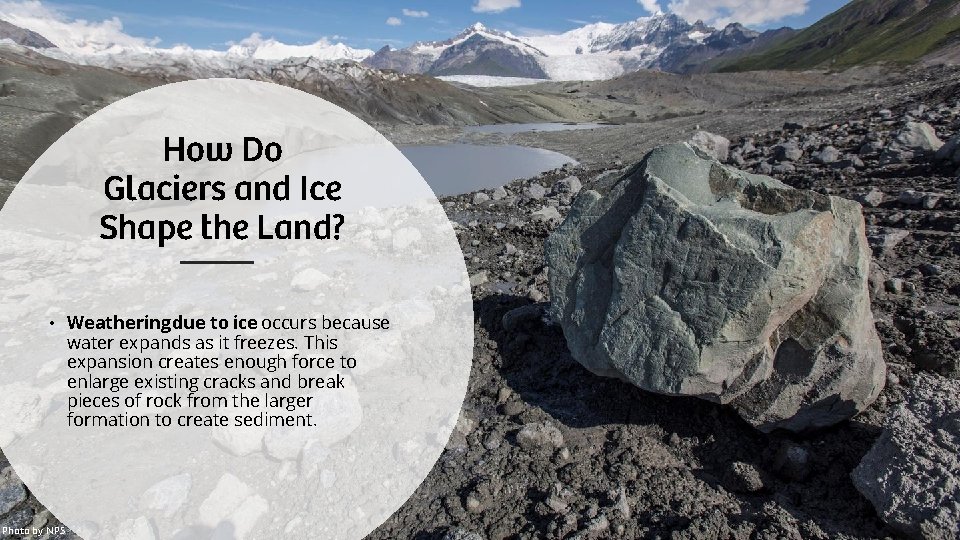
How Do Glaciers and Ice Shape the Land? • Weathering due to ice occurs because water expands as it freezes. This expansion creates enough force to enlarge existing cracks and break pieces of rock from the larger formation to create sediment. Photo by NPS
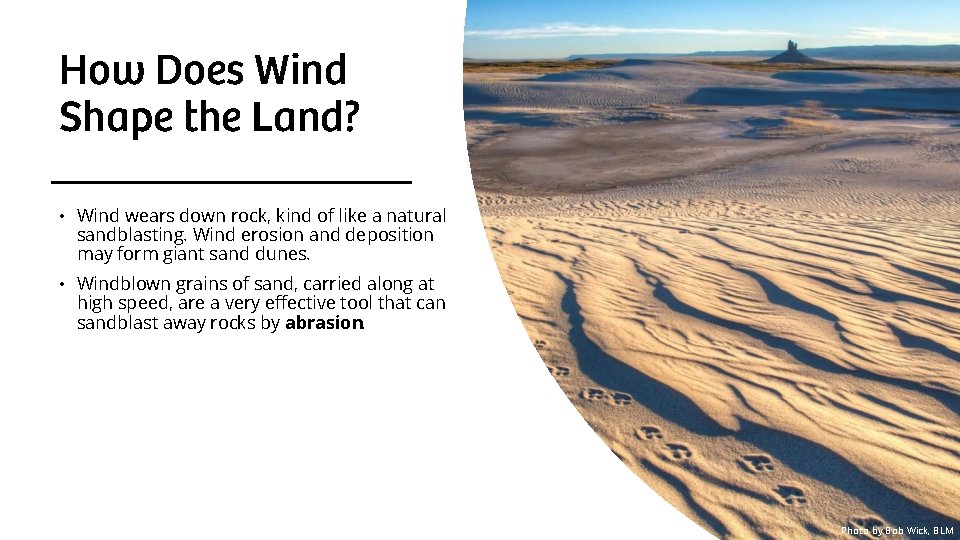
How Does Wind Shape the Land? • Wind wears down rock, kind of like a natural sandblasting. Wind erosion and deposition may form giant sand dunes. • Windblown grains of sand, carried along at high speed, are a very effective tool that can sandblast away rocks by abrasion. Photo by Bob Wick, BLM
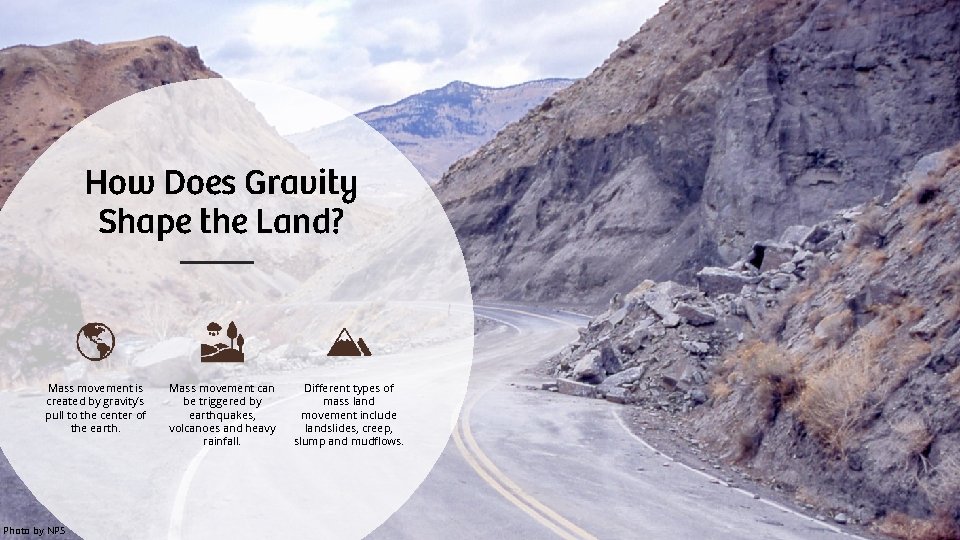
How Does Gravity Shape the Land? Mass movement is created by gravity’s pull to the center of the earth. Photo by NPS Mass movement can be triggered by earthquakes, volcanoes and heavy rainfall. Different types of mass land movement include landslides, creep, slump and mudflows.
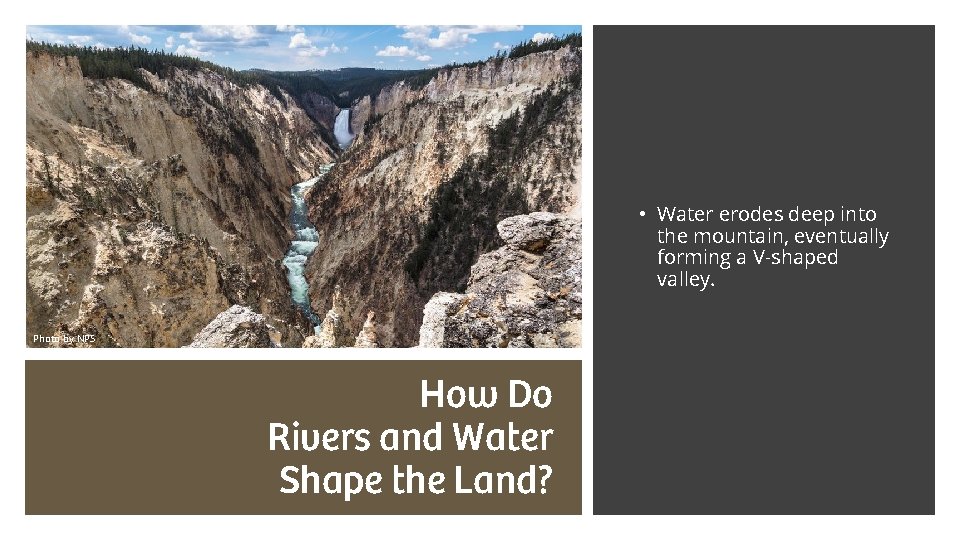
• Water erodes deep into the mountain, eventually forming a V-shaped valley. Photo by NPS How Do Rivers and Water Shape the Land?
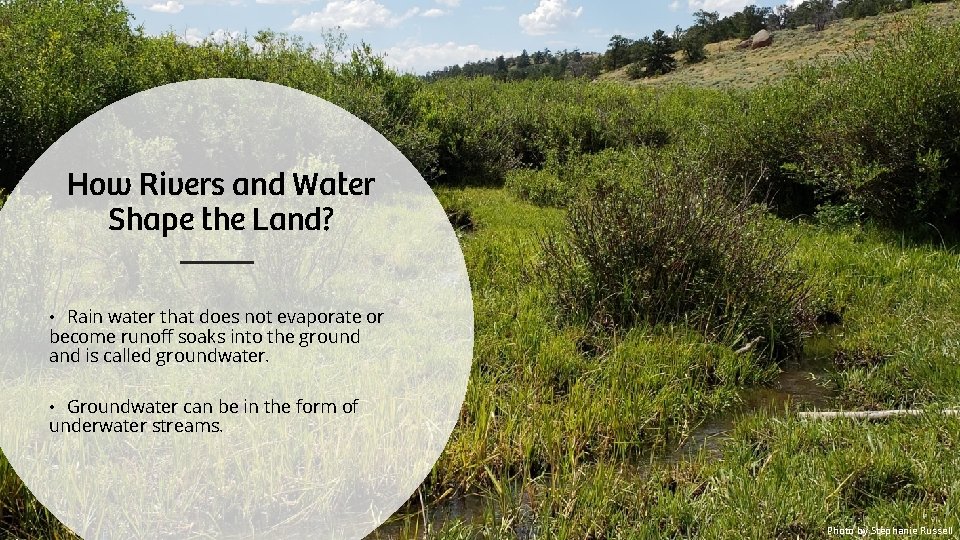
How Rivers and Water Shape the Land? • Rain water that does not evaporate or become runoff soaks into the ground and is called groundwater. • Groundwater can be in the form of underwater streams. Photo by Stephanie Russell
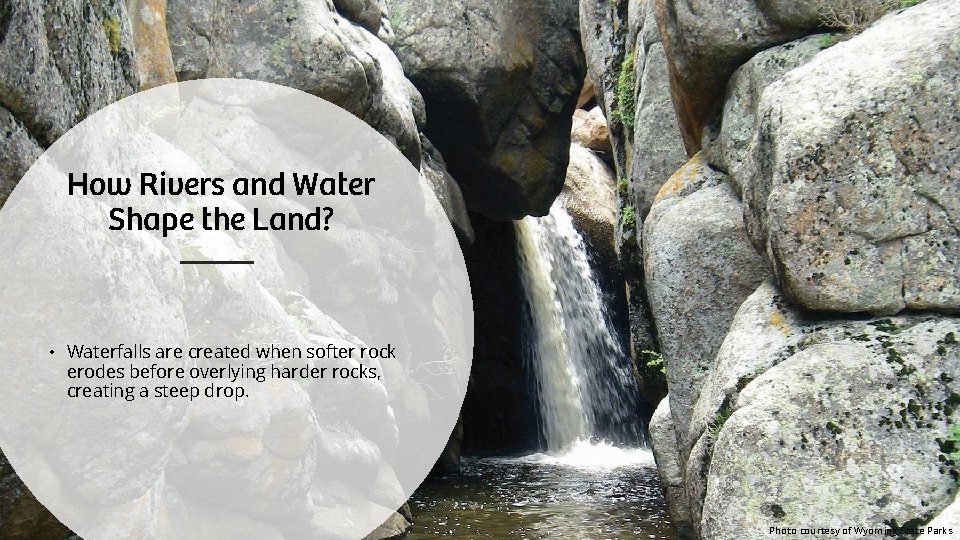
How Rivers and Water Shape the Land? • Waterfalls are created when softer rock erodes before overlying harder rocks, creating a steep drop. Photo courtesy of Wyoming State Parks
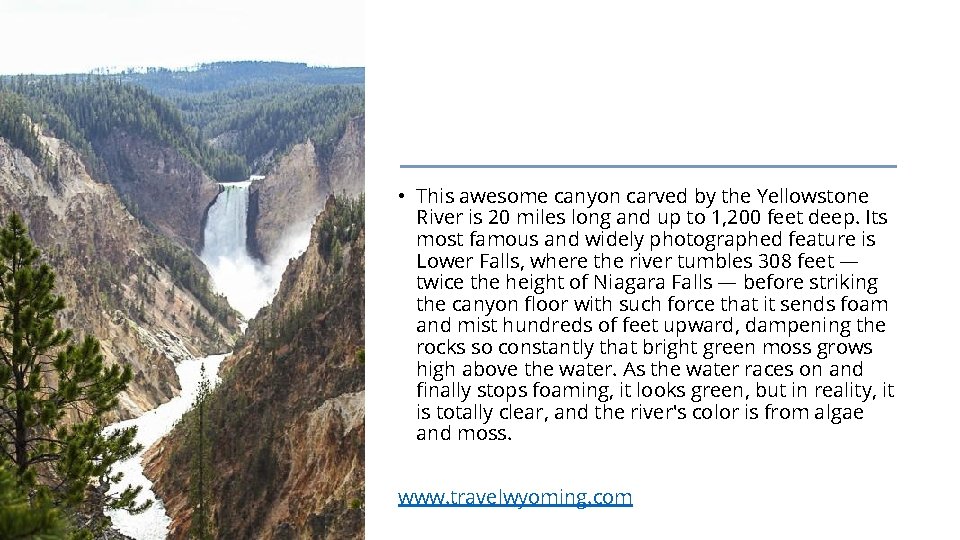
• This awesome canyon carved by the Yellowstone River is 20 miles long and up to 1, 200 feet deep. Its most famous and widely photographed feature is Lower Falls, where the river tumbles 308 feet — twice the height of Niagara Falls — before striking the canyon floor with such force that it sends foam and mist hundreds of feet upward, dampening the rocks so constantly that bright green moss grows high above the water. As the water races on and finally stops foaming, it looks green, but in reality, it is totally clear, and the river's color is from algae and moss. www. travelwyoming. com