
ERIR VERBS There are 2 easy steps to
-ER/-IR VERBS
There are 2 easy steps to conjugate a -er verb: 1. Drop the –er ending (stem is the left) 2. Add the appropriate ending to match the subject.
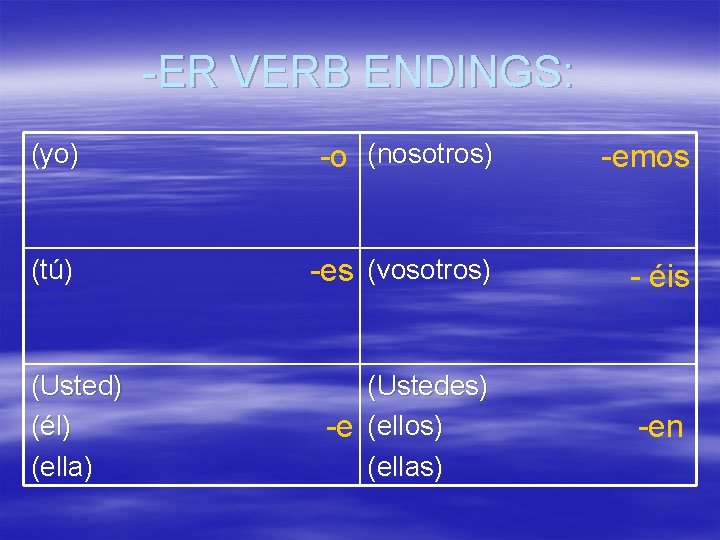
-ER VERB ENDINGS: (yo) -o (nosotros) -emos (tú) -es (vosotros) - éis (Ustedes) -e (ellos) (ellas) -en (Usted) (él) (ella)
Match the ending with what or who is doing the action of the verb. If the subject is tú, what is the verb ending? -es

There are 2 easy steps to conjugate a -ir verb: 1. Drop the –ir ending (stem is the left) Add the appropriate ending to match the 2. subject.
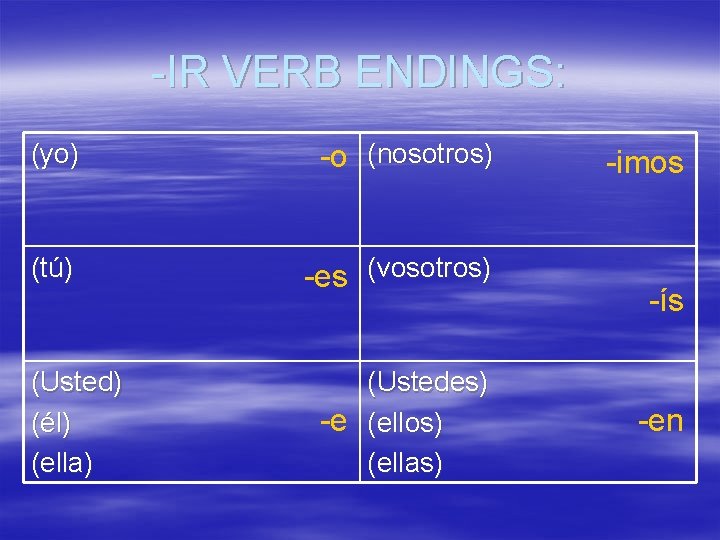
-IR VERB ENDINGS: (yo) -o (nosotros) (tú) -es (vosotros) (Usted) (él) (ella) (Ustedes) -e (ellos) (ellas) -imos -ís -en
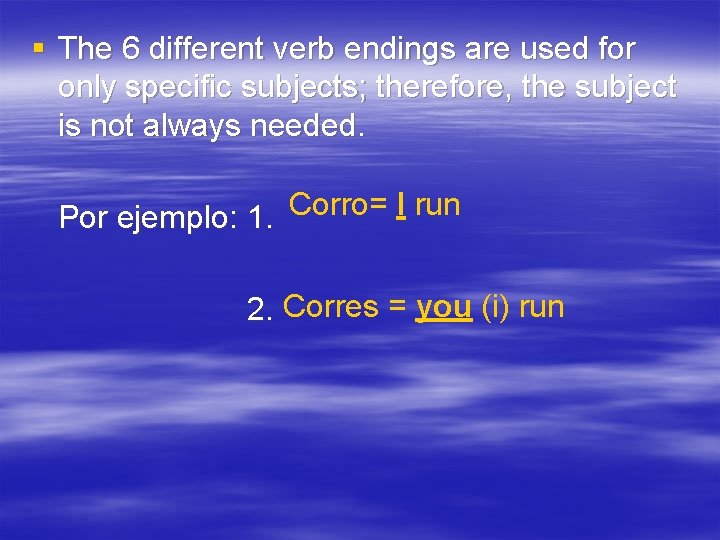
§ The 6 different verb endings are used for only specific subjects; therefore, the subject is not always needed. Por ejemplo: 1. Corro= I run 2. Corres = you (i) run
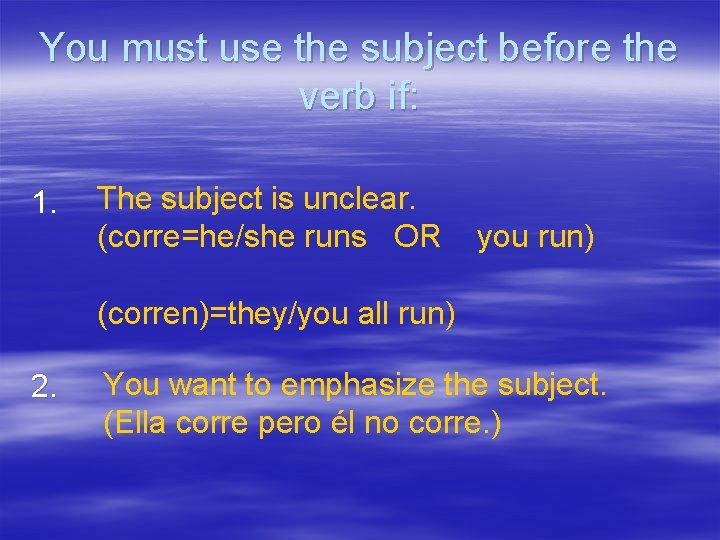
You must use the subject before the verb if: 1. The subject is unclear. (corre=he/she runs OR you run) (corren)=they/you all run) 2. You want to emphasize the subject. (Ella corre pero él no corre. )
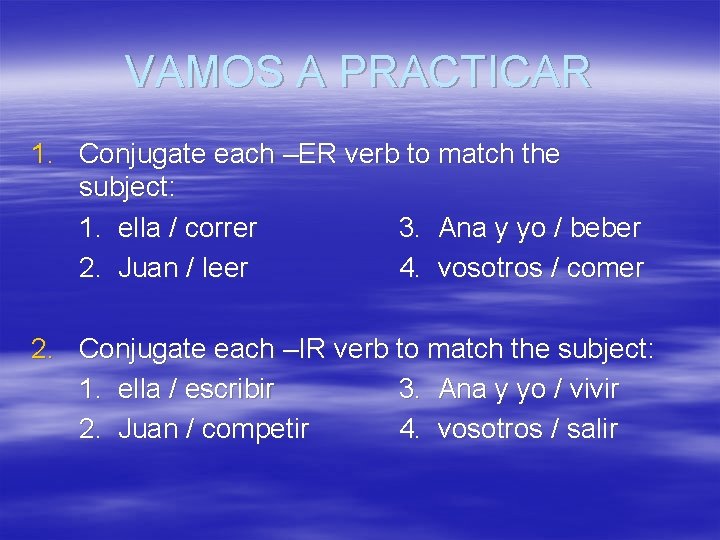
VAMOS A PRACTICAR 1. Conjugate each –ER verb to match the subject: 1. ella / correr 3. Ana y yo / beber 2. Juan / leer 4. vosotros / comer 2. Conjugate each –IR verb to match the subject: 1. ella / escribir 3. Ana y yo / vivir 2. Juan / competir 4. vosotros / salir
- Slides: 9