
ERIKSONS Stages of Development Ch 8 9 10
- Slides: 11
ERIKSON’S Stages of Development Ch. 8, 9 & 10
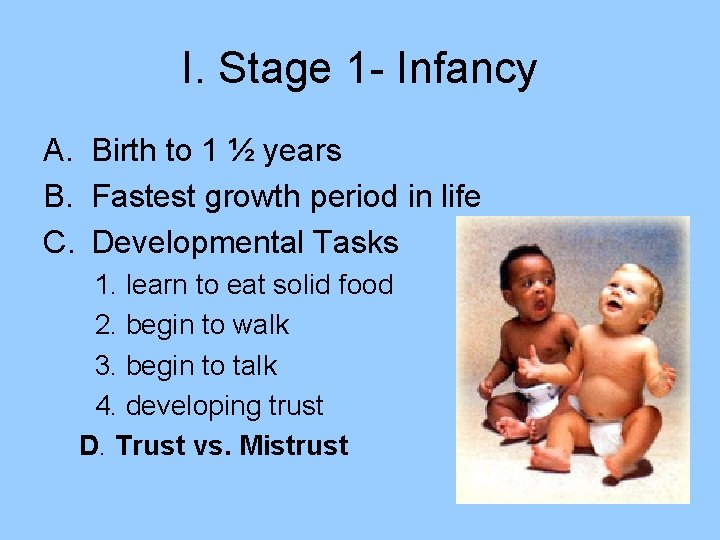
I. Stage 1 - Infancy A. Birth to 1 ½ years B. Fastest growth period in life C. Developmental Tasks 1. learn to eat solid food 2. begin to walk 3. begin to talk 4. developing trust D. Trust vs. Mistrust
II. Stage 2 - Early Childhood A. Ages 2 -3 B. Developmental tasks 1. walk and talk more 2. potty trained 3. social independence develops 4. Sense of autonomyneed to control impulses, body, environment. C. Autonomy vs. Shame/Doubt
III. Stage 3 - Childhood A. 4 -5 years B. Developmental tasks 1. initiate play with other kids 2. make-believe 3. ask questions 4. Learn initiative- the ability to start something on their own. C. Initiative vs. Guilt
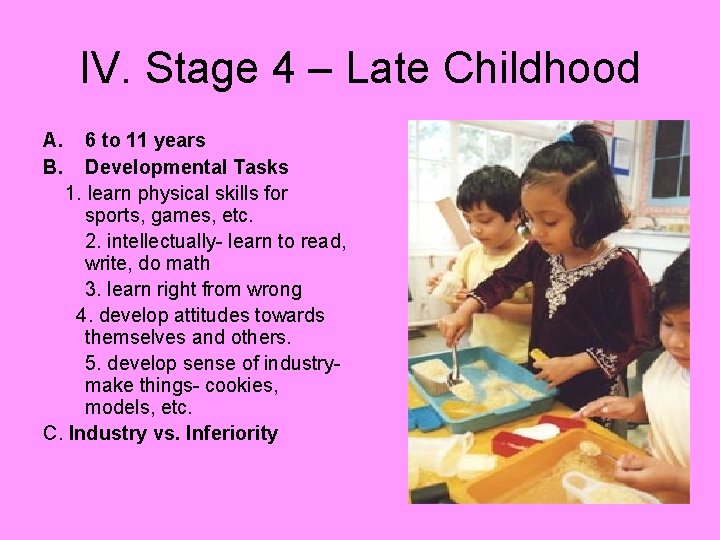
IV. Stage 4 – Late Childhood A. B. 6 to 11 years Developmental Tasks 1. learn physical skills for sports, games, etc. 2. intellectually- learn to read, write, do math 3. learn right from wrong 4. develop attitudes towards themselves and others. 5. develop sense of industrymake things- cookies, models, etc. C. Industry vs. Inferiority
V. Stage 5 – Puberty/Adolescence A. B. C. D. E. F. Ages 9 – 13 & 14 -17 Beginning of adolescence Become capable of reproducing Secondary sex characteristics begin to develop Second fastest period of growth Hormones develop- estrogen & progesteronegirls & testosterone-boys
G. Developmental Tasks 1. Form mature relationships 2. achieve a masculine or feminine social role 3. accept one’s physique and use one’s body effectively 4. Achieve emotional independence from parents and other adults 5. prepare for marriage and family life 6. prepare for career 7. acquire personal standards 8. develop social intelligence-aware of human needs-helping others 9. develop conceptual and problem-solving skills
VI. Stage 6 - Young Adulthood A. Generally age 20 to early 30’s- can start as young as 17. B. Financially independent from parents C. Can deal with everyday life trials with maturity D. At peak of physical abilities- strength, quickness, alertness E. Crucial life decisions made- marriage, career, children F. Intimacy vs. Isolation
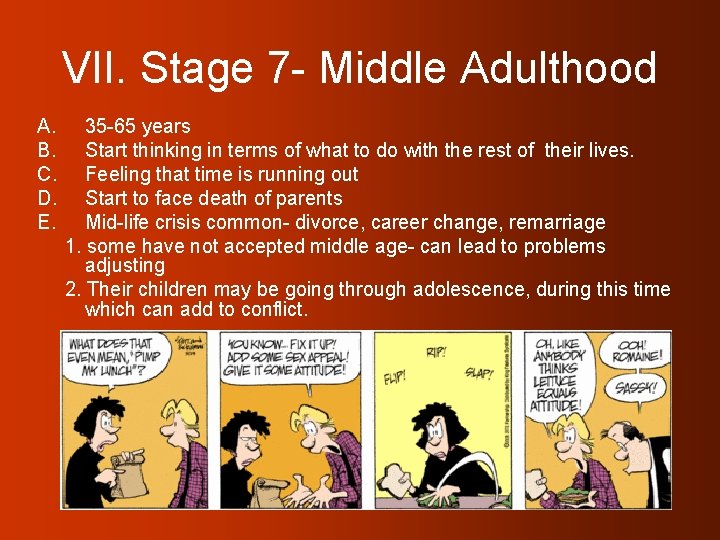
VII. Stage 7 - Middle Adulthood A. B. C. D. E. 35 -65 years Start thinking in terms of what to do with the rest of their lives. Feeling that time is running out Start to face death of parents Mid-life crisis common- divorce, career change, remarriage 1. some have not accepted middle age- can lead to problems adjusting 2. Their children may be going through adolescence, during this time which can add to conflict.
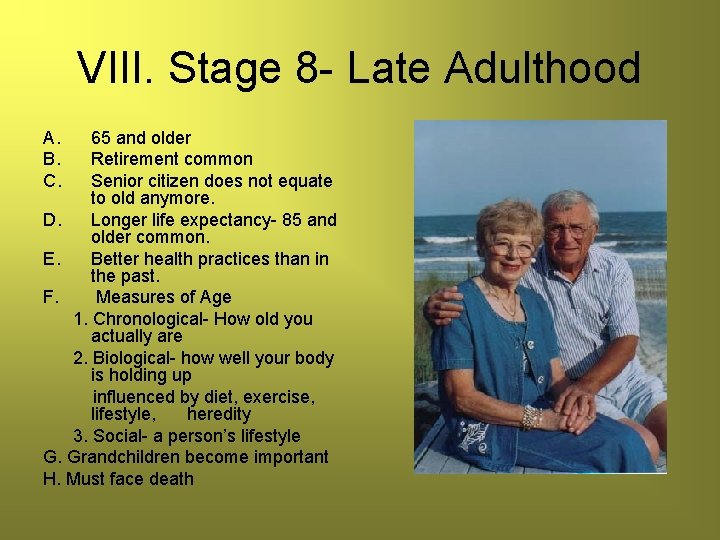
VIII. Stage 8 - Late Adulthood A. B. C. 65 and older Retirement common Senior citizen does not equate to old anymore. D. Longer life expectancy- 85 and older common. E. Better health practices than in the past. F. Measures of Age 1. Chronological- How old you actually are 2. Biological- how well your body is holding up influenced by diet, exercise, lifestyle, heredity 3. Social- a person’s lifestyle G. Grandchildren become important H. Must face death
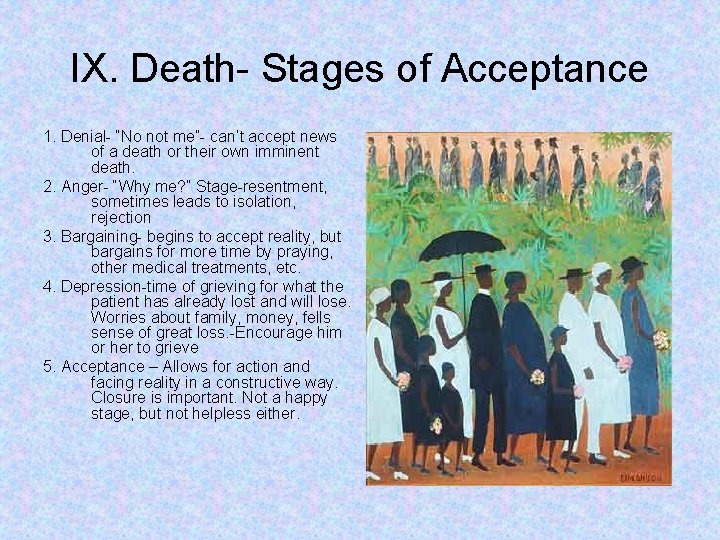
IX. Death- Stages of Acceptance 1. Denial- “No not me”- can’t accept news of a death or their own imminent death. 2. Anger- “Why me? ” Stage-resentment, sometimes leads to isolation, rejection 3. Bargaining- begins to accept reality, but bargains for more time by praying, other medical treatments, etc. 4. Depression-time of grieving for what the patient has already lost and will lose. Worries about family, money, fells sense of great loss. -Encourage him or her to grieve 5. Acceptance – Allows for action and facing reality in a constructive way. Closure is important. Not a happy stage, but not helpless either.