
ERIKSON Eight Ages of Man Source Biehler R
ERIKSON Eight Ages of Man Source: Biehler, R. F. (1978). Psychology applied to teaching. Boston: Houghton Mifflin. pages 99 -101.
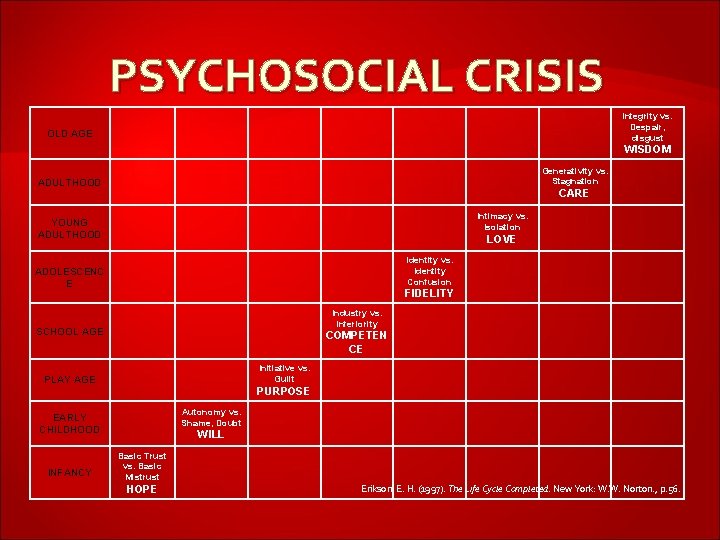
PSYCHOSOCIAL CRISIS Integrity vs. Despair, disgust OLD AGE WISDOM Generativity vs. Stagnation ADULTHOOD CARE Intimacy vs. Isolation YOUNG ADULTHOOD LOVE Identity vs. Identity Confusion ADOLESCENC E FIDELITY Industry vs. Inferiority SCHOOL AGE COMPETEN CE Initiative vs. Guilt PLAY AGE PURPOSE Autonomy vs. Shame, Doubt EARLY CHILDHOOD INFANCY WILL Basic Trust vs. Basic Mistrust HOPE Erikson, E. H. (1997). The Life Cycle Completed. New York: W. W. Norton. , p. 56.
Trust vs. Mistrust � Birth to 1 year � Infants learn to trust their world through the provision of consistent care. � Infants approach the world with distrust or fear if care is inadequate or inconsistent.
Autonomy vs. Shame and Doubt � 2 to 3 years � Children encouraged to do what they can at their own pace develop autonomy. � Children hamper their ability if asked to do too many things or do them too quickly. If shamed for inability, children develop self-doubt.
Initiative vs. Guilt � 4 to 5 years � Young children, given time to explore, will experiment and strengthen their sense of autonomy and initiative. � Young children who are restricted or receive negative feedback develop guilt about doing things on their own.
Industry vs. Inferiority � 6 to 11 years � Children develop industry when allowed to make things, experiment, and complete tasks. � Children feel inferior when they are unsuccessful, criticized for failure, or made to feel incapable.
Identify vs. Role Confusion � 12 to 18 years � Adolescents both break from and experience continuity with the past to develop a positive sense of self-identity. � Teenagers who struggle with stability express role confusion, particularly related to sexual orientation and occupational direction.
Intimacy vs. Isolation � Young adulthood � Young adults who possess self-identity choose to fuse identity with others. � Competitiveness and combative relationships with the very people young adults want to emotionally connect to leads to isolation.
Generativity vs. Stagnation � Middle adulthood � By establishing and developing the next generation, adults sense their own contribution and accomplishment. � Failure to be productive and contribute leads to self-absorption or personal stagnation.
Integrity vs. Despair � Old age � Integrity is the sense of a life well-lived and worthwhile. � Despair is the feeling that life was incomplete, but it is too late to attempt an alternative.
Three Crucial Stages � Erikson identified core strengths that arise from successful closure of each crisis (see chart). � He said three were most critical �HOPE from trust vs. mistrust in infancy �FIDELITY from identity vs. identity confusion in adolescence �CARE from generativity vs. self-absorption in adulthood. Erikson, E. H. (1997). The Life Cycle Completed. New York: W. W. Norton. , p. 55.
- Slides: 11