
Ergonomics Basics Reducing the Risks for Soft Tissue
Ergonomics Basics Reducing the Risks for Soft Tissue Injuries Part 1 - B
Ergonomic Training Learning Objectives 1. 2. 3. 4. Identify the ergonomic hazards Review the basic ergonomic controls for hazards to prevent injuries Describe the proper body mechanics for lifting tasks to prevent injuries Describe the risks of using prescription opioids and self-treatment for pain management 5. Identify the benefits of doing stretching exercises 6. Demonstrate how to perform at least one stretching exercise * Ergonomic Training Exercise – test your knowledge

Ergonomic Training Exercises – Answers

Ergonomic Training Exercises – Answers

Treatment and Progression – Don’t IGNORE Early Symptoms! • Painful to move: kneel, stoop, walk • Treatment o Early: ü Rest, Ice, Compression, Elevation (RICE) ü Physician prescribed medications (anti-inflammatories), therapy, splint o Late: surgery of back, knee, shoulder, hand
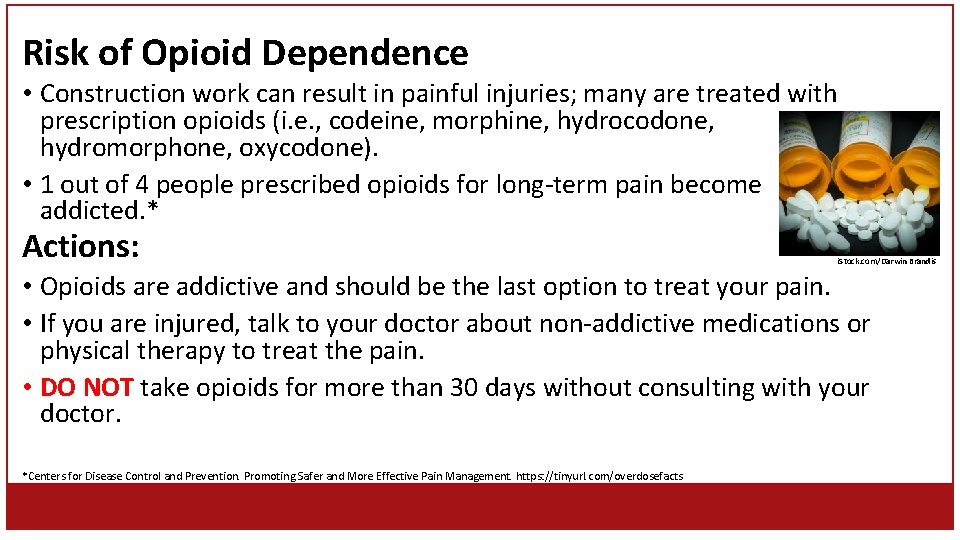
Risk of Opioid Dependence • Construction work can result in painful injuries; many are treated with prescription opioids (i. e. , codeine, morphine, hydrocodone, hydromorphone, oxycodone). • 1 out of 4 people prescribed opioids for long-term pain become addicted. * Actions: i. Stock. com/Darwin Brandis • Opioids are addictive and should be the last option to treat your pain. • If you are injured, talk to your doctor about non-addictive medications or physical therapy to treat the pain. • DO NOT take opioids for more than 30 days without consulting with your doctor. *Centers for Disease Control and Prevention. Promoting Safer and More Effective Pain Management. https: //tinyurl. com/overdosefacts
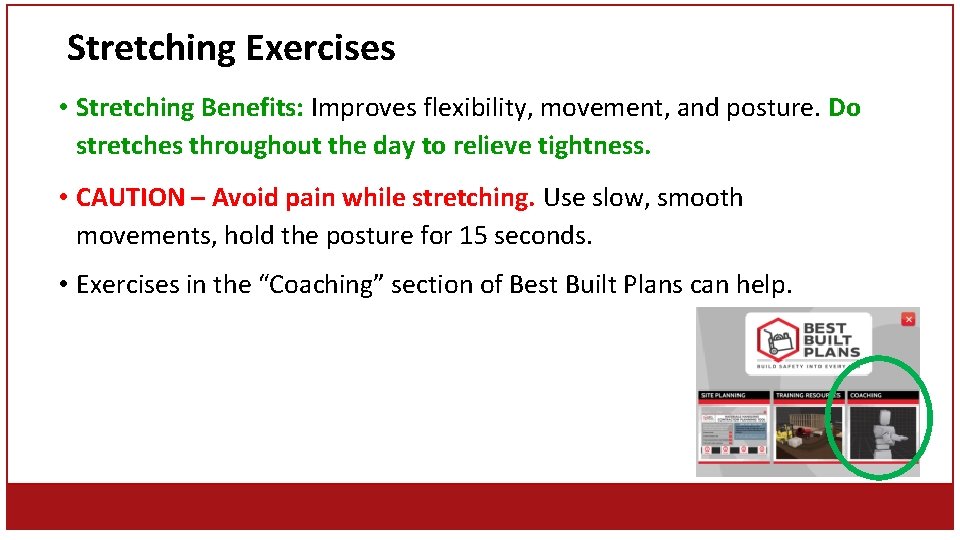
Stretching Exercises • Stretching Benefits: Improves flexibility, movement, and posture. Do stretches throughout the day to relieve tightness. • CAUTION – Avoid pain while stretching. Use slow, smooth movements, hold the posture for 15 seconds. • Exercises in the “Coaching” section of Best Built Plans can help.
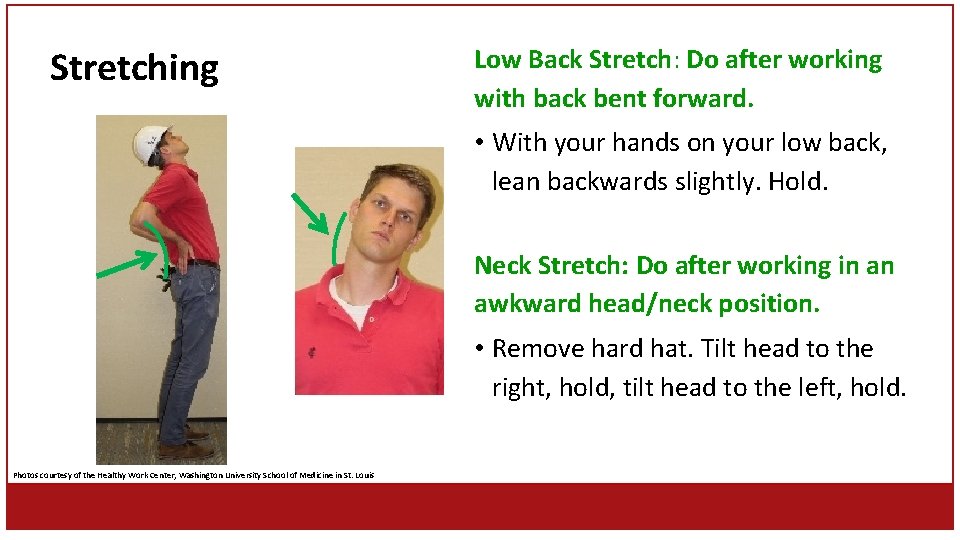
Stretching Low Back Stretch: Do after working with back bent forward. • With your hands on your low back, lean backwards slightly. Hold. Neck Stretch: Do after working in an awkward head/neck position. • Remove hard hat. Tilt head to the right, hold, tilt head to the left, hold. Photos courtesy of the Healthy Work Center, Washington University School of Medicine in St. Louis
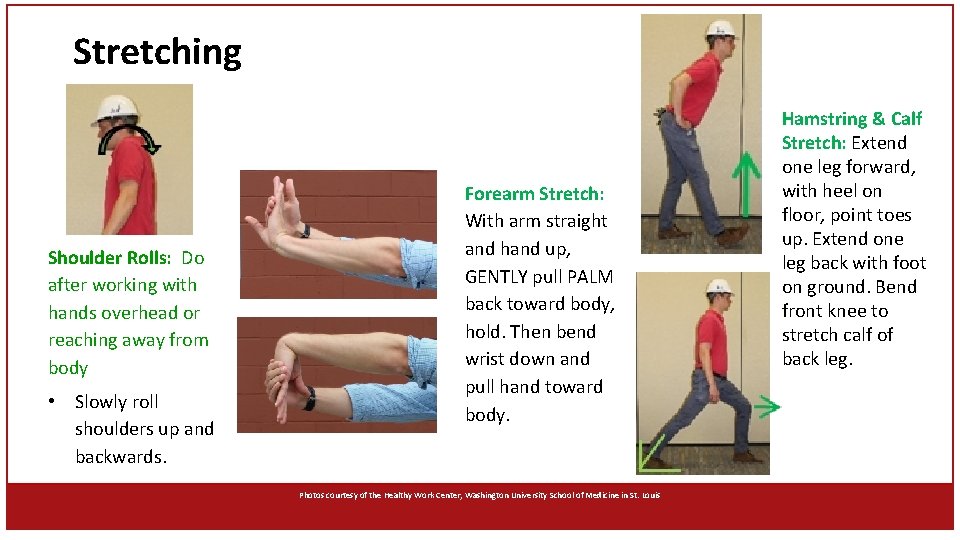
Stretching Shoulder Rolls: Do after working with hands overhead or reaching away from body • Slowly roll shoulders up and backwards. Forearm Stretch: With arm straight and hand up, GENTLY pull PALM back toward body, hold. Then bend wrist down and pull hand toward body. Photos courtesy of the Healthy Work Center, Washington University School of Medicine in St. Louis Hamstring & Calf Stretch: Extend one leg forward, with heel on floor, point toes up. Extend one leg back with foot on ground. Bend front knee to stretch calf of back leg.
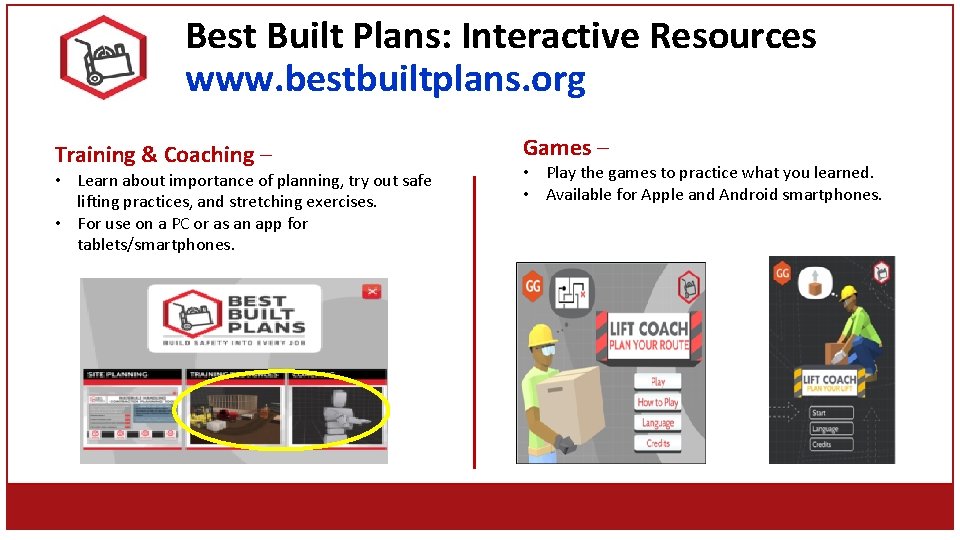
Best Built Plans: Interactive Resources www. bestbuiltplans. org Training & Coaching – • Learn about importance of planning, try out safe lifting practices, and stretching exercises. • For use on a PC or as an app for tablets/smartphones. Games – • Play the games to practice what you learned. • Available for Apple and Android smartphones.
Questions? © 2019, CPWR-The Center for Construction Research and Training. All rights reserved. CPWR is the research and training arm of NABTU. Production of this document was supported by cooperative agreement OH 009762 from the National Institute for Occupational Safety and Health (NIOSH). The contents are solely the responsibility of the authors and do not necessarily represent the official views of NIOSH.
- Slides: 11