
Ergo Analyst Participative Ergonomics Control Development Workshop Enter

- Slides: 9
Ergo. Analyst Participative Ergonomics Control Development Workshop [Enter your company &/or Task to be controlled here] [Enter your name and credentials here] [Enter your position in the company here] [Enter your email address here] [Enter your contact phone number here] www. Ergo. Analyst. com
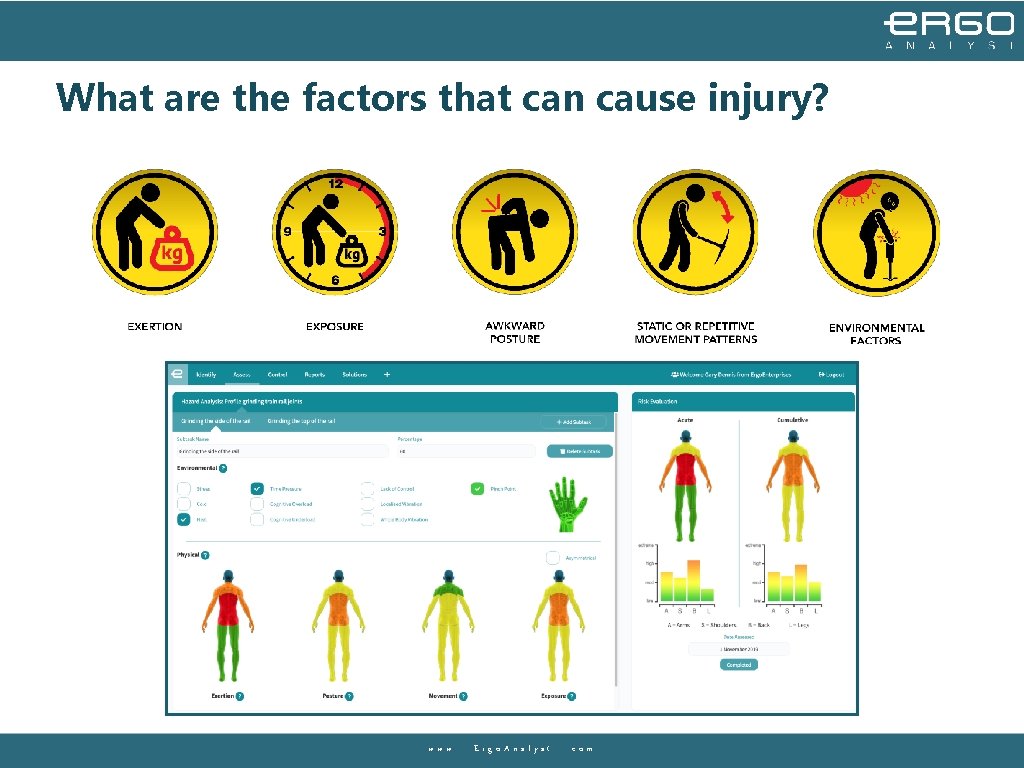
What are the factors that can cause injury? www. Ergo. Analyst. com
Put the task name here ! Task Factors • List the factors associated with the task, including : • Why the task is performed • How often the task is performed Insert a video of the task here • How long it takes to perform the task • Who performs the task • Descriptions (weights, etc) of the tools used • Etc Environmental Factors • List the environmental factors that affect the performance of the task, e. g. heat, wind, maintenance issues, storage and access location issues, etc. Physical Factors • Describe how the specific task factors result in high exertion, exposure, awkward postures and/or static or repetitive movement patterns on particular body regions that increase the risk of injury. www. Ergo. Analyst. com
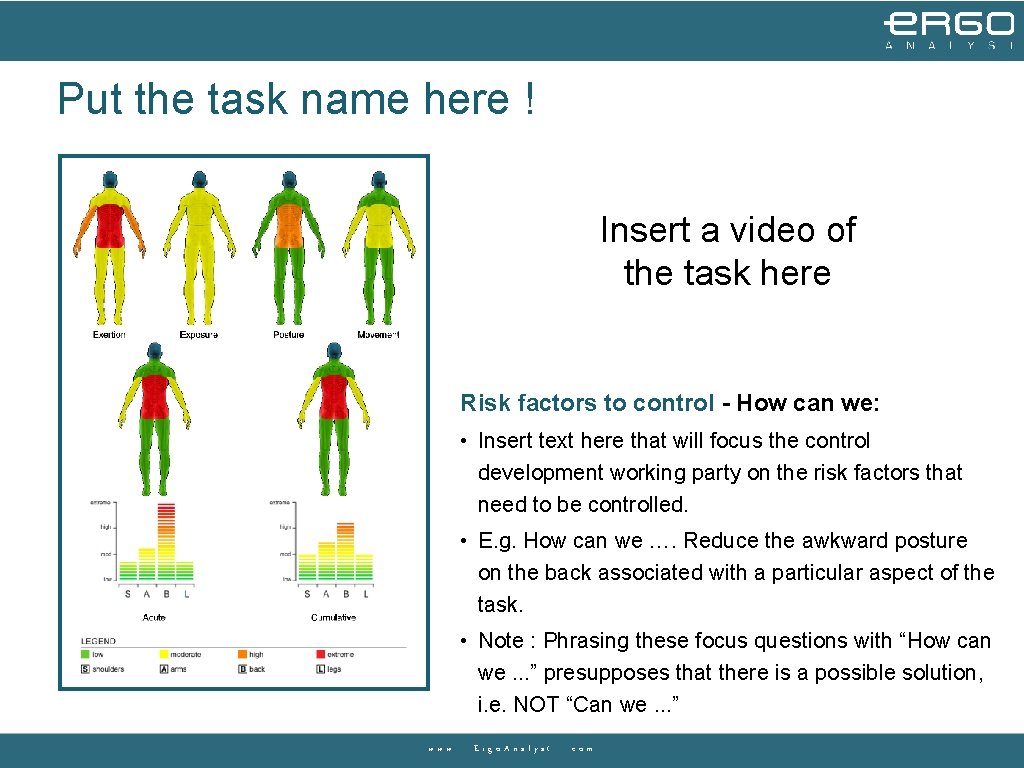
Put the task name here ! Insert a video of the task here Risk factors to control - How can we: • Insert text here that will focus the control development working party on the risk factors that need to be controlled. • E. g. How can we …. Reduce the awkward posture on the back associated with a particular aspect of the task. • Note : Phrasing these focus questions with “How can we. . . ” presupposes that there is a possible solution, i. e. NOT “Can we. . . ” www. Ergo. Analyst. com
Put the task name here ! Insert a picture of the actions listed on the white board that were developed in the workshop here Actions from the workshop: Elimination: • List all the actions they would eliminate the task altogether (i. e. the figures in Ergo. Analyst would be left blue and/or would effectively eliminate the risk (i. e. the acute and cumulative risk would be all low i. e. green) Design Controls: • List all of the actions that involve design changes to the task. • Note: Design controls are defined as controls that DON’T require worker compliance to be effective. Administrative Controls: • List all of the actions that involve administrative changes to the task. • Note: Administrative controls are defined as controls that DO require worker compliance to be effective. Progress: • During the implementation you can detail any progress that was made to implement the action plan. www. Ergo. Analyst. com
Ergo. Analyst Participative Ergonomics Control Development Workshop Task: Profile Grinding Gary Dennis BHSc (Hons) Ph. D CPE Managing Director Ergo. Enterprises Adj. The University of Queensland gdennis@ergoenterprises. com. au Mobile: 0410 629 626 www. Ergo. Analyst. com
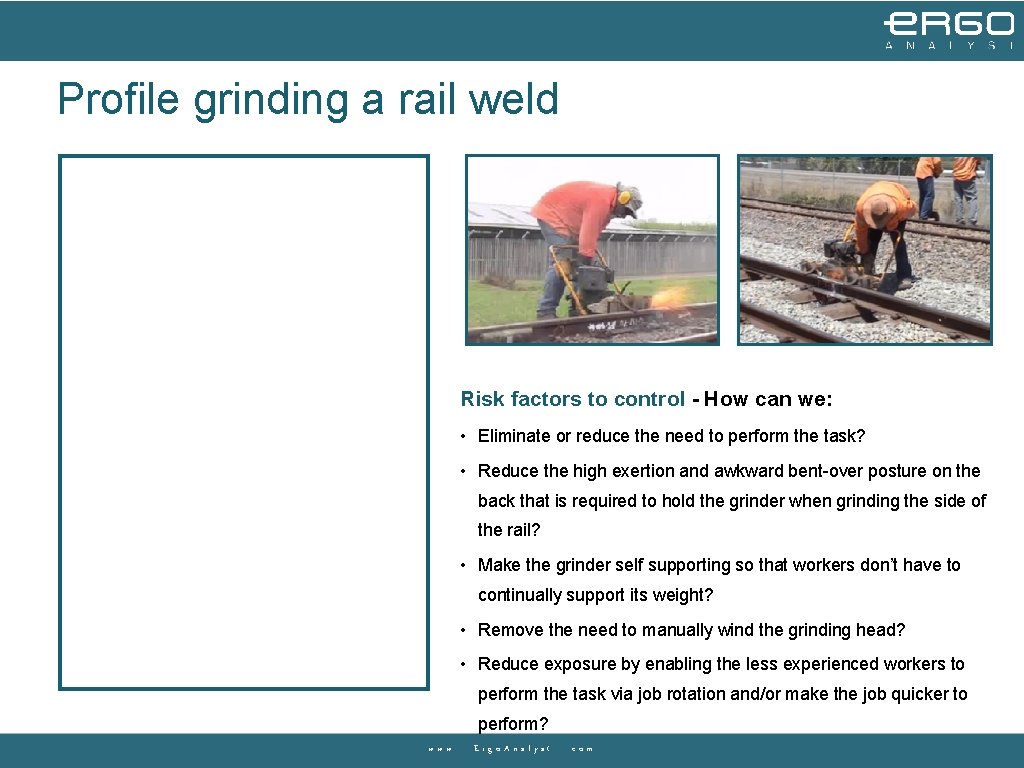
Profile grinding a rail weld Task Factors • Grind the weld joining 2 rail sections to match the profile of the rail with 1 mm tolerance • 68 kg Geismar grinder manually lifted on and off the truck (Hiab not generally used) and onto the track • 5 - 20 mins per weld • Typically to 5 - 10+ welds per 8 hour shift Environmental Factors • Hot, humid, localised vibration, sometimes time pressures, guards removed for side rail access, skill required not to ‘dip the rail’ (so the task is typically performed by the older more experienced team members) Physical Factors • Heavy grinder with high muscular force required to support its weight • Bent over back to grind the side of the rail • High force on wrist to wind the grinder head in www. Ergo. Analyst. com
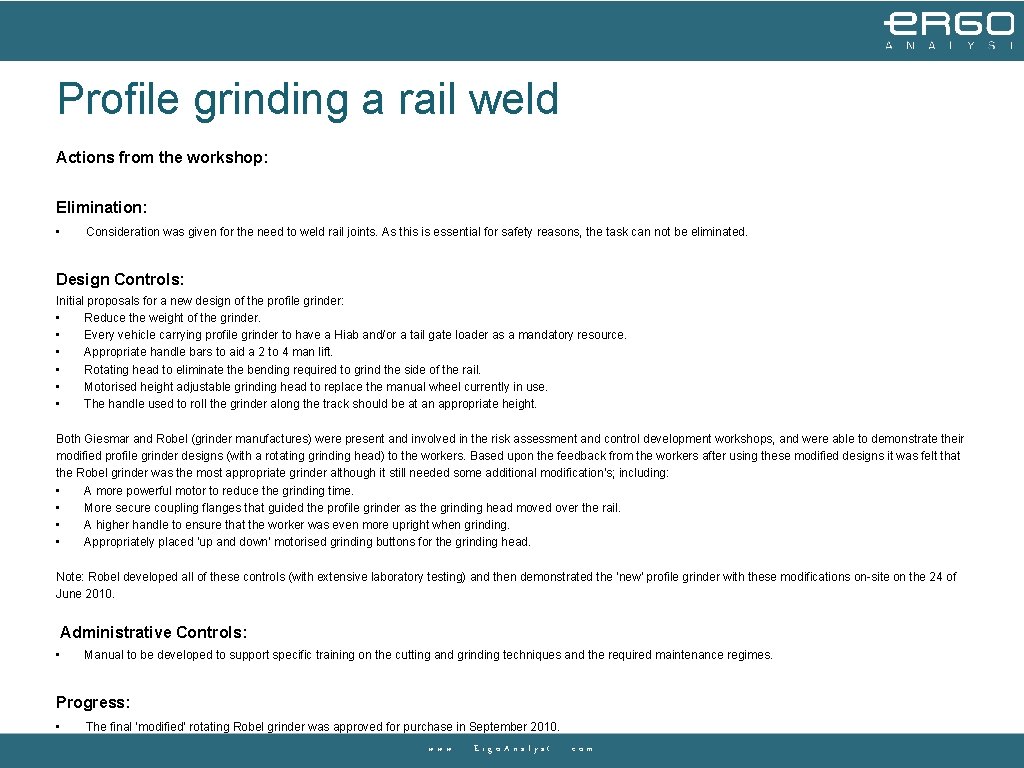
Profile grinding a rail weld Risk factors to control - How can we: • Eliminate or reduce the need to perform the task? • Reduce the high exertion and awkward bent-over posture on the back that is required to hold the grinder when grinding the side of the rail? • Make the grinder self supporting so that workers don’t have to continually support its weight? • Remove the need to manually wind the grinding head? • Reduce exposure by enabling the less experienced workers to perform the task via job rotation and/or make the job quicker to perform? www. Ergo. Analyst. com
Profile grinding a rail weld Actions from the workshop: Elimination: • Consideration was given for the need to weld rail joints. As this is essential for safety reasons, the task can not be eliminated. Design Controls: Initial proposals for a new design of the profile grinder: • Reduce the weight of the grinder. • Every vehicle carrying profile grinder to have a Hiab and/or a tail gate loader as a mandatory resource. • Appropriate handle bars to aid a 2 to 4 man lift. • Rotating head to eliminate the bending required to grind the side of the rail. • Motorised height adjustable grinding head to replace the manual wheel currently in use. • The handle used to roll the grinder along the track should be at an appropriate height. Both Giesmar and Robel (grinder manufactures) were present and involved in the risk assessment and control development workshops, and were able to demonstrate their modified profile grinder designs (with a rotating grinding head) to the workers. Based upon the feedback from the workers after using these modified designs it was felt that the Robel grinder was the most appropriate grinder although it still needed some additional modification's; including: • A more powerful motor to reduce the grinding time. • More secure coupling flanges that guided the profile grinder as the grinding head moved over the rail. • A higher handle to ensure that the worker was even more upright when grinding. • Appropriately placed 'up and down' motorised grinding buttons for the grinding head. Note: Robel developed all of these controls (with extensive laboratory testing) and then demonstrated the 'new' profile grinder with these modifications on-site on the 24 of June 2010. Administrative Controls: • Manual to be developed to support specific training on the cutting and grinding techniques and the required maintenance regimes. Progress: • The final ‘modified’ rotating Robel grinder was approved for purchase in September 2010. www. Ergo. Analyst. com