
ERDC 100 k W 25 m A accelerator

- Slides: 20
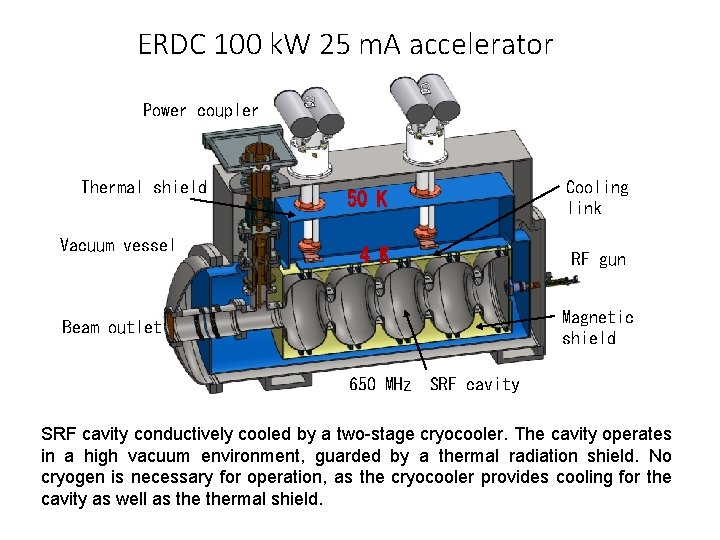
ERDC 100 k. W 25 m. A accelerator Power coupler Thermal shield Vacuum vessel 50 K Cooling link 4 K RF gun Magnetic shield Beam outlet 650 MHz SRF cavity conductively cooled by a two-stage cryocooler. The cavity operates in a high vacuum environment, guarded by a thermal radiation shield. No cryogen is necessary for operation, as the cryocooler provides cooling for the cavity as well as thermal shield.
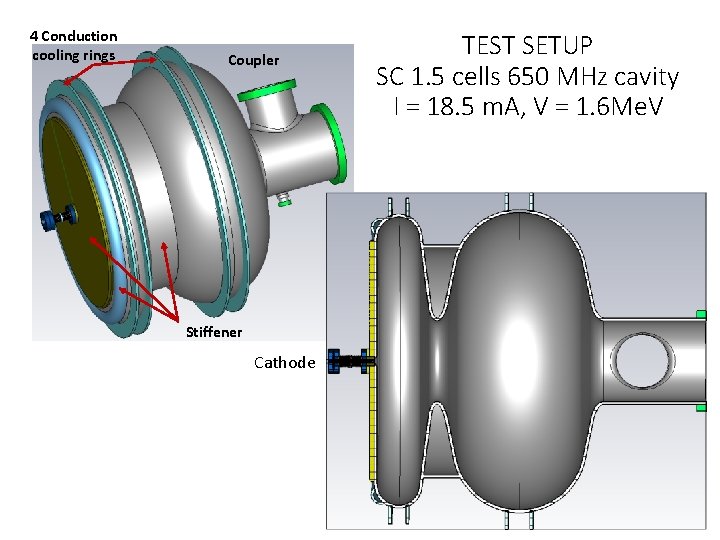
4 Conduction cooling rings Coupler Stiffener Cathode TEST SETUP SC 1. 5 cells 650 MHz cavity I = 18. 5 m. A, V = 1. 6 Me. V
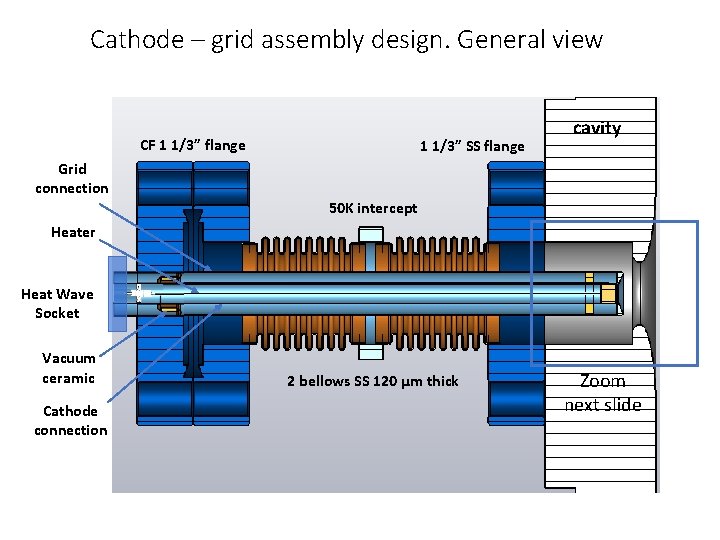
Cathode – grid assembly design. General view CF 1 1/3” flange 1 1/3” SS flange cavity Grid connection 50 K intercept Heater Heat Wave Socket Vacuum ceramic Cathode connection 2 bellows SS 120 μm thick Zoom next slide
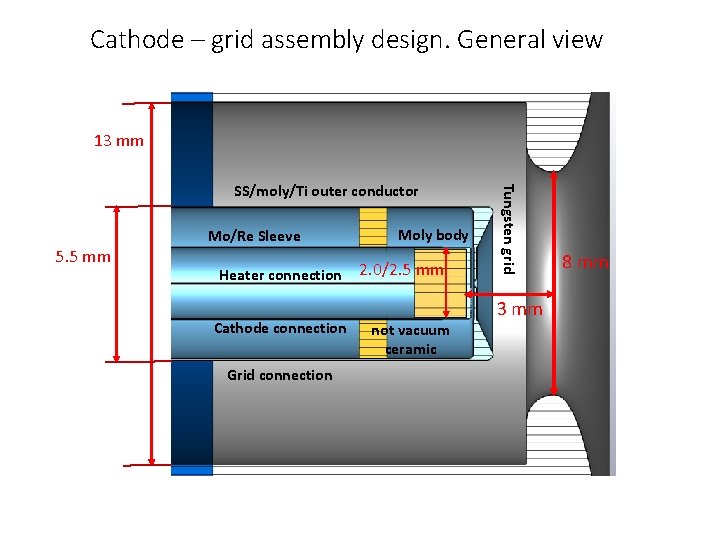
Cathode – grid assembly design. General view 13 mm 5. 5 mm Mo/Re Sleeve Heater connection Cathode connection Grid connection Moly body 2. 0/2. 5 mm not vacuum ceramic Tungsten grid SS/moly/Ti outer conductor 3 mm 8 mm
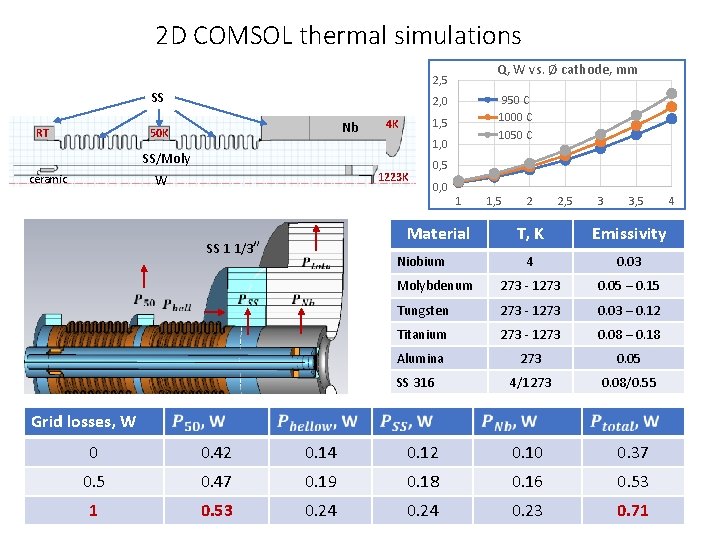
2 D COMSOL thermal simulations Q, W vs. Ø cathode, mm 2, 5 SS RT Nb 50 K 1, 5 4 K 1, 0 SS/Moly ceramic 950 C 1000 C 1050 C 2, 0 1223 K W 0, 5 0, 0 1 Material SS 1 1/3” 1, 5 2 2, 5 3 3, 5 T, K Emissivity 4 0. 03 Molybdenum 273 - 1273 0. 05 – 0. 15 Tungsten 273 - 1273 0. 03 – 0. 12 Titanium 273 - 1273 0. 08 – 0. 18 Alumina 273 0. 05 4/1273 0. 08/0. 55 Niobium SS 316 Grid losses, W 0 0. 42 0. 14 0. 12 0. 10 0. 37 0. 5 0. 47 0. 19 0. 18 0. 16 0. 53 1 0. 53 0. 24 0. 23 0. 71 4
Grid design. Losses vs. Transparency Ø 77% d 86% Transparency, % Ø/d, micron Grid Losses, W 77 40/50 1 86 25/50 0. 7
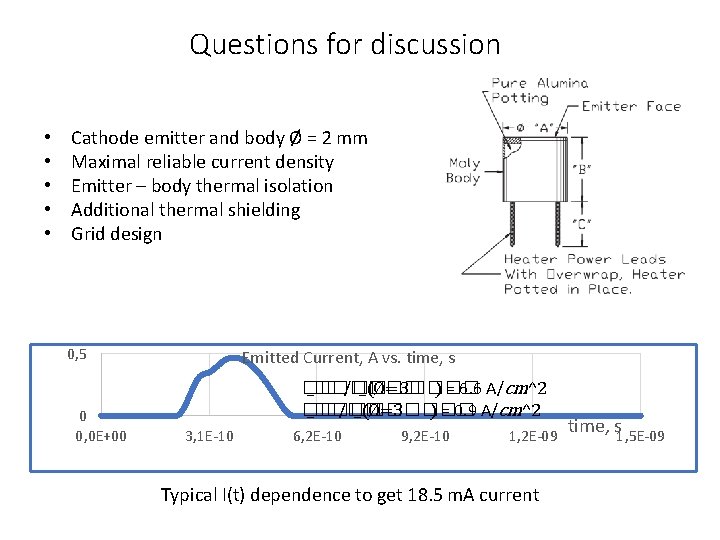
Questions for discussion • • • Cathode emitter and body Ø = 2 mm Maximal reliable current density Emitter – body thermal isolation Additional thermal shielding Grid design 0, 5 0 0, 0 E+00 Emitted Current, A vs. time, s �� _������ /�� _(Ø=3���� ) = 6. 6 A/cm^2 �� _������ /�� _(Ø=3���� ) = 0. 9 A/cm^2 3, 1 E-10 6, 2 E-10 9, 2 E-10 1, 2 E-09 Typical I(t) dependence to get 18. 5 m. A current time, s 1, 5 E-09
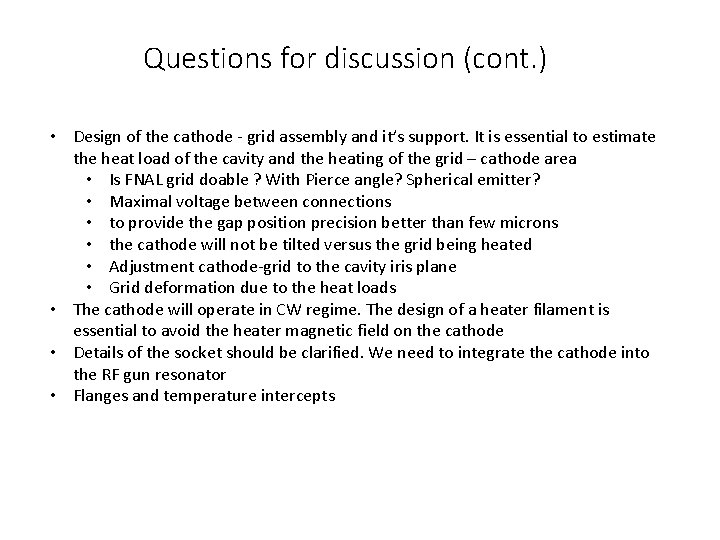
Questions for discussion (cont. ) • Design of the cathode - grid assembly and it’s support. It is essential to estimate the heat load of the cavity and the heating of the grid – cathode area • Is FNAL grid doable ? With Pierce angle? Spherical emitter? • Maximal voltage between connections • to provide the gap position precision better than few microns • the cathode will not be tilted versus the grid being heated • Adjustment cathode-grid to the cavity iris plane • Grid deformation due to the heat loads • The cathode will operate in CW regime. The design of a heater filament is essential to avoid the heater magnetic field on the cathode • Details of the socket should be clarified. We need to integrate the cathode into the RF gun resonator • Flanges and temperature intercepts
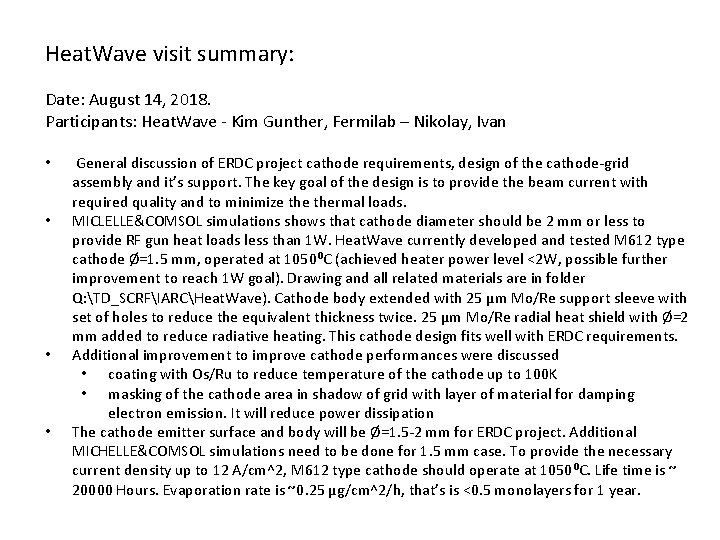
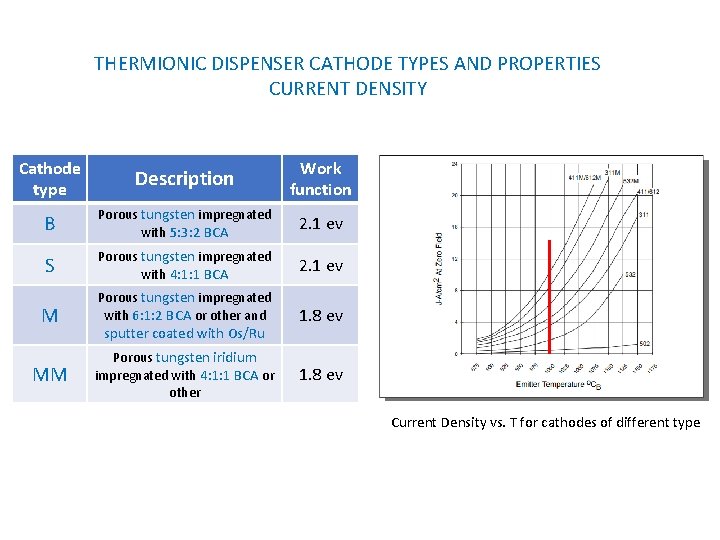
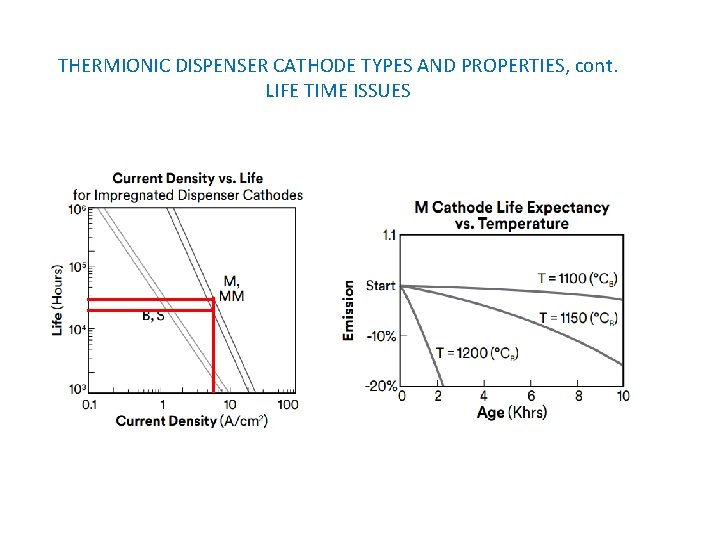
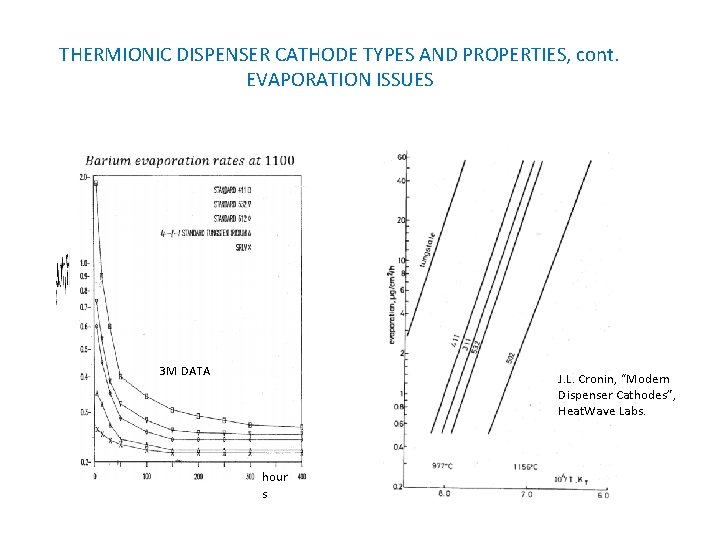
Heat. Wave visit summary: Date: August 14, 2018. Participants: Heat. Wave - Kim Gunther, Fermilab – Nikolay, Ivan • • General discussion of ERDC project cathode requirements, design of the cathode-grid assembly and it’s support. The key goal of the design is to provide the beam current with required quality and to minimize thermal loads. MICLELLE&COMSOL simulations shows that cathode diameter should be 2 mm or less to provide RF gun heat loads less than 1 W. Heat. Wave currently developed and tested M 612 type cathode Ø=1. 5 mm, operated at 1050⁰C (achieved heater power level <2 W, possible further improvement to reach 1 W goal). Drawing and all related materials are in folder Q: TD_SCRFIARCHeat. Wave). Cathode body extended with 25 µm Mo/Re support sleeve with set of holes to reduce the equivalent thickness twice. 25 µm Mo/Re radial heat shield with Ø=2 mm added to reduce radiative heating. This cathode design fits well with ERDC requirements. Additional improvement to improve cathode performances were discussed • coating with Os/Ru to reduce temperature of the cathode up to 100 K • masking of the cathode area in shadow of grid with layer of material for damping electron emission. It will reduce power dissipation The cathode emitter surface and body will be Ø=1. 5 -2 mm for ERDC project. Additional MICHELLE&COMSOL simulations need to be done for 1. 5 mm case. To provide the necessary current density up to 12 A/cm^2, M 612 type cathode should operate at 1050⁰C. Life time is ~ 20000 Hours. Evaporation rate is ~0. 25 µg/cm^2/h, that’s is <0. 5 monolayers for 1 year.
• • We discuss grid design and production issues. Heat. Wave produced both planar and formed shapes grids in wide range of dimensions in third-party companies from different materials including Tungsten and Molybdenum (tb-172. pdf). CAD model of the grid provided by customer can be used for production. Since planar geometry of the cathode and grid is less sensitive to dimensional errors and misalignments, we agreed to use planar design as a baseline. Grid with Pierce angle, wire diameter Ø=25 µm and 160 -180 µm of the distances between wires required for ERDC project can be done. Wire cross-section can be a racetrack shape with ratio between dimensions up to 2. We discussed the accuracy and tolerances, including the cathode-grid gap precision, grid tilt and deformation due to heating, cathode-grid assembly adjustment to the cavity iris plane etc. Heat. Wave will run calculation of all listed factors and provide the tolerances for further approval. Heater filament design will be done to avoid the heater magnetic field on the cathode. Grid shape, grid-to-flange distance, size of grid conductor and all tolerances finally will be determined by IARC. Heat. Wave will design a custom socket. After receipt of order, Heat. Wave will do the detailed design of the full assembly and submit it for approval before fabrication starts. Heatwave proposed to finalize design in 2 weeks (before Kim vacation) with our feedback. Estimation for production time is 16 -20 weeks, mostly defined by sub-contractor lead time (UHV ceramic brazing and grid production). Kim will send ASAP estimations of engineering PO regarding the efforts to do the detailed scale design of the cathode/electron gun and manufacturing cost estimations. "Regarding the engineering PO. I suggest a PO for $10 K. We will apply this to efforts to do the detailed scale design of the cathode/electron gun. Hours can always be added or deleted, as necessary. This will allow us to put some real time into determining how this assembly will be manufactured. Does this sound adequate to you? Do you need a formal quotation? "
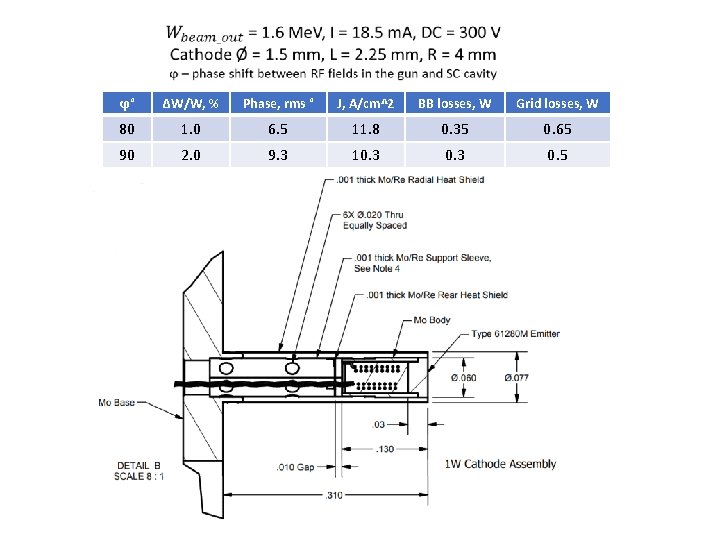
ϕ° ΔW/W, % Phase, rms ° J, A/cm^2 BB losses, W Grid losses, W 80 1. 0 6. 5 11. 8 0. 35 0. 65 90 2. 0 9. 3 10. 3 0. 5
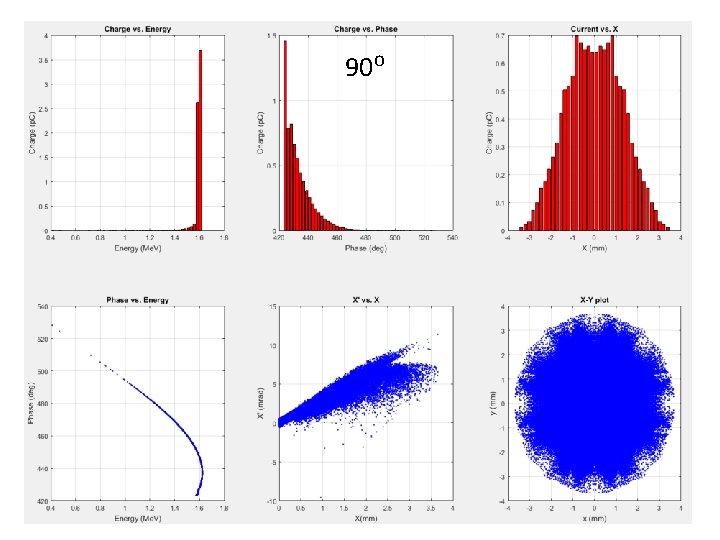
90⁰
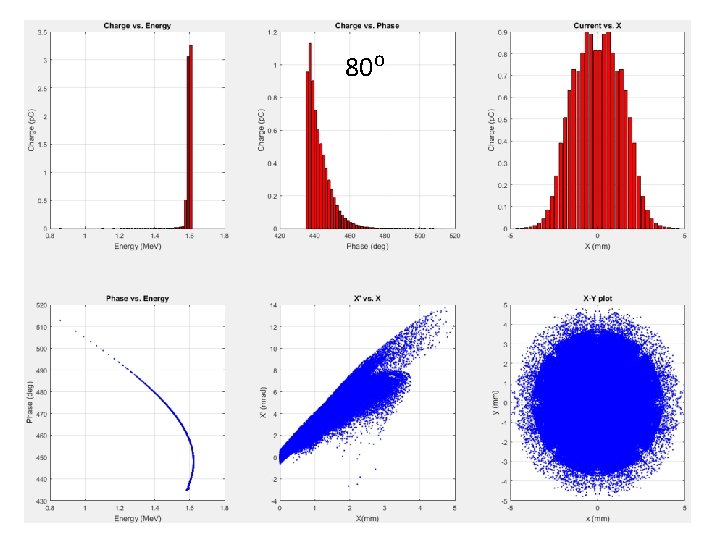
80⁰
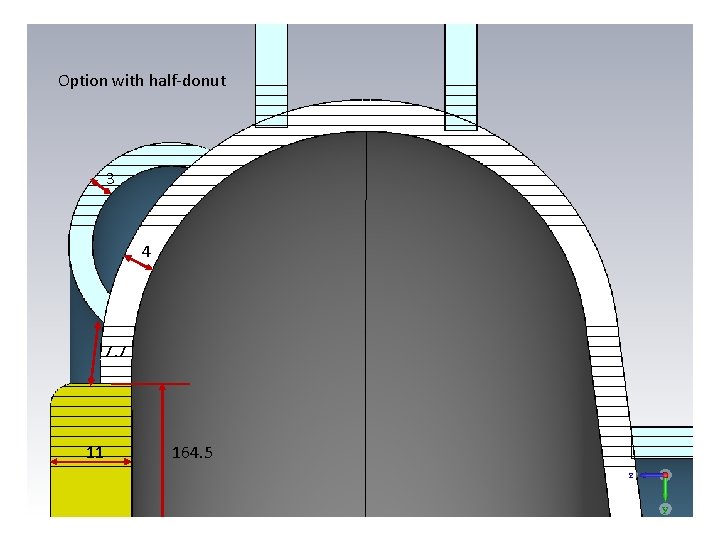
Option with half-donut 3 4 7. 7 11 164. 5
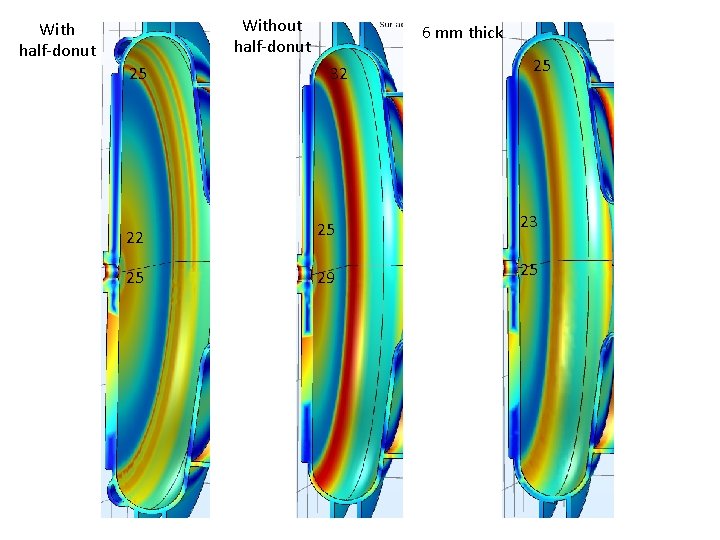
Without half-donut With half-donut 25 6 mm thick 32 25 23 25 29 25
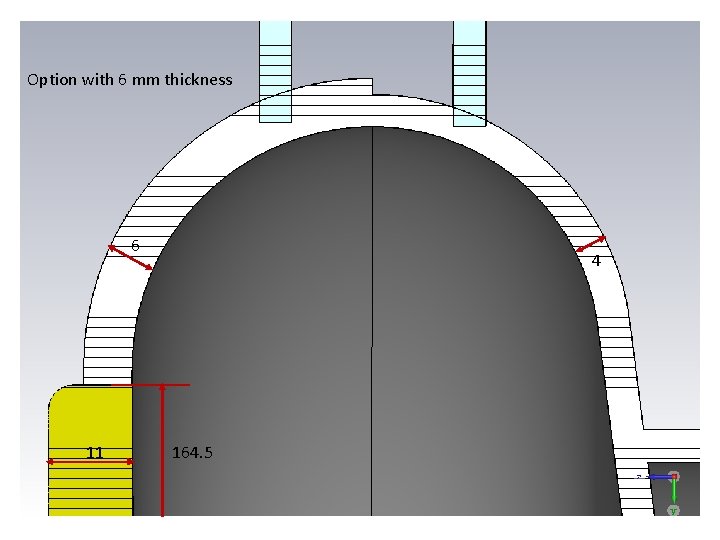
Option with 6 mm thickness 6 11 4 164. 5
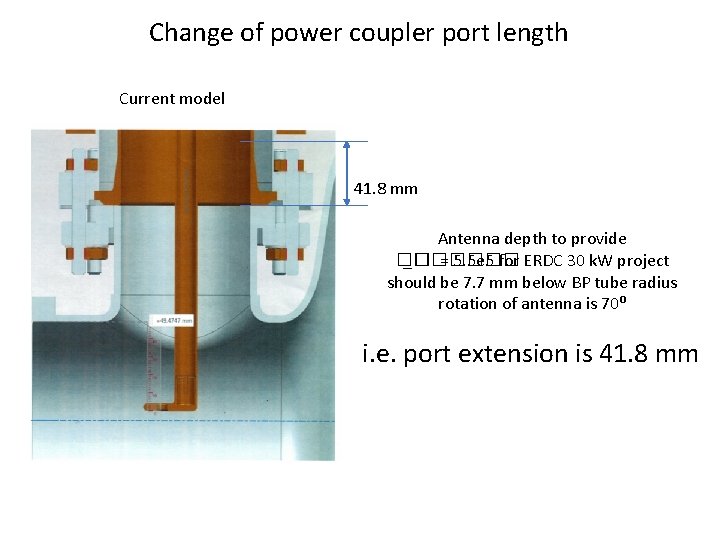
Change of power coupler port length Current model 41. 8 mm Antenna depth to provide �� _������ = 5. 5 e 5 for ERDC 30 k. W project should be 7. 7 mm below BP tube radius rotation of antenna is 70⁰ i. e. port extension is 41. 8 mm
THERMIONIC DISPENSER CATHODE TYPES AND PROPERTIES CURRENT DENSITY Cathode type Description Work function B Porous tungsten impregnated with 5: 3: 2 BCA 2. 1 ev S Porous tungsten impregnated with 4: 1: 1 BCA 2. 1 ev M Porous tungsten impregnated with 6: 1: 2 BCA or other and MM sputter coated with Os/Ru Porous tungsten iridium impregnated with 4: 1: 1 BCA or other 1. 8 ev Current Density vs. T for cathodes of different type
THERMIONIC DISPENSER CATHODE TYPES AND PROPERTIES, cont. LIFE TIME ISSUES
THERMIONIC DISPENSER CATHODE TYPES AND PROPERTIES, cont. EVAPORATION ISSUES 3 M DATA J. L. Cronin, “Modern Dispenser Cathodes”, Heat. Wave Labs. hour s