
EQUITY LENS IMPLEMENTATION TEAM equitylanecc edu equ ity




- Slides: 19
EQUITY LENS IMPLEMENTATION TEAM equity@lanecc. edu
equ ity@ lane cc. e du EQUITY LENS TOOLKIT
Unpacking the Equity Lens Toolkit Packet DIVERSITY VALUES STRATEGIC DIRECTION STRATEGIC OBJECTIVES KEY STRATEGIES DIVERSITY PLAN EQUITY LENS MODELS
Diversity Values “To ensure we realize our stated college values and actualize access, equity, and inclusion across the college, we are building and implementing an Equity Lens. We will be identifying and supporting best practices for equity-related initiatives, with a strong commitment to equal employment and educational opportunity in all activities, programs, and services. ”
Strategic Direction In order to fully realize Lane’s commitment to these outcomes, we will develop a social justice framework (Equity Lens) to guide our work. This framework will provide structures, systems and support for: • Advancing individual and collective growth in cultural fluency, agility and competency across the institution • Bringing stakeholder groups together to identify and remedy barriers to social justice at LCC • Improving recruitment and retention of diverse students and staff • Increasing the range, scope and depth of diversity, equity and inclusion curriculum • Demonstrating leadership in social justice
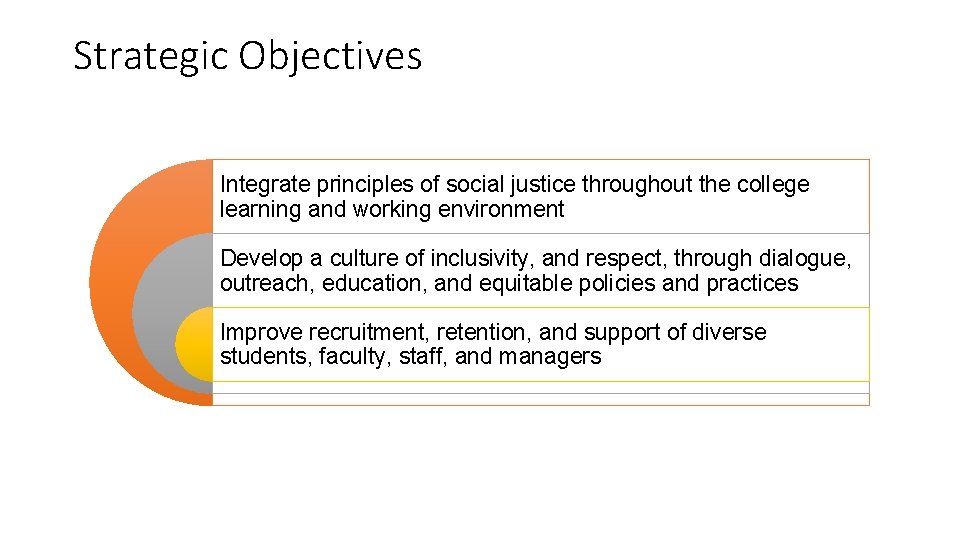
Strategic Objectives Integrate principles of social justice throughout the college learning and working environment Develop a culture of inclusivity, and respect, through dialogue, outreach, education, and equitable policies and practices Improve recruitment, retention, and support of diverse students, faculty, staff, and managers
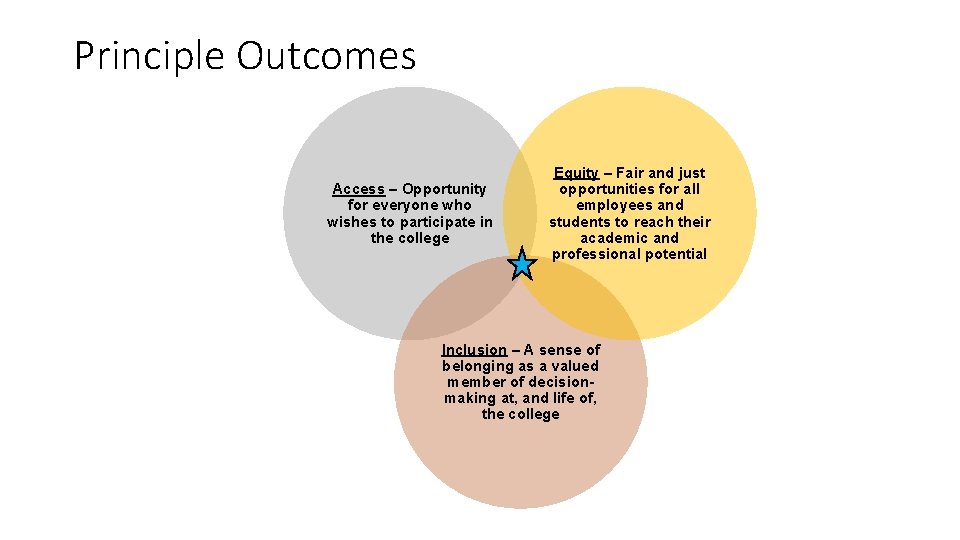
Principle Outcomes Access – Opportunity for everyone who wishes to participate in the college Equity – Fair and just opportunities for all employees and students to reach their academic and professional potential Inclusion – A sense of belonging as a valued member of decisionmaking at, and life of, the college
A Closer Look Equity Lens models previously developed have a single focus--usually race. Ours will be more broad and inclusive. Another unique feature of Lane’s Equity Lens is that we will include both students and employees.
Our Model Lane’s Equity Lens Tool Worksheet
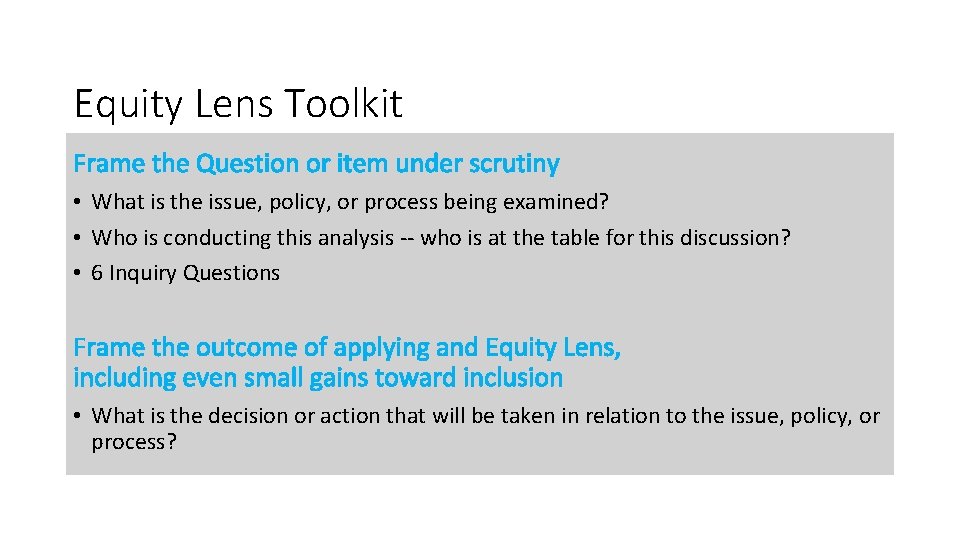
Equity Lens Toolkit Frame the Question or item under scrutiny • What is the issue, policy, or process being examined? • Who is conducting this analysis -- who is at the table for this discussion? • 6 Inquiry Questions Frame the outcome of applying and Equity Lens, including even small gains toward inclusion • What is the decision or action that will be taken in relation to the issue, policy, or process?
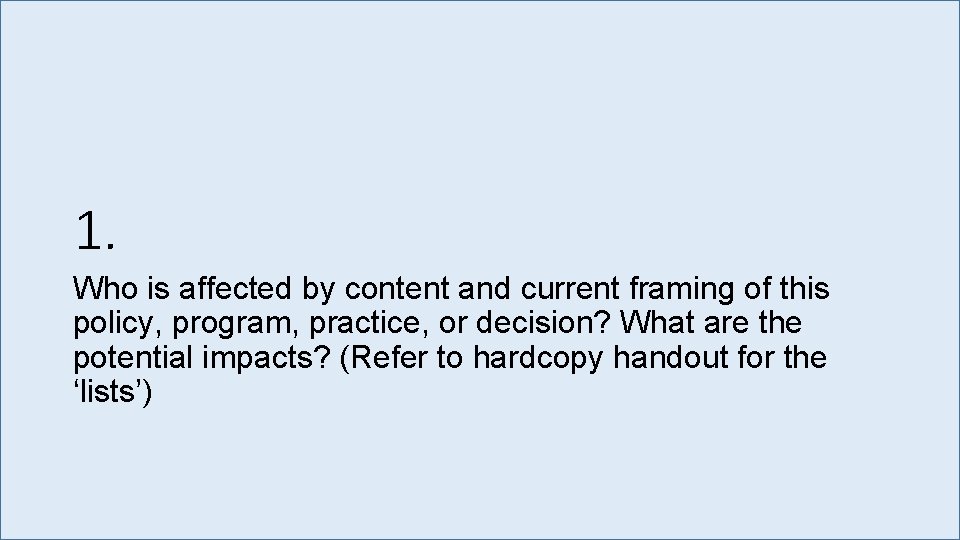
1. Who is affected by content and current framing of this policy, program, practice, or decision? What are the potential impacts? (Refer to hardcopy handout for the ‘lists’)
2 How does this policy, program, practice, decisionmaking process, or decision increase access, equity, and inclusion? How does it produce or worsen any disparities?
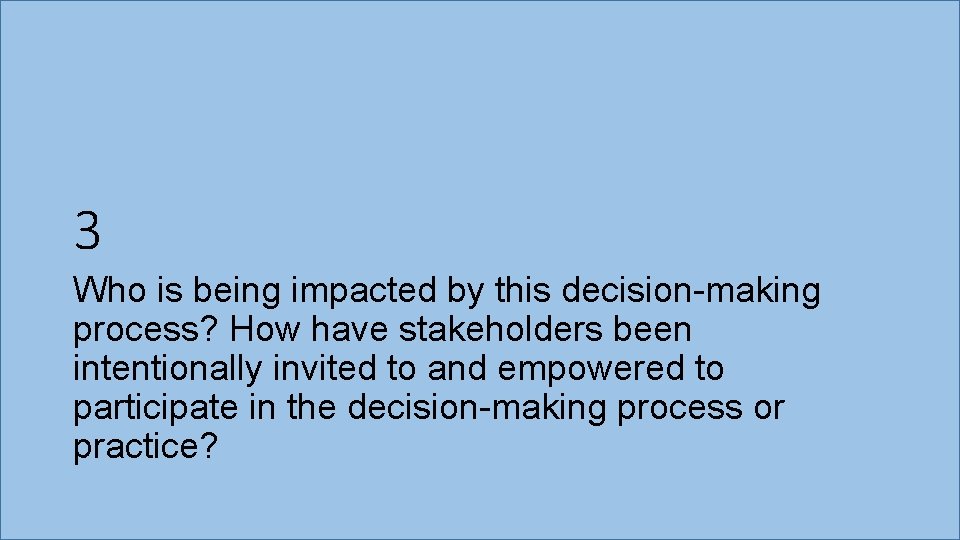
3 Who is being impacted by this decision-making process? How have stakeholders been intentionally invited to and empowered to participate in the decision-making process or practice?
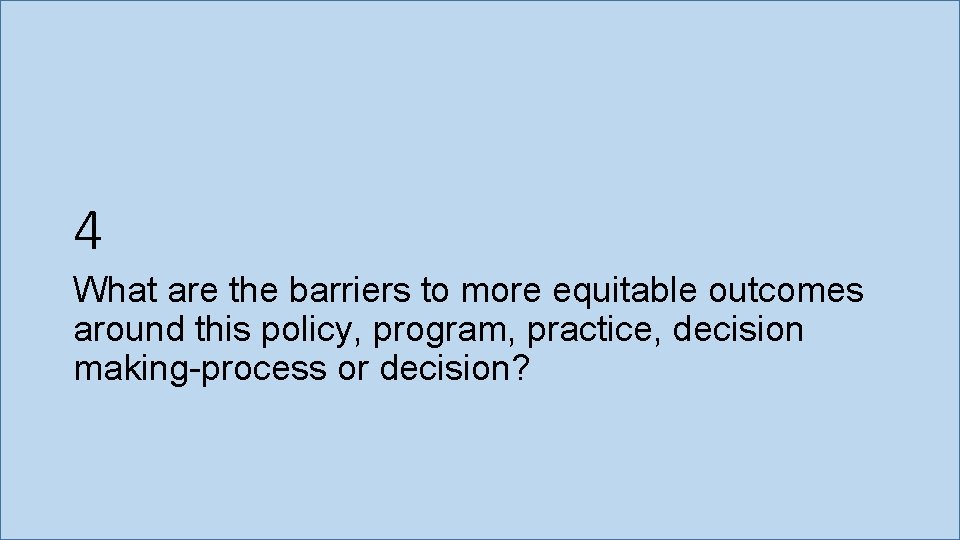
4 What are the barriers to more equitable outcomes around this policy, program, practice, decision making-process or decision?
5 How will members of the college community identify, address, and mitigate negative impacts and the barriers identified above? How will you support this work?
6 How can we, as members of the college community, create an environment and culture that fosters healing and reconciliation to transform our structures, environments, and selves?
Perspective Remember that the Equity Lens is a means of inquiry, and should never be used as a justification for a pre-determined outcome. Be mindful and transparent when assigning weight to the needs of any single group, especially as any single group over any other. Consider relationships, alliances, and social capital that might be affected by the decision, policy, or process being considered. Values won’t be represented as groups or individuals in your analysis, but if the decision-making body has agreed-upon values, it’s a good idea to make them explicit and name them at the beginning of the Equity Lens analysis.
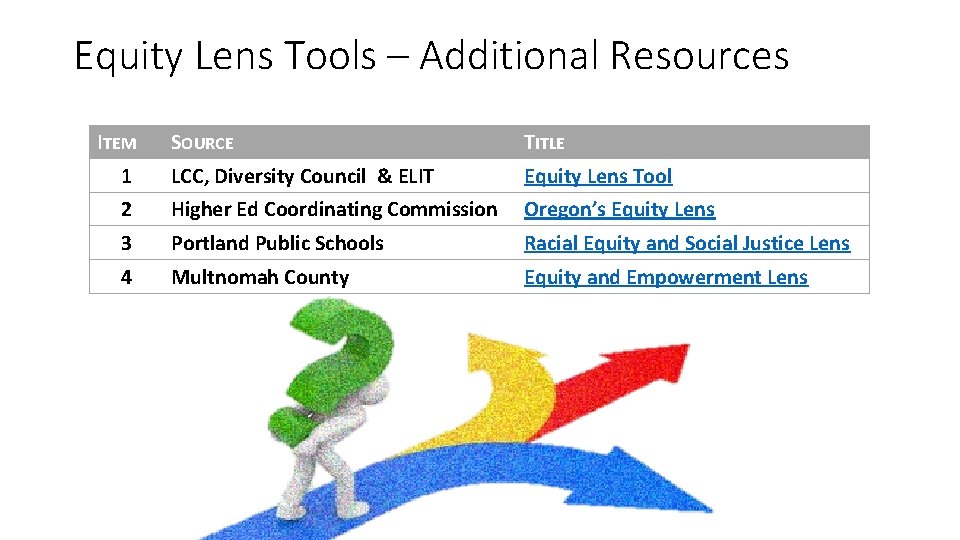
Equity Lens Tools – Additional Resources ITEM SOURCE TITLE 1 LCC, Diversity Council & ELIT Equity Lens Tool 2 Higher Ed Coordinating Commission Oregon’s Equity Lens 3 Portland Public Schools Racial Equity and Social Justice Lens 4 Multnomah County Equity and Empowerment Lens
What Questions Do You Have? equity@lanecc. edu