
Equipment Spotter Safety Continuing Education Fourth Quarter 2019

- Slides: 37
Equipment Spotter Safety Continuing Education Fourth Quarter 2019 1 -1
Objectives Upon completion of this continuing education module you should be able to: þ Define Spotter þ Understand “WHY” spotters are necessary þ See examples of equipment danger zones þ Discuss the Spotters Responsibilities þ Provide examples of common spotter hand signals 1 -2
Why Use a Spotter Session One 1 -3
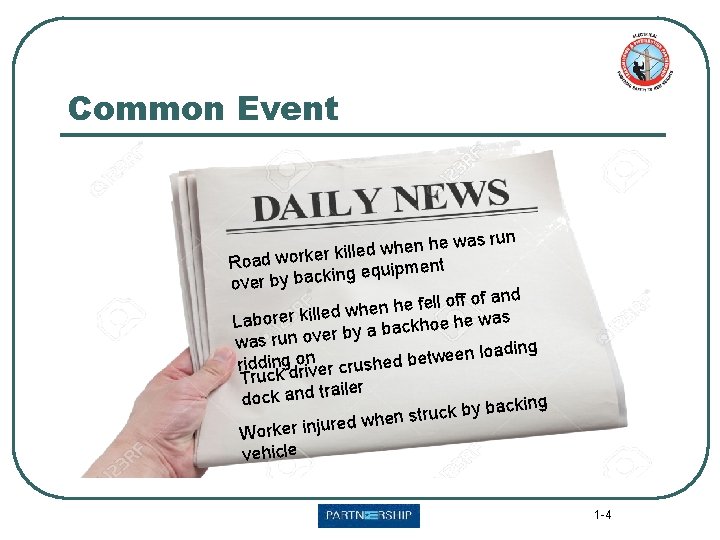
Common Event as run w e h n e h w killed Road worker ment ip u q e g in k c a over by b off of and ll fe e h n e h dw e was Laborer kille h e o h k c a b r by a was run ove n loading e e w t n e o b g d in ridd driver crushe Truck railer dock and t y backing b k c u r t s n red whe Worker inju vehicle 1 -4
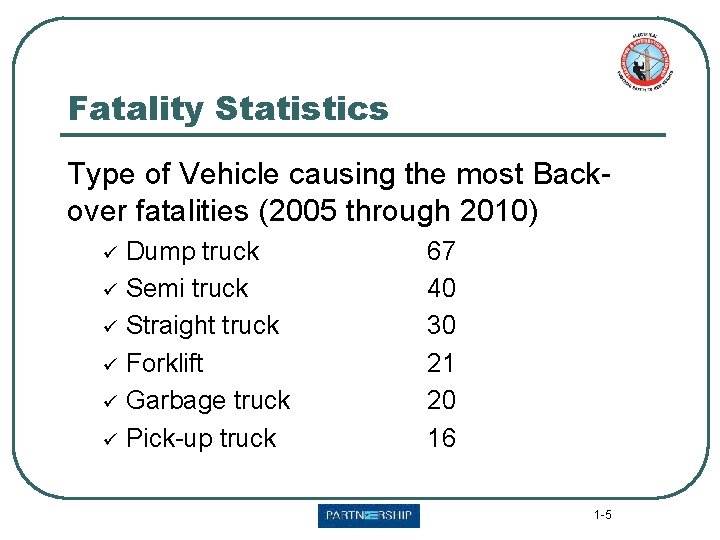
Fatality Statistics Type of Vehicle causing the most Backover fatalities (2005 through 2010) ü ü ü Dump truck Semi truck Straight truck Forklift Garbage truck Pick-up truck 67 40 30 21 20 16 1 -5
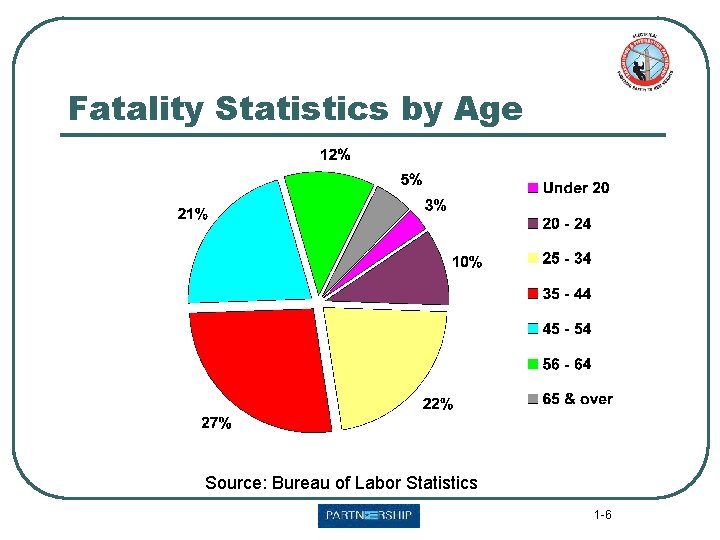
Fatality Statistics by Age Source: Bureau of Labor Statistics 1 -6
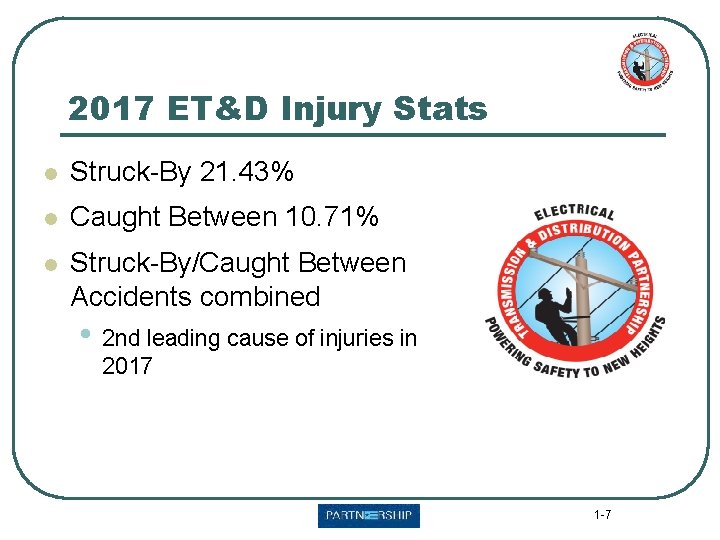
2017 ET&D Injury Stats l Struck-By 21. 43% l Caught Between 10. 71% l Struck-By/Caught Between Accidents combined • 2 nd leading cause of injuries in 2017 1 -7
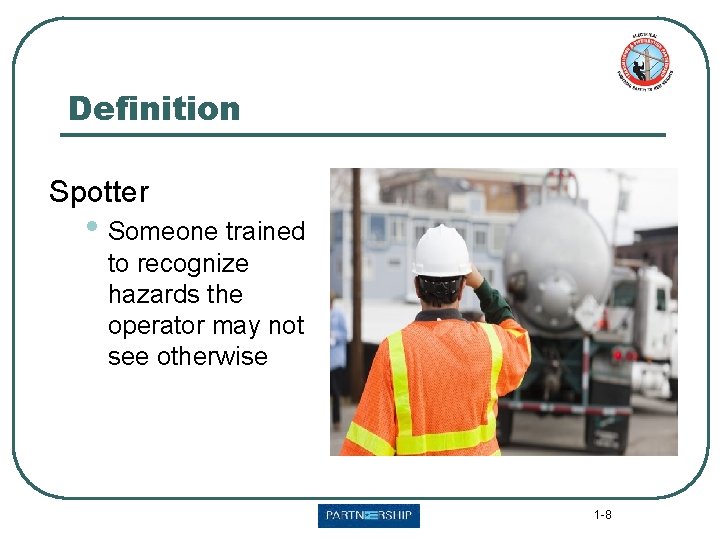
Definition Spotter • Someone trained to recognize hazards the operator may not see otherwise 1 -8
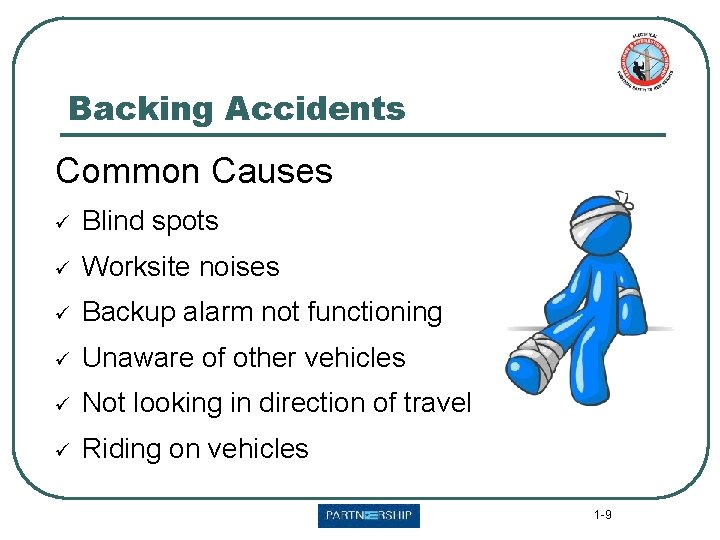
Backing Accidents Common Causes ü Blind spots ü Worksite noises ü Backup alarm not functioning ü Unaware of other vehicles ü Not looking in direction of travel ü Riding on vehicles 1 -9
When to use a Spotter ü ü ü Backing a vehicle or machinery Moving a vehicle or machinery in a congested area Poor visibility Close proximity Pedestrians/coworkers or other workers Lateral, overhead, or other obstructions 1 -10
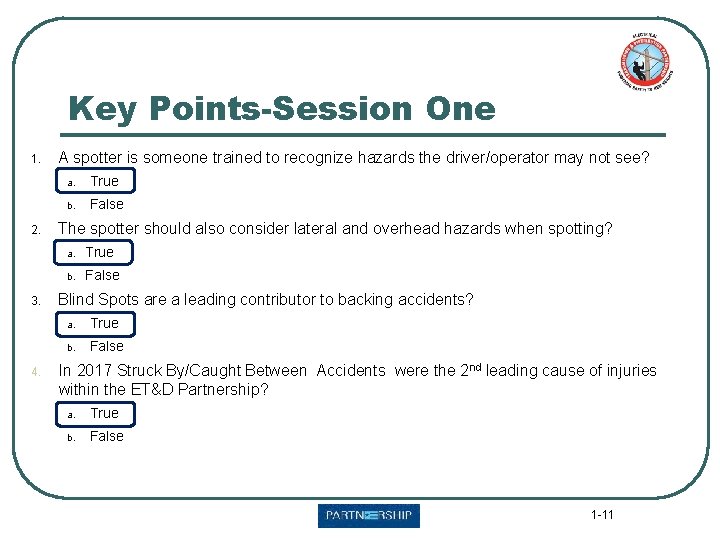
Key Points-Session One 1. 2. 3. 4. A spotter is someone trained to recognize hazards the driver/operator may not see? a. True b. False The spotter should also consider lateral and overhead hazards when spotting? a. True b. False Blind Spots are a leading contributor to backing accidents? a. True b. False In 2017 Struck By/Caught Between Accidents were the 2 nd leading cause of injuries within the ET&D Partnership? a. True b. False 1 -11
Blind Spots & Danger Zones Session Two 2 -1
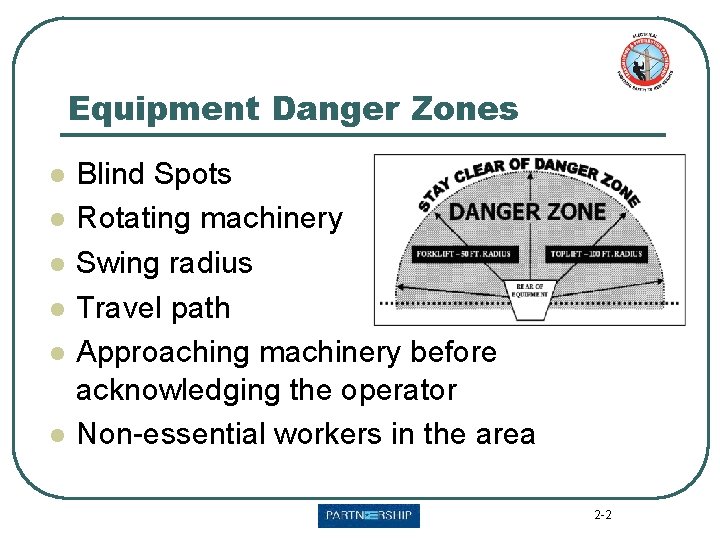
Equipment Danger Zones l l l Blind Spots Rotating machinery Swing radius Travel path Approaching machinery before acknowledging the operator Non-essential workers in the area 2 -2
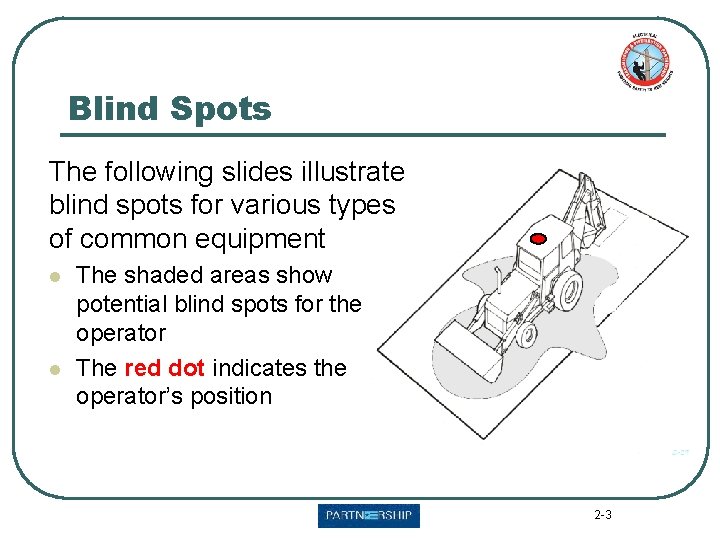
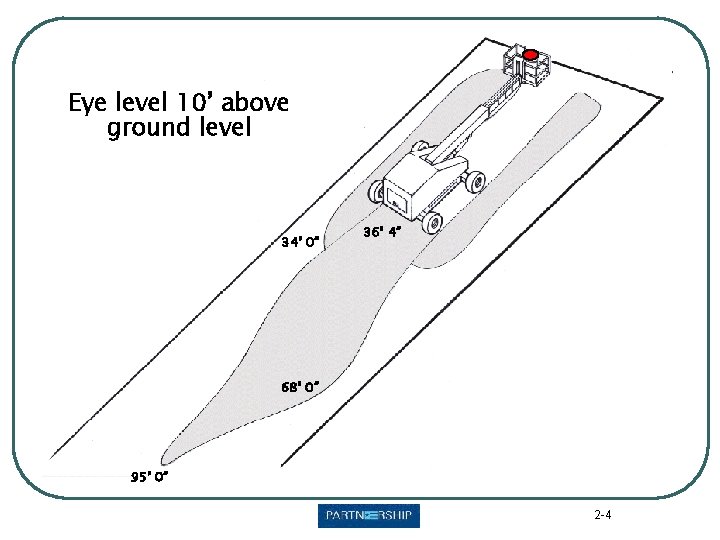
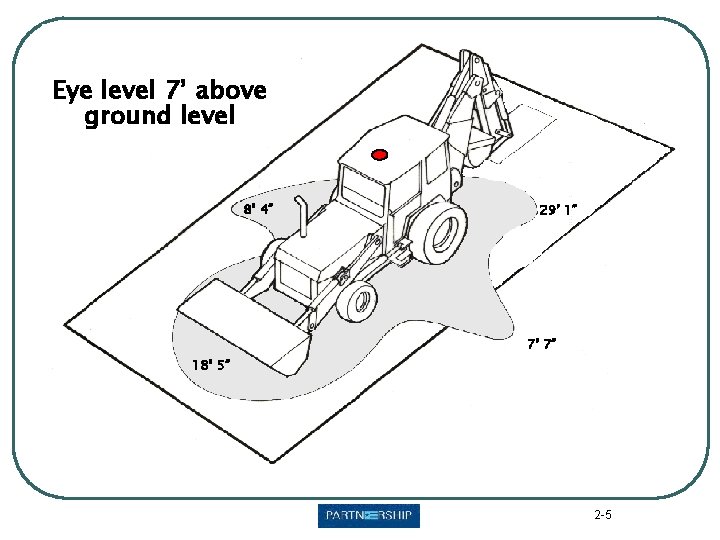
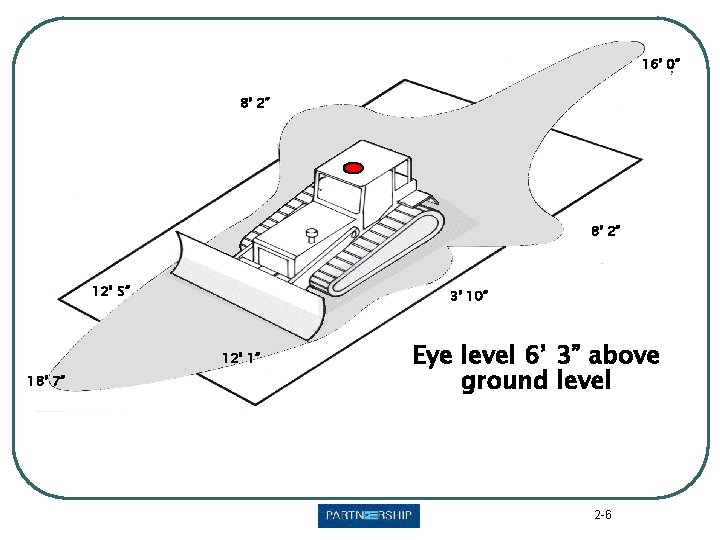
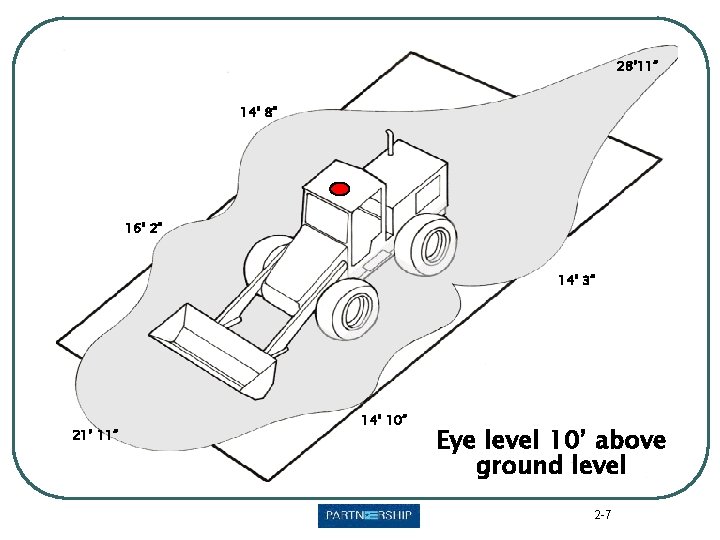
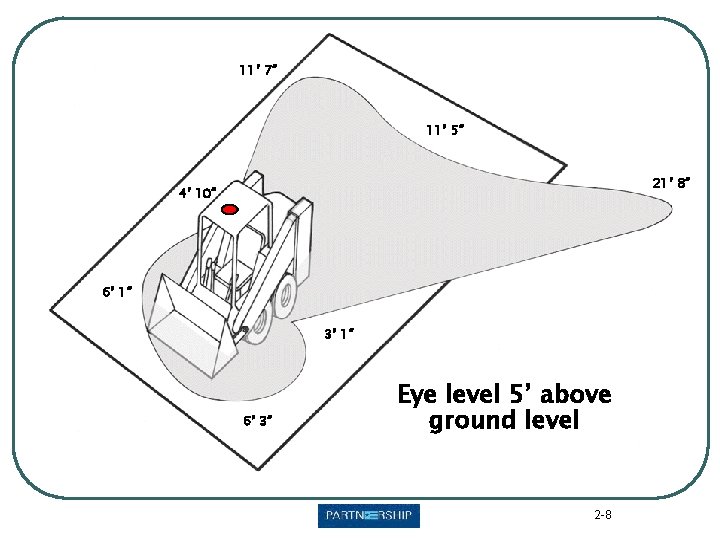
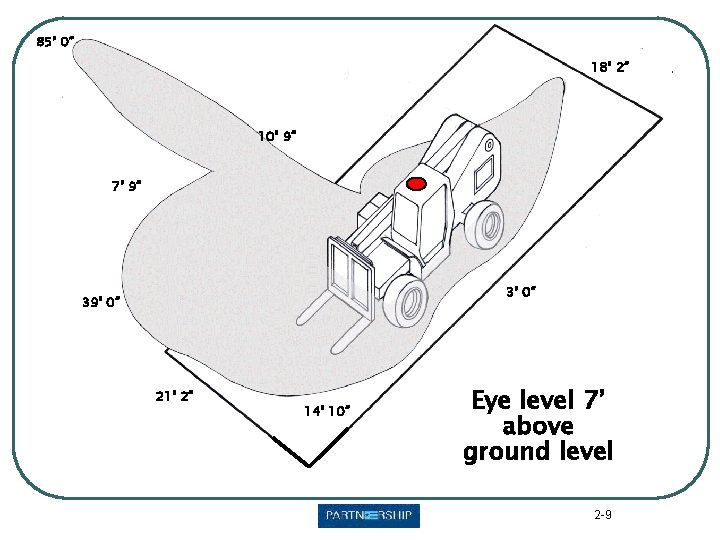
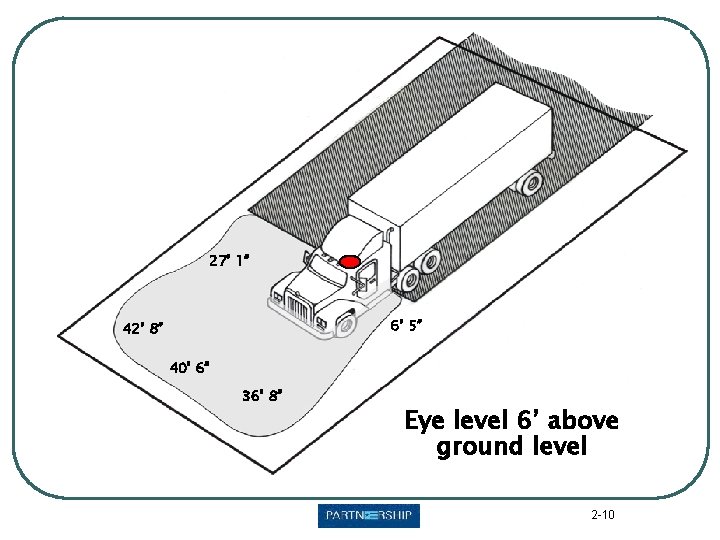
Blind Spots The following slides illustrate blind spots for various types of common equipment l l The shaded areas show potential blind spots for the operator The red dot indicates the operator’s position 2 -3
Eye level 10’ above ground level 34’ 0” 36’ 4” 68’ 0” 95’ 0” 2 -4
Eye level 7’ above ground level 8’ 4” 29’ 1” 7’ 7” 18’ 5” 2 -5
16’ 0” 8’ 2” 12’ 5” 3’ 10” 12’ 1” 18’ 7” Eye level 6’ 3” above ground level 2 -6
28’ 11” 14’ 8” 16’ 2” 14’ 3” 21’ 11” 14’ 10” Eye level 10’ above ground level 2 -7
11’ 7” 11’ 5” 21’ 8” 4’ 10” 6’ 1” 3’ 1” 6’ 3” Eye level 5’ above ground level 2 -8
85’ 0” 18’ 2” 10’ 9” 7’ 9” 3’ 0” 39’ 0” 21’ 2” 14’ 10” Eye level 7’ above ground level 2 -9
27’ 1” 6’ 5” 42’ 8” 40’ 6” 36’ 8” Eye level 6’ above ground level 2 -10
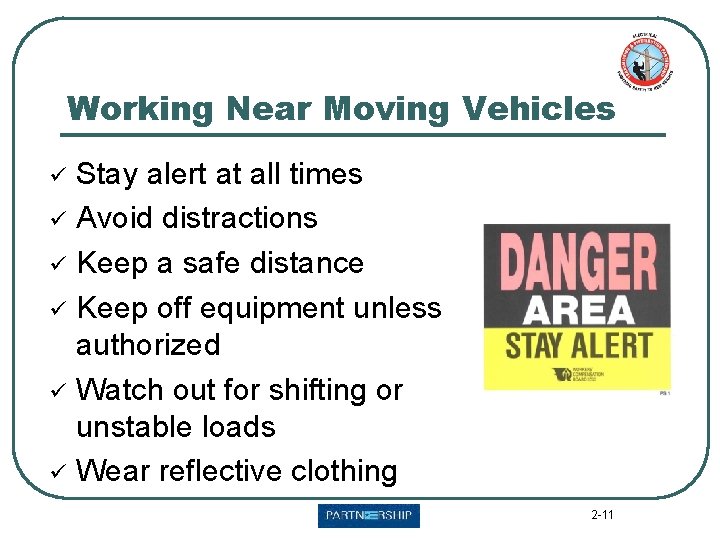
Working Near Moving Vehicles ü ü ü Stay alert at all times Avoid distractions Keep a safe distance Keep off equipment unless authorized Watch out for shifting or unstable loads Wear reflective clothing 2 -11
Key Points-Session Two 1. 2. 3. You should never approach machinery without first acknowledging the operator. a. True b. False Non essential employees should be kept clear from worksites. a. True b. False You should always wear high visability clothing when working near moving machinery. a. True b. False 2 -12
Spotter Responsibilities Session Three 3 -1
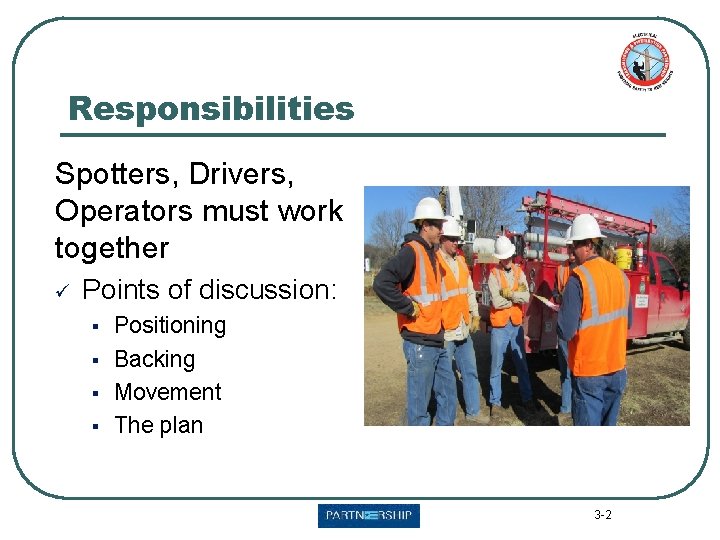
Responsibilities Spotters, Drivers, Operators must work together ü Points of discussion: § § Positioning Backing Movement The plan 3 -2
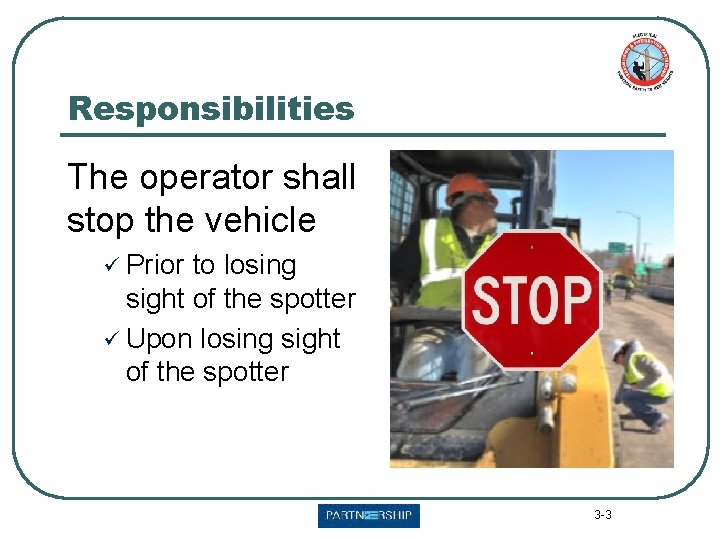
Responsibilities The operator shall stop the vehicle ü Prior to losing sight of the spotter ü Upon losing sight of the spotter 3 -3
Responsibilities In order to give you an unobstructed view stand at the driver's side ü Only one person signals ü The driver must understand the signals ü Discuss with the driver before any movement ü Explain the signals that will be used ü Allow for stopping distance and clearance 3 -4
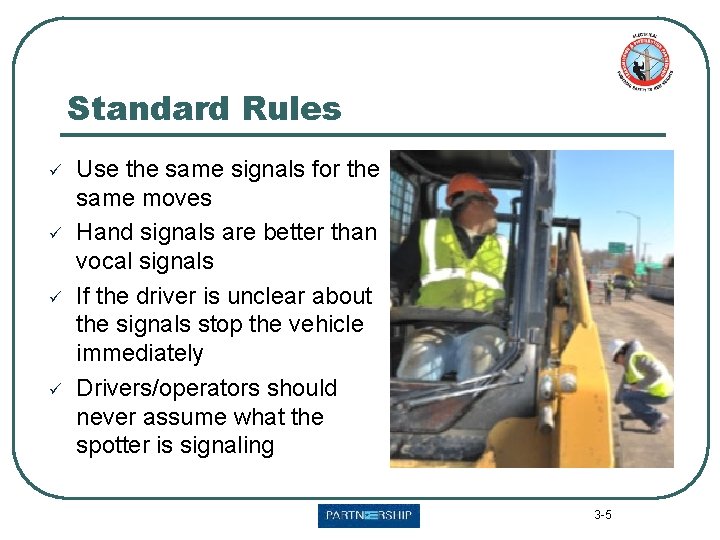
Standard Rules ü ü Use the same signals for the same moves Hand signals are better than vocal signals If the driver is unclear about the signals stop the vehicle immediately Drivers/operators should never assume what the spotter is signaling 3 -5
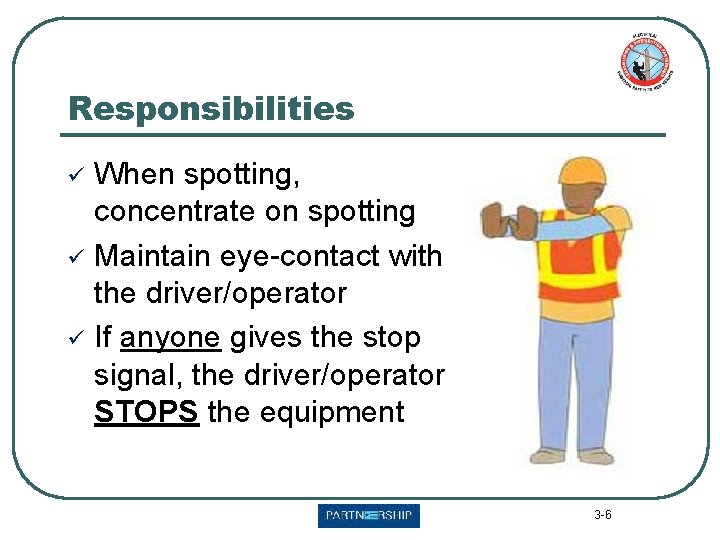
Responsibilities ü ü ü When spotting, concentrate on spotting Maintain eye-contact with the driver/operator If anyone gives the stop signal, the driver/operator STOPS the equipment 3 -6
Common Hand Signals 3 -7
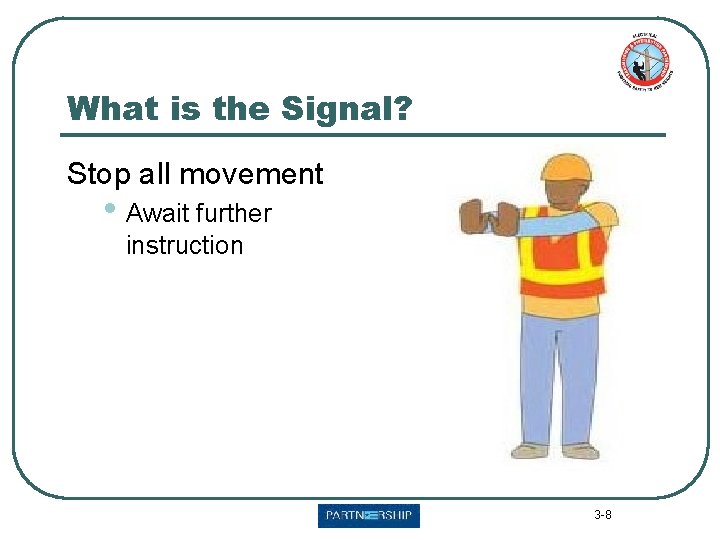
What is the Signal? Stop all movement • Await further instruction 3 -8
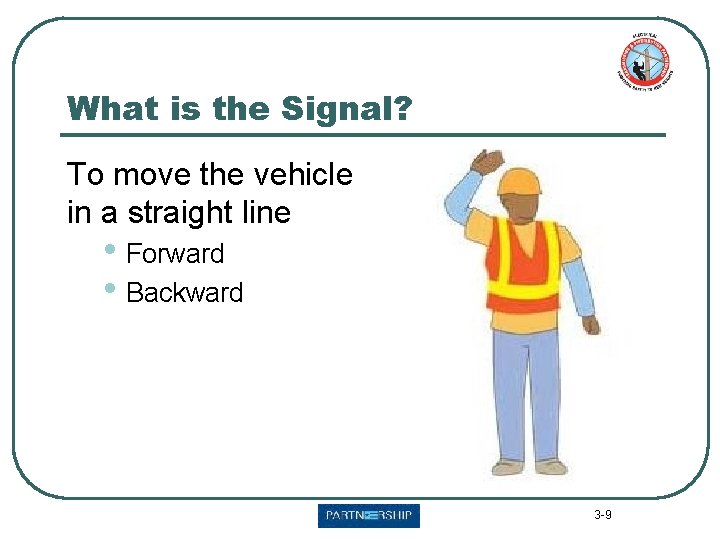
What is the Signal? To move the vehicle in a straight line • Forward • Backward 3 -9
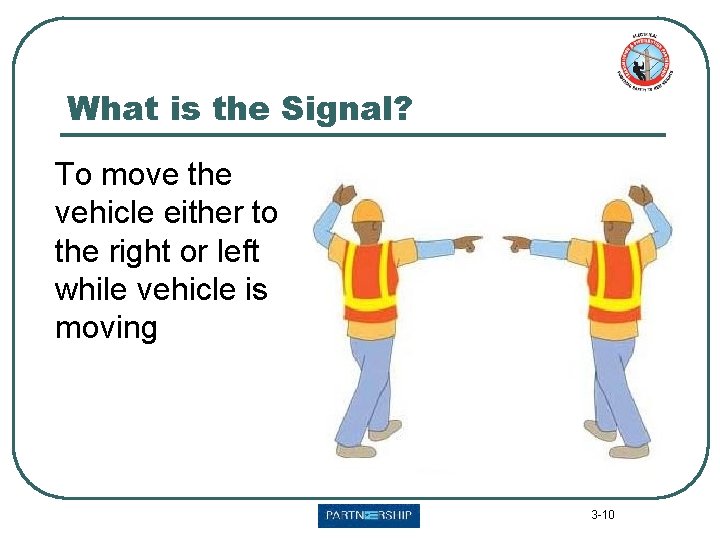
What is the Signal? To move the vehicle either to the right or left while vehicle is moving 3 -10
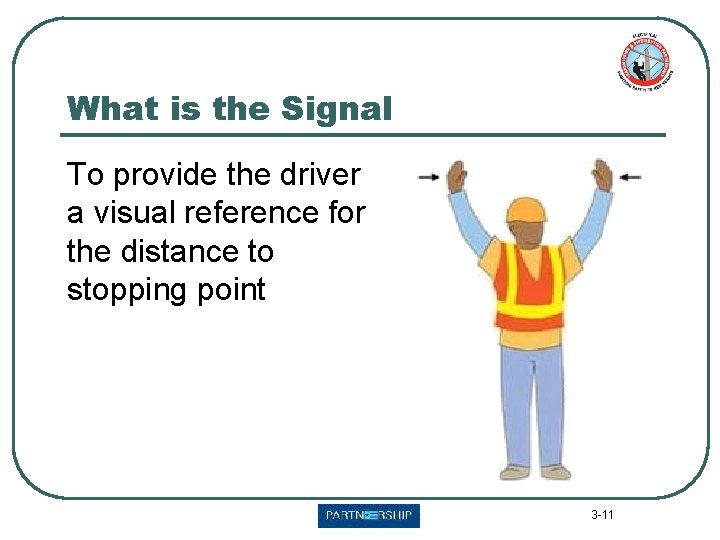
What is the Signal To provide the driver a visual reference for the distance to stopping point 3 -11
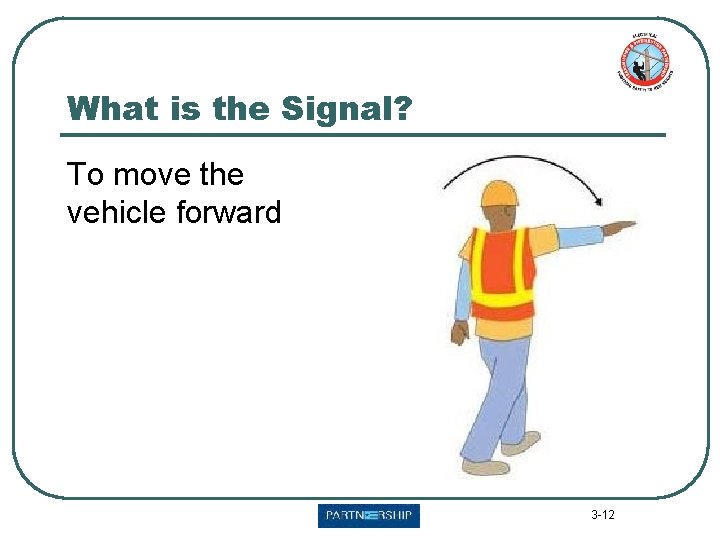
What is the Signal? To move the vehicle forward 3 -12
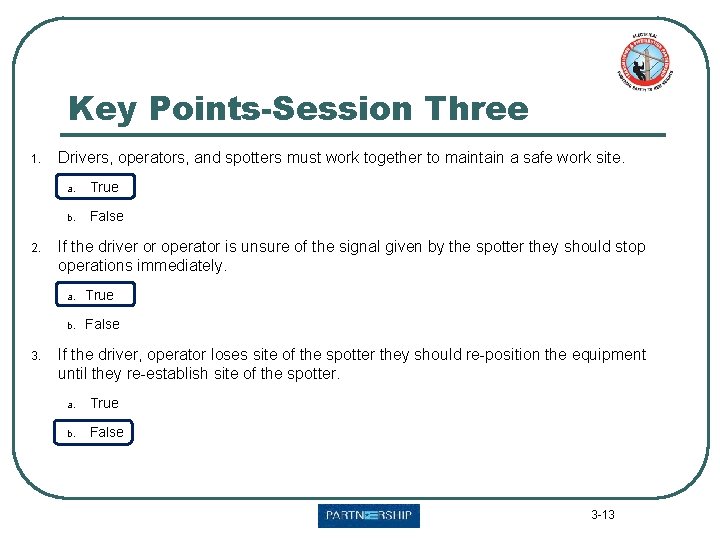
Key Points-Session Three 1. 2. 3. Drivers, operators, and spotters must work together to maintain a safe work site. a. True b. False If the driver or operator is unsure of the signal given by the spotter they should stop operations immediately. a. True b. False If the driver, operator loses site of the spotter they should re-position the equipment until they re-establish site of the spotter. a. True b. False 3 -13
1 -37