
EQUIPMENT IDENTIFICATION how to figure out the right









- Slides: 44
EQUIPMENT IDENTIFICATION how to figure out the right tool for the job
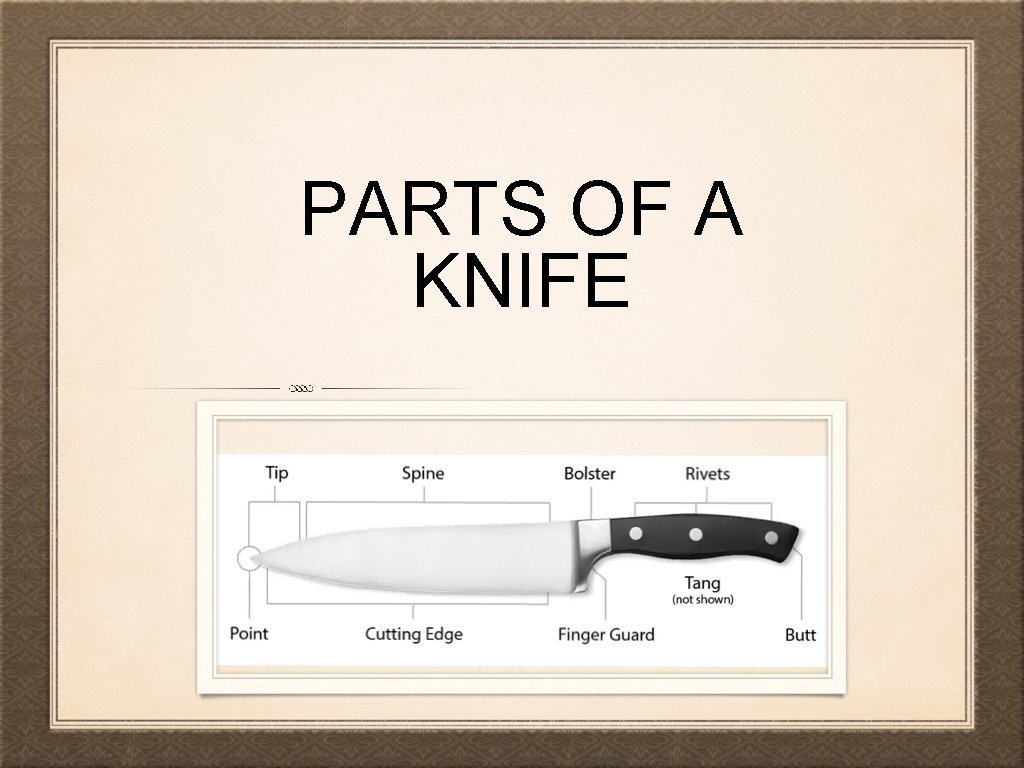
PARTS OF A KNIFE
Tang - part of the blade that continues into the handle Handles - the part of the knife you hold in your hand Rivets - metal rivets are used to secure the tang to the handle Bolsters - (collar or shank) point where the blade meets the handle
TYPES OF KNIVES
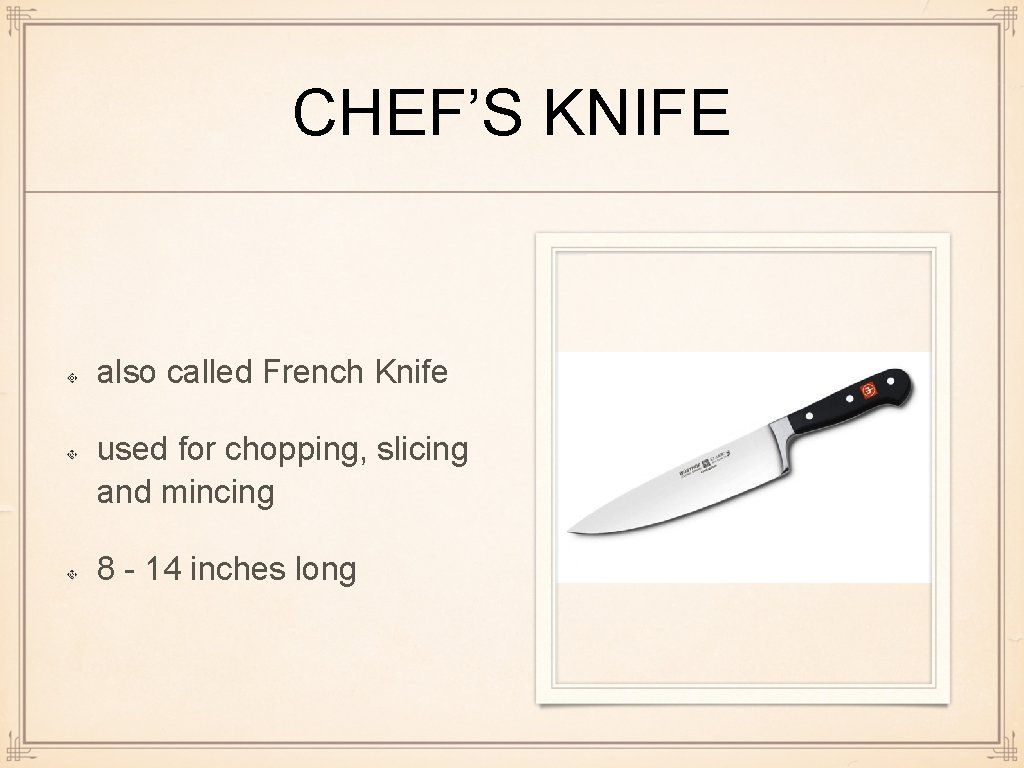
CHEF’S KNIFE also called French Knife used for chopping, slicing and mincing 8 - 14 inches long
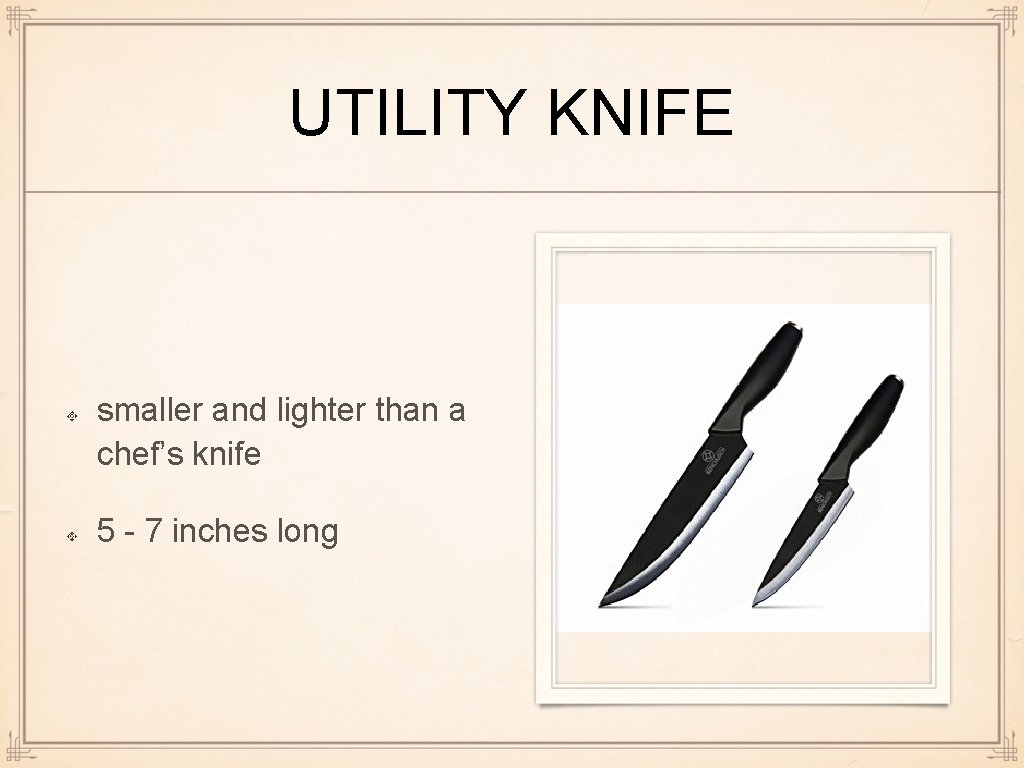
UTILITY KNIFE smaller and lighter than a chef’s knife 5 - 7 inches long
BONING KNIFE used to separate raw meat from bone thinner and shorter blade than a chef’s knife 6 inches long usually rigid
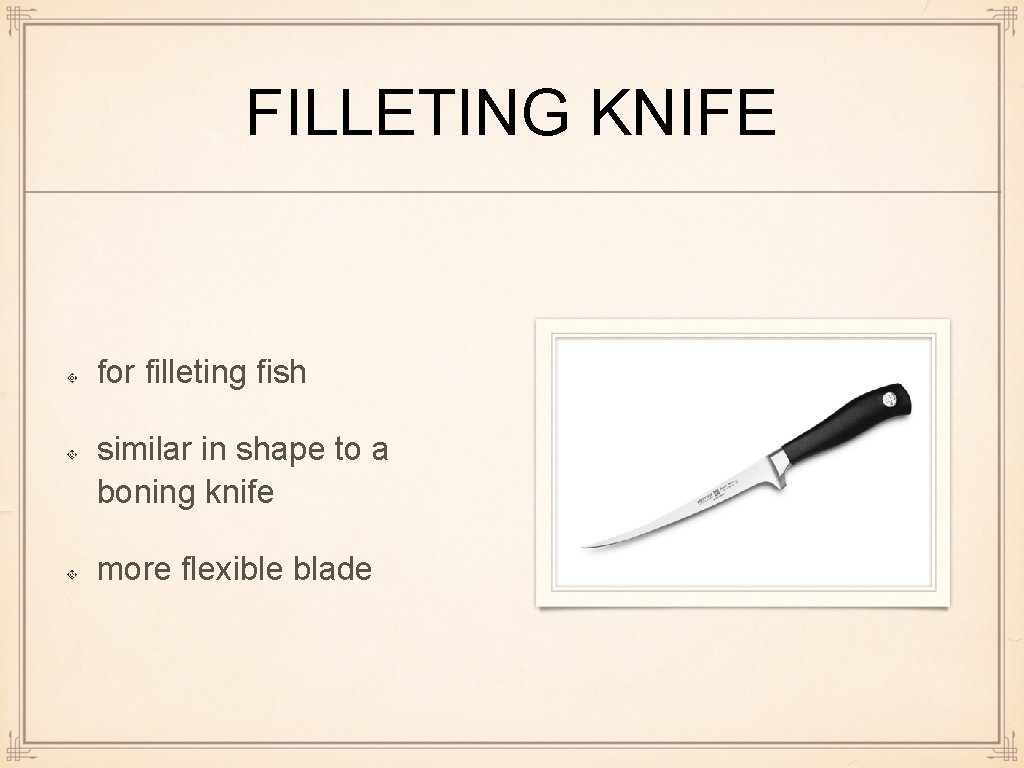
FILLETING KNIFE for filleting fish similar in shape to a boning knife more flexible blade
SLICER used for slicing cooked meat long blade with a rounded tip flexible or ridged with a fluted edge a series of ovals along the cutting edge sometimes called a bread knife because if may be used to slice loaves of bread
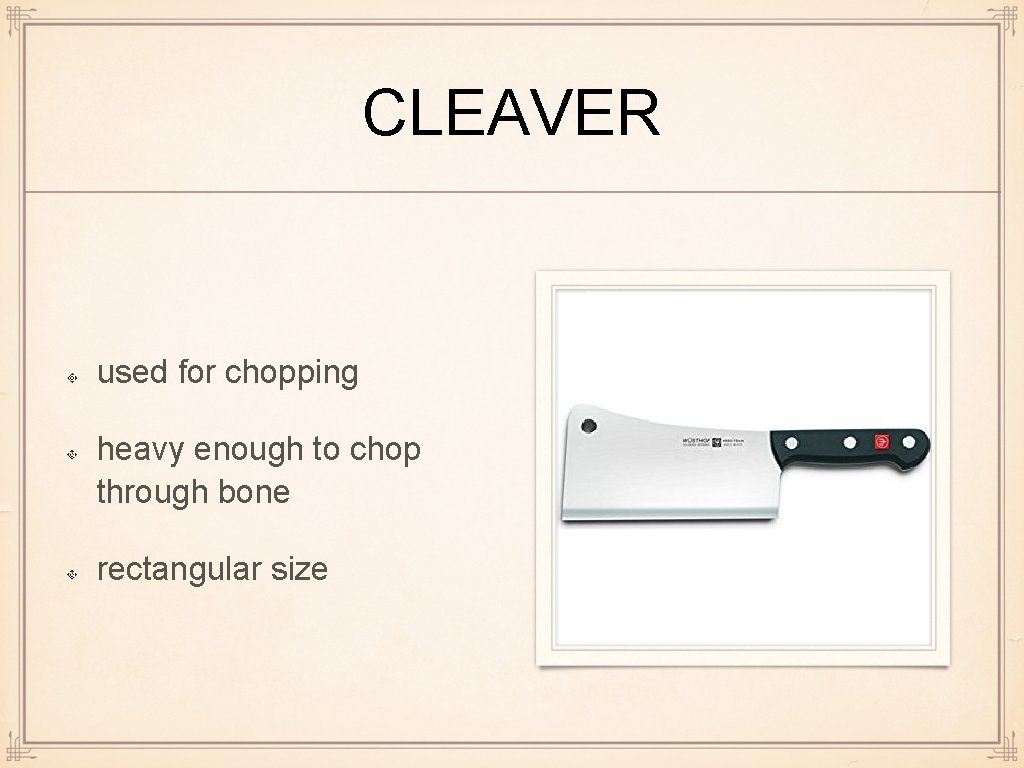
CLEAVER used for chopping heavy enough to chop through bone rectangular size
TOURNE KNIFE similar to paring knife curved blade to make cutting curved surfaces of tourneed vegetables easier
SWIVEL BLADED PEELER used to peel skin from vegetables and fruit swivel action accommodates the contours of items blade is sharpened on both sides will peel in an upward and downward motion
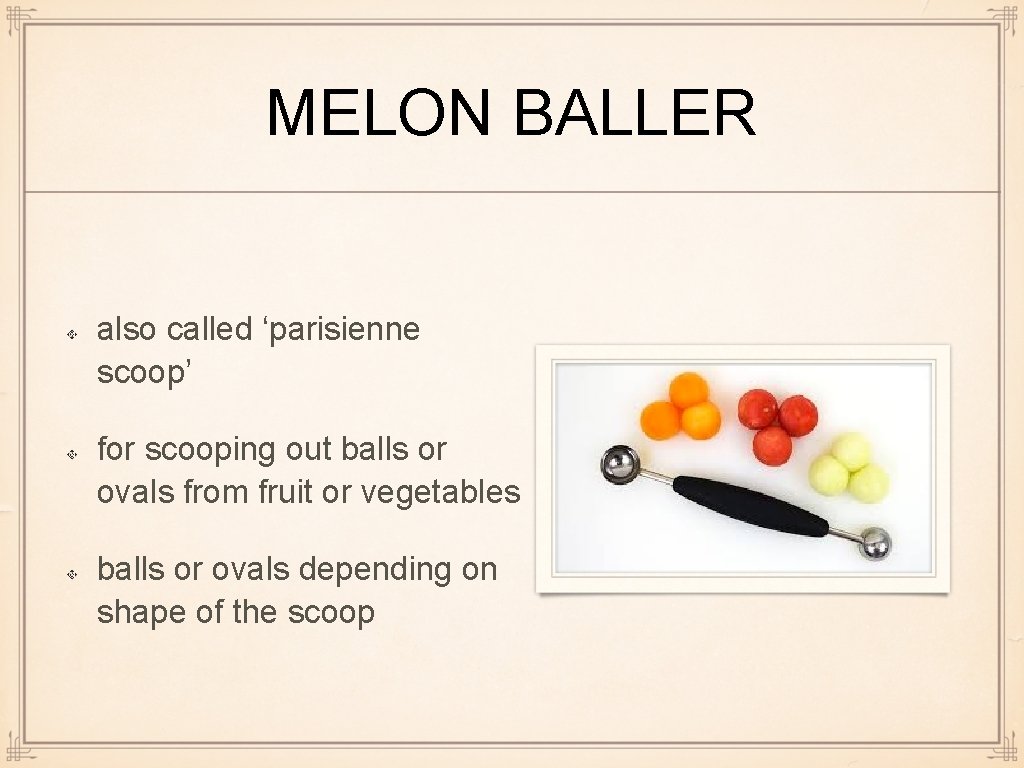
MELON BALLER also called ‘parisienne scoop’ for scooping out balls or ovals from fruit or vegetables balls or ovals depending on shape of the scoop
PALETTE KNIFE flexible and round tipped can be used as a spatula to turn pancakes and grilled foods also used for spreading jams, fillings and glazes
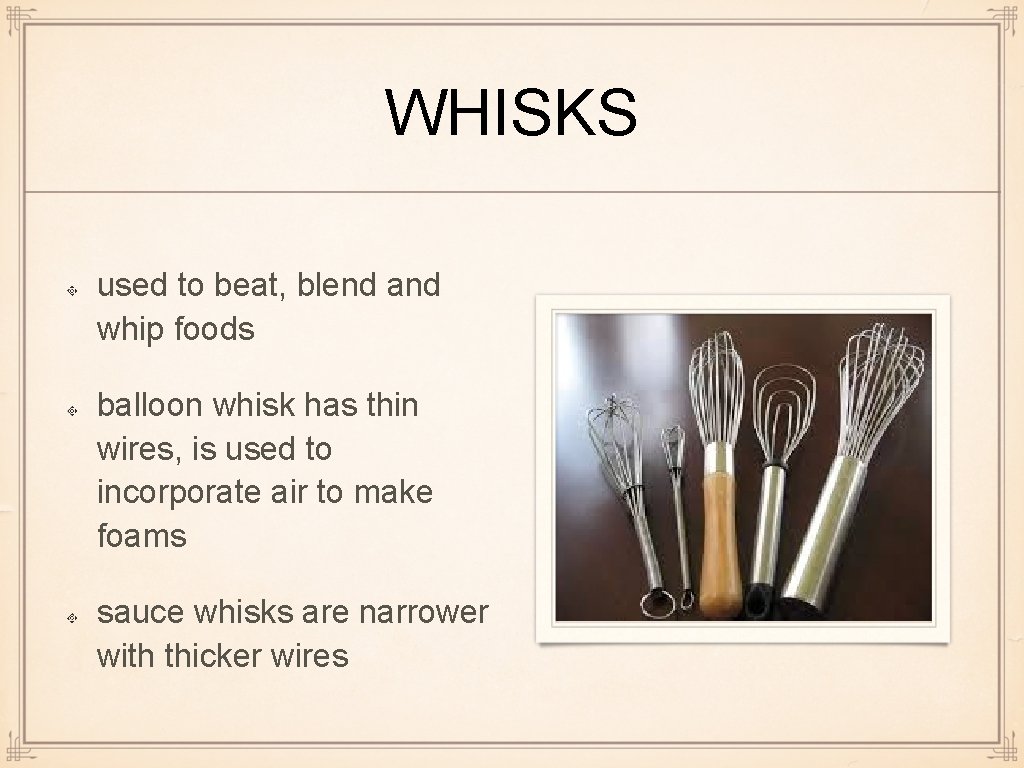
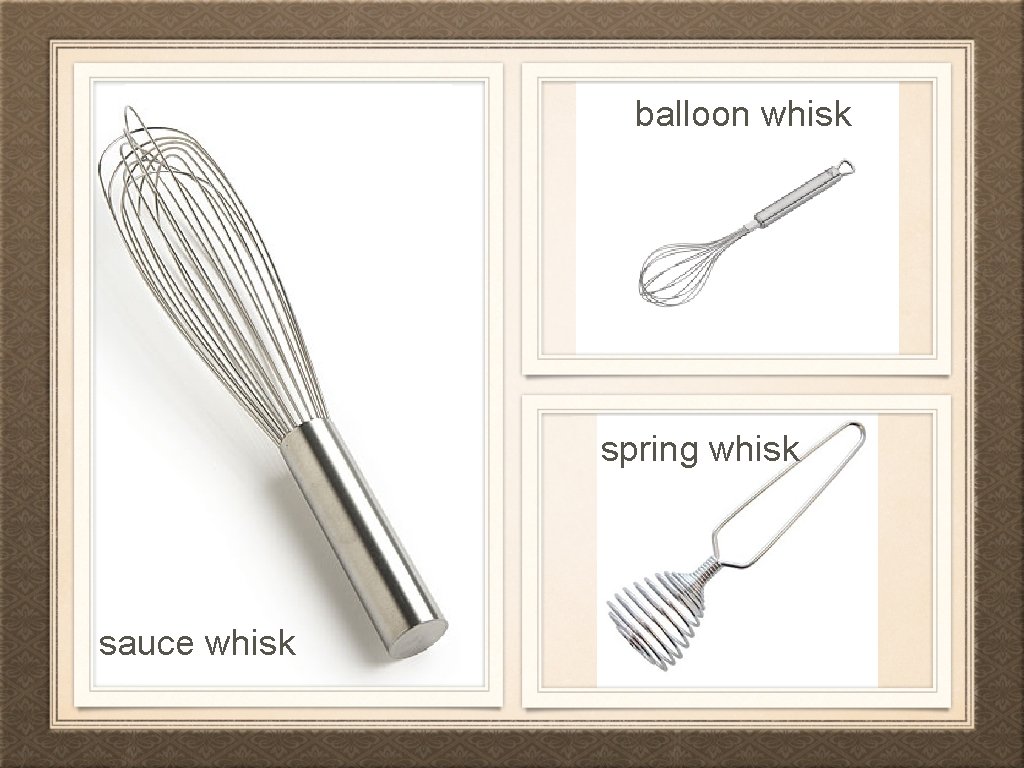
WHISKS used to beat, blend and whip foods balloon whisk has thin wires, is used to incorporate air to make foams sauce whisks are narrower with thicker wires
balloon whisk spring whisk sauce whisk
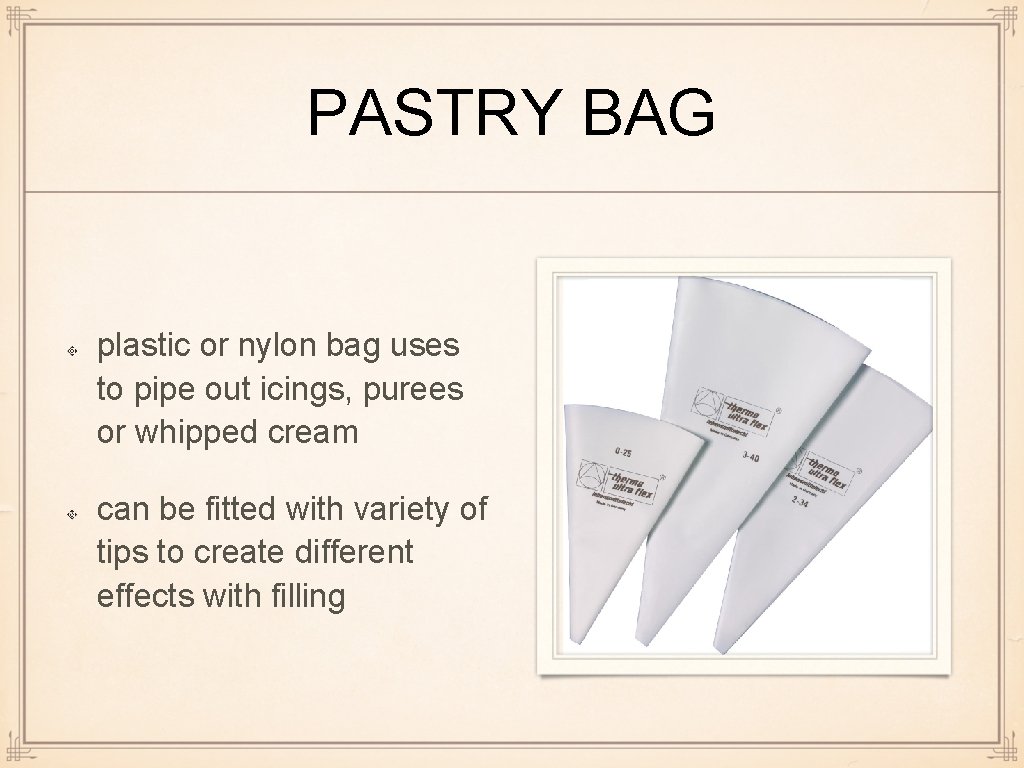
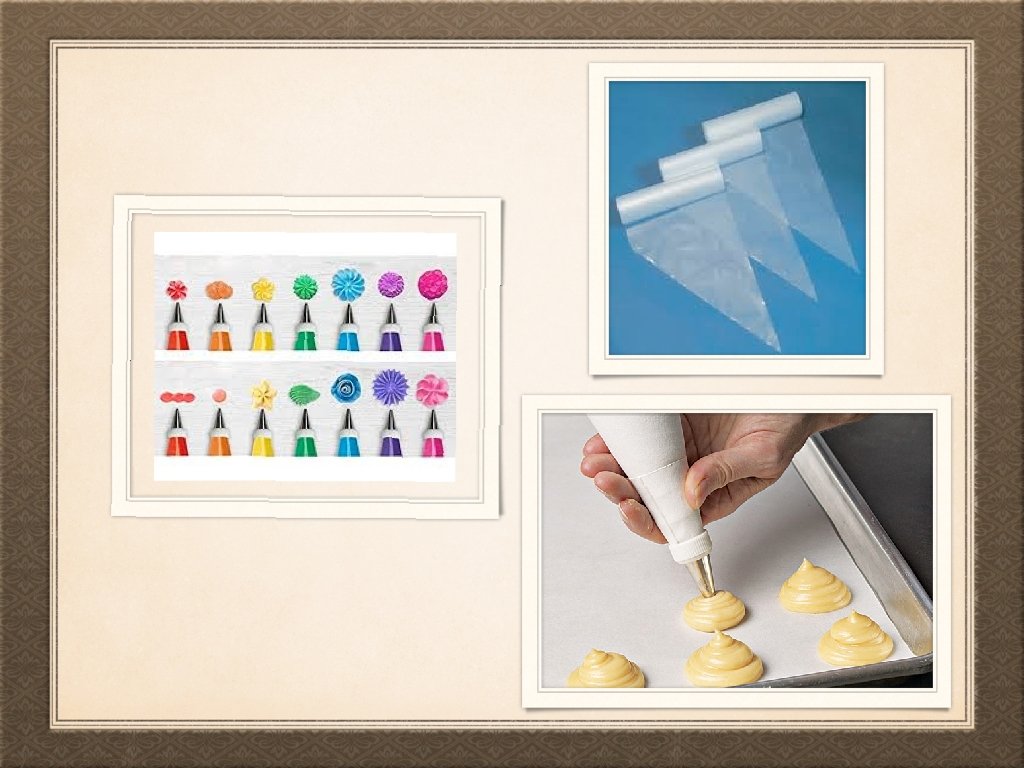
PASTRY BAG plastic or nylon bag uses to pipe out icings, purees or whipped cream can be fitted with variety of tips to create different effects with filling
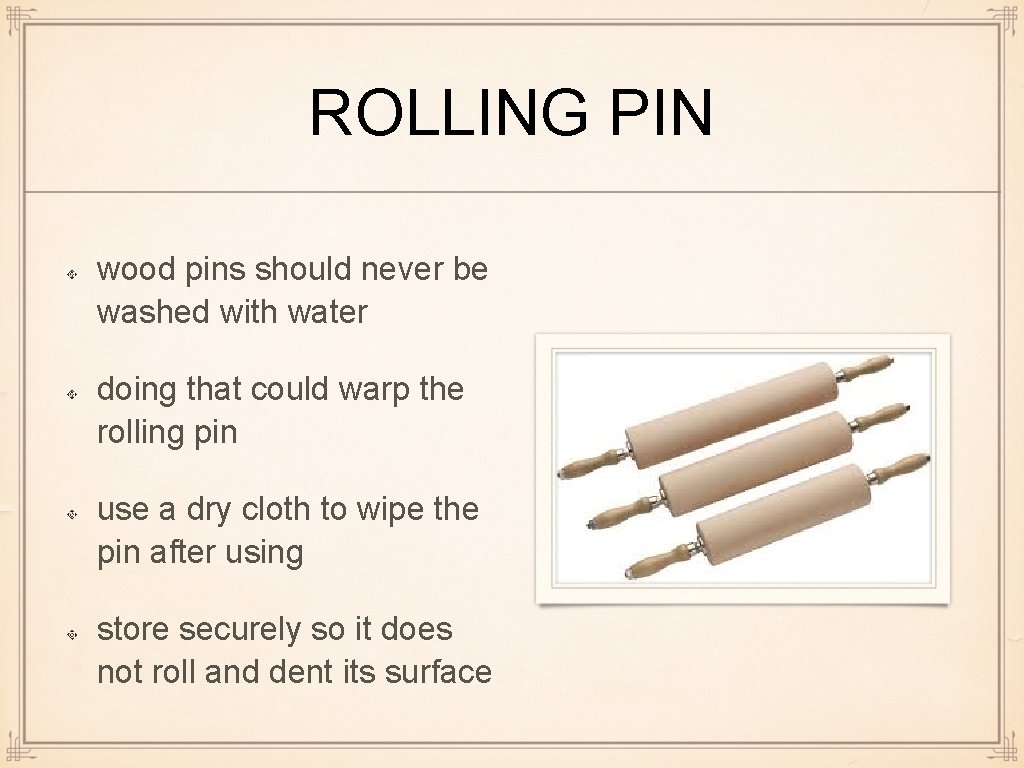
ROLLING PIN wood pins should never be washed with water doing that could warp the rolling pin use a dry cloth to wipe the pin after using store securely so it does not roll and dent its surface
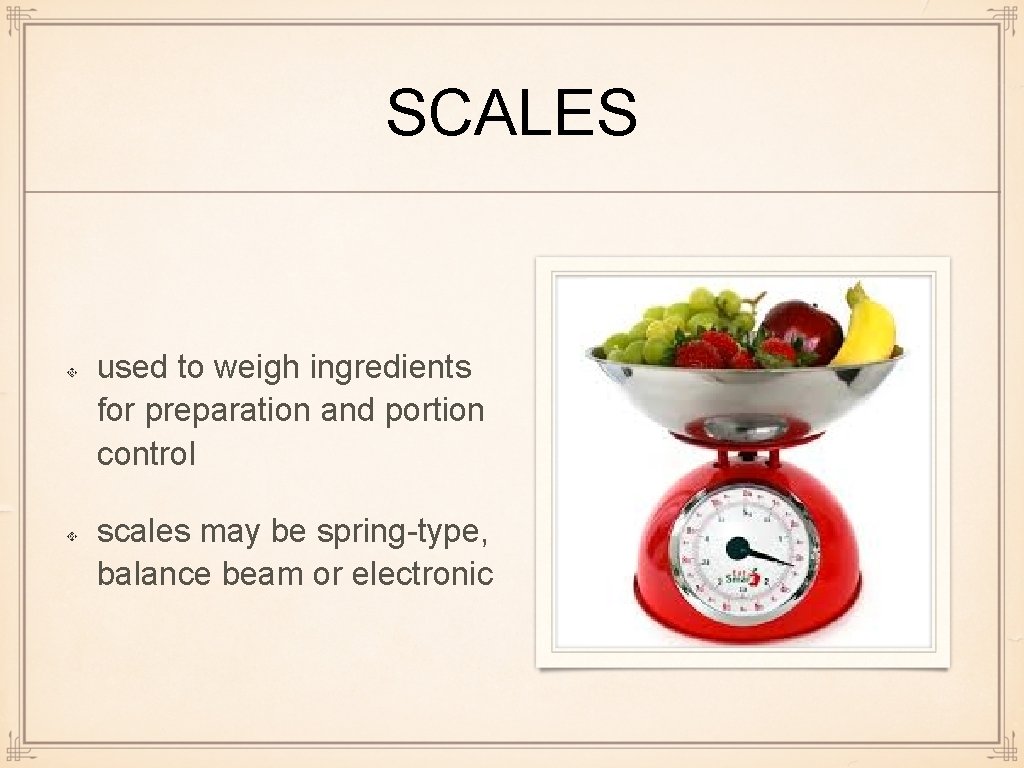
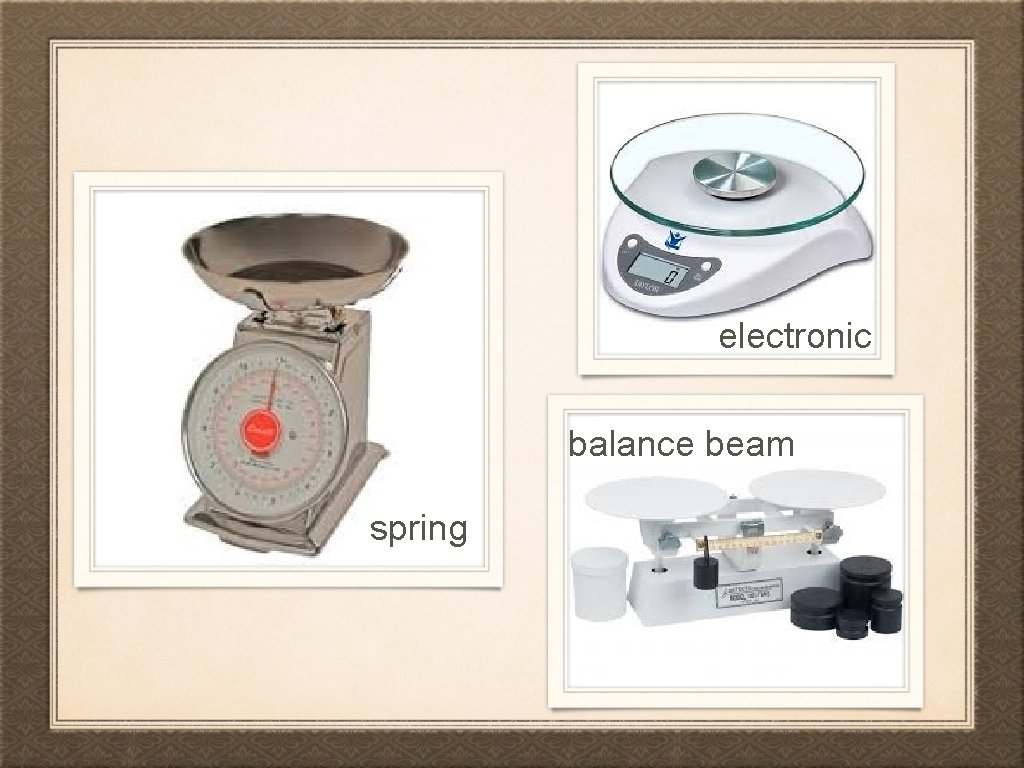
SCALES used to weigh ingredients for preparation and portion control scales may be spring-type, balance beam or electronic
electronic balance beam spring
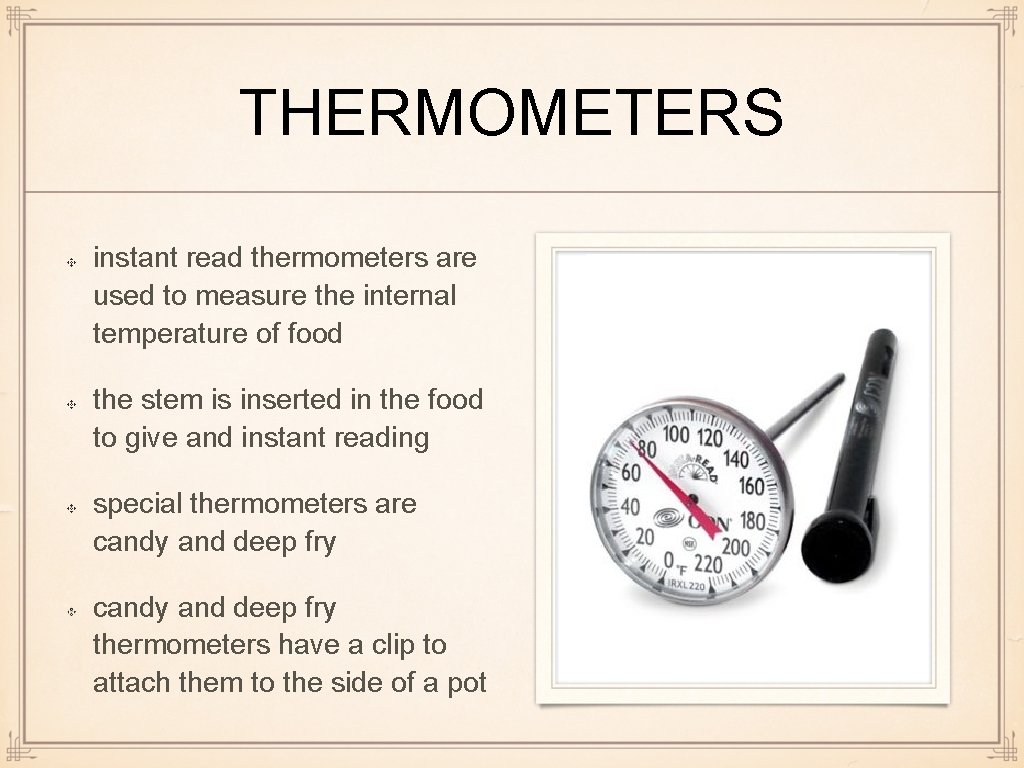
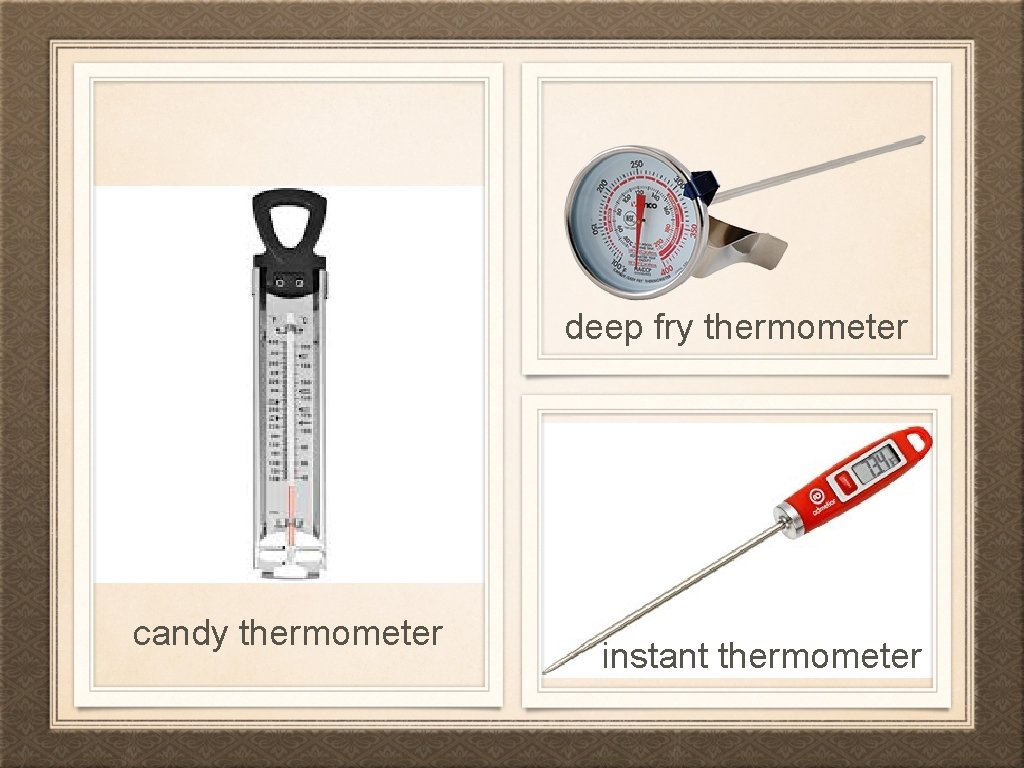
THERMOMETERS instant read thermometers are used to measure the internal temperature of food the stem is inserted in the food to give and instant reading special thermometers are candy and deep fry thermometers have a clip to attach them to the side of a pot
deep fry thermometer candy thermometer instant thermometer
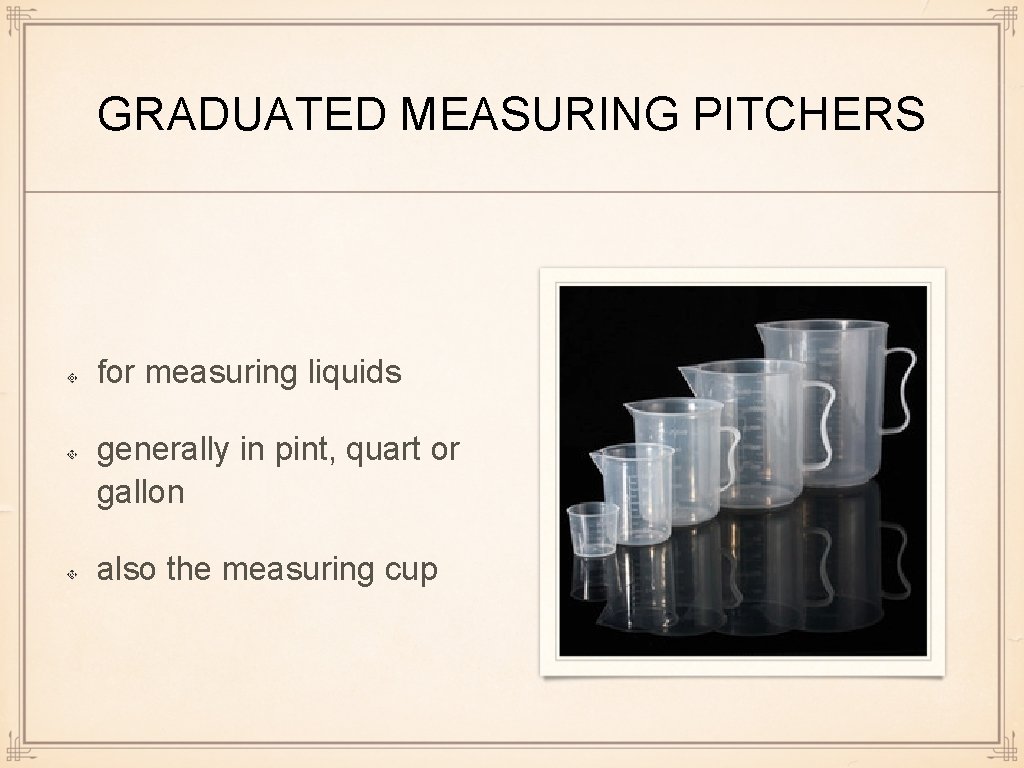
GRADUATED MEASURING PITCHERS for measuring liquids generally in pint, quart or gallon also the measuring cup
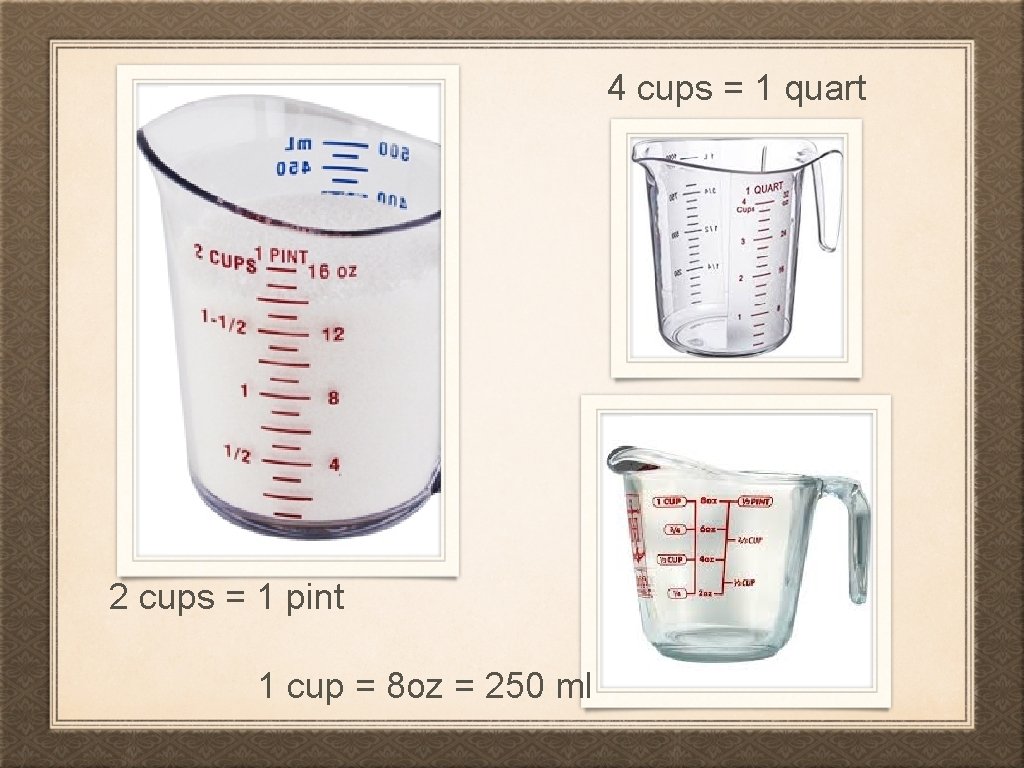
4 cups = 1 quart 2 cups = 1 pint 1 cup = 8 oz = 250 ml
MEASURING SPOONS tablespoon 1/2 tablespoon teaspoon 1/2 teaspoon 1/4 teaspoon 1/8 teaspoon
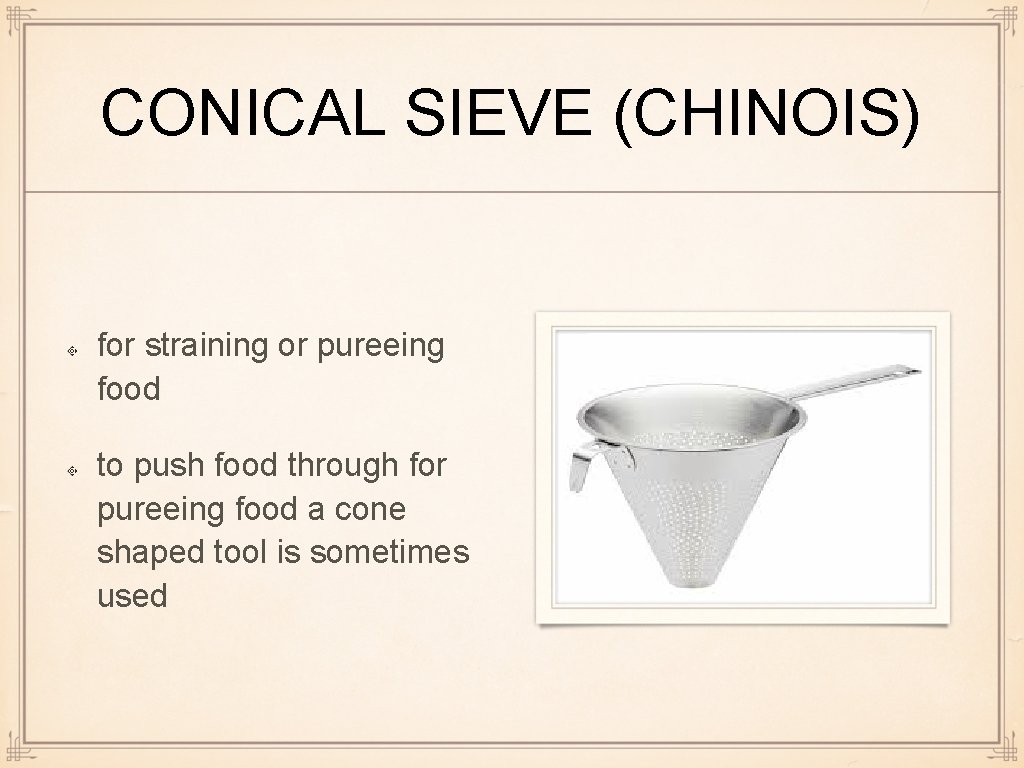
CONICAL SIEVE (CHINOIS) for straining or pureeing food to push food through for pureeing food a cone shaped tool is sometimes used
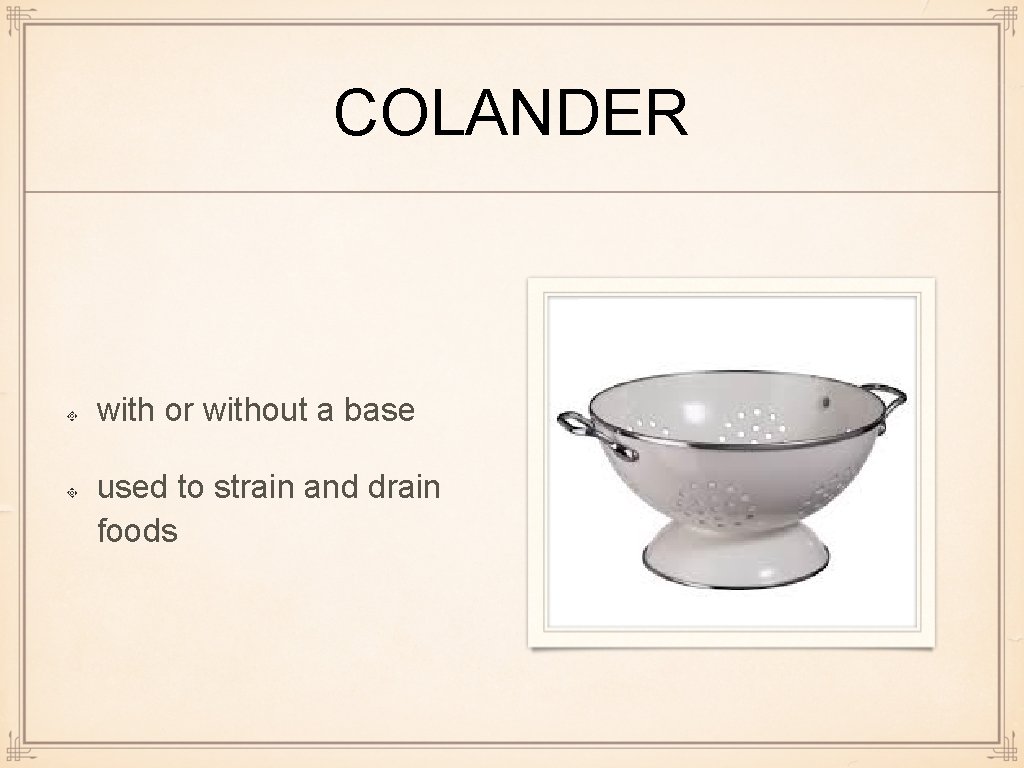
COLANDER with or without a base used to strain and drain foods
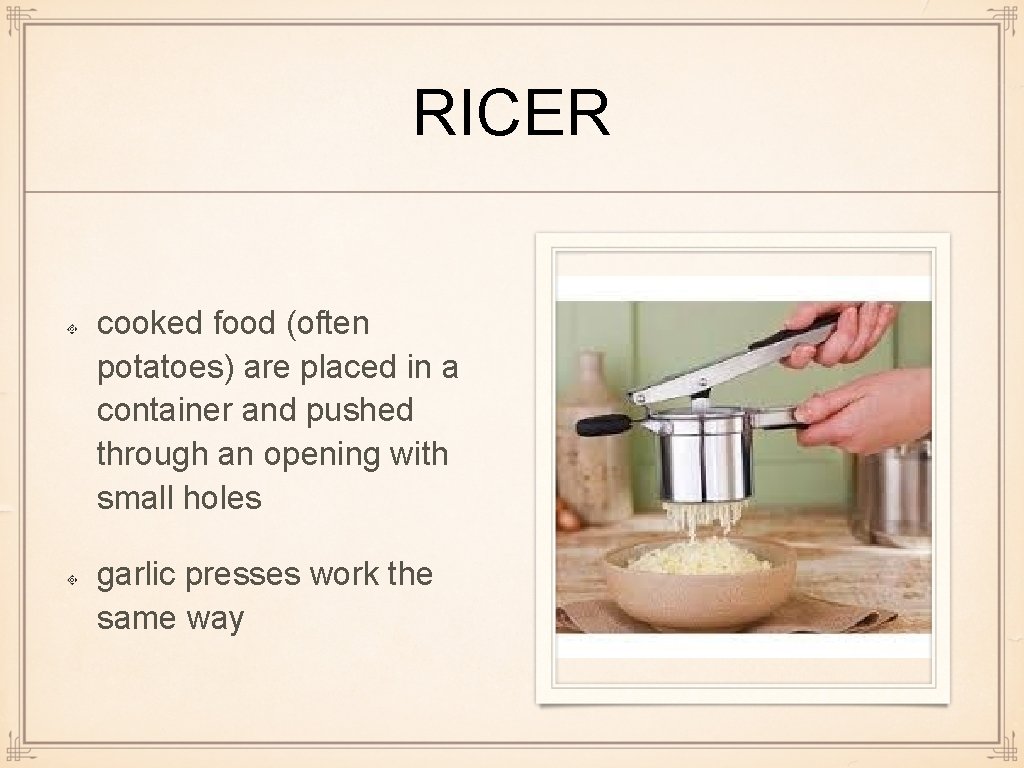
RICER cooked food (often potatoes) are placed in a container and pushed through an opening with small holes garlic presses work the same way
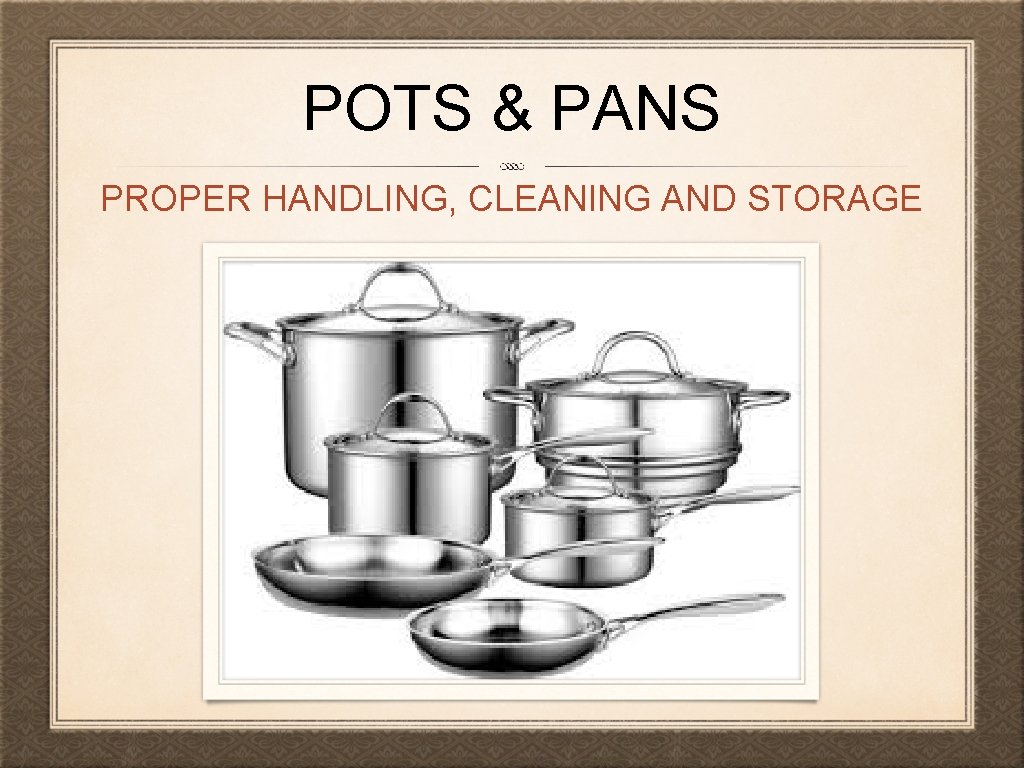
POTS & PANS PROPER HANDLING, CLEANING AND STORAGE
HANDLING, CLEANING, STORAGE avoid rapid temperature changes ex. moving a smoking hot pot into a sink of water may cause some items to warp or crack air drying is best enameled cast iron should not be cleaned with abrasives like steel wool poorly made pots and pans will have weak spots and warp
COPPER transfer heat quickly and evenly generally lined because direct contact with many foods will change their colour and consistency exception is to cook jams, jellies and other high sugar items
CAST IRON can hold heat well and evenly can be brittle must be treated carefully to prevent pitting, scarring and rusting can be coated with enamel to simplify care
STAINLESS STELL generally poor conductor of heat easy care and maintenance can be sandwiched with other metals like aluminum or copper for better heat conduction does not react with food
PRESSED OR ROLLED STEEL prone to discolouration transmit heat very rapidly pans are generally thin used to saute foods because of their quick response to heat
ALUMINUM excellent conductor of heat soft metal that wears down quickly if a metal spoon is used in an aluminum pot for a white sauce it may take on a gray colour anodized or treated aluminum do not react with food and is very popular
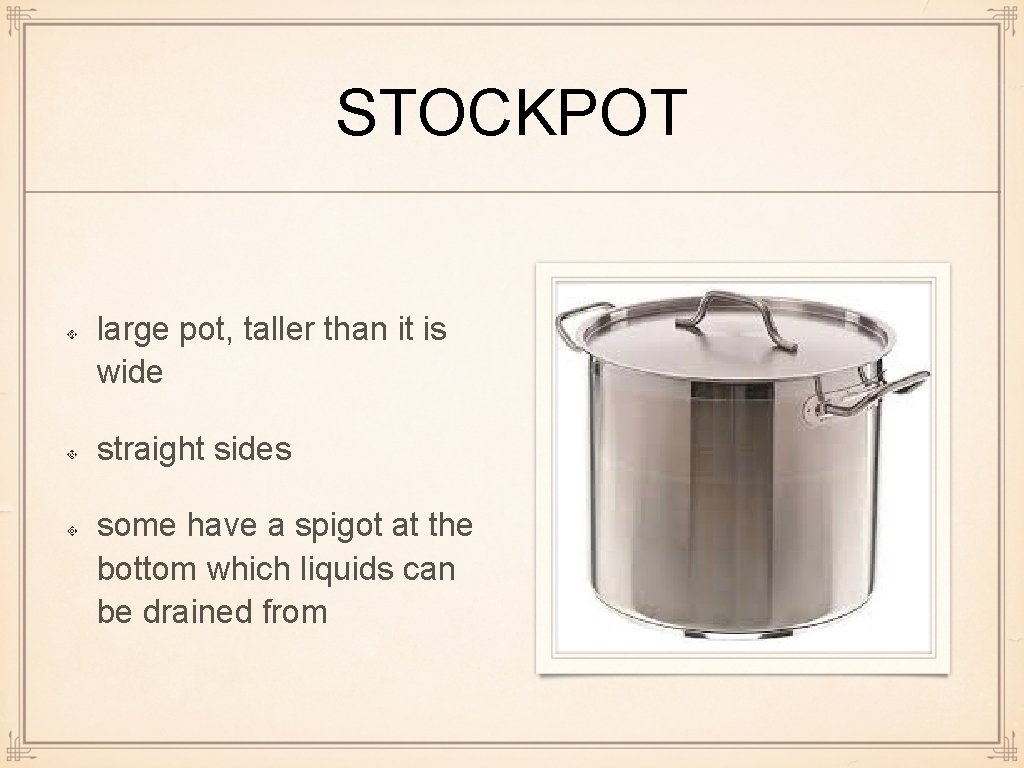
STOCKPOT large pot, taller than it is wide straight sides some have a spigot at the bottom which liquids can be drained from
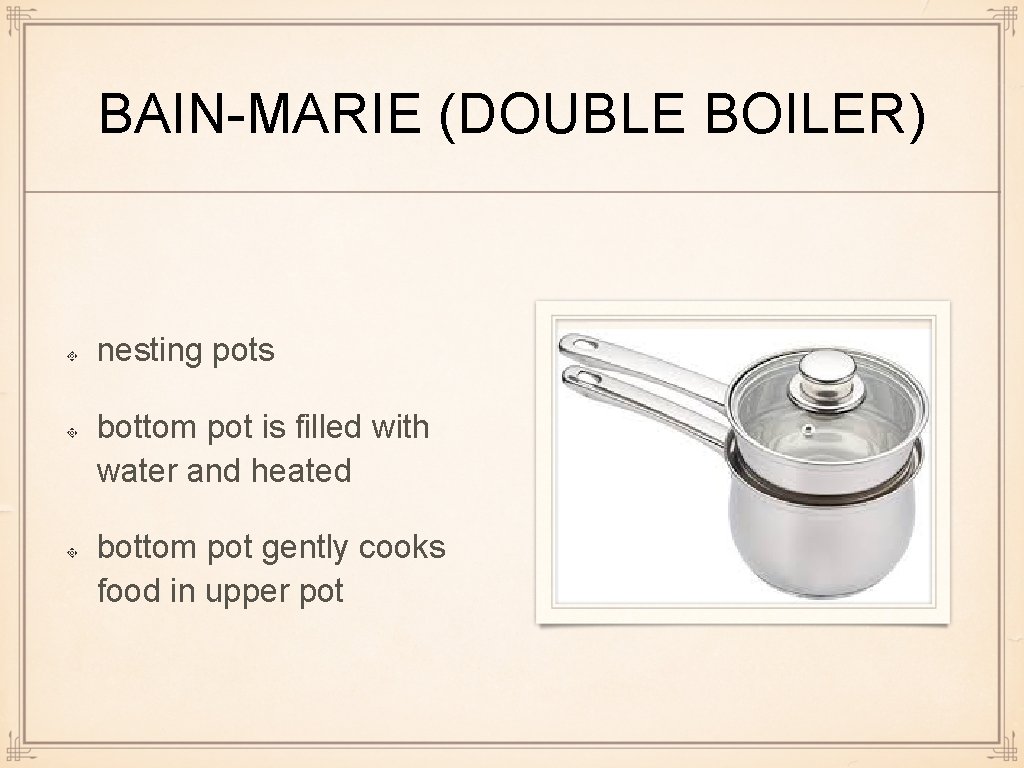
BAIN-MARIE (DOUBLE BOILER) nesting pots bottom pot is filled with water and heated bottom pot gently cooks food in upper pot
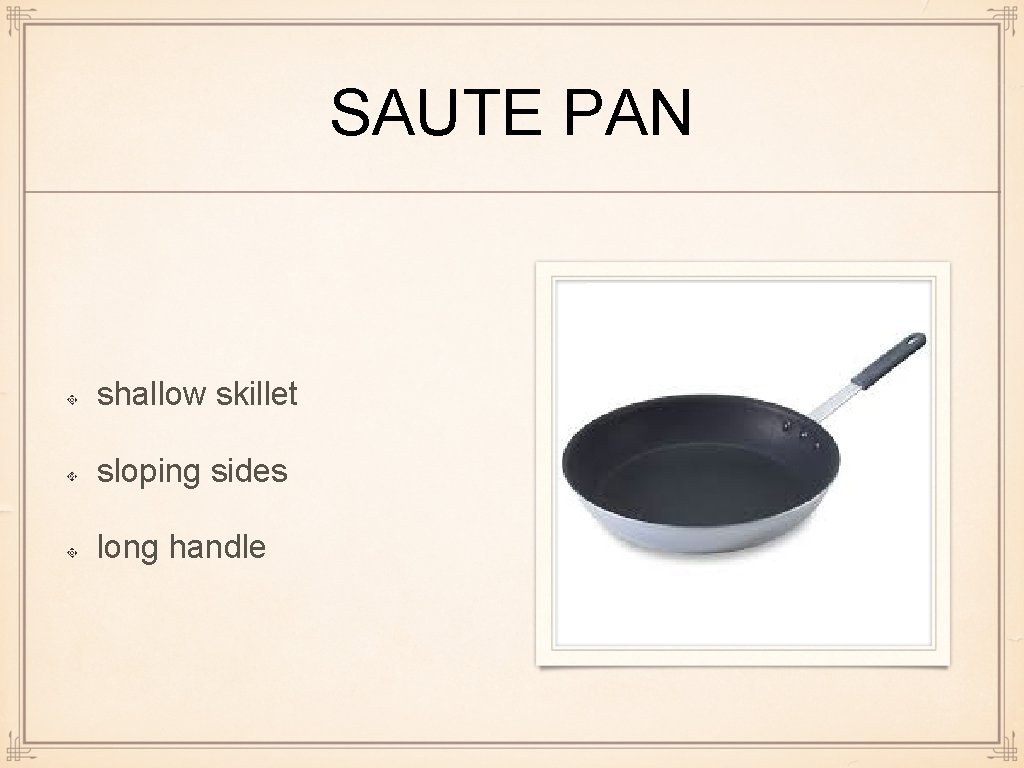
SAUTE PAN shallow skillet sloping sides long handle
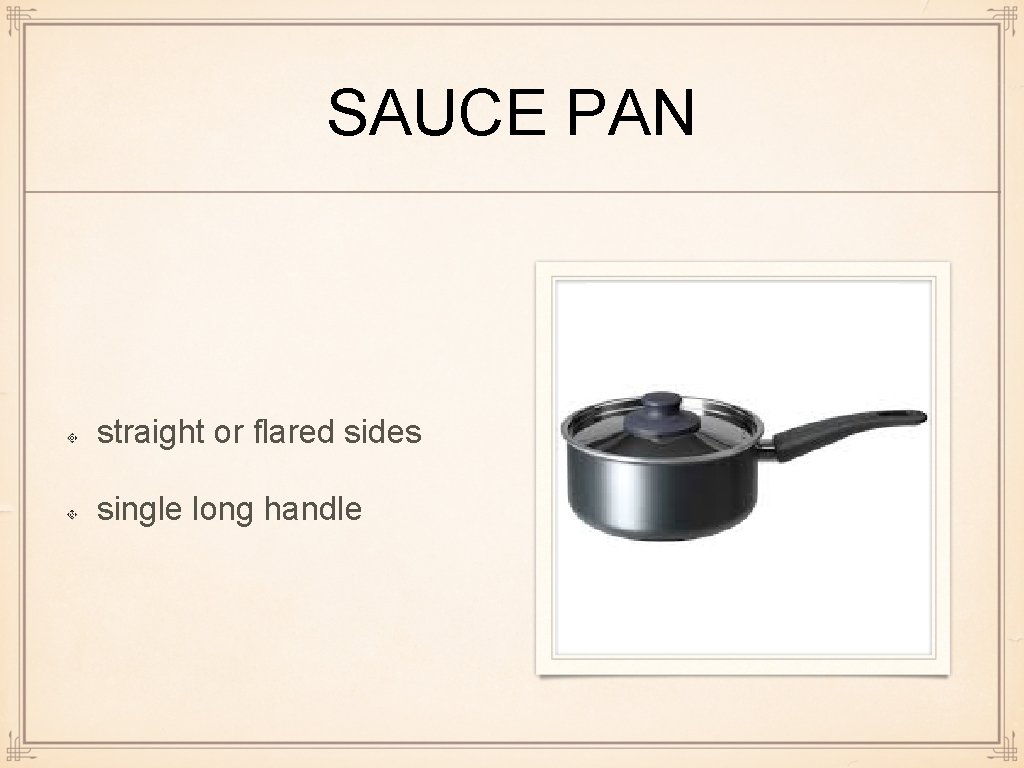
SAUCE PAN straight or flared sides single long handle
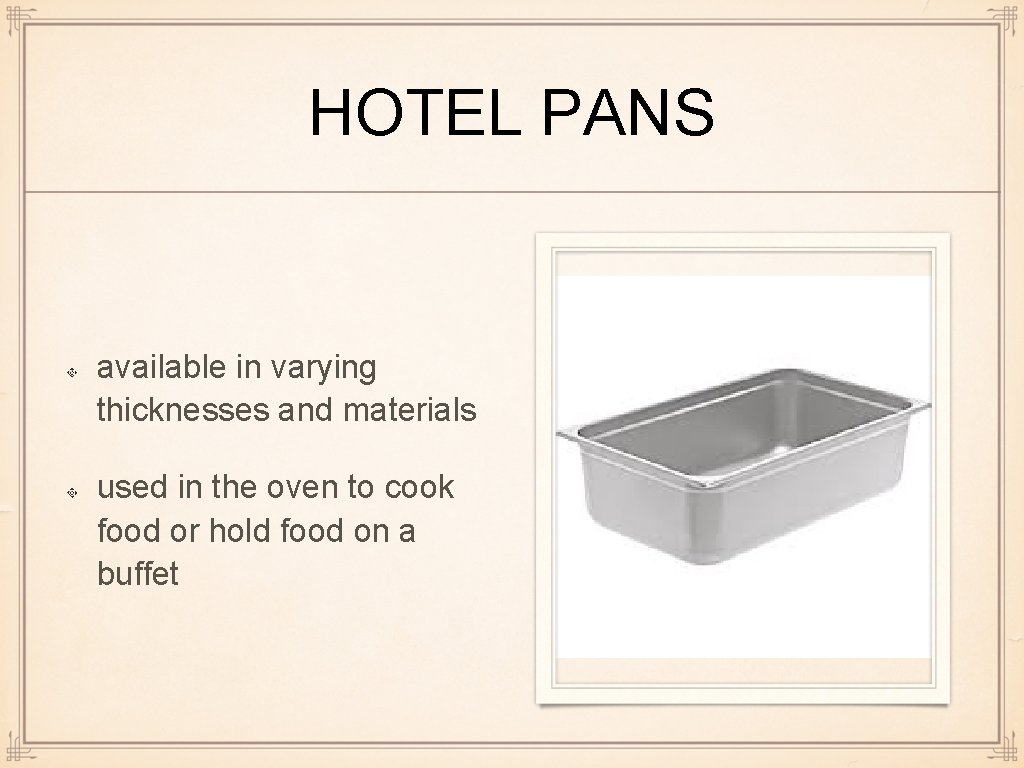
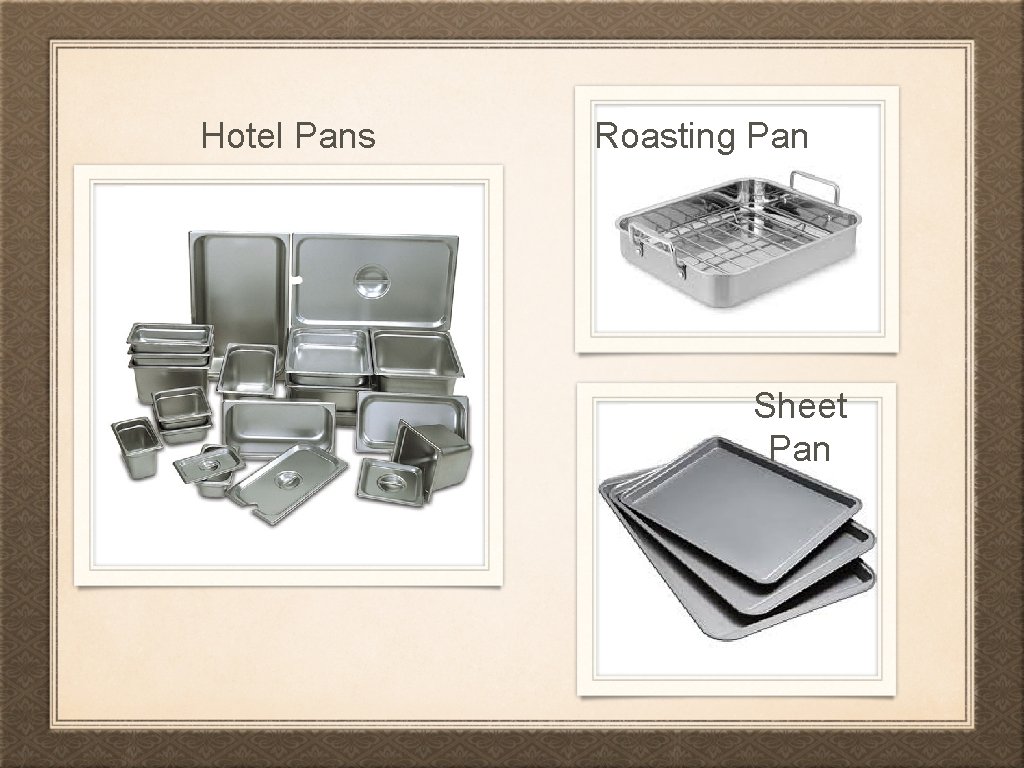
HOTEL PANS available in varying thicknesses and materials used in the oven to cook food or hold food on a buffet
Cake Pans Springform Pan Muffin Tin Pie Plate Loaf Pan
Hotel Pans Roasting Pan Sheet Pan
BIBLIOGRAPHY The professional chef. 7 th ed. , Wiley, 2002.