
EQUINE REPRODUCTION Stallion Physiology Onset of sexual maturity
- Slides: 38
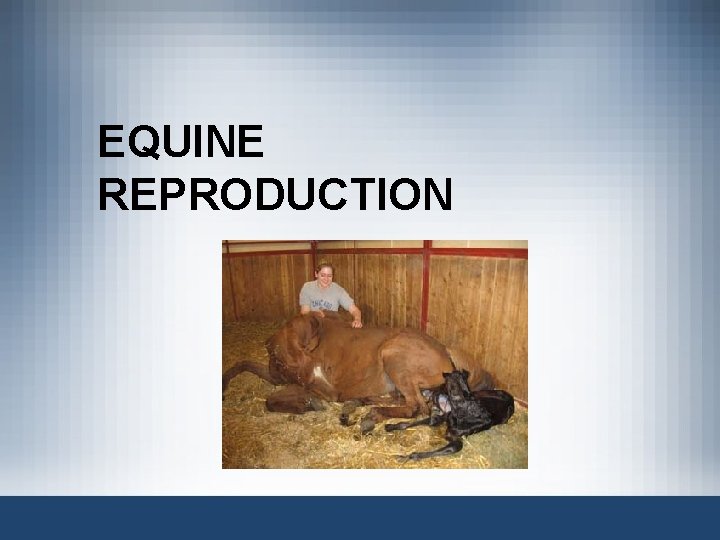
EQUINE REPRODUCTION
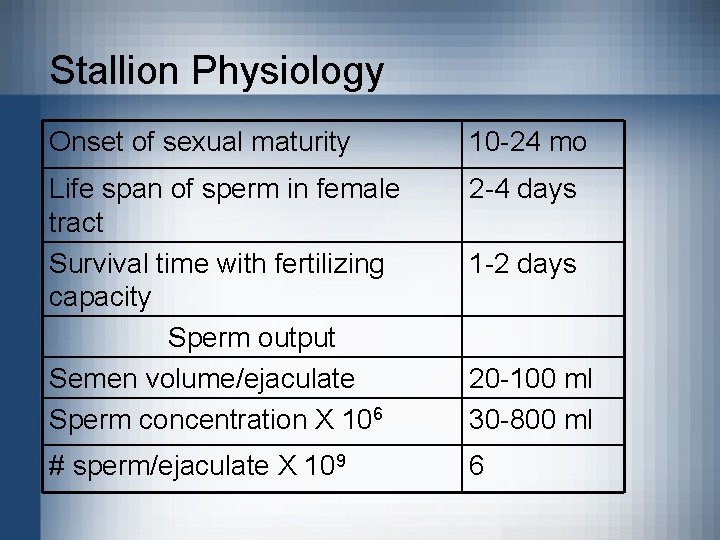
Stallion Physiology Onset of sexual maturity 10 -24 mo Life span of sperm in female tract Survival time with fertilizing capacity Sperm output Semen volume/ejaculate Sperm concentration X 106 2 -4 days # sperm/ejaculate X 109 6 1 -2 days 20 -100 ml 30 -800 ml
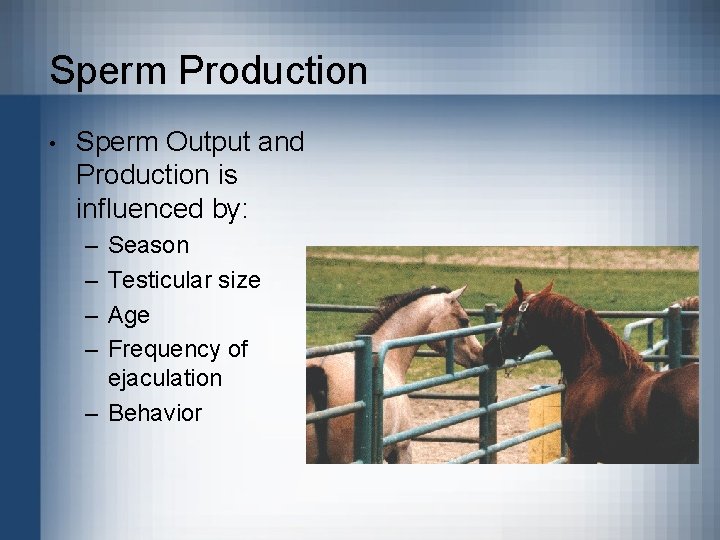
Sperm Production • Sperm Output and Production is influenced by: – – Season Testicular size Age Frequency of ejaculation – Behavior
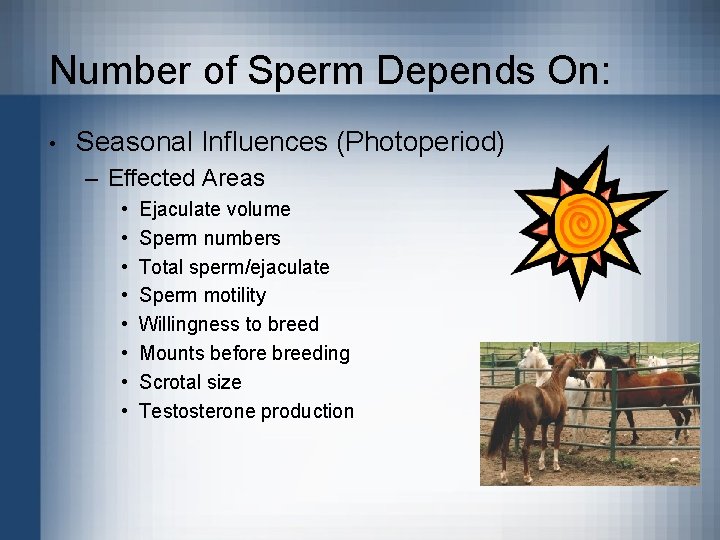
Number of Sperm Depends On: • Seasonal Influences (Photoperiod) – Effected Areas • • Ejaculate volume Sperm numbers Total sperm/ejaculate Sperm motility Willingness to breed Mounts before breeding Scrotal size Testosterone production
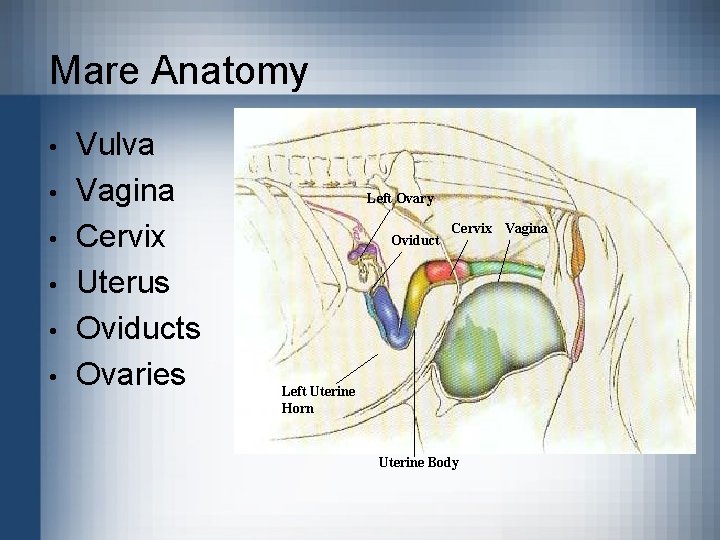
Mare Anatomy • • • Vulva Vagina Cervix Uterus Oviducts Ovaries Left Ovary Oviduct Cervix Vagina Left Uterine Horn Uterine Body
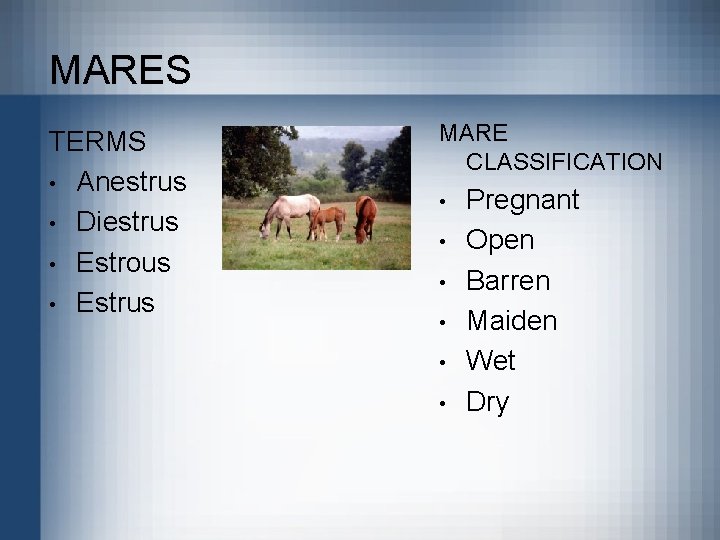
MARES TERMS • Anestrus • Diestrus • Estrous • Estrus MARE CLASSIFICATION • • • Pregnant Open Barren Maiden Wet Dry
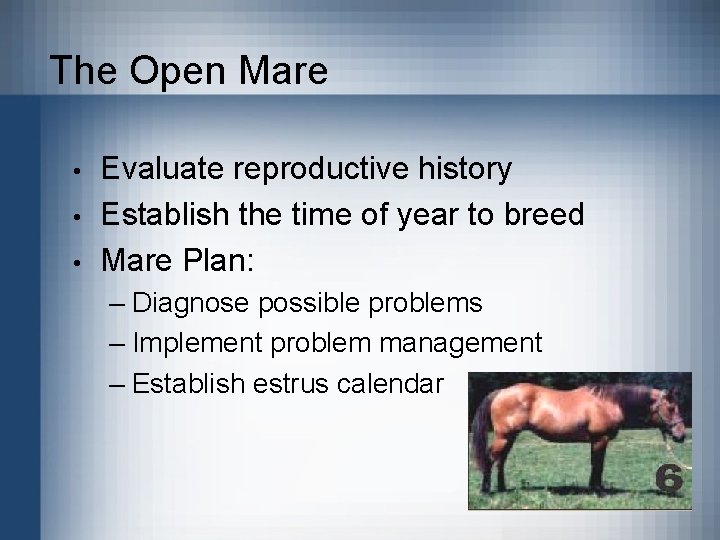
The Open Mare • • • Evaluate reproductive history Establish the time of year to breed Mare Plan: – Diagnose possible problems – Implement problem management – Establish estrus calendar
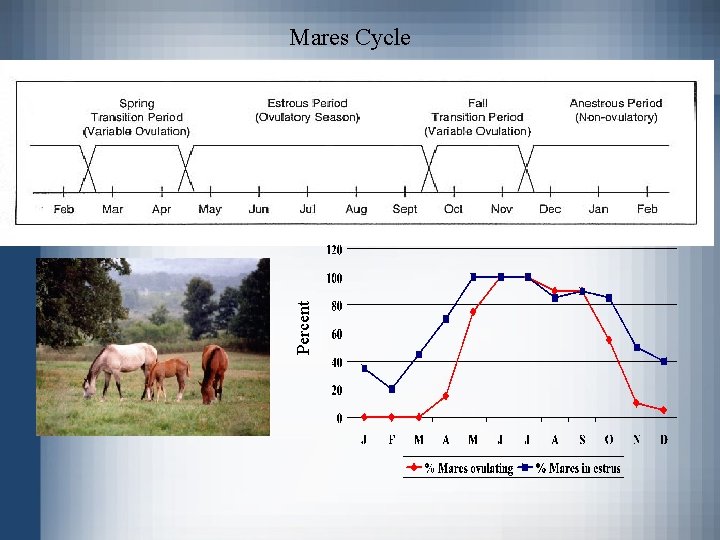
Percent Mares Cycle
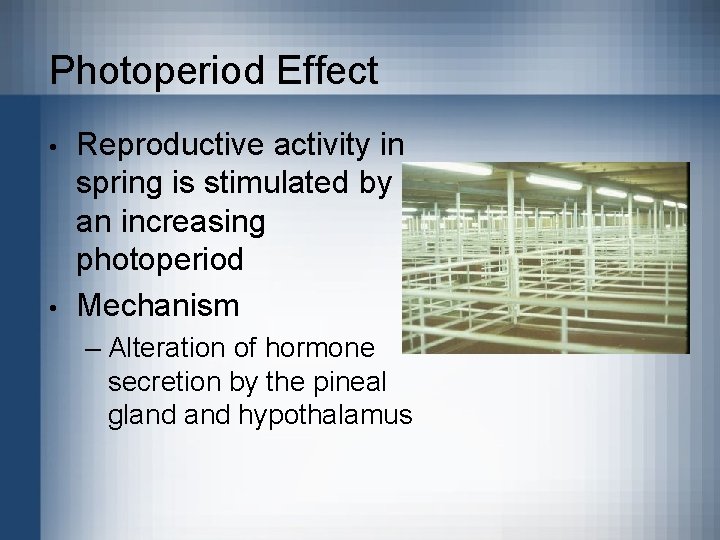
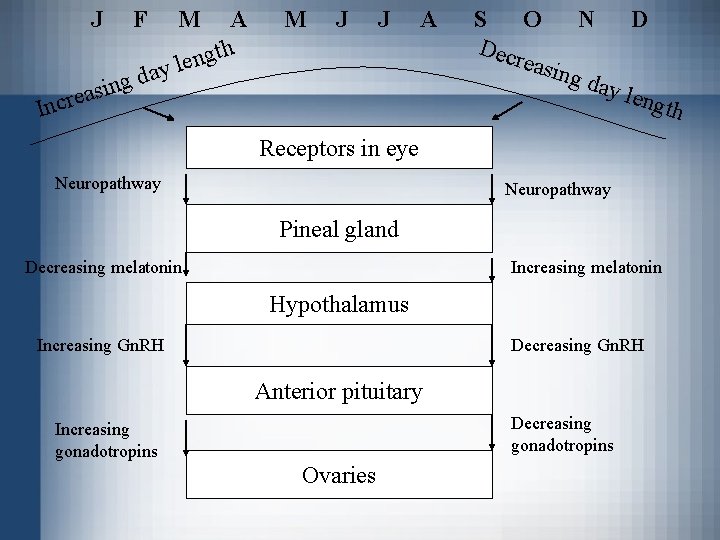
Photoperiod Effect • • Reproductive activity in spring is stimulated by an increasing photoperiod Mechanism – Alteration of hormone secretion by the pineal gland hypothalamus
J sin a e r Inc F M A ngth M J J A le y a gd S O N D Decr easin g da y len gth Receptors in eye Neuropathway Pineal gland Decreasing melatonin Increasing melatonin Hypothalamus Increasing Gn. RH Decreasing Gn. RH Anterior pituitary Decreasing gonadotropins Increasing gonadotropins Ovaries
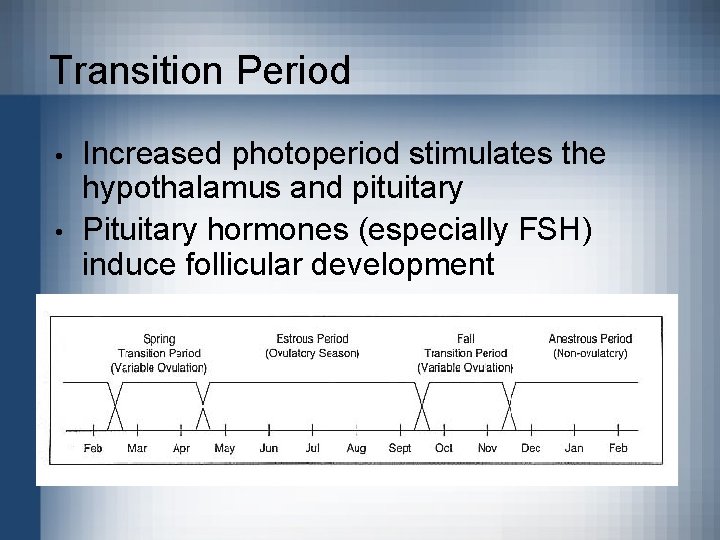
Transition Period • • Increased photoperiod stimulates the hypothalamus and pituitary Pituitary hormones (especially FSH) induce follicular development
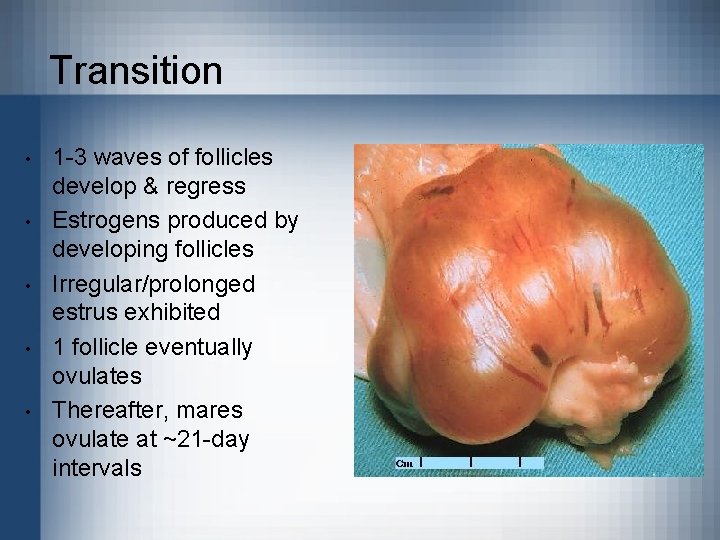
Transition • • • 1 -3 waves of follicles develop & regress Estrogens produced by developing follicles Irregular/prolonged estrus exhibited 1 follicle eventually ovulates Thereafter, mares ovulate at ~21 -day intervals
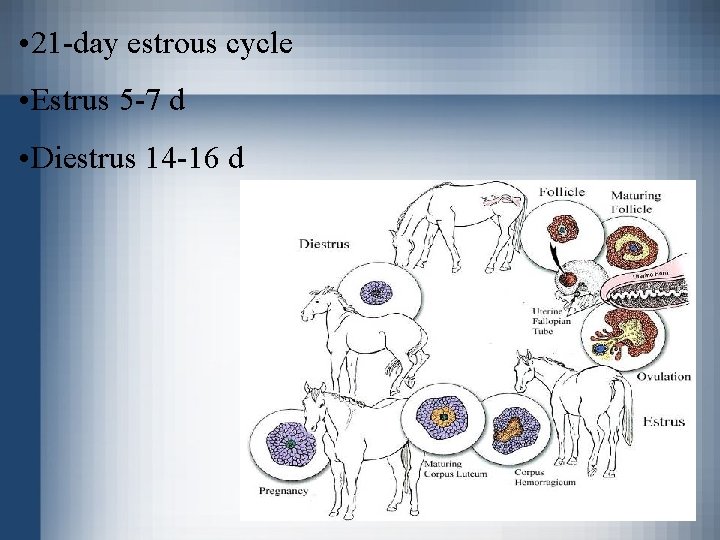
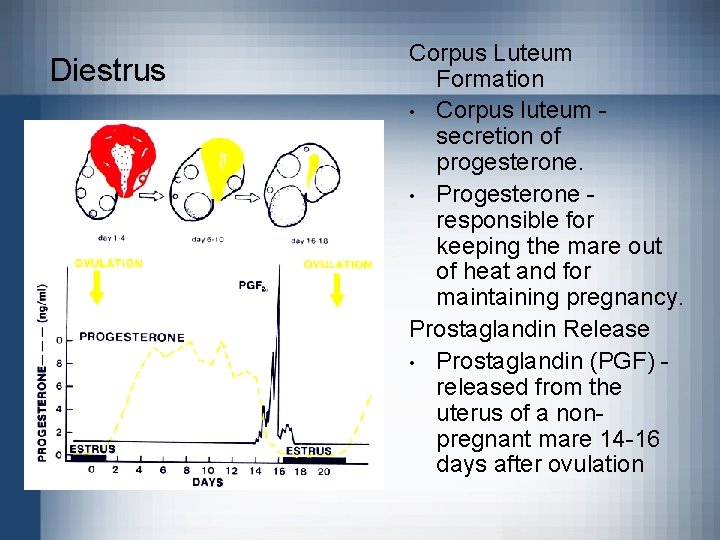
• 21 -day estrous cycle • Estrus 5 -7 d • Diestrus 14 -16 d
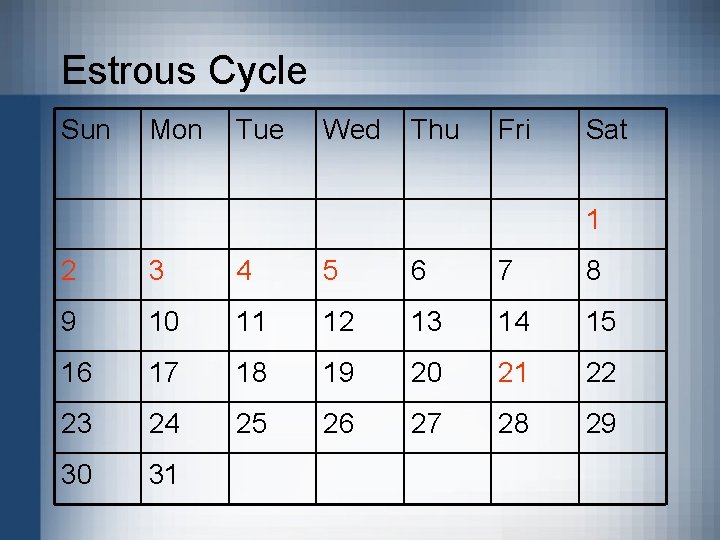
Estrous Cycle Sun Mon Tue Wed Thu Fri Sat 1 2 3 4 5 6 7 8 9 10 11 12 13 14 15 16 17 18 19 20 21 22 23 24 25 26 27 28 29 30 31
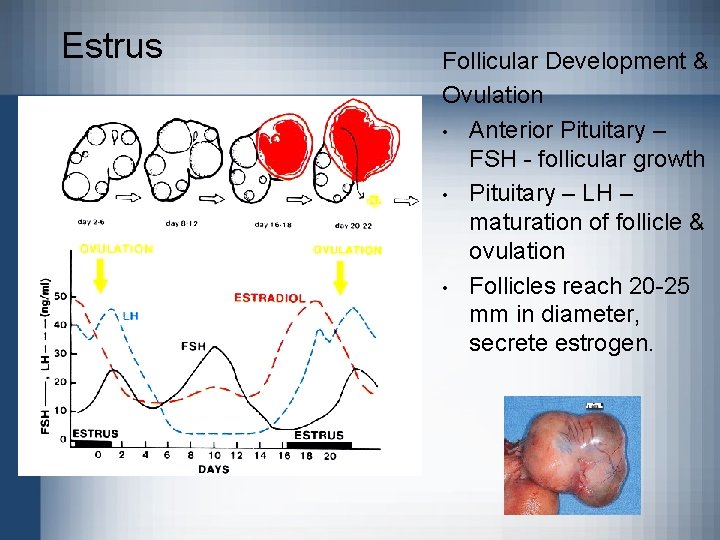
Estrus Follicular Development & Ovulation • Anterior Pituitary – FSH - follicular growth • Pituitary – LH – maturation of follicle & ovulation • Follicles reach 20 -25 mm in diameter, secrete estrogen.
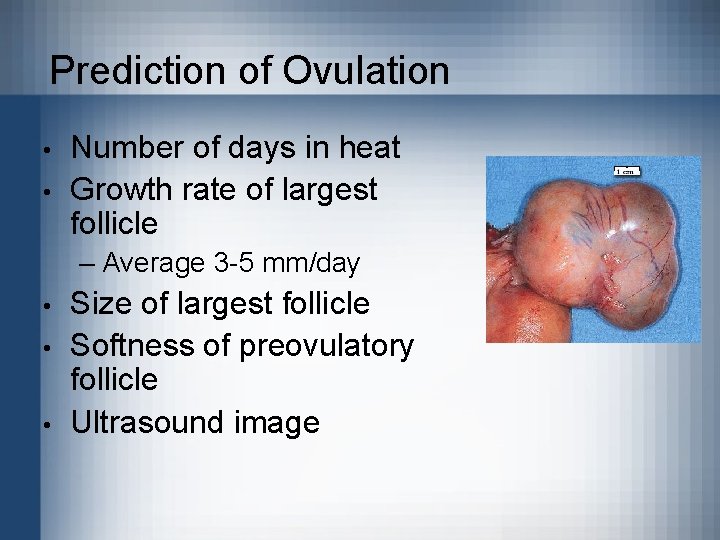
Prediction of Ovulation • • Number of days in heat Growth rate of largest follicle – Average 3 -5 mm/day • • • Size of largest follicle Softness of preovulatory follicle Ultrasound image
Diestrus Corpus Luteum Formation • Corpus luteum secretion of progesterone. • Progesterone responsible for keeping the mare out of heat and for maintaining pregnancy. Prostaglandin Release • Prostaglandin (PGF) released from the uterus of a nonpregnant mare 14 -16 days after ovulation
Postpartum Estrus • • Foal Heat Fertile as compared to other species. Breeding may be necessary to maintain the 12 mo. Foaling interval. May be necessary to back up foaling.
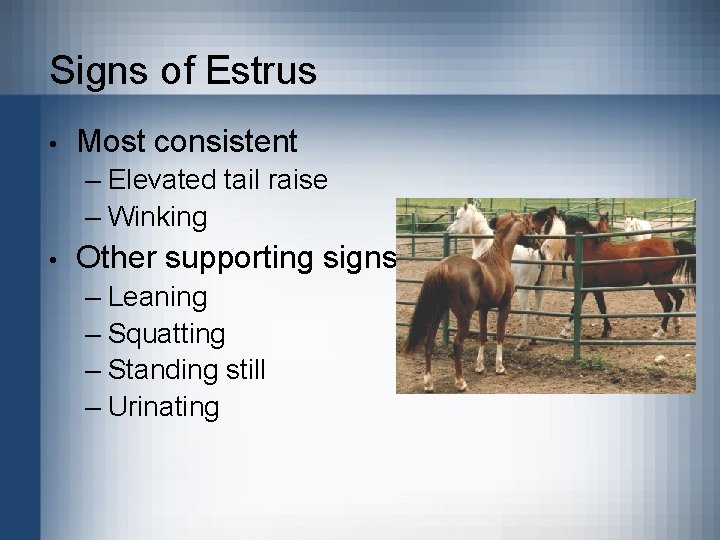
Signs of Estrus • Most consistent – Elevated tail raise – Winking • Other supporting signs – Leaning – Squatting – Standing still – Urinating
Manipulation Methods u Artificial lighting u Shortening Late Transition u Inducing Ovulation u Estrus synchronization u Estrus Synchronization & Ovulation Induction
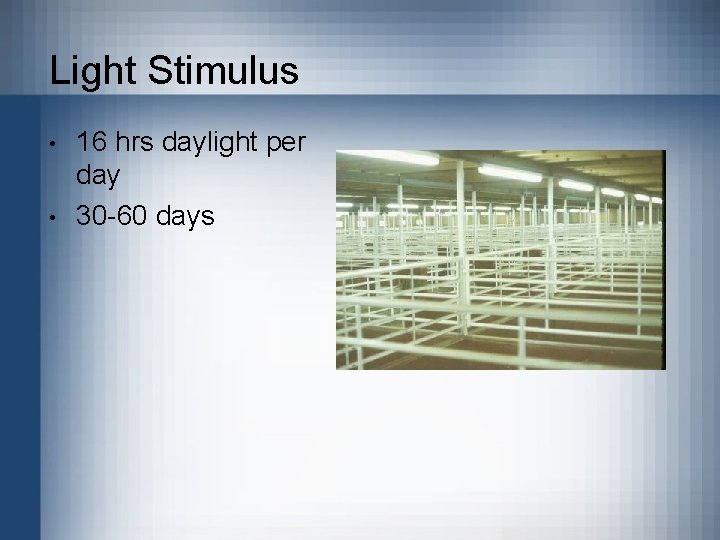
Light Stimulus • • 16 hrs daylight per day 30 -60 days
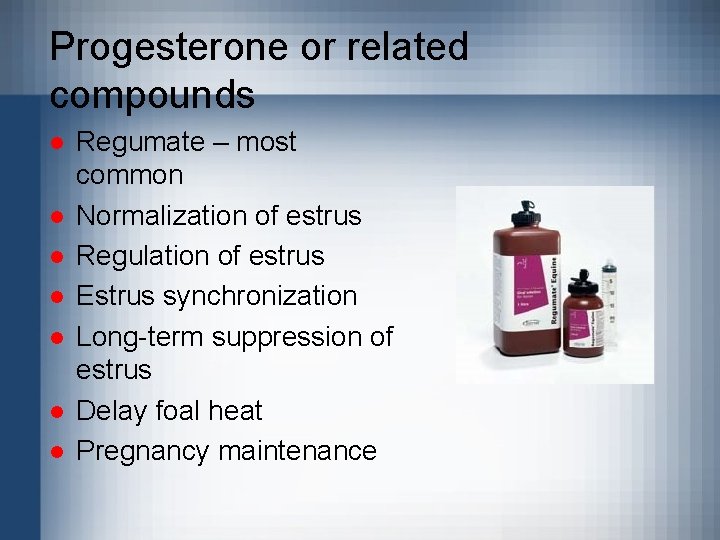
Progesterone or related compounds l l l l Regumate – most common Normalization of estrus Regulation of estrus Estrus synchronization Long-term suppression of estrus Delay foal heat Pregnancy maintenance
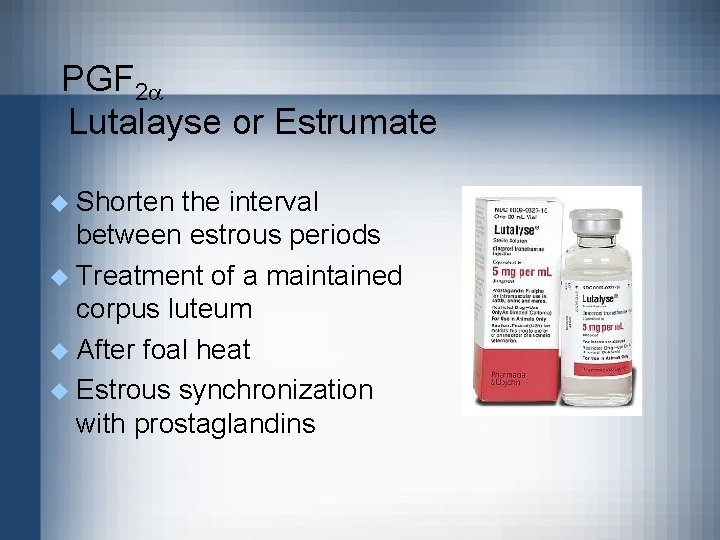
PGF 2 Lutalayse or Estrumate u Shorten the interval between estrous periods u Treatment of a maintained corpus luteum u After foal heat u Estrous synchronization with prostaglandins
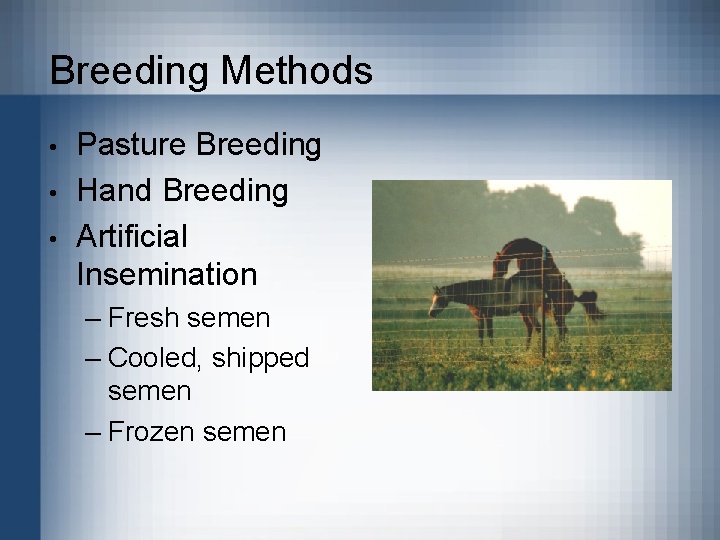
Breeding Methods • • • Pasture Breeding Hand Breeding Artificial Insemination – Fresh semen – Cooled, shipped semen – Frozen semen
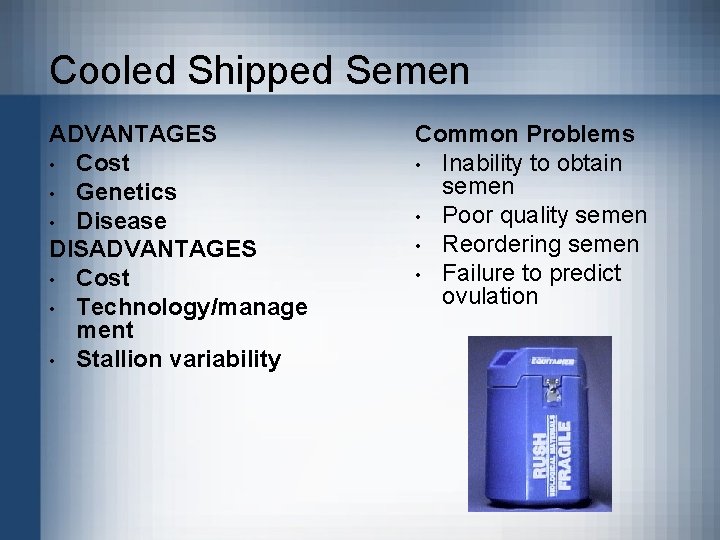
Cooled Shipped Semen ADVANTAGES • Cost • Genetics • Disease DISADVANTAGES • Cost • Technology/manage ment • Stallion variability Common Problems • Inability to obtain semen • Poor quality semen • Reordering semen • Failure to predict ovulation
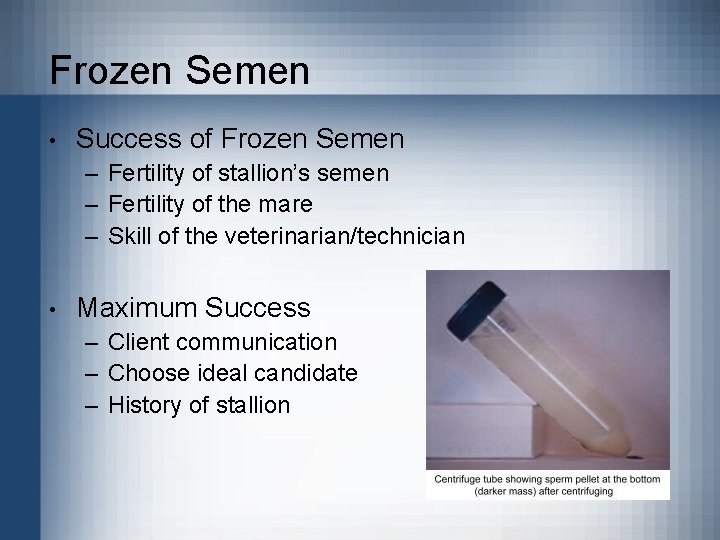
Frozen Semen • Success of Frozen Semen – Fertility of stallion’s semen – Fertility of the mare – Skill of the veterinarian/technician • Maximum Success – Client communication – Choose ideal candidate – History of stallion
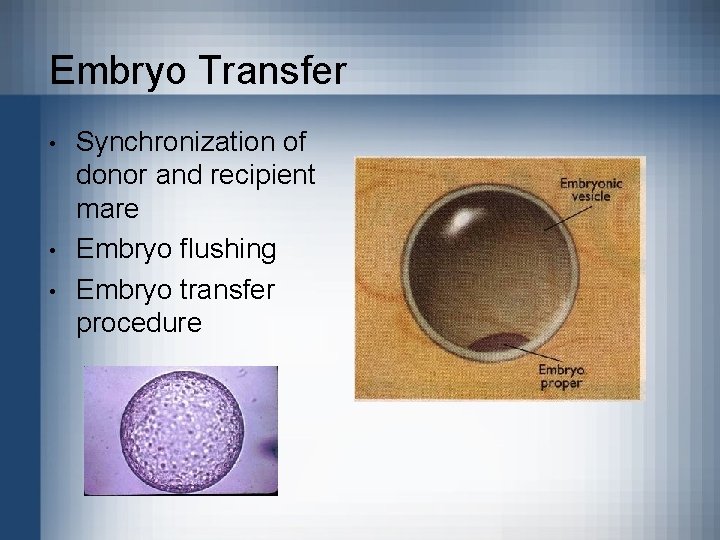
Embryo Transfer • • • Synchronization of donor and recipient mare Embryo flushing Embryo transfer procedure
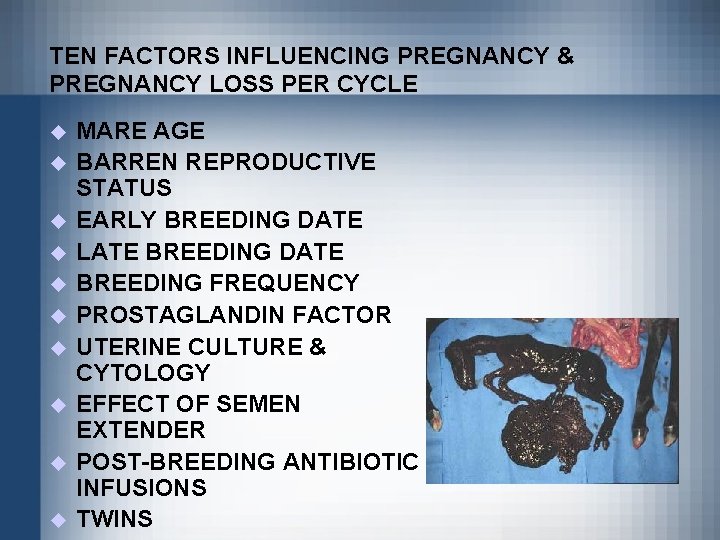
TEN FACTORS INFLUENCING PREGNANCY & PREGNANCY LOSS PER CYCLE u u u u u MARE AGE BARREN REPRODUCTIVE STATUS EARLY BREEDING DATE LATE BREEDING DATE BREEDING FREQUENCY PROSTAGLANDIN FACTOR UTERINE CULTURE & CYTOLOGY EFFECT OF SEMEN EXTENDER POST-BREEDING ANTIBIOTIC INFUSIONS TWINS
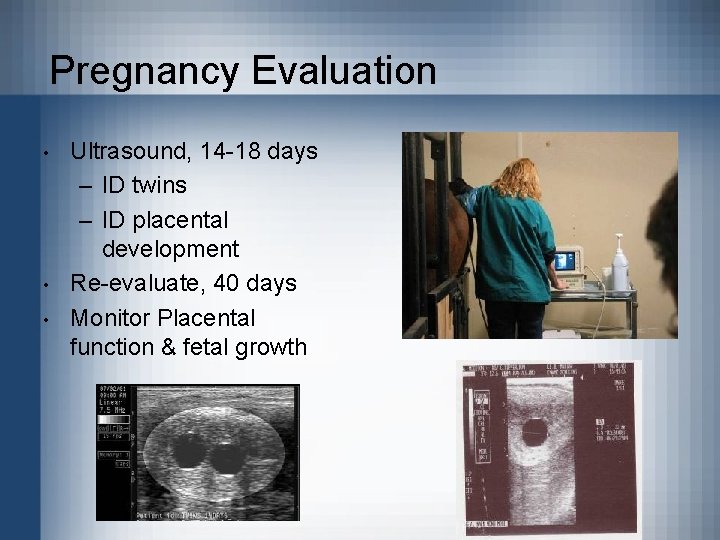
Pregnancy Evaluation • • • Ultrasound, 14 -18 days – ID twins – ID placental development Re-evaluate, 40 days Monitor Placental function & fetal growth
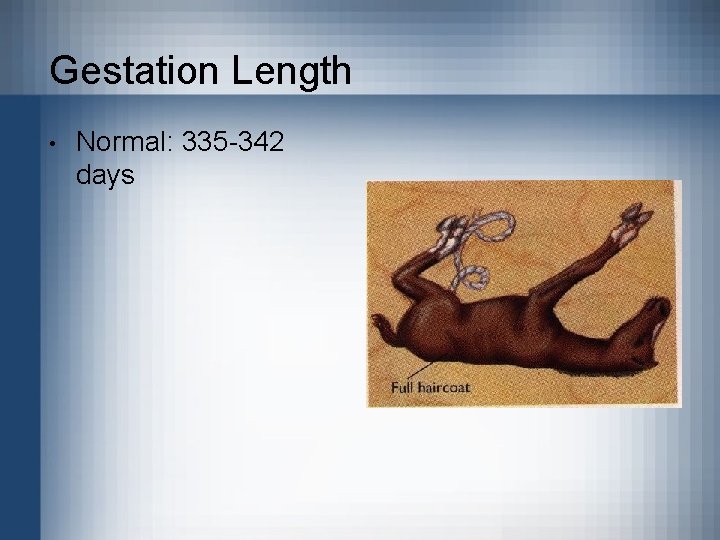
Gestation Length • Normal: 335 -342 days
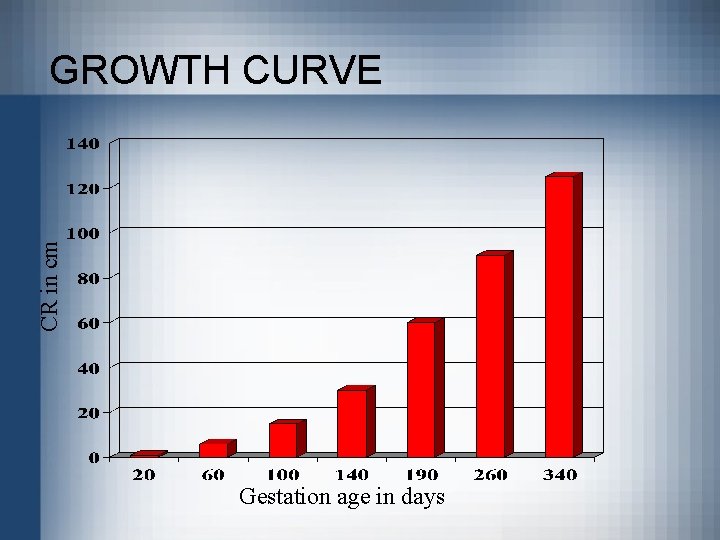
CR in cm GROWTH CURVE Gestation age in days
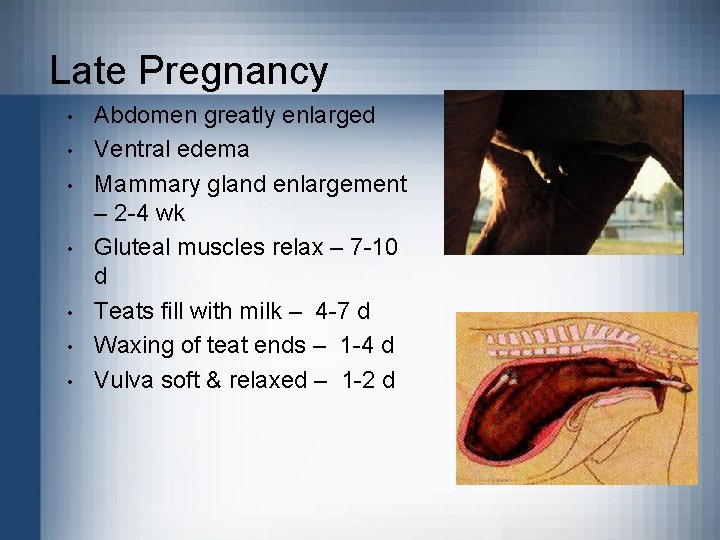
Late Pregnancy • • Abdomen greatly enlarged Ventral edema Mammary gland enlargement – 2 -4 wk Gluteal muscles relax – 7 -10 d Teats fill with milk – 4 -7 d Waxing of teat ends – 1 -4 d Vulva soft & relaxed – 1 -2 d
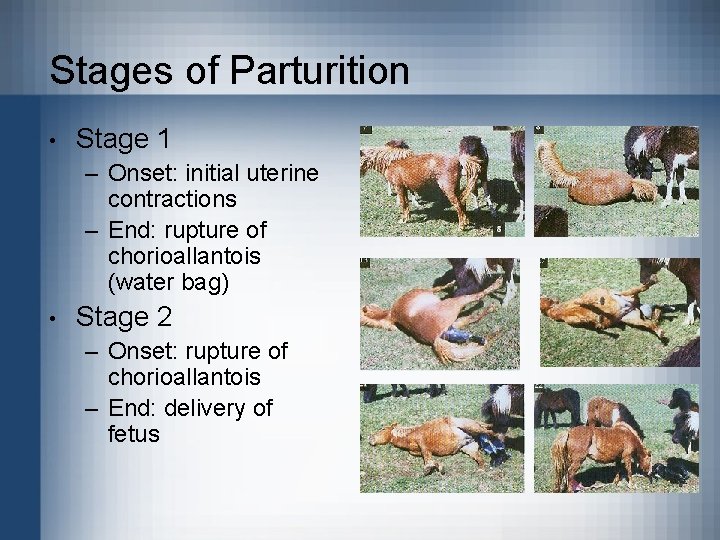
Stages of Parturition • Stage 1 – Onset: initial uterine contractions – End: rupture of chorioallantois (water bag) • Stage 2 – Onset: rupture of chorioallantois – End: delivery of fetus
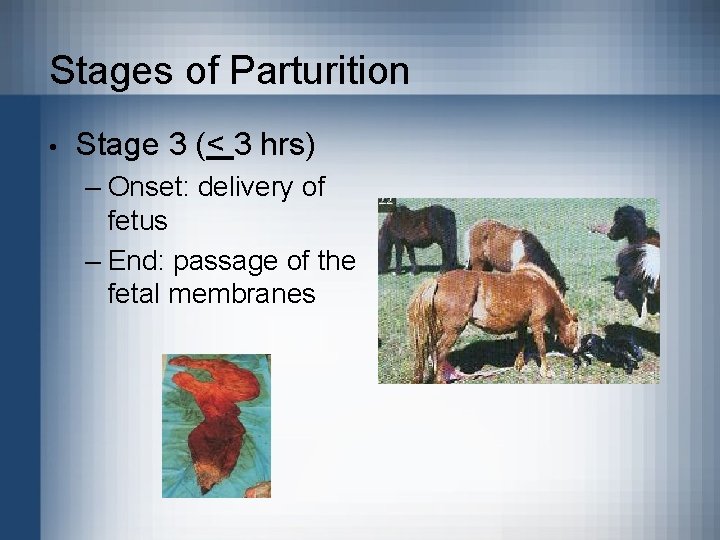
Stages of Parturition • Stage 3 (< 3 hrs) – Onset: delivery of fetus – End: passage of the fetal membranes
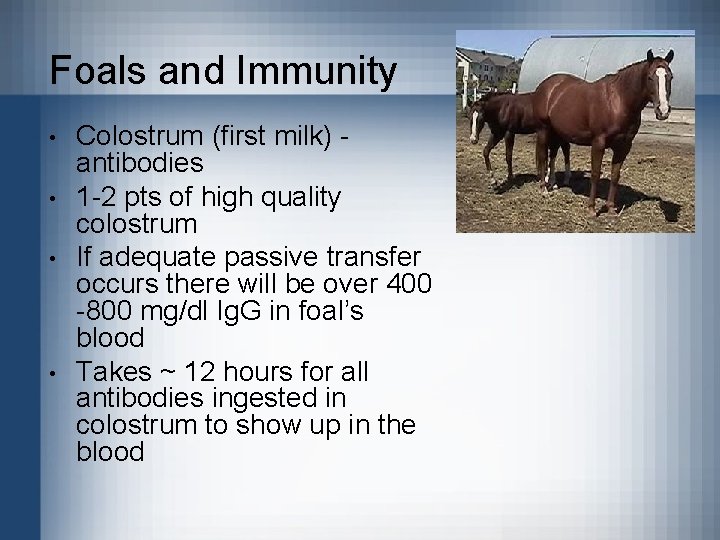
Foals and Immunity • • Colostrum (first milk) antibodies 1 -2 pts of high quality colostrum If adequate passive transfer occurs there will be over 400 -800 mg/dl Ig. G in foal’s blood Takes ~ 12 hours for all antibodies ingested in colostrum to show up in the blood
Key points • • First two weeks- lay the groundwork by ensuring adequate colostrum Preventative health program in place Appropriate nutrition Problems must be addressed rapidly when they arise. No time for a “wait and see” attitude