
EQUINE NUTRITION Digestion Microbes Passage of Digesta Muscle
EQUINE NUTRITION Digestion & Microbes
Passage of Digesta Muscle contractions in G. I Tract allow for what? � Peristalsis to move digesta towards anus � Mixture with digestive juices � Allowing for absorption During digestive upsets: � Movements may stop � Gasses of fermentation may accumulate

Passage through Cecum Peristalsis allows passage Passage Rate of Digesta is ~ � 20% per hour � Rumen = 2 -8% per hour
Microbial Digestion Three main distinctions in microbial fermentation and simple stomach digestion: � ß-1, 4 -linked polymers of cellulose are degraded � During their growth, microorganisms synthesize essential amino acids � Bacteria are net producers of B vitamins & vitamin K
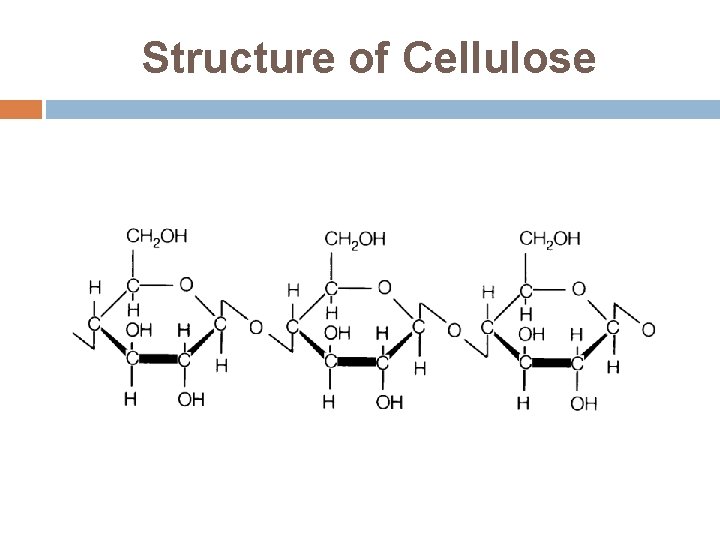
Structure of Cellulose

Microbial Numbers In the fundic region (p. H = ~5. 4) � Bacteria = 108 to 109/g Those present can withstand moderate acidity � Lactobacilli � Streptococci � Veillonella gazogenes
Microbial Numbers Jejunum and Ileum � Anaerobic 108 to Gram-Positive bacteria 109/g Cereal diet influences the amount of � lactic acid versus VFA’s that are produced as an end products
Microbial Numbers Cecum and Colon � Much higher amounts of bacteria 0. 5 x 10⁹ to 5 x 10⁹/g Difference between hind gut fermentation and rumen fermentation Lower starch content of the hindgut � Generally equates to lower rate of fermentation � However, starch content of cecum is variable � Variable suppression of cellulolytic bacteria As grain ↑ cellulolytic bacteria ↓ � What happens when forage is increased? �
Microbial Numbers One study revealed about Cecum: � Cellulolytic bacteria = 2 - 4% of total � Fungal and protozoal units were also found to be present � Optimal 5 -6 p. H in cecum for these constituents =
Fauna Protozoa in equine L. I. = � 0. 5 x 10⁵ to 1. 5 x 10⁵/ml Much larger than bacteria Contribution to metabolism is less ~72 species / different from rumenal Removal caused only slight decrease in DM digestibility � No effect on bacteria
Flora Bacteria � Highest populations in cecum and ventral colon � Only 20% of bacteria can degrade protein � Specific organisms may change by 100 fold in 24 hour period � Caused by Feeding Frequency Forage/Grain Ration p. H
Flora Effects on Bacteria � Feeding frequency can have large influence on digestive disorders � Large concentrate meals may cause: Elevated glycemic responses Abnormal behaviors Fibrous feeds can lower these responses High fiber diets also stimulate peristalsis � Decreasing risk of metabolic acidosis
Flora Horses on high grain diets � Are less efficient at digesting hay…why? What about horses on high forage diets? Abrupt changes in a diet may cause problems � Gradual change in diets is suggested
Products of Fermentation Microbial fermentation of fiber, starch, & protein yields: � Volitile Fatty Acids Acetic Propionic Butyric Fermentation and VFA absorption are promoted by: � The buffering effect of bicarbonate and Na+ derived from ileum � Anaerobic Environment � Normal motility to ensure adequate fermentation time and mixing
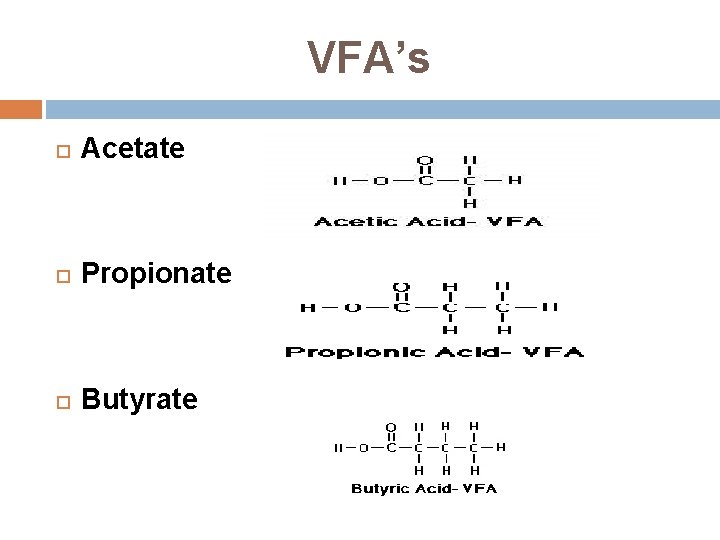
VFA’s Acetate Propionate Butyrate
Products of Fermentation Major Products of Fiber Digestion � Acetate � Butyrate Proportion of propionate increases with � Increasing from S. I. proportions of undigested starch
Absorption Water Largest is absorbed at the ileocecal junction � Water content of S. I. digesta amounts to � 87 -93% � Feces of healthy horse contains � 58 -62% water
Absorption Electrolytes are absorbed from the cecum and L. I. � Phospate is efficiently absorbed from both small and large intestine � Ca and Mg are not Absorbed � Why mainly in S. I. do we care?
Absorption Microbial Degradation occurs faster � In the cecum & ventral colon than in the dorsal colon Rate is also faster when � Starches CHO’s are degraded rather than structural Optimum p. H of 6. 5 exists for microbial activity � Promotes VFA absorption As p. H moves closer to the p. K of a particular VFA
Absorption H+ ions are required for VFA absorption � Derived from mucosal cells in exchange for Na+ Bicarbonate is secreted in exchange for Cl- Absorption of VFA’s is accompanied by �A net absorption of Na. Cl � Major determinant of water absorption
Absorption VFA’s pass readily in the blood Lactic acid produced in the stomach is not well absorbed in S. I. � Upon reaching L. I. Some absorbed Most is metabolized by bacteria to propionate
Absorption Microbial activity also produces gas � Carbon Each Dioxide, Methane, and Hydrogen are either Absorbed Ejected from the anus Participate in further metabolism Can create problems � If production exceeds expulsion
Protein Degradation Microbial growth requires N Protein breakdown much greater in S. I. � Than cecum Death and breakdown of microorganisms also � Release proteins and amino acids Generally thought that amino acid absorption in cecum is � Minimal when compared to dietary requirements
Urea Production Principle end product of protein catabolism Generally thought to not be utilized efficiently in the horse Mostly excreted through kidneys
- Slides: 24