
Equine Medication Techniques Chapter 4 Large Animal Clinical

- Slides: 21
Equine Medication Techniques Chapter 4 Large Animal Clinical Procedures Pg. 67
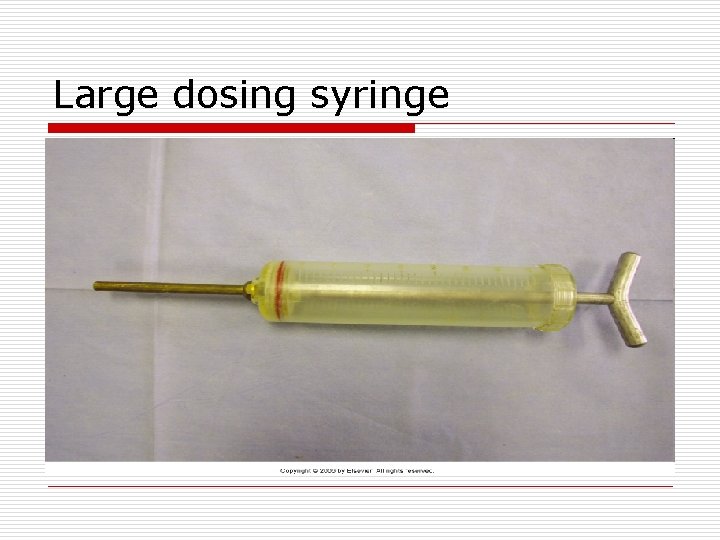
Large dosing syringe
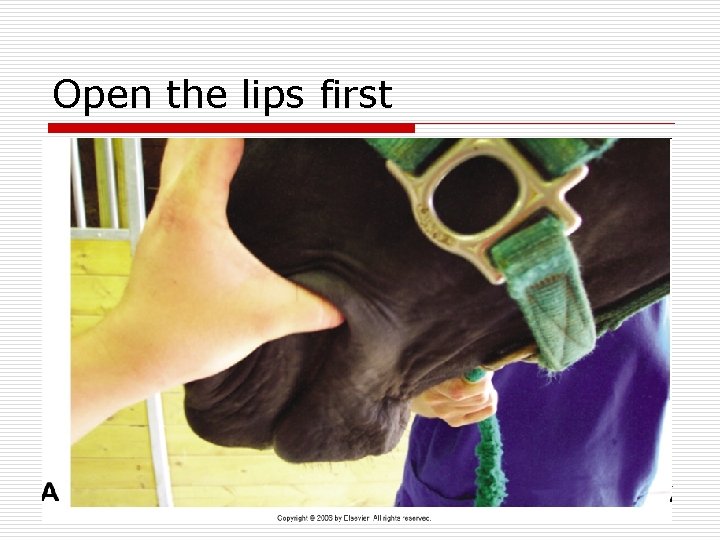
Open the lips first
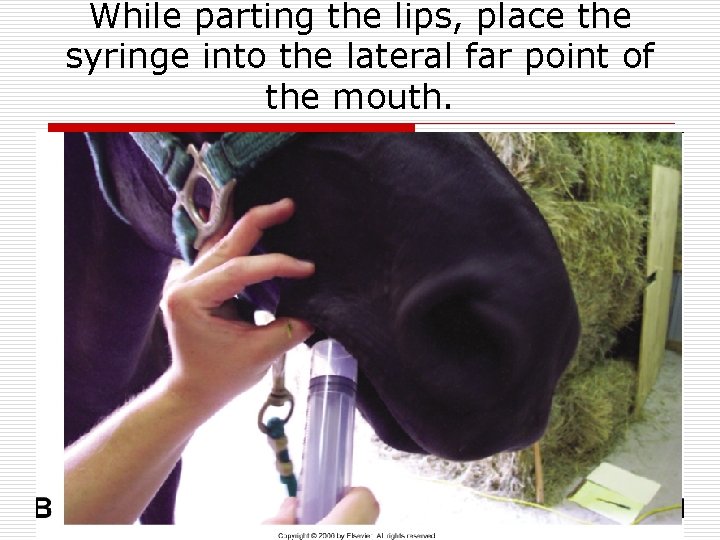
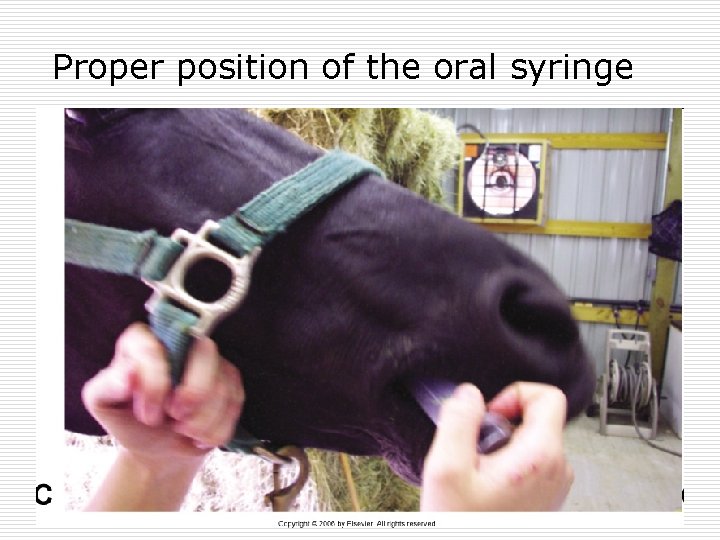
While parting the lips, place the syringe into the lateral far point of the mouth.
Proper position of the oral syringe
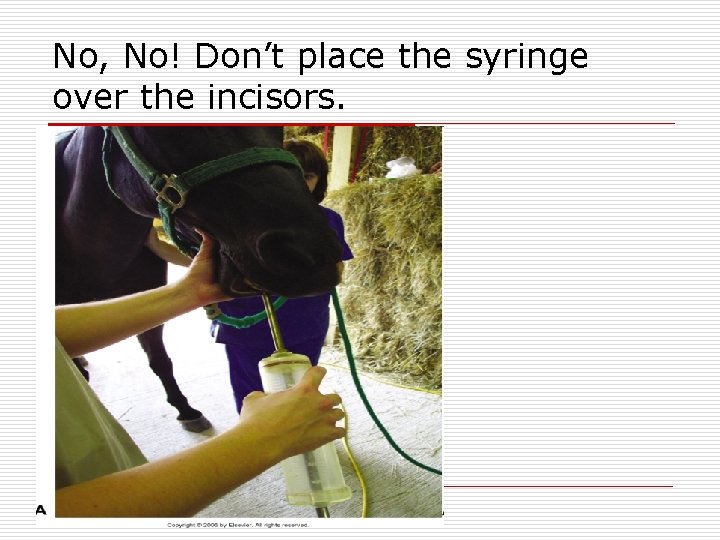
No, No! Don’t place the syringe over the incisors.
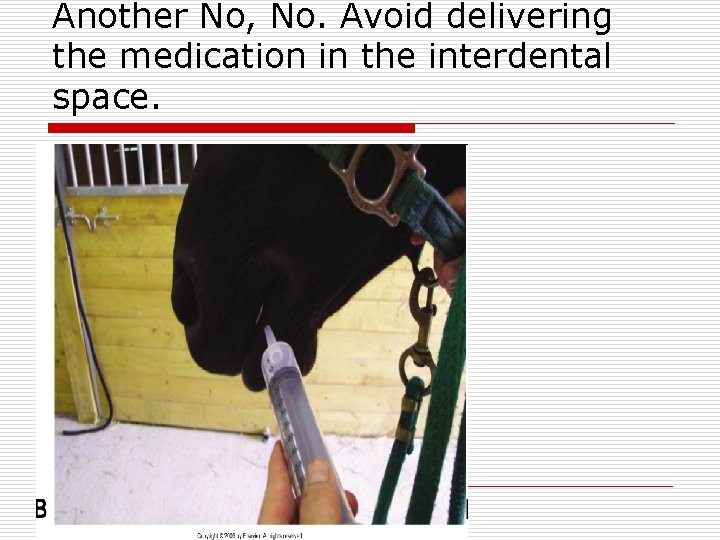
Another No, No. Avoid delivering the medication in the interdental space.
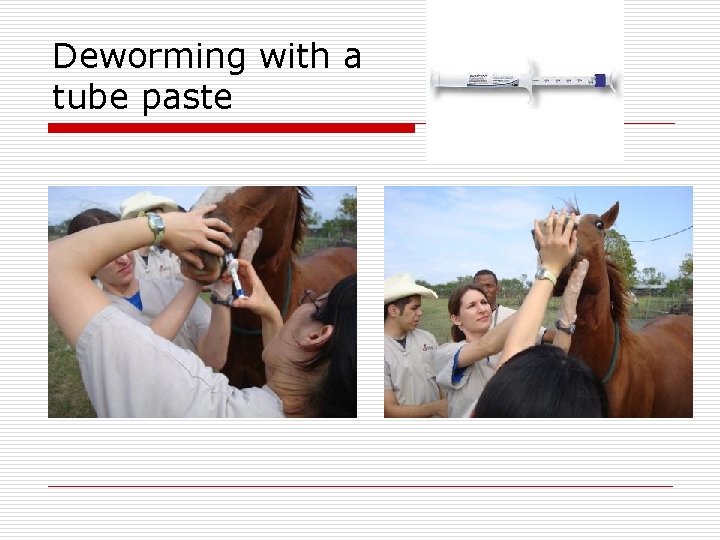
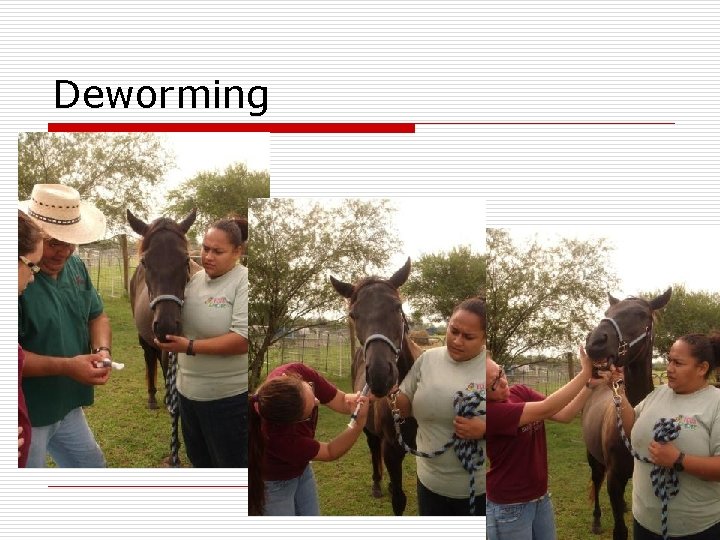
Deworming with a tube paste
Deworming
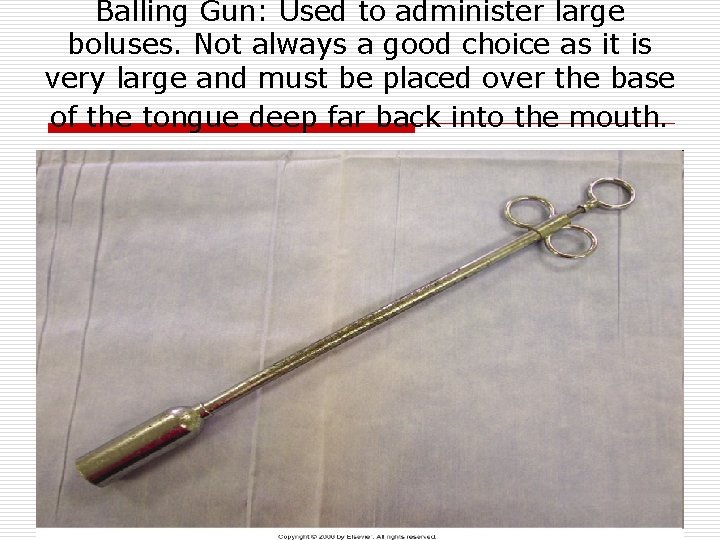
Balling Gun: Used to administer large boluses. Not always a good choice as it is very large and must be placed over the base of the tongue deep far back into the mouth.
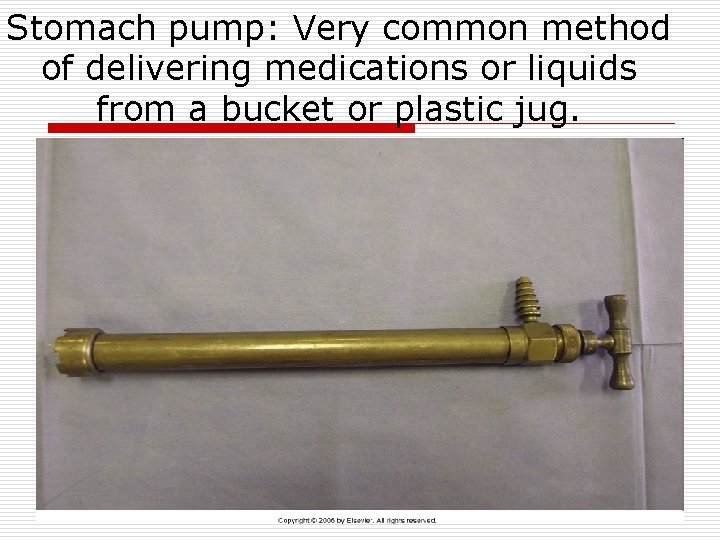
Stomach pump: Very common method of delivering medications or liquids from a bucket or plastic jug.
Stomach Pump Usage o Never force liquids against back pressure into the horse. o The capacity of an avg. 1000 lb horse’s stomach is 4 to 5 gallons. Do not exceed this volume. o Typically, 1 gallon of fluid is the max given at one dosing, though this may be repeated at 30 minute or 1 hour intervals in urgent situations.
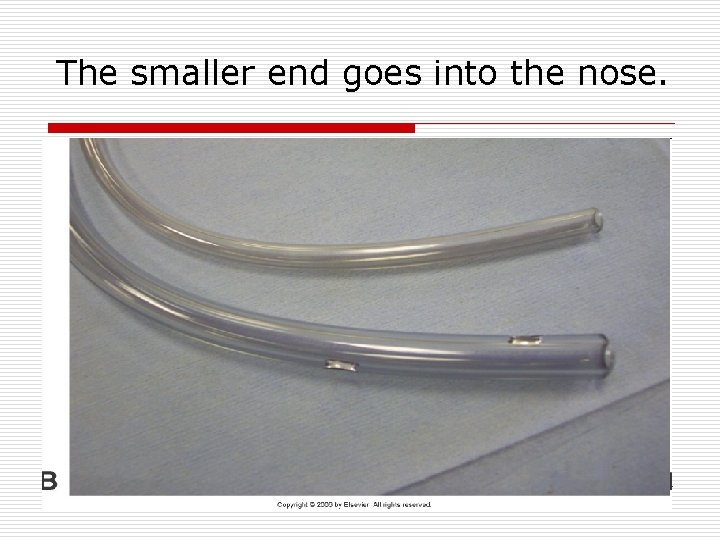
Various Plastic Clear Nasogastric Tubes
The smaller end goes into the nose.
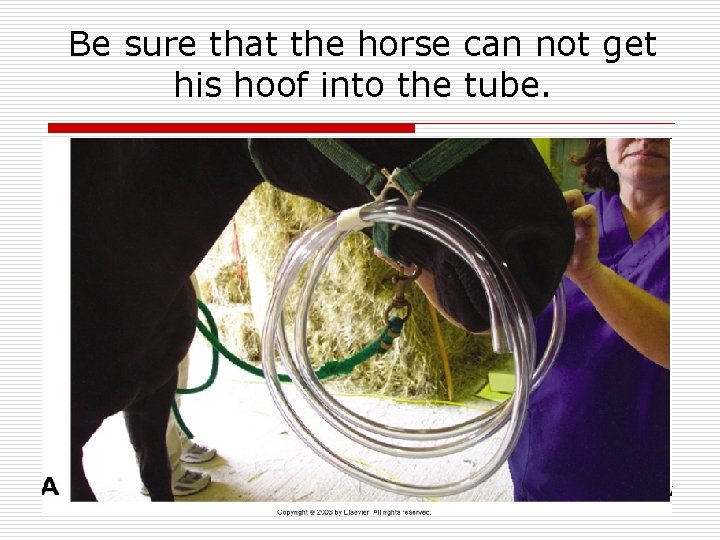
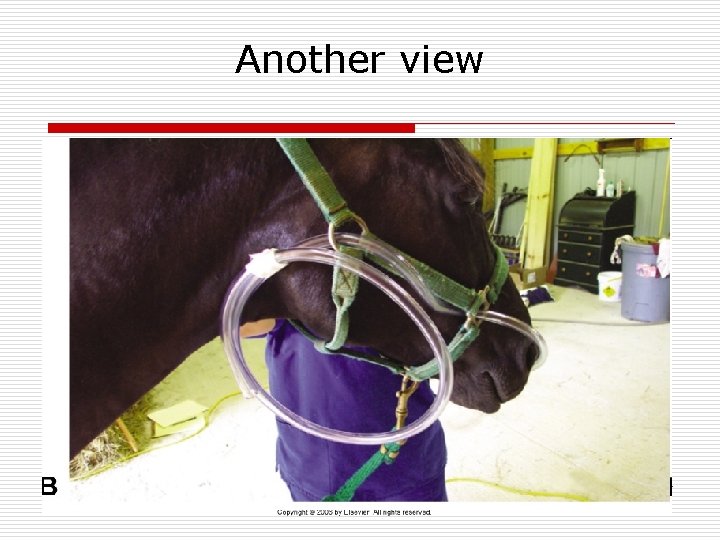
Nasogastric Tubes o Can be left in place for 24 to 48 hours. Be sure to secure them to the halter with adhesive tape.
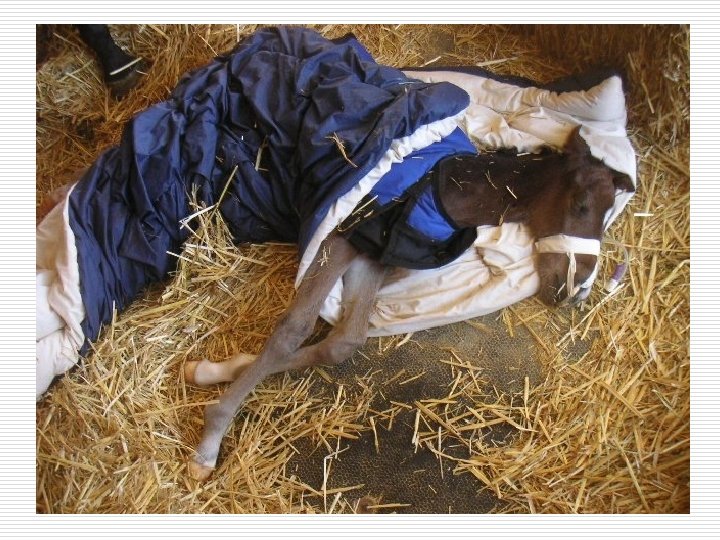
Be sure that the horse can not get his hoof into the tube.
Another view
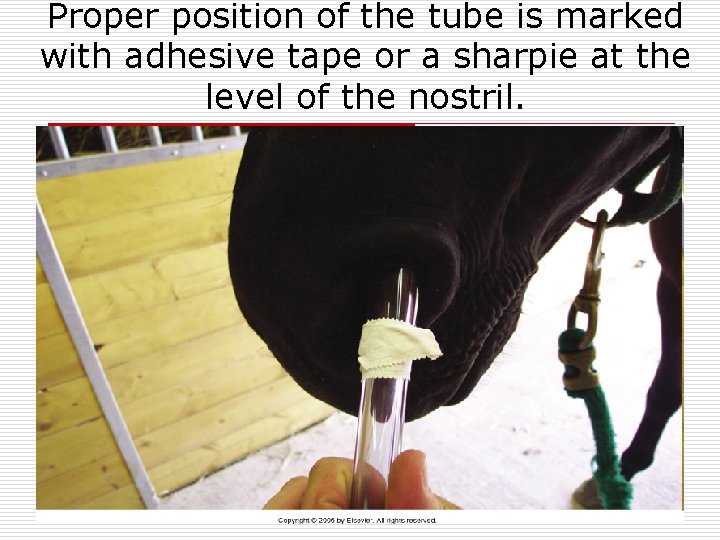
Proper position of the tube is marked with adhesive tape or a sharpie at the level of the nostril.
Removing the Nasogastric Tube o Always crimp the tube by folding it over double during removal. o Slowly pull out 12 inches at a time. o Beware of nosebleeds. o Be watchful of the horse as it may buck it’s head.
Why crimp the tube? o Often there is liquid material inside the tube. This liquid can be inhaled back into the lungs of the horse and they can develop aspirate pneumonia.