
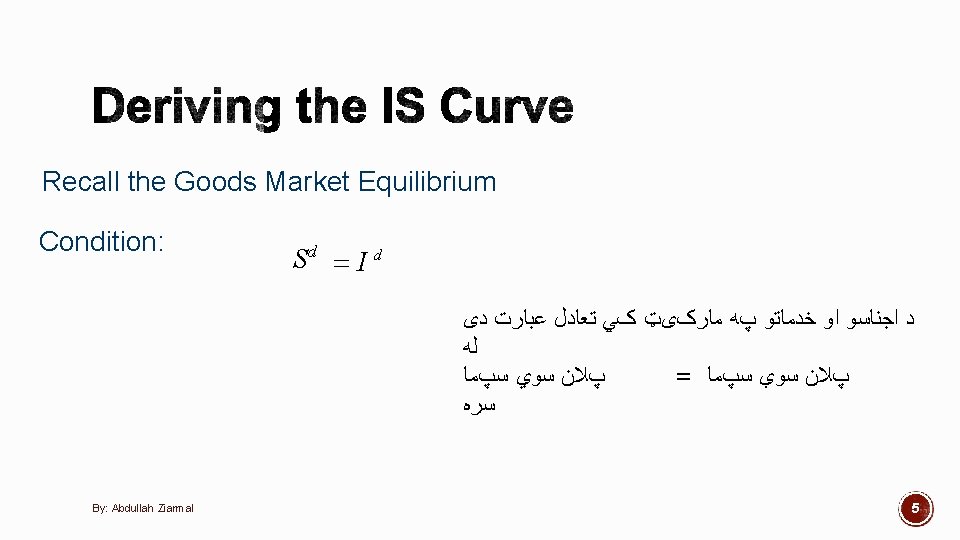
Equilibrium of the goods market is achieved when
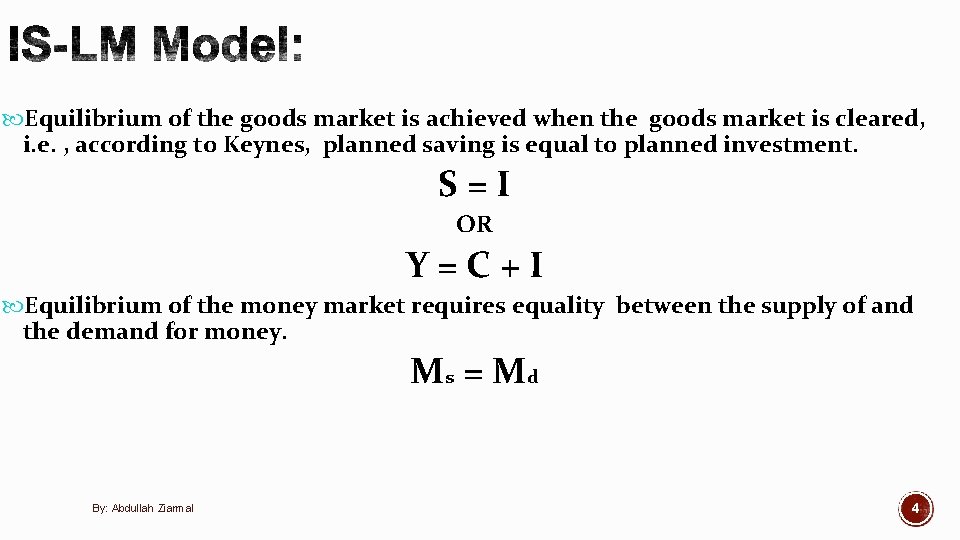
Equilibrium of the goods market is achieved when the goods market is cleared, i. e. , according to Keynes, planned saving is equal to planned investment. S=I OR Y=C+I Equilibrium of the money market requires equality between the supply of and the demand for money. Ms = M d By: Abdullah Ziarmal 4
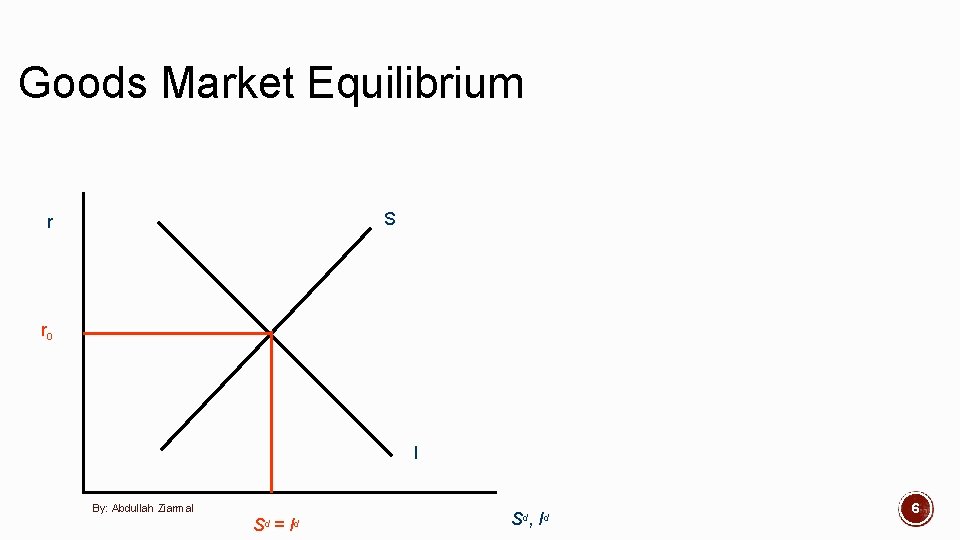
Goods Market Equilibrium S r r 0 I By: Abdullah Ziarmal S =I d d Sd, Id 6
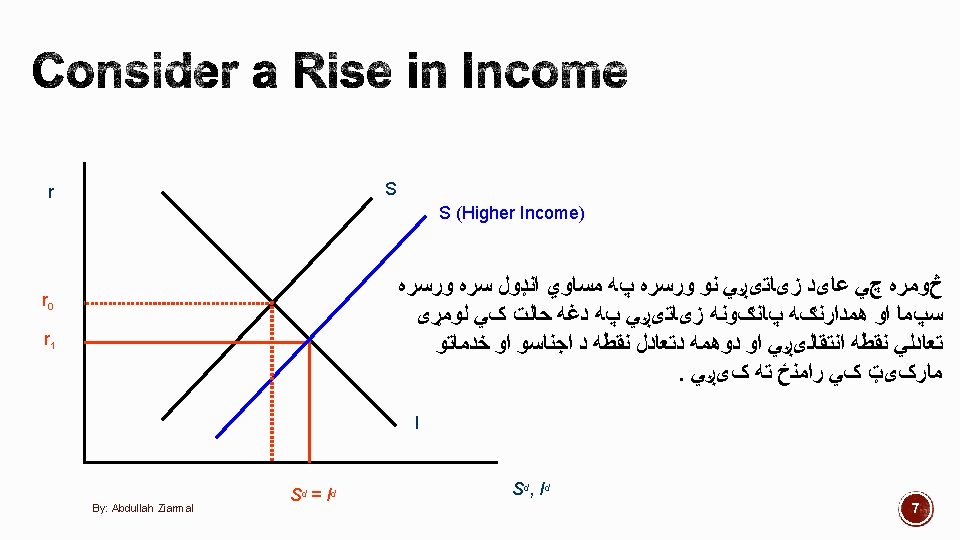

The previous slide shows that as income varies and goods market equilibrium is maintained, a higher value of income is associated with a lower value of the expected real interest rate Plot the income-interest rate pairs that satisfy the goods market equilibrium condition to get the IS curve § – The inverse relationship between income and interest rate implies that the IS curve is downward sloping By: Abdullah Ziarmal 8
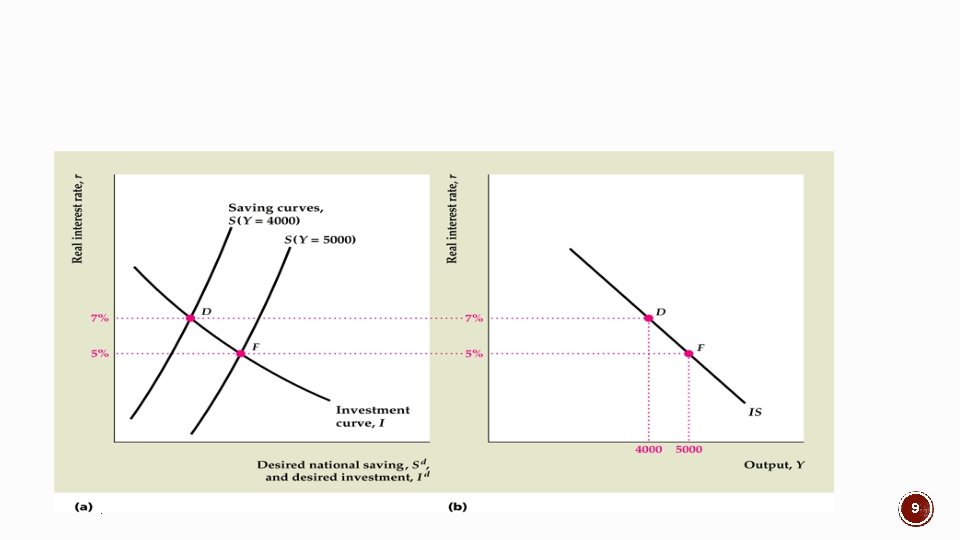
By: Abdullah Ziarmal 9
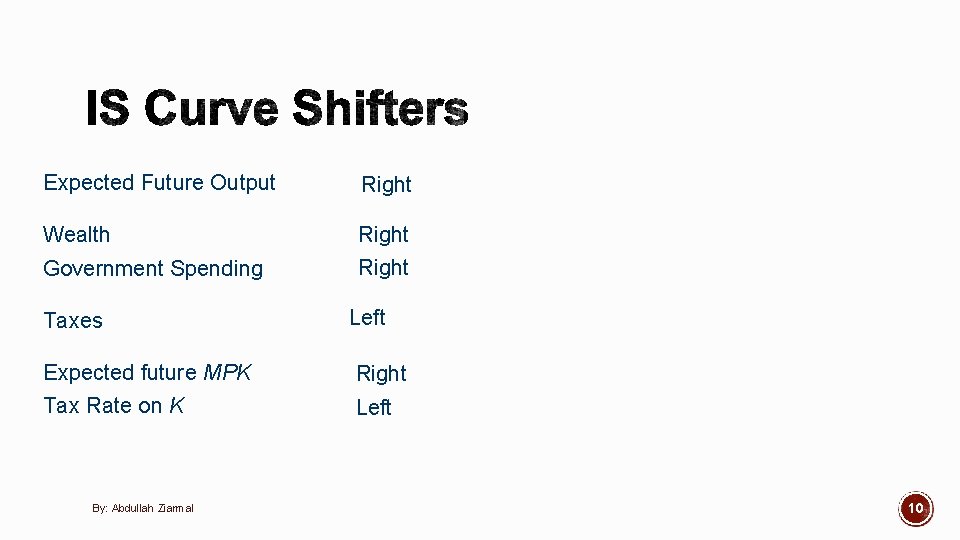
Expected Future Output Right Wealth Right Government Spending Right Taxes Left Expected future MPK Right Tax Rate on K Left By: Abdullah Ziarmal 10

By: Abdullah Ziarmal 11

By: Abdullah Ziarmal 12

The Derivation of LM By: Abdullah Ziarmal 13
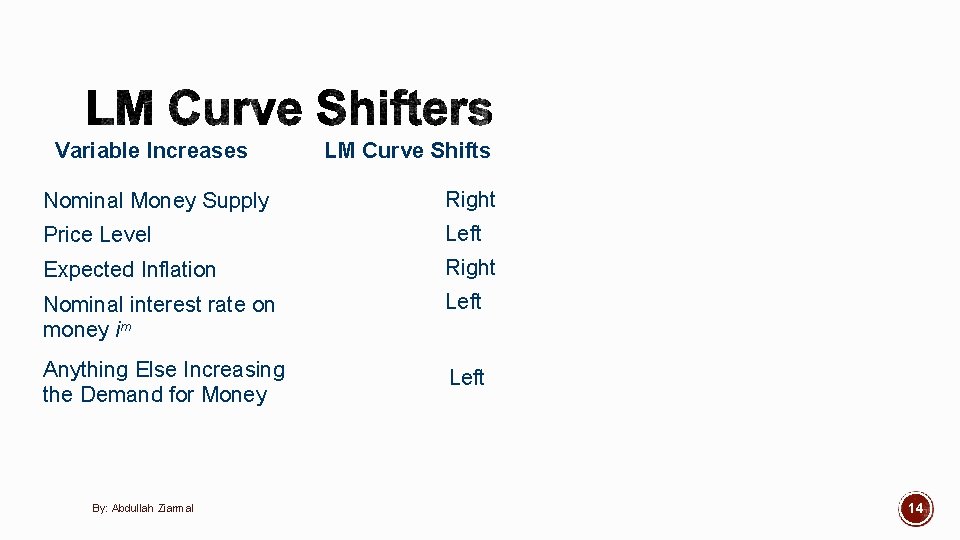
Variable Increases LM Curve Shifts Nominal Money Supply Right Price Level Left Expected Inflation Right Nominal interest rate on money im Left Anything Else Increasing the Demand for Money Left By: Abdullah Ziarmal 14

The Equilibrium Curve By: Abdullah Ziarmal 15
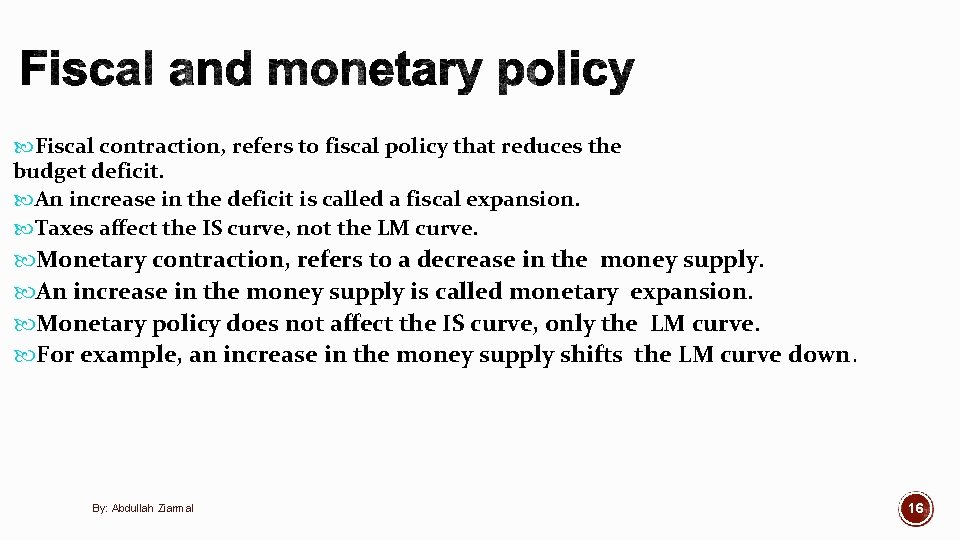
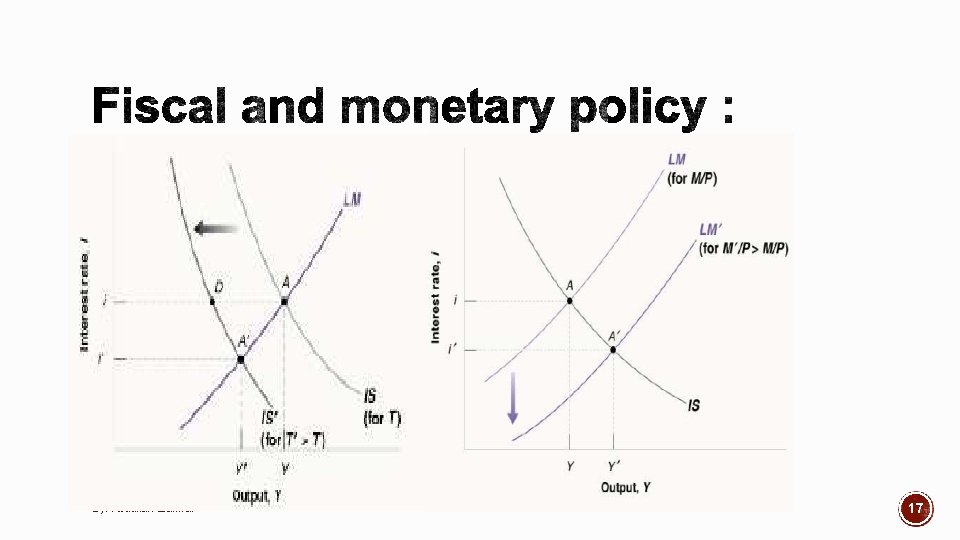
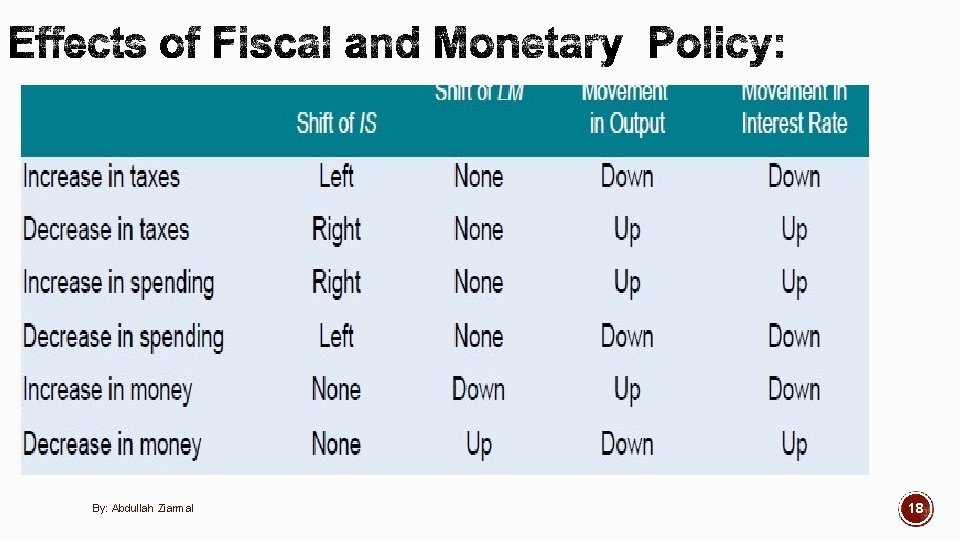
Fiscal contraction, refers to fiscal policy that reduces the budget deficit. An increase in the deficit is called a fiscal expansion. Taxes affect the IS curve, not the LM curve. Monetary contraction, refers to a decrease in the money supply. An increase in the money supply is called monetary expansion. Monetary policy does not affect the IS curve, only the LM curve. For example, an increase in the money supply shifts the LM curve down. By: Abdullah Ziarmal 16
By: Abdullah Ziarmal 17
By: Abdullah Ziarmal 18
- Slides: 18