
Equilibrium in the Aggregate DemandAggregate Supply Model The
Equilibrium in the Aggregate Demand-Aggregate Supply Model
The AD-AS Model 1929 -1933 the U. S. economy moved down the short-run aggregate supply curve as the aggregate price level fell 1979 -1980, the U. S. economy moved up the aggregate demand curve as the aggregate price level rose Both cases, a movement occurred
The AD-AS Model The AS-AD model uses the aggregate supply curve and the aggregate demand curve together to analyze economic fluctuations.
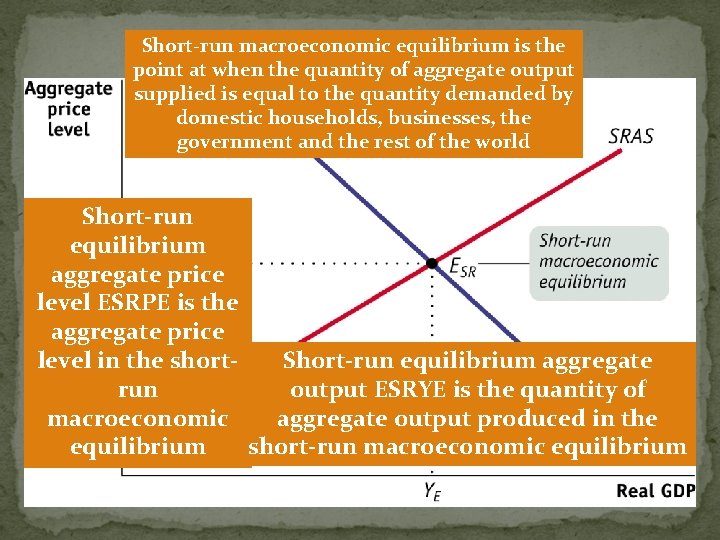
Short-run macroeconomic equilibrium is the point at when the quantity of aggregate output supplied is equal to the quantity demanded by domestic households, businesses, the government and the rest of the world Short-run equilibrium aggregate price level ESRPE is the aggregate price Short-run equilibrium aggregate level in the shortoutput ESRYE is the quantity of run aggregate output produced in the macroeconomic short-run macroeconomic equilibrium
Remember: When there is a shortage of any individual good, it causes the market to price to rise When there is a surplus, the good causes its market price to fall Both ensures that the market reaches equilibrium Same for short-run macroeconomic equilibrium Aggregate price level is above it equilibrium level, the quantity of aggregate output supplied exceeds the quantity of aggregate output demanded Leads to a fall in the aggregate price level and pushes it toward equilibrium
Remember The short-run equilibrium aggregate output and the short-run equilibrium aggregate price level can change because of shifts of either the AD curve or the SRA curve

Shifts of Aggregate Demand: Short. Run Effects Demand Shock An event that shifts the aggregate demand curve Change in expectations or wealth Effect of the size of the existing stock of physical capital Use of fiscal or monetary policy Great Depression was caused by a negative demand shock – the collapse of wealth and of business and consumer confidence that followed the stock market crash
Shifts of Aggregate Demand: Short. Run Effects The Depression was ended by a positive demand shock – huge increase in government purchases during WWII 2008 – negative demand shock caused by the housing market’s boom to bust

Shifts of Aggregate Demand: Short-Run Effects Demand shocks cause aggregate output and the aggregate price level to move in the same direction
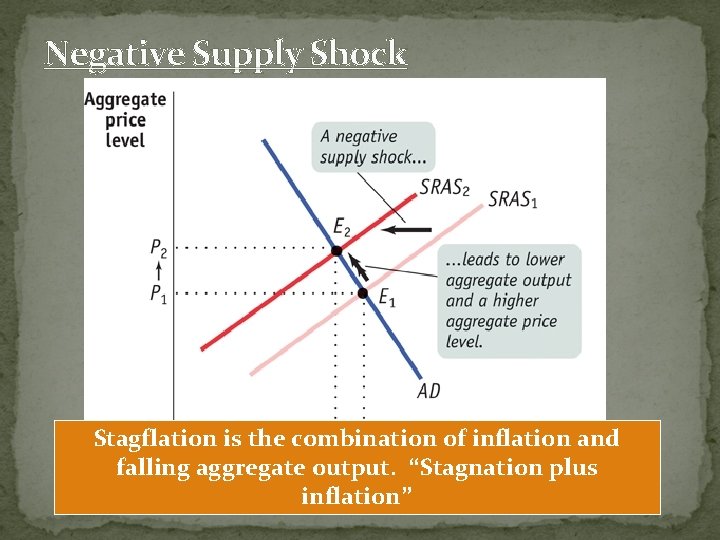
Negative Supply Shock Stagflation is the combination of inflation and falling aggregate output. “Stagnation plus inflation”
Stagflation effects on the economy: Falling aggregate output leads to rising unemployment Purchasing power is limited by rising prices Stagflation was present in the 1970 s
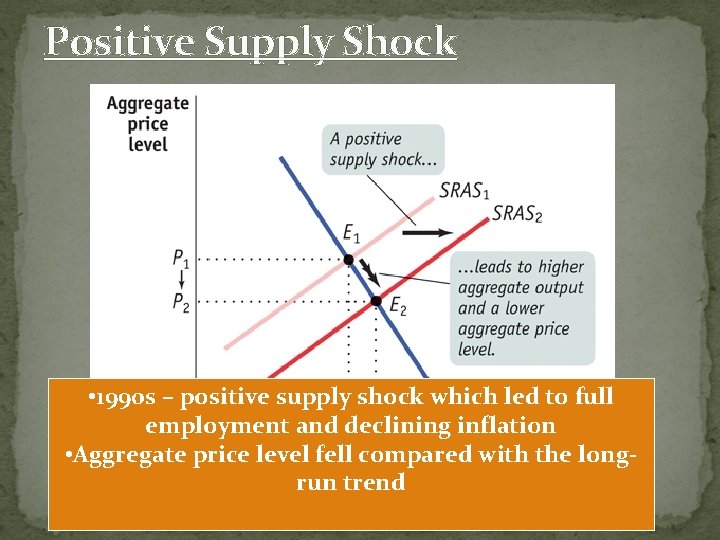
Positive Supply Shock • 1990 s – positive supply shock which led to full employment and declining inflation • Aggregate price level fell compared with the longrun trend
Negative and Positive Demand Shocks Distinctive feature: They both cause aggregate price level and aggregate output to move in OPPOSITE directions Important contrast between both: Monetary policy and fiscal policy enable the government to shift the AD curve Government is able to create shocks
Add to Notes: A supply shock is an event that shifts the SRAS curve NEGATIVE SHOCKS Raise production costs and reduces the quantity producers are willing to supply at any aggregate price level (leftward shift) POSITIVE SHOCKS Reduce production costs and increase quantity supplied at any given aggregate price (rightward shift)
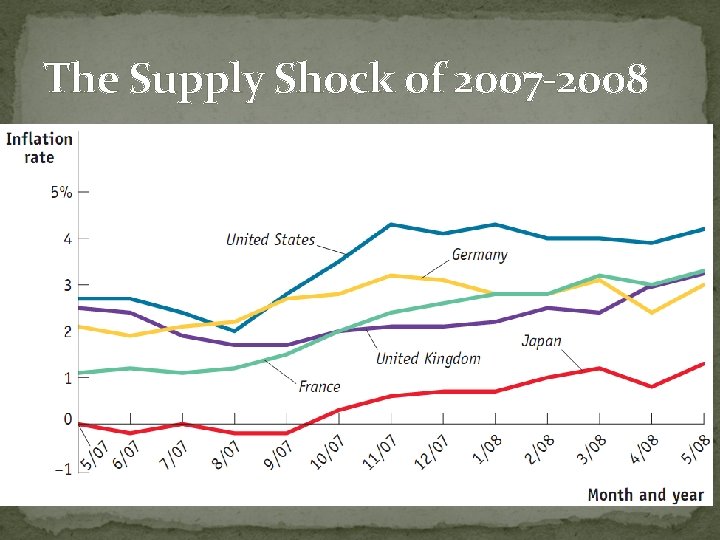
The Supply Shock of 2007 -2008
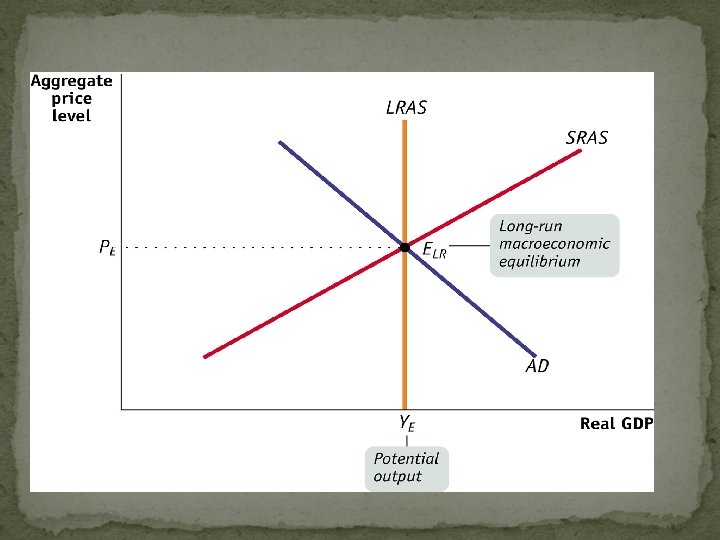
Long-run Macroeconomic Equilibrium The economy is in long-run macroeconomic equilibrium when the point of short-run macroeconomic equilibrium is on the long-run aggregate supply curve.
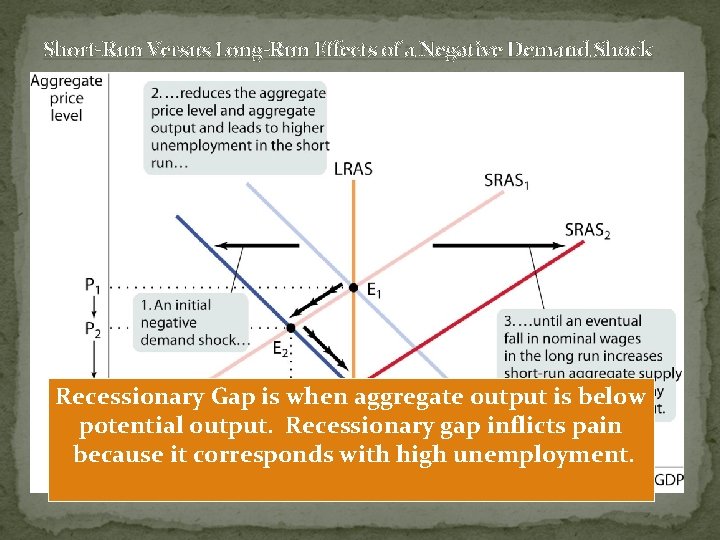
Short-Run Versus Long-Run Effects of a Negative Demand Shock Recessionary Gap is when aggregate output is below potential output. Recessionary gap inflicts pain because it corresponds with high unemployment.
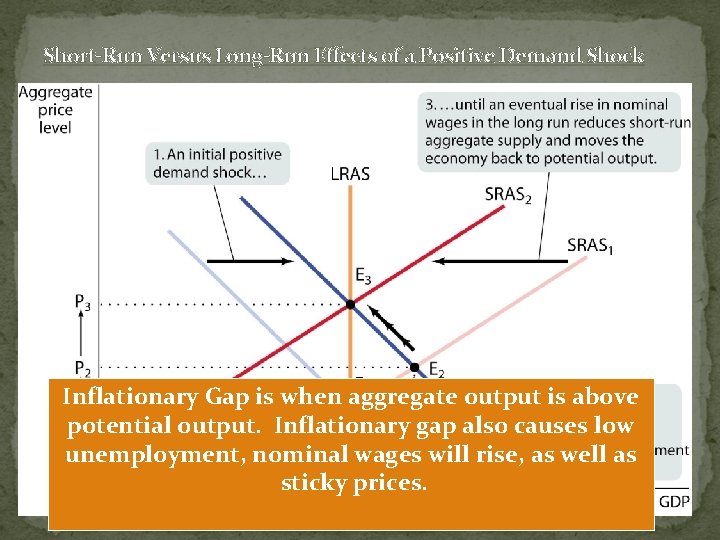
Short-Run Versus Long-Run Effects of a Positive Demand Shock Inflationary Gap is when aggregate output is above potential output. Inflationary gap also causes low unemployment, nominal wages will rise, as well as sticky prices.
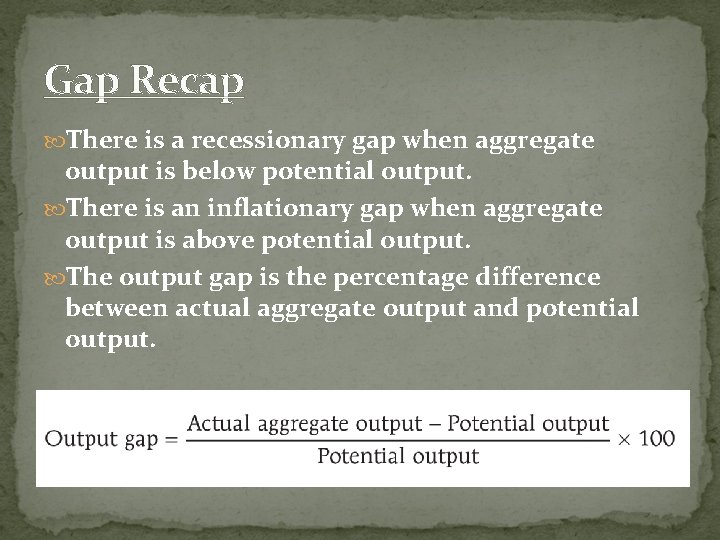
Gap Recap There is a recessionary gap when aggregate output is below potential output. There is an inflationary gap when aggregate output is above potential output. The output gap is the percentage difference between actual aggregate output and potential output.
Gap Recap The economy is self-correcting when shocks to aggregate demand affect aggregate output in the short run, but not the long run.
- Slides: 21