
Equilibrium BY KATELIN HANCOCK What is Equilibrium Chemists
Equilibrium BY: KATELIN HANCOCK
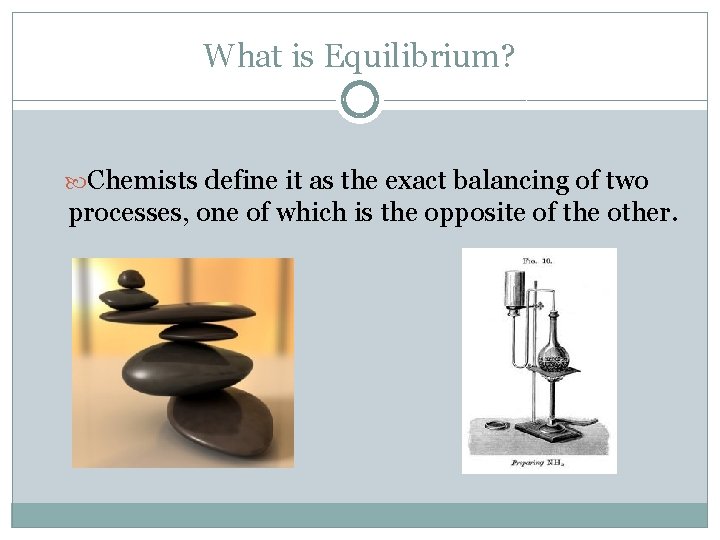
What is Equilibrium? Chemists define it as the exact balancing of two processes, one of which is the opposite of the other.
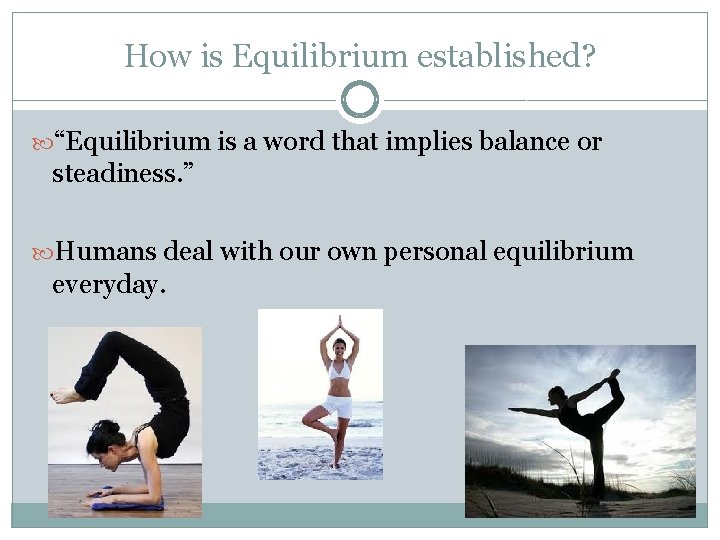
How is Equilibrium established? “Equilibrium is a word that implies balance or steadiness. ” Humans deal with our own personal equilibrium everyday.
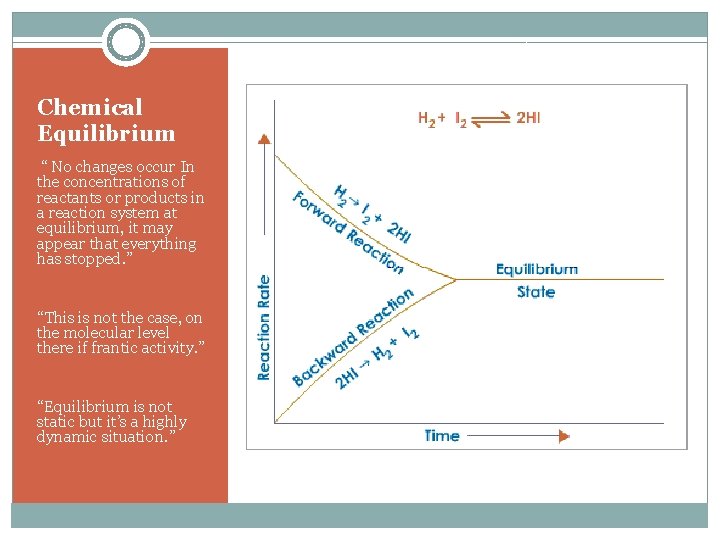
Chemical Equilibrium “ No changes occur In the concentrations of reactants or products in a reaction system at equilibrium, it may appear that everything has stopped. ” “This is not the case, on the molecular level there if frantic activity. ” “Equilibrium is not static but it’s a highly dynamic situation. ”
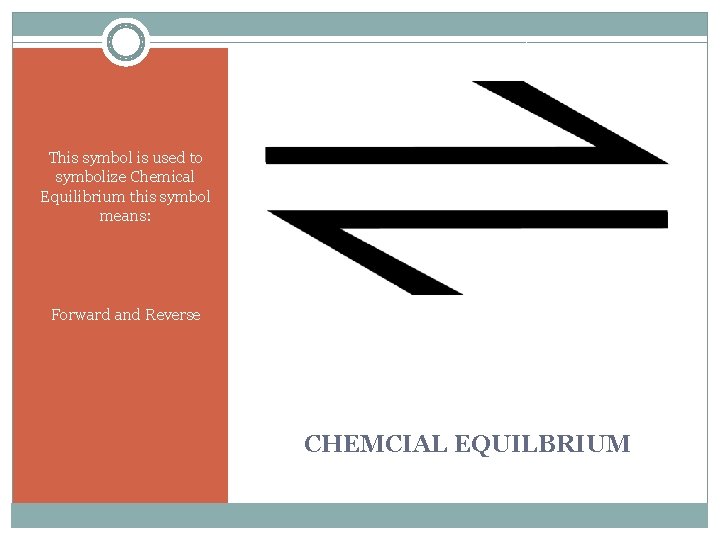
This symbol is used to symbolize Chemical Equilibrium this symbol means: Forward and Reverse CHEMCIAL EQUILBRIUM
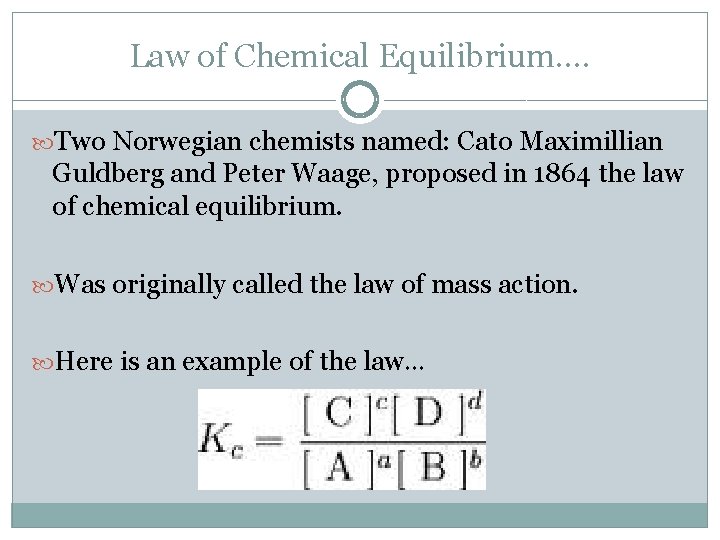
Law of Chemical Equilibrium…. Two Norwegian chemists named: Cato Maximillian Guldberg and Peter Waage, proposed in 1864 the law of chemical equilibrium. Was originally called the law of mass action. Here is an example of the law…

Le Chatelier’s Principle The definition states that when a change is imposed on a system at equilibrium, the position of the equilibrium shifts in a direction that tends to reduce the effect of that change. By using this principle it makes us able to predict the effects of changes in concentration, pressure, and temperature on a system at equilibrium.
Breathing affects body equilibrium and balance in a number of ways. Relaxed deep breathing provides oxygen necessary for brain function and interaction with the sense organs that detect equilibrium and balance. Vision Through peripheral and ambient vision, the brain senses the body's movement, orientation in space and relationship to objects in the environment. Vision also detects the stability of a surface or object Vestibular system The vestibular system includes the organs within the inner ear. It coordinates with the visual and auditory systems to sense direction and speed of head movement Balance within muscle groups and alignment of the skeletal system affect body equilibrium and balance. Small shifts of bones can affect the whole skeletal system Proprioception Proprioceptors are reflexive organs within muscles and tendons that response to changes in position of the body or limbs. Muscle spindles cause contraction of muscle fibers in response to these changes. Effects of Equilibrium
Work Cited Zumdahl, Steven, and Donald De. Coste. Introductory Chemical A Foundation. 7 th. United States: 2011. http: //www. livestrong. com/article/49331 - factors-body-equilibriumbalance/#ixzz 20 w 3 v. CIBG
The End
- Slides: 10