
EQUILIBRIUM BY HANNAH WADE GABBY INGRAM SYDNEY LITTLE
EQUILIBRIUM BY: HANNAH WADE, GABBY INGRAM, SYDNEY LITTLE, BOBBY PORTER, AND HAYLEY KILBURN
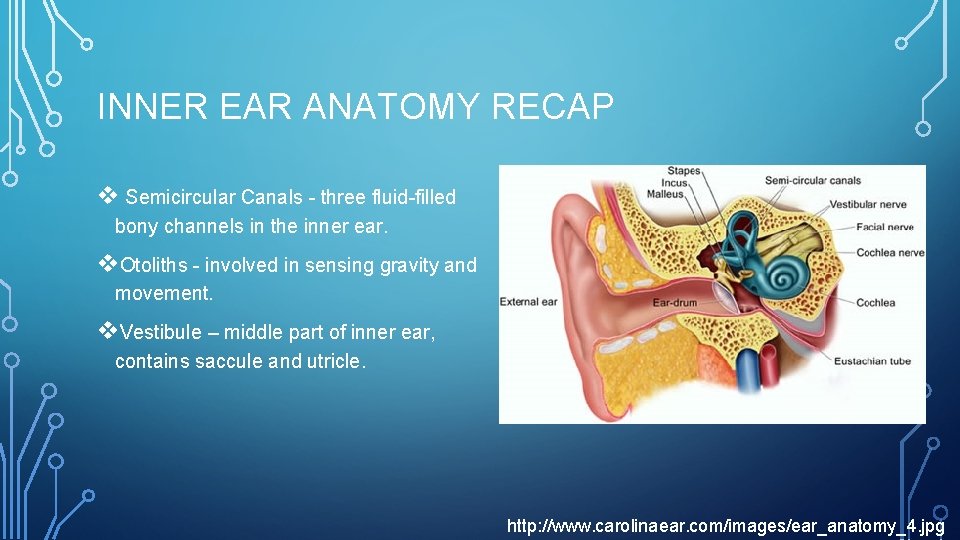
INNER EAR ANATOMY RECAP v Semicircular Canals - three fluid-filled bony channels in the inner ear. v. Otoliths - involved in sensing gravity and movement. v. Vestibule – middle part of inner ear, contains saccule and utricle. http: //www. carolinaear. com/images/ear_anatomy_4. jpg
STATIC VS. DYNAMIC EQUILIBRIUM Static Dynamic v. Detects vertical or horizontal v. Detects rotational movement v. Maintains balance v. Semicircular canals acceleration v. Senses head position, and maintains stability and posture v. Utricle and saccule within the vestibule
RECEPTORS Static Dynamic v. Maculae v. Sense the movement of hair v. Crista ampullaris v. Sense the movement of hair cells to detect movements of the otolithic membrane. cells to detect movements in the semicircular canal.
STIMULUS-RESPONSE PATHWAY v. Head movement causes otoliths to pool v. Receptors sense movement of specialized hairs v. Vestibular branch of vestibulocochlear nerve v. Motor impulses sent to maintain balance
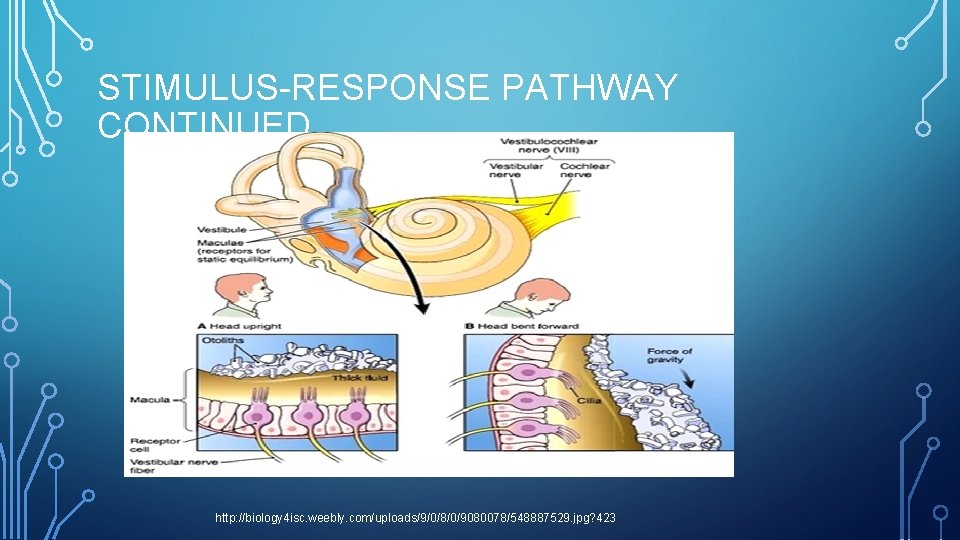
STIMULUS-RESPONSE PATHWAY CONTINUED http: //biology 4 isc. weebly. com/uploads/9/0/8/0/9080078/548887529. jpg? 423
SOURCES v. The Editors of Encyclopædia Britannica. (n. d. ). Inner ear. Retrieved April 21, 2016, from http: //www. britannica. com/science/inner-ear v. Moresea Power. Point v(n. d. ). Retrieved April 21, 2016, from http: //www. merriamwebster. com/medical/vestibule
- Slides: 7