
Equations of Motion for Uniform Acceleration Also called

- Slides: 14
Equations of Motion for Uniform Acceleration
Also called …. Equations of Motion for Constant Resultant Force because……… …acceleration and resultant force are directly proportional.
Also called …. (unhelpfully) suvat equations Unhelpful because it doesn’t tell us anything about when or how to apply them
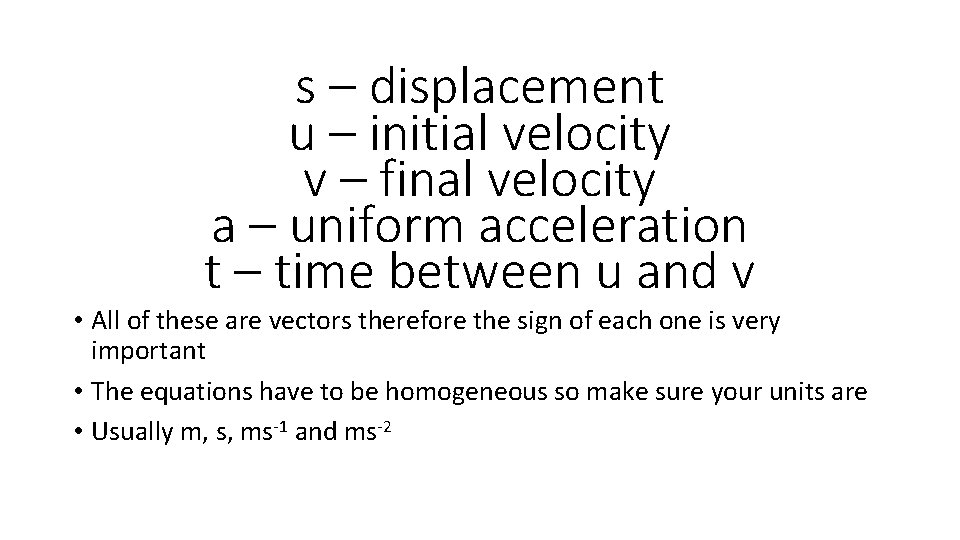
Also called …. (unhelpfully) suvat equations s – displacement u – initial velocity v – final velocity a – uniform acceleration t – time between u and v
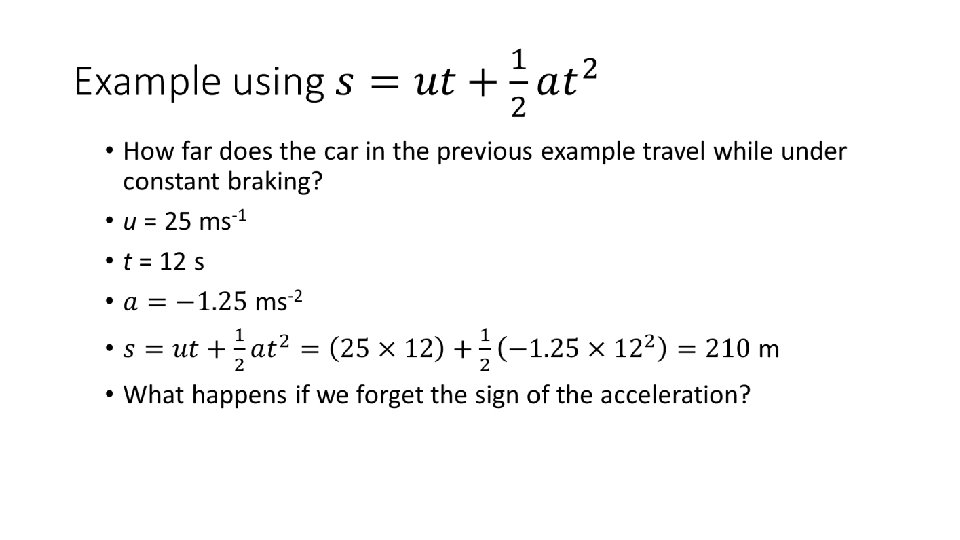
s – displacement u – initial velocity v – final velocity a – uniform acceleration t – time between u and v • All of these are vectors therefore the sign of each one is very important • The equations have to be homogeneous so make sure your units are • Usually m, s, ms-1 and ms-2
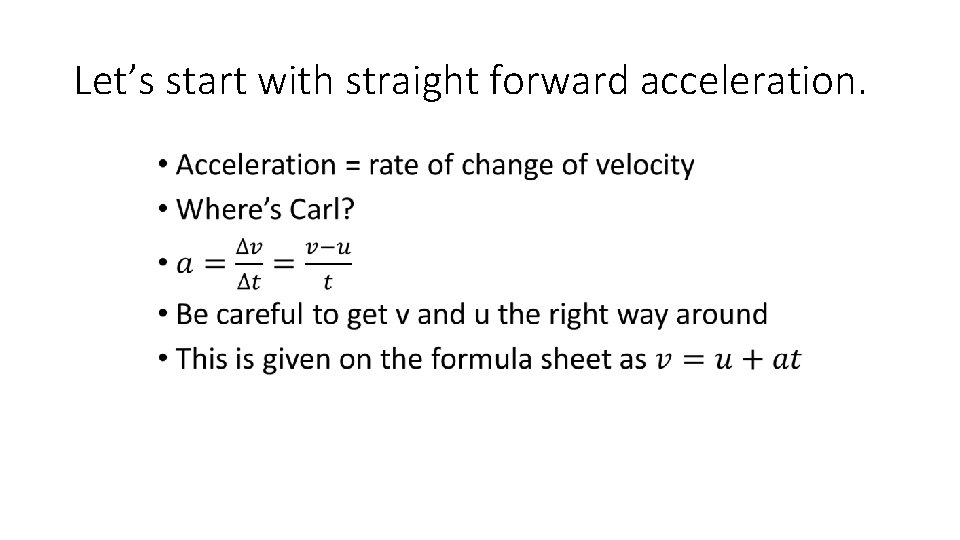
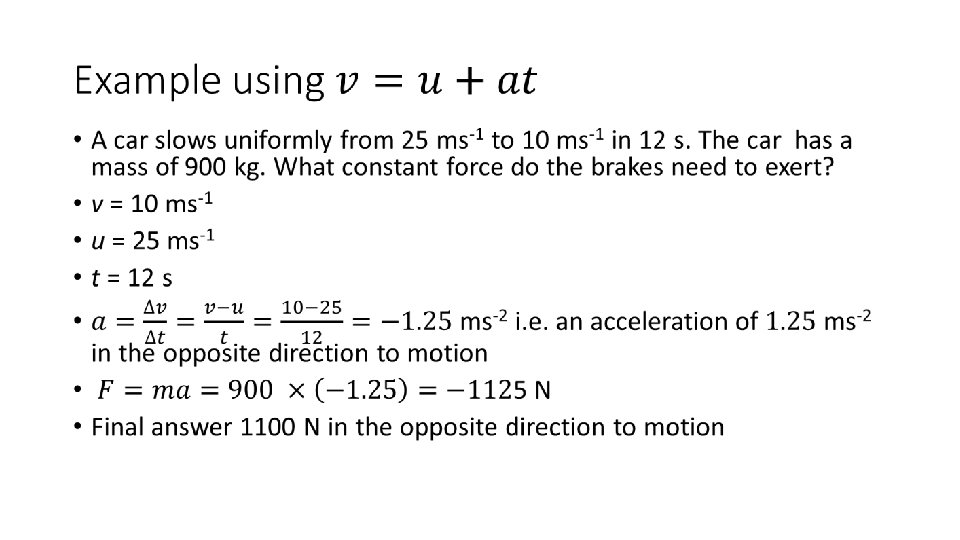
Let’s start with straight forward acceleration. •
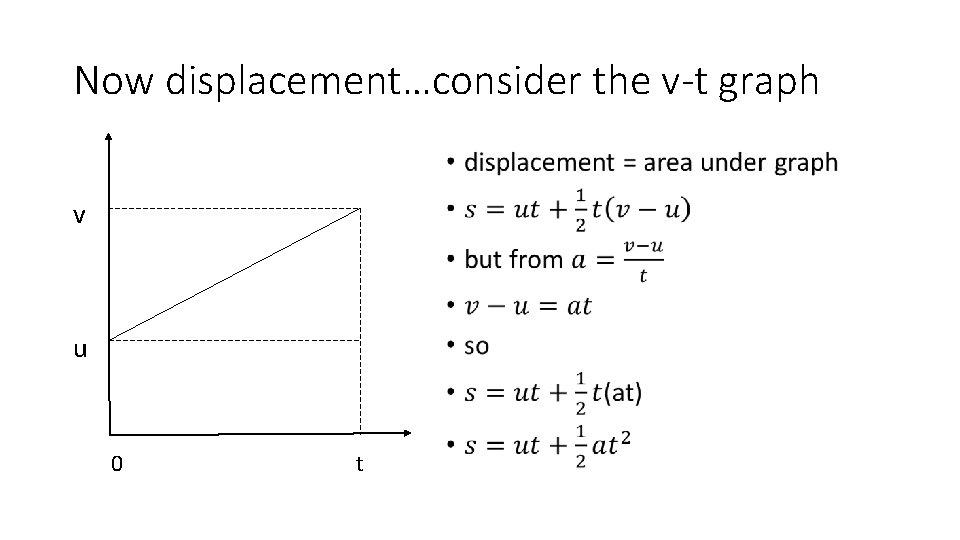
Now displacement…consider the v-t graph • v u 0 t
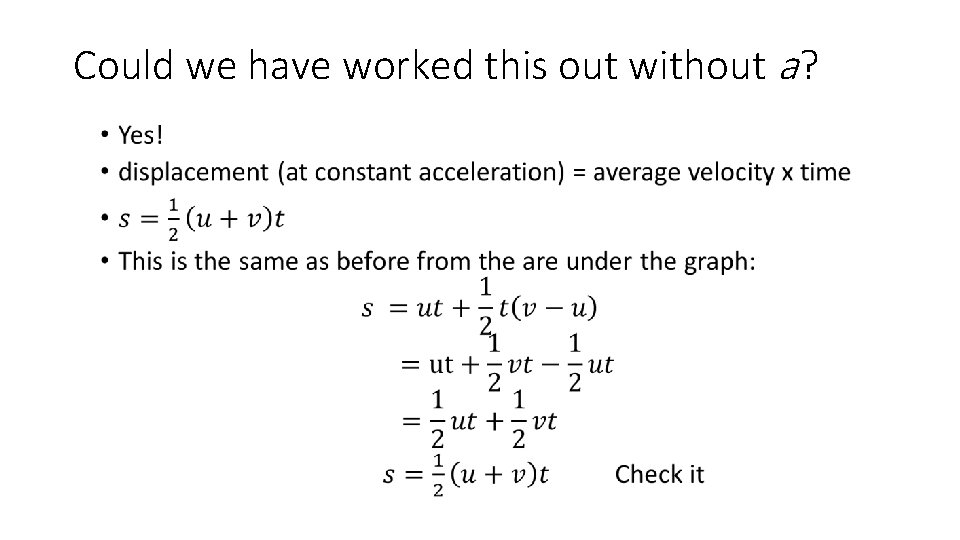
Could we have worked this out without a ? •
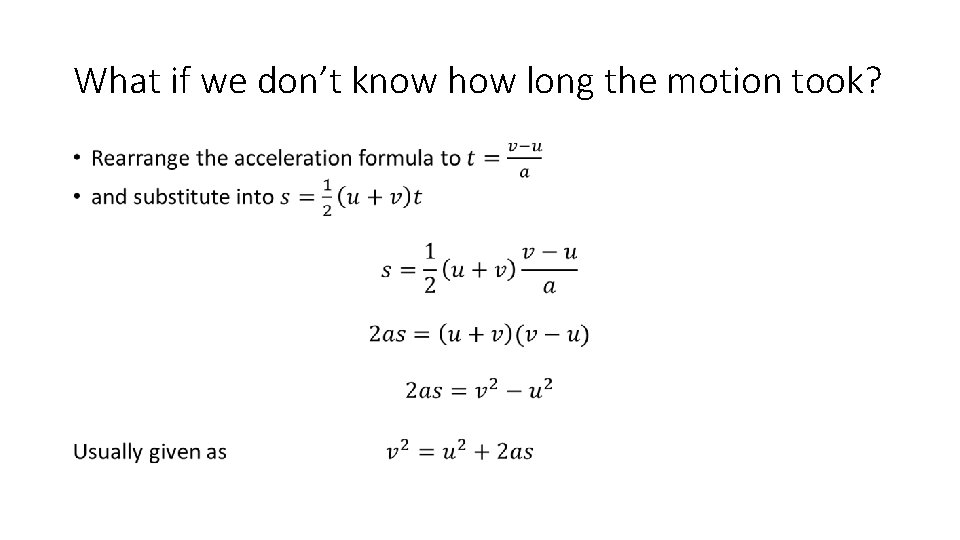
What if we don’t know how long the motion took? •
We can use this to find out how fast an object will be moving after it has been dropped from rest through a certain distance…. • If you fall off a 100 m high monument (in vacuum), how fast will you be moving when you hit the floor?
How do you know which one to use? • Write down what you DO know • a= • s= • u= • etc • Write down what you want to find: • v=? • Look for the formula with JUST a, s, u and v
Summary - Equations of Motion for Uniform Acceleration • • • Get yourself a nice drawing Define the positive direction and stick to it throughout Write down what you know Write down what you need to find out Look for the right equation Check the units are consistent Be careful with signs Solve it Reduce to a sensible number of significant figures Don’t forget the units