
EQ How does the energy of an earthquake
- Slides: 24
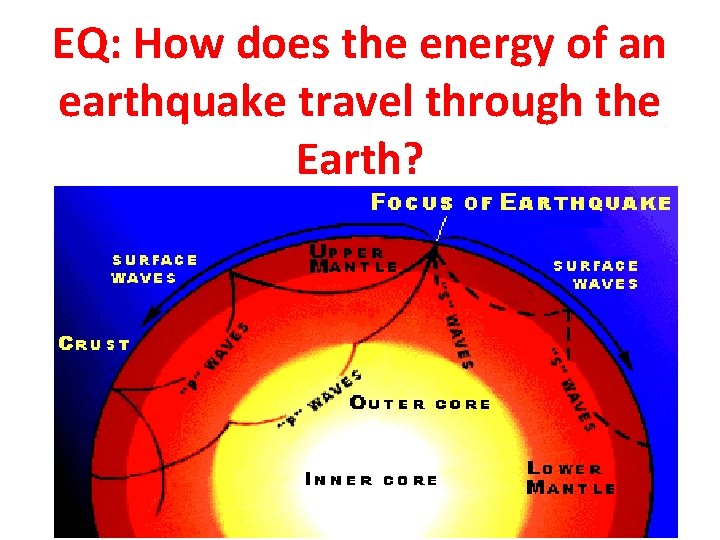
EQ: How does the energy of an earthquake travel through the Earth?
Let’s discuss… • What kind of waves have you observed? • How do waves move in water? Complete Discover activity on page 51.
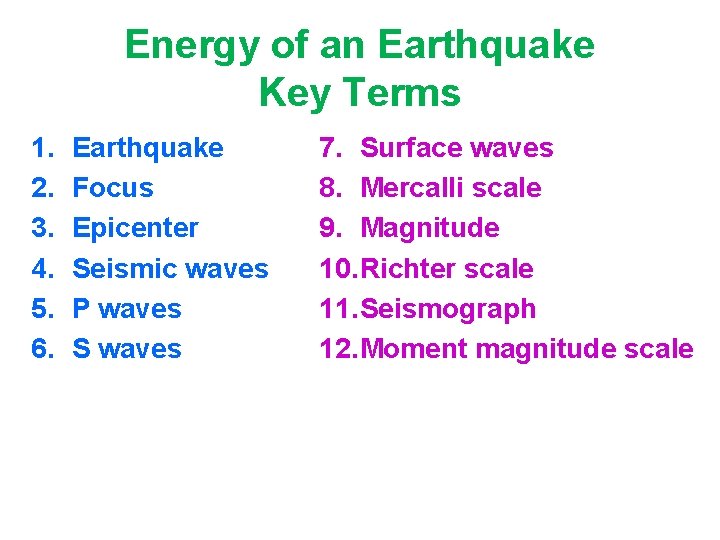
Energy of an Earthquake Key Terms 1. 2. 3. 4. 5. 6. Earthquake Focus Epicenter Seismic waves P waves S waves 7. Surface waves 8. Mercalli scale 9. Magnitude 10. Richter scale 11. Seismograph 12. Moment magnitude scale
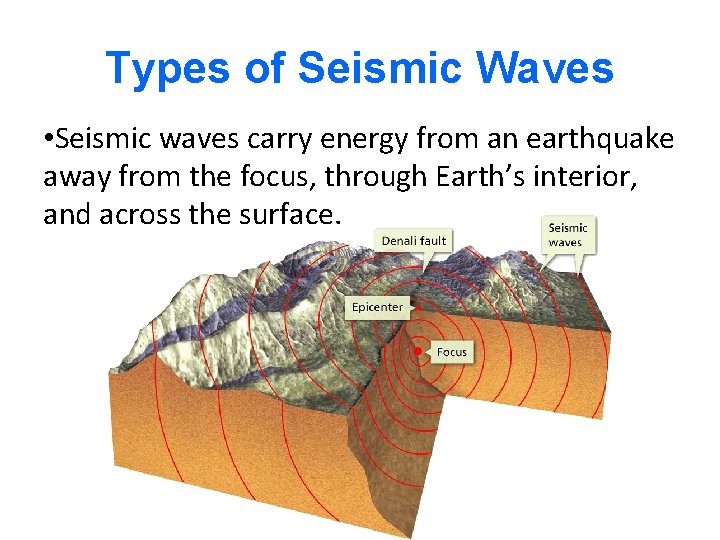
- Earthquakes and Seismic Waves Types of Seismic Waves • Seismic waves carry energy from an earthquake away from the focus, through Earth’s interior, and across the surface.
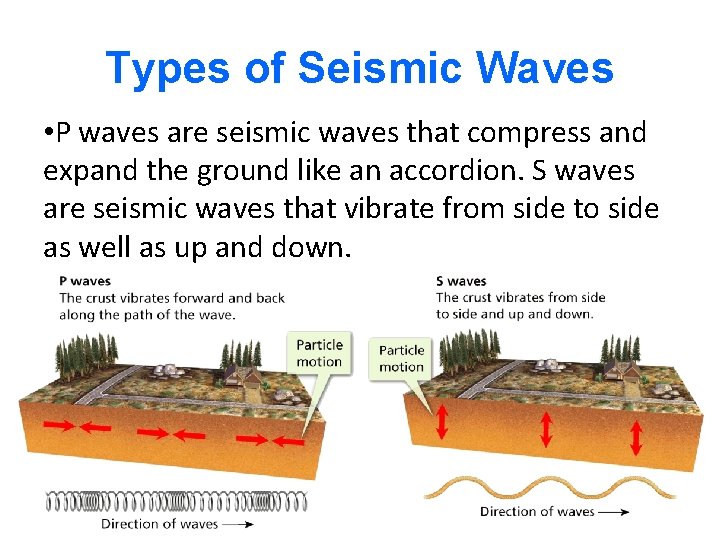
- Earthquakes and Seismic Waves Types of Seismic Waves • P waves are seismic waves that compress and expand the ground like an accordion. S waves are seismic waves that vibrate from side to side as well as up and down.
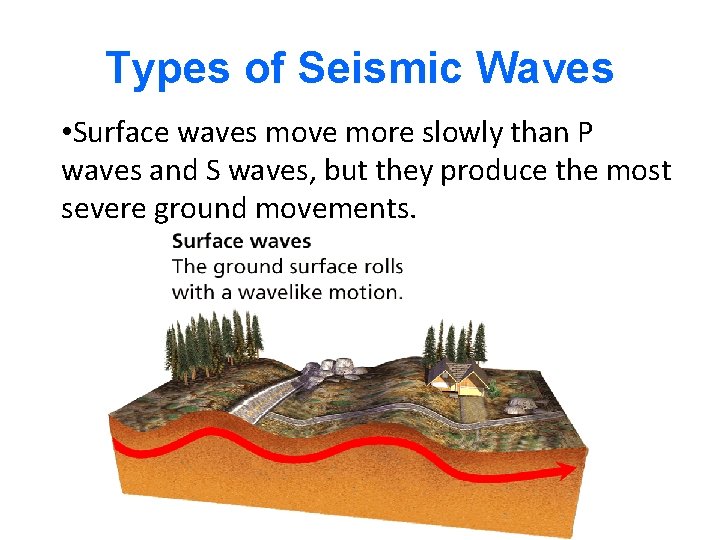
- Earthquakes and Seismic Waves Types of Seismic Waves • Surface waves move more slowly than P waves and S waves, but they produce the most severe ground movements.
Types of Seismic Waves P Waves- The 1 st waves to arrive that compress and expand the ground like an accordion. Can damage buildings and travel through liquids and solids. S Waves- Secondary waves that vibrate from side to side as well as up and down. They shake the ground and structures violently and can only travel through solids. Surface Waves- Move slower than P and S waves but can produce severe ground movements causing the ground to roll like ocean waves or shake buildings from side to side. http: //phschool. com/atschool/phsciexp/active_art/seismic_waves/index. html
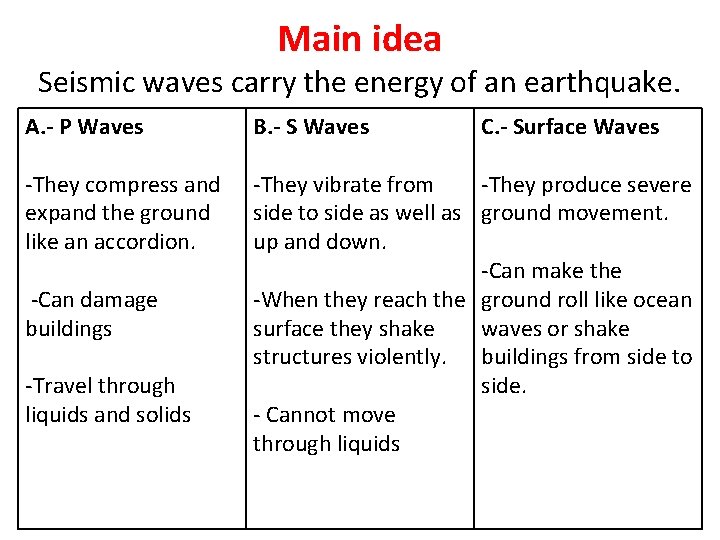
Main idea Seismic waves carry the energy of an earthquake. A. - P Waves B. - S Waves -They compress and expand the ground like an accordion. -They vibrate from -They produce severe side to side as well as ground movement. up and down. -Can make the -When they reach the ground roll like ocean surface they shake waves or shake structures violently. buildings from side to side. - Cannot move through liquids -Can damage buildings -Travel through liquids and solids C. - Surface Waves
Quick Check 1. The seismic waves that arrive second are a. P waves. b. S waves. c. surface waves. d. earthquake waves. 2. Which type of seismic wave travels the slowest? a. P waves b. S waves c. surface waves d. earthquake waves 3. Which type of seismic wave causes the ground to expand contract like an accordion? a. P waves b. S waves c. surface waves d. earthquake waves
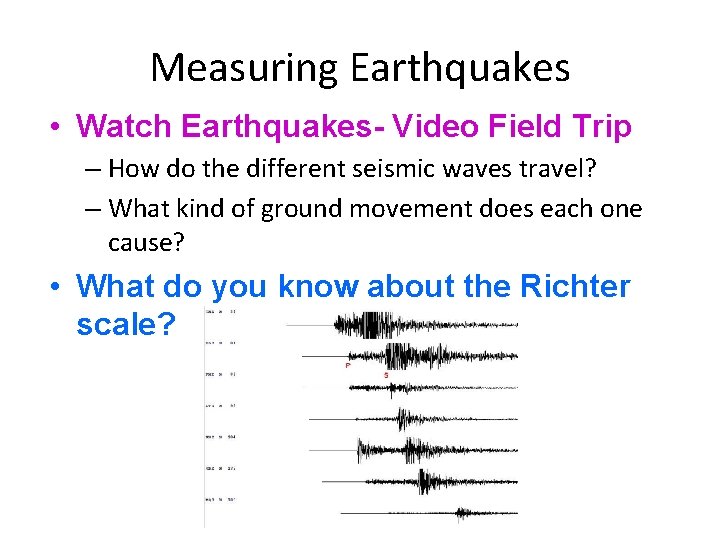
Measuring Earthquakes • Watch Earthquakes- Video Field Trip – How do the different seismic waves travel? – What kind of ground movement does each one cause? • What do you know about the Richter scale?
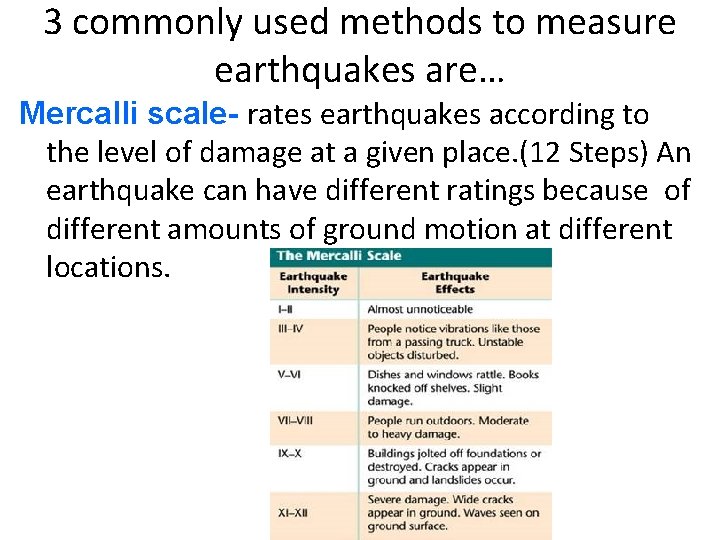
3 commonly used methods to measure earthquakes are… Mercalli scale- rates earthquakes according to the level of damage at a given place. (12 Steps) An earthquake can have different ratings because of different amounts of ground motion at different locations.
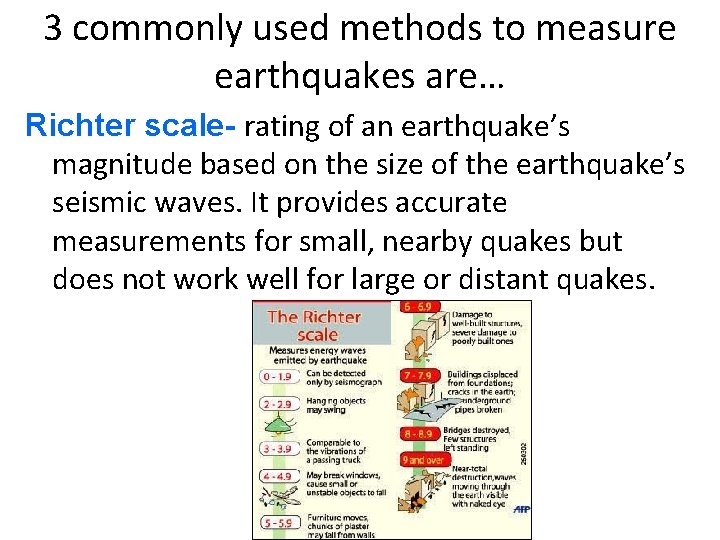
3 commonly used methods to measure earthquakes are… Richter scale- rating of an earthquake’s magnitude based on the size of the earthquake’s seismic waves. It provides accurate measurements for small, nearby quakes but does not work well for large or distant quakes.
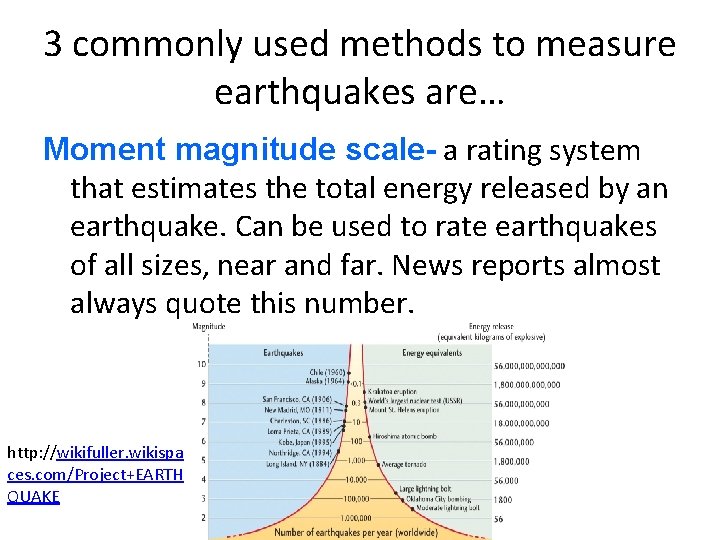
3 commonly used methods to measure earthquakes are… Moment magnitude scale- a rating system that estimates the total energy released by an earthquake. Can be used to rate earthquakes of all sizes, near and far. News reports almost always quote this number. http: //wikifuller. wikispa ces. com/Project+EARTH QUAKE
Quick Check 1. How are the Mercalli scale and the Richter scale similar? How are they different? – Both describe strength of an earthquake. The Mercalli scale describes an earthquake’s strength in terms of its effects-to what extent people notice it and the amount of damage it causes. The Richter scale describes an earthquake’s strength in terms of the size of its seismic waves. 2. On which scale would an earthquake’s strength vary from one place to another, and why? – The Mercalli scale; the amount of shaking that people would feel and the damage to objects would be greater in a place closer to the epicenter and less in a place farther away. Therefore causing the strength to vary from place to place.
Investing the Speed of an Earthquake Pre-Lab Discussion An earthquake produces waves that travel away from the earthquake’s epicenter, like ripples on a pond when you throw in a pebble. An earthquake produces three types of waves, primary (P waves), secondary (S waves), and surface waves. Seismologists track how far and how fast P and S waves travel to find the epicenter of the quake. In this investigation, you will construct a travel-time graph for P and S waves. You will use the graph to answer some questions about earthquakes. • What causes an earthquake? • What is the epicenter of an earthquake?
Problem: How can you use a graph of earthquake waves’ travel distance and time to find an epicenter? Materials: *Pencil*2 colored pencils Procedure 1. An earthquake produced P and S waves that were recorded by instruments at 20 stations. These waves are listed in the Data Table on the next page. The table shows the distance traveled and the travel time for each wave. Using these data, construct a graph showing the relationship between the distance traveled by P and S waves and their travel times. Label the curves P wave or S wave. 2. Use your graph to answer the questions.
Comparing Magnitudes Magnitude 8. 0 quake article • http: //www. sciencenews. org/view/generic/id/348092/des cription/Magnitude_80_earthquake_strikes_Solomon_Isla nds Magnitude 8 and greater Earthquakes since 1900 • http: //earthquake. usgs. gov/earthquakes/eqarchives/year/ mag 8/magnitude 8_1900_date. php • Earthquake website http: //earthquake. usgs. gov/earthquakes/? source=sitenav
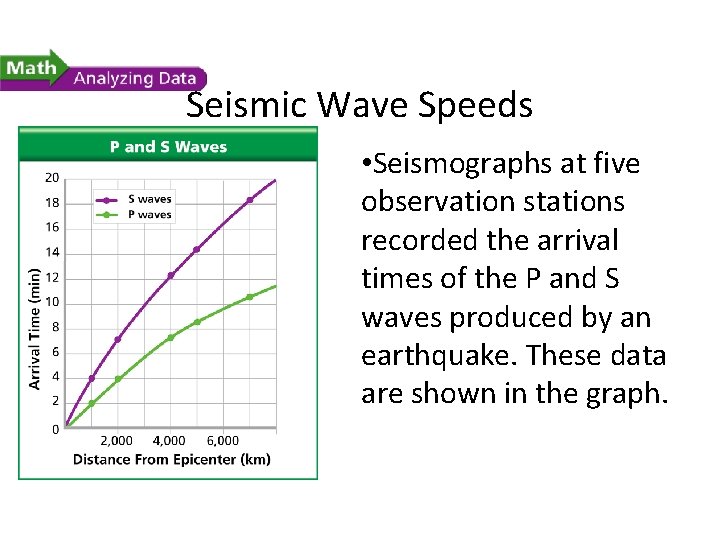
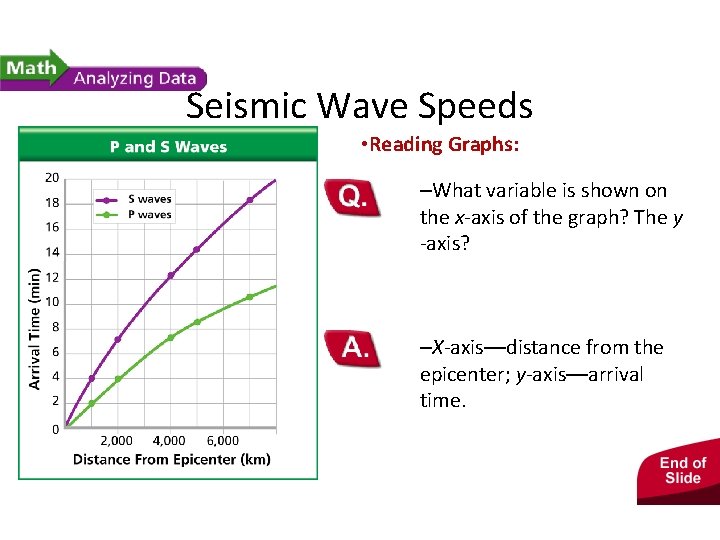
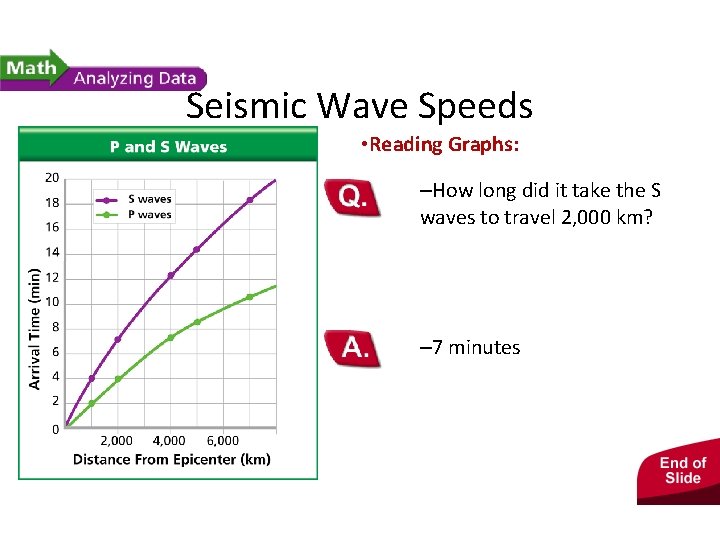
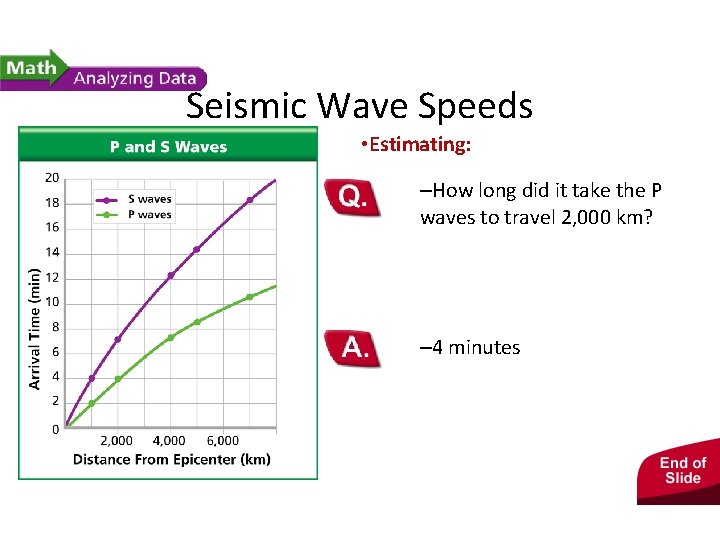
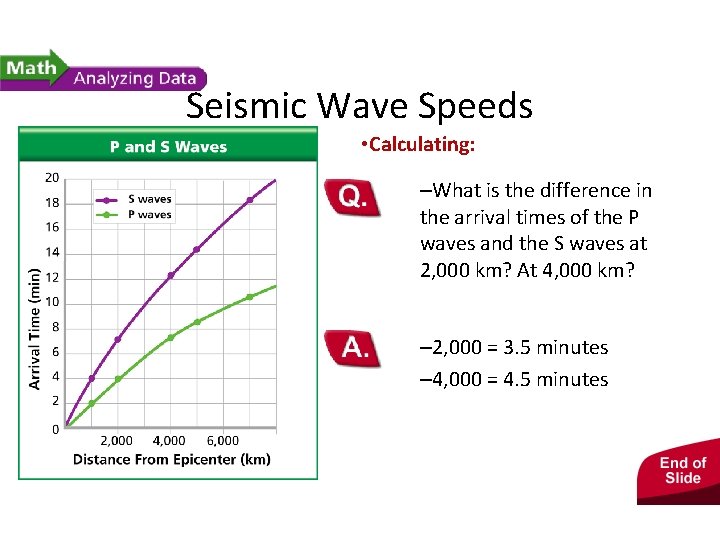
- Earthquakes and Seismic Waves Seismic Wave Speeds • Seismographs at five observation stations recorded the arrival times of the P and S waves produced by an earthquake. These data are shown in the graph.
- Earthquakes and Seismic Waves Seismic Wave Speeds • Reading Graphs: –What variable is shown on the x-axis of the graph? The y -axis? –X-axis––distance from the epicenter; y-axis––arrival time.
- Earthquakes and Seismic Waves Seismic Wave Speeds • Reading Graphs: –How long did it take the S waves to travel 2, 000 km? – 7 minutes
- Earthquakes and Seismic Waves Seismic Wave Speeds • Estimating: –How long did it take the P waves to travel 2, 000 km? – 4 minutes
- Earthquakes and Seismic Waves Seismic Wave Speeds • Calculating: –What is the difference in the arrival times of the P waves and the S waves at 2, 000 km? At 4, 000 km? – 2, 000 = 3. 5 minutes – 4, 000 = 4. 5 minutes
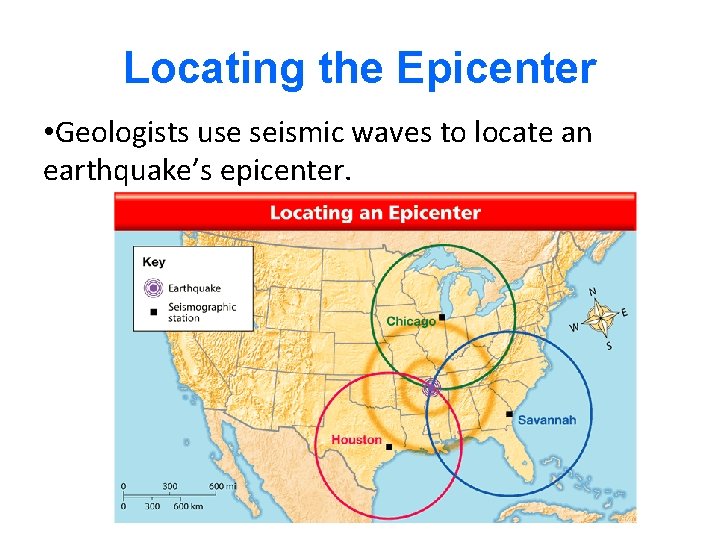
Locating the Epicenter 1. Measure the difference between the arrival times of the P waves and S waves. – The farther= greater time between P and S waves 2. Then draw at least 3 circles using data from different seismographs. – The center of each circle is a seismograph location. – The radius is the distance from seismograph to the epicenter. 3. The point where the 3 circles intersect is the location of the epicenter.
- Earthquakes and Seismic Waves Locating the Epicenter • Geologists use seismic waves to locate an earthquake’s epicenter.