
EPR Electronic PRocesses A new METHODOLOGY standard abstraction
EPR ( Electronic PRocesses) A new METHODOLOGY standard (abstraction technique) for Integration and coordination of internal processes and e-business in GOVERNMENTS 21/10 -2003 Hans A. Aanesen EPR-Forum HAA: okt 2003
Focus Areas The business objectives of EPR projects include: Enhanced data capture quality Quality in customer service and documentation of work done Efficiency and quality in administrative work, with reuse of information Effective cooperation and interoperation within an organization and between organizations Data support that benefits all employees Integration of legacy systems and overall presentation for the users Electronic supervision of services and delivery (see http: //www. unik. no/profor/ for videos of project examples) HAA: okt 2003
Goals The aim of this standard is to describe how application solutions can be organized in a unified way. The standard describes how: information is presented to the users tools and supporting materials are implemented communication with legacy systems will take place roles, processes and routines will be organized general functions can be standardized and shared HAA: okt 2003
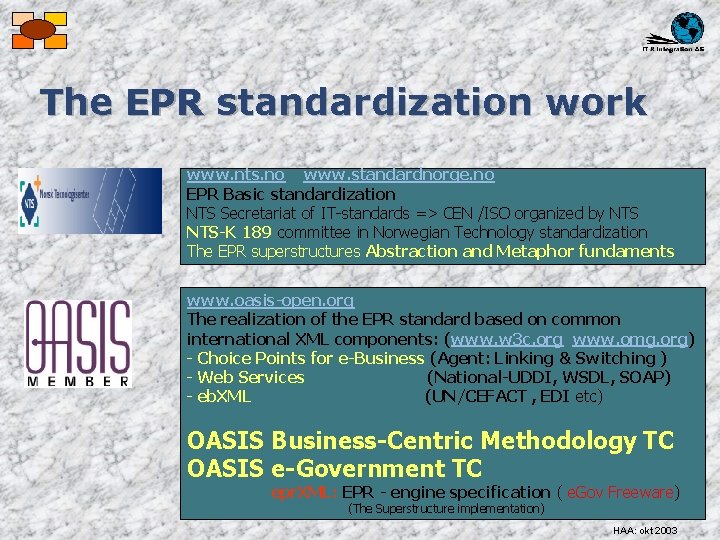
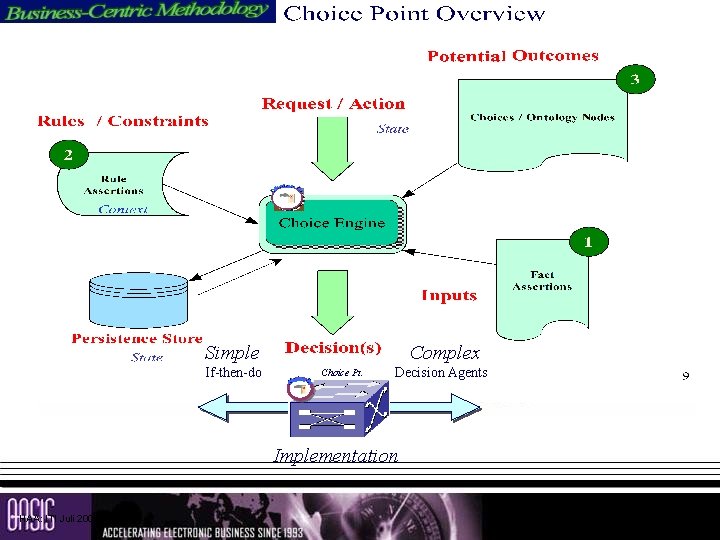
The EPR standardization work www. nts. no www. standardnorge. no EPR Basic standardization NTS Secretariat of IT-standards => CEN /ISO organized by NTS-K 189 committee in Norwegian Technology standardization The EPR superstructures Abstraction and Metaphor fundaments www. oasis-open. org The realization of the EPR standard based on common international XML components: (www. w 3 c. org www. omg. org) - Choice Points for e-Business (Agent: Linking & Switching ) - Web Services (National-UDDI, WSDL, SOAP) - eb. XML (UN/CEFACT , EDI etc) OASIS Business-Centric Methodology TC OASIS e-Government TC epr. XML: EPR - engine specification ( e. Gov Freeware) (The Superstructure implementation) HAA: okt 2003

EPR implementation pilots (Sector standardization organized through EPR-Forum) www. unik. no/profor Pro. For: Innovation Program in Governmental sector ( Blue light program) 2 Pilots : - Home based Health & Care services ( Integrated planning and reporting inside its COI) - Digital Building & Construction Office for service handling ( electronic co-operation inside its COI ) COI = Community Of Interest HAA: okt 2003

EPR is the road ahead to ”Open”, Including and Service organized collaboration in Real time without introduction of new Technology The EPR superstructure opens up quite new Methods in the way to integrate different legacy systems and construction of generic linked and switched e-Business processes HAA: okt 2003

EPR Superstructure organisation Construction and Integration of Business processes and logic By help of Folder structure metaphors NB ! EPR methodology is setting the specification requirement in how to integrate Legacy Systems. Done on EPR terms and not on Legacy System terms EPR is based on FREEWARE ! HAA: okt 2003
epr. XML EPR’s Hybrid Portal technology based on a a Service Oriented Architecture organized by help of modern XML abstraction technique HAA: okt 2003
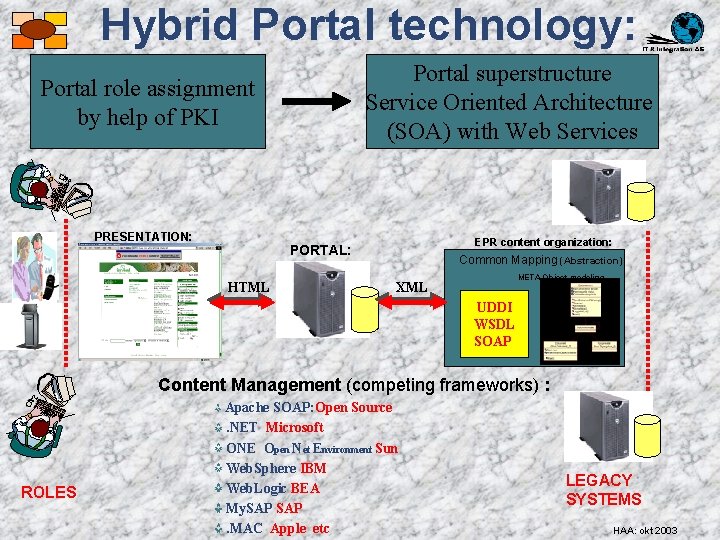
Hybrid Portal technology: Portal superstructure Service Oriented Architecture (SOA) with Web Services Portal role assignment by help of PKI PRESENTATION: EPR content organization: PORTAL: HTML Common Mapping (Abstraction) META Object modeling XML UDDI WSDL SOAP Content Management (competing frameworks) : ROLES Apache SOAP: Open Source. NET Microsoft ONE Open Net Environment Sun Web. Sphere IBM Web. Logic BEA My. SAP. MAC Apple etc LEGACY SYSTEMS HAA: okt 2003
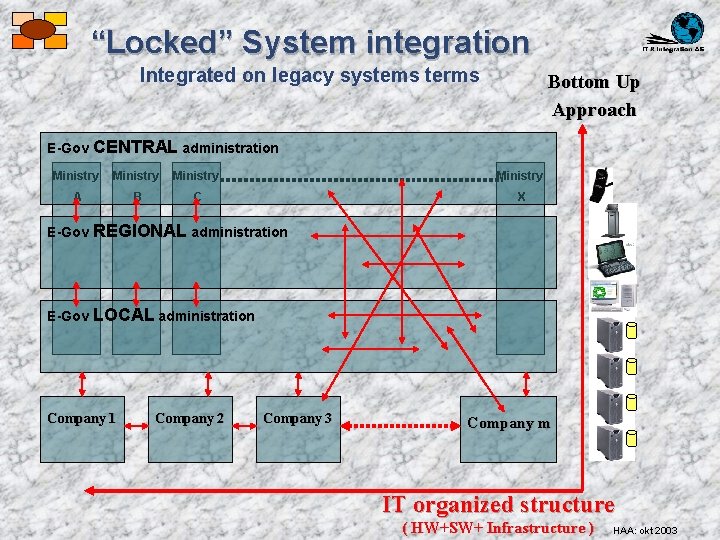
“Locked” System integration Integrated on legacy systems terms Bottom Up Approach E-Gov CENTRAL administration Ministry A B C X E-Gov REGIONAL administration E-Gov LOCAL administration Company 1 Company 2 Company 3 Company m IT organized structure ( HW+SW+ Infrastructure ) HAA: okt 2003
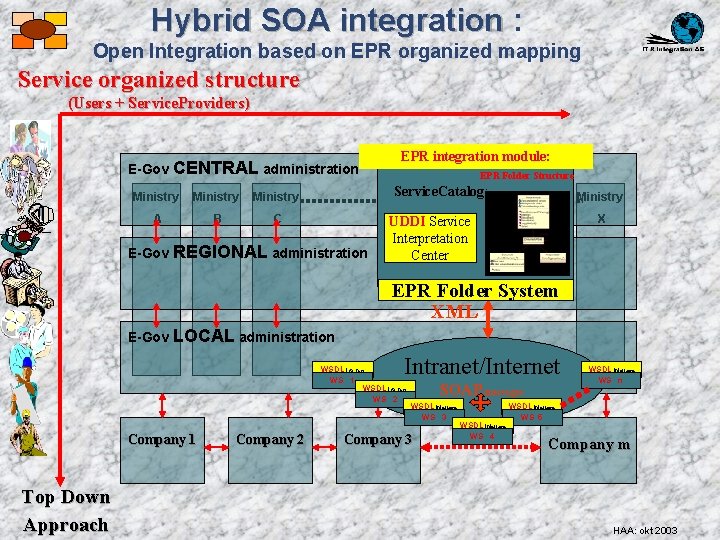
Hybrid SOA integration : Open Integration based on EPR organized mapping Service organized structure (Users + Service. Providers) E-Gov CENTRAL administration Ministry A B C EPR integration module: EPR Folder Structure Service. Catalog: E-Gov REGIONAL administration Ministry X UDDI Service Interpretation Center EPR Folder System XML E-Gov LOCAL administration Intranet/Internet WSDL Interface WS 1 WSDL Interface WS 2 Company 1 Top Down Approach Company 2 SOAP-messages WSDL Interface WS 3 Company 3 WSDL Interface WS 4 WSDL Interface WS n WSDL Interface WS 5 Company m HAA: okt 2003
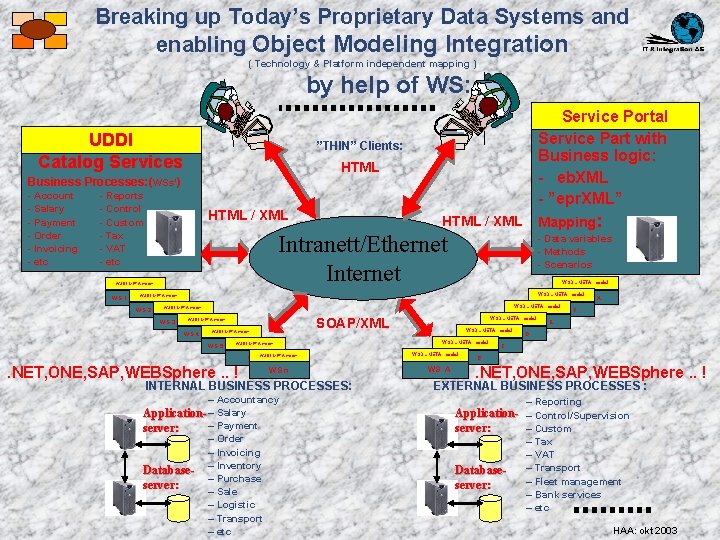
Breaking up Today’s Proprietary Data Systems and enabling Object Modeling Integration ( Technology & Platform independent mapping ) by help of WS: UDDI Catalog Services ”THIN” Clients: HTML Business Processes: (WSs’) - Account - Salary - Payment - Order - Invoicing - etc - Reports - Control - Custom - Tax - VAT - etc HTML / XML Mapping: HTML / XML Intranett/Ethernet Internet WSDL META model WS 1 Service Portal Service Part with Business logic: - eb. XML - ”epr. XML” - Data variables - Methods - Scenarios WSDL META model WS 2 WS WSDL META model WS 3 WS SOAP/XML WSDL META model WS 4 WSDL META model WS 5 WSDL META model WS 6 . NET, ONE, SAP, WEBSphere. . ! WS n INTERNAL BUSINESS PROCESSES: – Accountancy Application- – Salary – Payment server: – Order – Invoicing Database- – Inventory – Purchase server: – Sale – Logistic – Transport – etc WSDL META model WS WS A X F E D C B . NET, ONE, SAP, WEBSphere. . ! EXTERNAL BUSINESS PROCESSES : – Reporting Application- – Control/Supervision server: – Custom Databaseserver: – Tax – VAT – Transport – Fleet management – Bank services – etc HAA: okt 2003

EPR Portal Server Integration module: e-Government Co-operation Methodology as “driver” Service Portal: Service Part: EPR Folder Structure Service. Catalog: Info. part & Service part HTML Employees working folder with information and help tools UDDI Service Interpretation Center HTML EPR Folder System XML Intranet/Internet WSDL Interface WS 1 WSDL Interface XML Process Control LANs Web Server Lighting Control Security Systems Node 2 Node 3 WS 2 SOAP-messages WSDL Interface WS 3 EL meter Process Server 1 XML Node 1 Node i Node 4 Web Server WSDL Interface WS 4 WS 5 WSDL Interface WS n WEB Services: (XML) UDDI = Service Catalog WSDL = Connection XML SOAP = Message exchange Web Server Legacy system 1 Legacy system n Closed Net HVAC Refridge/Freezedevices HAA: okt 2003
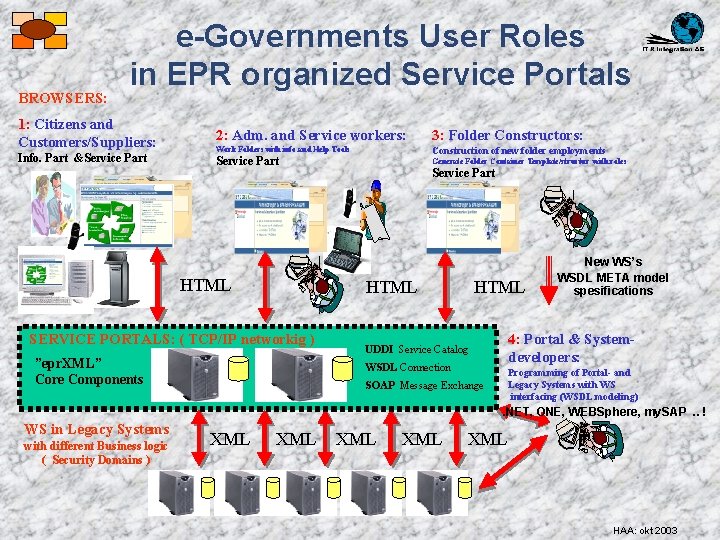
BROWSERS: e-Governments User Roles in EPR organized Service Portals 1: Citizens and Customers/Suppliers: 2: Adm. and Service workers: 3: Folder Constructors: Info. Part &Service Part Work Folders with info. and Help Tools Service Part Construction of new folder employments HTML Generate Folder Container Template/structur with roles Service Part HTML SERVICE PORTALS: ( TCP/IP networkig ) ”epr. XML” Core Components HTML New WS’s WSDL META model spesifications 4: Portal & Systemdevelopers: UDDI Service Catalog WSDL Connection Programming of Portal- and Legacy Systems with WS interfacing (WSDL modeling) SOAP Message Exchange . NET, ONE, WEBSphere, my. SAP. . ! WS in Legacy Systems with different Business logic ( Security Domains ) XML XML XML HAA: okt 2003
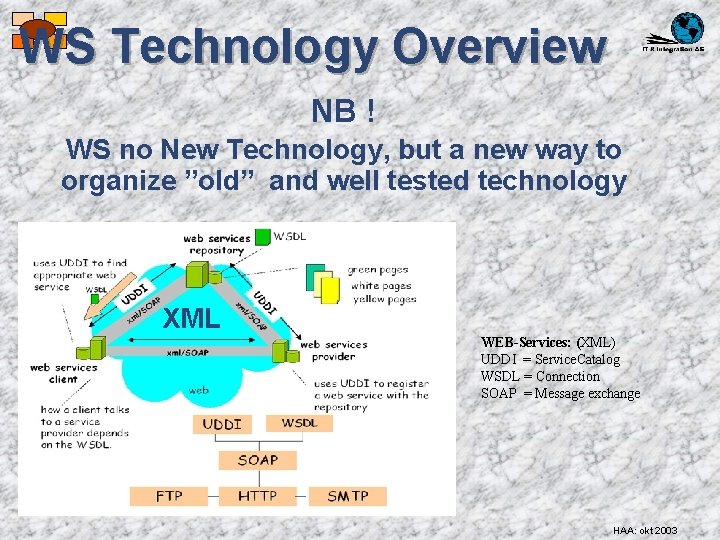
WS Technology Overview NB ! WS no New Technology, but a new way to organize ”old” and well tested technology XML WEB-Services: (XML) UDDI = Service. Catalog WSDL = Connection SOAP = Message exchange HAA: okt 2003
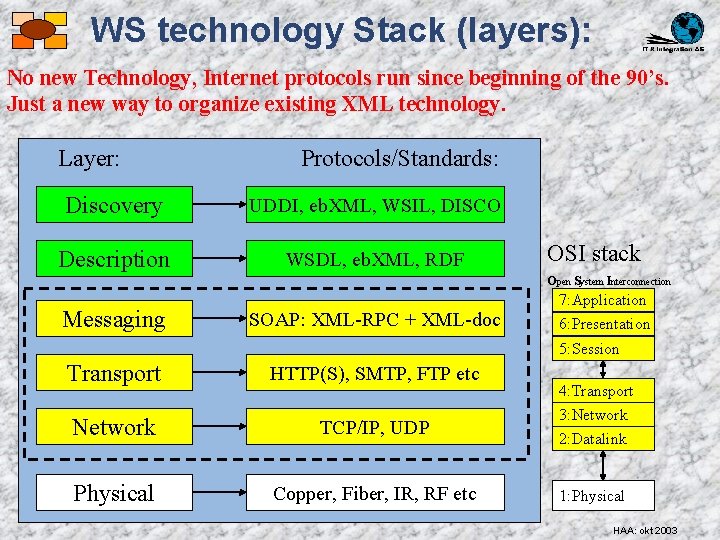
WS technology Stack (layers): No new Technology, Internet protocols run since beginning of the 90’s. Just a new way to organize existing XML technology. Layer: Protocols/Standards: Discovery UDDI, eb. XML, WSIL, DISCO Description WSDL, eb. XML, RDF OSI stack Open System Interconnection Messaging SOAP: XML-RPC + XML-doc 7: Application 6: Presentation 5: Session Transport HTTP(S), SMTP, FTP etc Network TCP/IP, UDP Physical Copper, Fiber, IR, RF etc 4: Transport 3: Network 2: Datalink 1: Physical HAA: okt 2003
HAA: ITI Juli 2003
HAA: ITI Juli 2003
Simple If-then-do Complex Choice Pt. Decision Agents Implementation HAA: ITI Juli 2003
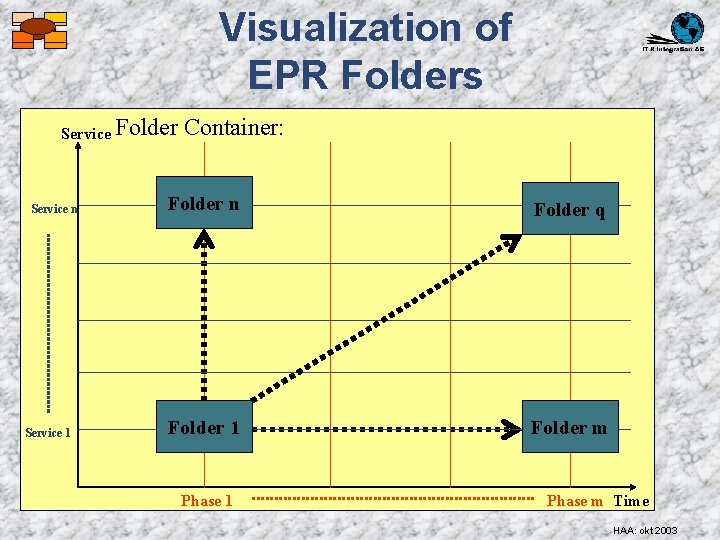
Visualization of EPR Folders Service Folder Service n Service 1 Container: Folder n Folder q Folder 1 Folder m Phase 1 Phase m Time HAA: okt 2003
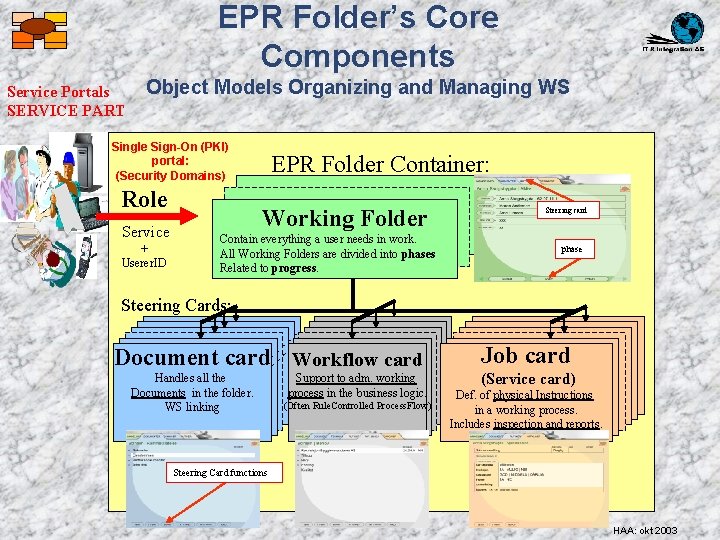
EPR Folder’s Core Components Service Portals SERVICE PART Object Models Organizing and Managing WS Single Sign-On (PKI) portal: (Security Domains) Role Service + Userer. ID EPR Folder Container: Arbeidsmappe Working Folder Arbeidsmappe ( Opprettes når ny bruker eller ny process ) Contain everything user needseller in work. ( Opprettes nårany bruker ny process ) All Working Folders are divided into phases Related to progress. Steering card phase Steering Cards: Dokumentkort Styrertilgangtiltilcard blankett-og og Workflow card Document Dokumentkort Styrer blankett. Styrer tilgang til blankettog dokumentmaler samt arkiverte Styrer tilgangtil tilblankettog dokumentmaler samtarkiverte Handles all the Support to adm. working Styrer tilgang og dokumentmaler samt Dokumenter. dokumentmaler samt arkiverte Dokumenter. Documents in samt the folder. dokumentmaler arkiverte process in the business logic. Dokumenter. (Often Rule. Controlled Process. Flow) WS linking Dokumenter. Dokumentkort Styrertilgang blankett-ogog Job card Dokumentkort Styrer tiltil blankett. Styrer tilgang til blankettdokumentmaler samt arkiverte Styrer tilgang til blankettogog dokumentmaler samtarkiverte (Service Styrer tilgang tilcard) blankettog dokumentmaler samt Dokumenter. dokumentmaler samt arkiverte Def. of physical Instructions Dokumenter. in a working process. Includes inspection and reports. Steering Card functions HAA: okt 2003
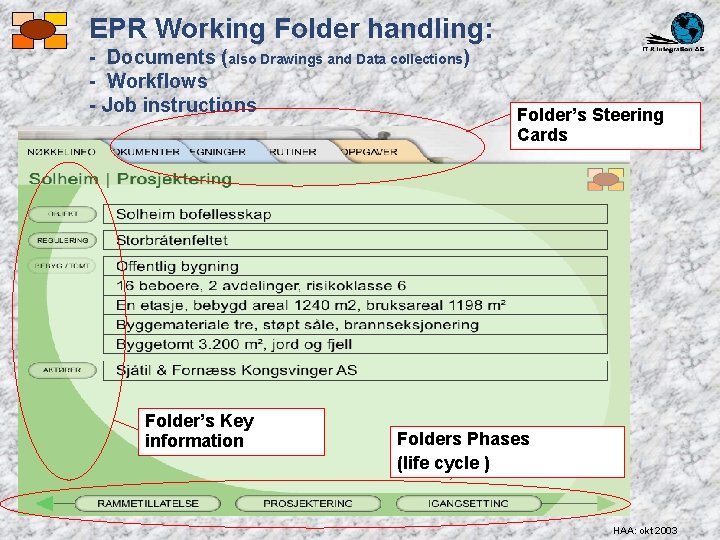
EPR Working Folder handling: - Documents (also Drawings and Data collections) - Workflows - Job instructions Folder’s Key information Folder’s Steering Cards Folders Phases (life cycle ) HAA: okt 2003
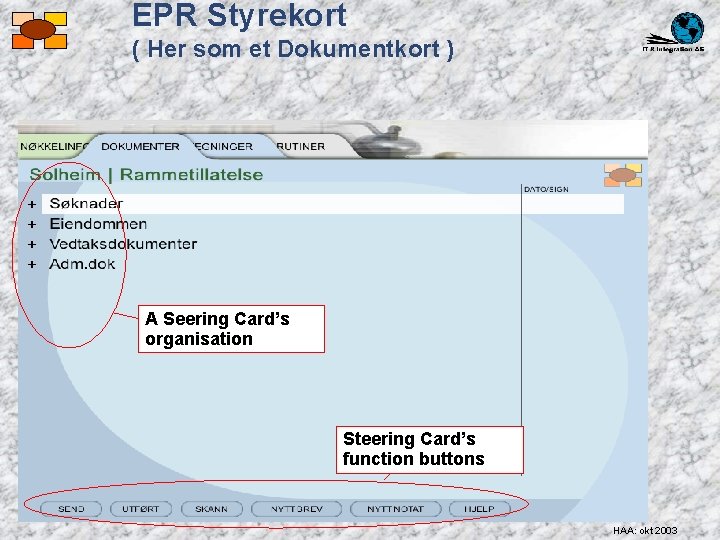
EPR Styrekort ( Her som et Dokumentkort ) A Seering Card’s organisation Steering Card’s function buttons HAA: okt 2003
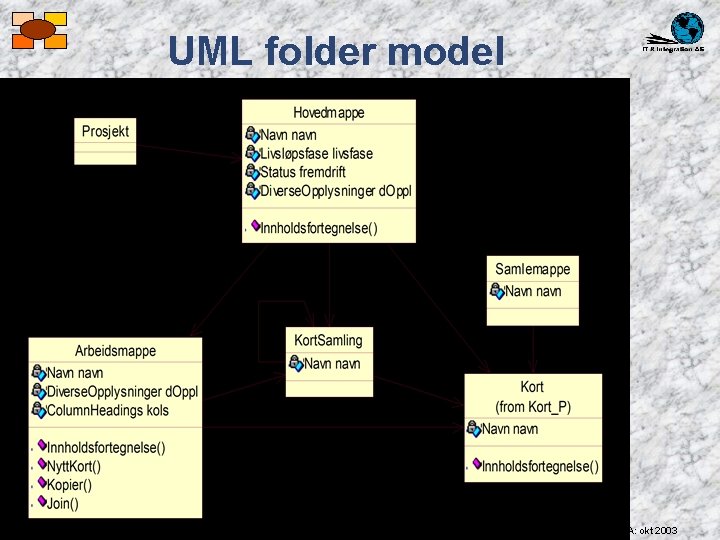
UML folder model HAA: okt 2003
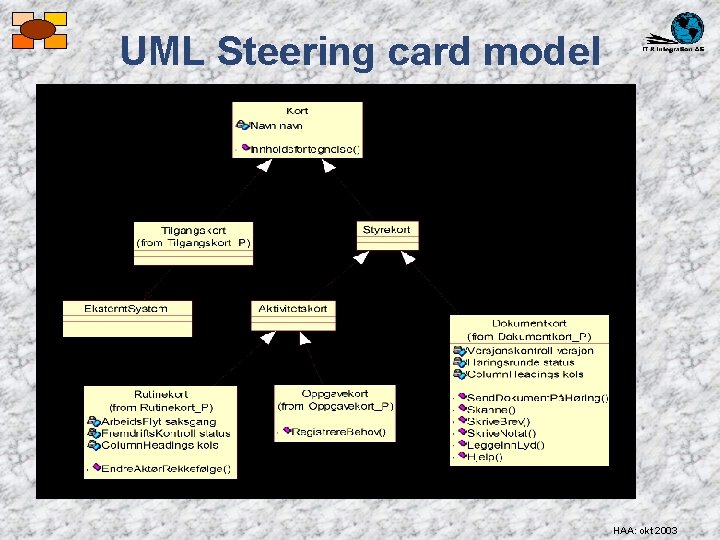
UML Steering card model HAA: okt 2003
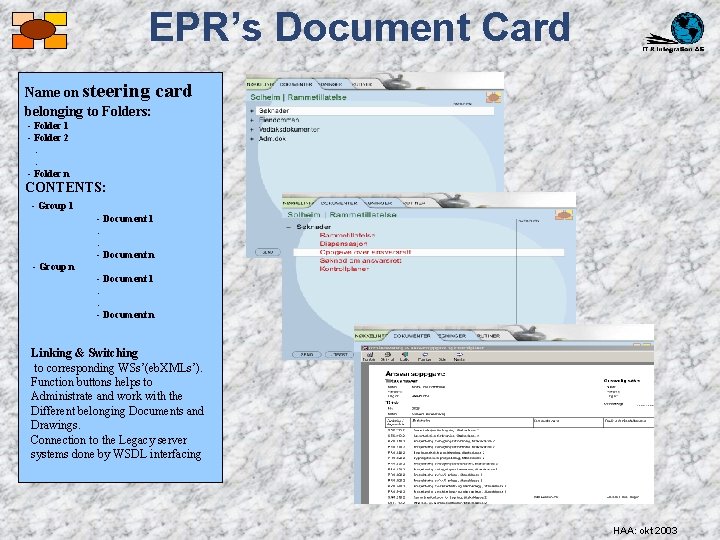
EPR’s Document Card Name on steering card belonging to Folders: - Folder 1 - Folder 2. . - Folder n CONTENTS: - Group 1 - Document 1. . - Document n - Group n - Document 1. . - Document n Linking & Switching to corresponding WSs’(eb. XMLs’). Function buttons helps to Administrate and work with the Different belonging Documents and Drawings. Connection to the Legacy server systems done by WSDL interfacing HAA: okt 2003
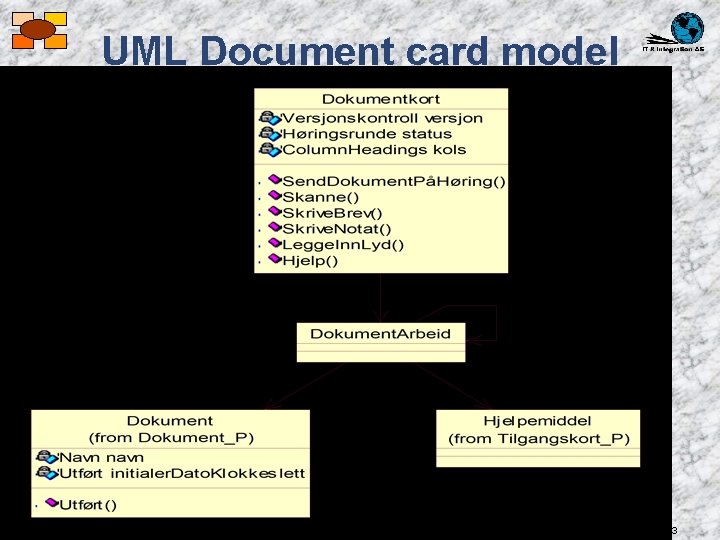
UML Document card model HAA: okt 2003
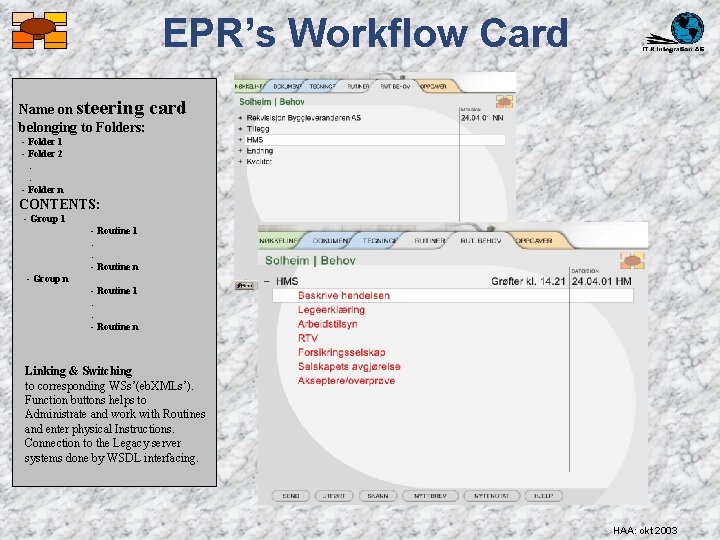
EPR’s Workflow Card Name on steering card belonging to Folders: - Folder 1 - Folder 2. . - Folder n CONTENTS: - Group 1 - Routine 1. . - Routine n - Group n - Routine 1. . - Routine n Linking & Switching to corresponding WSs’(eb. XMLs’). Function buttons helps to Administrate and work with Routines and enter physical Instructions. Connection to the Legacy server systems done by WSDL interfacing. HAA: okt 2003
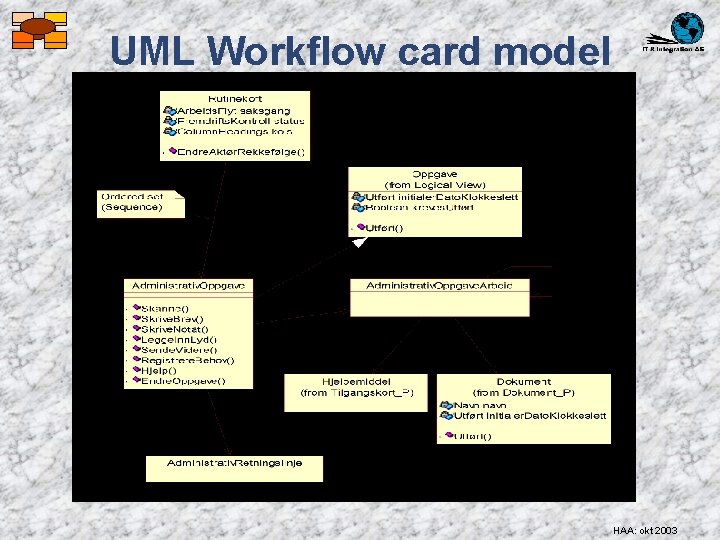
UML Workflow card model HAA: okt 2003
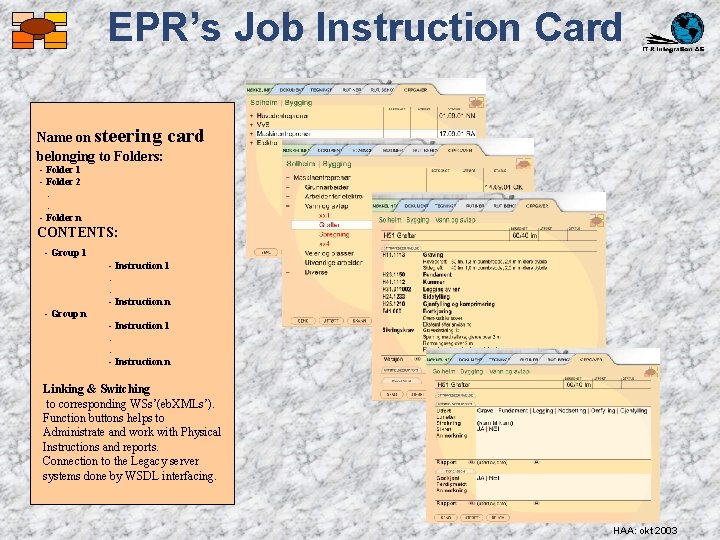
EPR’s Job Instruction Card Name on steering card belonging to Folders: - Folder 1 - Folder 2. . - Folder n CONTENTS: - Group 1 - Instruction 1. . - Instruction n - Group n - Instruction 1. . - Instruction n Linking & Switching to corresponding WSs’(eb. XMLs’). Function buttons helps to Administrate and work with Physical Instructions and reports. Connection to the Legacy server systems done by WSDL interfacing. HAA: okt 2003
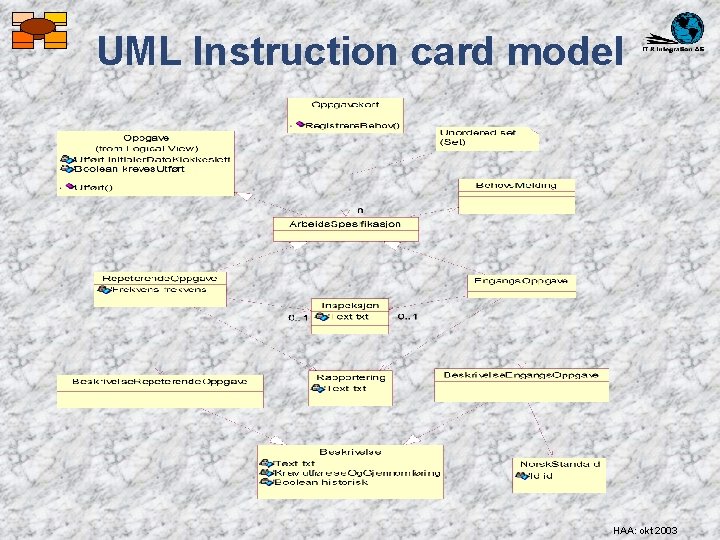
UML Instruction card model HAA: okt 2003
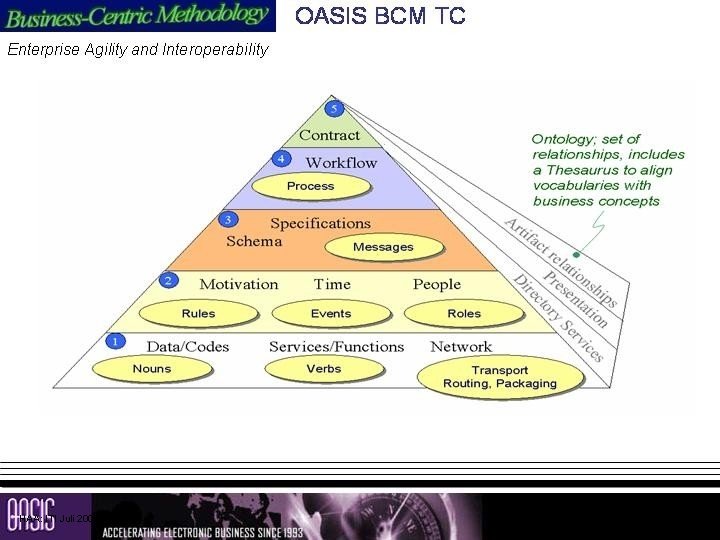
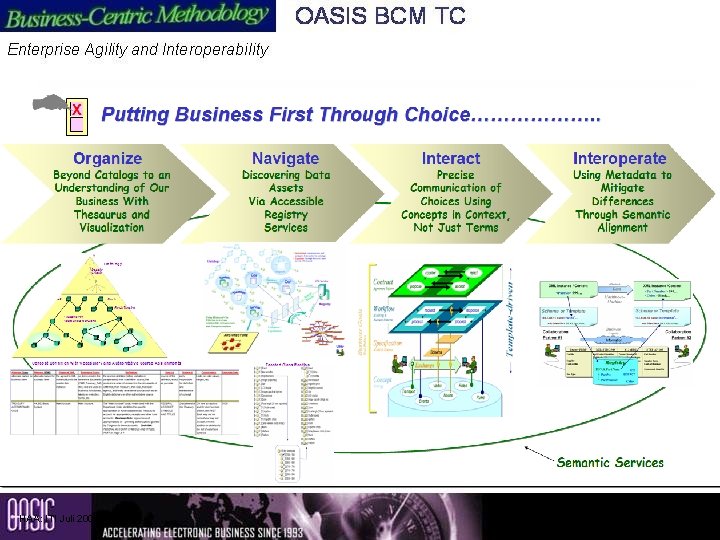
Future work items Integration of BCM Choice Point technology to provide flow control and linking and switching for EPR. Create BPSS of discrete workflow components – especially intra-enterprise exchanges. Create BCM contract and CPA templates for EPR participant roles and agreements. Look at applicability of CAM templates formalizing information quality control and context rules. HAA: okt 2003
Open Infrastructure & Platform Independence Thanks to WS, proprietary solutions belongs to the past ! Achieve USER controlled and non expensive data solutions ( HW & SW independence is a must ) Interoperable solutions makes standardization/digitalization even more important INTEGRATORS becomes the users and e-Governments “right hand” Network solutions will by help of WS open up and create new ways of user applications ( As EPR’s “Folder” structure ) Minimize the amount of physical devices with multifunctional logical (SW =>WS) units HAA: okt 2003
EPR- Forum EPR Forum defines the frames for e-Gov SECTOR STANDARDISATION: - Health and Care - Building and Construction - Oil & Gas -. . We must act Not talk ! HAA: okt 2003
- Slides: 34