
Epithelium Pseudostratified Columnar Epithelium appears to have layers
- Slides: 25
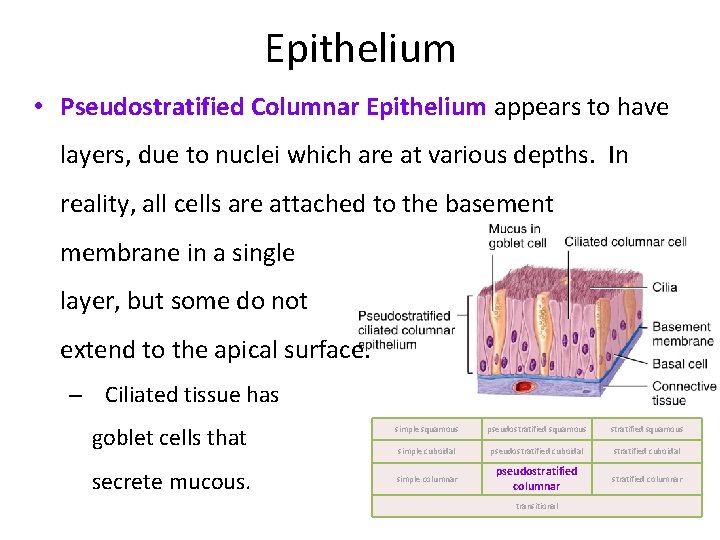
Epithelium • Pseudostratified Columnar Epithelium appears to have layers, due to nuclei which are at various depths. In reality, all cells are attached to the basement membrane in a single layer, but some do not extend to the apical surface. – Ciliated tissue has goblet cells that secrete mucous. simple squamous pseudostratified squamous simple cuboidal pseudostratified cuboidal simple columnar pseudostratified columnar transitional
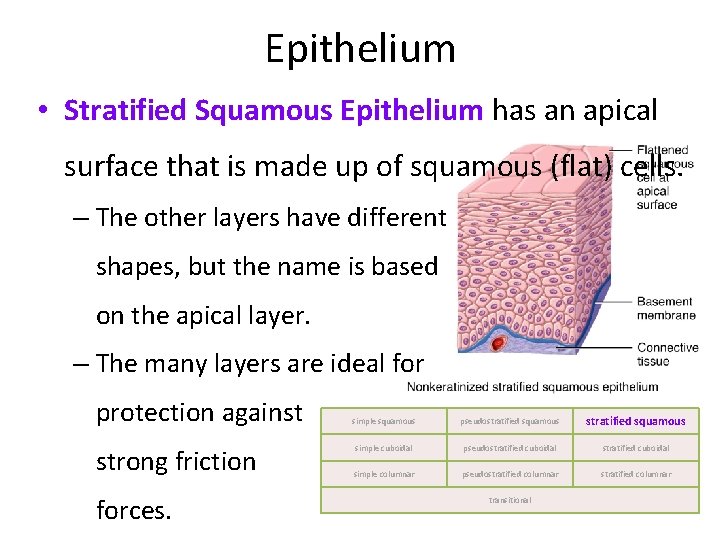
Epithelium • Stratified Squamous Epithelium has an apical surface that is made up of squamous (flat) cells. – The other layers have different shapes, but the name is based on the apical layer. – The many layers are ideal for protection against strong friction forces. simple squamous pseudostratified squamous simple cuboidal pseudostratified cuboidal simple columnar pseudostratified columnar transitional
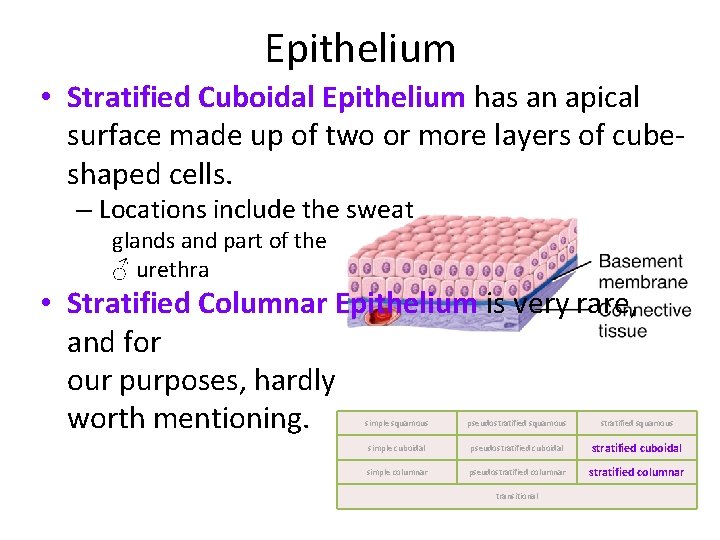
Epithelium • Stratified Cuboidal Epithelium has an apical surface made up of two or more layers of cubeshaped cells. – Locations include the sweat glands and part of the ♂ urethra • Stratified Columnar Epithelium is very rare, and for our purposes, hardly worth mentioning. simple squamous pseudostratified squamous simple cuboidal pseudostratified cuboidal simple columnar pseudostratified columnar transitional
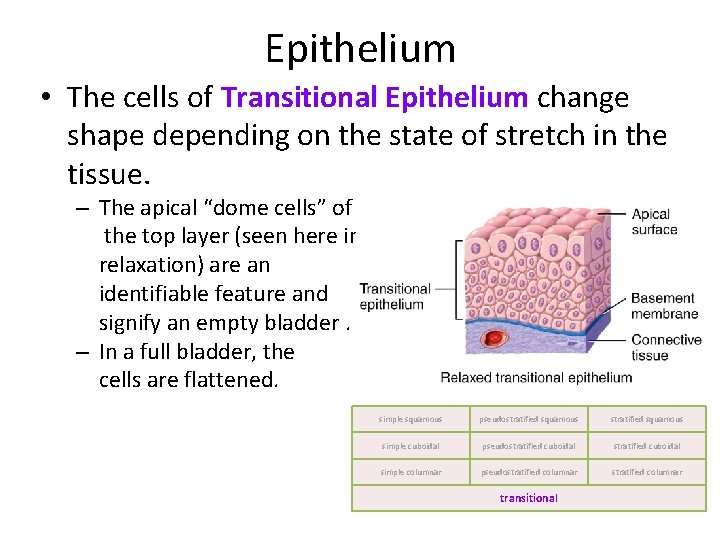
Epithelium • The cells of Transitional Epithelium change shape depending on the state of stretch in the tissue. – The apical “dome cells” of the top layer (seen here in relaxation) are an identifiable feature and signify an empty bladder. – In a full bladder, the cells are flattened. simple squamous pseudostratified squamous simple cuboidal pseudostratified cuboidal simple columnar pseudostratified columnar transitional
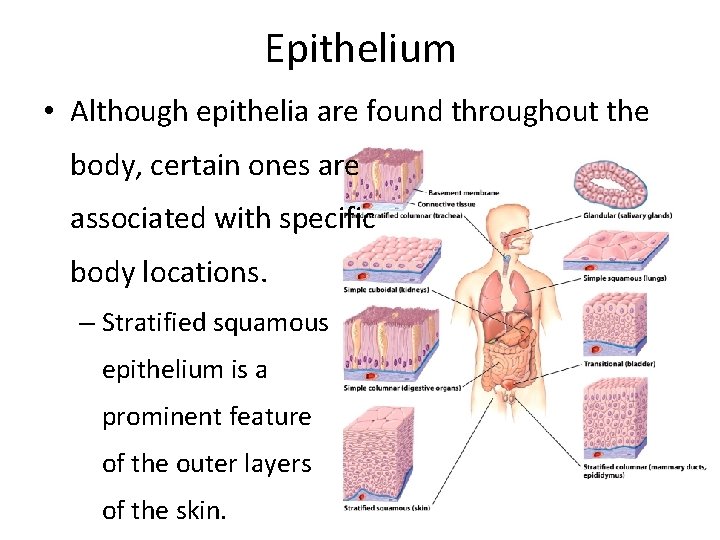
Epithelium • Although epithelia are found throughout the body, certain ones are associated with specific body locations. – Stratified squamous epithelium is a prominent feature of the outer layers of the skin.
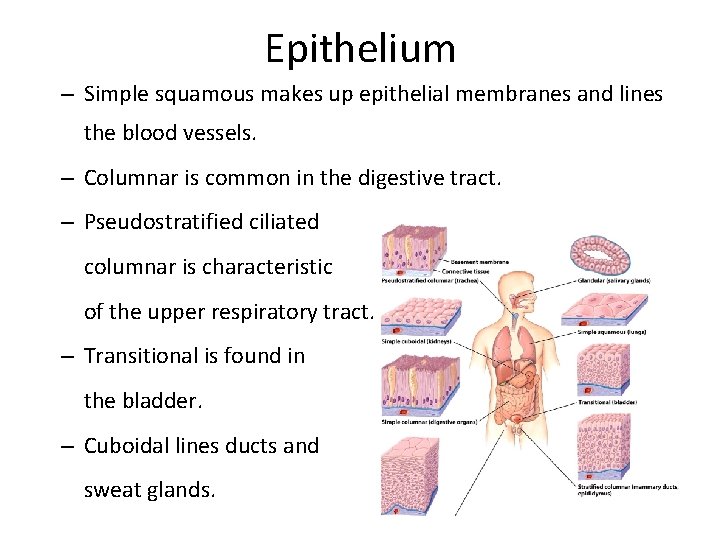
Epithelium – Simple squamous makes up epithelial membranes and lines the blood vessels. – Columnar is common in the digestive tract. – Pseudostratified ciliated columnar is characteristic of the upper respiratory tract. – Transitional is found in the bladder. – Cuboidal lines ducts and sweat glands.
Covering and Lining Epithelium • Endothelium is a specialized simple squamous epithelium that lines the entire circulatory system from the heart to the smallest capillary – it is extremely important in reducing turbulence of flow of blood. • Mesothelium is found in serous membranes such as the pericardium, pleura, and peritoneum. – Unlike other epithelial tissue, both are derived from embryonic mesoderm (the middle layer of the 3 primary germ layers of the embryo).
Connective Tissue • Connective Tissues are the most abundant and widely distributed tissues in the body – they are also the most heterogeneous of the tissue groups. – They perform numerous functions: • • • Bind tissues together Support and strengthen tissue Protect and insulate internal organs Compartmentalize and transport Energy reserves and immune responses
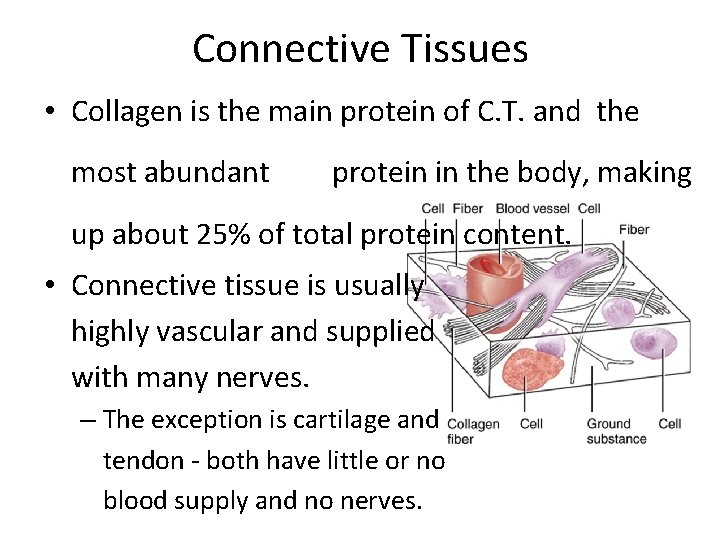
Connective Tissues • Collagen is the main protein of C. T. and the most abundant protein in the body, making up about 25% of total protein content. • Connective tissue is usually highly vascular and supplied with many nerves. – The exception is cartilage and tendon - both have little or no blood supply and no nerves.
Connective Tissues • Although they are a varied group, all C. T. share a common “theme”: – Sparse cells – Surrounded by an extracellular matrix • The extracellular matrix is a non-cellular material located between and around the cells. – It consists of protein fibers and ground substance (the ground substance may be fluid, semifluid, gelatinous, or calcified. )
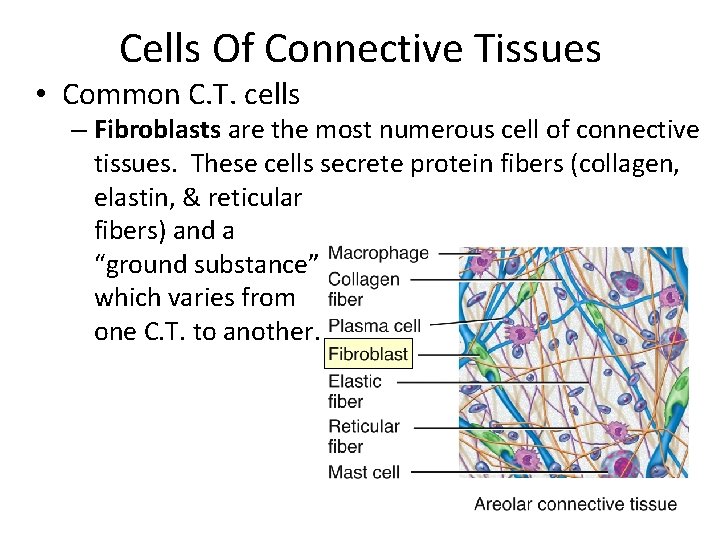
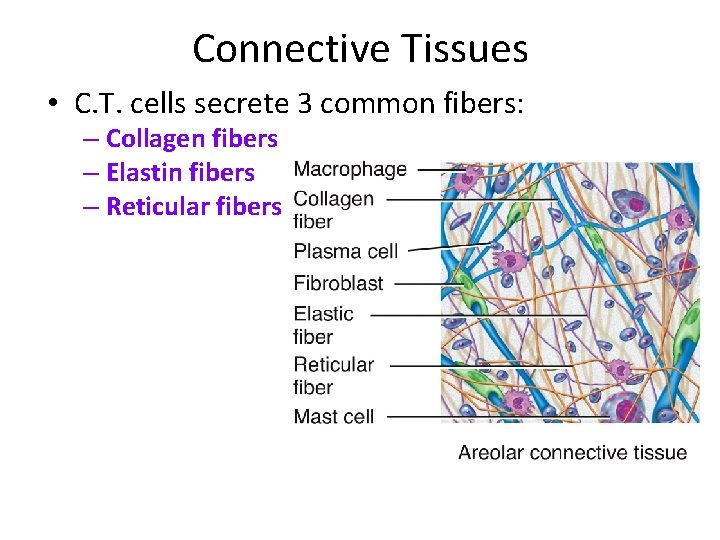
Cells Of Connective Tissues • Common C. T. cells – Fibroblasts are the most numerous cell of connective tissues. These cells secrete protein fibers (collagen, elastin, & reticular fibers) and a “ground substance” which varies from one C. T. to another.
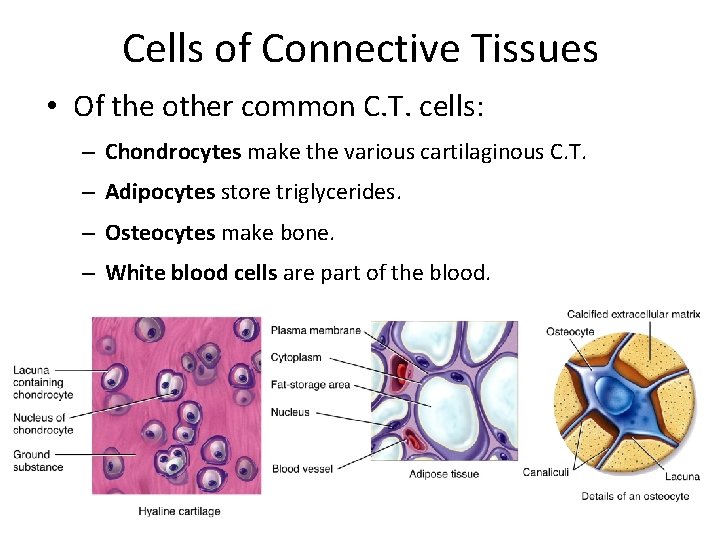
Cells of Connective Tissues • Of the other common C. T. cells: – Chondrocytes make the various cartilaginous C. T. – Adipocytes store triglycerides. – Osteocytes make bone. – White blood cells are part of the blood.
Connective Tissues • There are 5 types of white blood cells (WBCs): – Macrophages are the “big eaters” that swallow and destroy invaders or debris. They can be fixed or wandering. – Neutrophils are also macrophages (“small eaters”) that are numerous in the blood. – Mast cells and Eosinophils play an important role in inflammation. – Lymphocytes secrete antibody proteins and attack invaders.
Connective Tissues • C. T. cells secrete 3 common fibers: – Collagen fibers – Elastin fibers – Reticular fibers
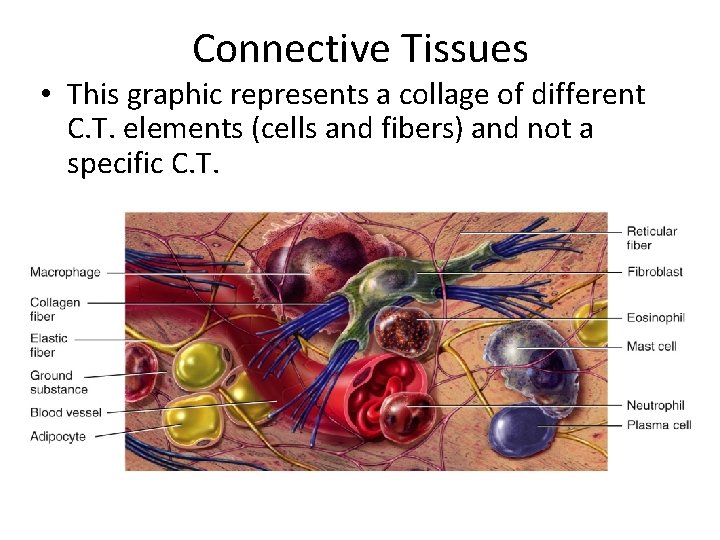
Connective Tissues • This graphic represents a collage of different C. T. elements (cells and fibers) and not a specific C. T.
Connective Tissue Classification • Embryonic connective tissue – Mesenchyme – Mucous connective tissue • Mature connective tissue – Loose connective tissue – Dense connective tissue – Cartilage – Bone – Liquid
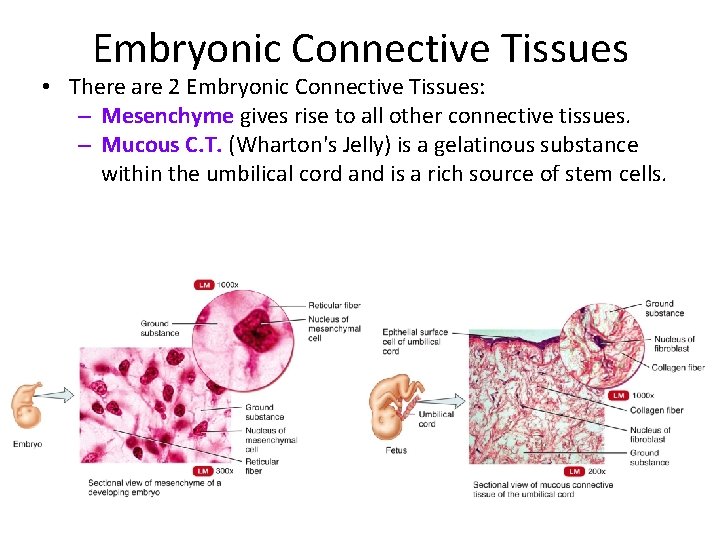
Embryonic Connective Tissues • There are 2 Embryonic Connective Tissues: – Mesenchyme gives rise to all other connective tissues. – Mucous C. T. (Wharton's Jelly) is a gelatinous substance within the umbilical cord and is a rich source of stem cells.
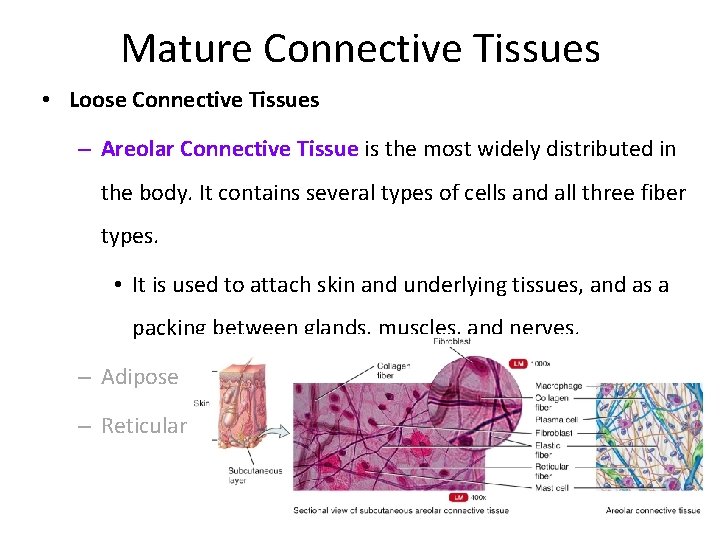
Mature Connective Tissues • Loose Connective Tissues – Areolar Connective Tissue is the most widely distributed in the body. It contains several types of cells and all three fiber types. • It is used to attach skin and underlying tissues, and as a packing between glands, muscles, and nerves. – Adipose – Reticular
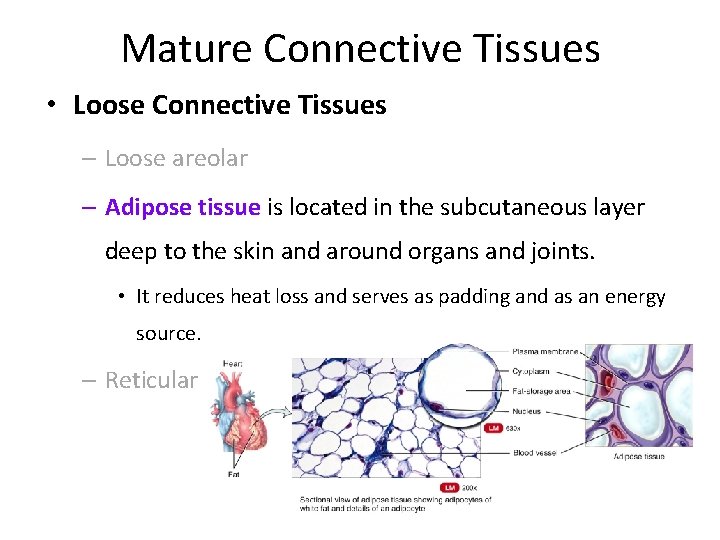
Mature Connective Tissues • Loose Connective Tissues – Loose areolar – Adipose tissue is located in the subcutaneous layer deep to the skin and around organs and joints. • It reduces heat loss and serves as padding and as an energy source. – Reticular
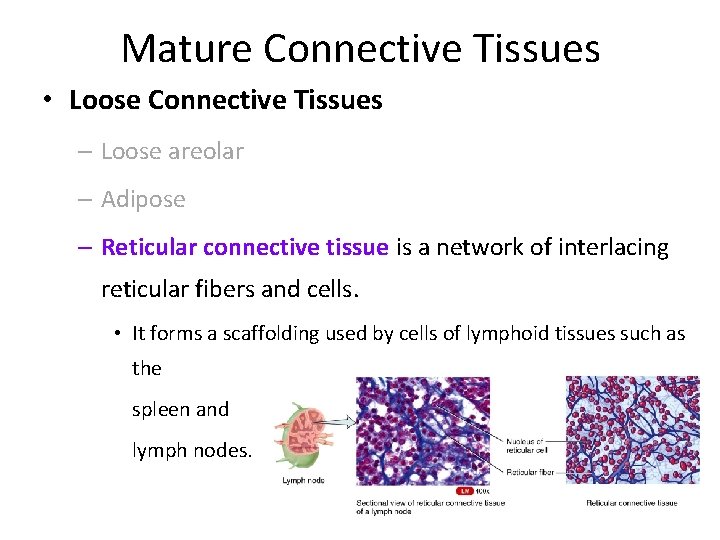
Mature Connective Tissues • Loose Connective Tissues – Loose areolar – Adipose – Reticular connective tissue is a network of interlacing reticular fibers and cells. • It forms a scaffolding used by cells of lymphoid tissues such as the spleen and lymph nodes.
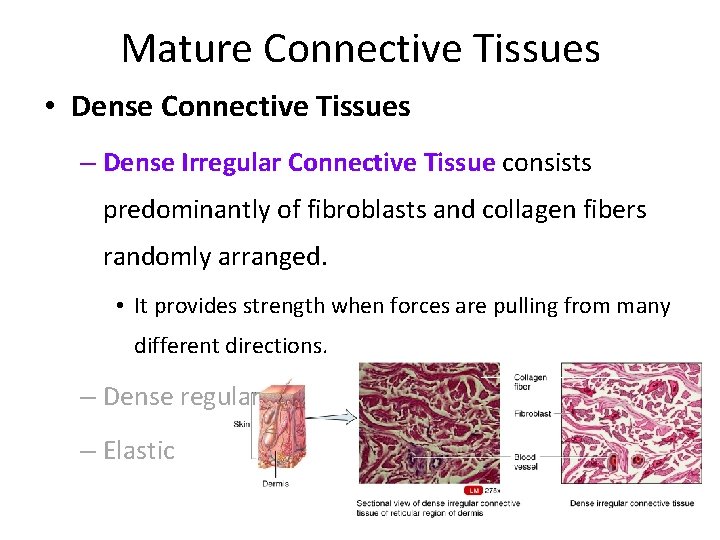
Mature Connective Tissues • Dense Connective Tissues – Dense Irregular Connective Tissue consists predominantly of fibroblasts and collagen fibers randomly arranged. • It provides strength when forces are pulling from many different directions. – Dense regular – Elastic
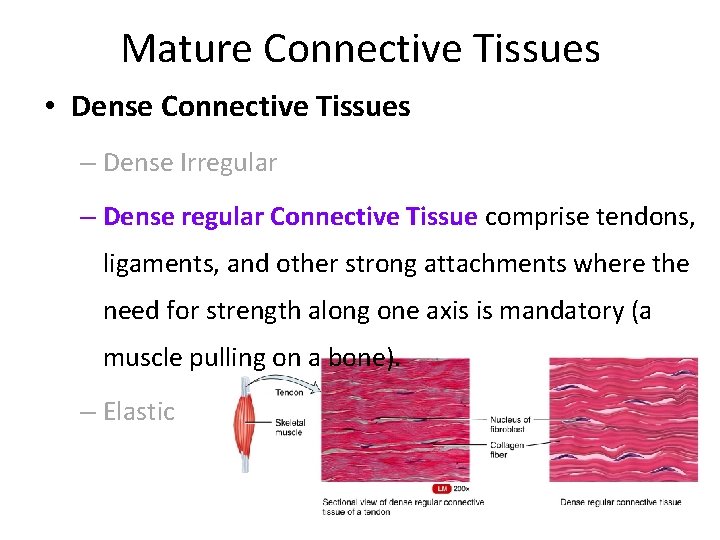
Mature Connective Tissues • Dense Connective Tissues – Dense Irregular – Dense regular Connective Tissue comprise tendons, ligaments, and other strong attachments where the need for strength along one axis is mandatory (a muscle pulling on a bone). – Elastic
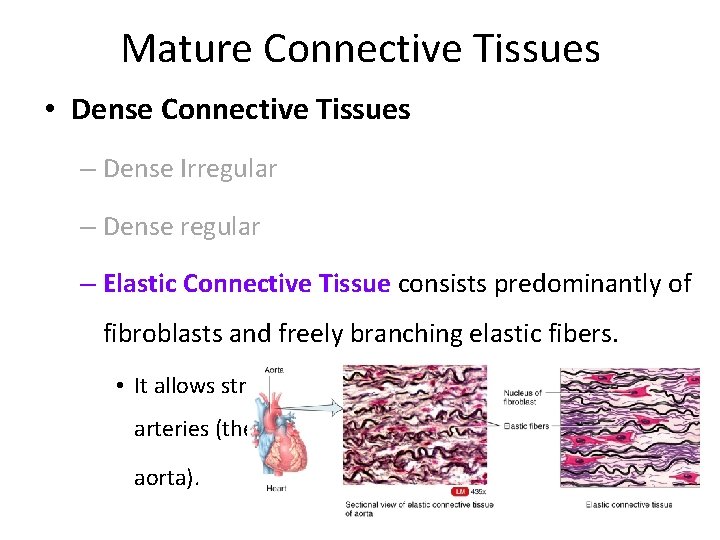
Mature Connective Tissues • Dense Connective Tissues – Dense Irregular – Dense regular – Elastic Connective Tissue consists predominantly of fibroblasts and freely branching elastic fibers. • It allows stretching of certain tissues like the elastic arteries (the aorta).
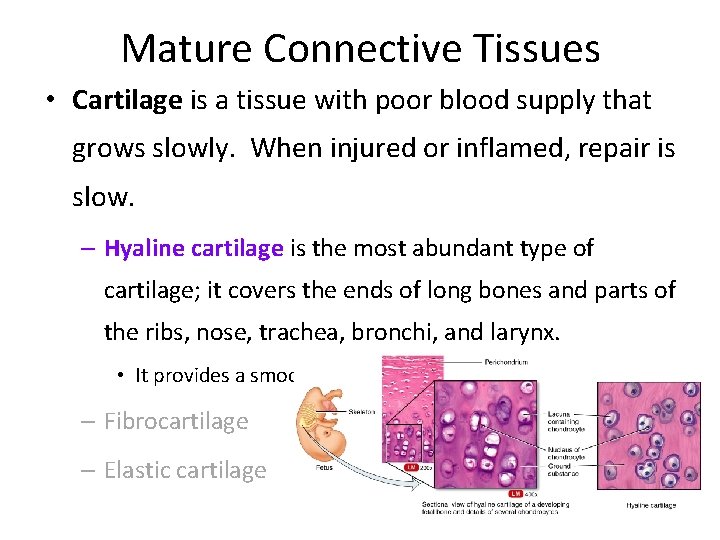
Mature Connective Tissues • Cartilage is a tissue with poor blood supply that grows slowly. When injured or inflamed, repair is slow. – Hyaline cartilage is the most abundant type of cartilage; it covers the ends of long bones and parts of the ribs, nose, trachea, bronchi, and larynx. • It provides a smooth surface for joint movement. – Fibrocartilage – Elastic cartilage
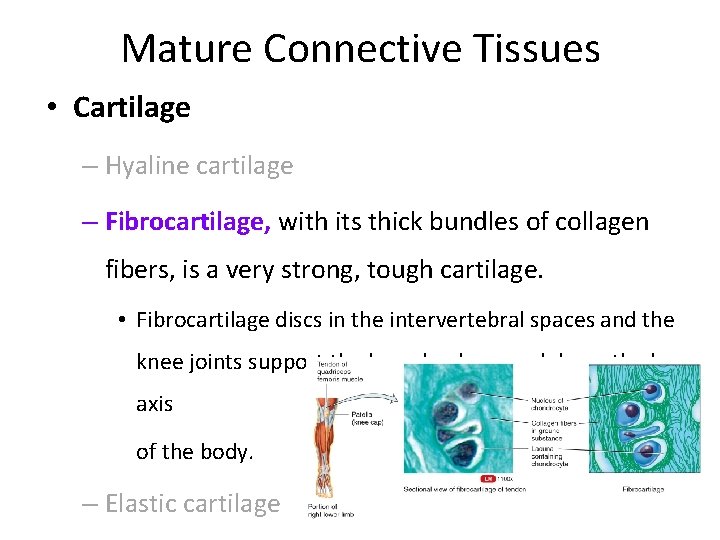
Mature Connective Tissues • Cartilage – Hyaline cartilage – Fibrocartilage, with its thick bundles of collagen fibers, is a very strong, tough cartilage. • Fibrocartilage discs in the intervertebral spaces and the knee joints support the huge loads up and down the long axis of the body. – Elastic cartilage