
EPITHELIAL TISSUE n Squamous n Cuboidal n Columnar
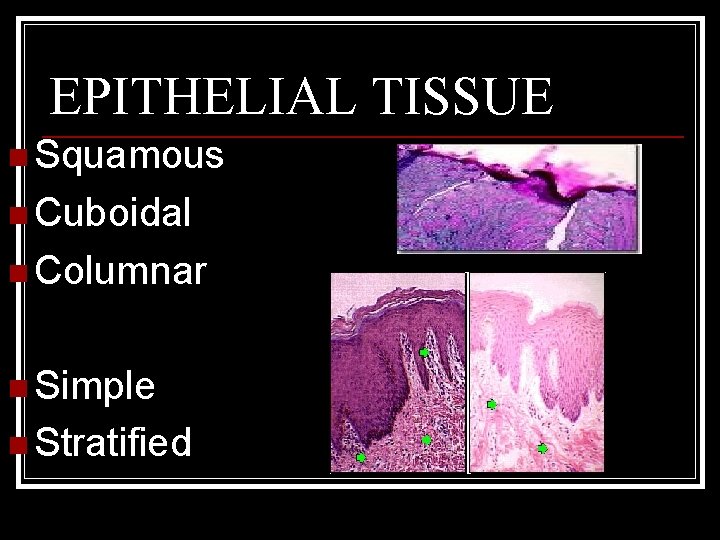
EPITHELIAL TISSUE n Squamous n Cuboidal n Columnar n Simple n Stratified
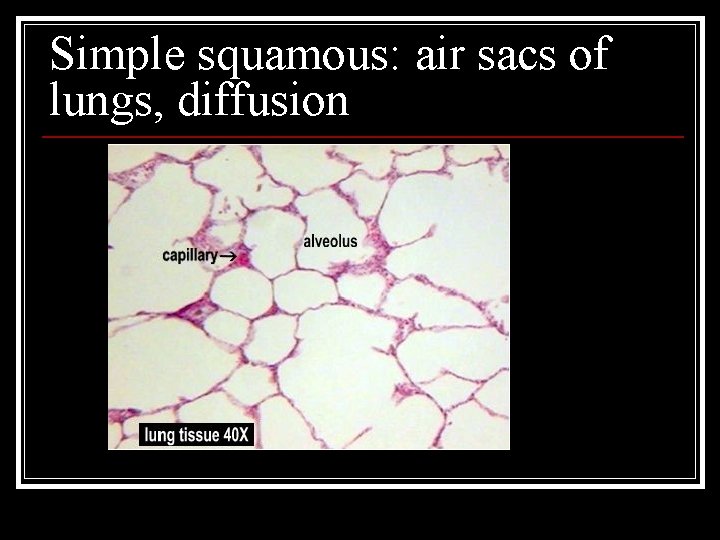
Simple squamous: air sacs of lungs, diffusion
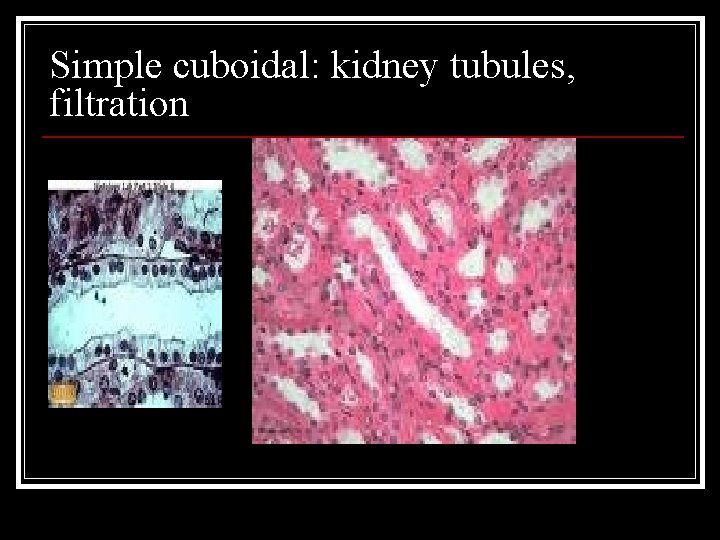
Simple cuboidal: kidney tubules, filtration
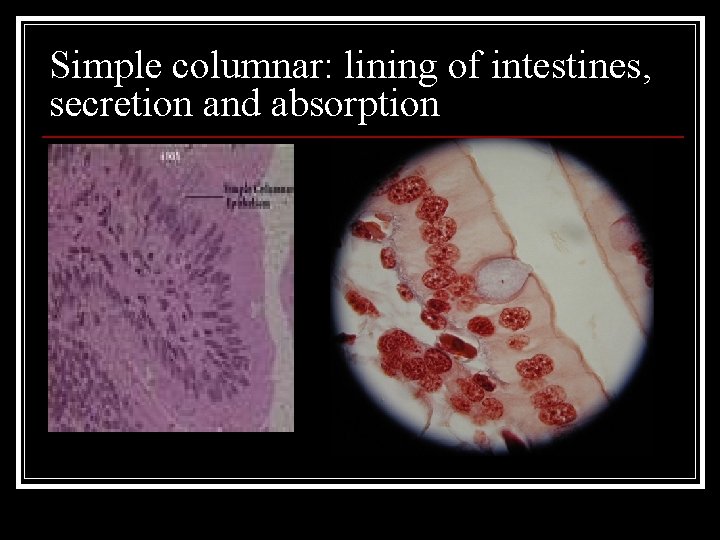
Simple columnar: lining of intestines, secretion and absorption
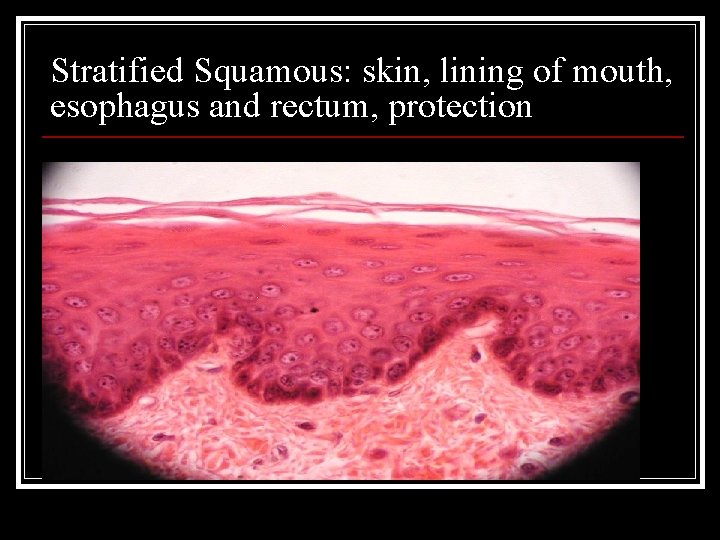
Stratified Squamous: skin, lining of mouth, esophagus and rectum, protection
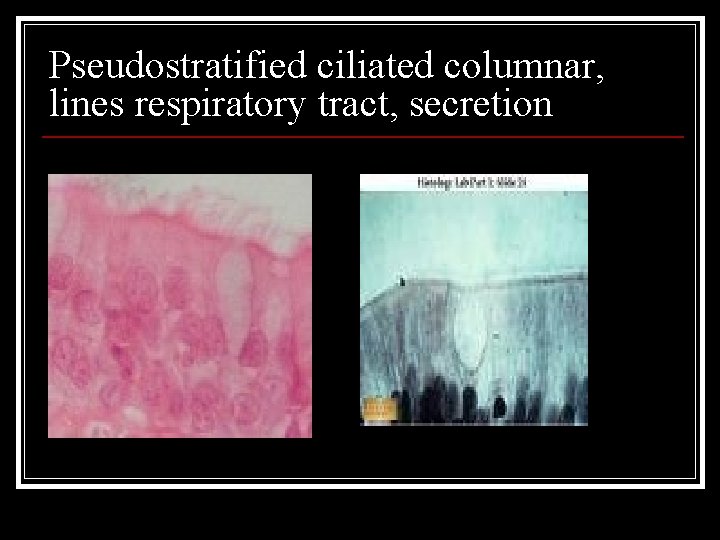
Pseudostratified ciliated columnar, lines respiratory tract, secretion
Epithelial Quiz n Simple squamous tissue
Exocrine Glands: secrete to ducts that lead into or out of the body n Merocrine: exocytosis, eccrine sweat glands, salivary, pancreas, etc n Apocrine: tip pinches off, axillary and groin sweat glands n Holocrine: cells rupture when secrete, oil glands
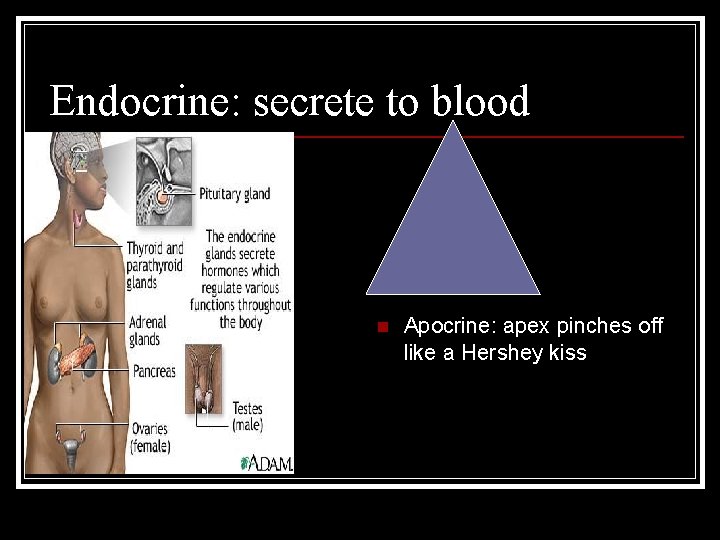
Endocrine: secrete to blood n Apocrine: apex pinches off like a Hershey kiss
Classification of Body Membranes · Epithelial membranes · Cutaneous membrane · Mucous membrane · Serous membrane · Connective tissue membranes Copyright © 2003 Pearson Education, Inc. publishing as Benjamin Cummings Slide 4. 2
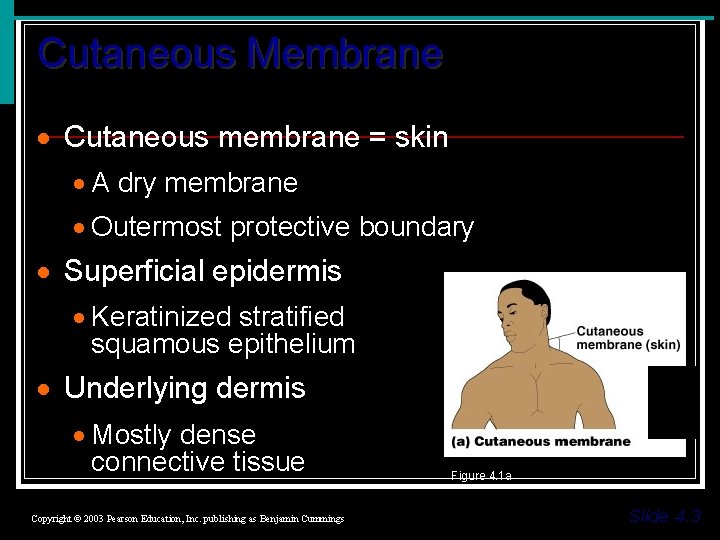
Cutaneous Membrane · Cutaneous membrane = skin · A dry membrane · Outermost protective boundary · Superficial epidermis · Keratinized stratified squamous epithelium · Underlying dermis · Mostly dense connective tissue Copyright © 2003 Pearson Education, Inc. publishing as Benjamin Cummings Figure 4. 1 a Slide 4. 3
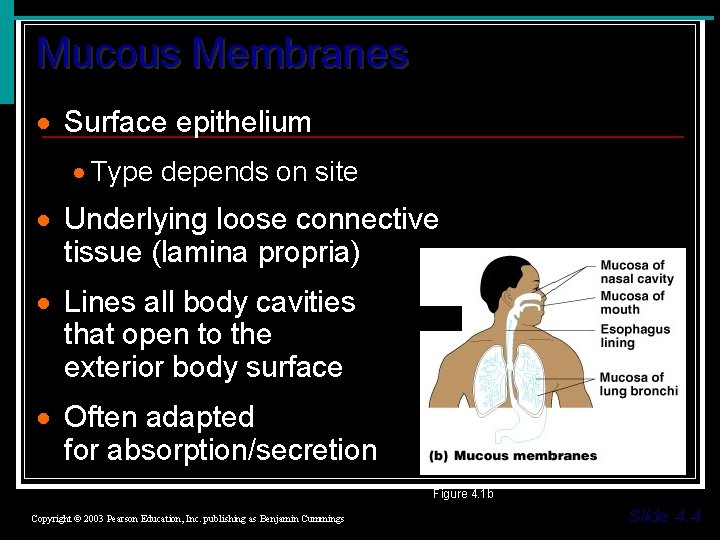
Mucous Membranes · Surface epithelium · Type depends on site · Underlying loose connective tissue (lamina propria) · Lines all body cavities that open to the exterior body surface · Often adapted for absorption/secretion Figure 4. 1 b Copyright © 2003 Pearson Education, Inc. publishing as Benjamin Cummings Slide 4. 4
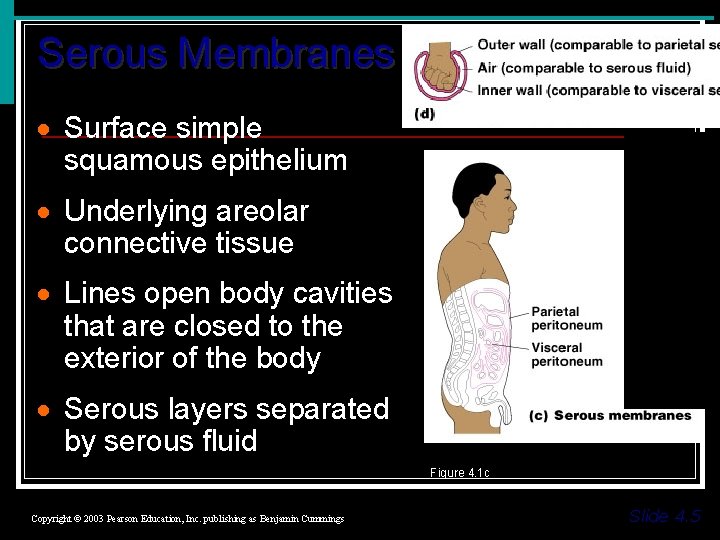
Serous Membranes · Surface simple squamous epithelium · Underlying areolar connective tissue · Lines open body cavities that are closed to the exterior of the body · Serous layers separated by serous fluid Figure 4. 1 c Copyright © 2003 Pearson Education, Inc. publishing as Benjamin Cummings Slide 4. 5
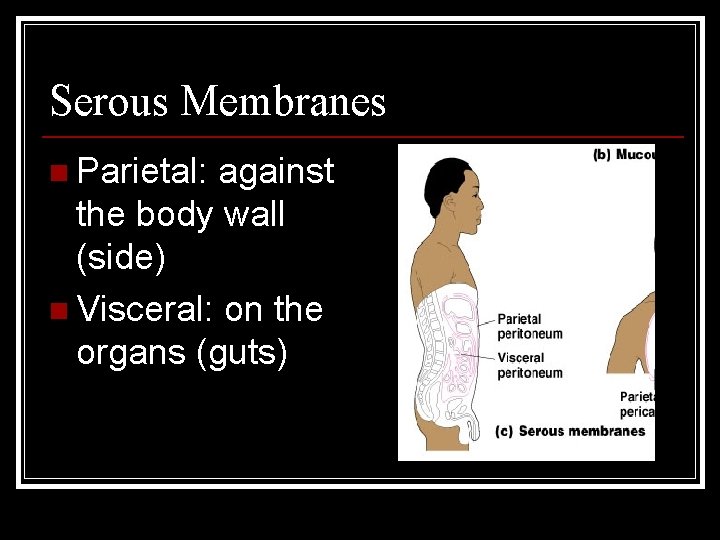
Serous Membranes n Parietal: against the body wall (side) n Visceral: on the organs (guts)
Serous Membranes n Heart: visceral and parietal pericardium n Lungs: visceral and parietal pleura n Intestines: visceral and parietal peritoneum
Functions of skin n Protects deeper tissues from: n n n Mechanical damage Chemical damage Bacterial damage Thermal damage Ultraviolet radiation Desiccation
Skin functions continued Aids in heat regulation n Aids in excretion of urea and uric acid n Synthesizes vitamin D n
Skin coloring n Melanin n n Carotene n n Yellow, brown or black pigments Orange-yellow pigment from some vegetables Hemoglobin n n Red coloring from blood cells in dermis capillaries Oxygen content determines the extent of red coloring
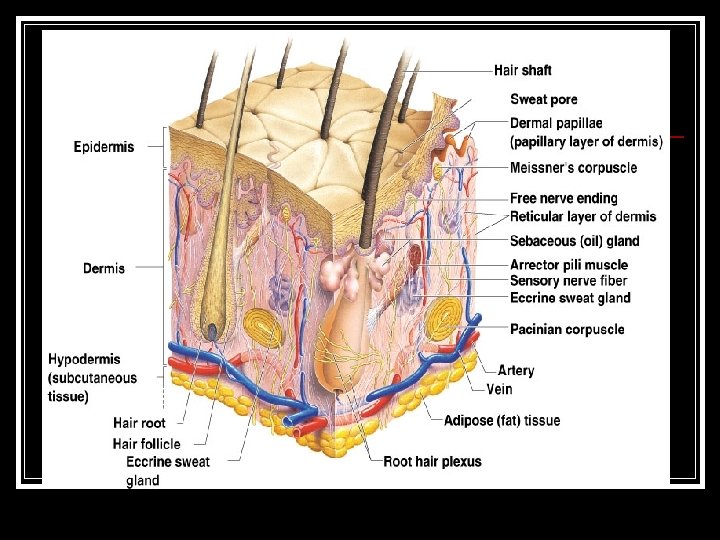
Review of Skin Layers n Epidermis: epithelial tissue n Stratum Corneum (cells full of keratin, dead) n Stratum Lucidum (only in palms and soles) n Stratum Granulosum n Stratum Spinosus n Stratum Basale (only mitotic layer, contains melanocytes
Dermis: Connective Tissue n Papillary layer: vascular, fingerprints n Reticular layer: Contains structures (sweat and oil glands, hair follicles, etc) n Hypodermis: Adipose tissue for insulation and cushioning
Skeletal Muscle Characteristics · Most are attached by tendons to bones · Cells are multinucleate · Striated – have visible banding · Voluntary – subject to conscious control · Cells are surrounded and bundled by connective tissue Copyright © 2003 Pearson Education, Inc. publishing as Benjamin Cummings Slide 6. 3
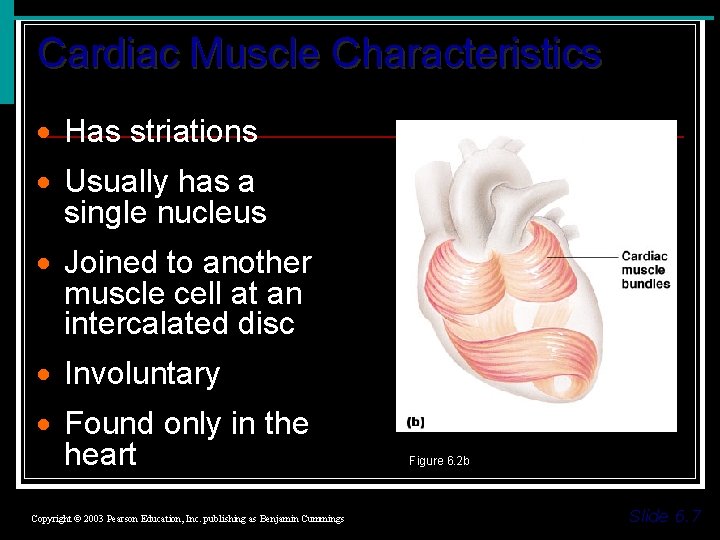
Cardiac Muscle Characteristics · Has striations · Usually has a single nucleus · Joined to another muscle cell at an intercalated disc · Involuntary · Found only in the heart Copyright © 2003 Pearson Education, Inc. publishing as Benjamin Cummings Figure 6. 2 b Slide 6. 7
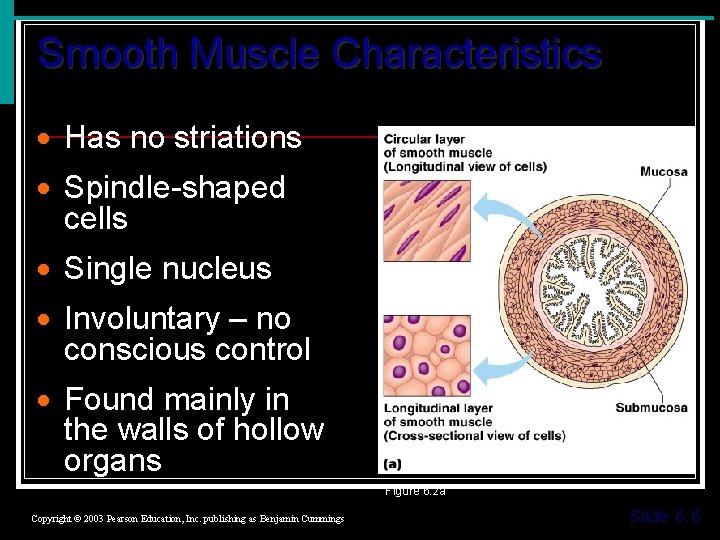
Smooth Muscle Characteristics · Has no striations · Spindle-shaped cells · Single nucleus · Involuntary – no conscious control · Found mainly in the walls of hollow organs Figure 6. 2 a Copyright © 2003 Pearson Education, Inc. publishing as Benjamin Cummings Slide 6. 6
Connective Tissue Characteristics n Variations n n in blood supply Some tissue types are well vascularized Some have poor blood supply or are avascular n Extracellular n matrix Non-living material that surrounds living cells
Connective Tissue n Found everywhere in the body n Includes the most abundant and widely distributed tissues n Functions n n n Binds body tissues together Supports the body Provides protection

- Slides: 27