
Epithelial Tissue General Features Closely packed cells with
- Slides: 40
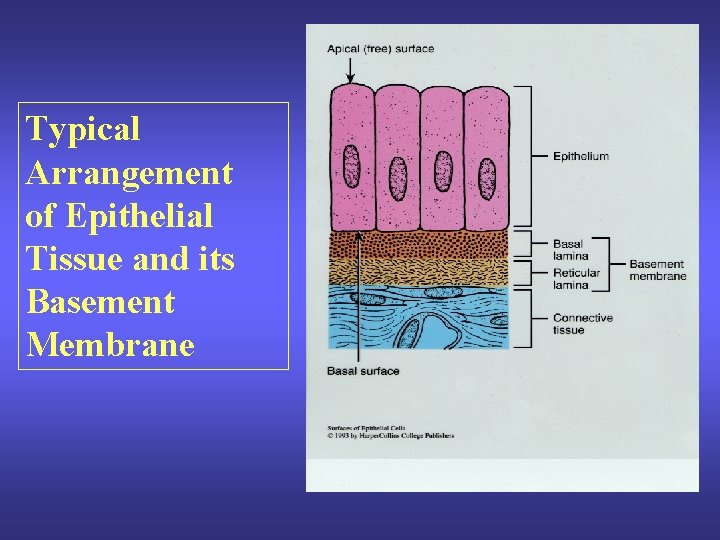
Epithelial Tissue -- General Features • Closely packed cells with little extracellular material – Many cell junctions often provide secure attachment. • Cells sit on basement membrane – Apical (upper) free surface – Basal surface against basement membrane • Avascular---without blood vessels – nutrients and waste must move by diffusion • Good nerve supply • Rapid cell division (high mitotic rate) • Functions – protection, filtration, lubrication, secretion, digestion, absorption, transportation, excretion, sensory reception, and reproduction.
Types of Epithelium • Covering and lining epithelium – epidermis of skin – lining of blood vessels and ducts – lining respiratory, reproductive, urinary & GI tract • Glandular epithelium – secreting portion of glands – thyroid, adrenal, and sweat glands
Typical Arrangement of Epithelial Tissue and its Basement Membrane
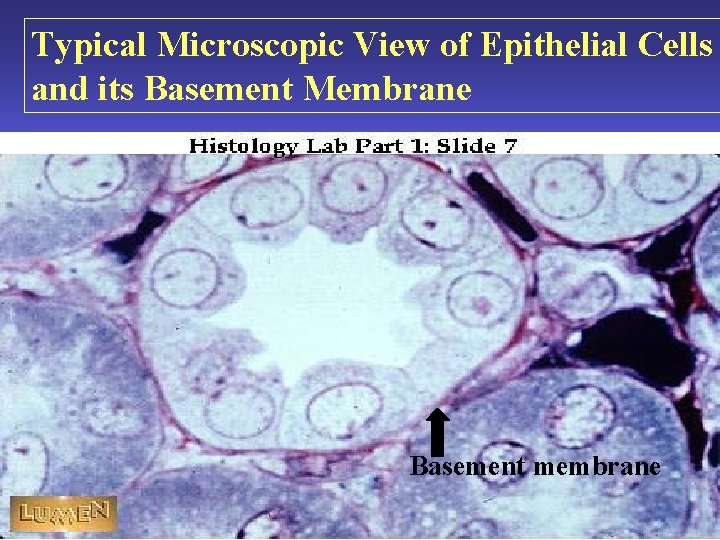
Typical Microscopic View of Epithelial Cells and its Basement Membrane Basement membrane
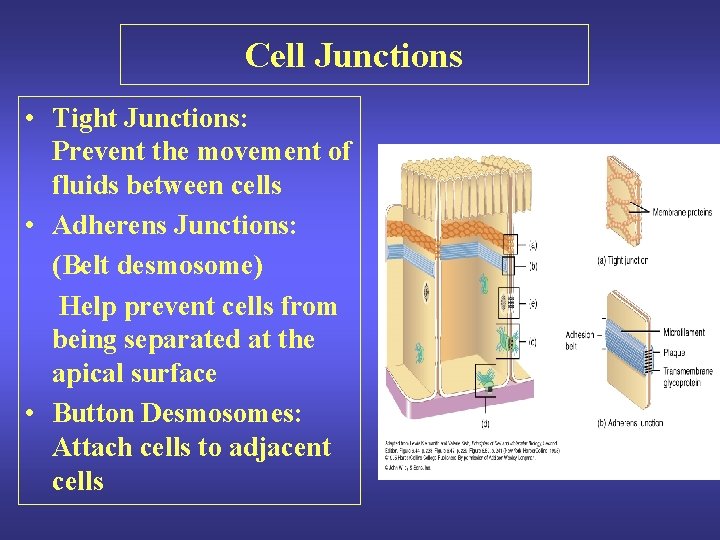
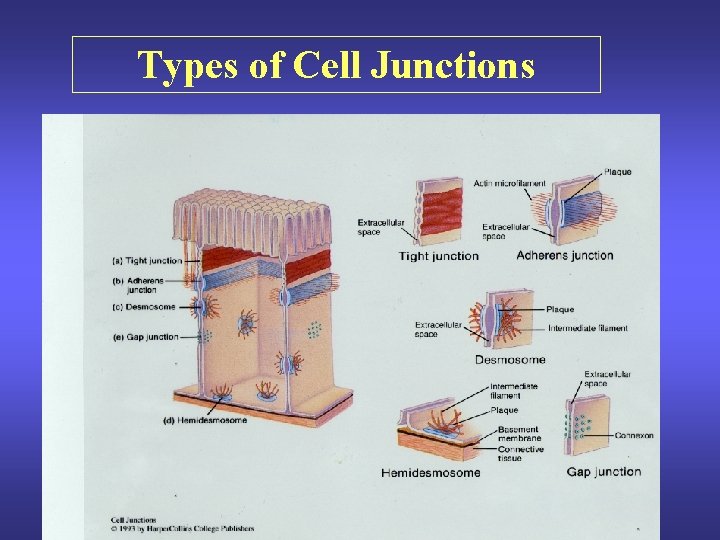
Cell Junctions • Tight Junctions: Prevent the movement of fluids between cells • Adherens Junctions: (Belt desmosome) Help prevent cells from being separated at the apical surface • Button Desmosomes: Attach cells to adjacent cells
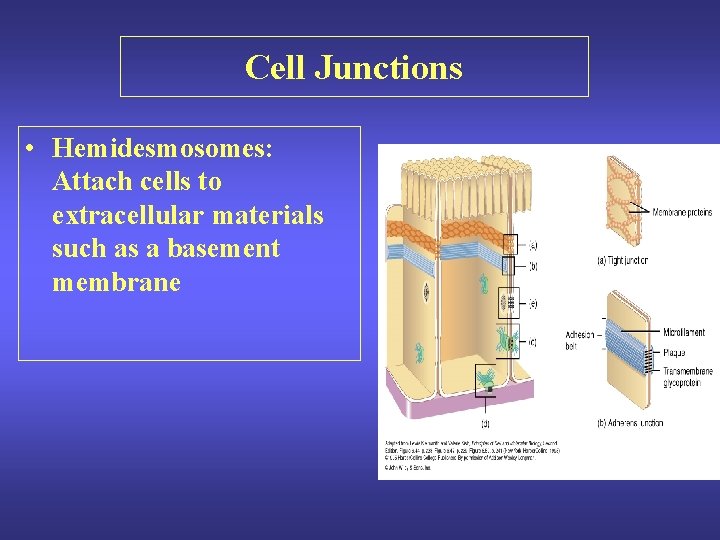
Cell Junctions • Hemidesmosomes: Attach cells to extracellular materials such as a basement membrane
Types of Cell Junctions
Epithelial Tissues These tissues are classified according to the arrangement of cells and the shape of cells 1. Arrangement: a. Simple b. Stratified c. Pseudostratified
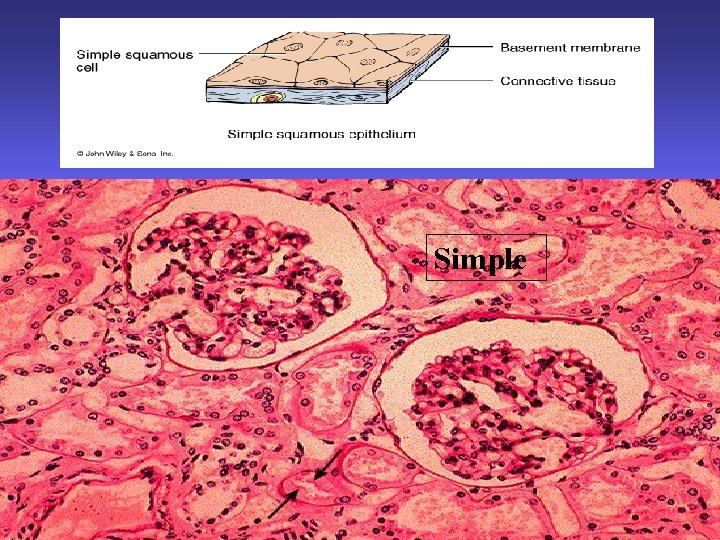
Simple
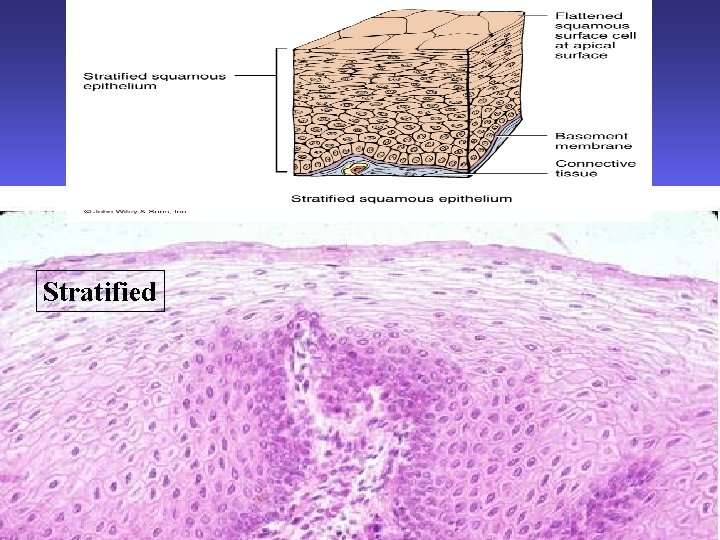
Stratified
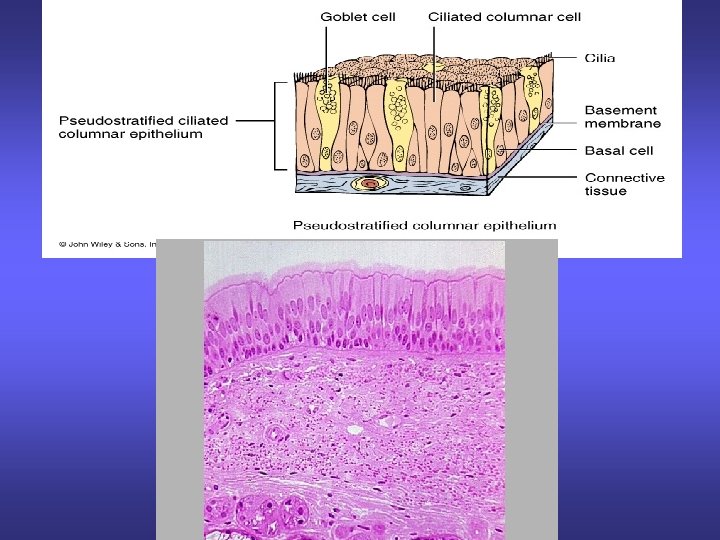
Pseudostratified
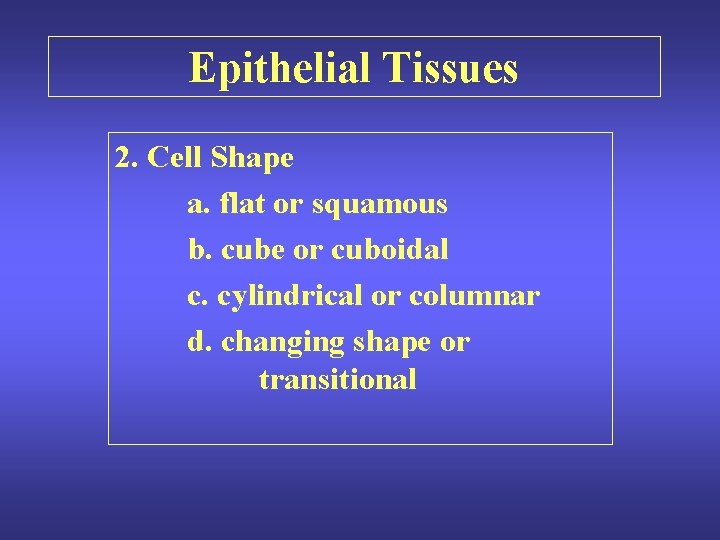
Epithelial Tissues 2. Cell Shape a. flat or squamous b. cube or cuboidal c. cylindrical or columnar d. changing shape or transitional
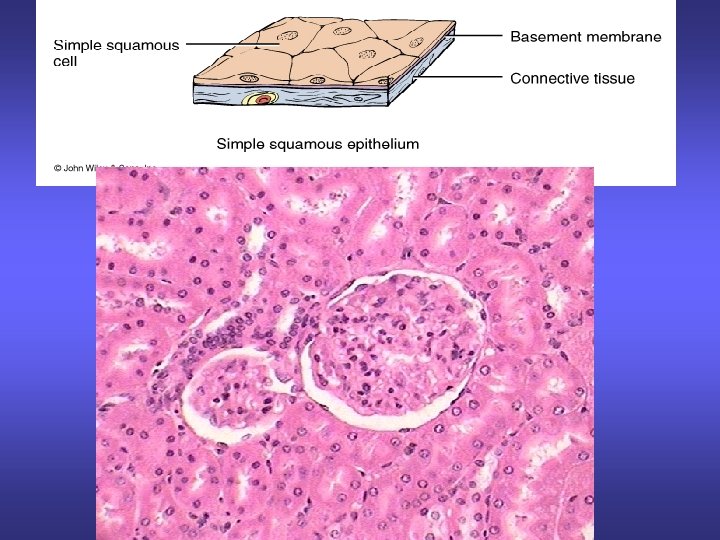
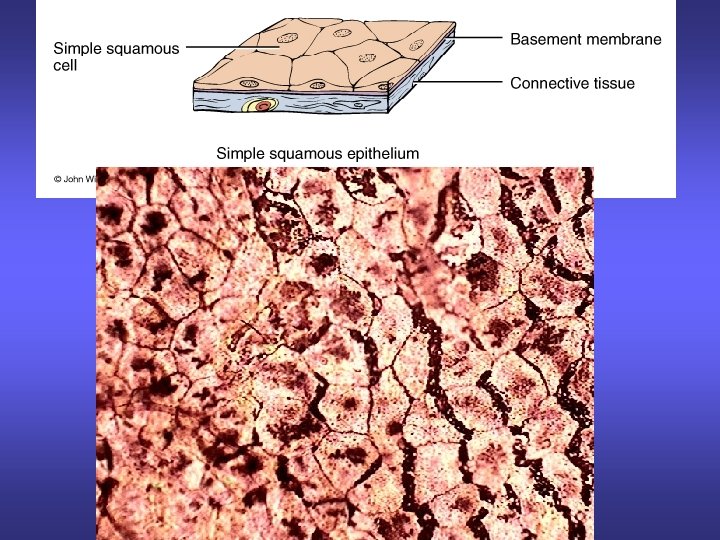
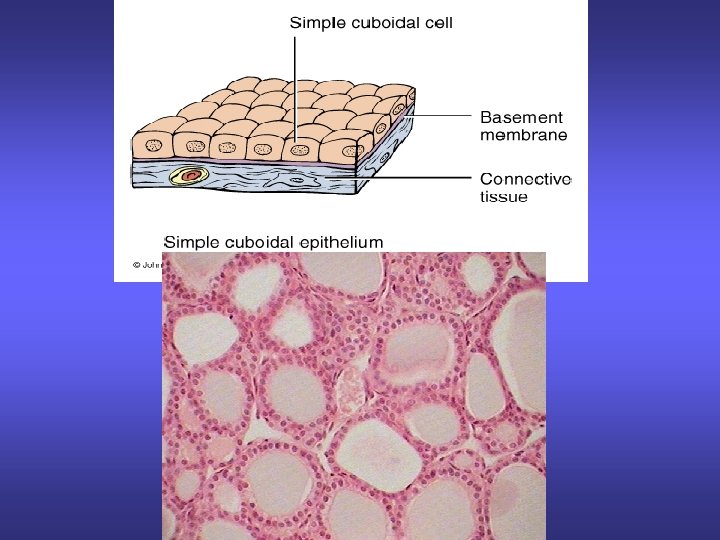
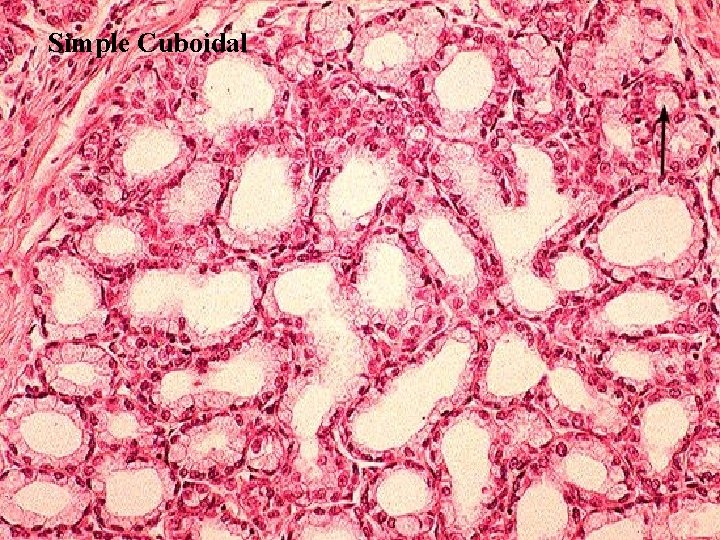
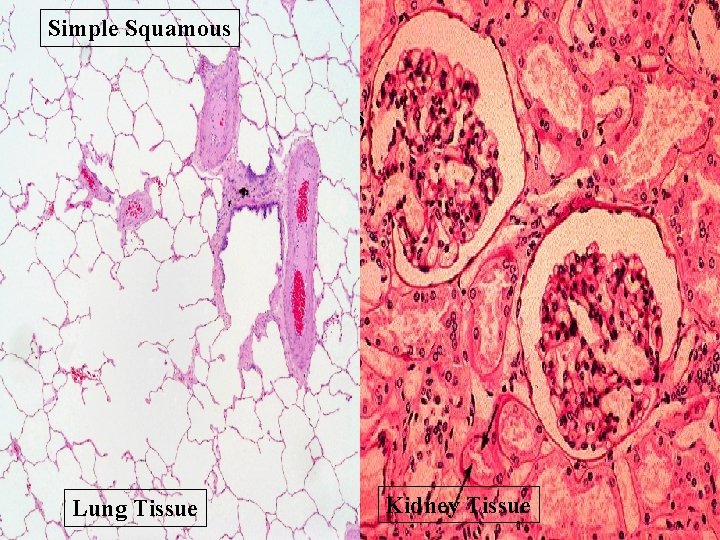
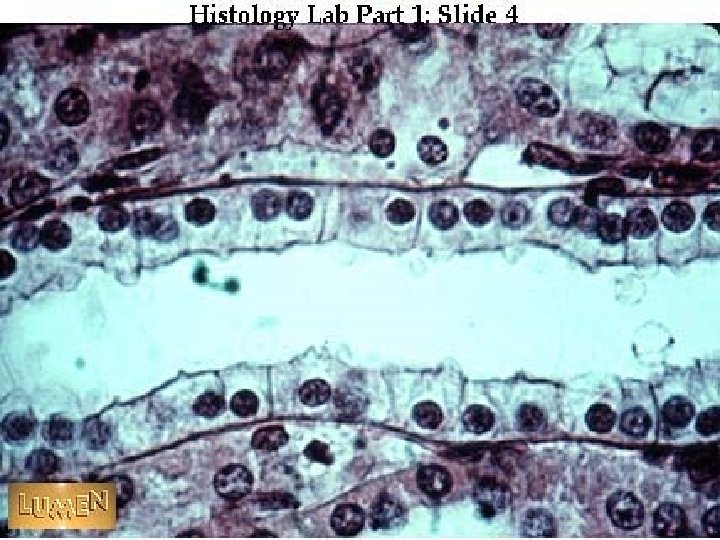
Simple Epithelium • Simple squamous epithelium consists of a single layer of flat, scale-like cells – adapted for diffusion and filtration (found in lungs and kidneys) – Endothelium lines the heart and blood vessels. – Mesothelium lines the thoracic and abdominopelvic cavities and covers the organs within them as part of Serous Membranes • Simple cuboidal epithelium consists of a simple layer of cube-shaped cells – adapted for secretion and absorption (found in the kidneys and thyroid gland)
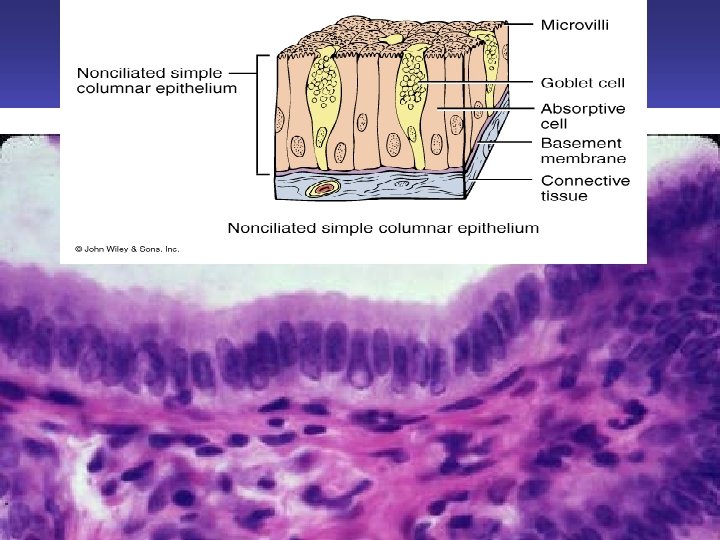
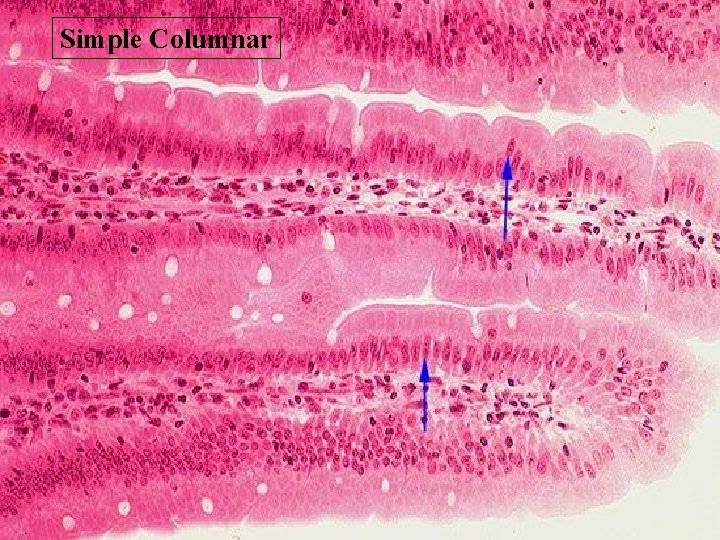
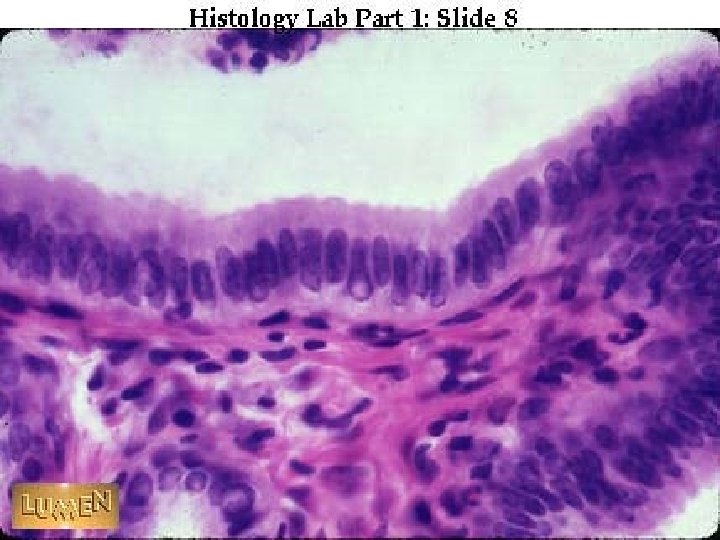
Simple Epithelium • Simple columnar epithelium consists of a single layer of rectangular cells and can exist in two forms – Nonciliated simple columnar epithelium contains microvilli • increase surface are and the rate of absorption • goblet cells secrete mucus • Found lining the stomach, small intestines, and large intestines.
Squamous
Simple Cuboidal
Simple Squamous Lung Tissue Kidney Tissue
Simple Columnar
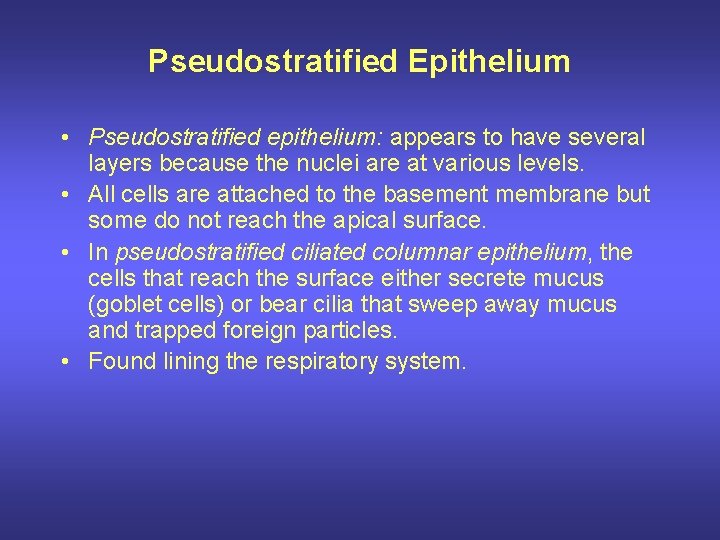
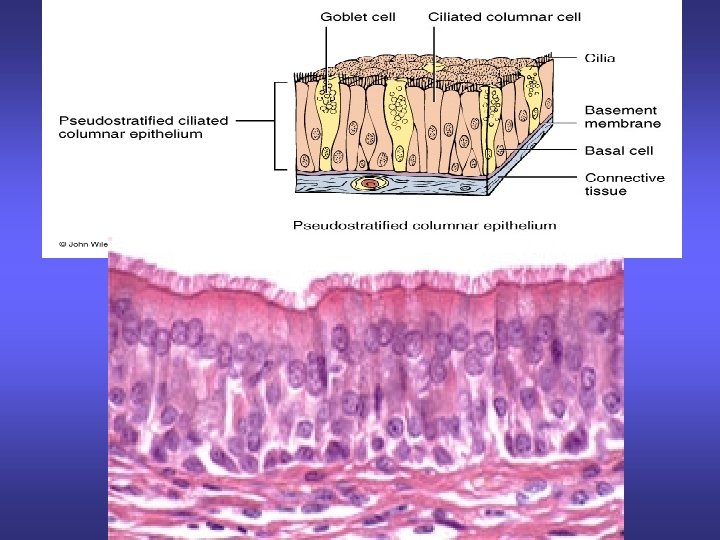
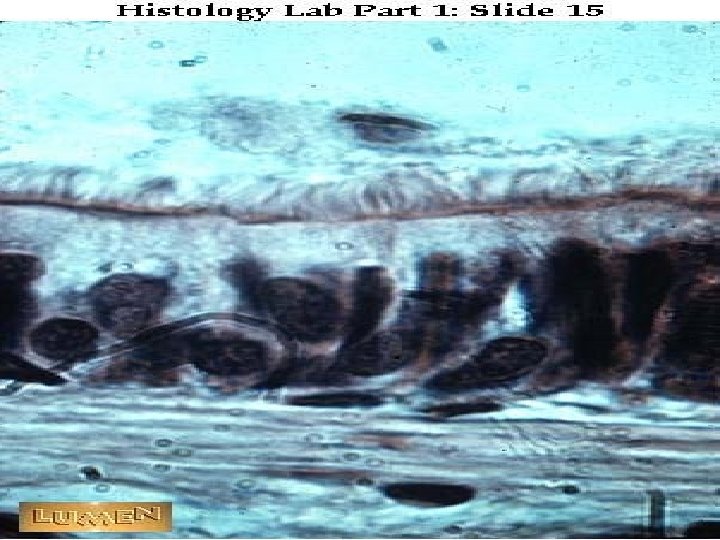
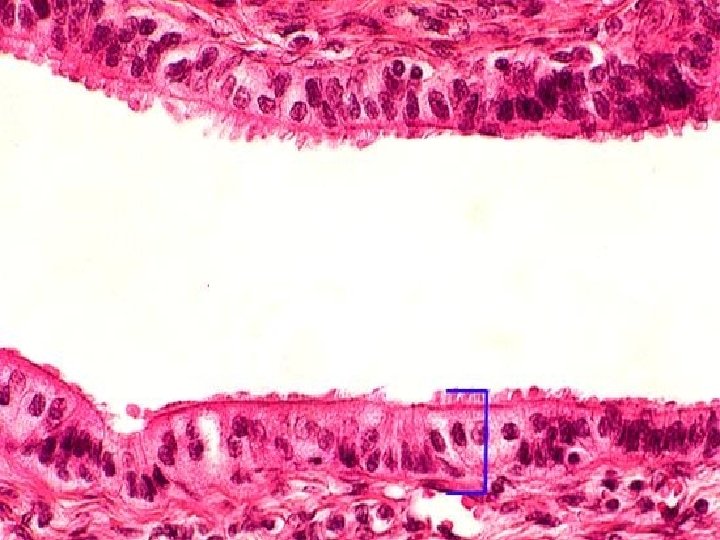
Pseudostratified Epithelium • Pseudostratified epithelium: appears to have several layers because the nuclei are at various levels. • All cells are attached to the basement membrane but some do not reach the apical surface. • In pseudostratified ciliated columnar epithelium, the cells that reach the surface either secrete mucus (goblet cells) or bear cilia that sweep away mucus and trapped foreign particles. • Found lining the respiratory system.
Pseudostratified
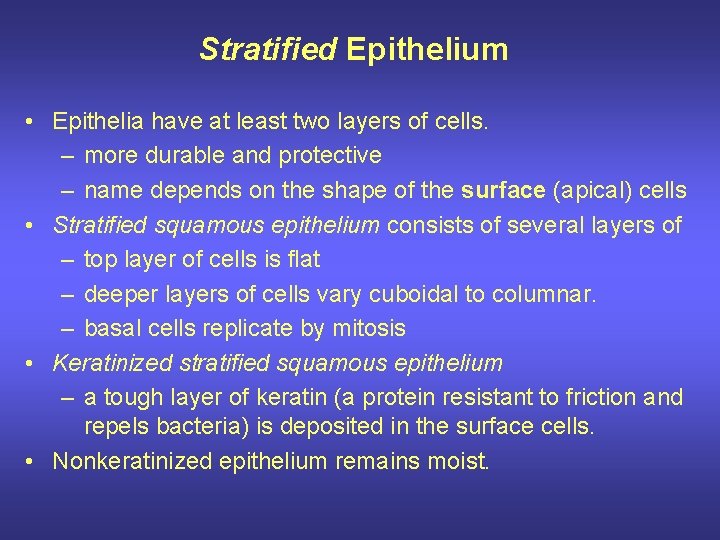
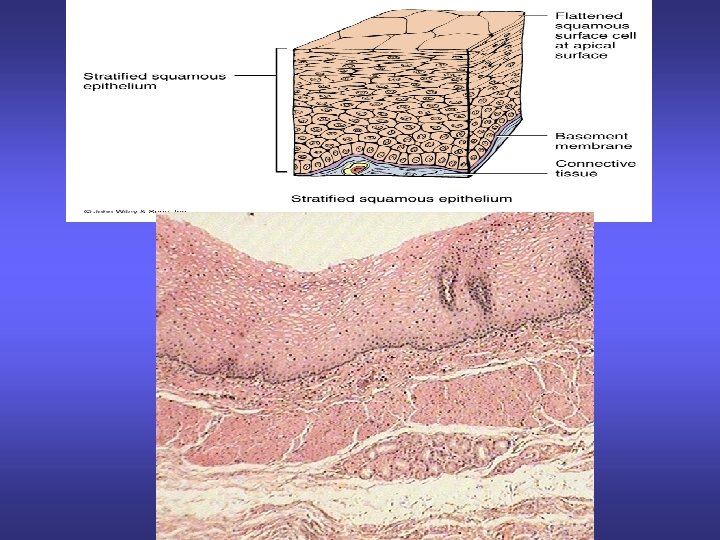
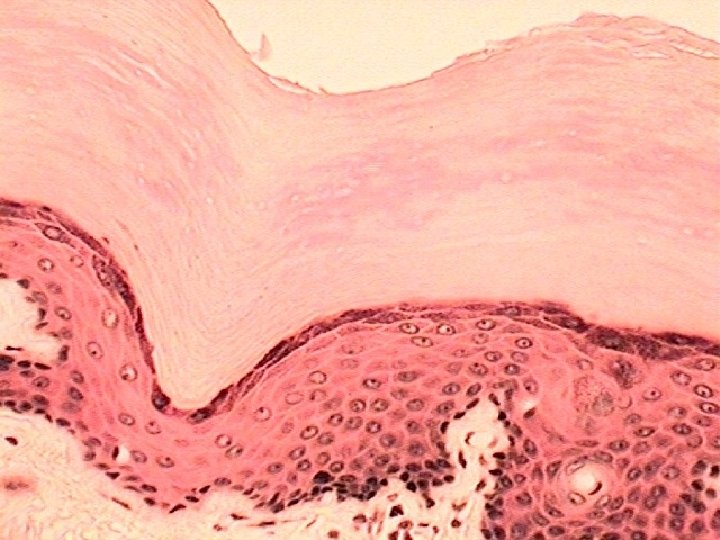
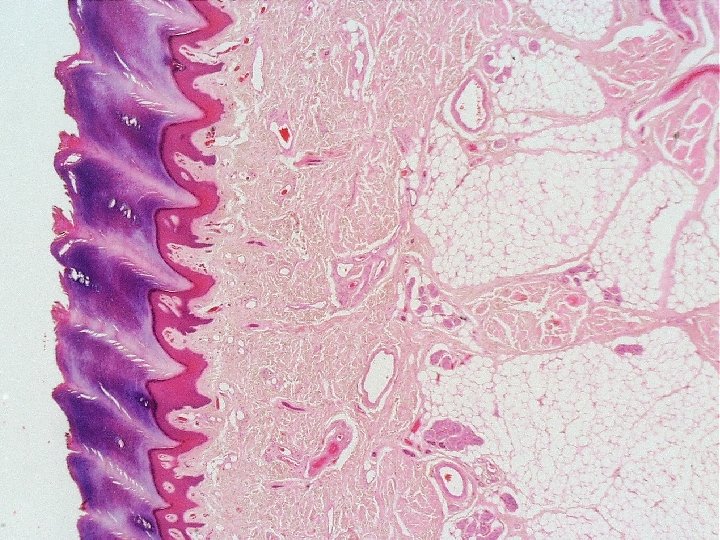
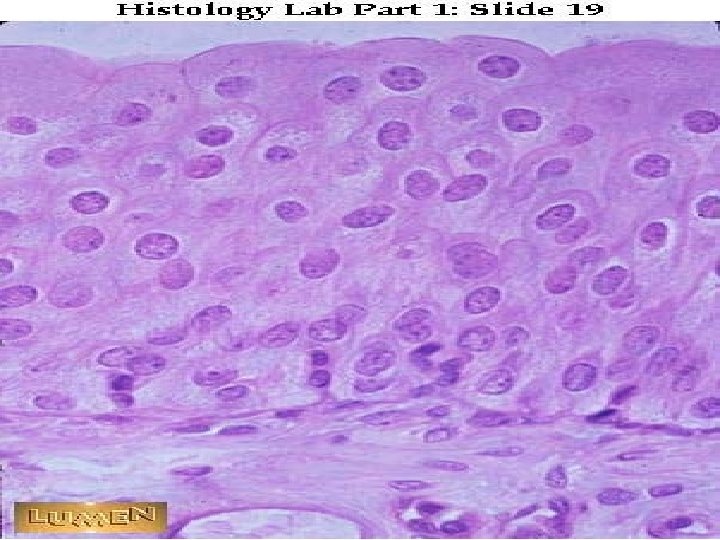
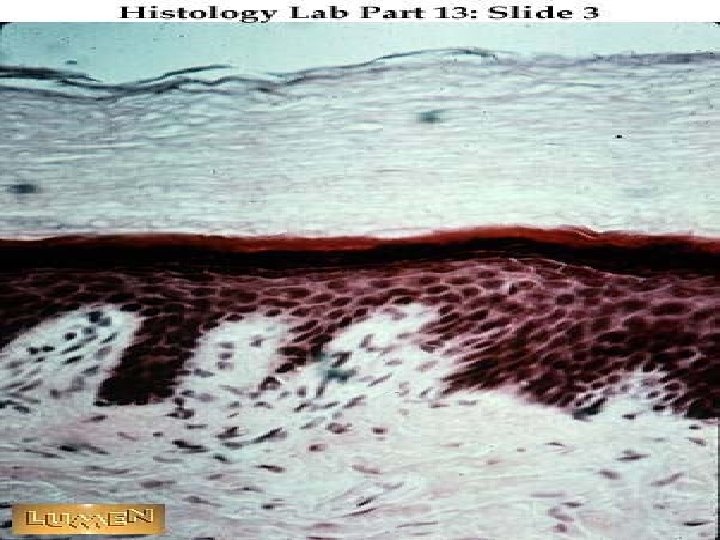
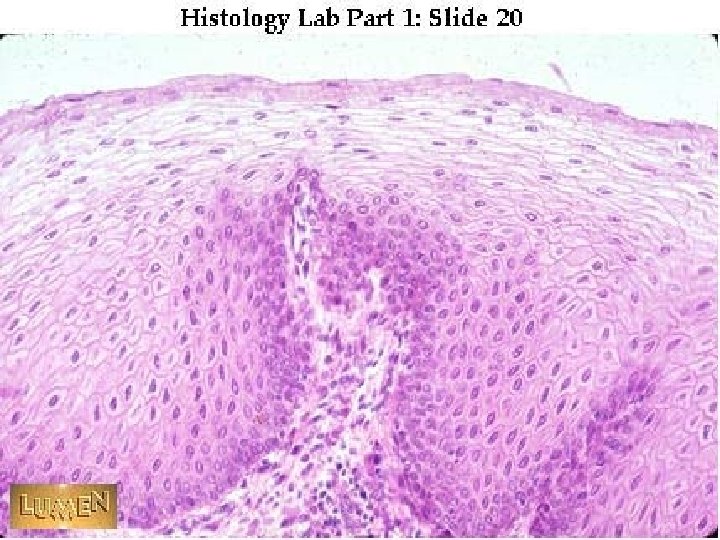
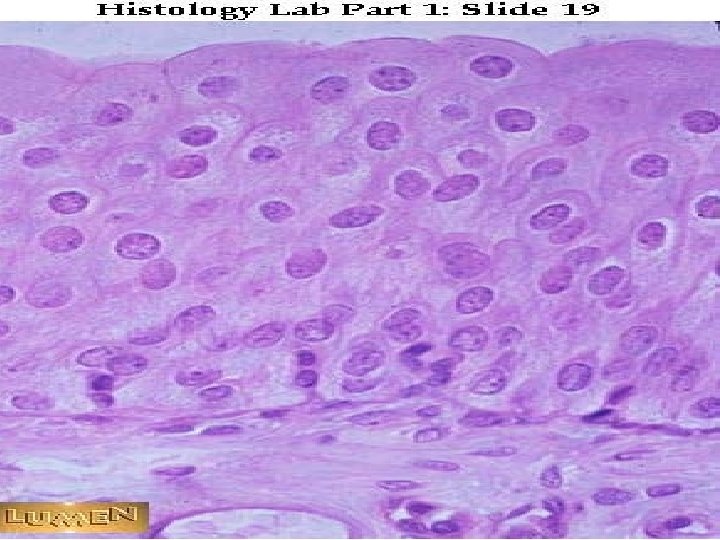
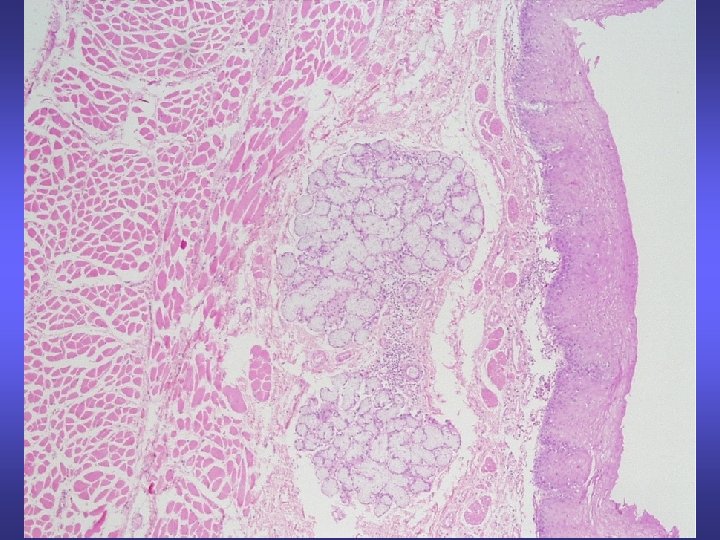
Stratified Epithelium • Epithelia have at least two layers of cells. – more durable and protective – name depends on the shape of the surface (apical) cells • Stratified squamous epithelium consists of several layers of – top layer of cells is flat – deeper layers of cells vary cuboidal to columnar. – basal cells replicate by mitosis • Keratinized stratified squamous epithelium – a tough layer of keratin (a protein resistant to friction and repels bacteria) is deposited in the surface cells. • Nonkeratinized epithelium remains moist.
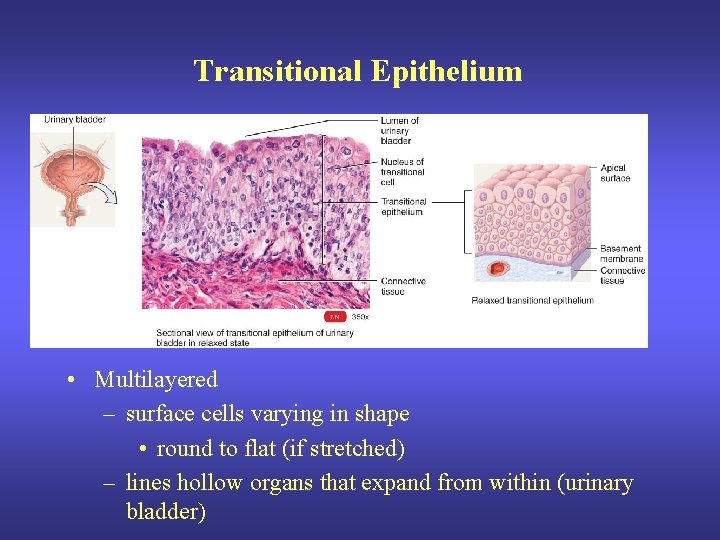
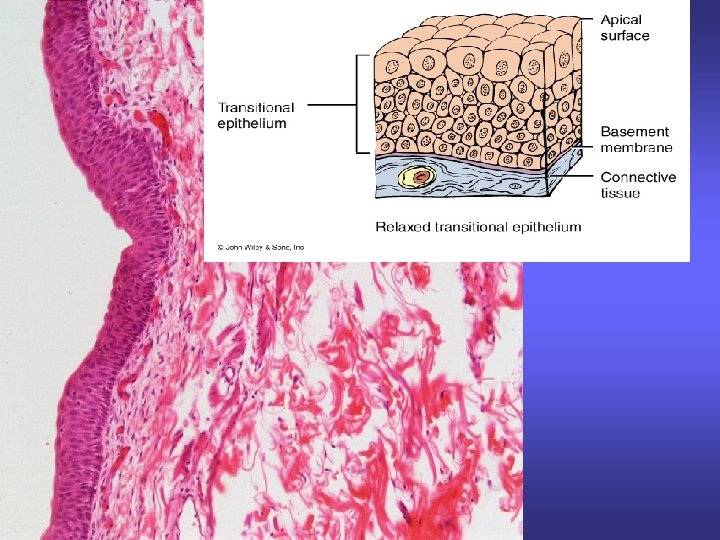
Transitional Epithelium • Multilayered – surface cells varying in shape • round to flat (if stretched) – lines hollow organs that expand from within (urinary bladder)
For each type of tissue you need to know 1. Description 2. Example of location 3. Function