
Epithelial Tissue Chapter 4 1 Human Anatomy Histology
![Types of Epithelial Tissues 1] Squamous Epithelium: simple and stratified 2] Cuboidal Epithelium 3]](https://slidetodoc.com/presentation_image_h/91c2c5d25a39d4f0417d750cc84547bf/image-10.jpg "Types of Epithelial Tissues 1] Squamous Epithelium: simple and stratified 2] Cuboidal Epithelium 3]")
- Slides: 25
Epithelial Tissue Chapter 4. 1 (Human Anatomy)
Histology is the branch of anatomy that studies the structure of animal tissue on a microscopic level.
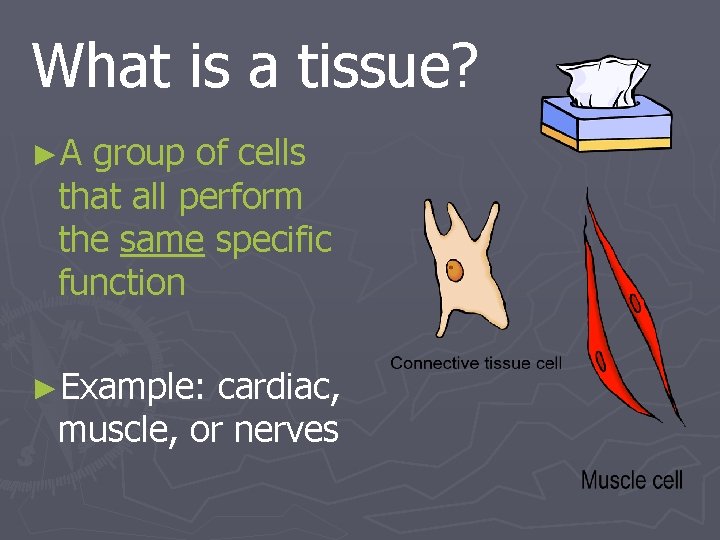
What is a tissue? ►A group of cells that all perform the same specific function ►Example: cardiac, muscle, or nerves
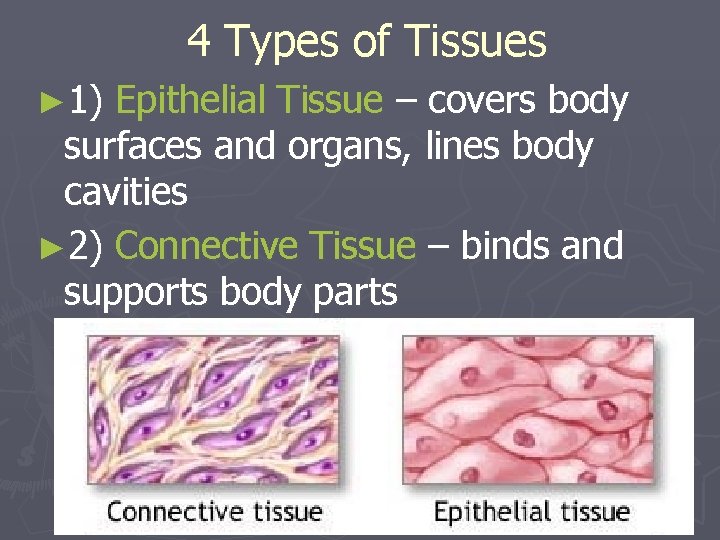
4 Types of Tissues ► 1) Epithelial Tissue – covers body surfaces and organs, lines body cavities ► 2) Connective Tissue – binds and supports body parts
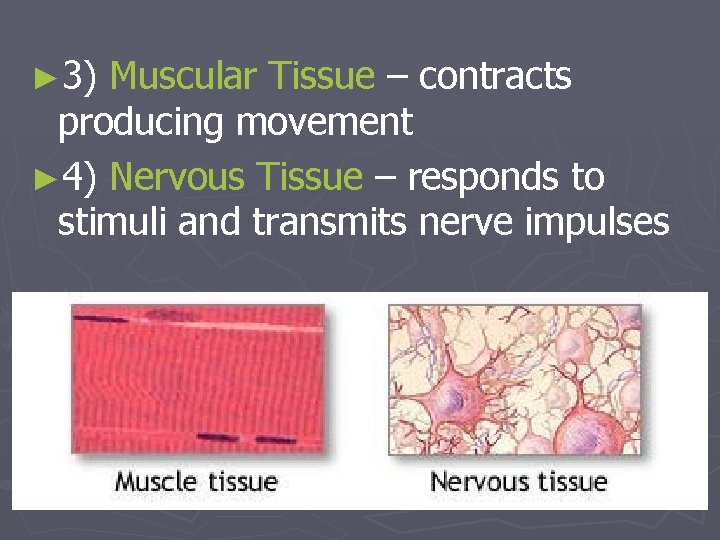
► 3) Muscular Tissue – contracts producing movement ► 4) Nervous Tissue – responds to stimuli and transmits nerve impulses
Epithelial Tissue ►Tightly packed cells ►Readily divides (mitosis) producing new cells to replace old or damaged cells ►Lacks blood vessels ►Exists on the skin and on the surface of organs, blood vessels, and body cavities
►Function: - Externally – protects body from drying out, injury, and bacterial invasion - Internally – protects, sweeps up impurities, secretes mucus, absorbs
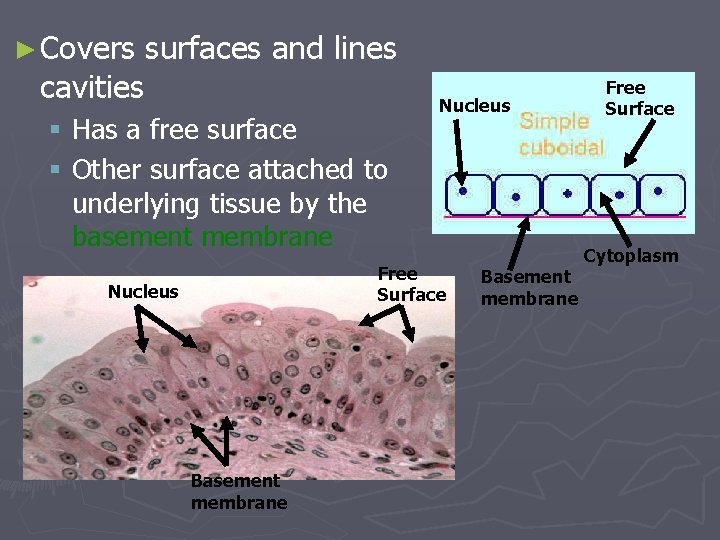
► Covers surfaces and lines cavities § Has a free surface § Other surface attached to underlying tissue by the basement membrane Nucleus Free Surface Nucleus Basement membrane Free Surface Cytoplasm
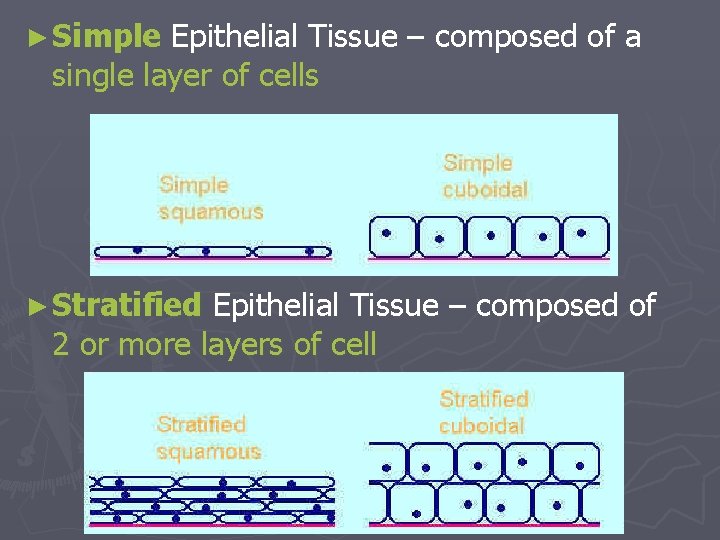
► Simple Epithelial Tissue – composed of a single layer of cells ► Stratified Epithelial Tissue – composed of 2 or more layers of cell
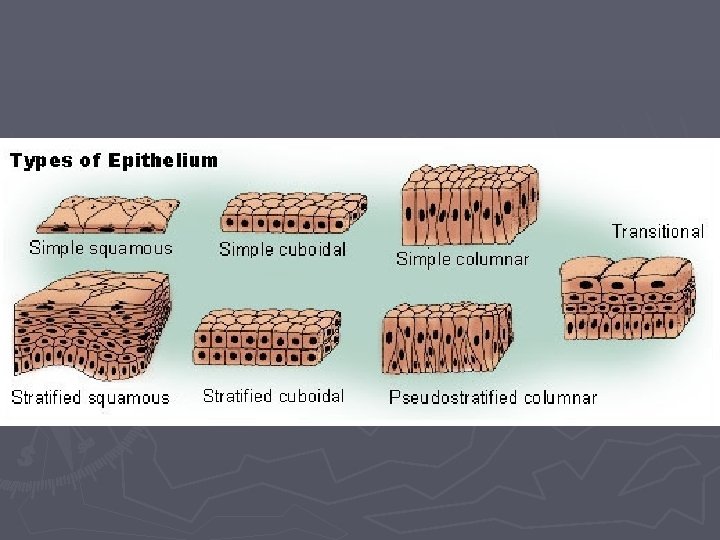
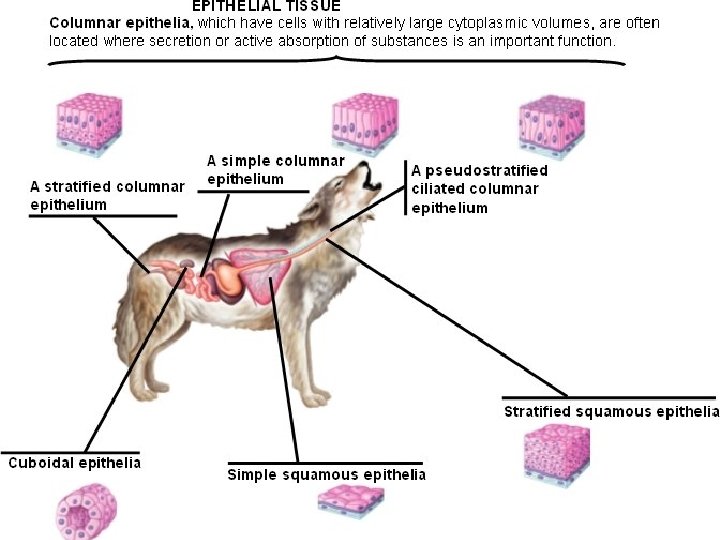
Types of Epithelial Tissues 1] Squamous Epithelium: simple and stratified 2] Cuboidal Epithelium 3] Columnar Epithelium 4] Pseudostratified Epithelium 5] Transitional Epithelium
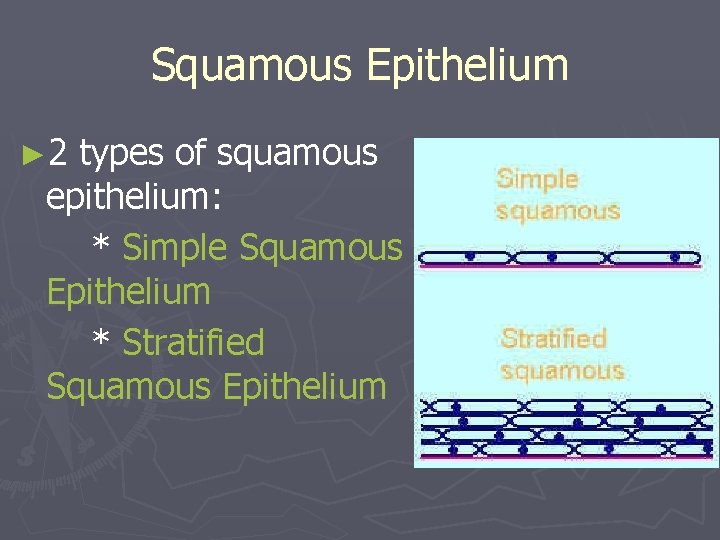
Squamous Epithelium ► 2 types of squamous epithelium: * Simple Squamous Epithelium * Stratified Squamous Epithelium
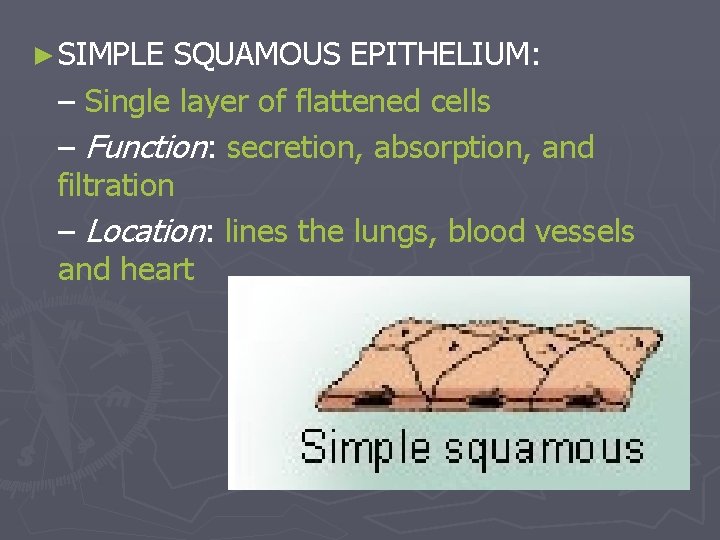
► SIMPLE SQUAMOUS EPITHELIUM: – Single layer of flattened cells – Function: secretion, absorption, and filtration – Location: lines the lungs, blood vessels and heart
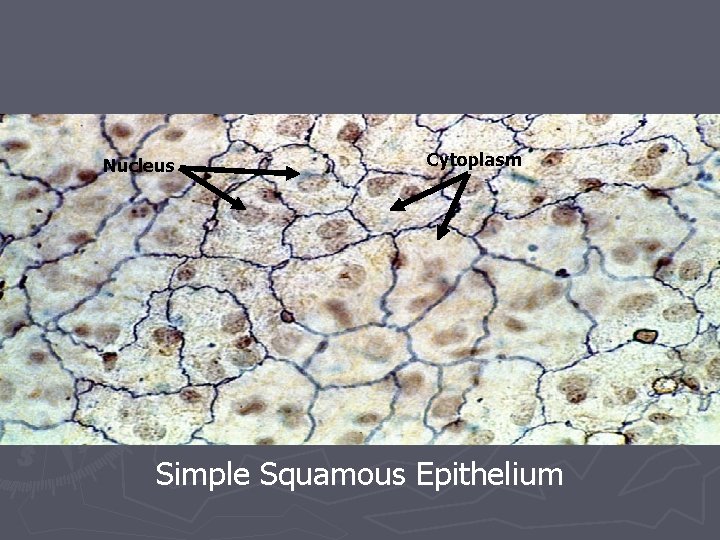
Nucleus Cytoplasm Simple Squamous Epithelium
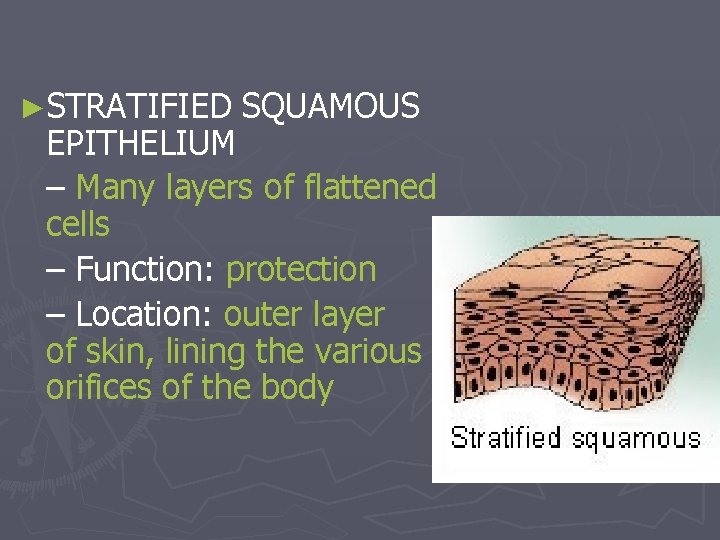
►STRATIFIED SQUAMOUS EPITHELIUM – Many layers of flattened cells – Function: protection – Location: outer layer of skin, lining the various orifices of the body
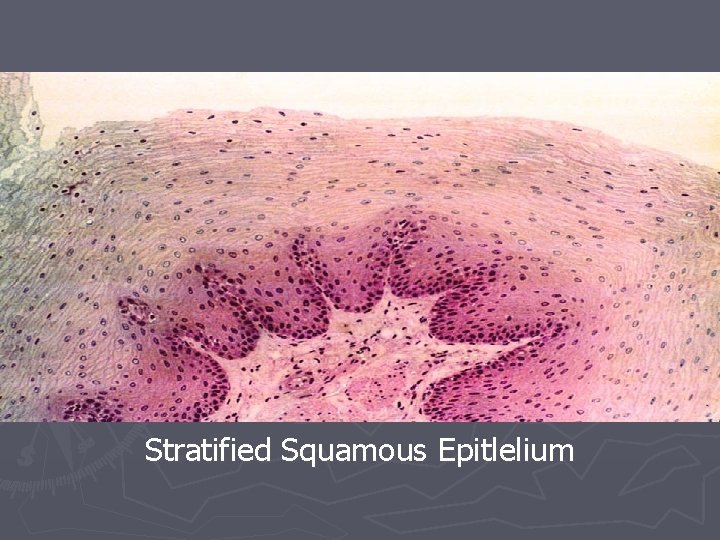
Stratified Squamous Epitlelium
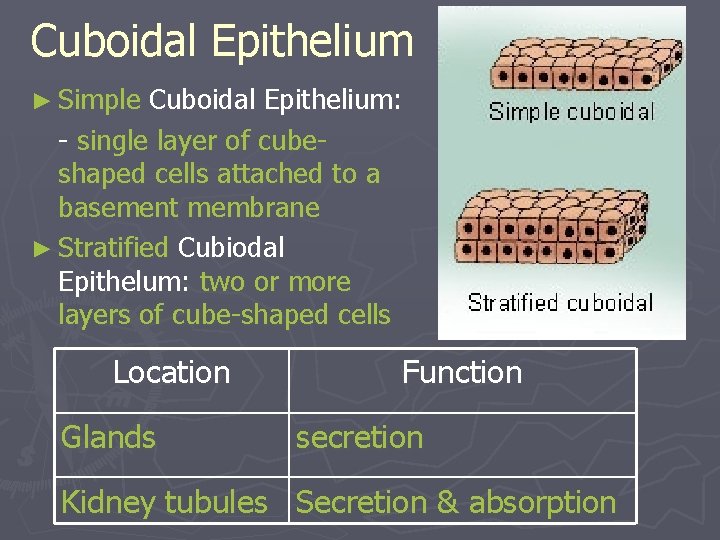
Cuboidal Epithelium ► Simple Cuboidal Epithelium: - single layer of cubeshaped cells attached to a basement membrane ► Stratified Cubiodal Epithelum: two or more layers of cube-shaped cells Location Glands Function secretion Kidney tubules Secretion & absorption
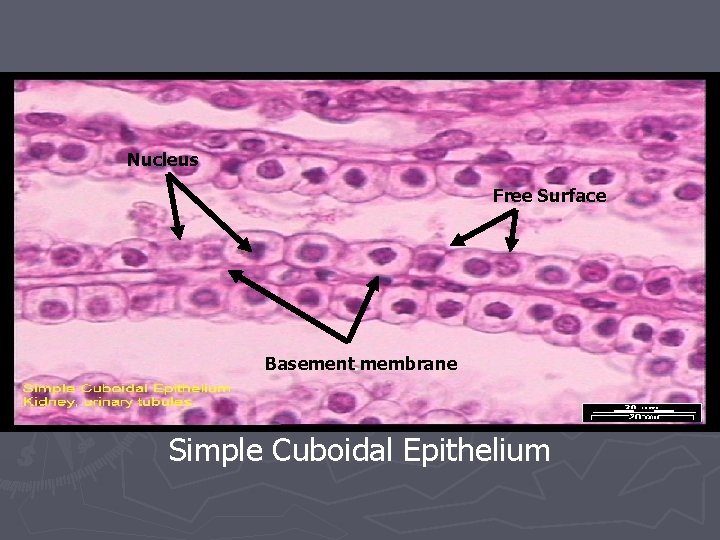
Nucleus Free Surface Basement membrane Simple Cuboidal Epithelium
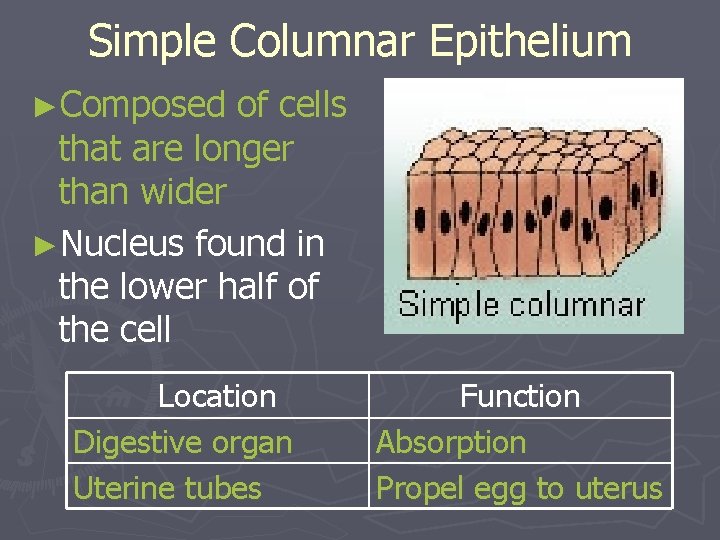
Simple Columnar Epithelium ►Composed of cells that are longer than wider ►Nucleus found in the lower half of the cell Location Digestive organ Uterine tubes Function Absorption Propel egg to uterus
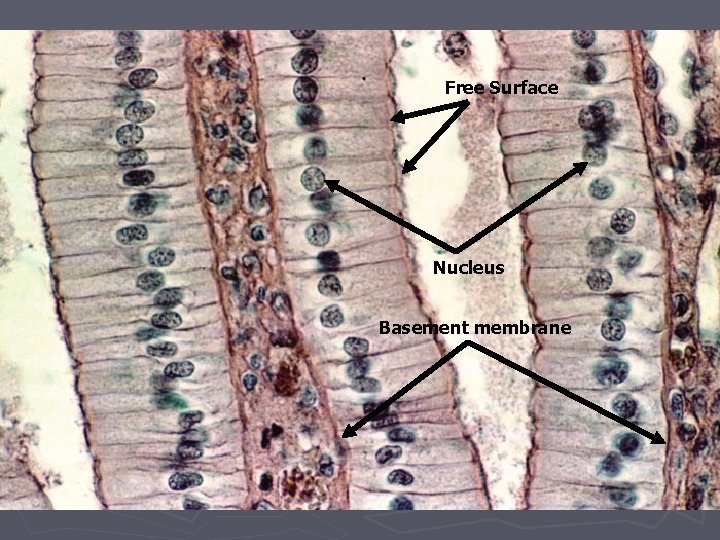
Free Surface Nucleus Basement membrane
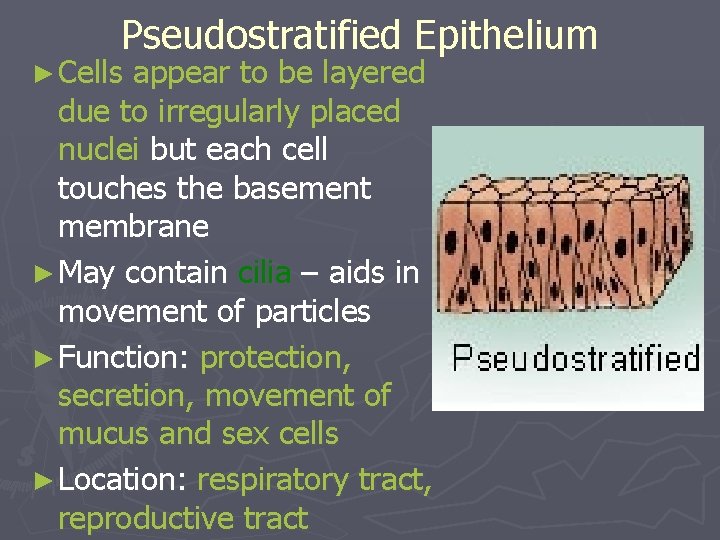
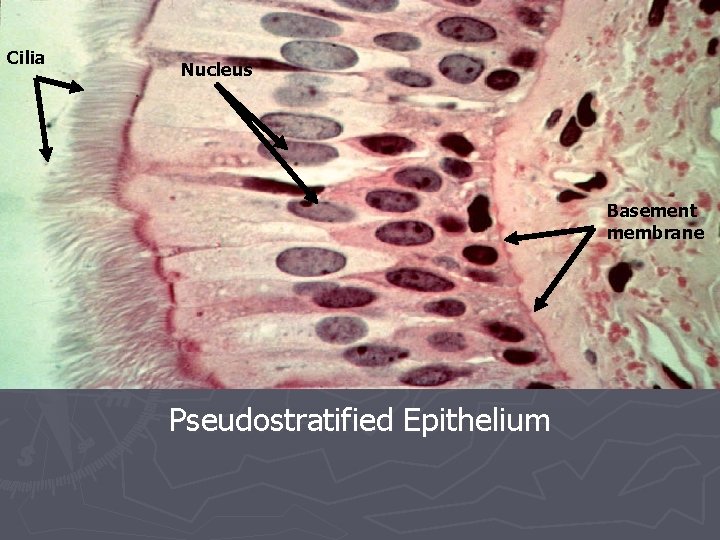
Pseudostratified Epithelium ► Cells appear to be layered due to irregularly placed nuclei but each cell touches the basement membrane ► May contain cilia – aids in movement of particles ► Function: protection, secretion, movement of mucus and sex cells ► Location: respiratory tract, reproductive tract
Cilia Nucleus Basement membrane Pseudostratified Epithelium
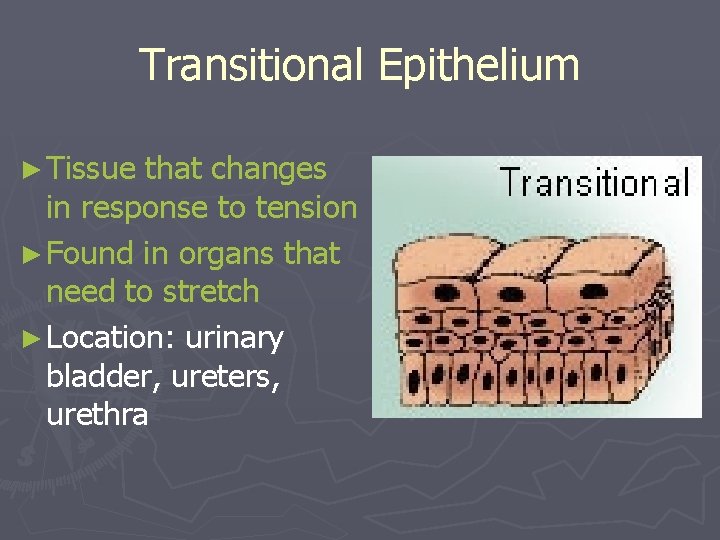
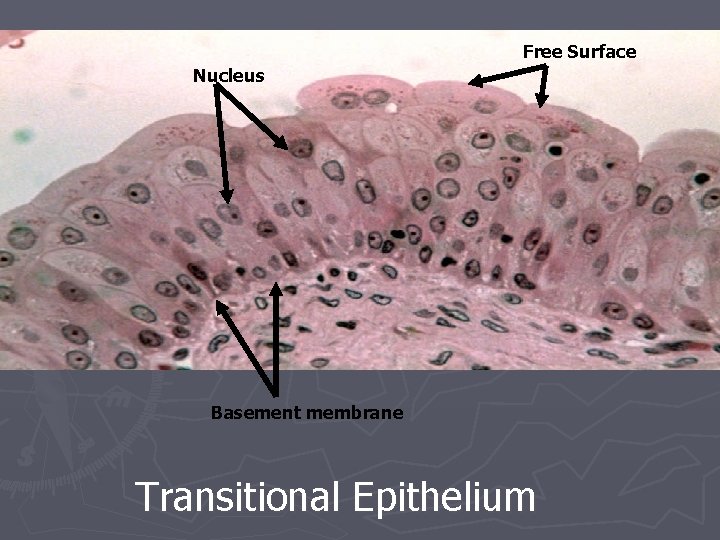
Transitional Epithelium ► Tissue that changes in response to tension ► Found in organs that need to stretch ► Location: urinary bladder, ureters, urethra
Free Surface Nucleus Basement membrane Transitional Epithelium