
Epithelia Human organization 1 Cell the basic structure

Epithelia
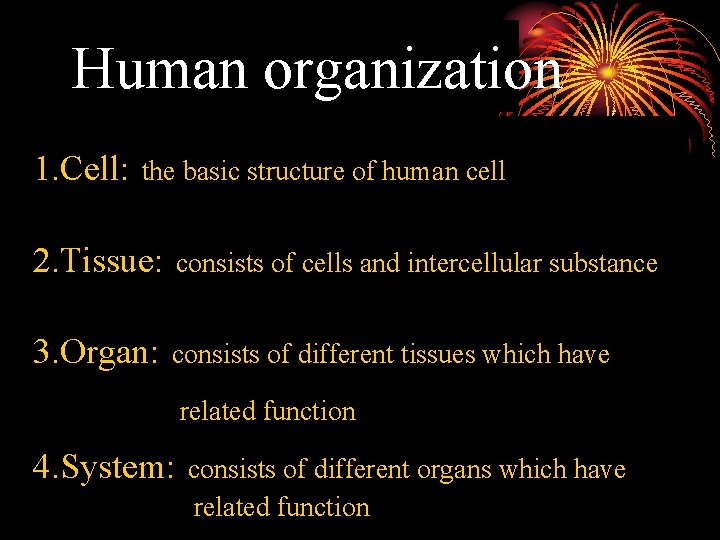
Human organization 1. Cell: the basic structure of human cell 2. Tissue: consists of cells and intercellular substance 3. Organ: consists of different tissues which have related function 4. System: consists of different organs which have related function
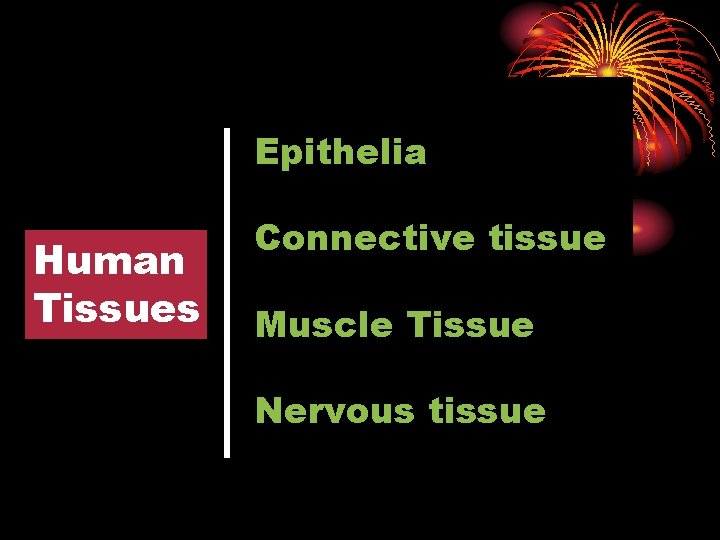
Epithelia Human Tissues Connective tissue Muscle Tissue Nervous tissue
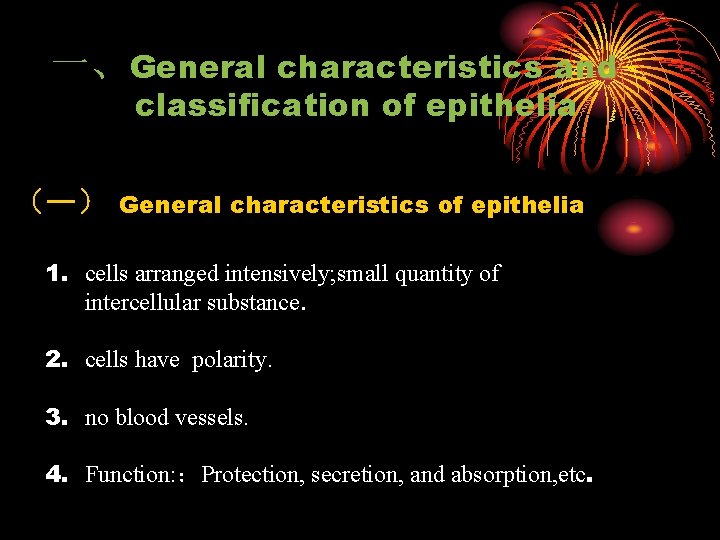
一、General characteristics and classification of epithelia (一) General characteristics of epithelia 1. cells arranged intensively; small quantity of intercellular substance. 2. cells have polarity. 3. no blood vessels. 4. Function: :Protection, secretion, and absorption, etc.

(二)Classification of Epithelia mainly classified into 2 sorts: Covering epithelia:Cells arranged like membrane Localization: covering the outer surface of the body and the inner surface of the cavities , Sacs or ducts within the body. Function: Protection. Glandular epithelia:Function- Secretion
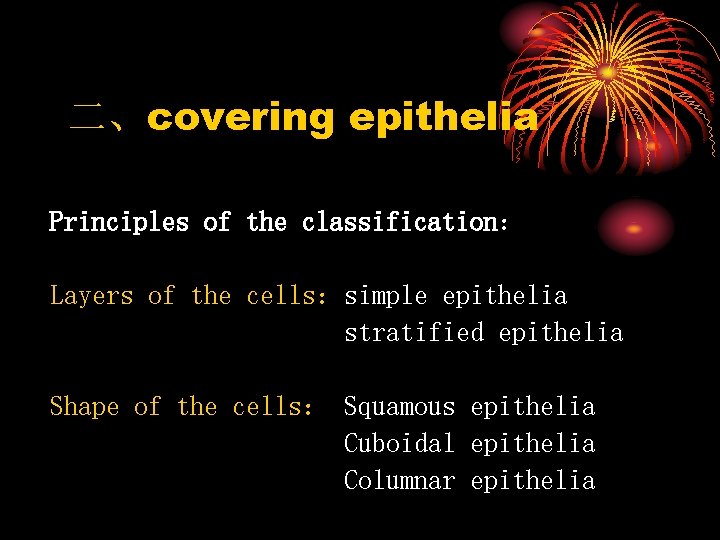
二、covering epithelia Principles of the classification: Layers of the cells:simple epithelia stratified epithelia Shape of the cells: Squamous epithelia Cuboidal epithelia Columnar epithelia
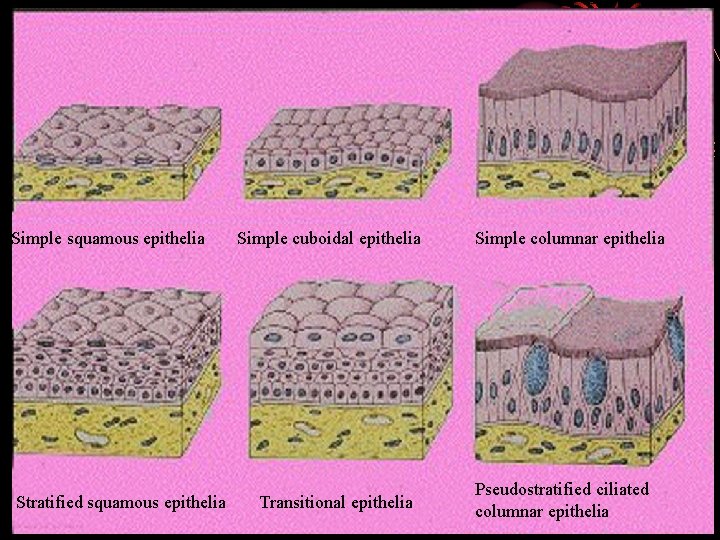
Simple squamous epithelia Stratified squamous epithelia Simple cuboidal epithelia Transitional epithelia Simple columnar epithelia Pseudostratified ciliated columnar epithelia

1. simple squamous epithelia Description: Single layer of flat cells with disc- shaped central nuclei. Top view: Polygonal, central nuclei Side view: Squamous, central nuclei Function: Allows passage of material by diffusion & filtration and reduces friction by providing a smooth surface & secreting lubricating serous fluid.
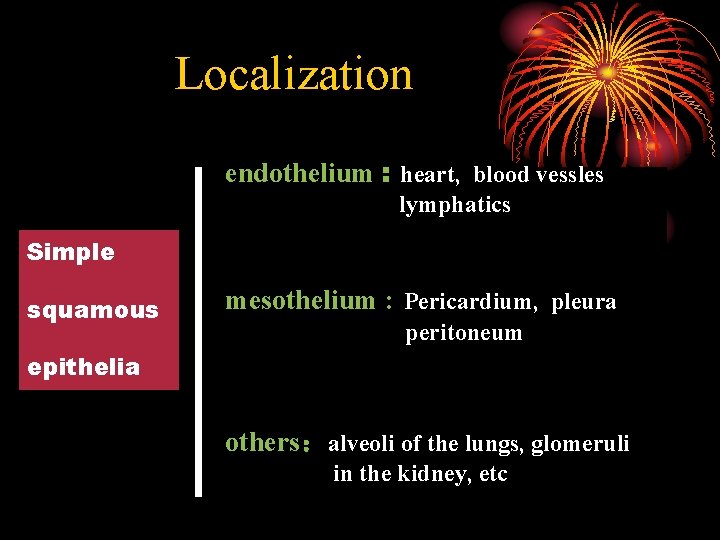
Localization endothelium : heart, blood vessles lymphatics Simple squamous mesothelium : Pericardium, pleura peritoneum epithelia others:alveoli of the lungs, glomeruli in the kidney, etc
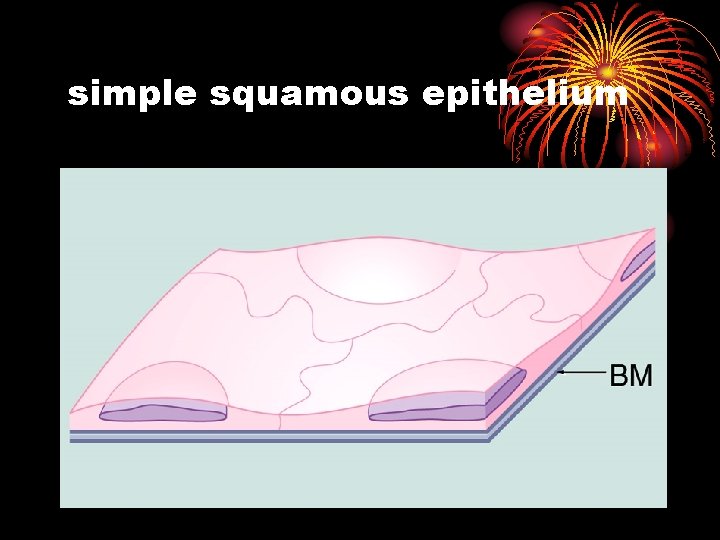
simple squamous epithelium
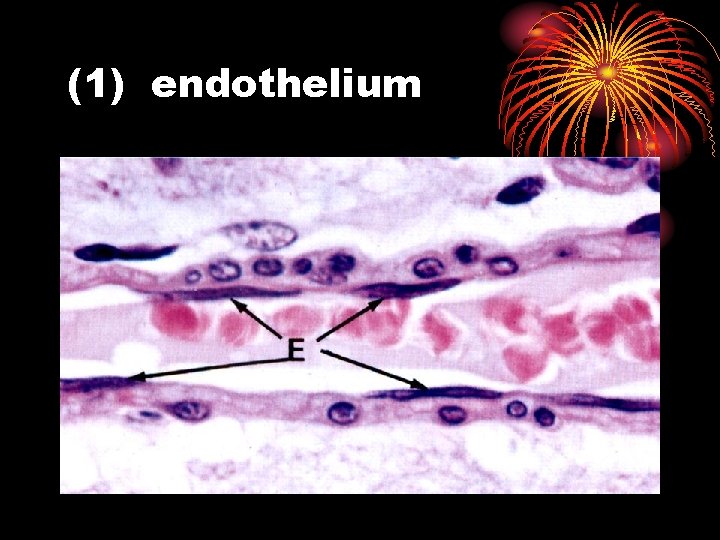
(1) endothelium
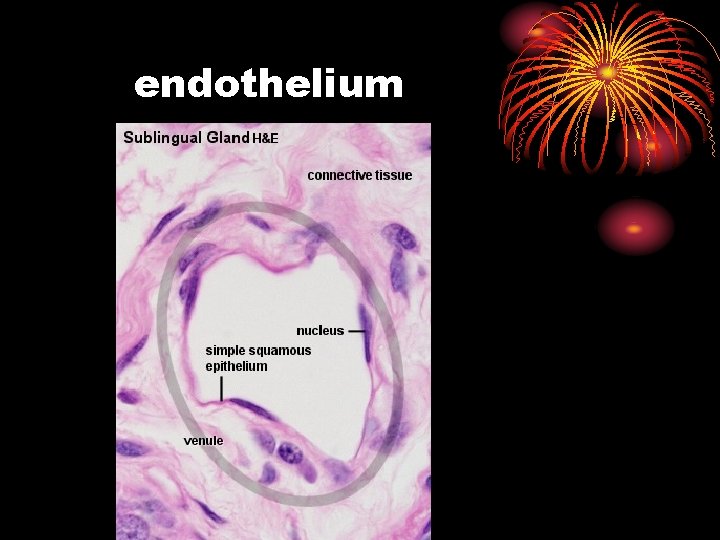
endothelium
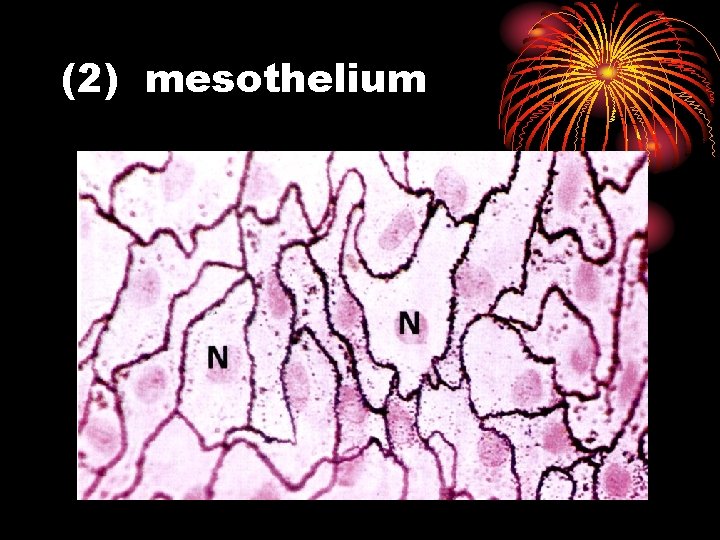
(2) mesothelium
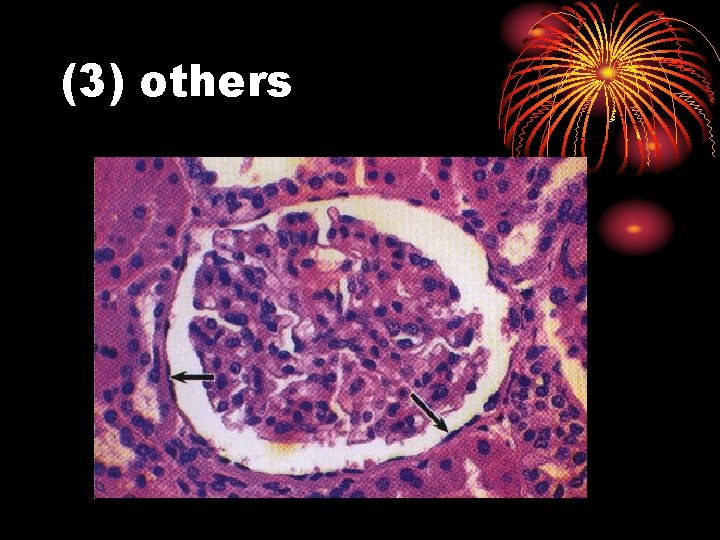
(3) others
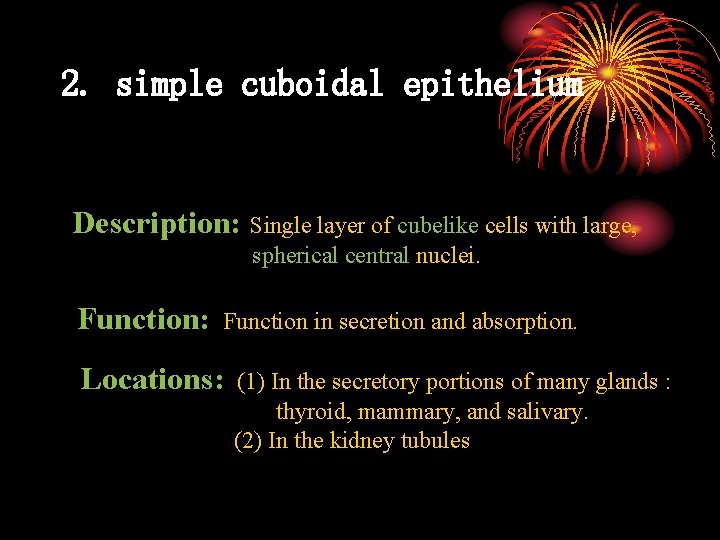
2. simple cuboidal epithelium Description: Single layer of cubelike cells with large, spherical central nuclei. Function: Function in secretion and absorption. Locations: (1) In the secretory portions of many glands : thyroid, mammary, and salivary. (2) In the kidney tubules
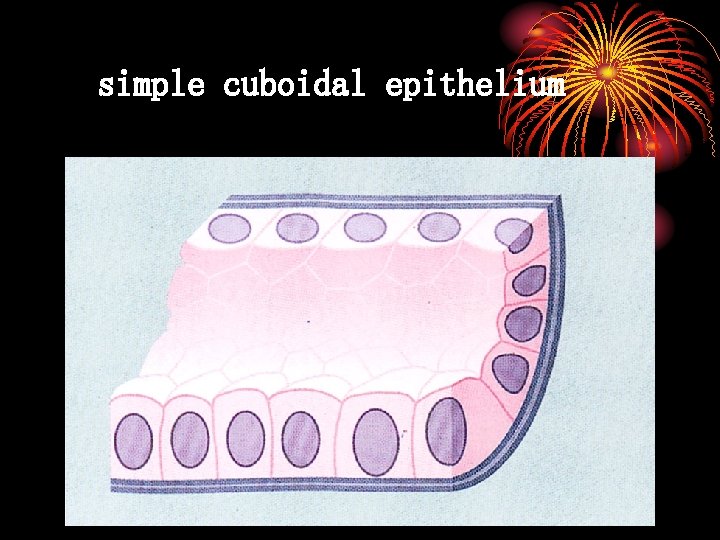
simple cuboidal epithelium
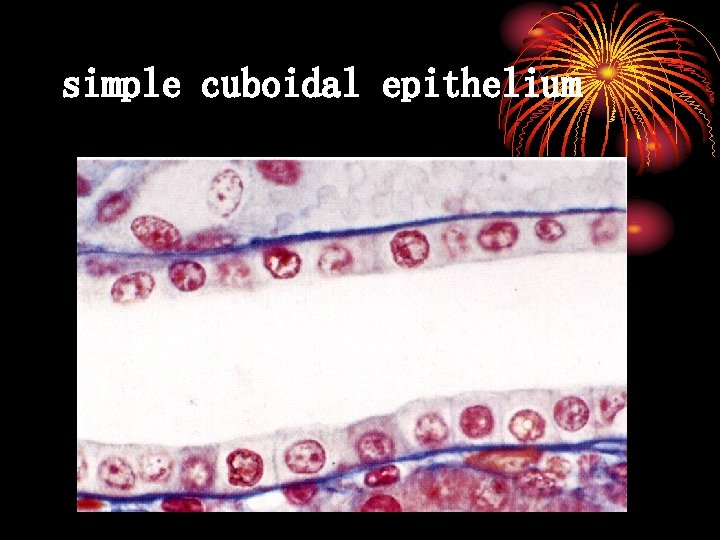
simple cuboidal epithelium
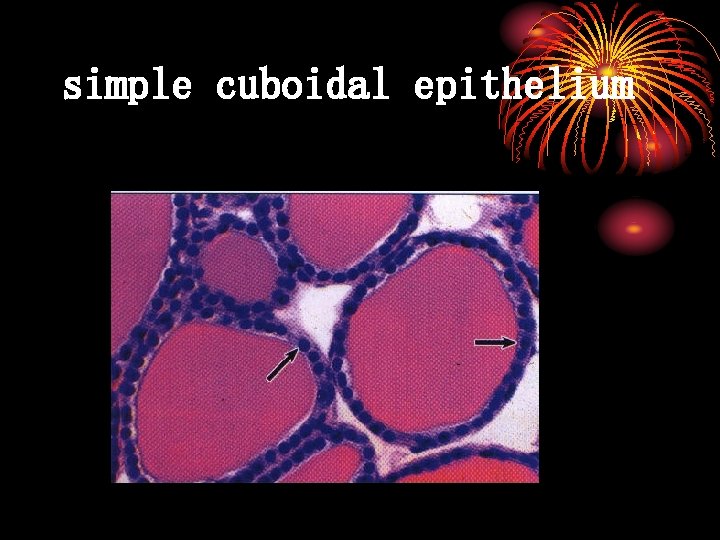
simple cuboidal epithelium
3. simple columnar epithelium Description: Single layer of columnar cells with oval nuclei ; often have an apical border of microvilli; Many contain goblet cells (mucus-secreting unicellular glands). Function: absorption of nutrients; secretion of mucus & enzymes. Locations: digestive tract, etc.
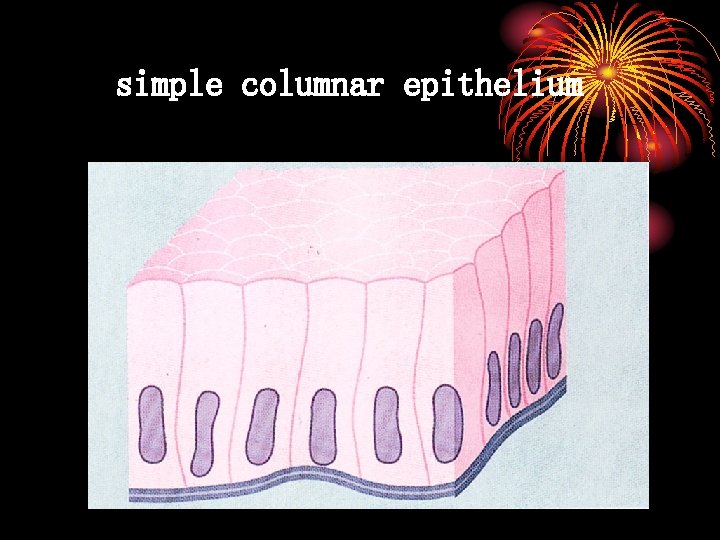
simple columnar epithelium
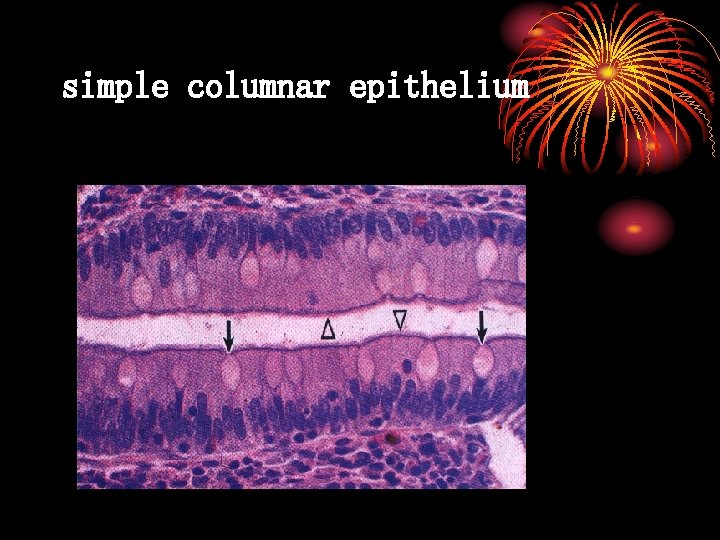
simple columnar epithelium
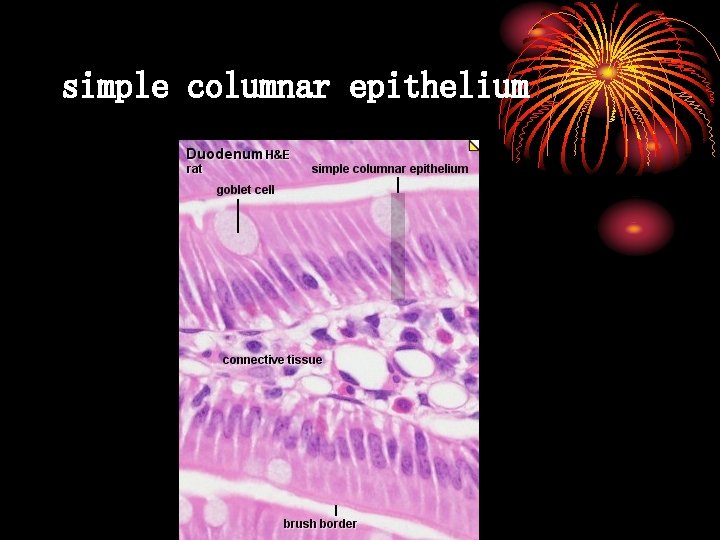
simple columnar epithelium

4. pseudostratified ciliated columnar epithelium Description: Function: single layer of cells of differing heights, but some don't reach the free surface. Nuclei are seen at many different levels. They contain goblet cells and cilia. secretion & propulsion of mucus Locations: l the trachea & most of the upper respiratory tract.
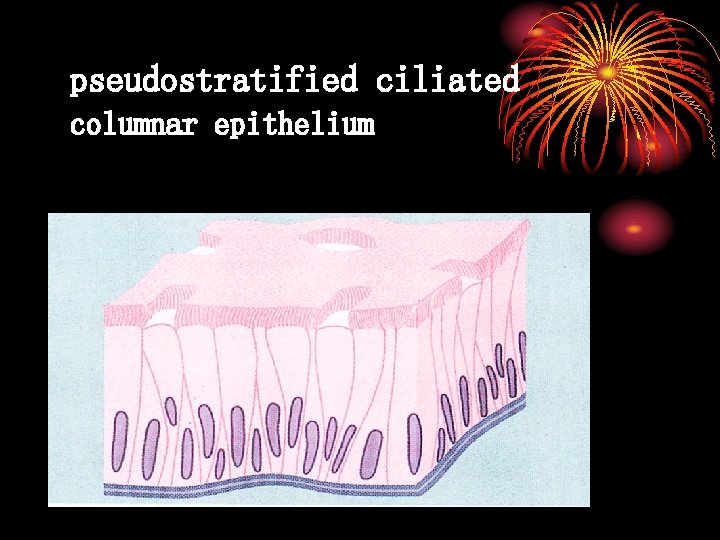
pseudostratified ciliated columnar epithelium
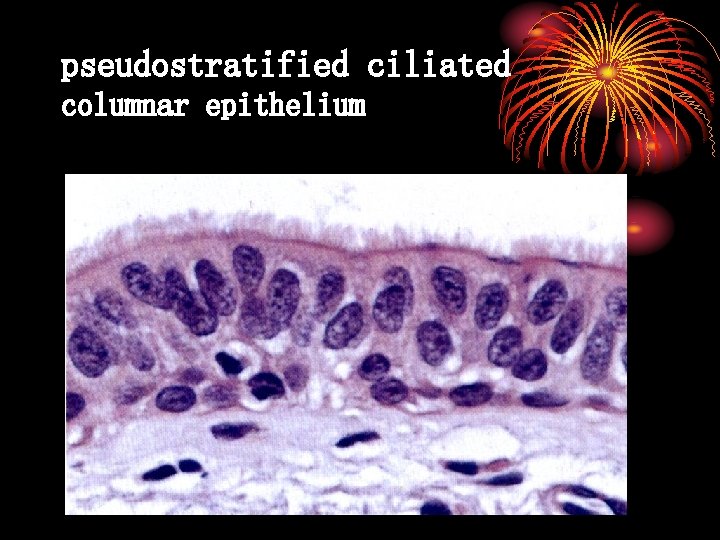
pseudostratified ciliated columnar epithelium

pseudostratified ciliated columnar epithelium
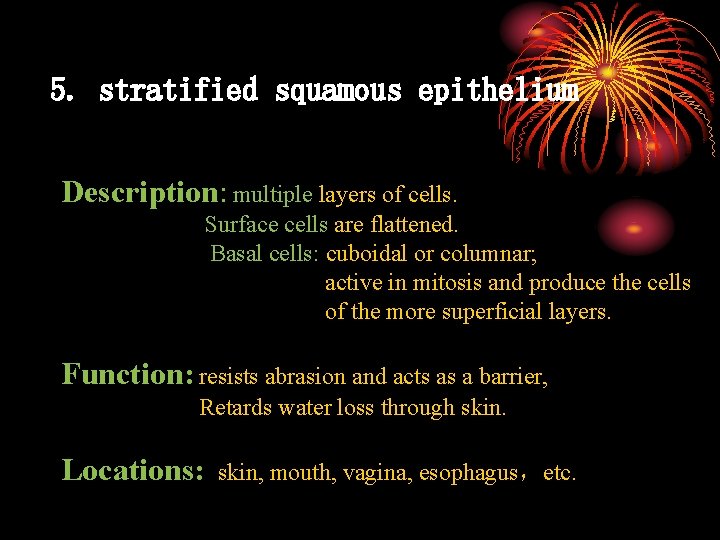
5. stratified squamous epithelium Description: multiple layers of cells. Surface cells are flattened. Basal cells: cuboidal or columnar; active in mitosis and produce the cells of the more superficial layers. Function: resists abrasion and acts as a barrier, Retards water loss through skin. Locations: skin, mouth, vagina, esophagus,etc.

keratinized stratified squamous epithelium: skin Stratified Surface is covered with layers of compact dead cells without nuclei (and full of keratin) Squamous epithelium nonkeratinized stratified squamous epithelium: esophagus, oral cavity
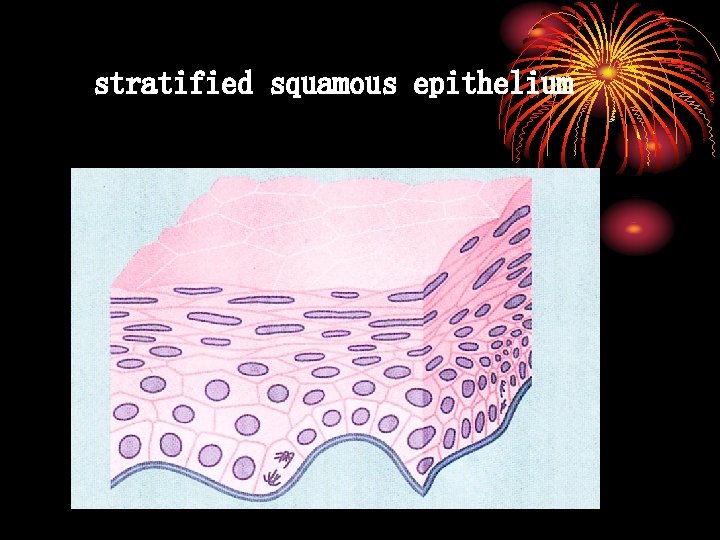
stratified squamous epithelium
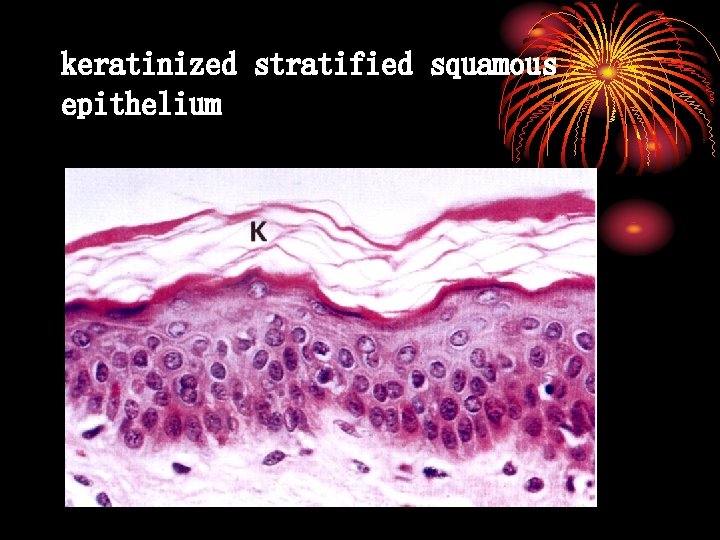
keratinized stratified squamous epithelium
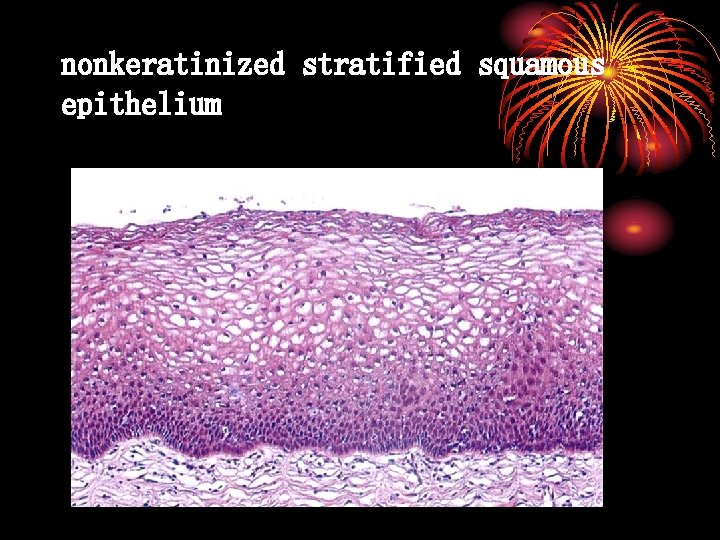
nonkeratinized stratified squamous epithelium

7. transitional epithelium Description: multiple layers of cells. Surface cells are dome-shaped. Middle layers: cells are polyhedral Basal cells: cuboidal or columnar. Locations: renal pelvis and calyces, the ureter, the urinary bladder , etc.
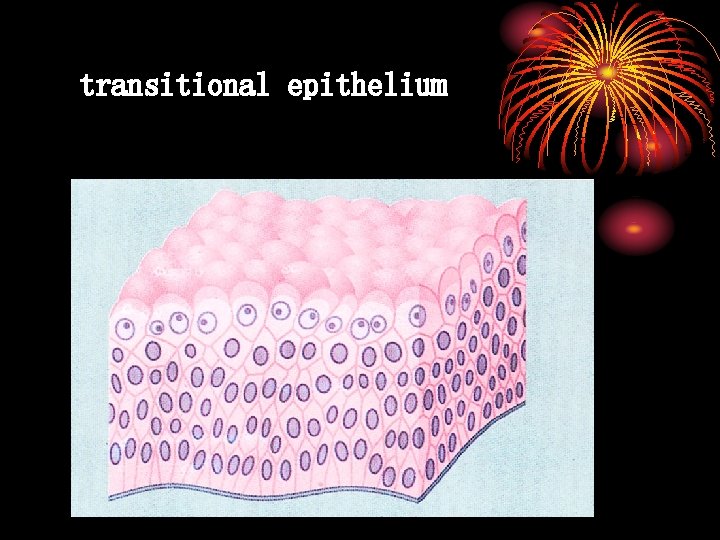
transitional epithelium
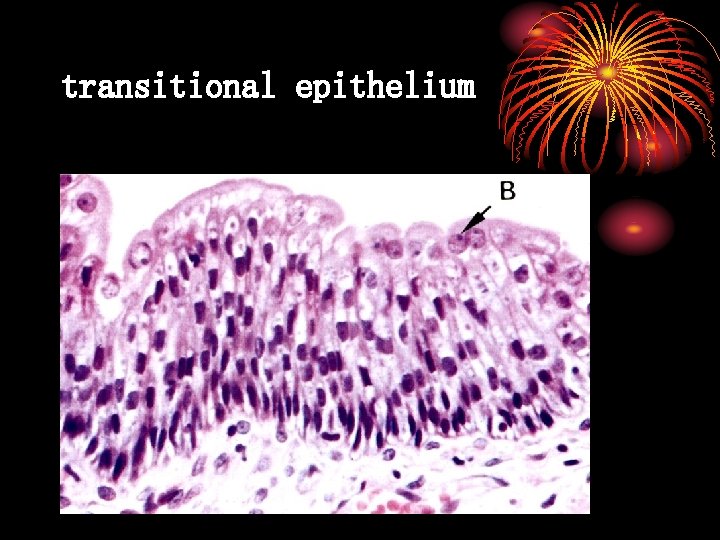
transitional epithelium
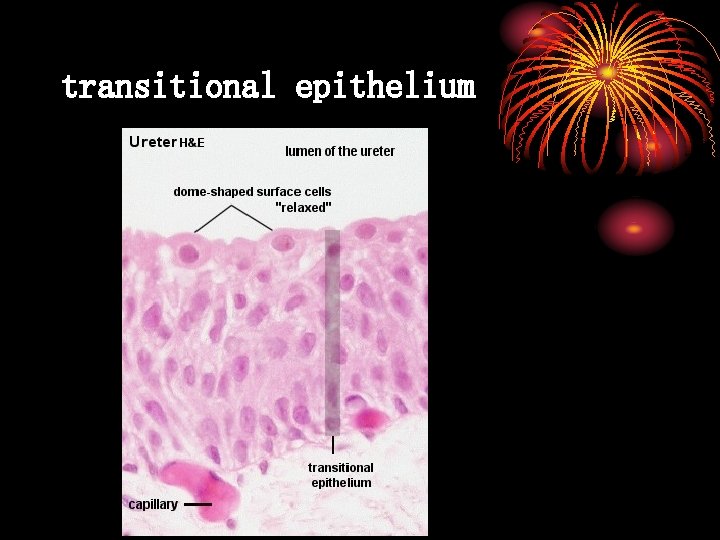
transitional epithelium
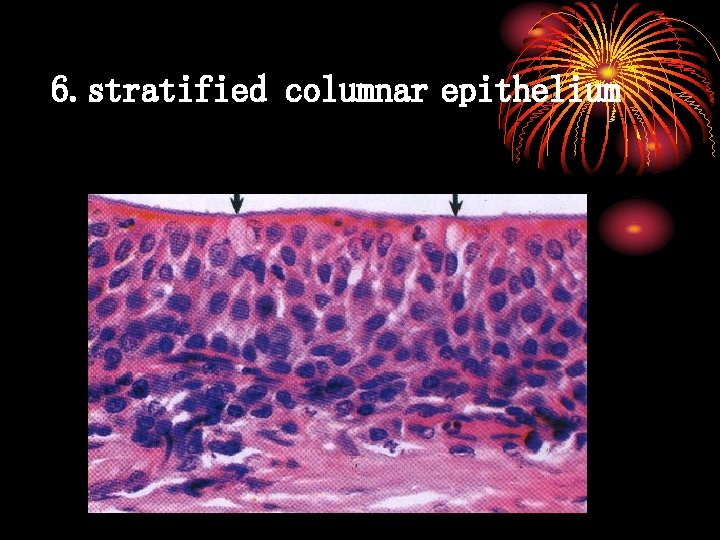
6. stratified columnar epithelium
三、special structure of each side (一)surface of epithelia 1. microvillus 2. cilium
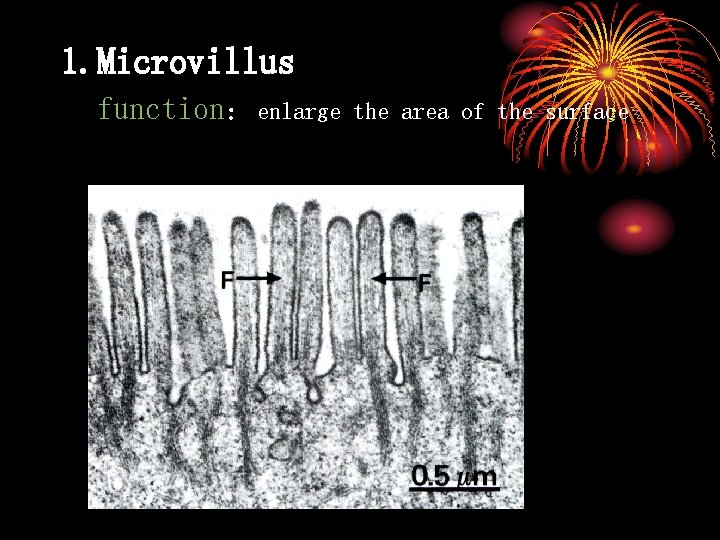
1. Microvillus function:enlarge the area of the surface
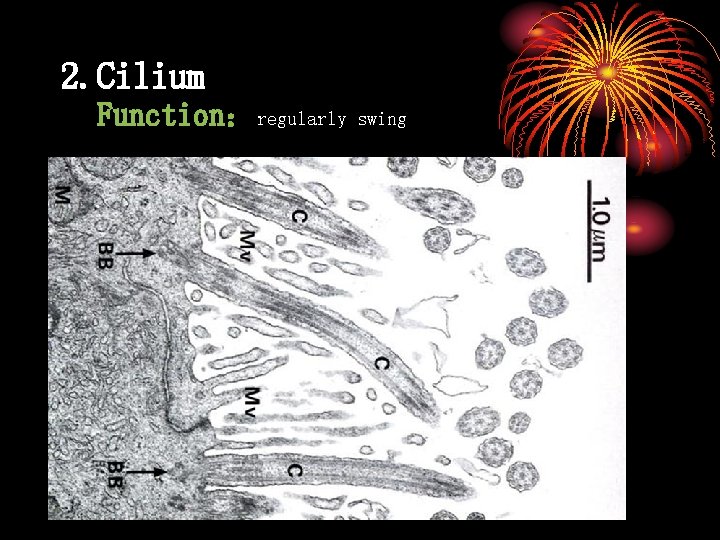
2. Cilium Function:regularly swing
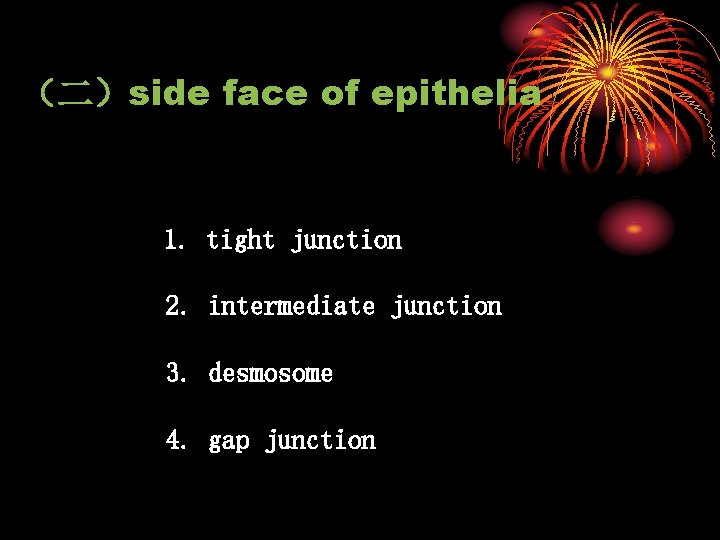
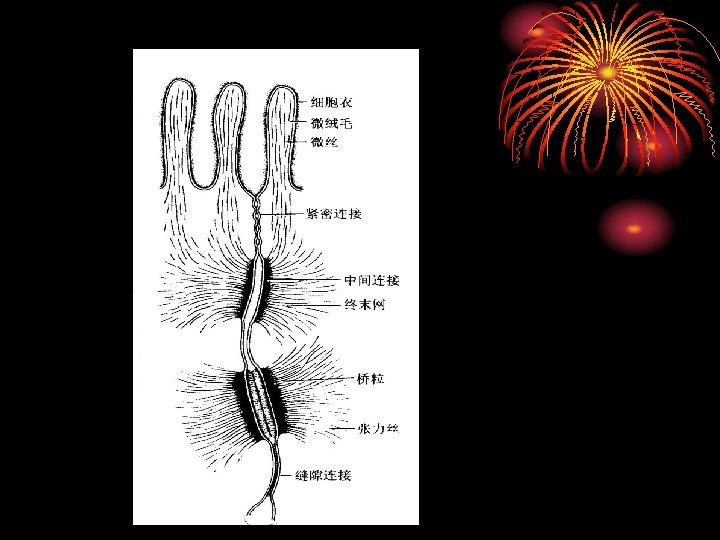
(二)side face of epithelia 1. tight junction 2. intermediate junction 3. desmosome 4. gap junction
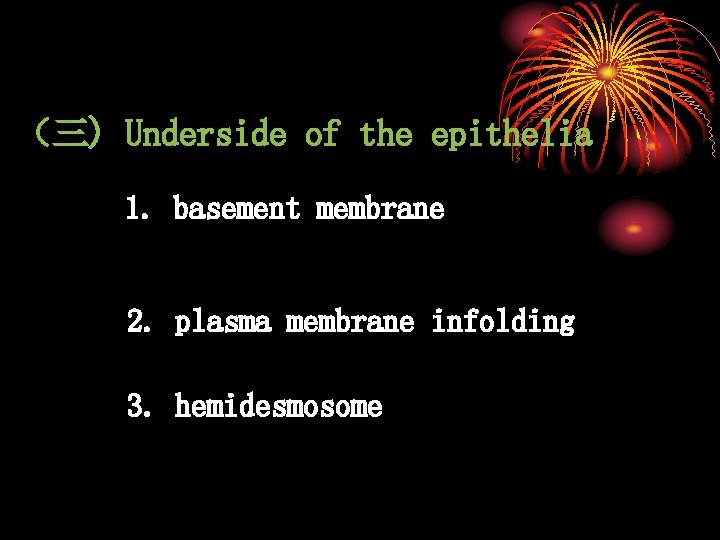
(三) Underside of the epithelia 1. basement membrane 2. plasma membrane infolding 3. hemidesmosome
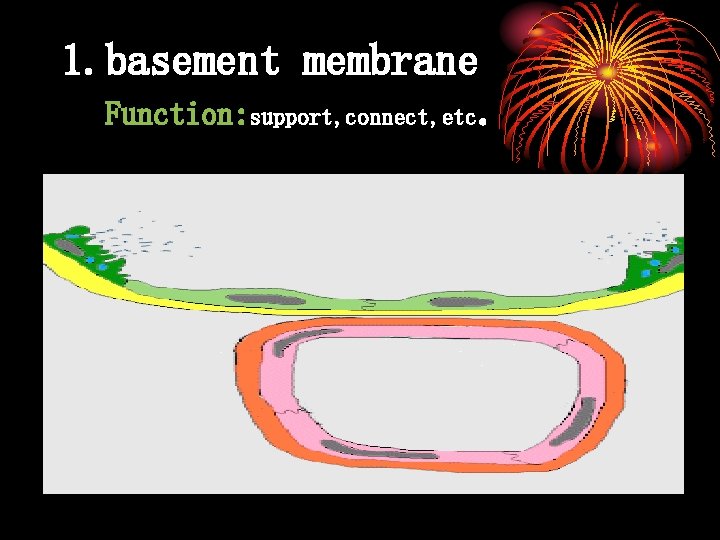
1. basement membrane Function: support, connect, etc.
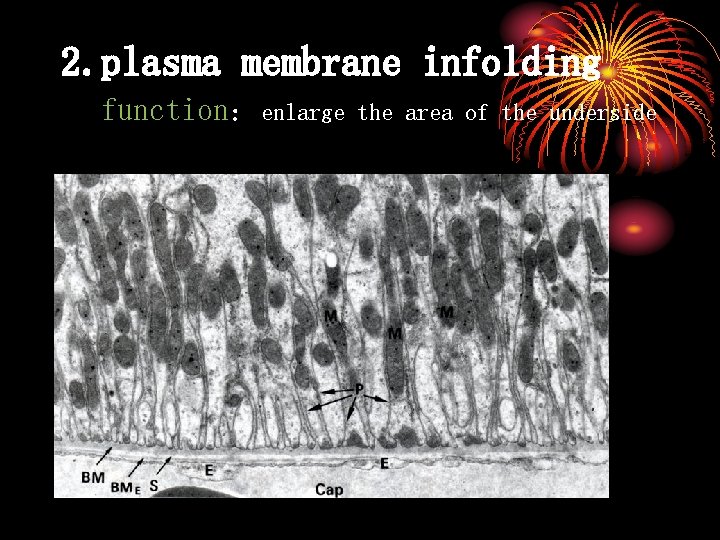
2. plasma membrane infolding function:enlarge the area of the underside
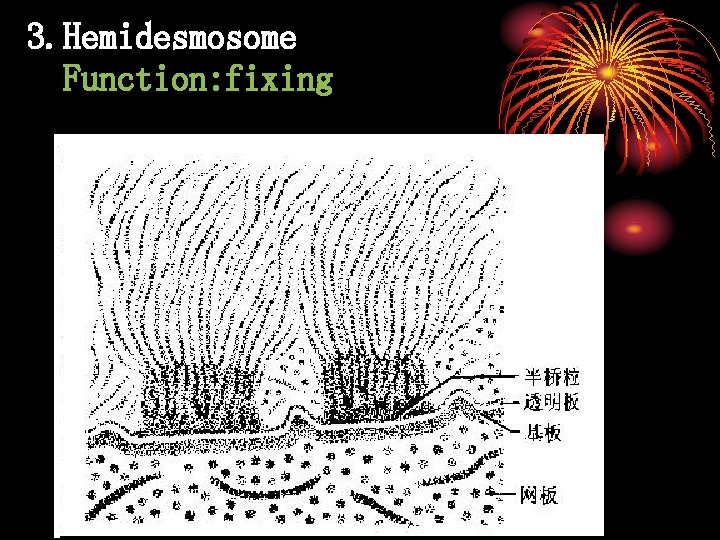
3. Hemidesmosome Function: fixing
- Slides: 45