
EpiReady EFFECTIVE TEAM RESPONSE STRATEGIES AND TACTICS Module
- Slides: 21
Epi-Ready EFFECTIVE TEAM RESPONSE – STRATEGIES AND TACTICS Module 9
Module Objectives By the end of this module, participants will be able to explain the elements associated with an effective team response. §Identify barriers to effective team response §Describe ways to overcome barriers to effective team response §Discover communication strategies that support effective team response 9 -2
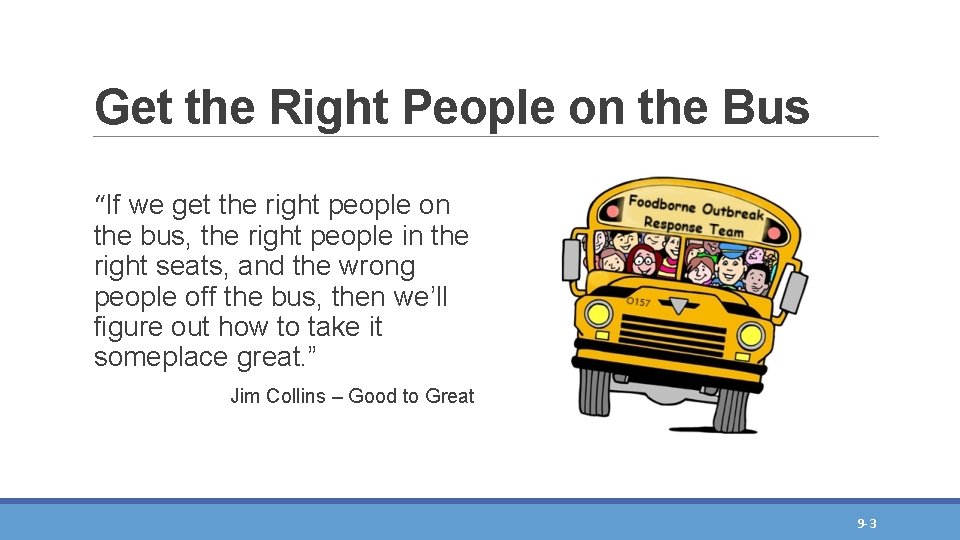
Get the Right People on the Bus “If we get the right people on the bus, the right people in the right seats, and the wrong people off the bus, then we’ll figure out how to take it someplace great. ” Jim Collins – Good to Great 9 -3
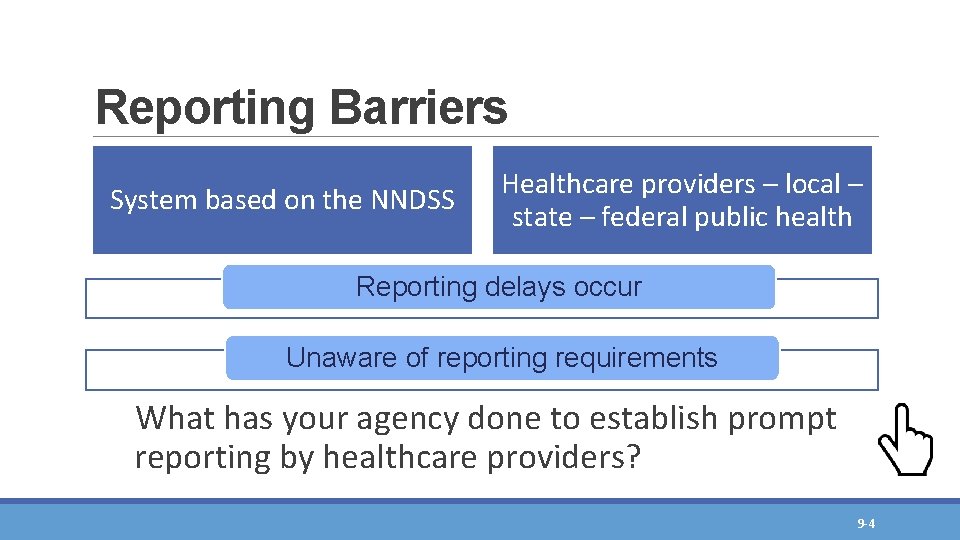
Reporting Barriers System based on the NNDSS Healthcare providers – local – state – federal public health Reporting delays occur Unaware of reporting requirements What has your agency done to establish prompt reporting by healthcare providers? 9 -4
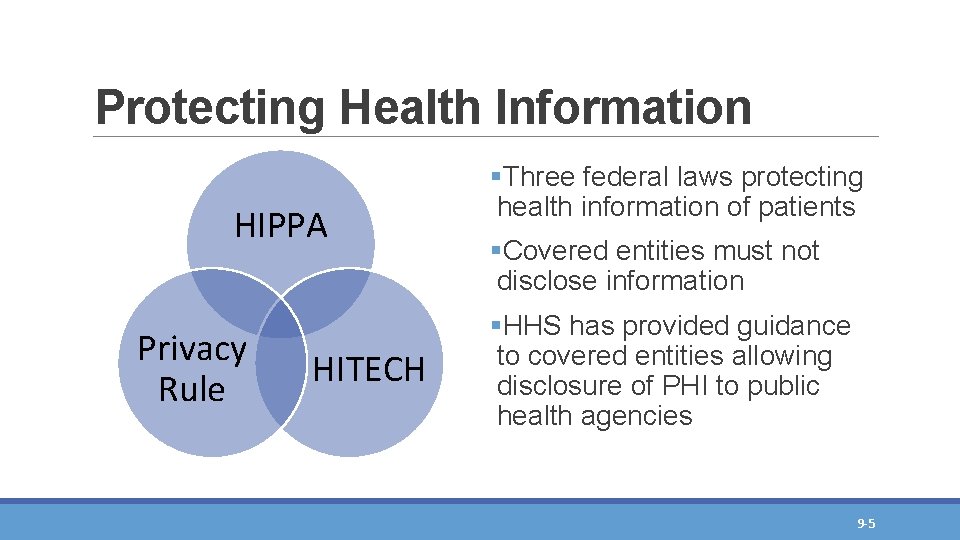
Protecting Health Information HIPPA Privacy Rule HITECH §Three federal laws protecting health information of patients §Covered entities must not disclose information §HHS has provided guidance to covered entities allowing disclosure of PHI to public health agencies 9 -5
Privacy Act Federal Government enacted the Privacy Act in 1974 - most states have similar laws §Agencies gather only what is necessary and relevant to their mission §No disclosure without consent §Individuals to have access to information held about them 9 -6
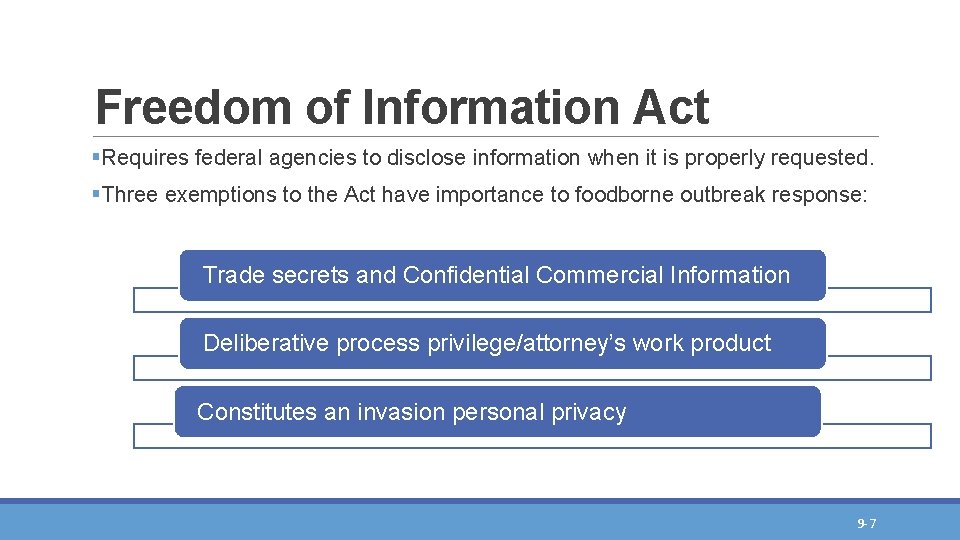
Freedom of Information Act §Requires federal agencies to disclose information when it is properly requested. §Three exemptions to the Act have importance to foodborne outbreak response: Trade secrets and Confidential Commercial Information Deliberative process privilege/attorney’s work product Constitutes an invasion personal privacy 9 -7
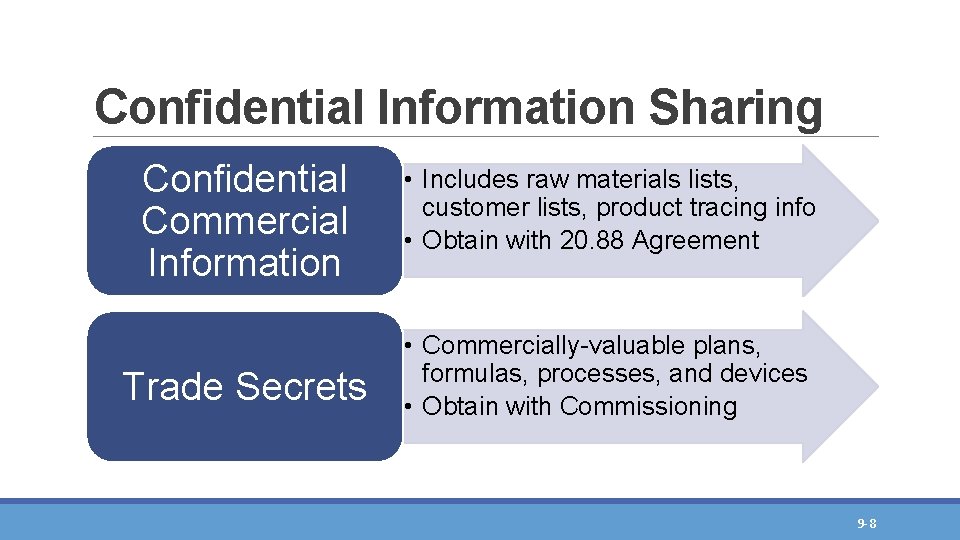
Confidential Information Sharing Confidential Commercial Information • Includes raw materials lists, customer lists, product tracing info • Obtain with 20. 88 Agreement Trade Secrets • Commercially-valuable plans, formulas, processes, and devices • Obtain with Commissioning 9 -8
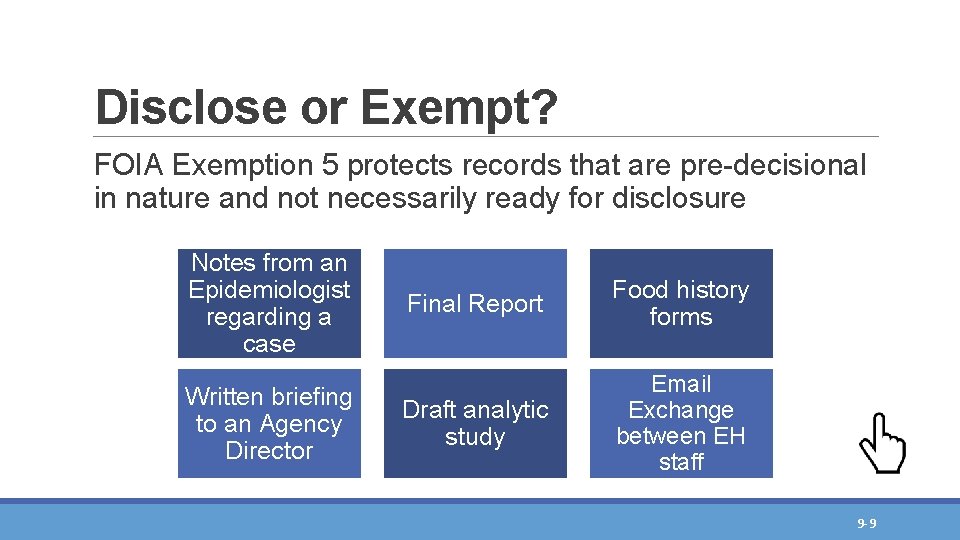
Disclose or Exempt? FOIA Exemption 5 protects records that are pre-decisional in nature and not necessarily ready for disclosure Notes from an Epidemiologist regarding a case Written briefing to an Agency Director Final Report Food history forms Draft analytic study Email Exchange between EH staff 9 -9
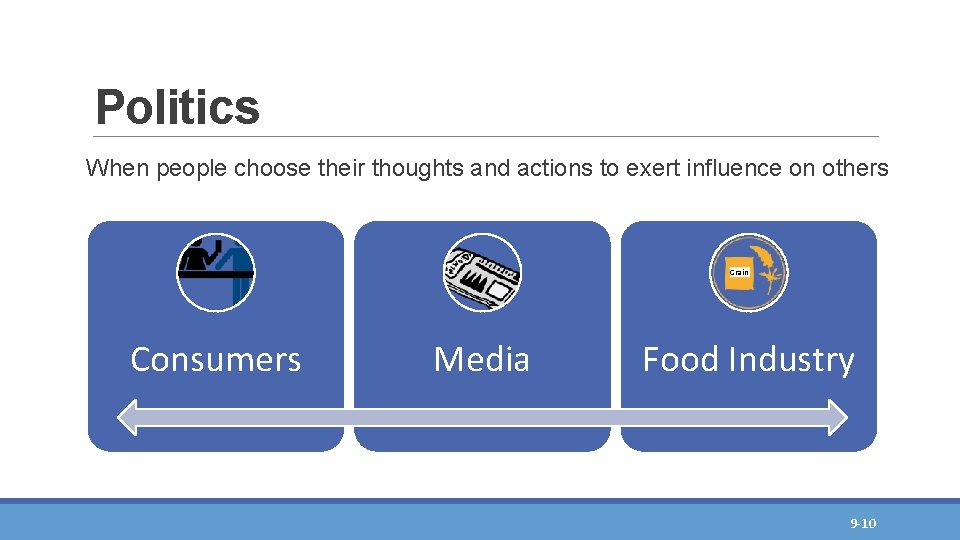
Politics When people choose their thoughts and actions to exert influence on others Grain Consumers Media Food Industry 9 -10
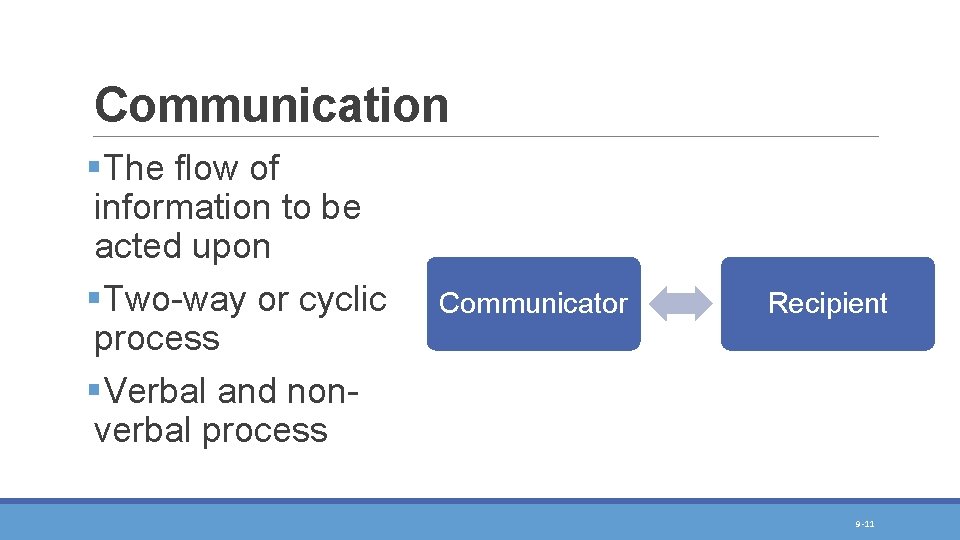
Communication §The flow of information to be acted upon §Two-way or cyclic process §Verbal and nonverbal process Communicator Recipient 9 -11
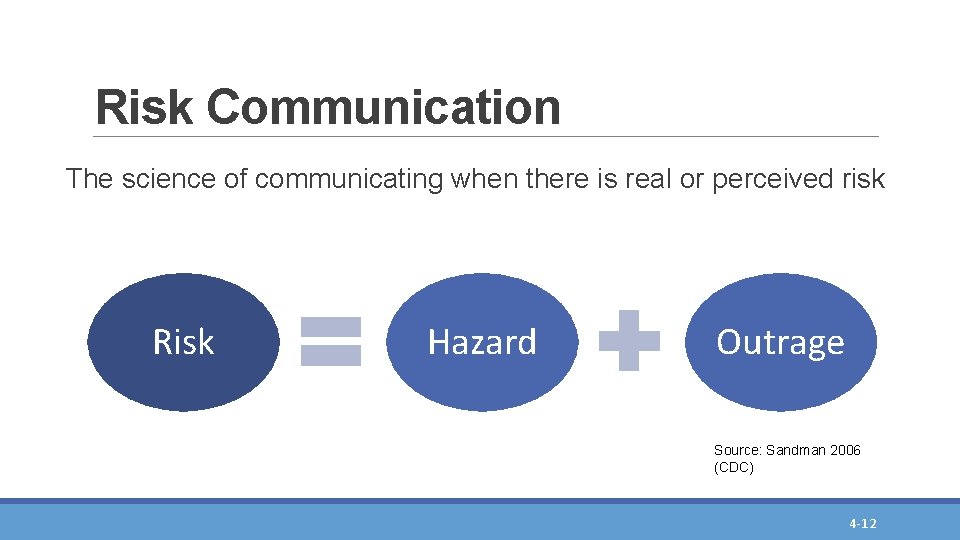
Risk Communication The science of communicating when there is real or perceived risk Risk Hazard Outrage Source: Sandman 2006 (CDC) 4 -12
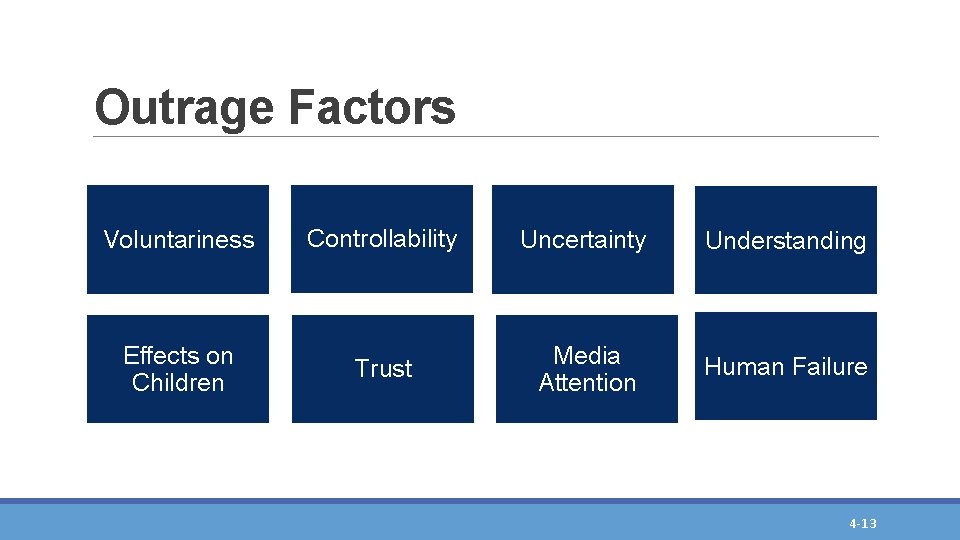
Outrage Factors Voluntariness Effects on Children Controllability Uncertainty Understanding Trust Media Attention Human Failure 4 -13
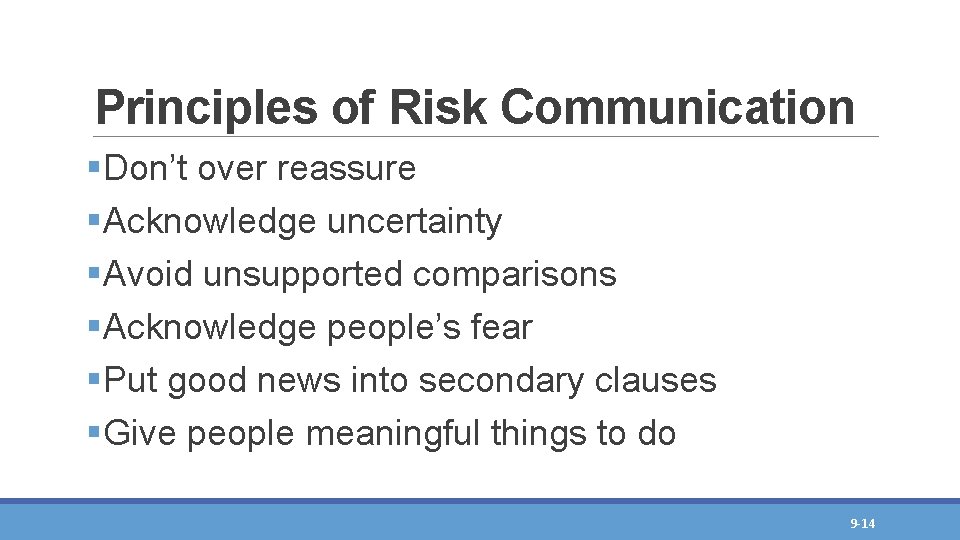
Principles of Risk Communication §Don’t over reassure §Acknowledge uncertainty §Avoid unsupported comparisons §Acknowledge people’s fear §Put good news into secondary clauses §Give people meaningful things to do 9 -14
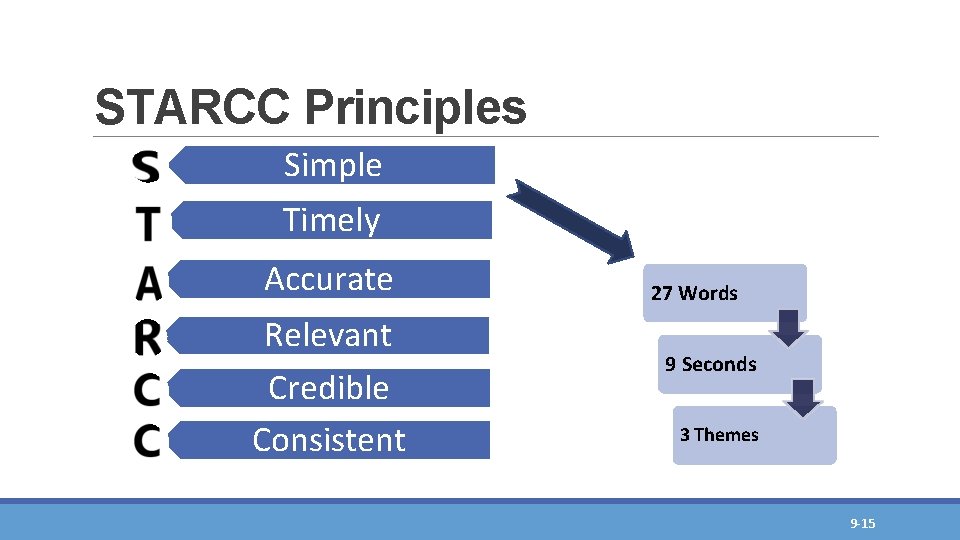
STARCC Principles Simple Timely Accurate Relevant Credible Consistent 27 Words 9 Seconds 3 Themes 9 -15
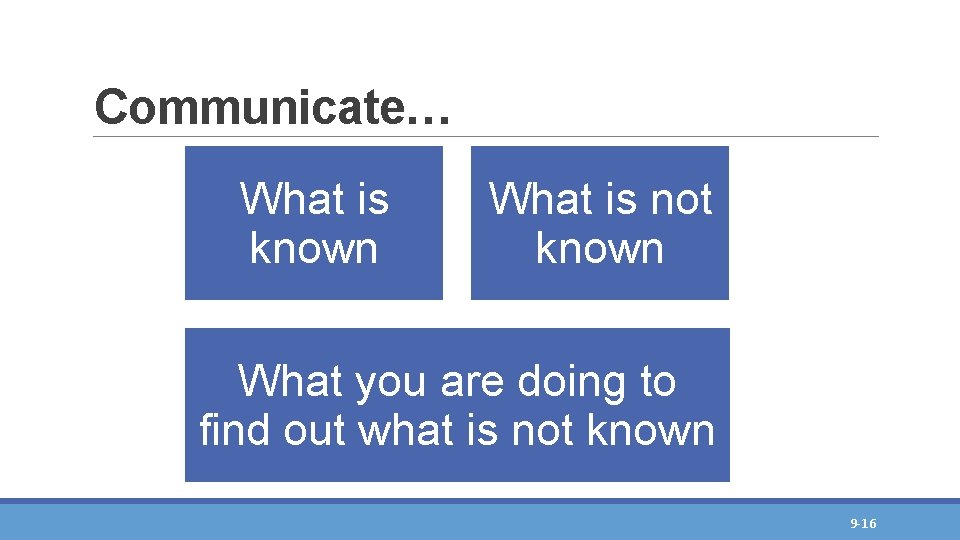
Communicate… What is known What is not known What you are doing to find out what is not known 9 -16
Activity § Work in table groups § 10 minutes to work § 10 minutes to report § Choose a spokesperson to deliver the message Given the information in the participant’s manual, generate a risk communication message that is consistent with the principles of risk communication and the message mapping principles of 279 -3. Record your responses in the space provided in the manual. 9 -17
Communication Methods Newsprint, Television, Radio Web pages and E-mail Social Media 9 -18
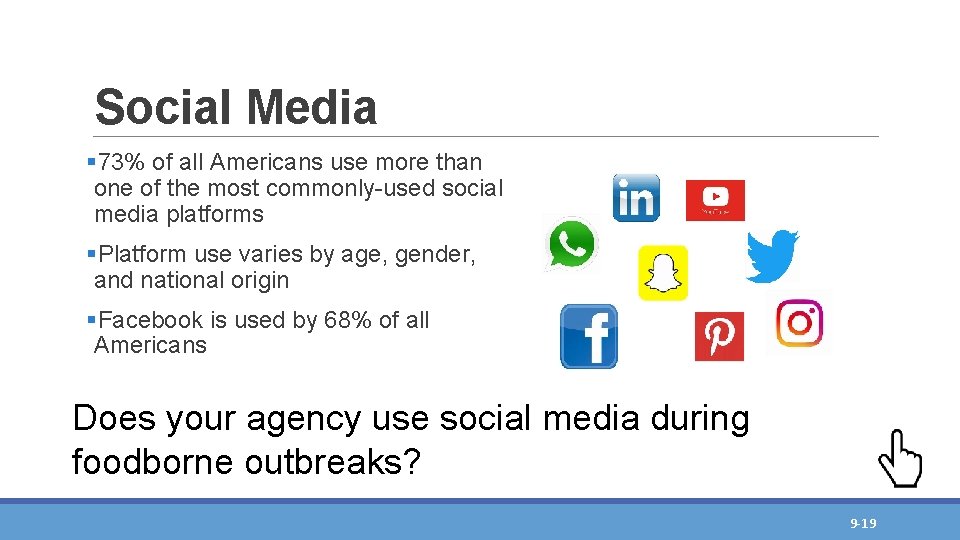
Social Media § 73% of all Americans use more than one of the most commonly-used social media platforms §Platform use varies by age, gender, and national origin §Facebook is used by 68% of all Americans Does your agency use social media during foodborne outbreaks? 9 -19
Summary Identify barriers to effective team response Describe ways to overcome barriers to effective team response Discover communication strategies that support effective team response 20
Coming Up Next The Value of Reporting 9 -21