
Epilepsy Updates Newer Antiepileptic Drugs and Rescue Aid
- Slides: 55
Epilepsy Updates Newer Antiepileptic Drugs and Rescue Aid Mikiko Takeda, M. S. , Pharm. D. , Ph. C Assistant Professor University of New Mexico College of Pharmacy 1
Leaning objectives Pharmacists To review pharmacology and pharmacokinetics of antiepileptic drugs (AEDs) and to detect possible adverse reactions at early stage. To review pharmacology and pharmacokinetics of newer AEDs and to explain the differences and similarities of newer AEDs. To select appropriate AED for patients with epilepsy and to monitor adequate labs for patient safety. Pharmacy technicians To review pharmacology and pharmacokinetics of antiepileptic drugs (AEDs). To update drug information on the newer AEDs. To identify major adverse reactions from AEDs for patient safety. 2
Epilepsy – definition Seizure Clinical manifestation of abnormal and excessive activity of cortical neurons Epilepsy Brain disorder characterized By an enduring predisposition to generate epileptic seizures and… By the neurobiologic, cognitive, psychological, and social consequences of the condition. Definition requires occurrence of at least one epileptic seizure. 3 Fisher RS. Et al. ILAE official report: a practical clinical definition of epilepsy. Epilepsia. 2014 Apr; 55(4): 475 -82.
Epilepsy – epidemiology Approximately 3 million Americans (3% of population) and 50 million people worldwide suffer from epilepsy Epilepsy affects more than 1. 1 million women of childbearing age in the United States Crude prevalence on the Navajo reservation: 13. 5 per 1, 000 Epilepsy prevalence in the United States: 5 -10 per 1, 000 Epilepsy Foundation, available from http: //epilepsyfoundation. org/aboutepilepsy/index. cfm Epilepsia 2009 Oct; 50(10): 2180 -5. Epub 2009 Jun 1. 4
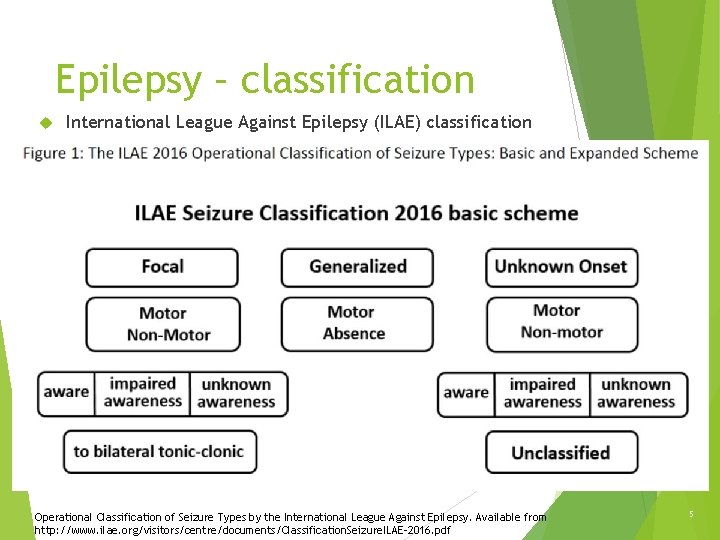
Epilepsy – classification International League Against Epilepsy (ILAE) classification Operational Classification of Seizure Types by the International League Against Epilepsy. Available from http: //www. ilae. org/visitors/centre/documents/Classification. Seizure. ILAE-2016. pdf 5
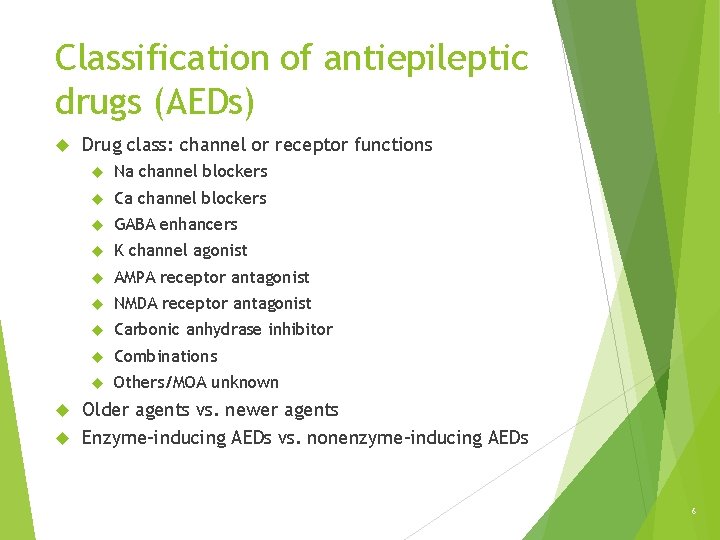
Classification of antiepileptic drugs (AEDs) Drug class: channel or receptor functions Na channel blockers Ca channel blockers GABA enhancers K channel agonist AMPA receptor antagonist NMDA receptor antagonist Carbonic anhydrase inhibitor Combinations Others/MOA unknown Older agents vs. newer agents Enzyme-inducing AEDs vs. nonenzyme-inducing AEDs 6
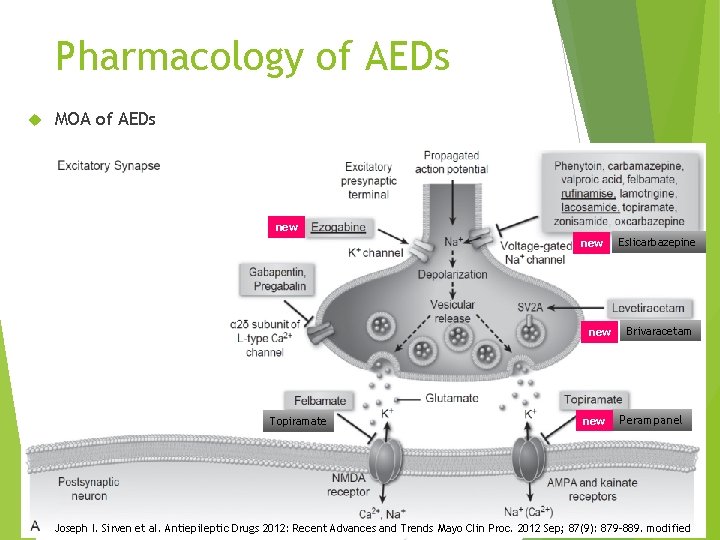
Pharmacology of AEDs MOA of AEDs new new Topiramate new Eslicarbazepine Brivaracetam Perampanel 7 Joseph I. Sirven et al. Antiepileptic Drugs 2012: Recent Advances and Trends Mayo Clin Proc. 2012 Sep; 87(9): 879– 889. modified
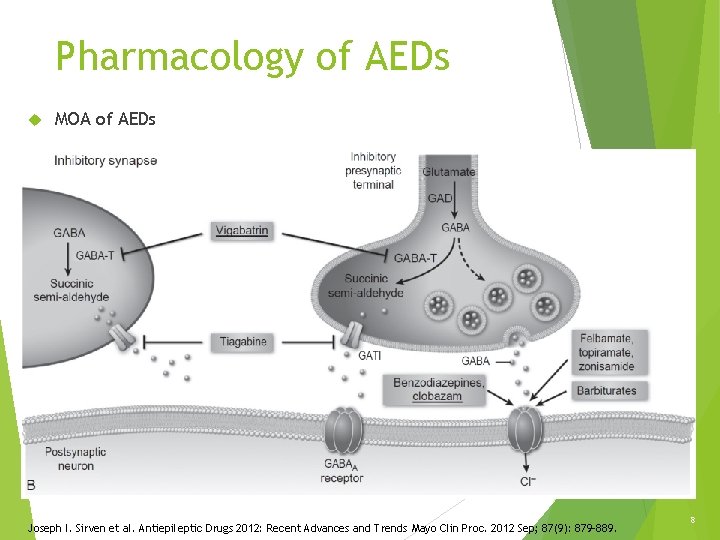
Pharmacology of AEDs MOA of AEDs Joseph I. Sirven et al. Antiepileptic Drugs 2012: Recent Advances and Trends Mayo Clin Proc. 2012 Sep; 87(9): 879– 889. 8
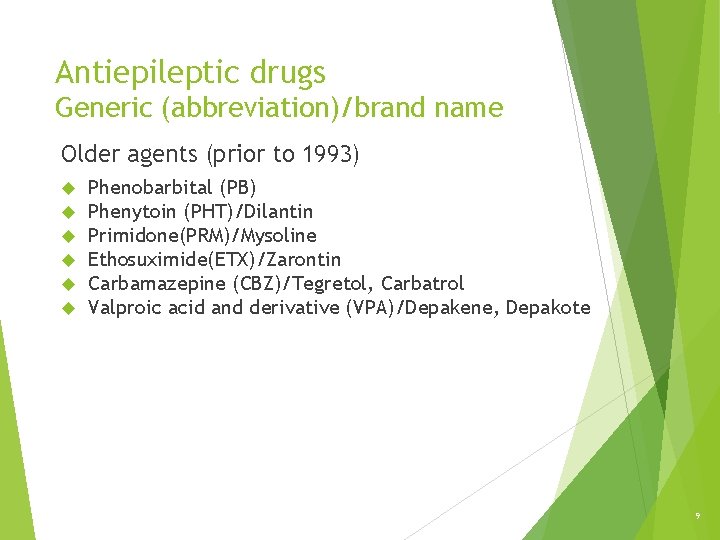
Antiepileptic drugs Generic (abbreviation)/brand name Older agents (prior to 1993) Phenobarbital (PB) Phenytoin (PHT)/Dilantin Primidone(PRM)/Mysoline Ethosuximide(ETX)/Zarontin Carbamazepine (CBZ)/Tegretol, Carbatrol Valproic acid and derivative (VPA)/Depakene, Depakote 9
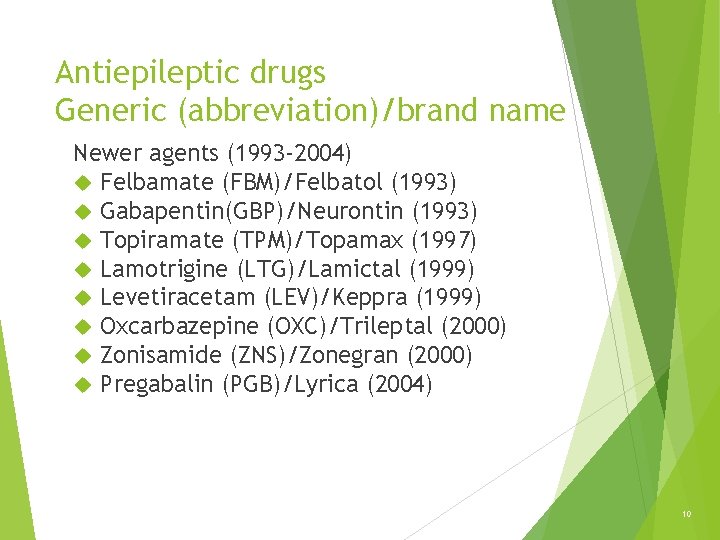
Antiepileptic drugs Generic (abbreviation)/brand name Newer agents (1993 -2004) Felbamate (FBM)/Felbatol (1993) Gabapentin(GBP)/Neurontin (1993) Topiramate (TPM)/Topamax (1997) Lamotrigine (LTG)/Lamictal (1999) Levetiracetam (LEV)/Keppra (1999) Oxcarbazepine (OXC)/Trileptal (2000) Zonisamide (ZNS)/Zonegran (2000) Pregabalin (PGB)/Lyrica (2004) 10
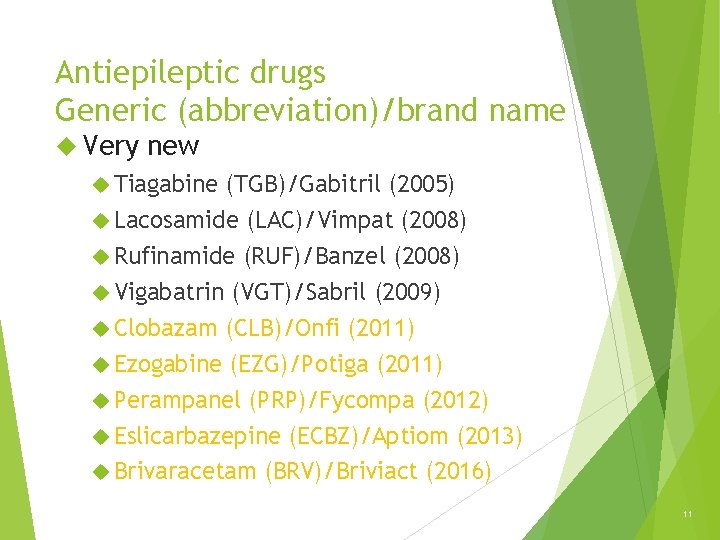
Antiepileptic drugs Generic (abbreviation)/brand name Very new Tiagabine (TGB)/Gabitril (2005) Lacosamide (LAC)/Vimpat (2008) Rufinamide (RUF)/Banzel (2008) Vigabatrin (VGT)/Sabril (2009) Clobazam (CLB)/Onfi (2011) Ezogabine (EZG)/Potiga (2011) Perampanel (PRP)/Fycompa (2012) Eslicarbazepine (ECBZ)/Aptiom (2013) Brivaracetam (BRV)/Briviact (2016) 11
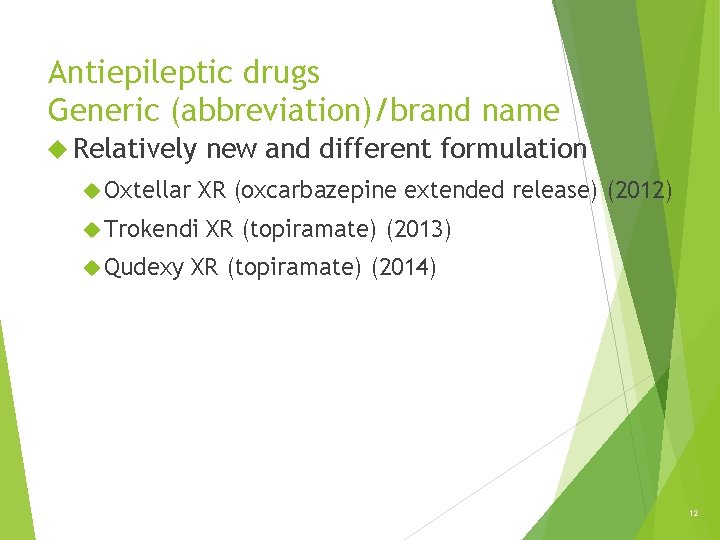
Antiepileptic drugs Generic (abbreviation)/brand name Relatively Oxtellar new and different formulation XR (oxcarbazepine extended release) (2012) Trokendi Qudexy XR (topiramate) (2013) XR (topiramate) (2014) 12
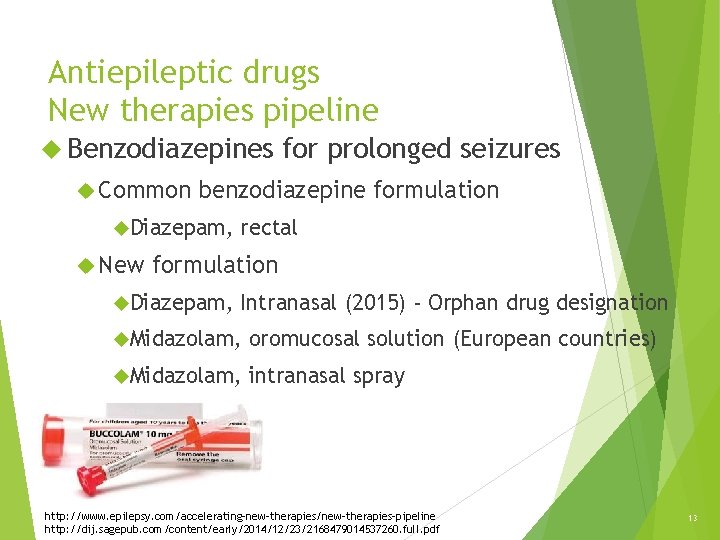
Antiepileptic drugs New therapies pipeline Benzodiazepines Common benzodiazepine formulation Diazepam, New for prolonged seizures rectal formulation Diazepam, Intranasal (2015) - Orphan drug designation Midazolam, oromucosal solution (European countries) Midazolam, intranasal spray http: //www. epilepsy. com/accelerating-new-therapies/new-therapies-pipeline http: //dij. sagepub. com/content/early/2014/12/23/2168479014537260. full. pdf 13
Epilepsy Updates Newer Antiepileptic Drugs 14
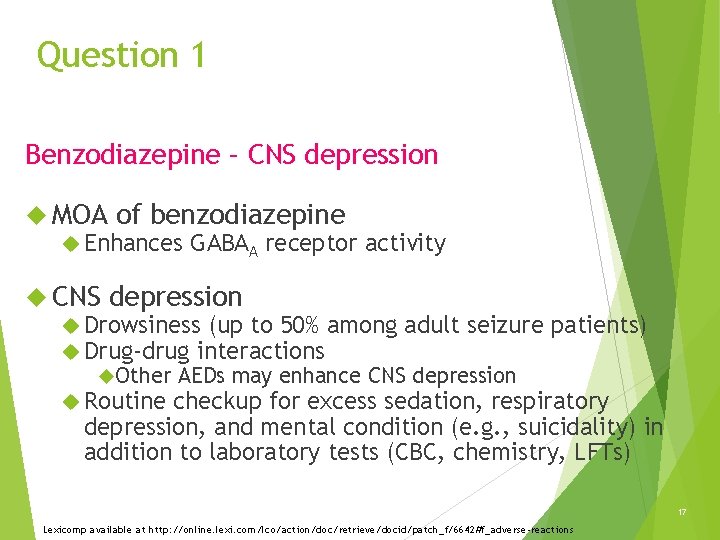
Question 1 Benzodiazepine AB is a 14 -year-old female who suffers from generalized tonic clonic seizures. At her last visit, her neurologist prescribed clonazepam, and since then, her seizures have been well controlled. Her mother said that add-on clonazepam significantly decreased seizure frequency. However, AB complains about severe daytime sleepiness. AEDs Levetiracetam 1, 000 mg po twice daily (50 mg/kg/day) Clonazepam 0. 5 mg po three times daily 15
VOTE A. MOA-related adverse reaction B. Non-MOA-related adverse reaction/unclear 16
Question 1 Benzodiazepine – CNS depression MOA of benzodiazepine Enhances GABAA receptor activity CNS depression Drowsiness (up to 50% among adult seizure patients) Drug-drug interactions Other AEDs may enhance CNS depression Routine checkup for excess sedation, respiratory depression, and mental condition (e. g. , suicidality) in addition to laboratory tests (CBC, chemistry, LFTs) 17 Lexicomp available at http: //online. lexi. com/lco/action/doc/retrieve/docid/patch_f/6642#f_adverse-reactions
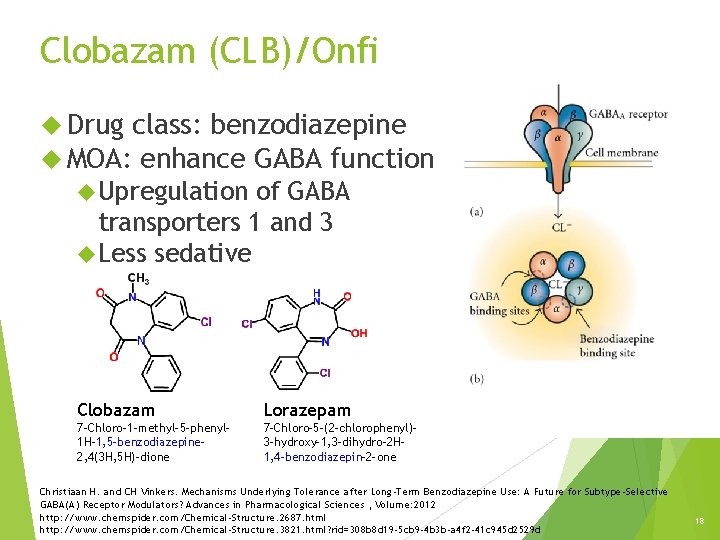
Clobazam (CLB)/Onfi Drug class: benzodiazepine MOA: enhance GABA function Upregulation of GABA transporters 1 and 3 Less sedative Clobazam Lorazepam 7 -Chloro-1 -methyl-5 -phenyl 1 H-1, 5 -benzodiazepine 2, 4(3 H, 5 H)-dione 7 -Chloro-5 -(2 -chlorophenyl)3 -hydroxy-1, 3 -dihydro-2 H 1, 4 -benzodiazepin-2 -one Christiaan H. and CH Vinkers. Mechanisms Underlying Tolerance after Long-Term Benzodiazepine Use: A Future for Subtype-Selective GABA(A) Receptor Modulators? Advances in Pharmacological Sciences , Volume: 2012 http: //www. chemspider. com/Chemical-Structure. 2687. html http: //www. chemspider. com/Chemical-Structure. 3821. html? rid=308 b 8 d 19 -5 cb 9 -4 b 3 b-a 4 f 2 -41 c 945 d 2529 d 18
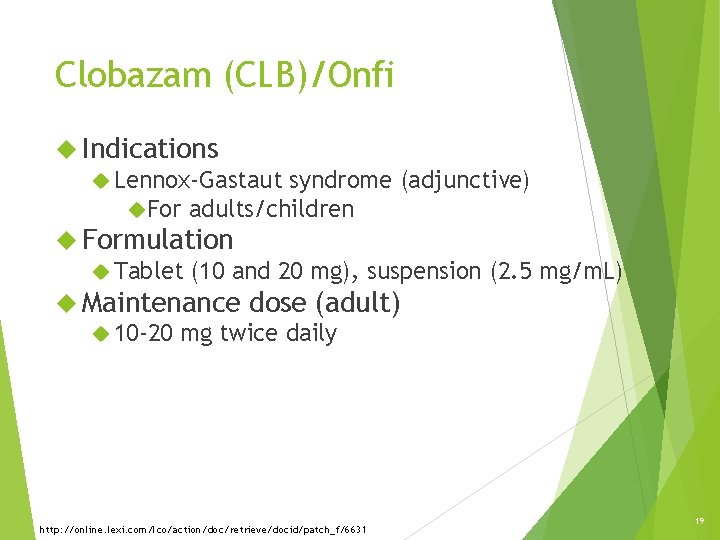
Clobazam (CLB)/Onfi Indications Lennox-Gastaut syndrome (adjunctive) For adults/children Formulation Tablet (10 and 20 mg), suspension (2. 5 mg/m. L) Maintenance dose (adult) 10 -20 mg twice daily http: //online. lexi. com/lco/action/doc/retrieve/docid/patch_f/6631 19
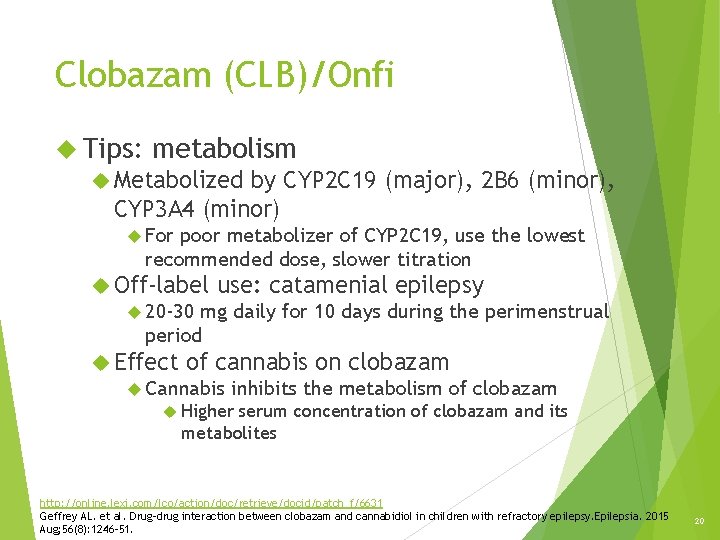
Clobazam (CLB)/Onfi Tips: metabolism Metabolized by CYP 2 C 19 (major), 2 B 6 (minor), CYP 3 A 4 (minor) For poor metabolizer of CYP 2 C 19, use the lowest recommended dose, slower titration Off-label use: catamenial epilepsy 20 -30 mg daily for 10 days during the perimenstrual period Effect of cannabis on clobazam Cannabis inhibits the metabolism of clobazam Higher serum concentration of clobazam and its metabolites http: //online. lexi. com/lco/action/doc/retrieve/docid/patch_f/6631 Geffrey AL. et al. Drug-drug interaction between clobazam and cannabidiol in children with refractory epilepsy. Epilepsia. 2015 Aug; 56(8): 1246 -51. 20
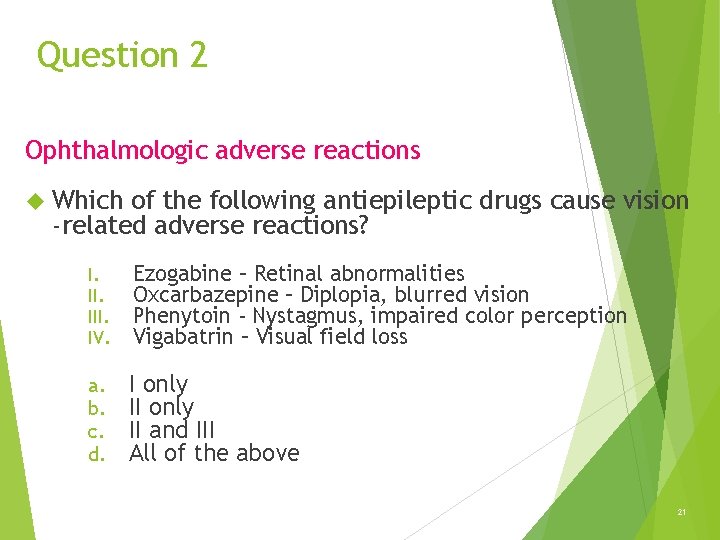
Question 2 Ophthalmologic adverse reactions Which of the following antiepileptic drugs cause vision -related adverse reactions? I. III. IV. Ezogabine – Retinal abnormalities Oxcarbazepine – Diplopia, blurred vision Phenytoin - Nystagmus, impaired color perception Vigabatrin – Visual field loss a. b. c. d. I only II and III All of the above 21
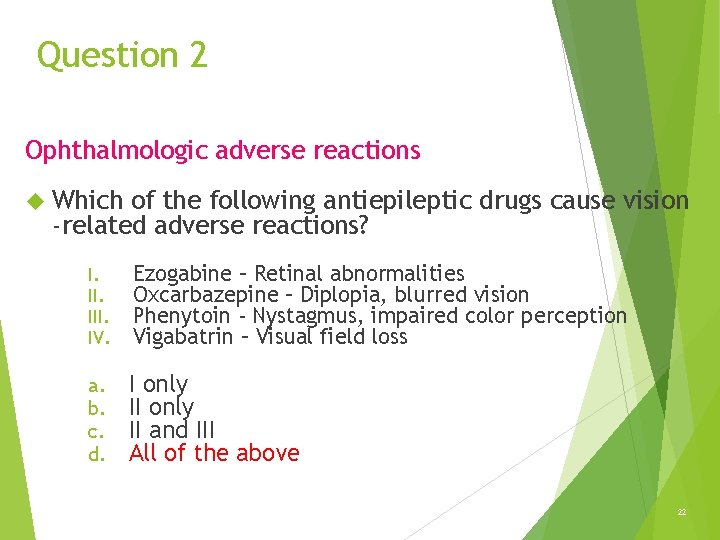
Question 2 Ophthalmologic adverse reactions Which of the following antiepileptic drugs cause vision -related adverse reactions? I. III. IV. Ezogabine – Retinal abnormalities Oxcarbazepine – Diplopia, blurred vision Phenytoin - Nystagmus, impaired color perception Vigabatrin – Visual field loss a. b. c. d. I only II and III All of the above 22
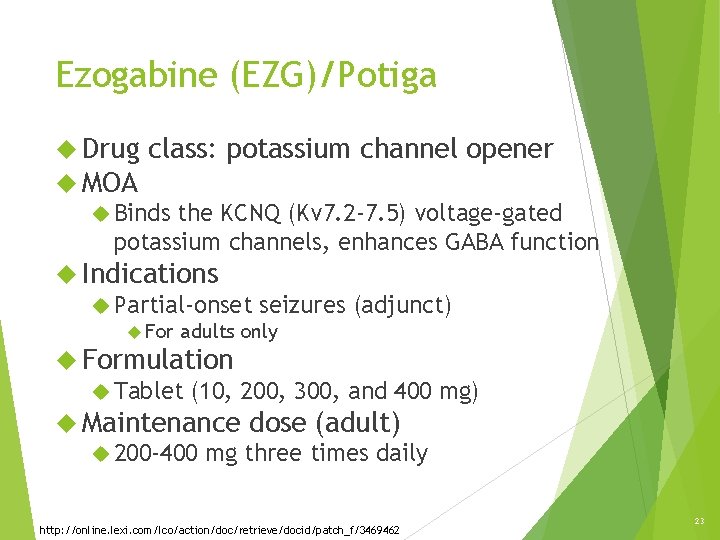
Ezogabine (EZG)/Potiga Drug class: potassium channel opener MOA Binds the KCNQ (Kv 7. 2 -7. 5) voltage-gated potassium channels, enhances GABA function Indications Partial-onset seizures (adjunct) For adults only Formulation Tablet (10, 200, 300, and 400 mg) Maintenance dose (adult) 200 -400 mg three times daily http: //online. lexi. com/lco/action/doc/retrieve/docid/patch_f/3469462 23
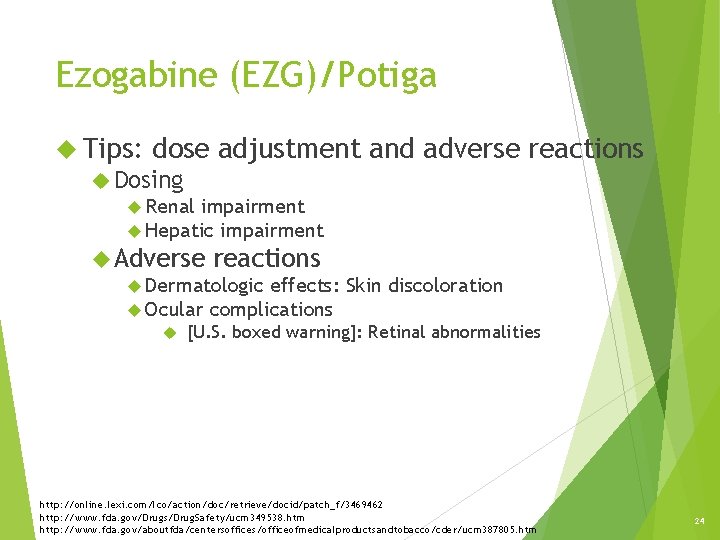
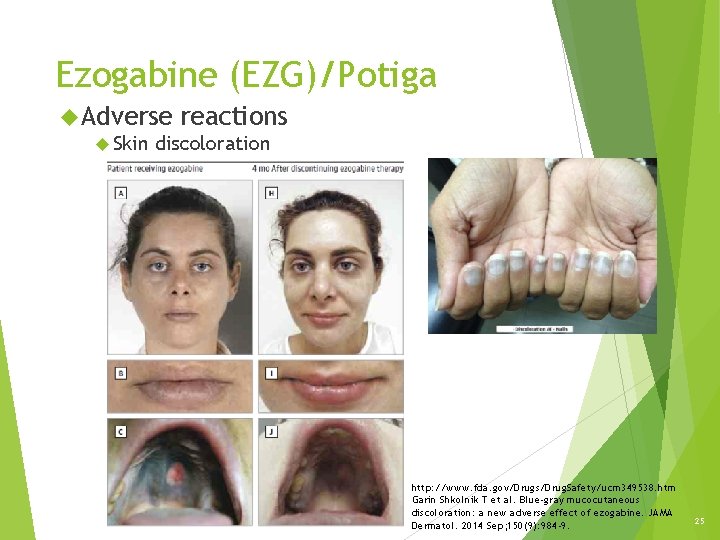
Ezogabine (EZG)/Potiga Tips: dose Dosing adjustment and adverse reactions Renal impairment Hepatic impairment Adverse reactions Dermatologic effects: Ocular complications Skin discoloration [U. S. boxed warning]: Retinal abnormalities http: //online. lexi. com/lco/action/doc/retrieve/docid/patch_f/3469462 http: //www. fda. gov/Drugs/Drug. Safety/ucm 349538. htm http: //www. fda. gov/aboutfda/centersoffices/officeofmedicalproductsandtobacco/cder/ucm 387805. htm 24
Ezogabine (EZG)/Potiga Adverse Skin reactions discoloration http: //www. fda. gov/Drugs/Drug. Safety/ucm 349538. htm Garin Shkolnik T et al. Blue-gray mucocutaneous discoloration: a new adverse effect of ezogabine. JAMA Dermatol. 2014 Sep; 150(9): 984 -9. 25
Question 3 Control substance in antiepileptic drugs Which of the following antiepileptic drugs is (are) a controlled substance, schedule 3(III) drug(s)? I. III. IV. Ezogabine Clobazam Perampanel Pregabalin a. b. c. d. I only II and III All of the above 26
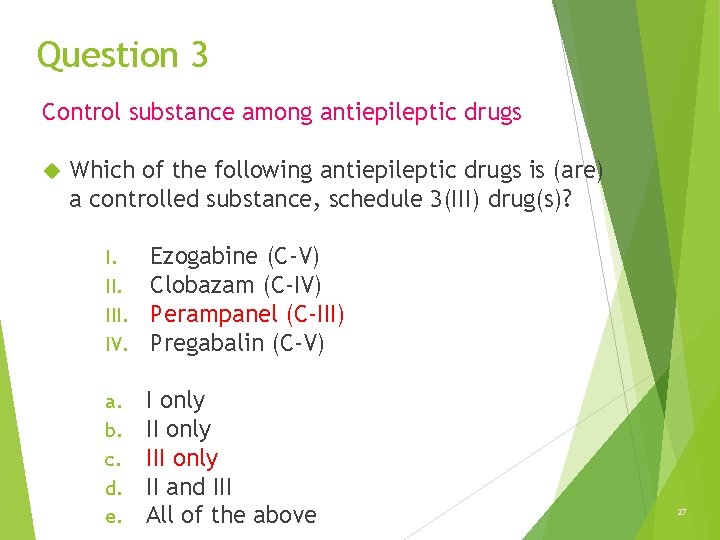
Question 3 Control substance among antiepileptic drugs Which of the following antiepileptic drugs is (are) a controlled substance, schedule 3(III) drug(s)? I. III. IV. Ezogabine (C-V) Clobazam (C-IV) Perampanel (C-III) Pregabalin (C-V) a. b. c. d. e. I only III only II and III All of the above 27
Perampanel (PRP)/Fycompa Drug class: AMPA glutamate receptor antagonist MOA Binds to alpha-amino-3 -hydroxy-5 -methyl-4 isoxazolepropionic acid (AMPA) glutamate receptor on postsynaptic neurons Glutamate: Neuro excitatory neurotransmitter Indications Partial-onset seizures (adjunct) and primary generalized tonic-clonic seizures (adjunct) For adults and children Children ≥ 12 years and adolescents only http: //online. lexi. com/lco/action/doc/retrieve/docid/patch_f/4005002 28
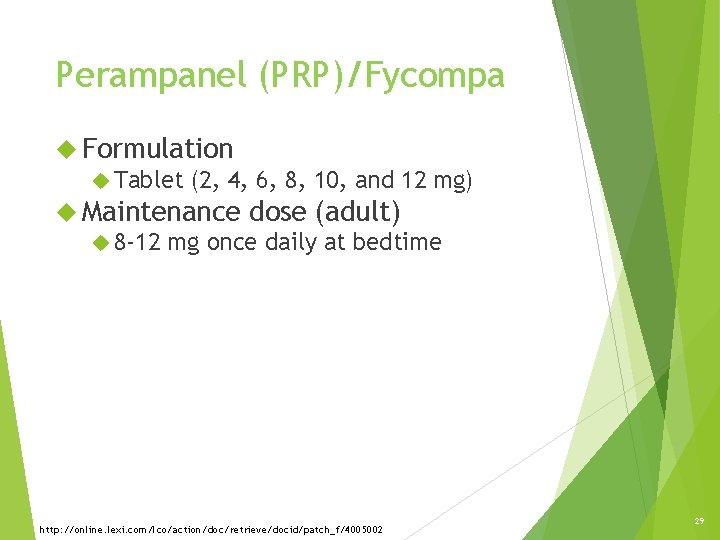
Perampanel (PRP)/Fycompa Formulation Tablet (2, 4, 6, 8, 10, and 12 mg) Maintenance dose (adult) 8 -12 mg once daily at bedtime http: //online. lexi. com/lco/action/doc/retrieve/docid/patch_f/4005002 29
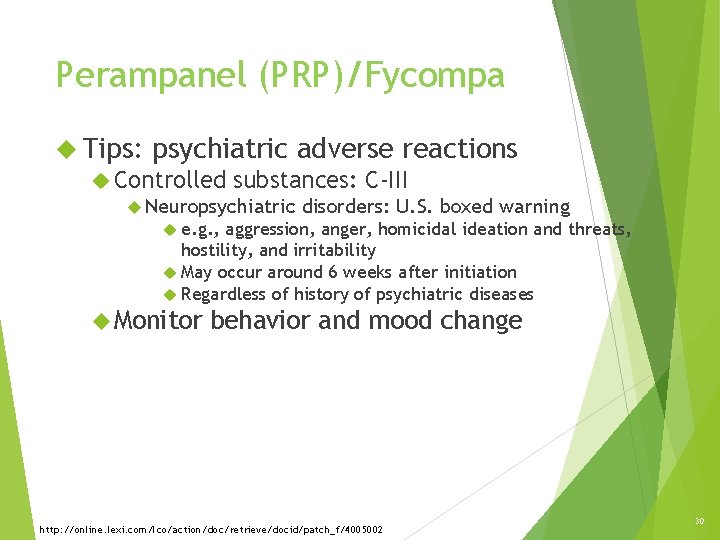
Perampanel (PRP)/Fycompa Tips: psychiatric adverse reactions Controlled substances: C-III Neuropsychiatric disorders: U. S. boxed warning e. g. , aggression, anger, homicidal ideation and threats, hostility, and irritability May occur around 6 weeks after initiation Regardless of history of psychiatric diseases Monitor behavior and mood change http: //online. lexi. com/lco/action/doc/retrieve/docid/patch_f/4005002 30
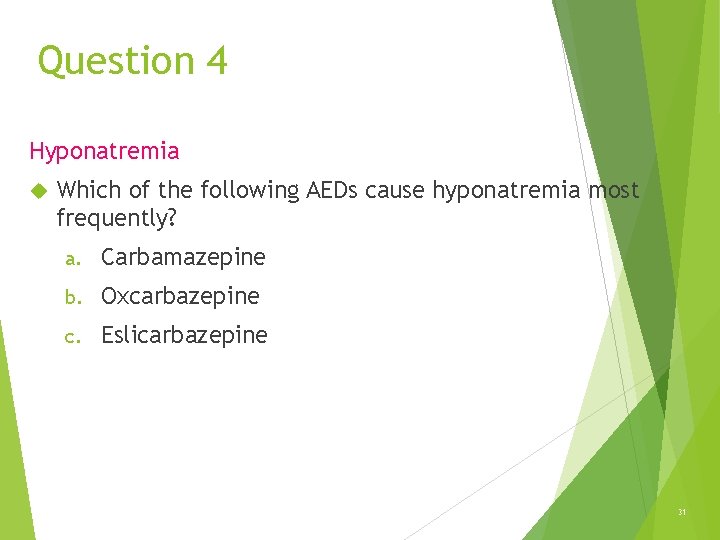
Question 4 Hyponatremia Which of the following AEDs cause hyponatremia most frequently? a. Carbamazepine b. Oxcarbazepine c. Eslicarbazepine 31
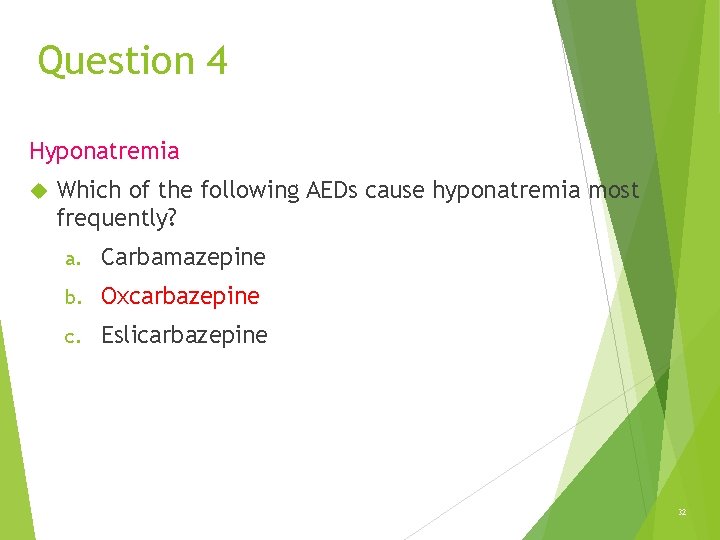
Question 4 Hyponatremia Which of the following AEDs cause hyponatremia most frequently? a. Carbamazepine b. Oxcarbazepine c. Eslicarbazepine 32
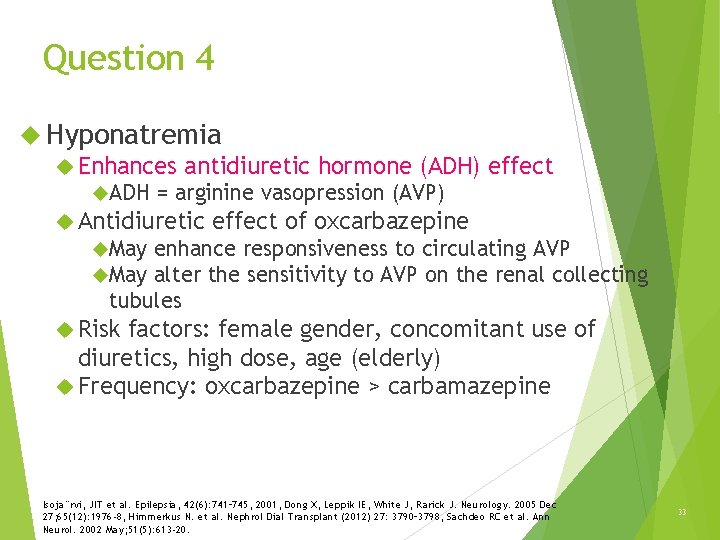
Question 4 Hyponatremia Enhances antidiuretic hormone (ADH) effect ADH = arginine vasopression (AVP) Antidiuretic effect of oxcarbazepine May enhance responsiveness to circulating AVP May alter the sensitivity to AVP on the renal collecting tubules Risk factors: female gender, concomitant use of diuretics, high dose, age (elderly) Frequency: oxcarbazepine > carbamazepine Isoja¨rvi, JIT et al. Epilepsia, 42(6): 741– 745, 2001, Dong X, Leppik IE, White J, Rarick J. Neurology. 2005 Dec 27; 65(12): 1976 -8, Himmerkus N. et al. Nephrol Dial Transplant (2012) 27: 3790– 3798, Sachdeo RC et al. Ann Neurol. 2002 May; 51(5): 613 -20. 33
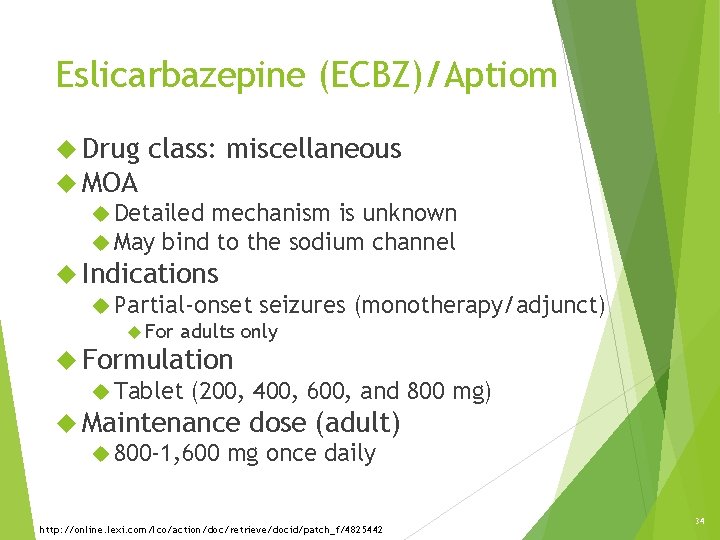
Eslicarbazepine (ECBZ)/Aptiom Drug class: miscellaneous MOA Detailed mechanism is unknown May bind to the sodium channel Indications Partial-onset seizures (monotherapy/adjunct) For adults only Formulation Tablet (200, 400, 600, and 800 mg) Maintenance dose (adult) 800 -1, 600 mg once daily http: //online. lexi. com/lco/action/doc/retrieve/docid/patch_f/4825442 34
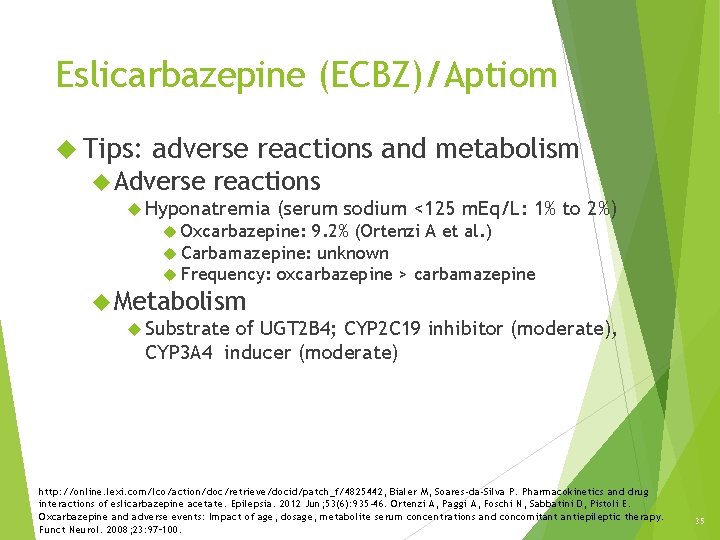
Eslicarbazepine (ECBZ)/Aptiom Tips: adverse reactions and metabolism Adverse reactions Hyponatremia (serum sodium <125 m. Eq/L: 1% to 2%) Oxcarbazepine: 9. 2% (Ortenzi A et al. ) Carbamazepine: unknown Frequency: oxcarbazepine > carbamazepine Metabolism Substrate of UGT 2 B 4; CYP 2 C 19 inhibitor (moderate), CYP 3 A 4 inducer (moderate) http: //online. lexi. com/lco/action/doc/retrieve/docid/patch_f/4825442, Bialer M, Soares-da-Silva P. Pharmacokinetics and drug interactions of eslicarbazepine acetate. Epilepsia. 2012 Jun; 53(6): 935 -46. Ortenzi A, Paggi A, Foschi N, Sabbatini D, Pistoli E. Oxcarbazepine and adverse events: Impact of age, dosage, metabolite serum concentrations and concomitant antiepileptic therapy. Funct Neurol. 2008; 23: 97– 100. 35
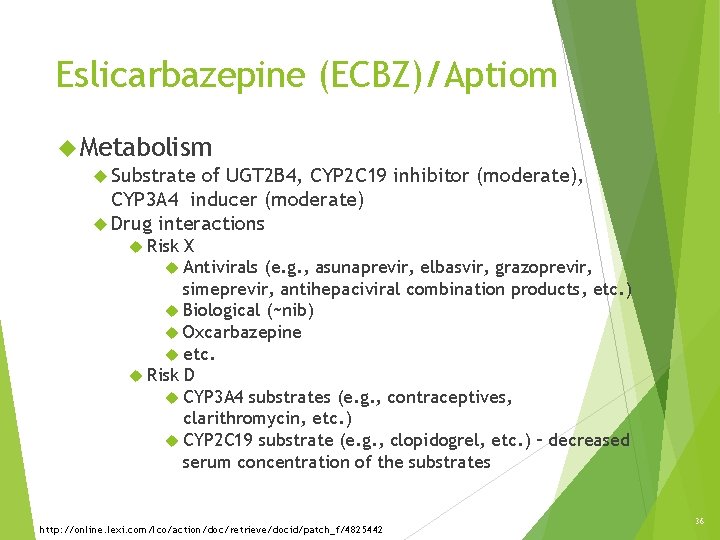
Eslicarbazepine (ECBZ)/Aptiom Metabolism Substrate of UGT 2 B 4, CYP 2 C 19 inhibitor (moderate), CYP 3 A 4 inducer (moderate) Drug interactions Risk X Antivirals (e. g. , asunaprevir, elbasvir, grazoprevir, simeprevir, antihepaciviral combination products, etc. ) Biological (~nib) Oxcarbazepine etc. Risk D CYP 3 A 4 substrates (e. g. , contraceptives, clarithromycin, etc. ) CYP 2 C 19 substrate (e. g. , clopidogrel, etc. ) – decreased serum concentration of the substrates http: //online. lexi. com/lco/action/doc/retrieve/docid/patch_f/4825442 36
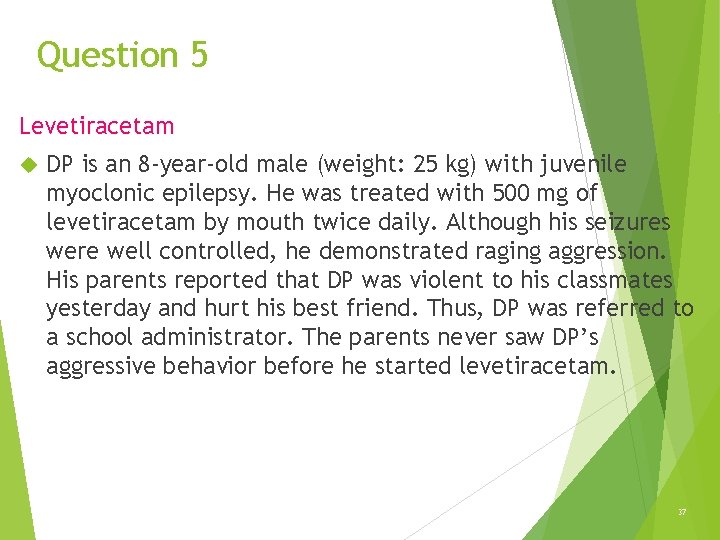
Question 5 Levetiracetam DP is an 8 -year-old male (weight: 25 kg) with juvenile myoclonic epilepsy. He was treated with 500 mg of levetiracetam by mouth twice daily. Although his seizures were well controlled, he demonstrated raging aggression. His parents reported that DP was violent to his classmates yesterday and hurt his best friend. Thus, DP was referred to a school administrator. The parents never saw DP’s aggressive behavior before he started levetiracetam. 37
VOTE A. MOA-related adverse reaction B. Non-MOA-related adverse reaction/unclear 38
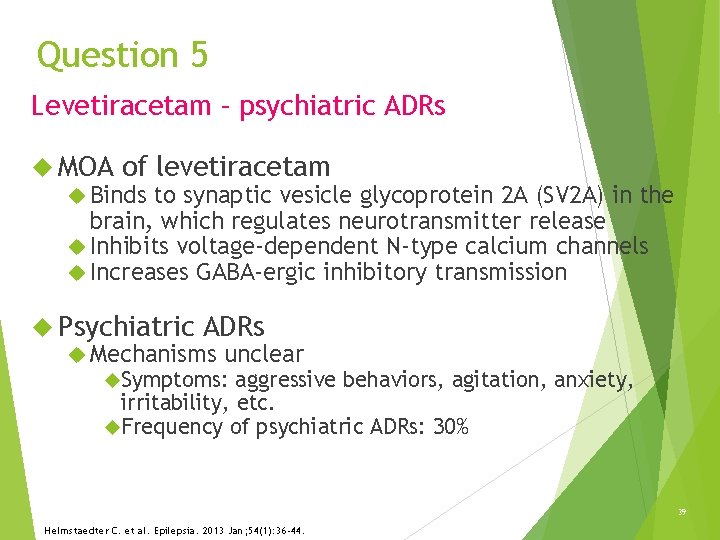
Question 5 Levetiracetam – psychiatric ADRs MOA of levetiracetam Binds to synaptic vesicle glycoprotein 2 A (SV 2 A) in the brain, which regulates neurotransmitter release Inhibits voltage-dependent N-type calcium channels Increases GABA-ergic inhibitory transmission Psychiatric ADRs Mechanisms unclear Symptoms: aggressive behaviors, agitation, anxiety, irritability, etc. Frequency of psychiatric ADRs: 30% 39 Helmstaedter C. et al. Epilepsia. 2013 Jan; 54(1): 36 -44.
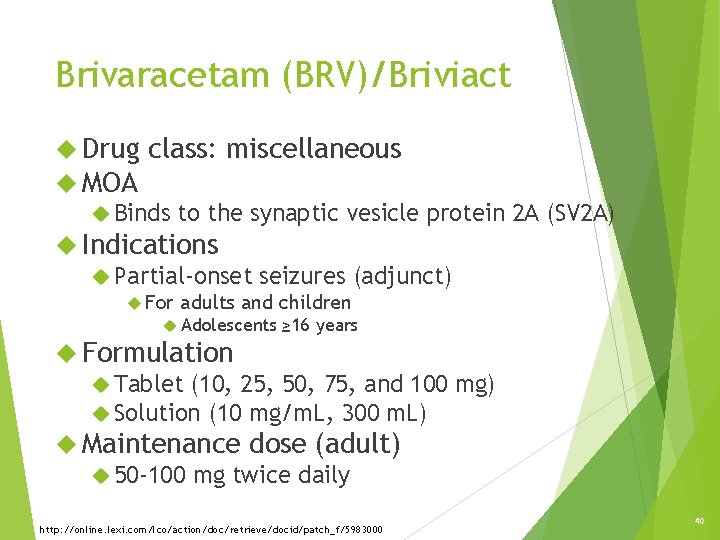
Brivaracetam (BRV)/Briviact Drug class: miscellaneous MOA Binds to the synaptic vesicle protein 2 A (SV 2 A) Indications Partial-onset seizures (adjunct) For adults and children Adolescents ≥ 16 years Formulation Tablet (10, 25, 50, 75, and 100 mg) Solution (10 mg/m. L, 300 m. L) Maintenance dose (adult) 50 -100 mg twice daily http: //online. lexi. com/lco/action/doc/retrieve/docid/patch_f/5983000 40
Brivaracetam (BRV)/Briviact Tips: titration Initiation schedule Relatively short titration 25 -50 mg po twice daily period Discontinuation Gradual titration Reduce the dose by 50 mg/day on a weekly basis (Canadian label) http: //online. lexi. com/lco/action/doc/retrieve/docid/patch_f/5983000 41
Epilepsy Updates Rescue Agents 42
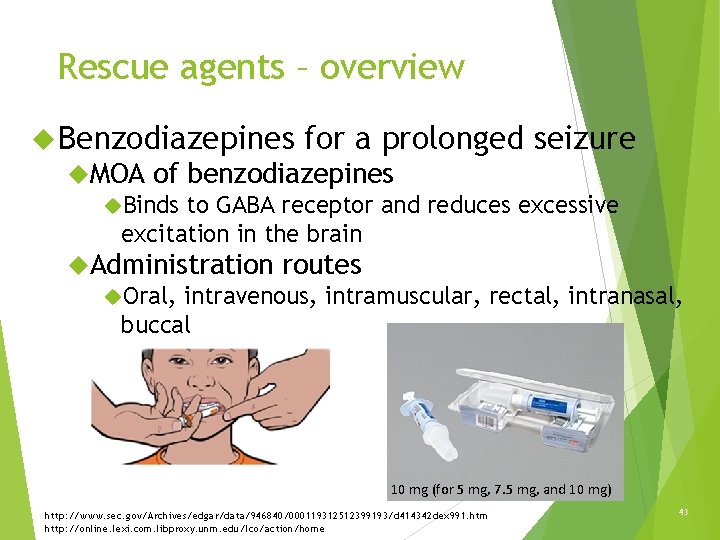
Rescue agents – overview Benzodiazepines for a prolonged seizure MOA of benzodiazepines Binds to GABA receptor and reduces excessive excitation in the brain Administration routes Oral, intravenous, intramuscular, rectal, intranasal, buccal 10 mg (for 5 mg, 7. 5 mg, and 10 mg) http: //www. sec. gov/Archives/edgar/data/946840/000119312512399193/d 414342 dex 991. htm http: //online. lexi. com. libproxy. unm. edu/lco/action/home 43
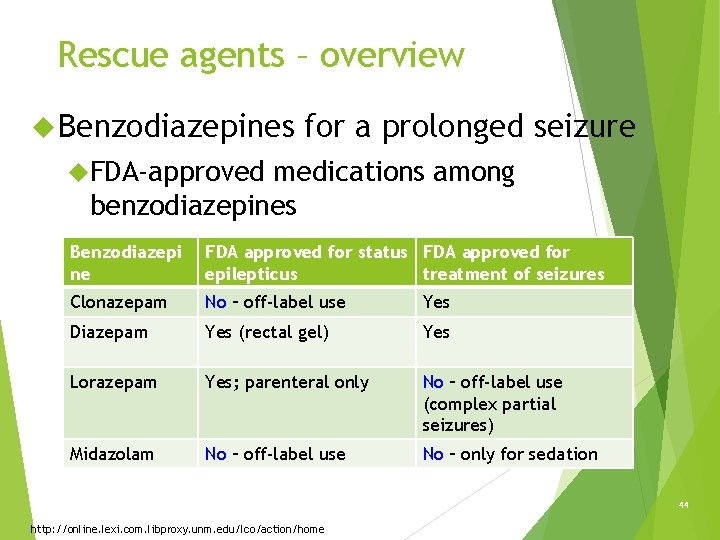
Rescue agents – overview Benzodiazepines for a prolonged seizure FDA-approved medications among benzodiazepines Benzodiazepi ne FDA approved for status FDA approved for epilepticus treatment of seizures Clonazepam No – off-label use Yes Diazepam Yes (rectal gel) Yes Lorazepam Yes; parenteral only No – off-label use (complex partial seizures) Midazolam No – off-label use No – only for sedation 44 http: //online. lexi. com. libproxy. unm. edu/lco/action/home
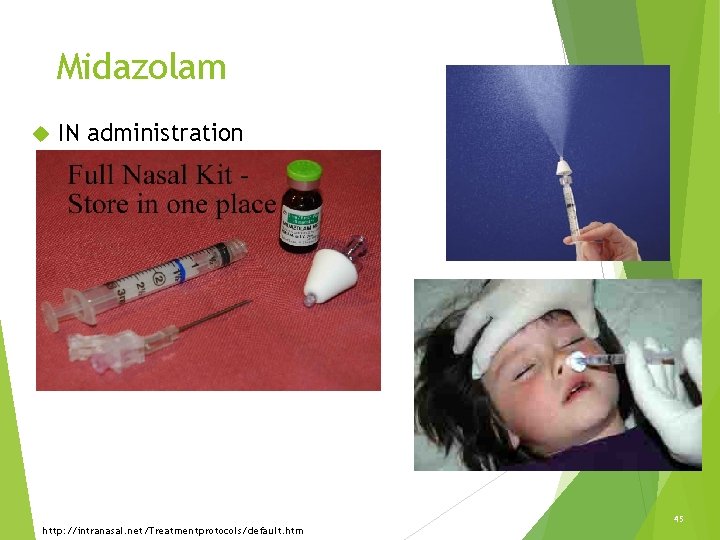
Midazolam IN administration http: //intranasal. net/Treatmentprotocols/default. htm 45
Midazolam Administration route: IM or IN Formulation: Solution for IV, IM, IN, Buccal Syrup for PO Buccal (UK) Dosing for prehospital treatment: 13 -40 Kg: 5 mg once > 40 Kg: 10 mg once Cost: 5 mg/m. L (1 m. L, preservative free): $1. 56 46
Midazolam - Pharmacokinetics Onset IM (adults): 15 minutes; peak plasma effect within 1 hour IM (children): 5 minutes; peak plasma effect within 30 minutes IN (children): 4 -8 Minutes Duration IM (adults): Two hours IN (children): 18 -41 minutes Bioavailability (adult data): 90% Half-life: Two to six hours 47
Midazolam Why IN administration? Efficacy Same as rectal diazepam Convenience Easy preparation Easy administration Cost effectiveness Inexpensive Social compared with diazepam rectal factor Can be used in public 48
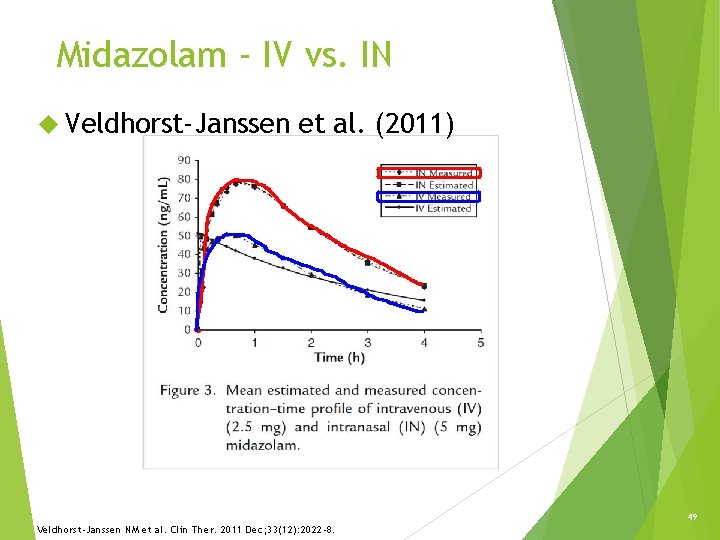
Midazolam - IV vs. IN Veldhorst-Janssen et al. (2011) 49 Veldhorst-Janssen NM et al. Clin Ther. 2011 Dec; 33(12): 2022 -8.
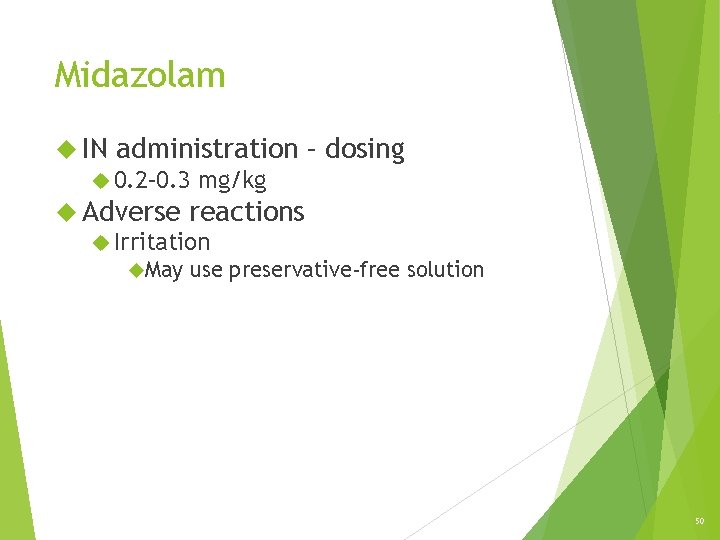
Midazolam IN administration – dosing 0. 2– 0. 3 mg/kg Adverse reactions Irritation May use preservative-free solution 50
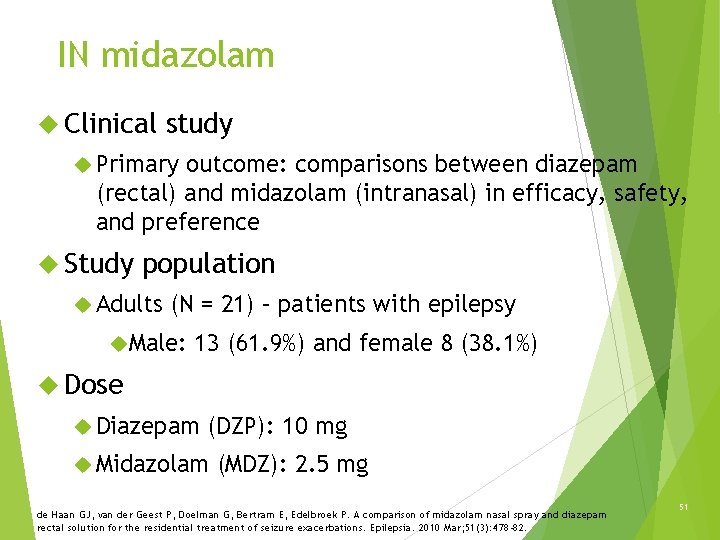
IN midazolam Clinical study Primary outcome: comparisons between diazepam (rectal) and midazolam (intranasal) in efficacy, safety, and preference Study population Adults (N = 21) – patients with epilepsy Male: 13 (61. 9%) and female 8 (38. 1%) Dose Diazepam (DZP): 10 mg Midazolam (MDZ): 2. 5 mg de Haan GJ, van der Geest P, Doelman G, Bertram E, Edelbroek P. A comparison of midazolam nasal spray and diazepam rectal solution for the residential treatment of seizure exacerbations. Epilepsia. 2010 Mar; 51(3): 478 -82. 51
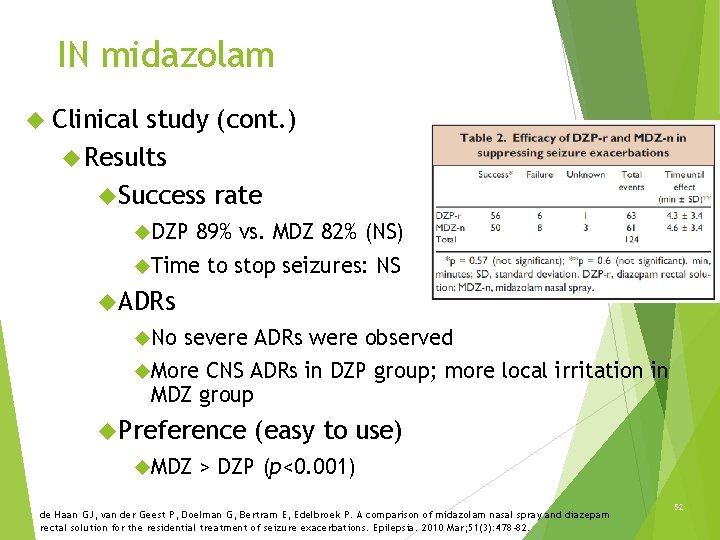
IN midazolam Clinical study (cont. ) Results Success rate DZP 89% vs. MDZ 82% (NS) Time to stop seizures: NS ADRs No severe ADRs were observed More CNS ADRs in DZP group; more local irritation in MDZ group Preference MDZ (easy to use) > DZP (p<0. 001) de Haan GJ, van der Geest P, Doelman G, Bertram E, Edelbroek P. A comparison of midazolam nasal spray and diazepam rectal solution for the residential treatment of seizure exacerbations. Epilepsia. 2010 Mar; 51(3): 478 -82. 52
Midazolam Issues Institute for Safe Medication Practices comment on BD syringe medication storage: “These syringes were never cleared by FDA for use as a closed container storage system for drug products, and the suitability of these syringes for that purpose has not been established. ” https: //www. ismp. org/newsletters/acutecare/showarticle. aspx? id=117 53
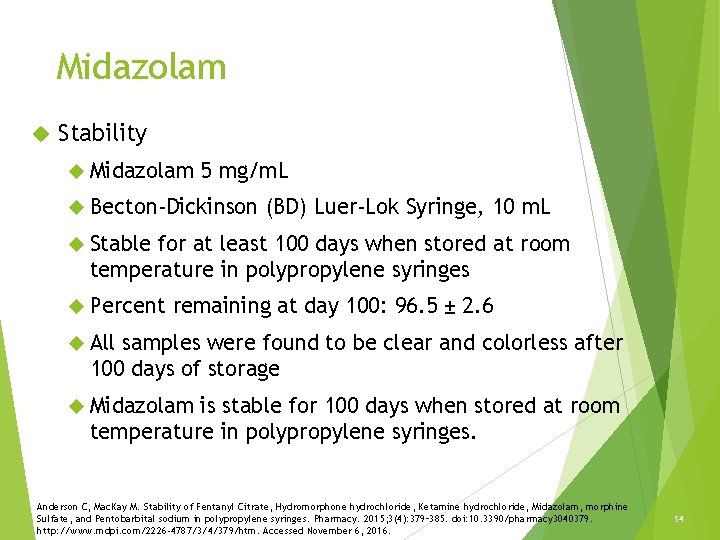
Midazolam Stability Midazolam 5 mg/m. L Becton-Dickinson (BD) Luer-Lok Syringe, 10 m. L Stable for at least 100 days when stored at room temperature in polypropylene syringes Percent remaining at day 100: 96. 5 ± 2. 6 All samples were found to be clear and colorless after 100 days of storage Midazolam is stable for 100 days when stored at room temperature in polypropylene syringes. Anderson C, Mac. Kay M. Stability of Fentanyl Citrate, Hydromorphone hydrochloride, Ketamine hydrochloride, Midazolam, morphine Sulfate, and Pentobarbital sodium in polypropylene syringes. Pharmacy. 2015; 3(4): 379– 385. doi: 10. 3390/pharmacy 3040379. http: //www. mdpi. com/2226 -4787/3/4/379/htm. Accessed November 6, 2016. 54
Seizures and Spells ECHO Join us to learn epilepsy! When? First and third Tuesdays from noon to 1: 30 p. m. Who can join us? Any healthcare providers, educators, school nurses What to learn? Epilepsy (disease states, pharmacology, patient education, etc. ) through mini lecture (20 -30 minutes) Present a case! 20 -minute case discussion (1 -2 cases per session) Benefits FREE participation, FREE CE (offers 1. 5 ACPE accredited contact hours for pharmacists)! For more information, visit http: //echo. unm. edu/nm-teleechoclinics/child-youth-epilepsy-teleecho-clinic/ 55