
Epilepsy Seizures 1 n n Epilepsy is a
- Slides: 26
Epilepsy & Seizures 1
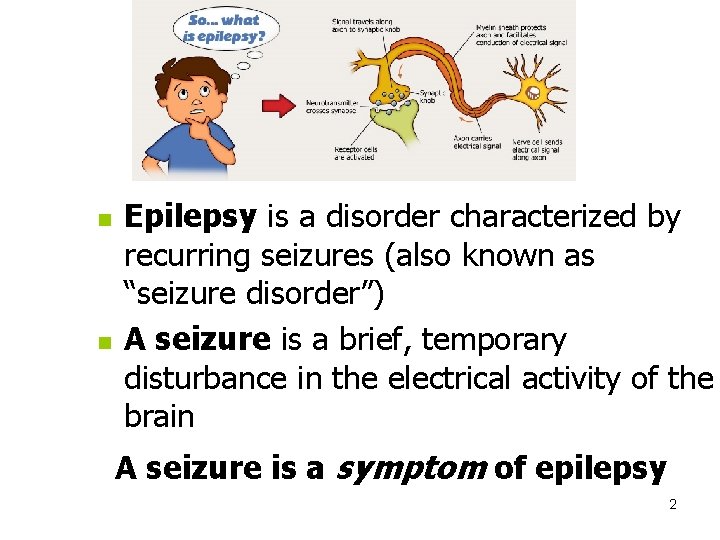
n n Epilepsy is a disorder characterized by recurring seizures (also known as “seizure disorder”) A seizure is a brief, temporary disturbance in the electrical activity of the brain A seizure is a symptom of epilepsy 2
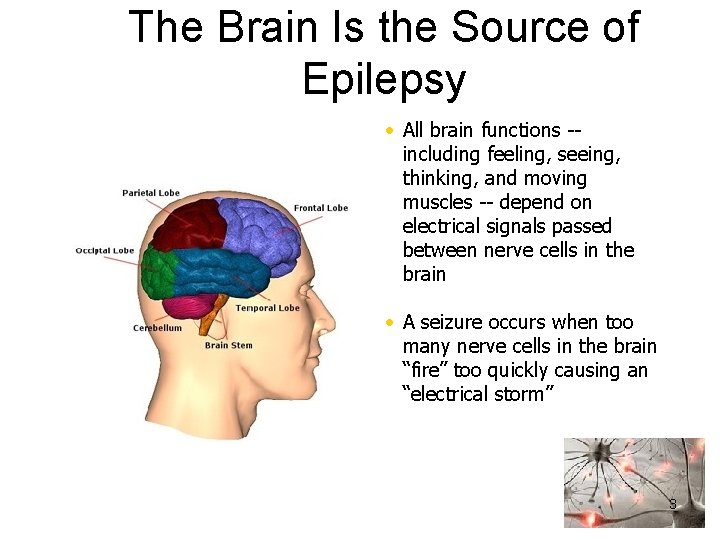
The Brain Is the Source of Epilepsy • All brain functions -including feeling, seeing, thinking, and moving muscles -- depend on electrical signals passed between nerve cells in the brain • A seizure occurs when too many nerve cells in the brain “fire” too quickly causing an “electrical storm” 3
Who Has Epilepsy? • Over 3 million Americans have epilepsy • Roughly 181, 000 new cases of seizures and epilepsy occur each year • 50% of people with epilepsy develop seizures by the age of 25; however, anyone can get epilepsy at any time • Now there as many people with epilepsy who are 60 or older as children aged 10 or younger 4
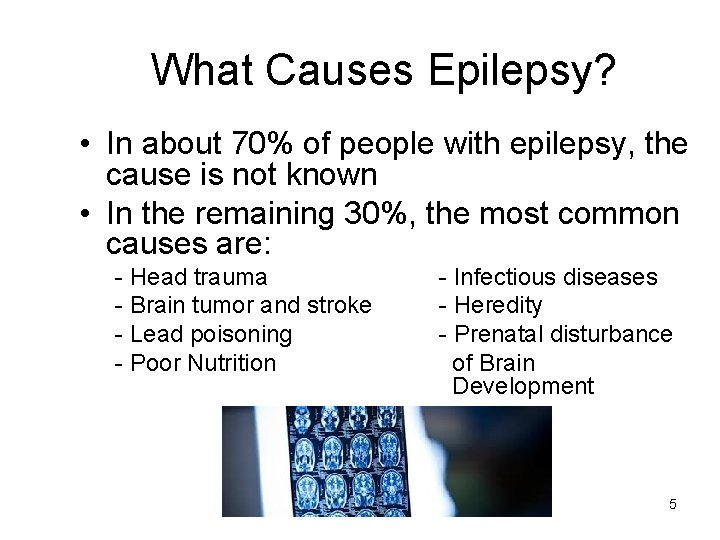
What Causes Epilepsy? • In about 70% of people with epilepsy, the cause is not known • In the remaining 30%, the most common causes are: - Head trauma - Brain tumor and stroke - Lead poisoning - Poor Nutrition - Infectious diseases - Heredity - Prenatal disturbance of Brain Development 5
Symptoms That May Indicate Epilepsy • • • Periods of blackout or confused memory Occasional “fainting spells” Episodes of blank staring in children Sudden falls for no apparent reason Episodes of blinking or chewing at inappropriate times • A convulsion, with or without fever • Clusters of swift jerking movements in babies 6
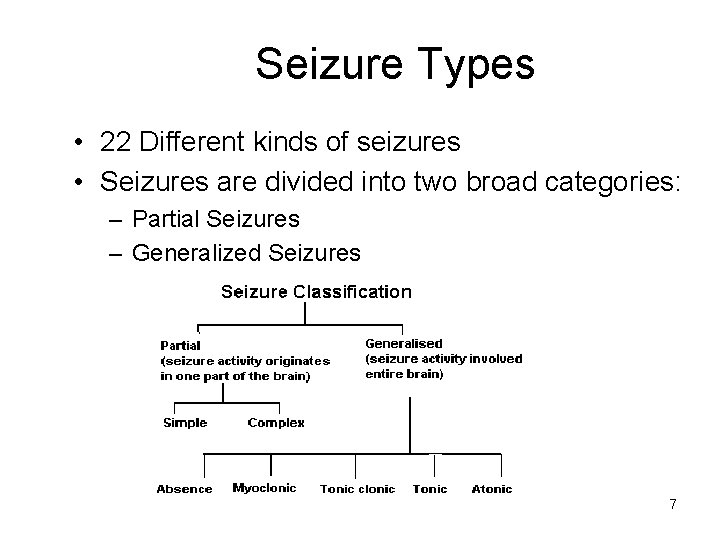
Seizure Types • 22 Different kinds of seizures • Seizures are divided into two broad categories: – Partial Seizures – Generalized Seizures 7
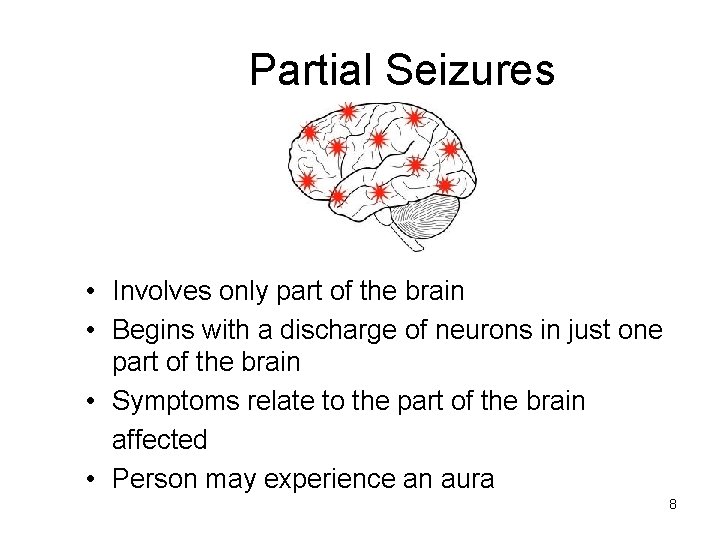
Partial Seizures • Involves only part of the brain • Begins with a discharge of neurons in just one part of the brain • Symptoms relate to the part of the brain affected • Person may experience an aura 8
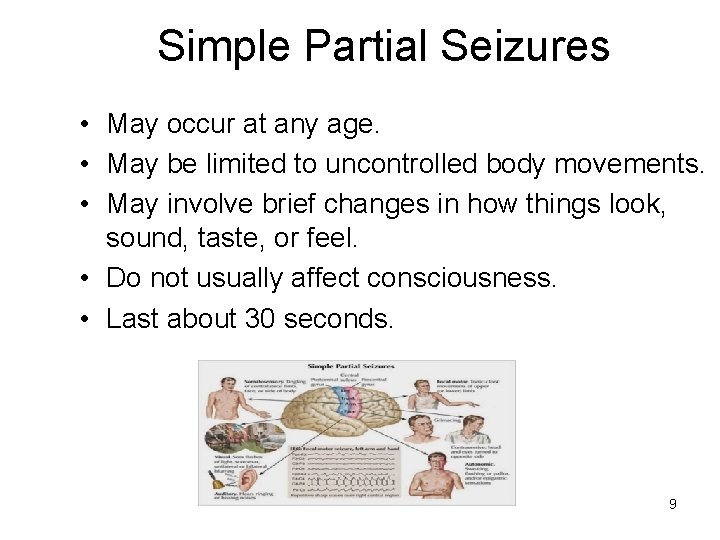
Simple Partial Seizures • May occur at any age. • May be limited to uncontrolled body movements. • May involve brief changes in how things look, sound, taste, or feel. • Do not usually affect consciousness. • Last about 30 seconds. 9
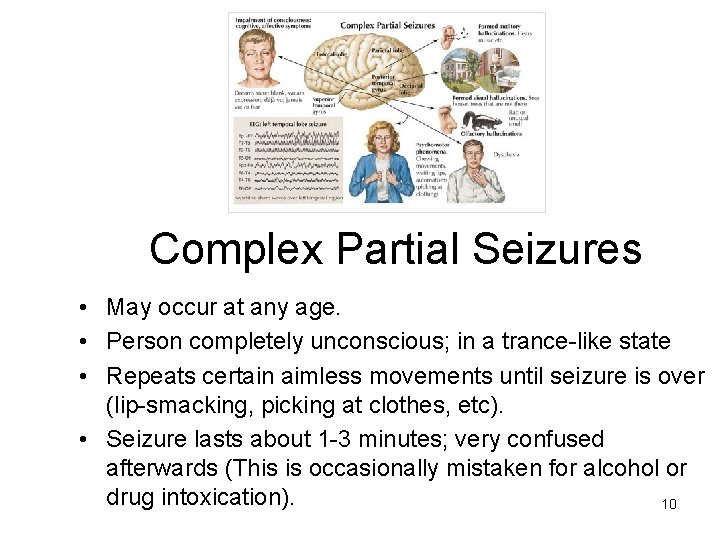
Complex Partial Seizures • May occur at any age. • Person completely unconscious; in a trance-like state • Repeats certain aimless movements until seizure is over (lip-smacking, picking at clothes, etc). • Seizure lasts about 1 -3 minutes; very confused afterwards (This is occasionally mistaken for alcohol or drug intoxication). 10
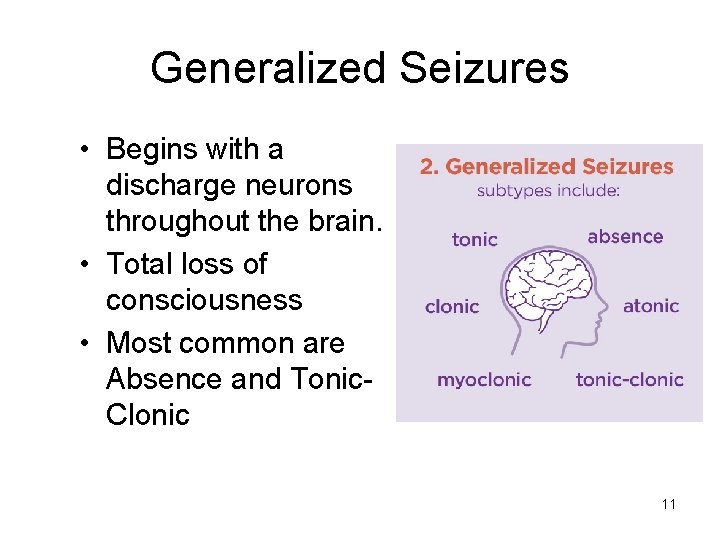
Generalized Seizures • Begins with a discharge neurons throughout the brain. • Total loss of consciousness • Most common are Absence and Tonic. Clonic 11
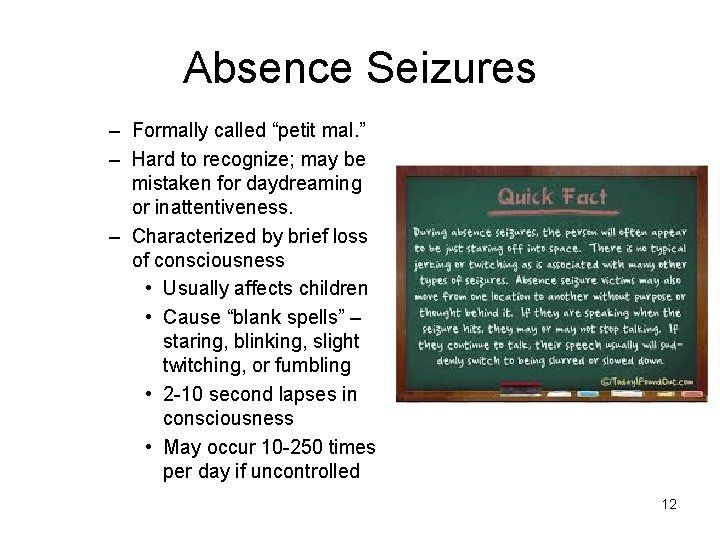
Absence Seizures – Formally called “petit mal. ” – Hard to recognize; may be mistaken for daydreaming or inattentiveness. – Characterized by brief loss of consciousness • Usually affects children • Cause “blank spells” – staring, blinking, slight twitching, or fumbling • 2 -10 second lapses in consciousness • May occur 10 -250 times per day if uncontrolled 12
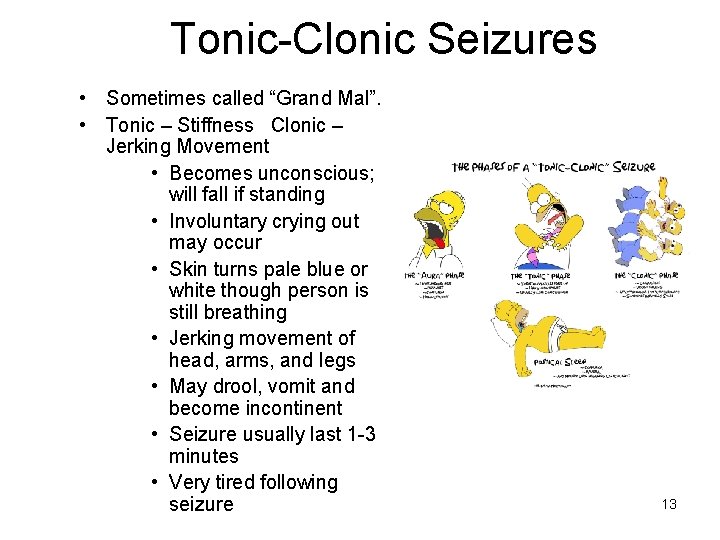
Tonic-Clonic Seizures • Sometimes called “Grand Mal”. • Tonic – Stiffness Clonic – Jerking Movement • Becomes unconscious; will fall if standing • Involuntary crying out may occur • Skin turns pale blue or white though person is still breathing • Jerking movement of head, arms, and legs • May drool, vomit and become incontinent • Seizure usually last 1 -3 minutes • Very tired following seizure 13
Seizure Triggers • • Missed medication (#1 reason) Stress/anxiety/worry Lack of sleep/extreme fatigue Dehydration, illness, poor nutrition Hormonal changes, growth spurts Photosensitivity Drug/alcohol use; drug interactions General illness 14
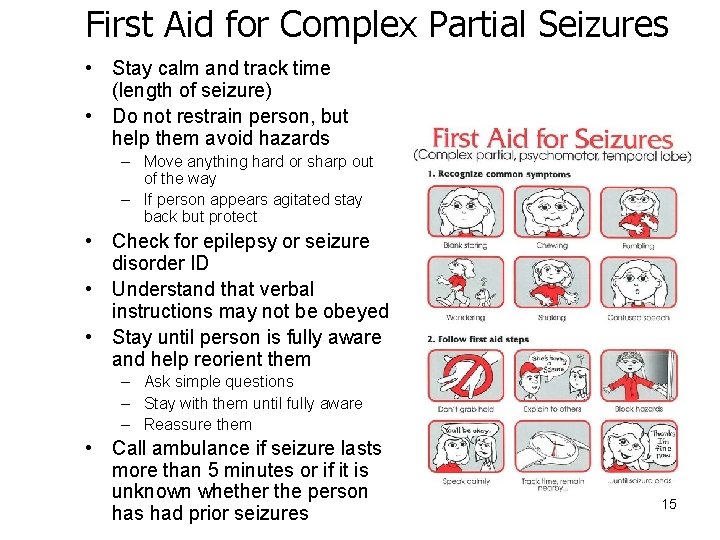
First Aid for Complex Partial Seizures • Stay calm and track time (length of seizure) • Do not restrain person, but help them avoid hazards – Move anything hard or sharp out of the way – If person appears agitated stay back but protect • Check for epilepsy or seizure disorder ID • Understand that verbal instructions may not be obeyed • Stay until person is fully aware and help reorient them – Ask simple questions – Stay with them until fully aware – Reassure them • Call ambulance if seizure lasts more than 5 minutes or if it is unknown whether the person has had prior seizures 15
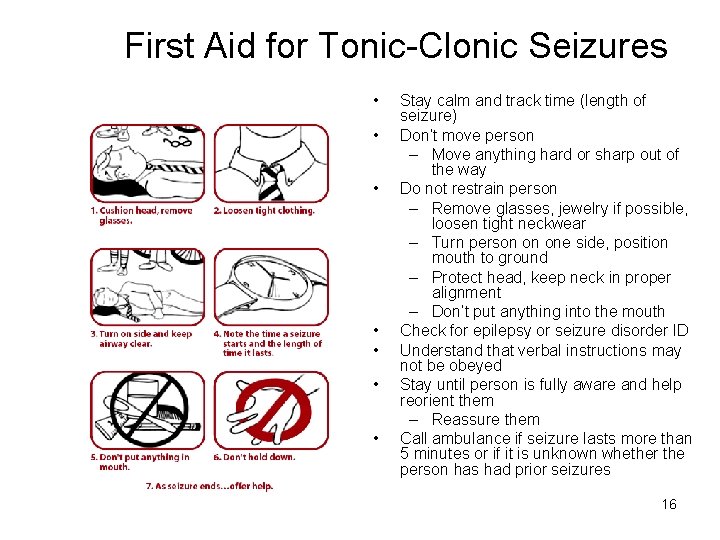
First Aid for Tonic-Clonic Seizures • • Stay calm and track time (length of seizure) Don’t move person – Move anything hard or sharp out of the way Do not restrain person – Remove glasses, jewelry if possible, loosen tight neckwear – Turn person on one side, position mouth to ground – Protect head, keep neck in proper alignment – Don’t put anything into the mouth Check for epilepsy or seizure disorder ID Understand that verbal instructions may not be obeyed Stay until person is fully aware and help reorient them – Reassure them Call ambulance if seizure lasts more than 5 minutes or if it is unknown whether the person has had prior seizures 16
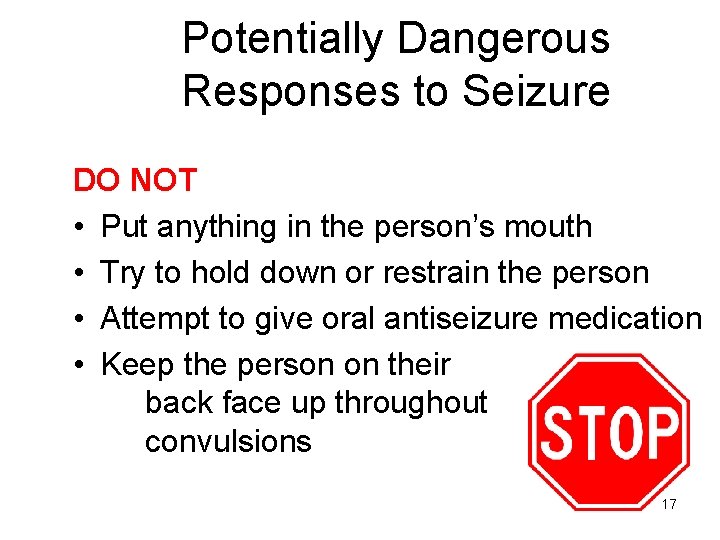
Potentially Dangerous Responses to Seizure DO NOT • Put anything in the person’s mouth • Try to hold down or restrain the person • Attempt to give oral antiseizure medication • Keep the person on their back face up throughout convulsions 17
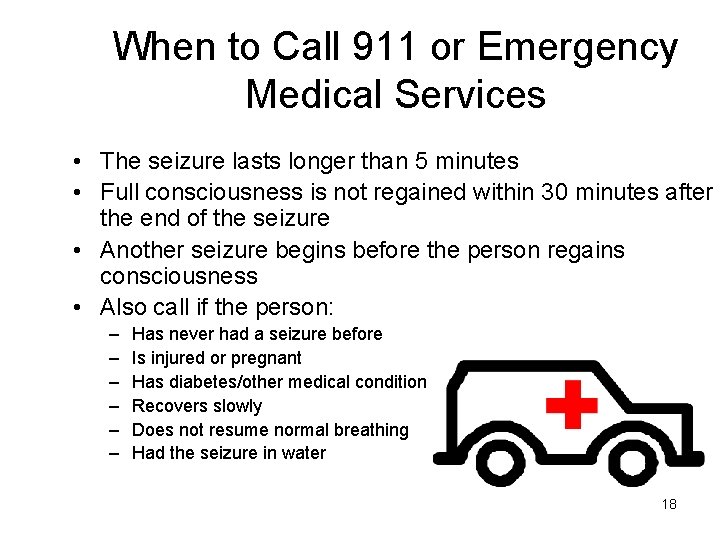
When to Call 911 or Emergency Medical Services • The seizure lasts longer than 5 minutes • Full consciousness is not regained within 30 minutes after the end of the seizure • Another seizure begins before the person regains consciousness • Also call if the person: – – – Has never had a seizure before Is injured or pregnant Has diabetes/other medical condition Recovers slowly Does not resume normal breathing Had the seizure in water 18
Treatment Goals in Epilepsy • Help person with epilepsy lead full and productive life – Epilepsy is what they have, not who they are • Eliminate seizures without producing side effects 19
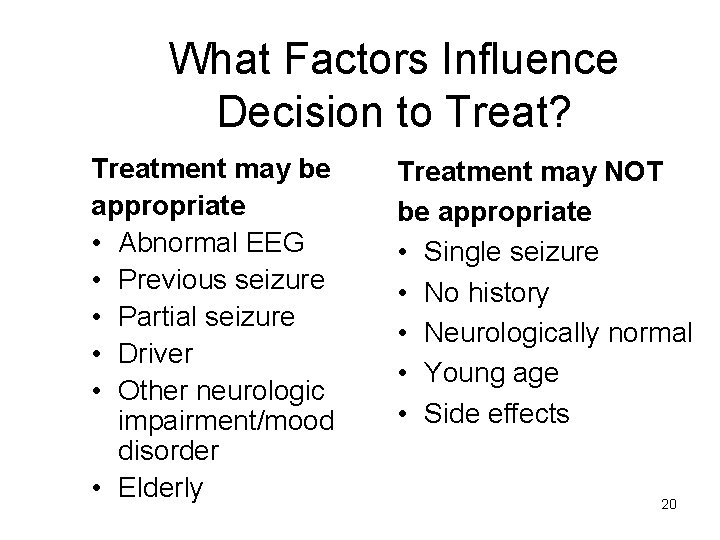
What Factors Influence Decision to Treat? Treatment may be appropriate • Abnormal EEG • Previous seizure • Partial seizure • Driver • Other neurologic impairment/mood disorder • Elderly Treatment may NOT be appropriate • Single seizure • No history • Neurologically normal • Young age • Side effects 20
Types of Treatment n Medication n Nonpharmacologic treatment n n n 1 st Generation medications 2 nd Generation medications Ketogenic diet Vagus nerve stimulation Surgery 21
Epilepsy and Mood Disorders • Depression is The Most Common Mood Disorder In People With Epilepsy. • In General 29% of People With Epilepsy Have A Major Depressive Disorder. • 50% Of Those Who Are Depressed Are Not Diagnosed. • People Diagnosed with Epilepsy Are Three Times More Likely To Commit Suicide Then The General Population. • People With A History of Depression Have a 3 to 7 Times Higher Risk of Developing Epilepsy. 22
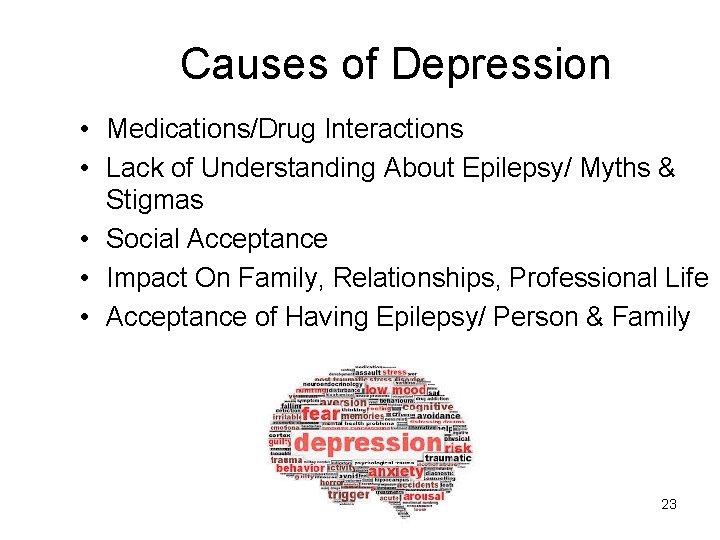
Causes of Depression • Medications/Drug Interactions • Lack of Understanding About Epilepsy/ Myths & Stigmas • Social Acceptance • Impact On Family, Relationships, Professional Life • Acceptance of Having Epilepsy/ Person & Family 23
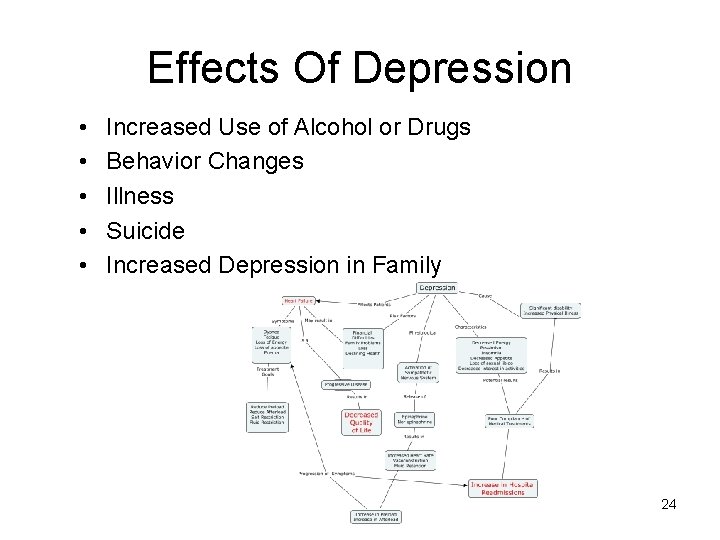
Effects Of Depression • • • Increased Use of Alcohol or Drugs Behavior Changes Illness Suicide Increased Depression in Family 24
Epilepsy Foundation of Western Wisconsin • 1812 Brackett Ave, Suite 5 Eau Claire, WI 54701 • 1 -800 -924 -2105 or 715 -834 -4455 • www. epilepsywesternwi. org • Cover 22 counties in Western WI – Ashland, Barron, Buffalo, Burnett, Chippewa, Clark, Dunn, Douglas, Eau Claire, Iron, Jackson, Pierce, Pepin, Polk, Price, Rusk, Sawyer, St. Croix, Taylor, Trempealeau and Washburn 25
National and Community Resources • The Epilepsy Foundation – Website: www. epilepsywesternwi. org • Medic. Alert Foundation • Social Security Administration • Accreditation Council on Services for People with Disabilities • State Offices – Vocational Rehabilitation – Protection and Advocacy – Aging Services 26