
Epilepsy and Stroke By Sindhu Priya E S
Epilepsy and Stroke By Sindhu Priya E S
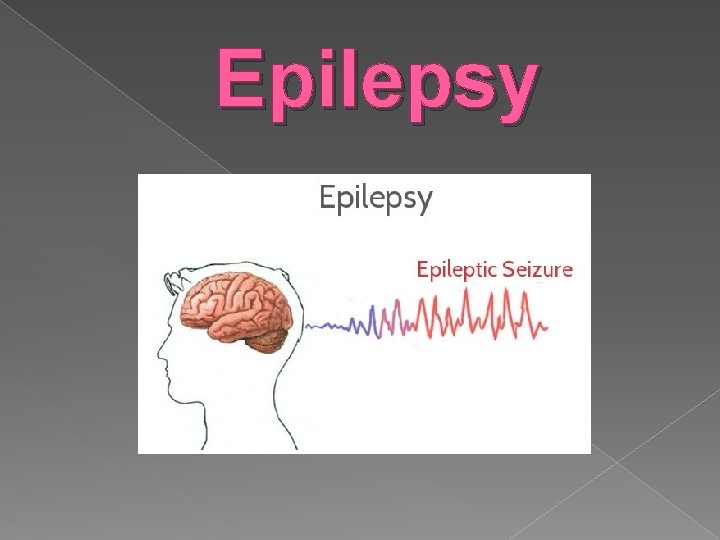
Epilepsy
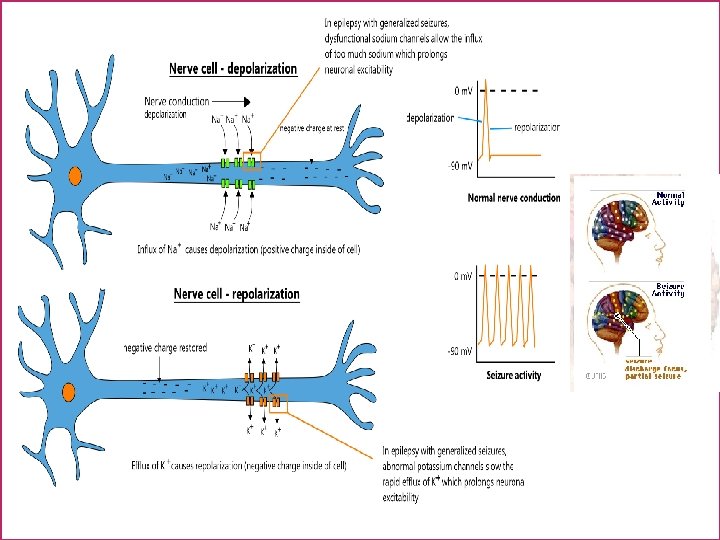
Definition Epilepsy is a disorder in which nerve cell activity in the brain is disturbed, causing seizures � Epilepsy is characterized by recurring seizures (also known as “seizure disorder”). � A seizure is a symptom of epilepsy
Seizure and convultions � A seizure occurs when too many nerve cells in the brain “fire” too quickly resulting in excessive discharge of cortical neurons causing an “electrical storm” which is measured by the Electroencephalogram (EEG) � Convultions implies violent, involuntary contractions of the voluntary muscles
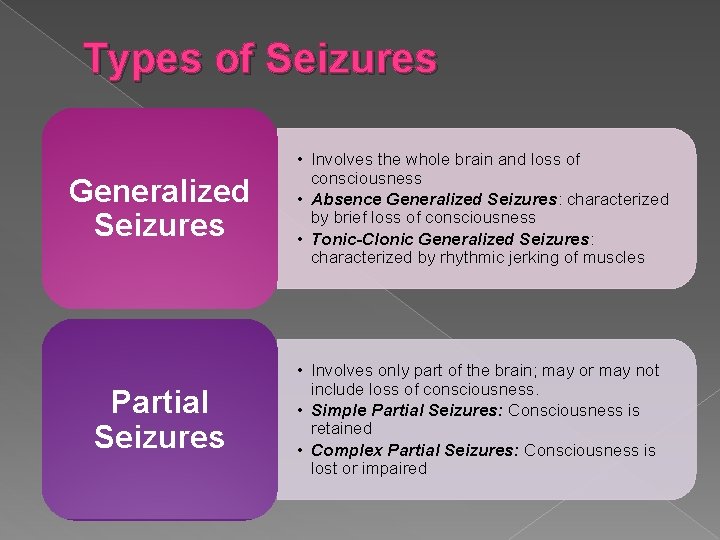
Types of Seizures Generalized Seizures • Involves the whole brain and loss of consciousness • Absence Generalized Seizures: characterized by brief loss of consciousness • Tonic-Clonic Generalized Seizures: characterized by rhythmic jerking of muscles Partial Seizures • Involves only part of the brain; may or may not include loss of consciousness. • Simple Partial Seizures: Consciousness is retained • Complex Partial Seizures: Consciousness is lost or impaired
Causes of epilepsy � Genetic causes � Congenital � Acquired or developmental conditions causes Trauma, stroke, tumors, problems in brain because of infections
Pathogenesis Seizures are genarated because of two reasons � Decreased inhibitory neurotransmitter excitatory activity: Glutamate, Ach neurotransmitter activity: GABA � Increased
Pathophysiology of important events epilepsy involves two � Hyperexcitability It is the abnormal responsiveness of the neurons to an excitatory input leading to multiple discharges � Hyper synchrony It is the recruitment of a large number of nearby neurons to the abnormal firing mode
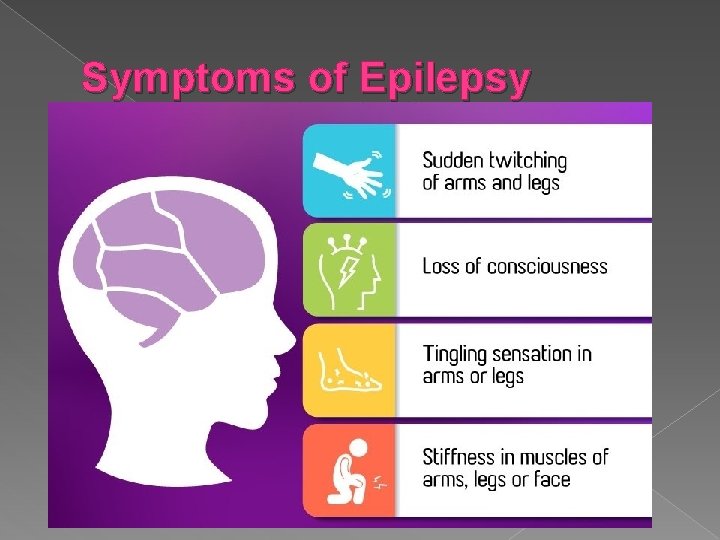
Symptoms of Epilepsy
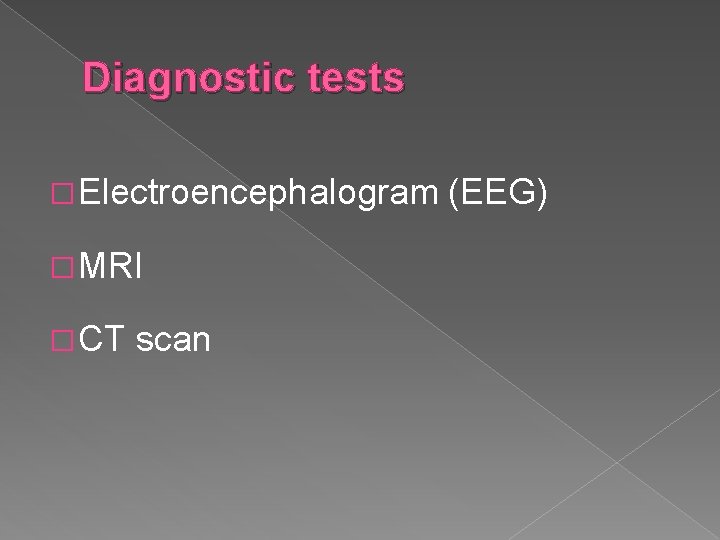
Diagnostic tests � Electroencephalogram � MRI � CT scan (EEG)
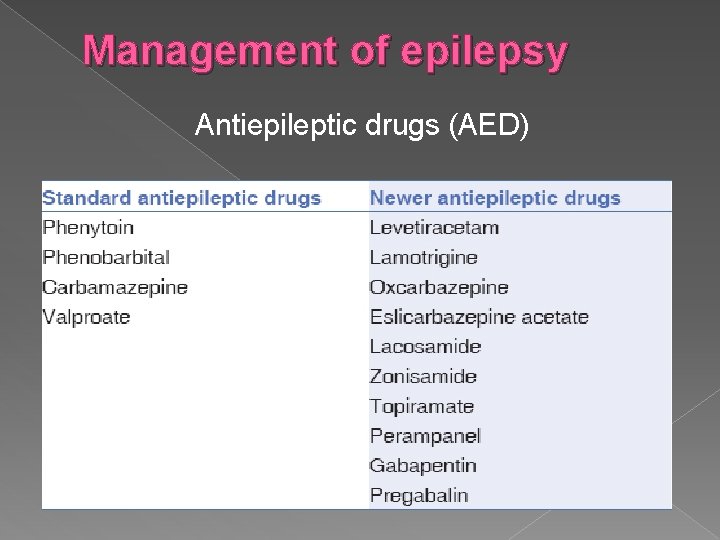
Management of epilepsy Antiepileptic drugs (AED)
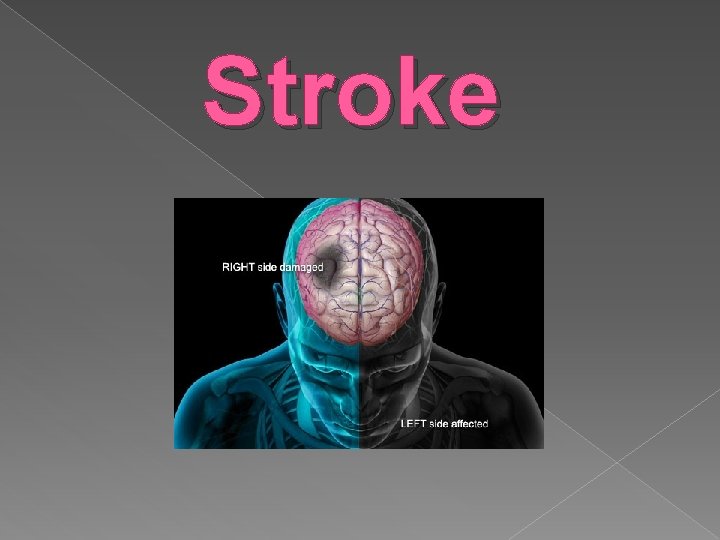
Stroke
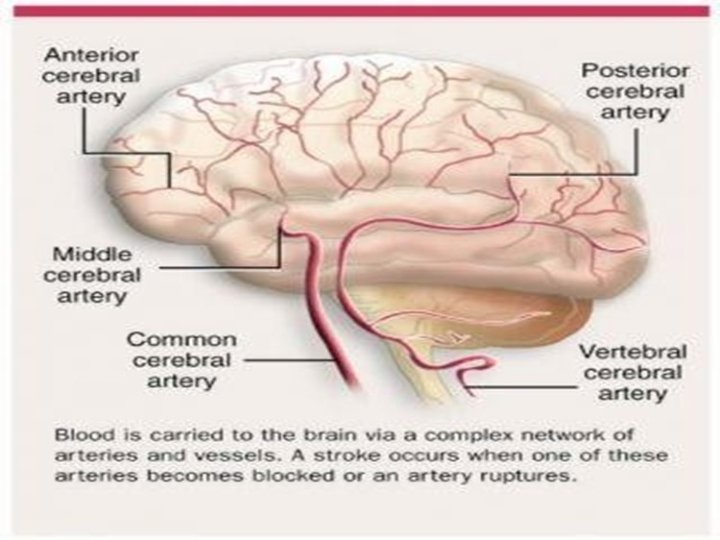
Definition Stroke is a medical condition in which poor blood flow to the brain results in cell death The brain cells get deprived of the oxygen and glucose needed to survive & die It is also called as Brain attack
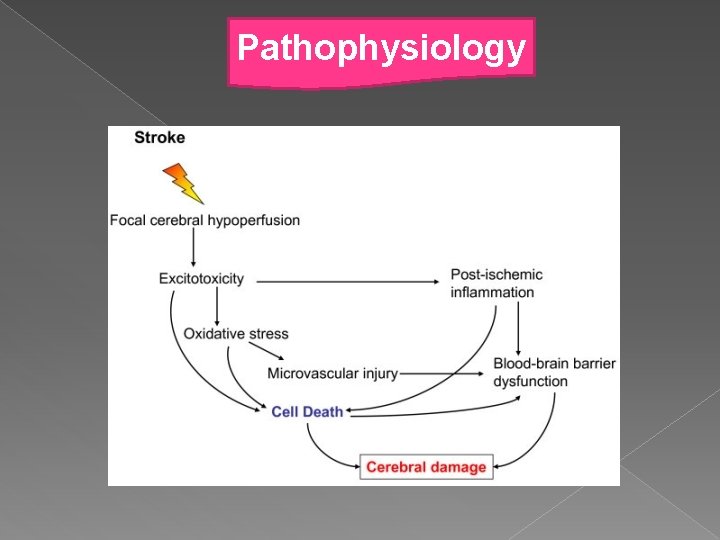
Pathophysiology
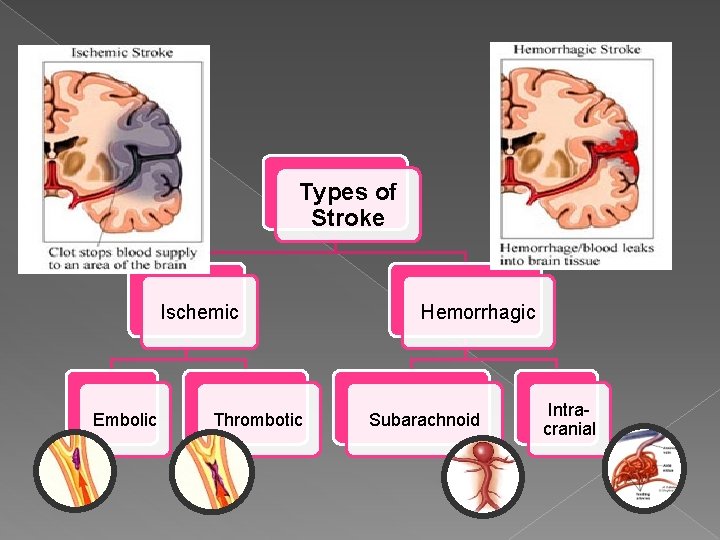
Types of Stroke Ischemic Embolic Thrombotic Hemorrhagic Subarachnoid Intracranial 16
1. ISCHEMIC STROKE Ischemic stroke occurs when vessel that supplies blood to the brain is blocked by a clot. This may happen in two ways: 1. A clot may form in an artery that is already very narrow. This is called as thrombus. If it completely blocks the artery , it is called as Thrombotic Stroke. 2. A clot may break off from another place in the blood vessel of the brain or some other part of the body and travel up to the brain to block a smaller artery. This is called as embolism. This causes Embolic Stroke
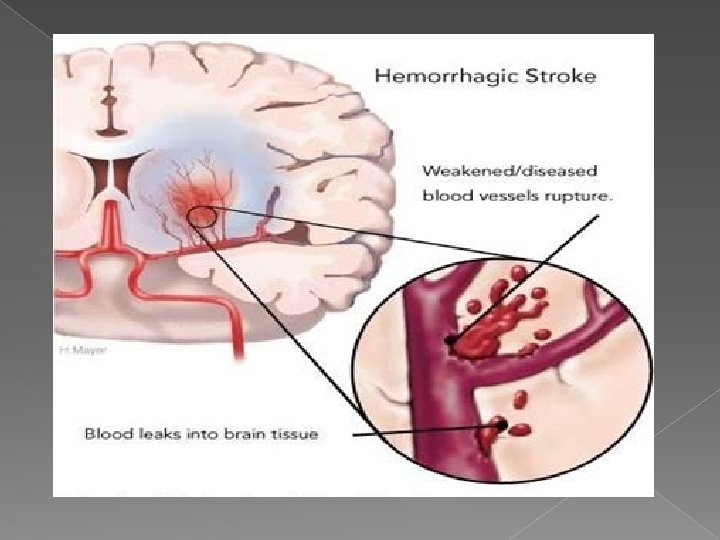
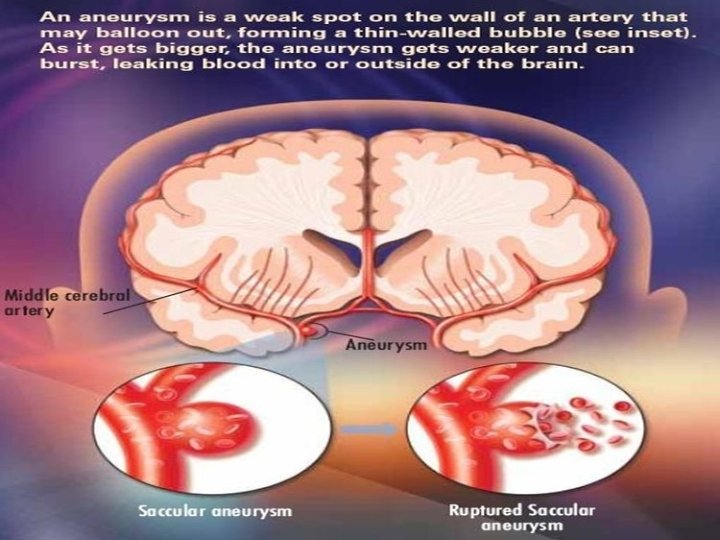
2. HEMORRHAGIC STROKE Hemorrhagic stroke occurs when a blood vessel in part of the brain becomes weak and bursts open, causing blood to leak into the brain.
Types of Hemorrhagic Stroke Intra Cerebral • Occurs mostly in Haemorrhage hypertensive patients. Subarachnoid • It occurs when blood Haemorrhage enters the subarachnoid space.
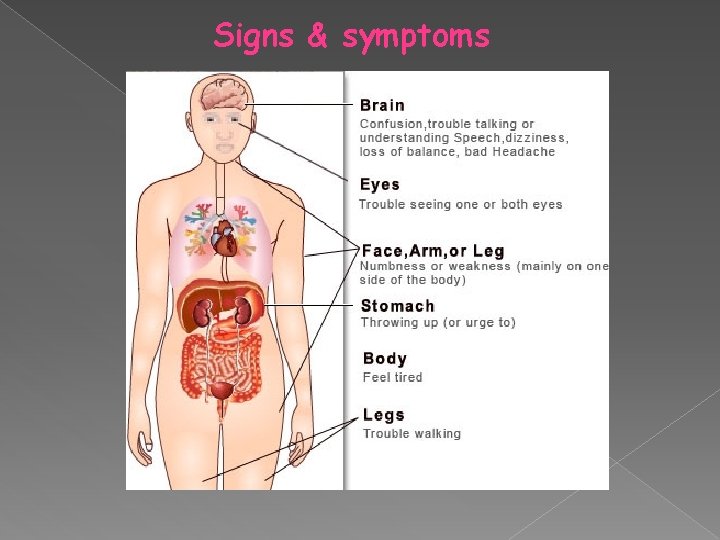
Signs & symptoms
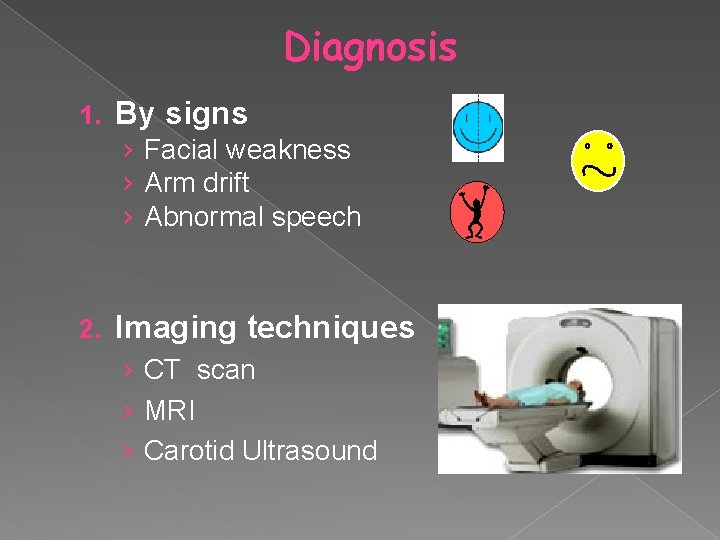
Diagnosis 1. By signs › Facial weakness › Arm drift › Abnormal speech 2. Imaging techniques › CT scan › MRI › Carotid Ultrasound
Stroke management 1. Physiological regulation 2. Pharmacological treatment of acute stroke �Thrombolysis �Antiplatelets and anticoagulants �Increasing perfusion: head-down hydration, plasma expanders posture, �Statins, antihypertensives, neuroprotectants 3. Rehabilitation therapies
- Slides: 27