
Epilepsy and Seizures What are seizures Definition of
- Slides: 26
Epilepsy and Seizures
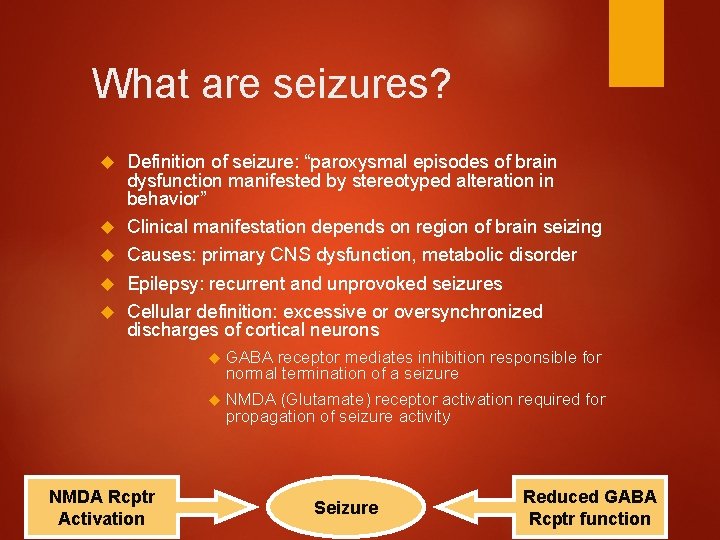
What are seizures? Definition of seizure: “paroxysmal episodes of brain dysfunction manifested by stereotyped alteration in behavior” Clinical manifestation depends on region of brain seizing Causes: primary CNS dysfunction, metabolic disorder Epilepsy: recurrent and unprovoked seizures Cellular definition: excessive or oversynchronized discharges of cortical neurons GABA receptor mediates inhibition responsible for normal termination of a seizure NMDA (Glutamate) receptor activation required for propagation of seizure activity NMDA Rcptr Activation Seizure Reduced GABA Rcptr function
Epidemiology Approximately 1% population (3 million epilepsy cases in US). Second most common neurological disease Comparable prevalence in men vs. women
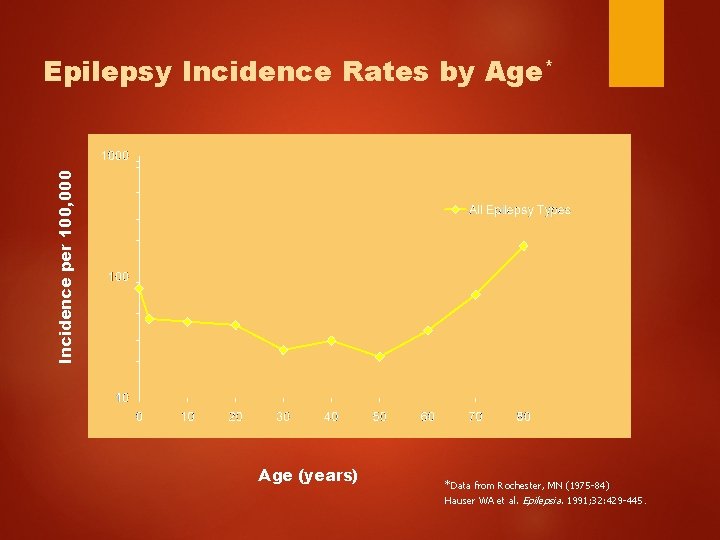
Incidence per 100, 000 Epilepsy Incidence Rates by Age* Age (years) *Data from Rochester, MN (1975 -84) Hauser WA et al. Epilepsia. 1991; 32: 429 -445.
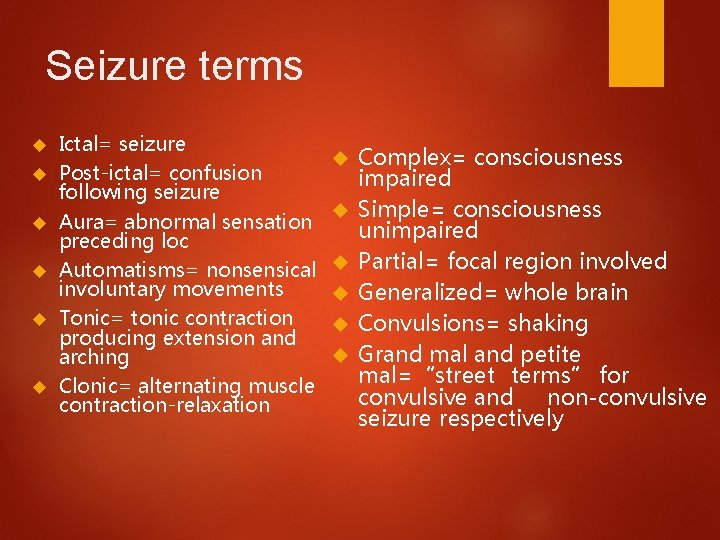
Seizure terms Ictal= seizure Post-ictal= confusion following seizure Aura= abnormal sensation preceding loc Automatisms= nonsensical involuntary movements Tonic= tonic contraction producing extension and arching Clonic= alternating muscle contraction-relaxation Complex= consciousness impaired Simple= consciousness unimpaired Partial= focal region involved Generalized= whole brain Convulsions= shaking Grand mal and petite mal=“street terms” for convulsive and non-convulsive seizure respectively
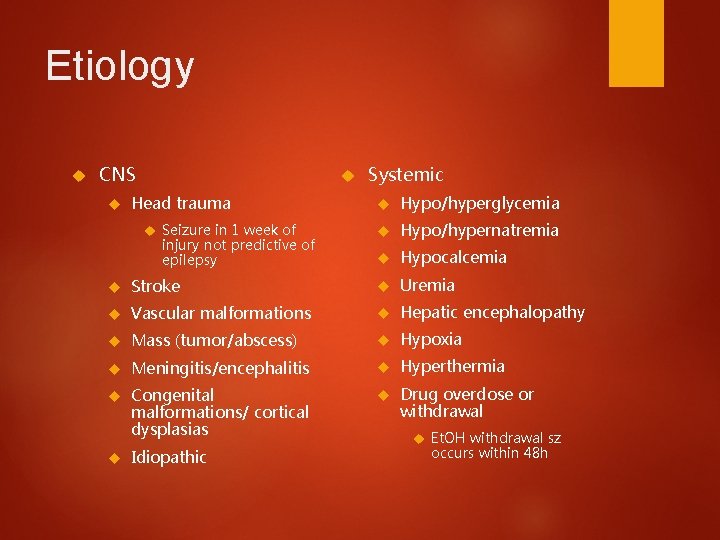
Etiology CNS Head trauma Seizure in 1 week of injury not predictive of epilepsy Systemic Hypo/hyperglycemia Hypo/hypernatremia Hypocalcemia Stroke Uremia Vascular malformations Hepatic encephalopathy Mass (tumor/abscess) Hypoxia Meningitis/encephalitis Hyperthermia Congenital malformations/ cortical dysplasias Drug overdose or withdrawal Idiopathic Et. OH withdrawal sz occurs within 48 h
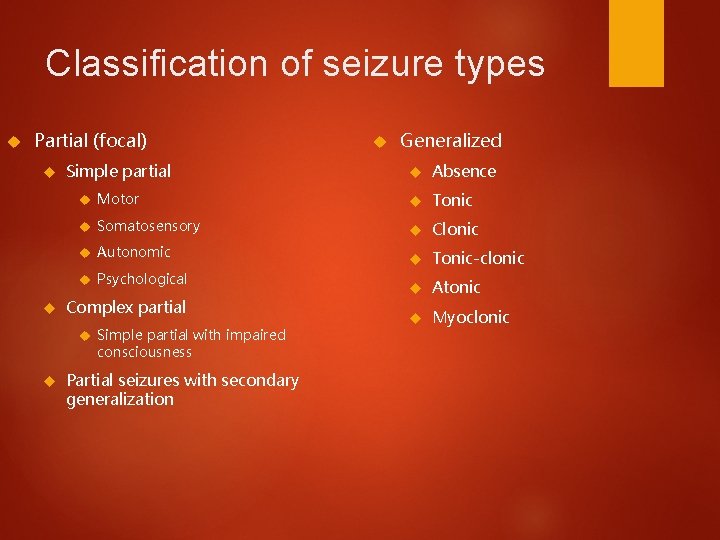
Classification of seizure types Partial (focal) Simple partial Absence Motor Tonic Somatosensory Clonic Tonic-clonic Atonic Myoclonic Psychological Complex partial Simple partial with impaired consciousness Generalized Autonomic Partial seizures with secondary generalization
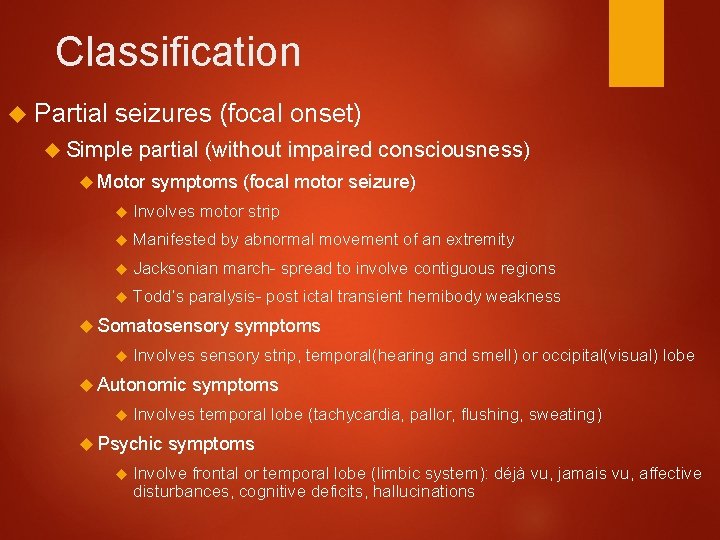
Classification Partial seizures (focal onset) Simple partial (without impaired consciousness) Motor symptoms (focal motor seizure) Involves motor strip Manifested by abnormal movement of an extremity Jacksonian march- spread to involve contiguous regions Todd’s paralysis- post ictal transient hemibody weakness Somatosensory Involves Autonomic sensory strip, temporal(hearing and smell) or occipital(visual) lobe symptoms Involves Psychic symptoms temporal lobe (tachycardia, pallor, flushing, sweating) symptoms Involve frontal or temporal lobe (limbic system): déjà vu, jamais vu, affective disturbances, cognitive deficits, hallucinations
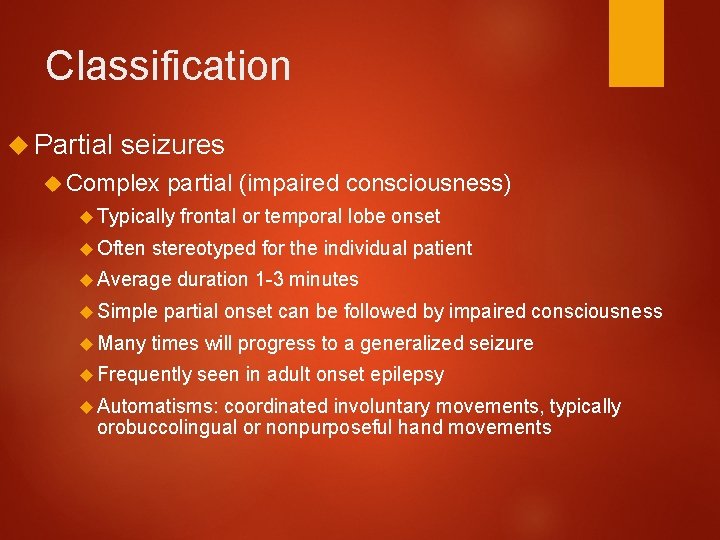
Classification Partial seizures Complex partial (impaired consciousness) Typically Often stereotyped for the individual patient Average Simple Many frontal or temporal lobe onset duration 1 -3 minutes partial onset can be followed by impaired consciousness times will progress to a generalized seizure Frequently seen in adult onset epilepsy Automatisms: coordinated involuntary movements, typically orobuccolingual or nonpurposeful hand movements
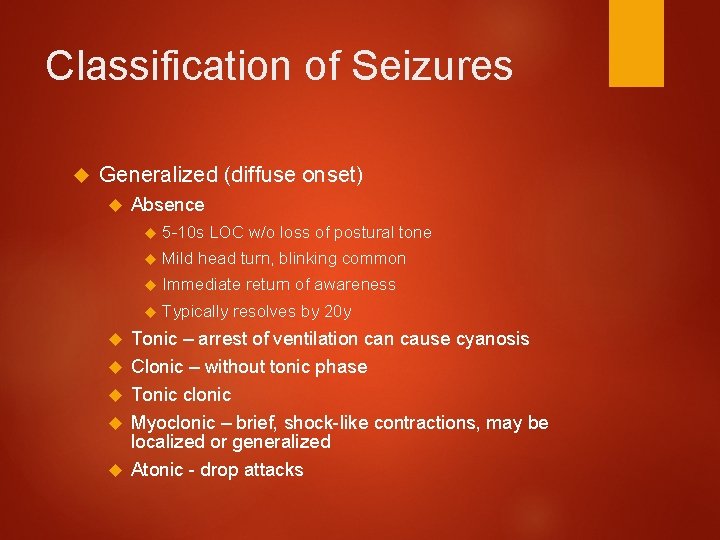
Classification of Seizures Generalized (diffuse onset) Absence 5 -10 s Mild LOC w/o loss of postural tone head turn, blinking common Immediate Typically return of awareness resolves by 20 y Tonic – arrest of ventilation cause cyanosis Clonic – without tonic phase Tonic clonic Myoclonic – brief, shock-like contractions, may be localized or generalized Atonic - drop attacks
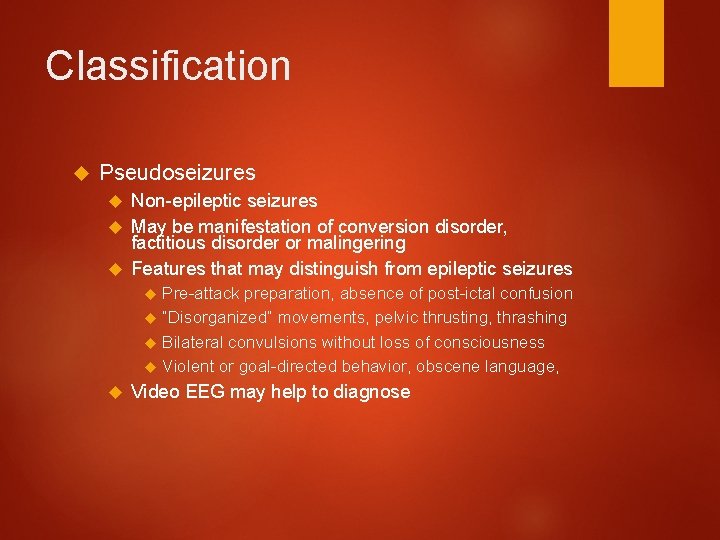
Classification Pseudoseizures Non-epileptic seizures May be manifestation of conversion disorder, factitious disorder or malingering Features that may distinguish from epileptic seizures Pre-attack preparation, absence of post-ictal confusion “Disorganized” movements, pelvic thrusting, thrashing Bilateral convulsions without loss of consciousness Violent or goal-directed behavior, obscene language, Video EEG may help to diagnose
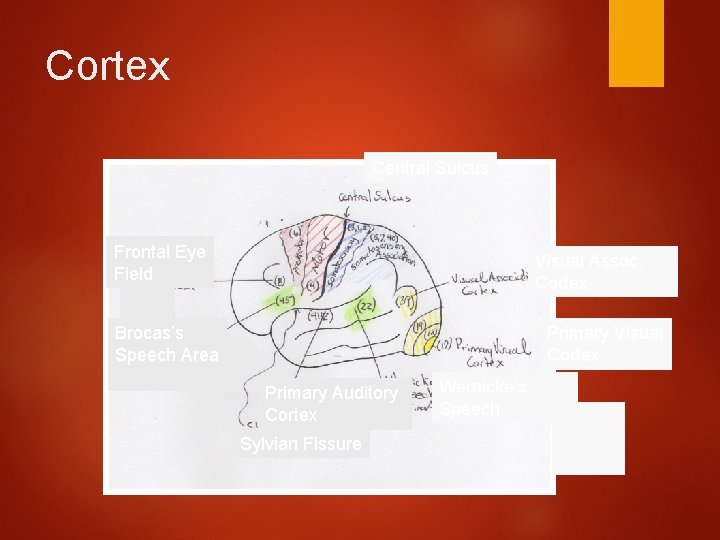
Seizure Phenotypes think of anatomy!!
Cortex Central Sulcus Frontal Eye Field Visual Assoc. Cortex Brocas’s Speech Area Primary Visual Cortex Primary Auditory Cortex Sylvian Fissure Wernicke’s Speech
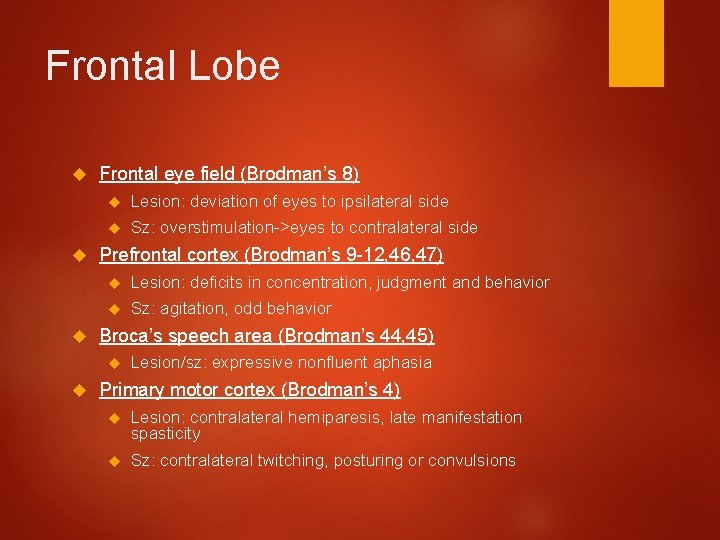
Frontal Lobe Frontal eye field (Brodman’s 8) Lesion: deviation of eyes to ipsilateral side Sz: overstimulation->eyes to contralateral side Prefrontal cortex (Brodman’s 9 -12, 46, 47) Lesion: deficits in concentration, judgment and behavior Sz: agitation, odd behavior Broca’s speech area (Brodman’s 44, 45) Lesion/sz: expressive nonfluent aphasia Primary motor cortex (Brodman’s 4) Lesion: contralateral hemiparesis, late manifestation spasticity Sz: contralateral twitching, posturing or convulsions
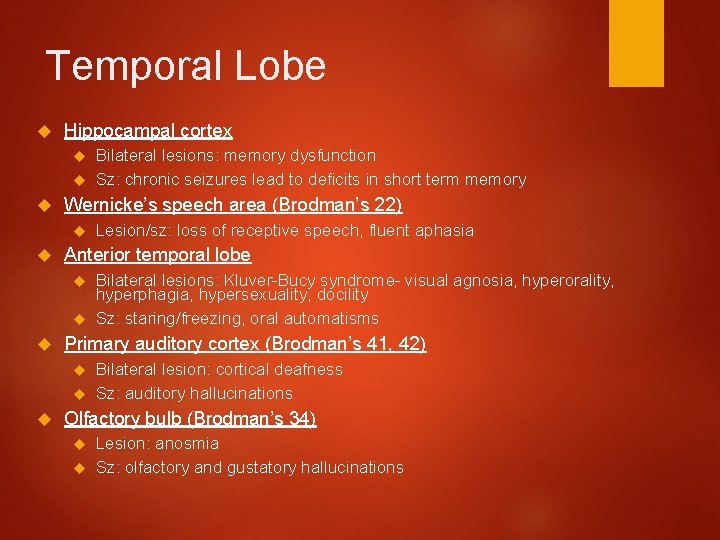
Temporal Lobe Hippocampal cortex Bilateral lesions: memory dysfunction Sz: chronic seizures lead to deficits in short term memory Wernicke’s speech area (Brodman’s 22) Lesion/sz: loss of receptive speech, fluent aphasia Anterior temporal lobe Bilateral lesions: Kluver-Bucy syndrome- visual agnosia, hyperorality, hyperphagia, hypersexuality, docility Sz: staring/freezing, oral automatisms Primary auditory cortex (Brodman’s 41, 42) Bilateral lesion: cortical deafness Sz: auditory hallucinations Olfactory bulb (Brodman’s 34) Lesion: anosmia Sz: olfactory and gustatory hallucinations
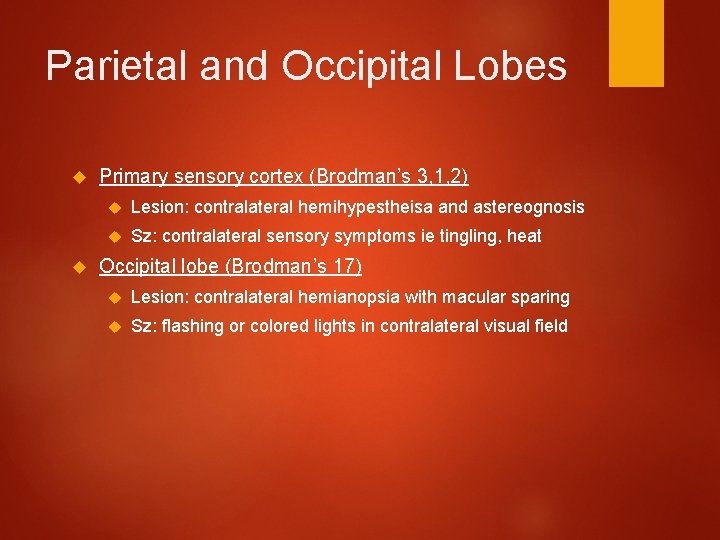
Parietal and Occipital Lobes Primary sensory cortex (Brodman’s 3, 1, 2) Lesion: contralateral hemihypestheisa and astereognosis Sz: contralateral sensory symptoms ie tingling, heat Occipital lobe (Brodman’s 17) Lesion: contralateral hemianopsia with macular sparing Sz: flashing or colored lights in contralateral visual field
Seizure Management
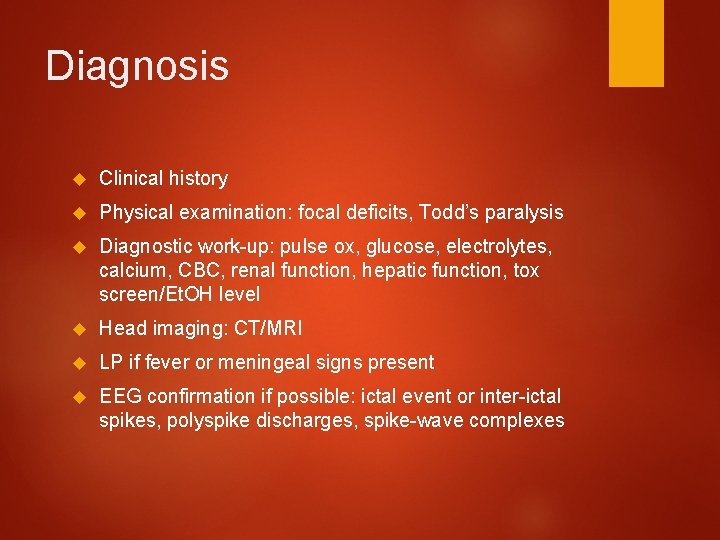
Diagnosis Clinical history Physical examination: focal deficits, Todd’s paralysis Diagnostic work-up: pulse ox, glucose, electrolytes, calcium, CBC, renal function, hepatic function, tox screen/Et. OH level Head imaging: CT/MRI LP if fever or meningeal signs present EEG confirmation if possible: ictal event or inter-ictal spikes, polyspike discharges, spike-wave complexes
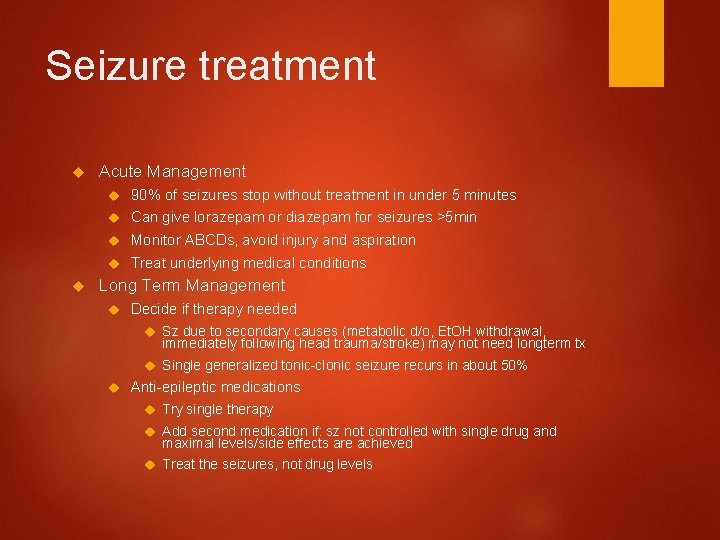
Seizure treatment Acute Management 90% of seizures stop without treatment in under 5 minutes Can give lorazepam or diazepam for seizures >5 min Monitor ABCDs, avoid injury and aspiration Treat underlying medical conditions Long Term Management Decide if therapy needed Sz due to secondary causes (metabolic d/o, Et. OH withdrawal, immediately following head trauma/stroke) may not need longterm tx Single generalized tonic-clonic seizure recurs in about 50% Anti-epileptic medications Try single therapy Add second medication if: sz not controlled with single drug and maximal levels/side effects are achieved Treat the seizures, not drug levels
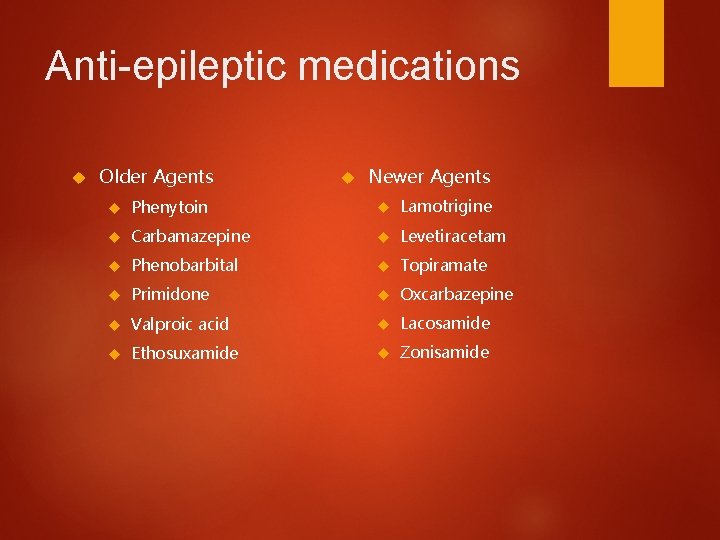
Anti-epileptic medications Older Agents Newer Agents Phenytoin Lamotrigine Carbamazepine Levetiracetam Phenobarbital Topiramate Primidone Oxcarbazepine Valproic acid Lacosamide Ethosuxamide Zonisamide
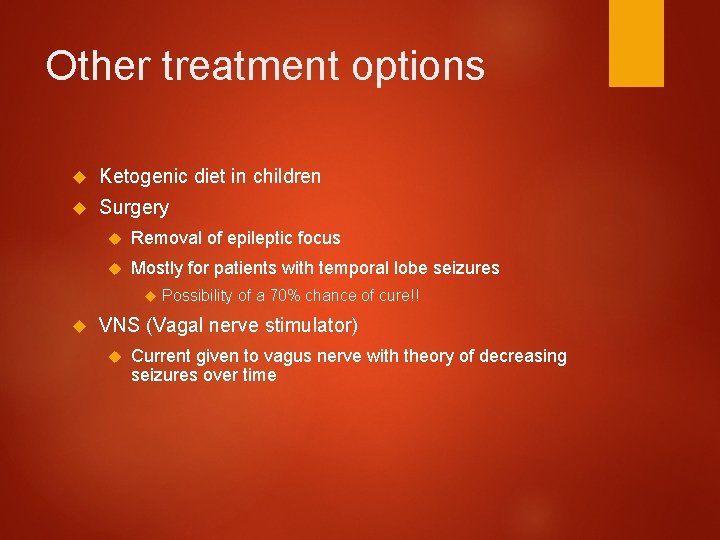
Other treatment options Ketogenic diet in children Surgery Removal of epileptic focus Mostly for patients with temporal lobe seizures Possibility of a 70% chance of cure!! VNS (Vagal nerve stimulator) Current given to vagus nerve with theory of decreasing seizures over time
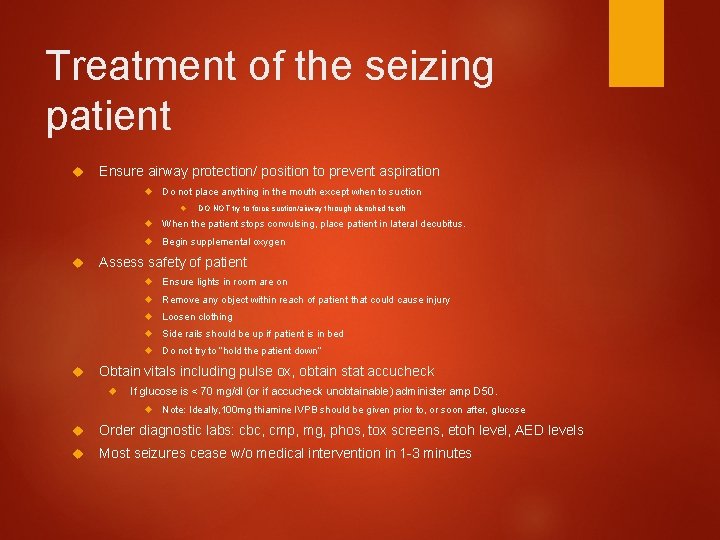
Treatment of the seizing patient Ensure airway protection/ position to prevent aspiration Do not place anything in the mouth except when to suction DO NOT try to force suction/airway through clenched teeth When the patient stops convulsing, place patient in lateral decubitus. Begin supplemental oxygen Assess safety of patient Ensure lights in room are on Remove any object within reach of patient that could cause injury Loosen clothing Side rails should be up if patient is in bed Do not try to “hold the patient down” Obtain vitals including pulse ox, obtain stat accucheck If glucose is < 70 mg/dl (or if accucheck unobtainable) administer amp D 50. Note: Ideally, 100 mg thiamine IVPB should be given prior to, or soon after, glucose Order diagnostic labs: cbc, cmp, mg, phos, tox screens, etoh level, AED levels Most seizures cease w/o medical intervention in 1 -3 minutes
Status Epilepticus
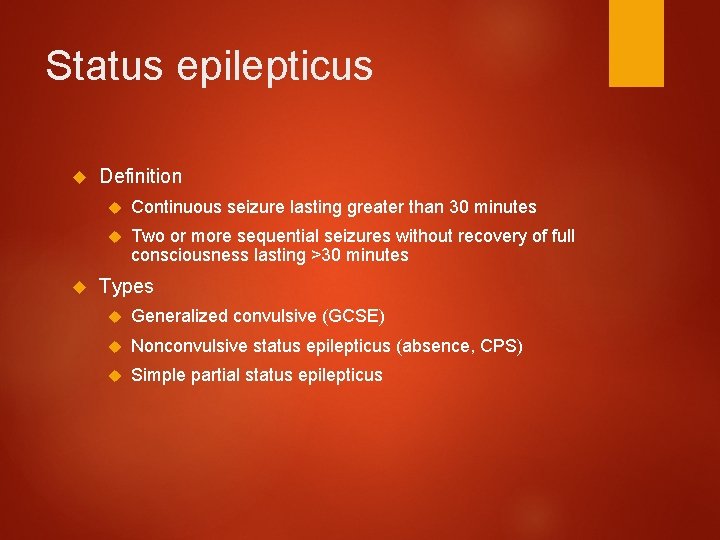
Status epilepticus Definition Continuous seizure lasting greater than 30 minutes Two or more sequential seizures without recovery of full consciousness lasting >30 minutes Types Generalized convulsive (GCSE) Nonconvulsive status epilepticus (absence, CPS) Simple partial status epilepticus
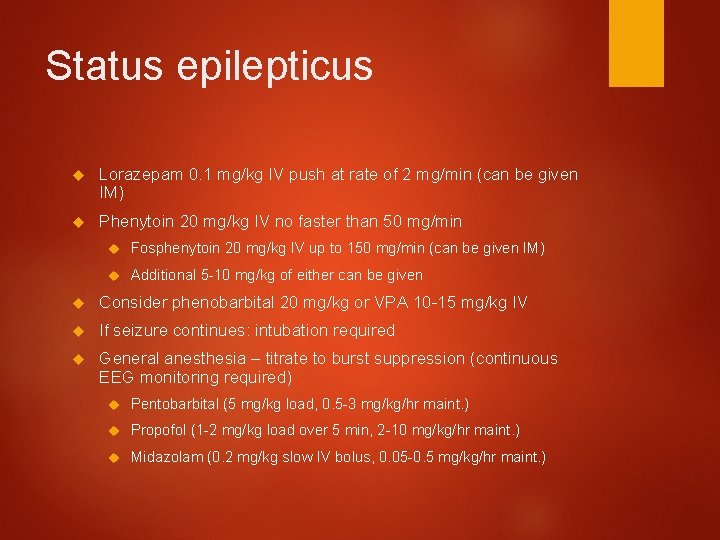
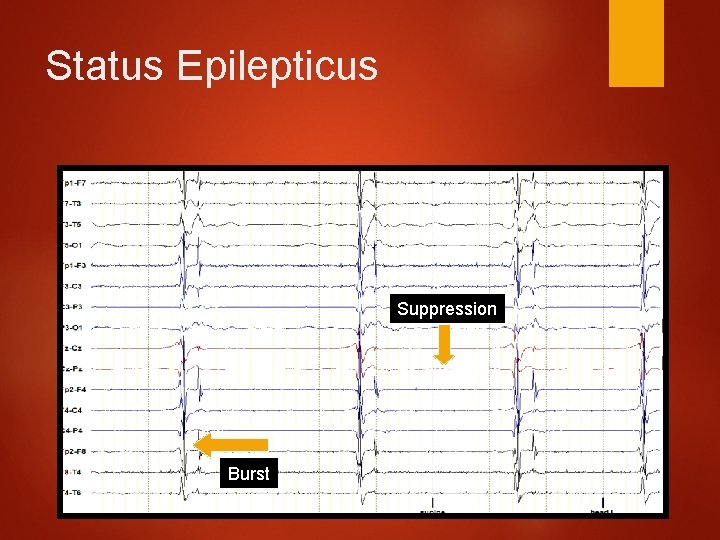
Status epilepticus Lorazepam 0. 1 mg/kg IV push at rate of 2 mg/min (can be given IM) Phenytoin 20 mg/kg IV no faster than 50 mg/min Fosphenytoin 20 mg/kg IV up to 150 mg/min (can be given IM) Additional 5 -10 mg/kg of either can be given Consider phenobarbital 20 mg/kg or VPA 10 -15 mg/kg IV If seizure continues: intubation required General anesthesia – titrate to burst suppression (continuous EEG monitoring required) Pentobarbital (5 mg/kg load, 0. 5 -3 mg/kg/hr maint. ) Propofol (1 -2 mg/kg load over 5 min, 2 -10 mg/kg/hr maint. ) Midazolam (0. 2 mg/kg slow IV bolus, 0. 05 -0. 5 mg/kg/hr maint. )
Status Epilepticus Titrate IV agents to burst suppression Suppression Burst