
Epigenetics Functional changes to the genome that do
- Slides: 20
Epigenetics Functional changes to the genome that do not alter the nucleotide sequence. Heritable through progeny of cells and/or organisms. Most epigenetic changes only occur within the course of one individual organism's lifetime e. g. Totipotency to pluripotency as an epigenetic phenomenon. Covalent modifications of DNA, RNA and histones are often considered synonymous with epigenetics: e. g. methylation, hydroxymethylation, acetylation, phosphorylation, ubiquitination and sumoylation. However, other epigenetic mechanisms include non-coding RNAs (e. g. Micro. RNAs, s. RNAs), Prions and other inherited structural characteristics.
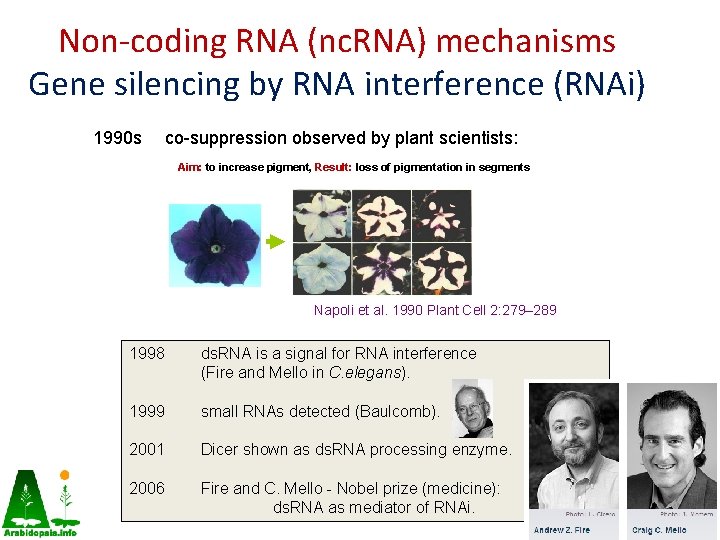
Non-coding RNA (nc. RNA) mechanisms Gene silencing by RNA interference (RNAi) 1990 s co-suppression observed by plant scientists: Aim: to increase pigment, Result: loss of pigmentation in segments Napoli et al. 1990 Plant Cell 2: 279– 289 1998 ds. RNA is a signal for RNA interference (Fire and Mello in C. elegans). 1999 small RNAs detected (Baulcomb). 2001 Dicer shown as ds. RNA processing enzyme. 2006 Fire and C. Mello - Nobel prize (medicine): ds. RNA as mediator of RNAi.
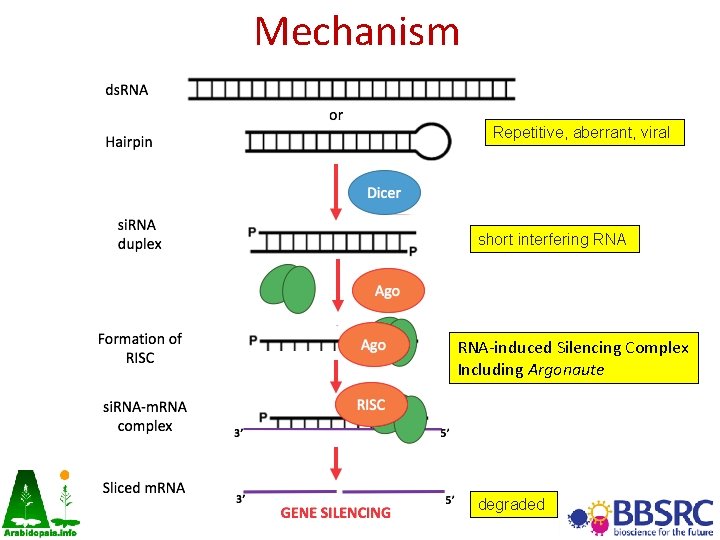
Mechanism Repetitive, aberrant, viral short interfering RNA-induced Silencing Complex Including Argonaute degraded
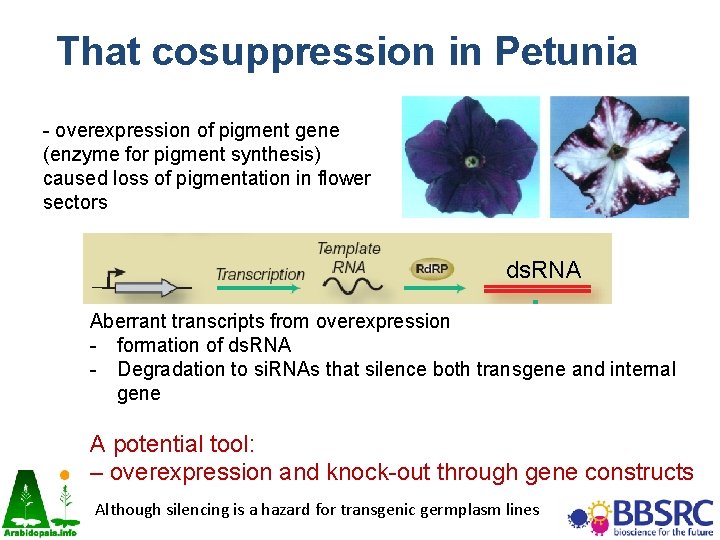
That cosuppression in Petunia - overexpression of pigment gene (enzyme for pigment synthesis) caused loss of pigmentation in flower sectors ds. RNA Aberrant transcripts from overexpression - formation of ds. RNA - Degradation to si. RNAs that silence both transgene and internal gene A potential tool: – overexpression and knock-out through gene constructs Although silencing is a hazard for transgenic germplasm lines
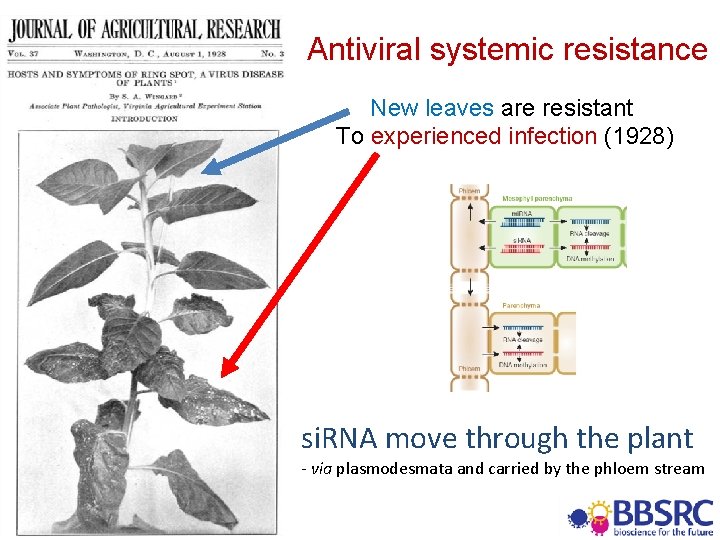
Antiviral systemic resistance New leaves are resistant To experienced infection (1928) si. RNA move through the plant - via plasmodesmata and carried by the phloem stream
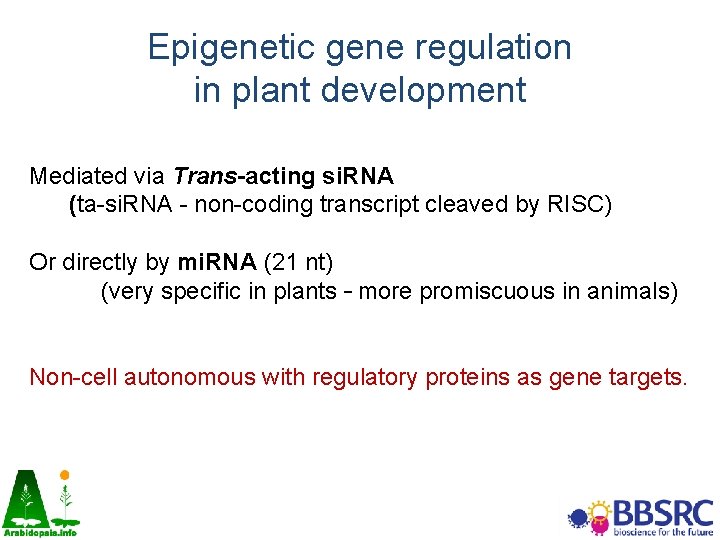
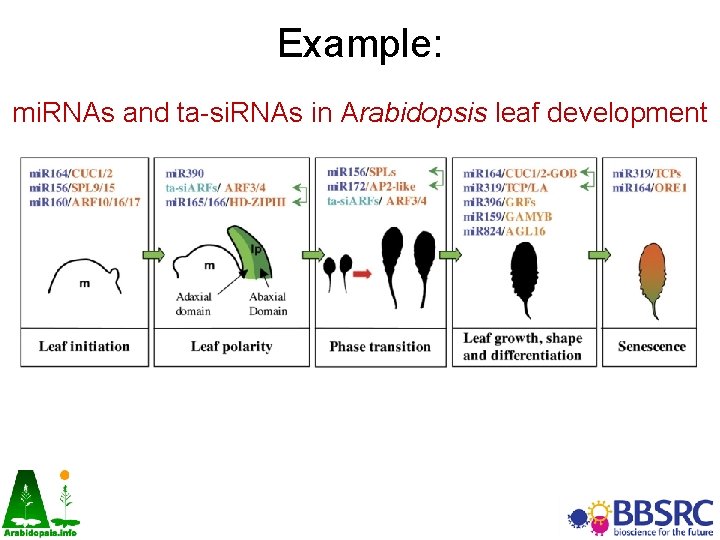
Epigenetic gene regulation in plant development Mediated via Trans-acting si. RNA (ta-si. RNA - non-coding transcript cleaved by RISC) Or directly by mi. RNA (21 nt) (very specific in plants – more promiscuous in animals) Non-cell autonomous with regulatory proteins as gene targets.
Example: mi. RNAs and ta-si. RNAs in Arabidopsis leaf development Pulido A , Laufs P J. Exp. Bot. 2010; 61: 1277 -1291
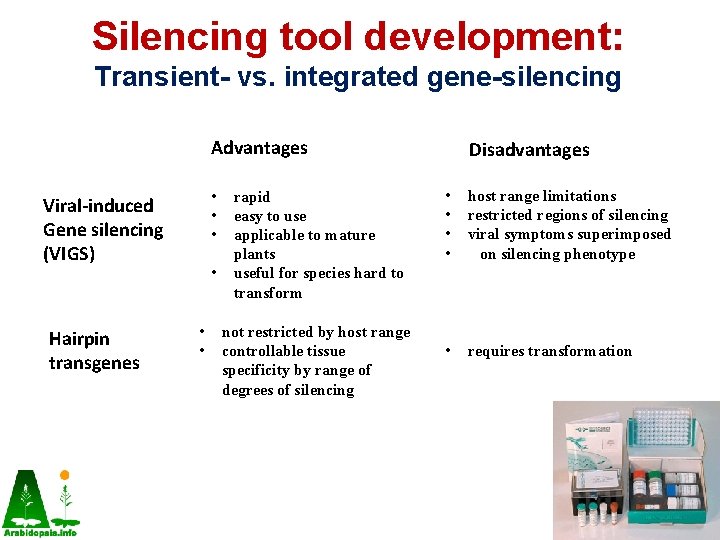
Silencing tool development: Transient- vs. integrated gene-silencing Advantages • • • Viral-induced Gene silencing (VIGS) Hairpin transgenes • • • rapid easy to use applicable to mature plants useful for species hard to transform not restricted by host range controllable tissue specificity by range of degrees of silencing Disadvantages • • host range limitations restricted regions of silencing viral symptoms superimposed on silencing phenotype • requires transformation
AGRIKOLA Arabidopsis Genomic RNAi Knock-out Line Analysis Objectives: 1. Provide a set of binary plasmids for constitutively or controllably triggering gene-silencing of at least 20, 000 Arabidopsis genes for which specific tags can be designed. 2. Transform Arabidopsis with a wide selection of these plasmids to obtain targeted mutants.
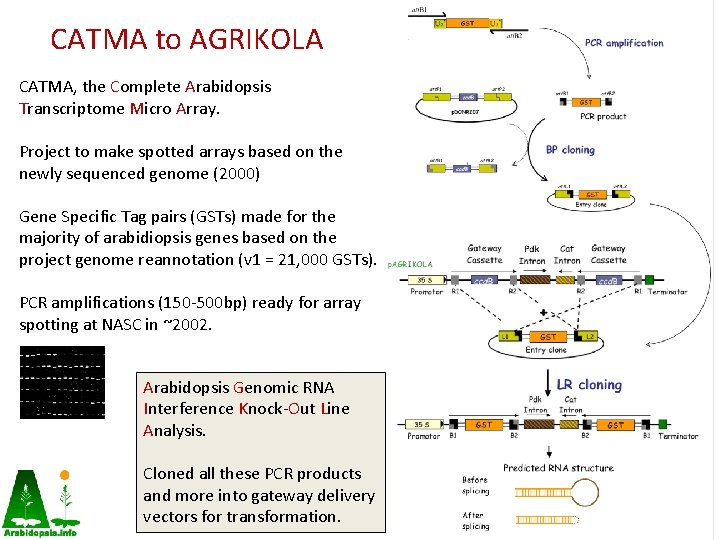
CATMA to AGRIKOLA CATMA, the Complete Arabidopsis Transcriptome Micro Array. Project to make spotted arrays based on the newly sequenced genome (2000) Gene Specific Tag pairs (GSTs) made for the majority of arabidiopsis genes based on the project genome reannotation (v 1 = 21, 000 GSTs). PCR amplifications (150 -500 bp) ready for array spotting at NASC in ~2002. Arabidopsis Genomic RNA Interference Knock-Out Line Analysis. Cloned all these PCR products and more into gateway delivery vectors for transformation.
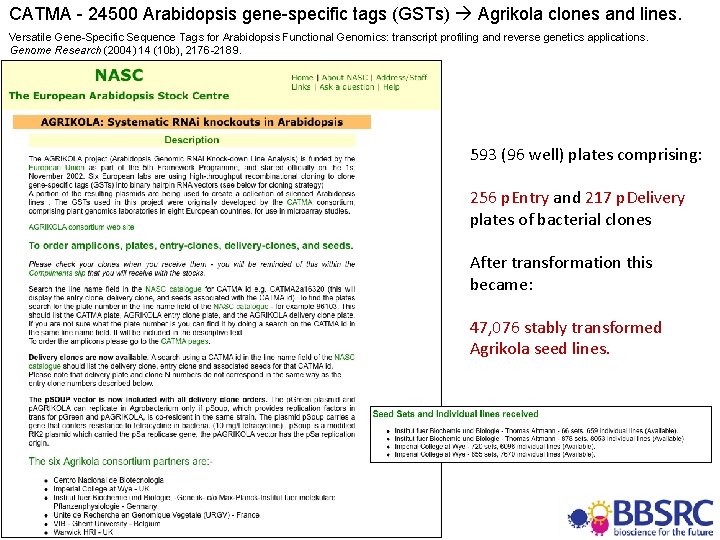
CATMA - 24500 Arabidopsis gene-specific tags (GSTs) Agrikola clones and lines. Versatile Gene-Specific Sequence Tags for Arabidopsis Functional Genomics: transcript profiling and reverse genetics applications. Genome Research (2004) 14 (10 b), 2176 -2189. 593 (96 well) plates comprising: 256 p. Entry and 217 p. Delivery plates of bacterial clones After transformation this became: 47, 076 stably transformed Agrikola seed lines.
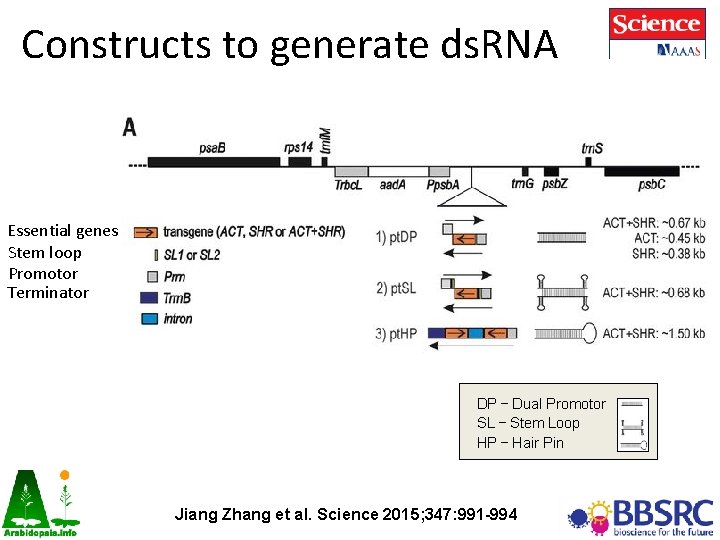
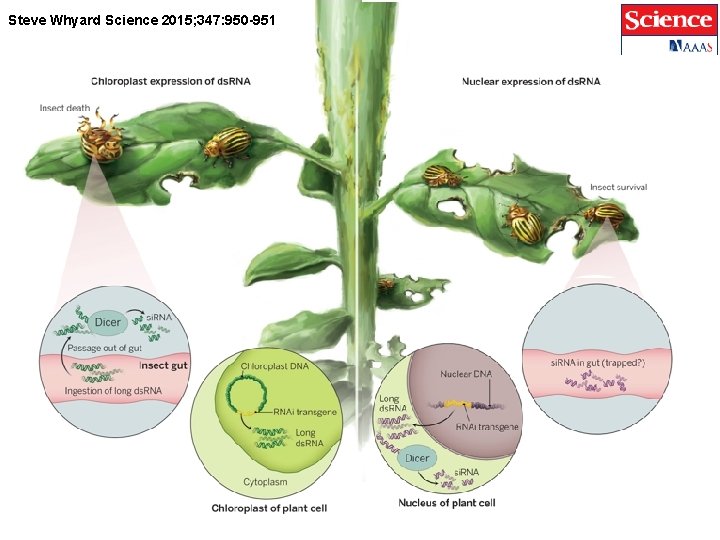
Full crop protection from an insect pest by expression of long double-stranded RNAs in plastids by Jiang Zhang, Sher Afzal Khan, Claudia Hasse, Stephanie Ruf, David G. Heckel, and Ralph Bock Both insects and plants have active RNA-i silencing machinery. Ds-RNA fed to insects is taken up and processed by dicer thereby silencing matching genes. However, Ds-RNA cannot readily accumulate in plants due to dicer activity in the plant itself (although it does work – it is inefficient). Insight: plastids are derived from free-living prokaryotes without an RNA-i mechanism What happens if we express Ds-RNA in chloroplasts? Science Volume 347(6225): 991 -994 February 27, 2015
Constructs to generate ds. RNA Essential genes Stem loop Promotor Terminator DP – Dual Promotor SL – Stem Loop HP – Hair Pin Jiang Zhang et al. Science 2015; 347: 991 -994
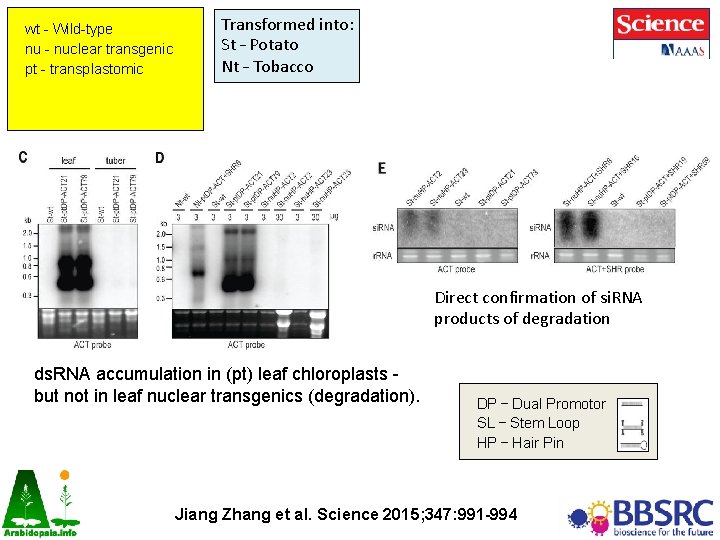
wt - Wild-type nu - nuclear transgenic pt - transplastomic Transformed into: St – Potato Nt – Tobacco Direct confirmation of si. RNA products of degradation ds. RNA accumulation in (pt) leaf chloroplasts but not in leaf nuclear transgenics (degradation). DP – Dual Promotor SL – Stem Loop HP – Hair Pin Jiang Zhang et al. Science 2015; 347: 991 -994
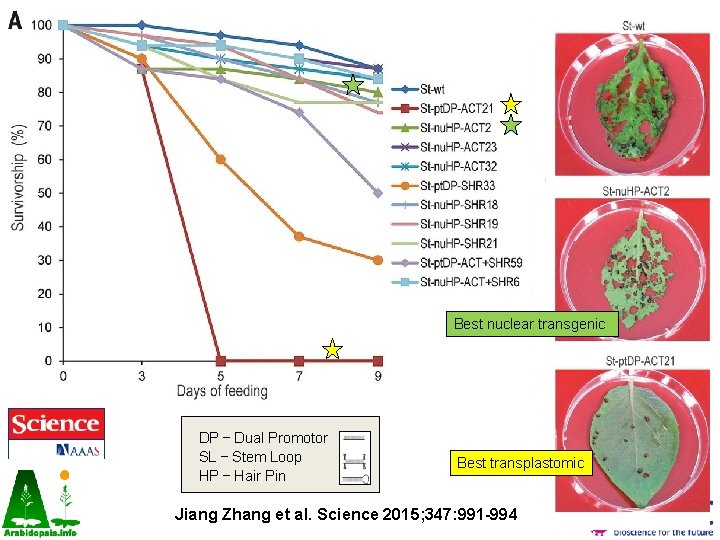
Best nuclear transgenic DP – Dual Promotor SL – Stem Loop HP – Hair Pin Best transplastomic Jiang Zhang et al. Science 2015; 347: 991 -994
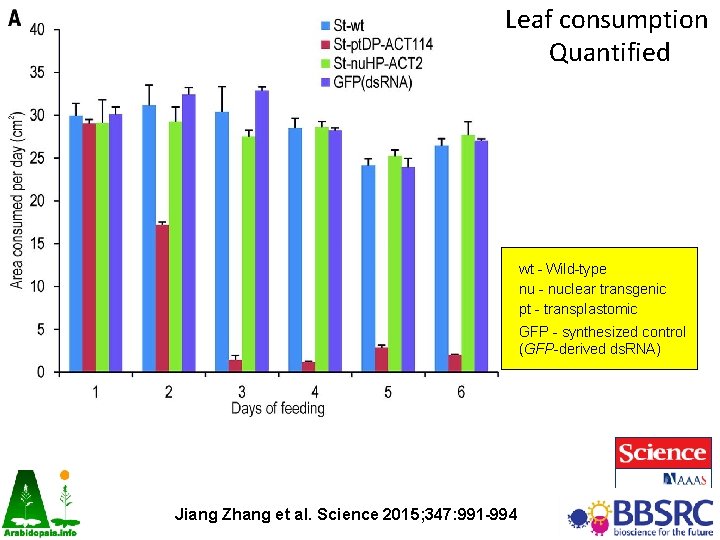
Leaf consumption Quantified wt - Wild-type nu - nuclear transgenic pt - transplastomic GFP - synthesized control (GFP-derived ds. RNA) Jiang Zhang et al. Science 2015; 347: 991 -994
Steve Whyard Science 2015; 347: 950 -951
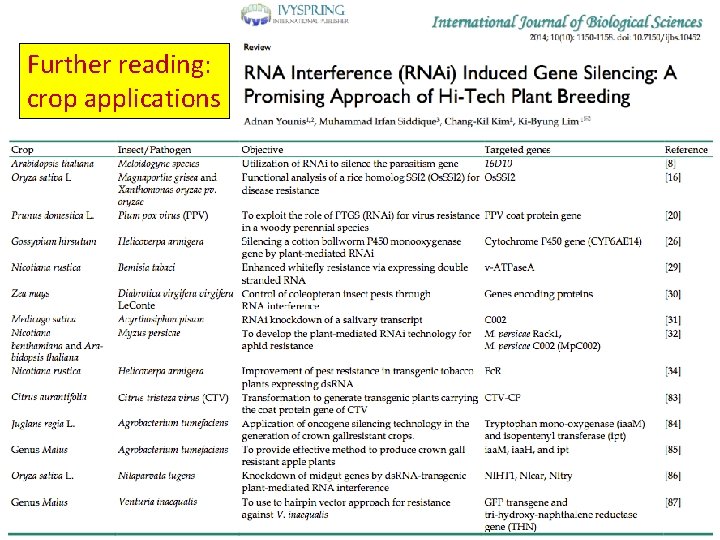
Further reading: crop applications
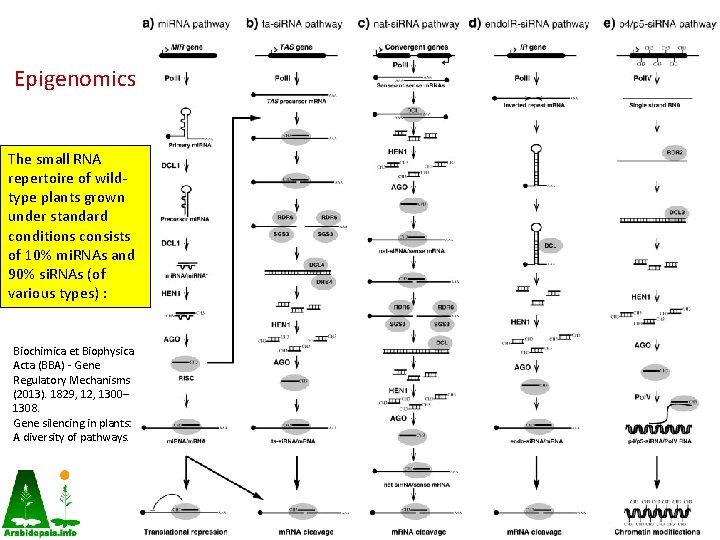
Epigenomics The small RNA repertoire of wildtype plants grown under standard conditions consists of 10% mi. RNAs and 90% si. RNAs (of various types) : Biochimica et Biophysica Acta (BBA) - Gene Regulatory Mechanisms (2013). 1829, 12, 1300– 1308. Gene silencing in plants: A diversity of pathways.
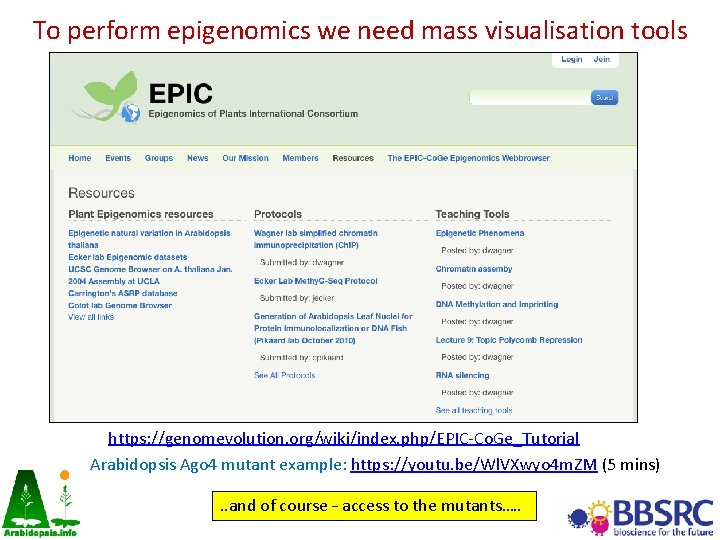
To perform epigenomics we need mass visualisation tools https: //genomevolution. org/wiki/index. php/EPIC-Co. Ge_Tutorial Arabidopsis Ago 4 mutant example: https: //youtu. be/Wl. VXwyo 4 m. ZM (5 mins). . and of course – access to the mutants…. .