
Epidemiology Notes September 2020 1 How to use

Epidemiology Notes September 2020 1
How to use this Presentation Students should review this presentation and take notes on information they find relevant. This presentation is intended to provide some background and increase student knowledge concerning the topic of Epidemiology. Students will find additional information and fuller explanations in other resources referenced both here and the MY SO lesson plan. 2
Online Text Books Two free online textbooks that students may want to reference or read sections of while working on the EXPLAIN phase of the lesson include: Principles of Epidemiology 3 rd edition from the CDC http: //www. cdc. gov/osels/scientific_edu/SS 1978. pdf Epidemiology Basics published by the World Health Organization http: //whqlibdoc. who. int/publications/2006/9241547073_ eng. pdf 3
Epidemiology Topic Distribution Questions & Information on Epidemiology are distributed across three Topic Areas Background & Surveillance Outbreak Investigation Patterns, Control & Prevention 4
Background & Surveillance Public Health Approach vs. Clinical Approach Some Key Figures in the History of Epidemiology & Population Health Components of Public Health Epidemiology & Public Health Natural History & Spectrum of Disease Public Health Surveillance 5

Clinical vs. Public Health Approaches Public Health Clinical Medicine Primary Focus Populations Individuals Emphasis Prevention Diagnosis Health Promotion Treatment Whole Community Whole Patient Interventions aimed at Environment, Human Behavior and Lifestyle, and Medical Care Analytical (Epidemiology); Medical Care Setting and Population (Occupational Health); Substantive Health Problem (Nutrition); Patient Group (Pediatrics); Paradigm Organizational Lines of Specialization Skills in Assessment, Policy Development, and Assurance Organ (Cardiology); Etiology, Pathophysiology (Oncology, Infectious Disease) Technical Skill (Radiology) [Adapted from: Fineberg, Harvey, MD, Ph. D, Dean, Harvard University School of Public Health, 1990. Traditional Distinctions Between Public Health and Medicine. Table 5 -1, Who Will Keep the Public Healthy? Educating Public Health 6 Professionals for the 21 st Century. Institute of Medicine, 2003.
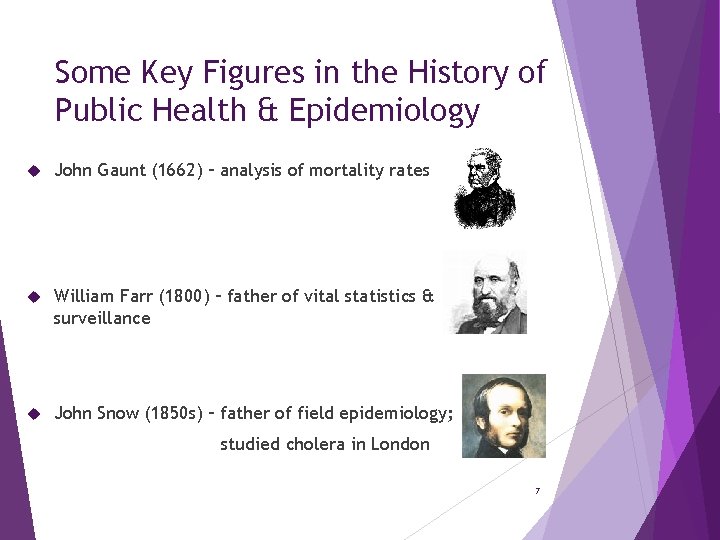
Some Key Figures in the History of Public Health & Epidemiology John Gaunt (1662) – analysis of mortality rates William Farr (1800) – father of vital statistics & surveillance John Snow (1850 s) – father of field epidemiology; studied cholera in London 7

A Public Health Approach Surveillance Risk Factor Identification Intervention Evaluation Implementation 8
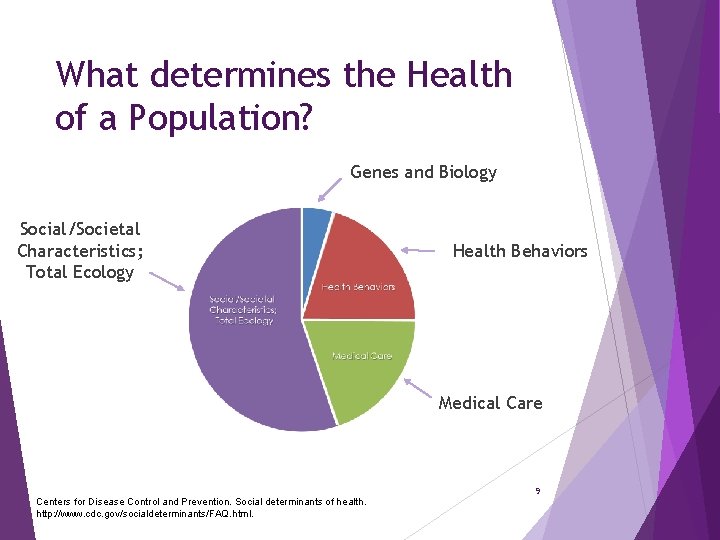
What determines the Health of a Population? Genes and Biology Social/Societal Characteristics; Total Ecology Health Behaviors Medical Care 9 Centers for Disease Control and Prevention. Social determinants of health. http: //www. cdc. gov/socialdeterminants/FAQ. html.
Notes about the Previous Chart The previous chart is an estimate of how these four major determinants influence health at the population level. Notice the portion of the chart that represents medical care. We spend trillions of dollars on health care, yet it only determines about 25% of our health. The remaining 75% of what determines our health as a population is our total environment or ecology, including the social environment in which we live, plus our health behaviors and to a lesser extent, our genes and biology. An example of the role these determinants play in our daily lives is through nutrition and physical activity. Both are essential elements in producing optimal health and should be viewed in the context of such environmental factors as • social and cultural norms that influence food choices and physical activity, • environmental characteristics, such as availability (lack of healthy food, open space for exercise, or safety in urban neighborhoods), and • sector influences, such as the marketing of processed food. All of these factors influence our individual choices, which in turn, influence our overall health. 10
Public Health Core Sciences 11
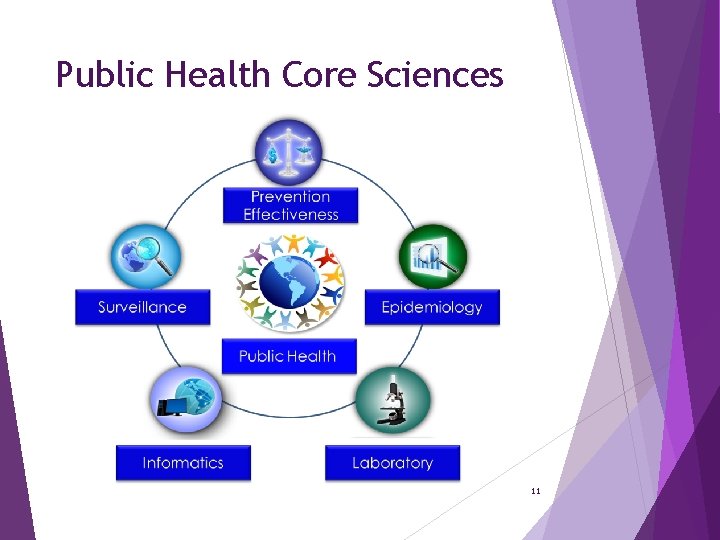
Explaining the Public Health Core Sciences To implement the public health approach, practitioners use and apply scientific methods. These methods come from a series of core sciences that provide the foundation. These sciences include: Public Health Surveillance, which we use to monitor a public health situation. Epidemiology enables us to determine where diseases originate, how or why they move through populations, and how we can prevent them. We’ll learn more about epidemiology during today’s course. Public Health Laboratories support public health by performing tests to confirm disease diagnoses. Laboratories also support public health by conducting research and training. Public Health Informatics continues to increase in importance as we shift from of paper documents to electronic health records. Informatics deals with the methods for collecting, compiling, and presenting health information. It enables us to use electronic data effectively when addressing a public health situation. Prevention Effectiveness is closely linked to public health policy. Prevention effectiveness studies provide important economic information for decision makers to help them choose the best option available. These five core sciences can help us protect and promote the public’s health by giving public health practitioners the answers they need. One science alone cannot answer the questions and provide a solution; it is the application of these core sciences together. 12
Example of Public Health Core Sciences in Action Let’s look at the public health challenge of influenza. Public health surveillance can monitor when and where cases of influenza occur each year. Professionals can use the science of epidemiology to understand why different populations choose to get vaccinated against influenza. They can use the science of informatics to receive and analyze electronic information from health care institutions (e. g. , doctors’ offices and hospitals) to determine whether persons who get influenza go to see a doctor and whether they get well or die. Public health practitioners can use laboratory science to determine whether persons with fever and cough have influenza or a different infection, and they can use prevention effectiveness to show that influenza vaccination campaigns that might cost $200, 000 can prevent $1 million in medical costs, lost wages, and other costs. 13
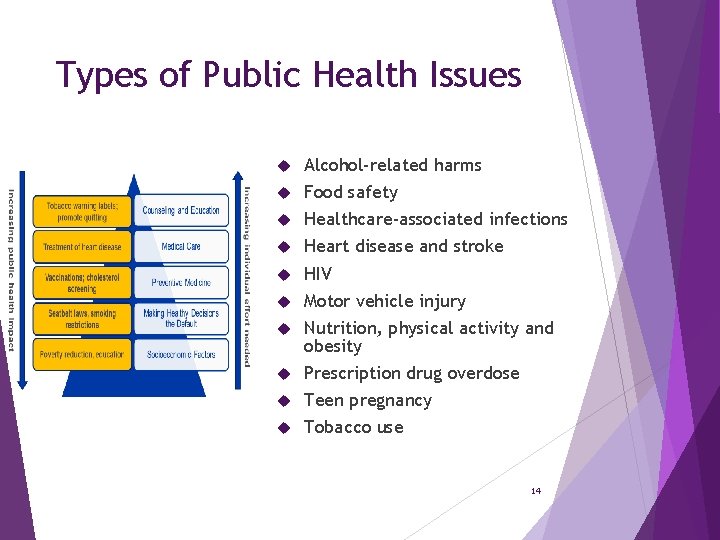
Types of Public Health Issues Alcohol-related harms Food safety Healthcare-associated infections Heart disease and stroke HIV Motor vehicle injury Nutrition, physical activity and obesity Prescription drug overdose Teen pregnancy Tobacco use 14
Epidemiology Scientific Method – organized problem solving Distribution and determinants of disease in human populations Prevent and control those diseases Health-related events: Chronic diseases Environmental problems Behavioral problems Injuries Infectious diseases 15
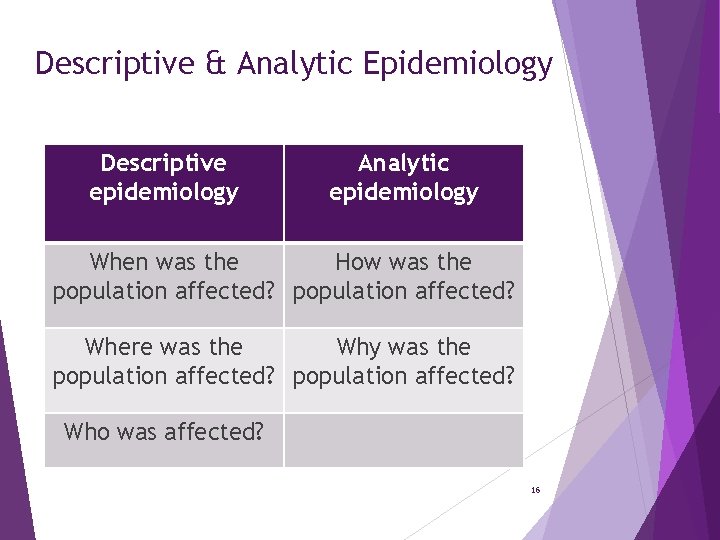
Descriptive & Analytic Epidemiology Descriptive epidemiology Analytic epidemiology When was the How was the population affected? Where was the Why was the population affected? Who was affected? 16
Connecting Descriptive & Analytic Epidemiology Time, place, and person is the mantra of the epidemiologist. Another way of comparing descriptive and analytic epidemiology is to say that, during the descriptive process, we are concerned with • when the population was affected, • where they were affected, and • who specifically was affected. From the observations gathered during the descriptive process, a hypothesis is generated about the causes of observed patterns and the factors that increase risk for disease or injury. To test a hypothesis, epidemiologists must use an analytic epidemiology process in which they ask how and why the population was affected. 17
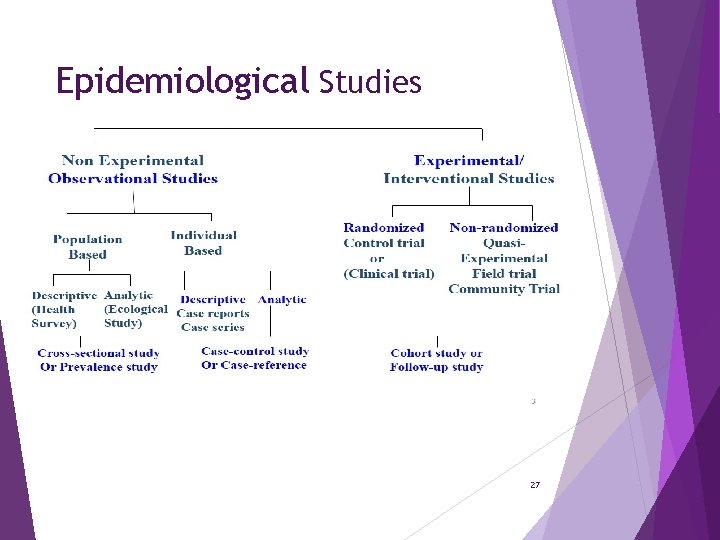
Epidemiology Study Types Experimental Epidemiology Study Types Descriptive Observational Analytic 18 18
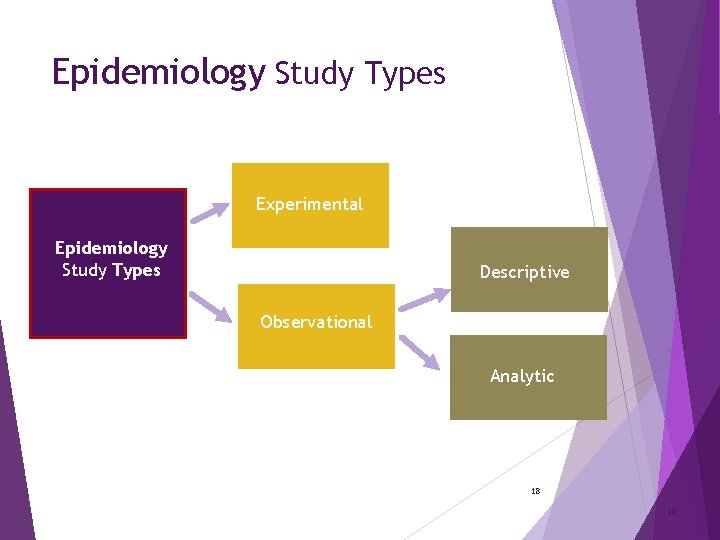
Epidemiological Studies Notes In an experimental study, the investigators can control certain factors within the study from the beginning. An example of this type is a vaccine efficacy trial that might be conducted by the National Institutes of Health. In such a trial, the investigators randomly control who receives the test vaccine and who does not among a limited group of participants; they then observe the outcome to determine if it should to be used more widely. In an observational study, the epidemiologist does not control the circumstances. These studies can be further subdivided into descriptive and analytic. Descriptive epidemiology is the more basic of these categories and is fundamental to what epidemiologists do. In a descriptive study, the epidemiologist collects information that characterizes and summarizes the health event or problem. In the analytic study, the epidemiologist relies on comparisons between different groups to determine the role of different causative conditions or risk factors. 19
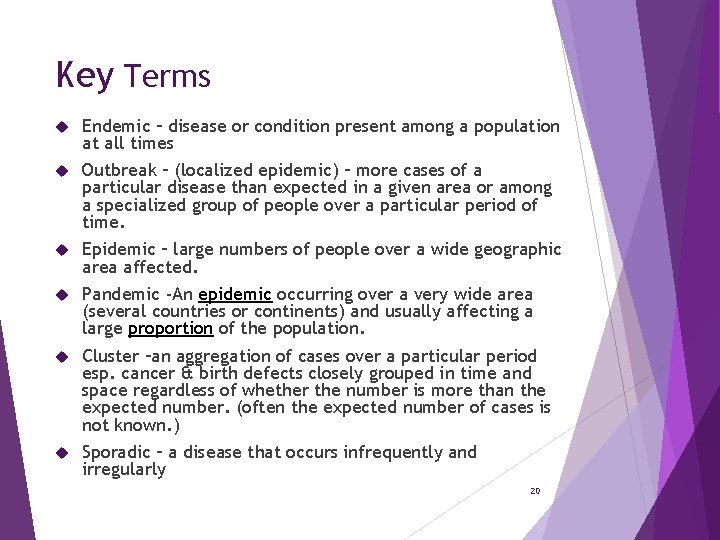
Key Terms Endemic – disease or condition present among a population at all times Outbreak – (localized epidemic) – more cases of a particular disease than expected in a given area or among a specialized group of people over a particular period of time. Epidemic – large numbers of people over a wide geographic area affected. Pandemic -An epidemic occurring over a very wide area (several countries or continents) and usually affecting a large proportion of the population. Cluster –an aggregation of cases over a particular period esp. cancer & birth defects closely grouped in time and space regardless of whether the number is more than the expected number. (often the expected number of cases is not known. ) Sporadic – a disease that occurs infrequently and irregularly 20

Natural History & Spectrum of Disease 21
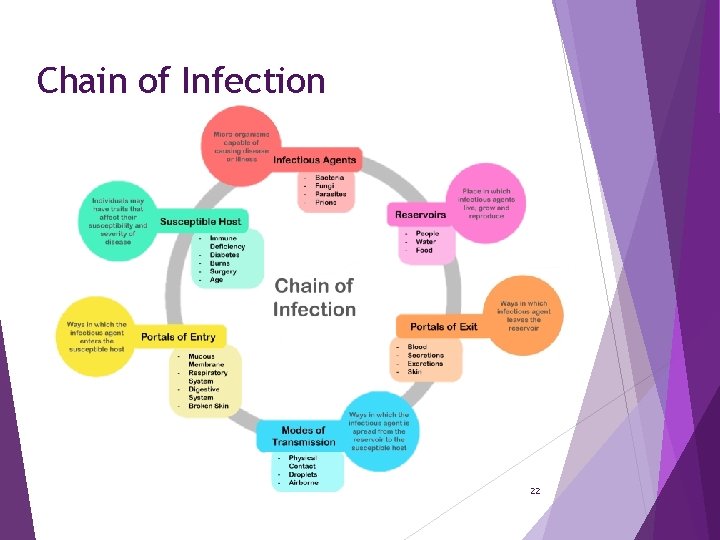
Chain of Infection 22
Objectives of Surveillance The main objectives of surveillance are: To provide information about new and changing trends in the health status of a population, e. g. , morbidity, mortality, nutritional status or other indicators and environmental hazards, health practices and other factors that may affect health To provide feed-back which may be expected to modify the policy and the system itself and lead to redefinition of objectives To provide timely warning of public health disasters so that interventions can be mobilized 23
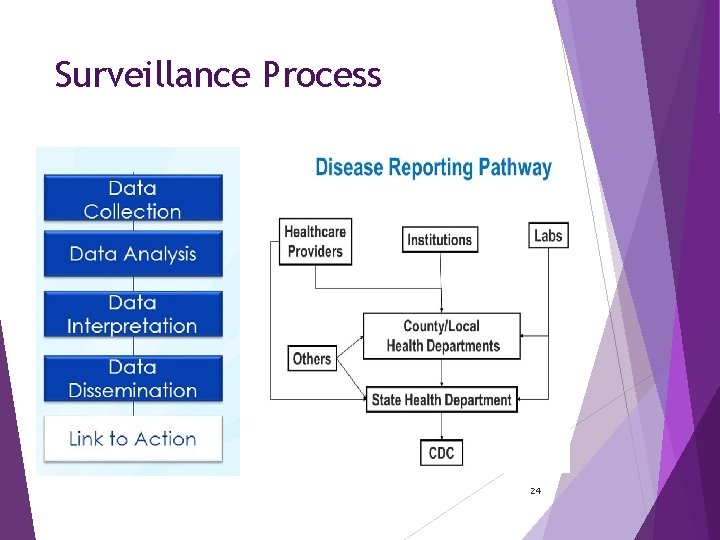
Surveillance Process 24
Types of Surveillance Passive Surveillance – diseases reported by health care professional as reporting case of measles Active Surveillance – health agencies contact health providers seeking reports as searching for other cases of measles to identify potential outbreak Sentinel Surveillance – involves only a limited network of carefully selected reporting sites targeting a particular disease Syndromic Surveillance – focuses on one or more symptoms to detect or anticipate outbreaks as influenza causing symptoms and absentee increases 25
Outbreak Investigation Steps in Solving Health Problems Step 1 - Collect Data Surveillance Determine Time/Place/Person triad Step 2 – Assessment Step 3 - Hypothesis testing Inference Determine How and Why Step 4 – Action Intervention Make sure to not only know the steps but be prepared to analyze an outbreak study. 26
Epidemiological Studies 27
Connecting the Scientific Method & Epidemiology Obtain Background Information Define the Problem Formulate Hypothesis Develop a Study to Test the Hypothesis Collect Data and Observations Evaluate Results Determine if Hypothesis is true/modify Formulate Conclusions Report Results Compare these steps to 13 Steps in Outbreak Investigation 28
Step 1: Prepare for Field Work Research, supplies & equipment – research the disease or situation and gather needed supplies & equipment to conduct the investigation Administrative arrangements – make official administrative and personal travel arrangements Local contacts - follow protocol 29
Step 2: Establish the Existence of an Outbreak Expected # of cases for area – use records as health dept. , hospital records, death records, physician records, doctor survey to determine expected # for the area in a given time Other factors in play – numbers may exceed normal due to factors such as better reporting, seasonal fluctuations, population changes 30
Step 3: Verify the Diagnosis Proper diagnosis - verify the procedures used to diagnose the problem and check methods used for identifying infectious and toxic chemical agents Not lab error – be sure that the increase number of cases are not due to experimental error Commonality – interview several persons who became ill to gain insight concerning possible cause, source, and spread of disease or problem 31
Step 4: Construct a Case Definition Used to determine who has the disease or condition Based on 4 components or standard criteria Clinical Information about the disease or condition Characteristics of the affected people Location or place Want as specific as possible such as restaurant, county, or several specific areas Time sequence which is the specific time during which the outbreak or condition occurred 32
Case Definition Influenza-like Illness (ILI) A case of influenza-like illness (ILI) or influenza is defined as a person with fever of 37. 8°C (100°F) or greater orally or 38. 3°C (101°F) rectally PLUS cough during the influenza season (October 1 through May 31). A person with laboratory confirmed influenza is also considered a case even if the person does not have cough and fever. 33
Identifying cases Identification of specific cases Kind & Number Count Specific Cases Three Levels of Identification Possible – some factors point to diagnosis Probable – many factors point to diagnosis but may lack lab verification Confirmed – have diagnosis with case definition plus lab verification Initial reports may be only a small sampling of the total problem. Be sure to expand search to determine the true size and extent of the problem 34
Recording Case Information Line Listing is a mechanism to record information about cases Line Listing is chart of specific cases including information about each case Information contained in Line Listing is: Identifying information - ID or case # - left column + name or initials Clinical information – diagnosis, symptoms, lab results, hospital, current condition including death Descriptive Details: Time: date & time of onset, date of report Person: age, sex, occupation, other characteristics Place: street, city or county + specific site Risk factors & possible causes – specific to situation (disease) and outbreak setting 35
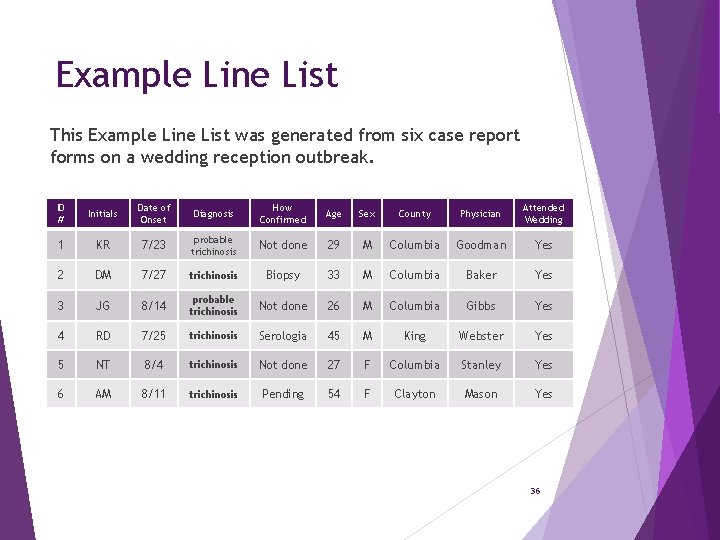
Example Line List This Example Line List was generated from six case report forms on a wedding reception outbreak. ID # Initials Date of Onset Diagnosis How Confirmed Age Sex County Physician Attended Wedding 1 KR 7/23 probable trichinosis Not done 29 M Columbia Goodman Yes 2 DM 7/27 trichinosis Biopsy 33 M Columbia Baker Yes 3 JG 8/14 probable trichinosis Not done 26 M Columbia Gibbs Yes 4 RD 7/25 trichinosis Serologia 45 M King Webster Yes 5 NT 8/4 trichinosis Not done 27 F Columbia Stanley Yes 6 AM 8/11 trichinosis Pending 54 F Clayton Mason Yes 36
Step 5: Find Cases Systematically and Record Information Identifying information Demographic information Clinical information Risk factor information Reporter information 37
Types of Descriptive Studies study the distribution of a problem by cases or outcome, frequency in population, exposure, time pattern or environmental factor Studies without a control group can be used for descriptive purposes! Case report/case series case report = detail report of a single patient from one or more doctors case series = characteristics of several patients Correlative studies correlates general characteristics of the population with health problem frequency with several groups during the same period of time Time series analysis correlate within the same population a different point in time Ecologic relations correlate relative to specific ecologic factors as diet Cross sectional a survey of a population where participants are selected irrespective of exposure or disease status 38
Step 6: Describe in terms of Time, Place & Person Triad Time – a histogram showing the course of the disease or outbreak to identify the source of the exposure Epidemic Curve or Epi curve (Begin early & update often) Place – geographic extent plus spot map of cases to identify groups specific to a location or environmental factors Person – identify the affected population by type of person or by exposures as age, sex, high risk exposure as with AIDS 39
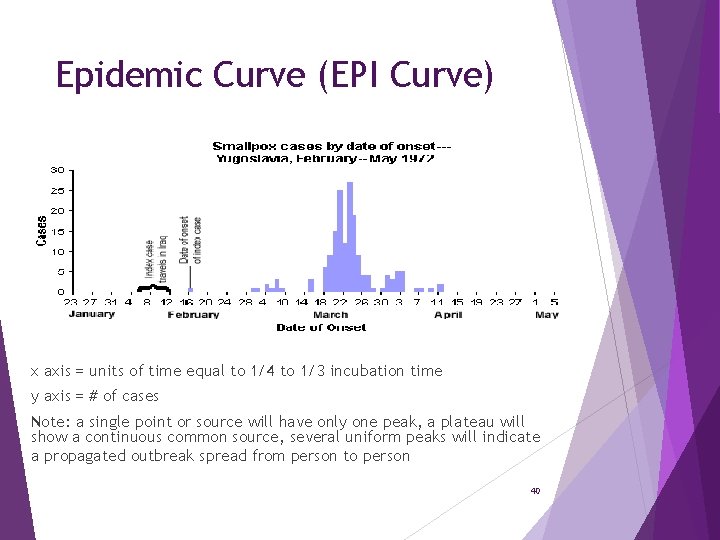
Epidemic Curve (EPI Curve) x axis = units of time equal to 1/4 to 1/3 incubation time y axis = # of cases Note: a single point or source will have only one peak, a plateau will show a continuous common source, several uniform peaks will indicate a propagated outbreak spread from person to person 40
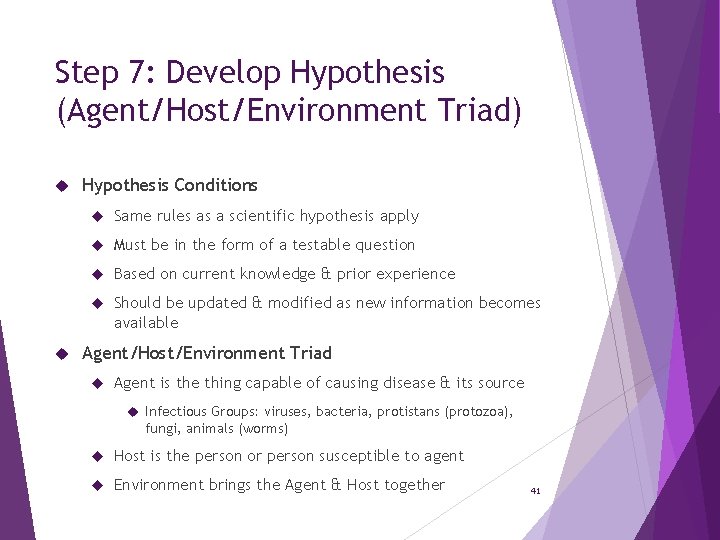
Step 7: Develop Hypothesis (Agent/Host/Environment Triad) Hypothesis Conditions Same rules as a scientific hypothesis apply Must be in the form of a testable question Based on current knowledge & prior experience Should be updated & modified as new information becomes available Agent/Host/Environment Triad Agent is the thing capable of causing disease & its source Infectious Groups: viruses, bacteria, protistans (protozoa), fungi, animals (worms) Host is the person or person susceptible to agent Environment brings the Agent & Host together 41
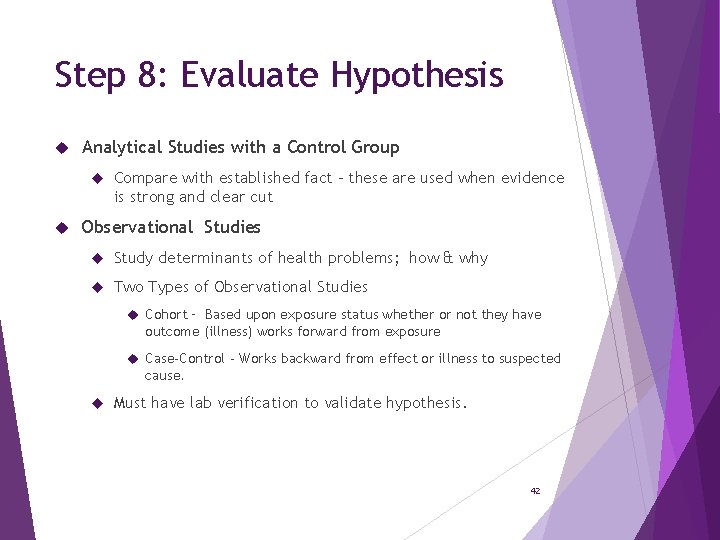
Step 8: Evaluate Hypothesis Analytical Studies with a Control Group Compare with established fact – these are used when evidence is strong and clear cut Observational Studies Study determinants of health problems; how & why Two Types of Observational Studies Cohort – Based upon exposure status whether or not they have outcome (illness) works forward from exposure Case-Control - Works backward from effect or illness to suspected cause. Must have lab verification to validate hypothesis. 42
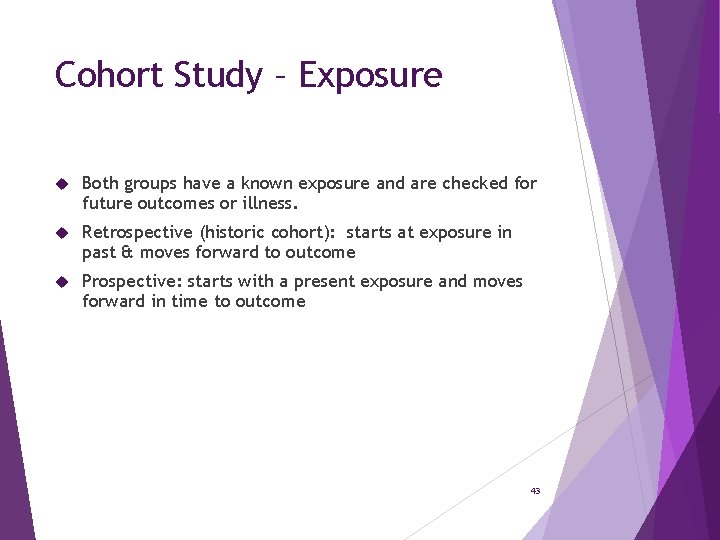
Cohort Study – Exposure Both groups have a known exposure and are checked for future outcomes or illness. Retrospective (historic cohort): starts at exposure in past & moves forward to outcome Prospective: starts with a present exposure and moves forward in time to outcome 43
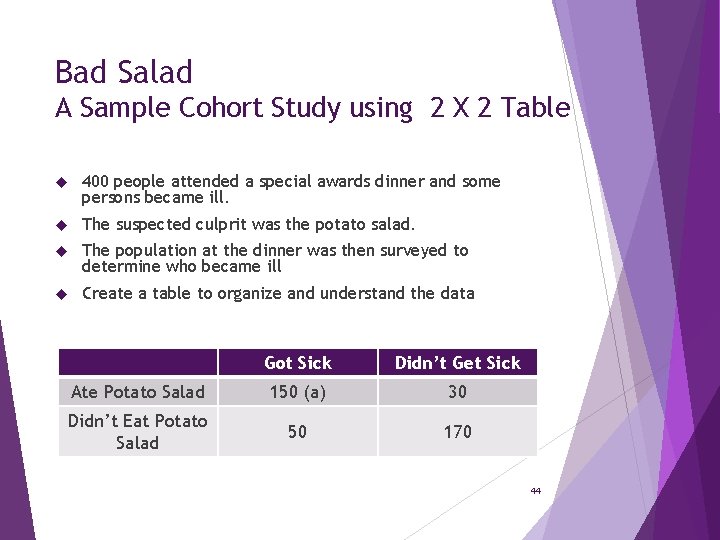
Bad Salad A Sample Cohort Study using 2 X 2 Table 400 people attended a special awards dinner and some persons became ill. The suspected culprit was the potato salad. The population at the dinner was then surveyed to determine who became ill Create a table to organize and understand the data Got Sick Didn’t Get Sick Ate Potato Salad 150 (a) 30 Didn’t Eat Potato Salad 50 170 44
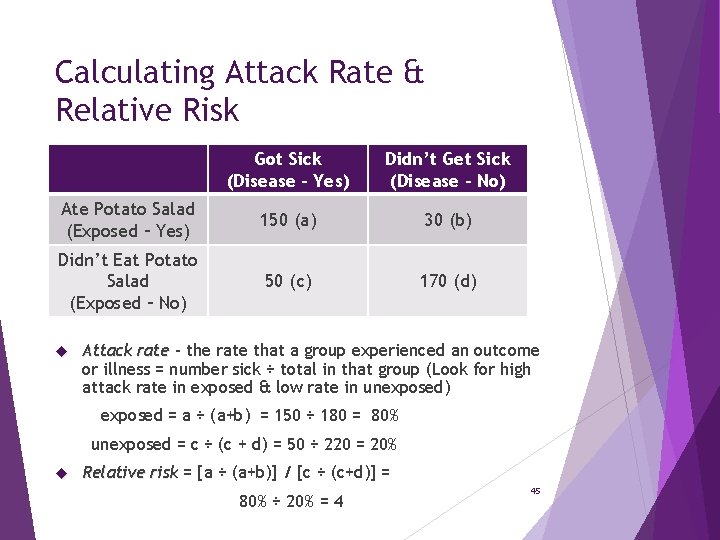
Calculating Attack Rate & Relative Risk Got Sick (Disease – Yes) Didn’t Get Sick (Disease – No) Ate Potato Salad (Exposed – Yes) 150 (a) 30 (b) Didn’t Eat Potato Salad (Exposed – No) 50 (c) 170 (d) Attack rate – the rate that a group experienced an outcome or illness = number sick ÷ total in that group (Look for high attack rate in exposed & low rate in unexposed) exposed = a ÷ (a+b) = 150 ÷ 180 = 80% unexposed = c ÷ (c + d) = 50 ÷ 220 = 20% Relative risk = [a ÷ (a+b)] / [c ÷ (c+d)] = 80% ÷ 20% = 4 45
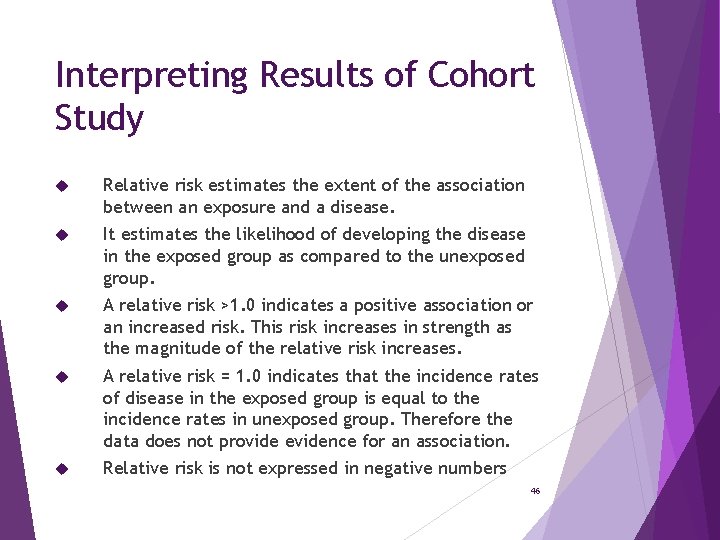
Interpreting Results of Cohort Study Relative risk estimates the extent of the association between an exposure and a disease. It estimates the likelihood of developing the disease in the exposed group as compared to the unexposed group. A relative risk >1. 0 indicates a positive association or an increased risk. This risk increases in strength as the magnitude of the relative risk increases. A relative risk = 1. 0 indicates that the incidence rates of disease in the exposed group is equal to the incidence rates in unexposed group. Therefore the data does not provide evidence for an association. Relative risk is not expressed in negative numbers 46
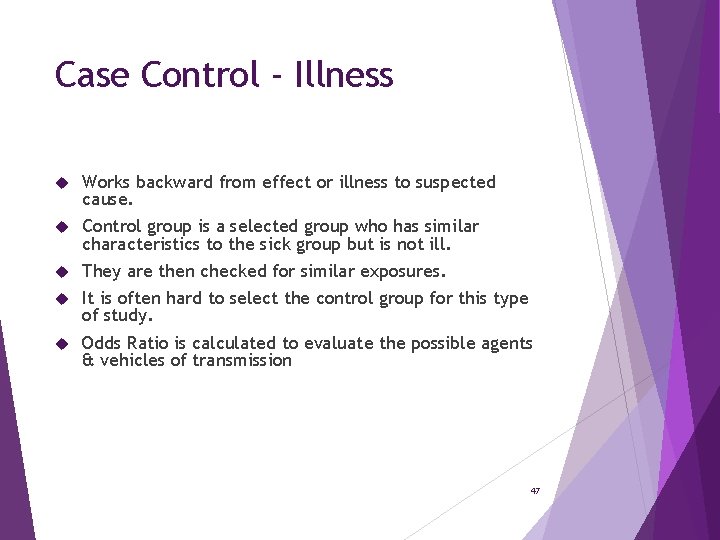
Case Control - Illness Works backward from effect or illness to suspected cause. Control group is a selected group who has similar characteristics to the sick group but is not ill. They are then checked for similar exposures. It is often hard to select the control group for this type of study. Odds Ratio is calculated to evaluate the possible agents & vehicles of transmission 47
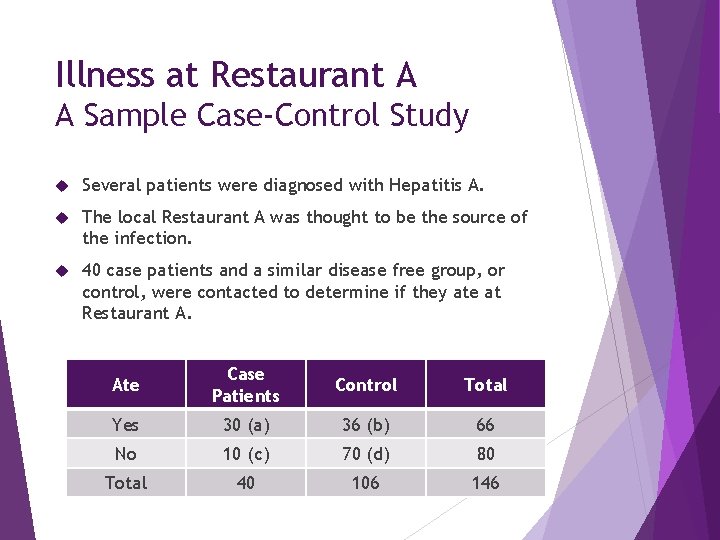
Illness at Restaurant A A Sample Case-Control Study Several patients were diagnosed with Hepatitis A. The local Restaurant A was thought to be the source of the infection. 40 case patients and a similar disease free group, or control, were contacted to determine if they ate at Restaurant A. Ate Case Patients Control Total Yes 30 (a) 36 (b) 66 No 10 (c) 70 (d) 80 Total 40 106 146 48
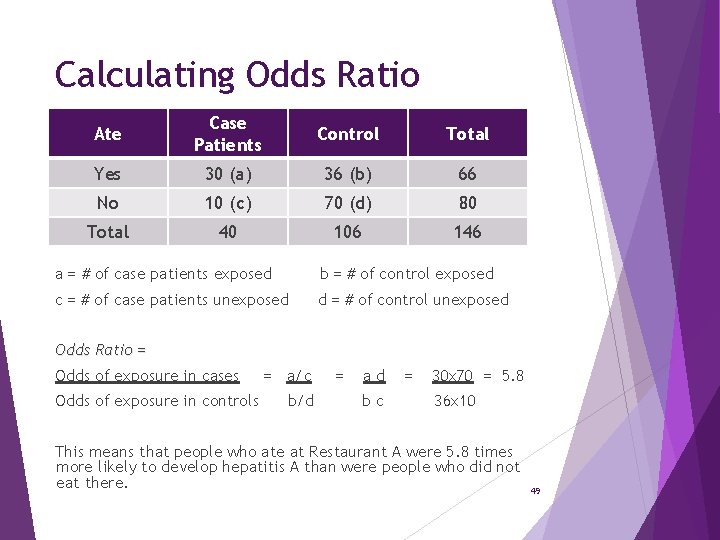
Calculating Odds Ratio Ate Case Patients Control Total Yes 30 (a) 36 (b) 66 No 10 (c) 70 (d) 80 Total 40 106 146 a = # of case patients exposed b = # of control exposed c = # of case patients unexposed d = # of control unexposed Odds Ratio = Odds of exposure in cases Odds of exposure in controls = a/c b/d = ad bc = 30 x 70 = 5. 8 36 x 10 This means that people who ate at Restaurant A were 5. 8 times more likely to develop hepatitis A than were people who did not eat there. 49
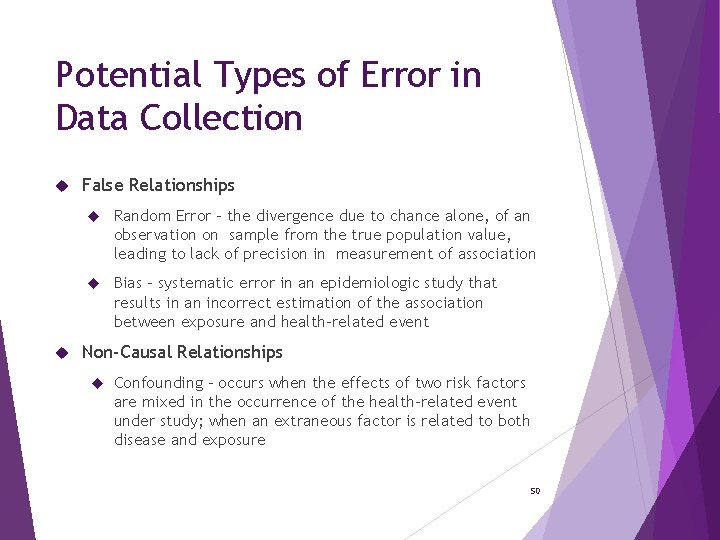
Potential Types of Error in Data Collection False Relationships Random Error - the divergence due to chance alone, of an observation on sample from the true population value, leading to lack of precision in measurement of association Bias - systematic error in an epidemiologic study that results in an incorrect estimation of the association between exposure and health-related event Non-Causal Relationships Confounding – occurs when the effects of two risk factors are mixed in the occurrence of the health-related event under study; when an extraneous factor is related to both disease and exposure 50
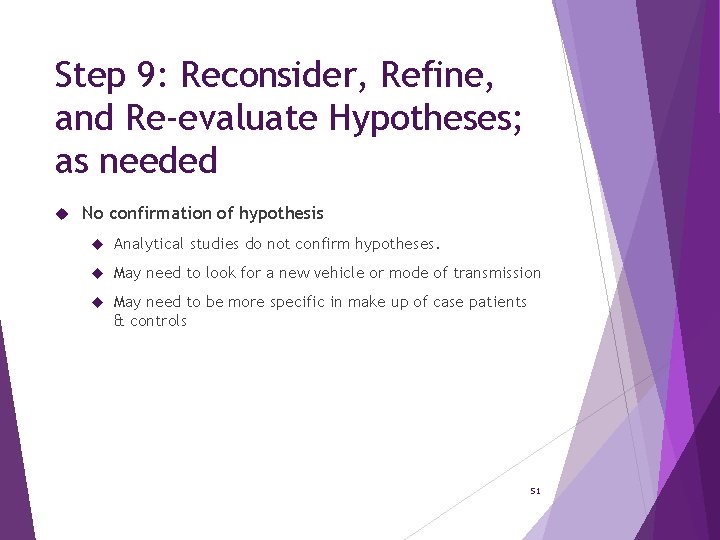
Step 9: Reconsider, Refine, and Re-evaluate Hypotheses; as needed No confirmation of hypothesis Analytical studies do not confirm hypotheses. May need to look for a new vehicle or mode of transmission May need to be more specific in make up of case patients & controls 51
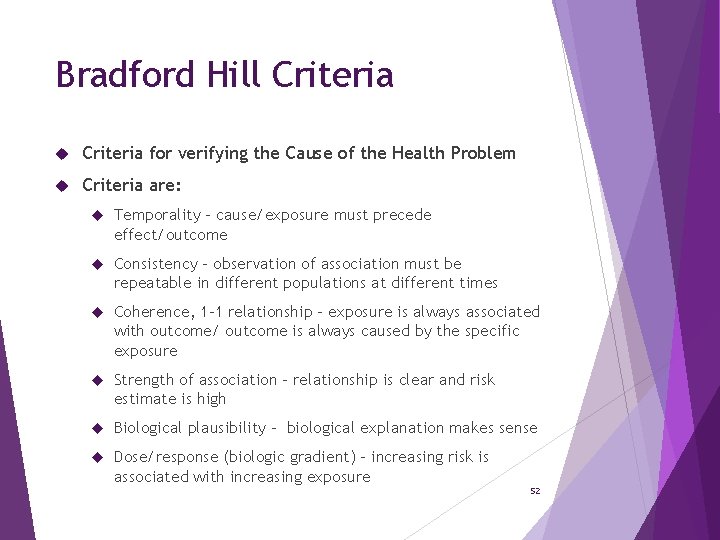
Bradford Hill Criteria for verifying the Cause of the Health Problem Criteria are: Temporality – cause/exposure must precede effect/outcome Consistency – observation of association must be repeatable in different populations at different times Coherence, 1 -1 relationship – exposure is always associated with outcome/ outcome is always caused by the specific exposure Strength of association – relationship is clear and risk estimate is high Biological plausibility – biological explanation makes sense Dose/response (biologic gradient) – increasing risk is associated with increasing exposure 52
Step 10: Compare and Reconcile with Laboratory an/or Environmental Studies Verify with laboratory/environmental studies Laboratory evidence can confirm the findings Verification with control conditions is very important Lab verification is needed to validate a hypothesis Environmental studies are equally important Examination of the area of an outbreak can provide evidence and clues used in laboratory analysis 53
Step 11: Implement Control and Preventative Measures As soon as source is known – people are sick or hurting and need he must know agent & source of agent + susceptibility of host+ chain of transmission Aim at chain of agent-source-host – break the chain of transmission at any of its 3 points May interrupt transmission or exposure – with vehicles as isolation May reduce susceptibility – with immunizations, legal issues and/or education 54
Step 12: Initiate or Maintain Surveillance Once control and prevention measures have been implemented, they must continue to be monitored If active surveillance was initiated as part of case finding efforts, it should be continued to determine whether the prevention and control measures are working 55
Step 13: Communicate Findings Oral briefing – inform local health officials or other need -to-know groups as soon as information is available Written report – usually done in scientific format for future reference, legal issues, and education 56
Patterns, Control & Prevention Interpret Tables, Charts & Graphs Determine Measures of Disease Frequency Risk Rates Ratios Proportions Control Strategies Prevention Strategies 57
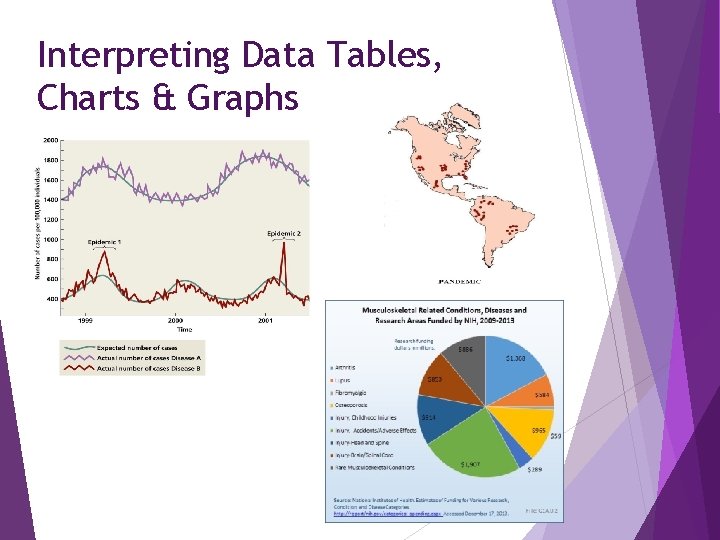
Interpreting Data Tables, Charts & Graphs 58
Determining & Interpreting Measures of Frequency Epidemiological measures include: Counts – the absolute number of persons who have a disease or characteristics of interest Risk – the probability that an individual will be affected by, or die from, an illness or injury within a stated time or age span. Rate – the number of cases occurring during a specific period; always dependent on the size of the population during the period Ratio – often compares two rates and is a value obtained by dividing one quantity by another Proportion – a comparison of a part to the whole The number of cases divided by the total population Does not have a time dimension Can be expressed as a decimal, fraction, or a percentage 59
Calculation Illustrations Rate (%) = number of cases X 100 population at risk Ratio = number of events, items, persons in one group number of events, items, persons in another group Proportion = number of persons or events with a particular characteristic total number of persons or events of which the numerator is a subset X 10 n 60
Disease Control Disease control describes ongoing operations aimed at reducing: The incidence of disease The duration of disease and consequently the risk of transmission The effects of infection, including both the physical and psychosocial complications The financial burden to the community 61
Disease Control Process Disease control involves Control - public policy intervention that restricts the circulation of an infectious agent beyond the level that would result from spontaneous, individual behaviors to protect against infection Elimination – reduction to zero of the incidence of specified disease in a defined geographical area as a result of deliberate efforts Eradication – termination of all transmission of infections by extermination of infectious agents Extinction – the specific infectious agent no longer exists in nature or in the laboratory 62
Preventable Causes of Disease BEINGS Biological factors and Behavioral Factors Environmental factors Immunologic factors Nutritional factors Genetic factors Services, Social factors, and Spiritual factors [JF Jekel, Epidemiology, Biostatistics, and Preventive Medicine, 1996] 63
Levels of Disease Prevention Primordial Prevention establish or maintain conditions to minimize health hazards Target: Whole population through public health policy Example: Advocacy for social change to make physical activity easier Primary Prevention – prevent disease well before it develops by reducing risk factors Target: Whole population, selected groups, & healthy individuals Example: Primary care advice during a routine consultation Secondary Prevention – early detection of disease through screening Target: selected individuals with high risk patients Example: Primary care risk factor reduction for those at risk of a chronic disease, fall, or injury Tertiary Prevention – target established disease to prevent deterioration Target: Patients Example: Exercise advice as part of cardiac rehabilitation 64
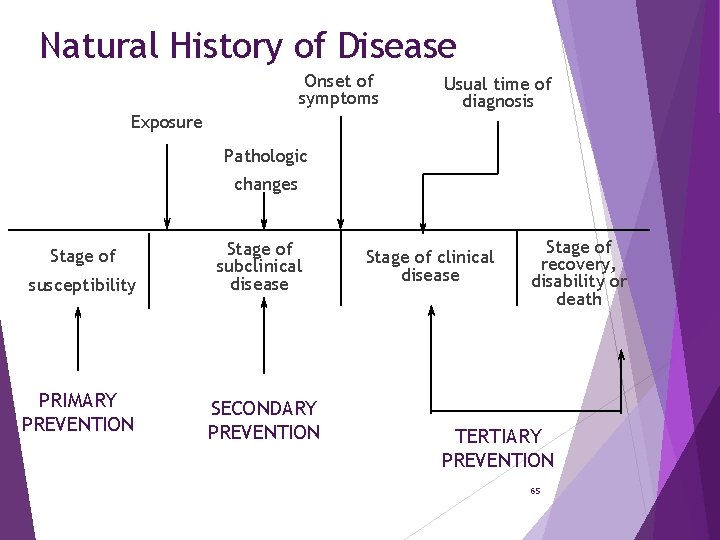
Natural History of Disease Onset of symptoms Exposure Usual time of diagnosis Pathologic changes susceptibility Stage of subclinical disease PRIMARY PREVENTION SECONDARY PREVENTION Stage of clinical disease Stage of recovery, disability or death TERTIARY PREVENTION 65
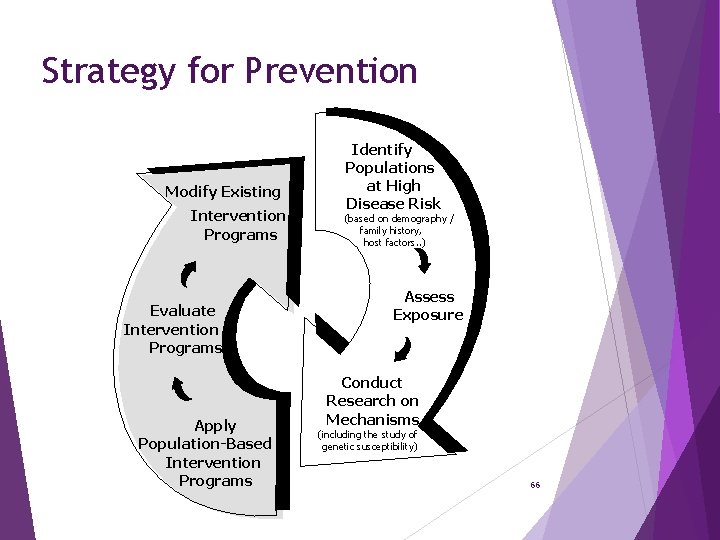
Strategy for Prevention Modify Existing Intervention Programs Evaluate Intervention Programs Apply Population-Based Intervention Programs Identify Populations at High Disease Risk (based on demography / family history, host factors. . ) Assess Exposure Conduct Research on Mechanisms (including the study of genetic susceptibility) 66
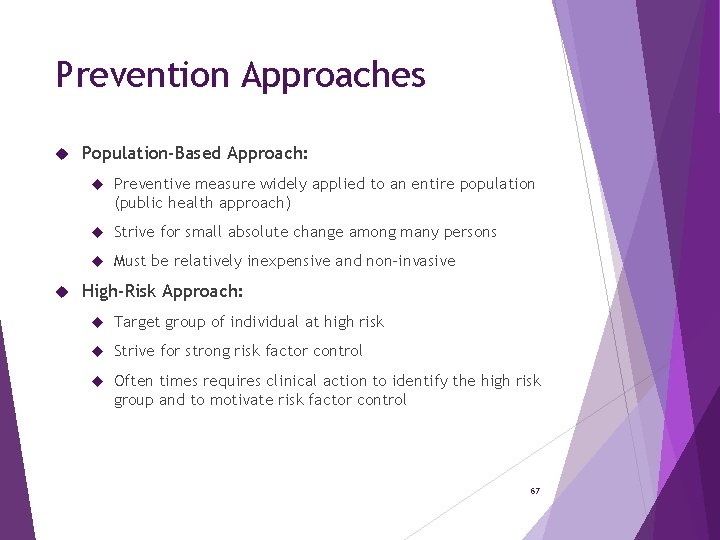
Prevention Approaches Population-Based Approach: Preventive measure widely applied to an entire population (public health approach) Strive for small absolute change among many persons Must be relatively inexpensive and non-invasive High-Risk Approach: Target group of individual at high risk Strive for strong risk factor control Often times requires clinical action to identify the high risk group and to motivate risk factor control 67
Monitoring Refers to the performance and analysis of routine measurements aimed at detecting changes in the environment or health status of population Monitoring of air pollution, water quality, growth and nutritional status It also refers to ongoing measurement of performance of a health service or a health professional, or of the extent to which patients comply with or adhere to advice from health professionals. 68
Types of Skills Needed Recognize risk factors for health problems Know the components of the scientific method used in investigating a disease outbreak to real-life situations affecting health Understand interpret the basic concepts of mathematics (rates & proportions as attack rate, relative risk & odds ratio) used to assess health risks Recognize an epidemiological case definition Know the different types of study designs used by epidemiologists and be able to recognize them from written accounts 69
- Slides: 69