
Epidemiology Kept Simple Chapter 9 Types of Epidemiologic
![Epidemiology Kept Simple Chapter 9: Types of Epidemiologic Studies [Introduction to Analytic Studies]](https://slidetodoc.com/presentation_image_h2/f4a9a9bbcfa12afe58d69a2bcf91cd66/image-1.jpg "Epidemiology Kept Simple Chapter 9: Types of Epidemiologic Studies [Introduction to Analytic Studies]")
- Slides: 13
Epidemiology Kept Simple Chapter 9: Types of Epidemiologic Studies [Introduction to Analytic Studies]
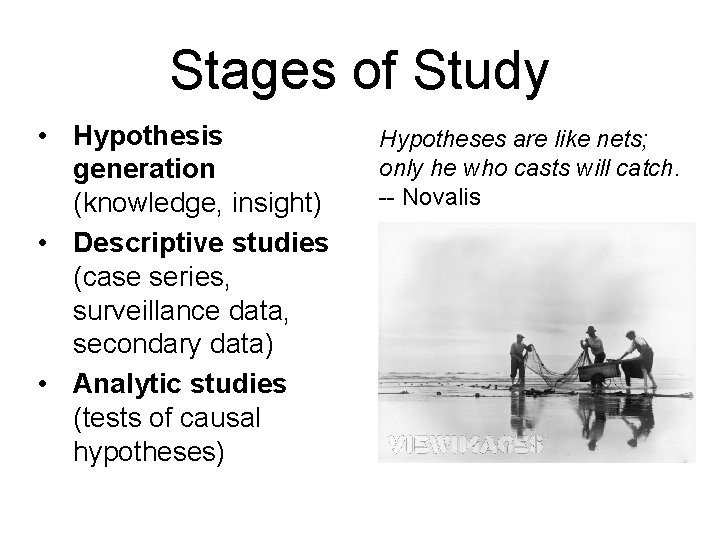
Stages of Study • Hypothesis generation (knowledge, insight) • Descriptive studies (case series, surveillance data, secondary data) • Analytic studies (tests of causal hypotheses) Hypotheses are like nets; only he who casts will catch. -- Novalis
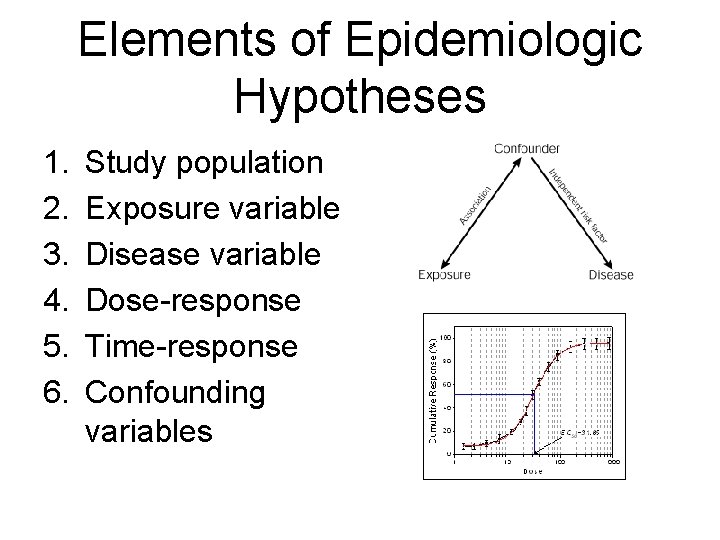
Elements of Epidemiologic Hypotheses 1. 2. 3. 4. 5. 6. Study population Exposure variable Disease variable Dose-response Time-response Confounding variables
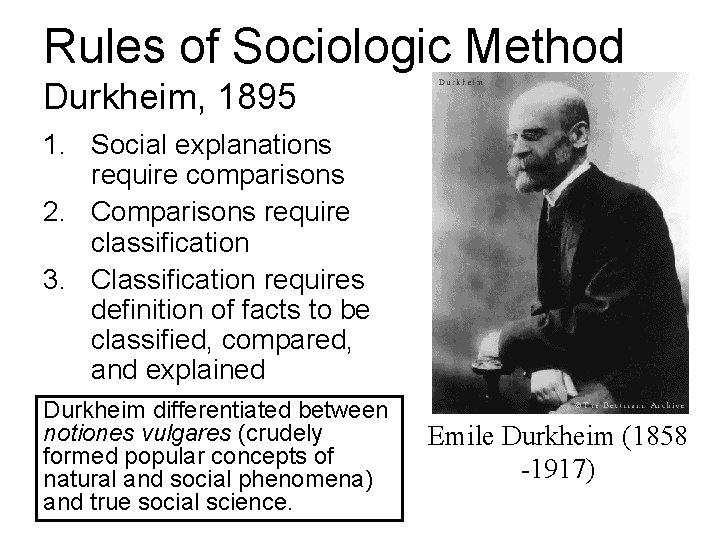
Rules of Sociologic Method Durkheim, 1895 1. Social explanations require comparisons 2. Comparisons require classification 3. Classification requires definition of facts to be classified, compared, and explained Durkheim differentiated between notiones vulgares (crudely formed popular concepts of natural and social phenomena) and true social science. Emile Durkheim (1858 -1917)
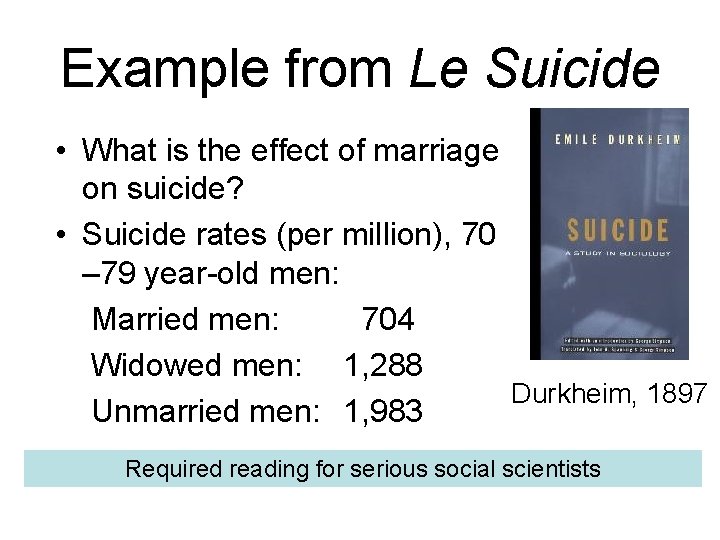
Example from Le Suicide • What is the effect of marriage on suicide? • Suicide rates (per million), 70 – 79 year-old men: Married men: 704 Widowed men: 1, 288 Durkheim, 1897 Unmarried men: 1, 983 Required reading for serious social scientists
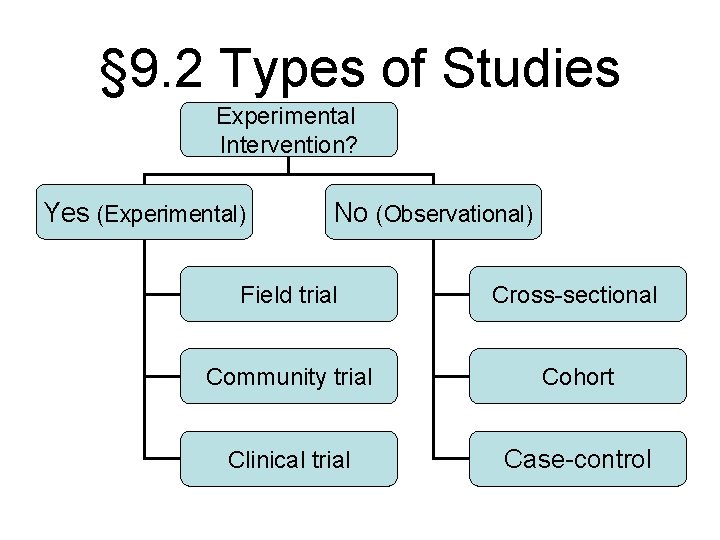
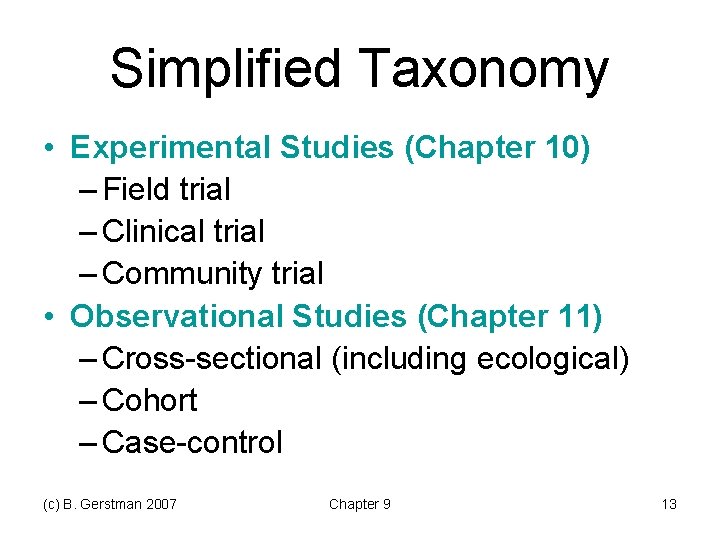
§ 9. 2 Types of Studies Experimental Intervention? Yes (Experimental) No (Observational) Field trial Cross-sectional Community trial Cohort Clinical trial Case-control
Selected Study Design Elements • • Experimentation Unit of observation Individual follow-up Case-control sampling (c) B. Gerstman 2007 Chapter 9 8
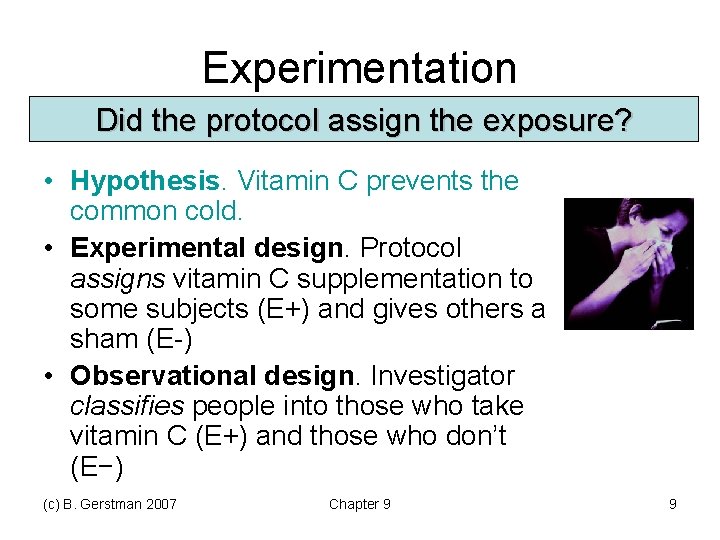
Experimentation Did the protocol assign the exposure? • Hypothesis. Vitamin C prevents the common cold. • Experimental design. Protocol assigns vitamin C supplementation to some subjects (E+) and gives others a sham (E-) • Observational design. Investigator classifies people into those who take vitamin C (E+) and those who don’t (E−) (c) B. Gerstman 2007 Chapter 9 9
Unit of Observation Are data available on individuals? • Hypothesis. Cigarettes cause lung cancer • Person-level data. Classify individuals as smokers (E+) or non-smokers (E−) and compare incidence • Aggregate-level (ecological) data. Classifies regions as high-smoking (E+) and low-smoking regions (E−) and compares incidences (data available at group level only) (c) B. Gerstman 2007 Chapter 9 10
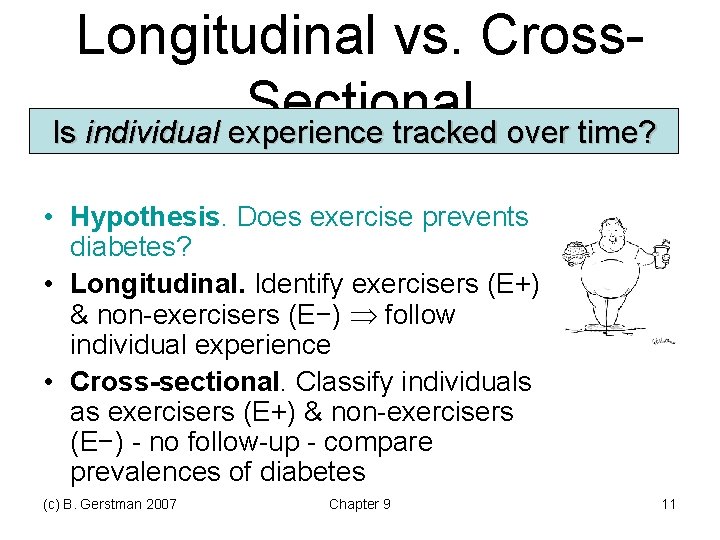
Longitudinal vs. Cross. Sectional Is individual experience tracked over time? • Hypothesis. Does exercise prevents diabetes? • Longitudinal. Identify exercisers (E+) & non-exercisers (E−) follow individual experience • Cross-sectional. Classify individuals as exercisers (E+) & non-exercisers (E−) - no follow-up - compare prevalences of diabetes (c) B. Gerstman 2007 Chapter 9 11
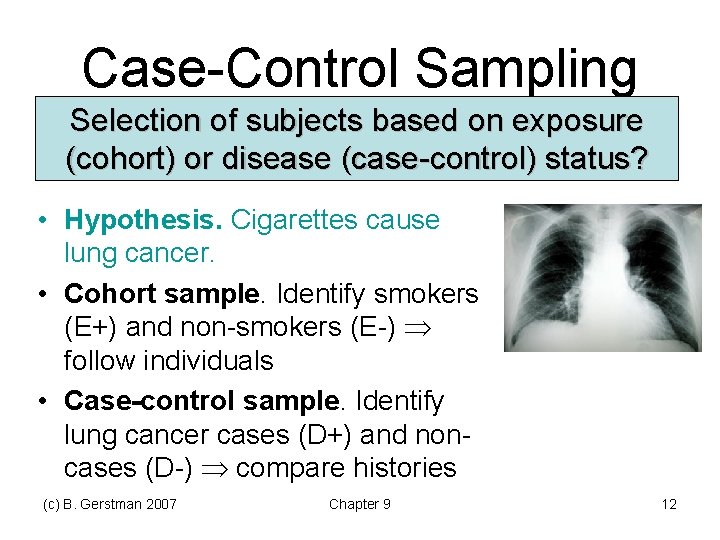
Case-Control Sampling Selection of subjects based on exposure (cohort) or disease (case-control) status? • Hypothesis. Cigarettes cause lung cancer. • Cohort sample. Identify smokers (E+) and non-smokers (E-) follow individuals • Case-control sample. Identify lung cancer cases (D+) and noncases (D-) compare histories (c) B. Gerstman 2007 Chapter 9 12
Simplified Taxonomy • Experimental Studies (Chapter 10) – Field trial – Clinical trial – Community trial • Observational Studies (Chapter 11) – Cross-sectional (including ecological) – Cohort – Case-control (c) B. Gerstman 2007 Chapter 9 13
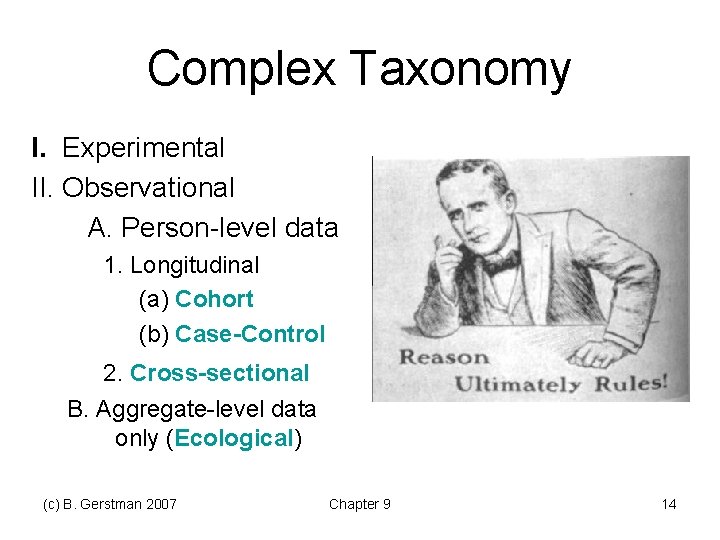
Complex Taxonomy I. Experimental II. Observational A. Person-level data 1. Longitudinal (a) Cohort (b) Case-Control 2. Cross-sectional B. Aggregate-level data only (Ecological) (c) B. Gerstman 2007 Chapter 9 14