
Epidemiology and infection control Introduction DEFINITIONS What is
- Slides: 23
Epidemiology and infection control Introduction
DEFINITIONS • What is epidemiology? • What is an epidemiologist?
EPIDEMIOLOGY is the study of the nature, cause, control and determinants of the frequency and distribution of disease, disability, and death in human populations. Epidemiology: the study of factors influencing the occurence, transmission, distribution, prevention and control of disease in a defined population
Classically speaking Epi = upon Demos = people Ology = science Epidemiology = the science which deals with what falls upon people…. . Bridge between biomedical, social and behavioral sciences
Simple Old Definitions: Oxford English Dictionary THE BRANCH OF MEDICAL SCIENCE WHICH TREATS EPIDEMICS Kuller LH: American J of Epidemiology 1991; 134: 1051 EPIDEMIOLOGY IS THE STUDY OF "EPIDEMICS" AND THEIR PREVENTION Anderson G. In: Rothman KJ: Modern Epidemiology THE STUDY OF THE OCCURRENCE OF ILLNESS
A Modern Definition: Study of the occurrence and distribution of healthrelated diseases or events in specified populations, including the study of the determinants influencing such states, and the application of this knowledge to control the health problem
Demarcation ( )ﺍﻟﺘﺨﻄﻴﻂ of Epidemiology Demarcation of scientific disciplines evolves historically as their intellectual( )ﺍﻟﺘﺜﻘﻴﻒ , institutional and professional environments evolved ( )ﻣﺘﻄﻮﺭ Epidemiology benefits from a rich plurality( )ﺍﻟﺘﻌﺪﺩ of scientific cultures and practices; consequently it enjoys diverse demarcation discourses, with diverse applications in public health policy, clinical practice, basic research….
An EPIDEMIOLOGIST is a public health scientist, who is responsible for carrying out all useful and effective activities needed for successful epidemiology practice
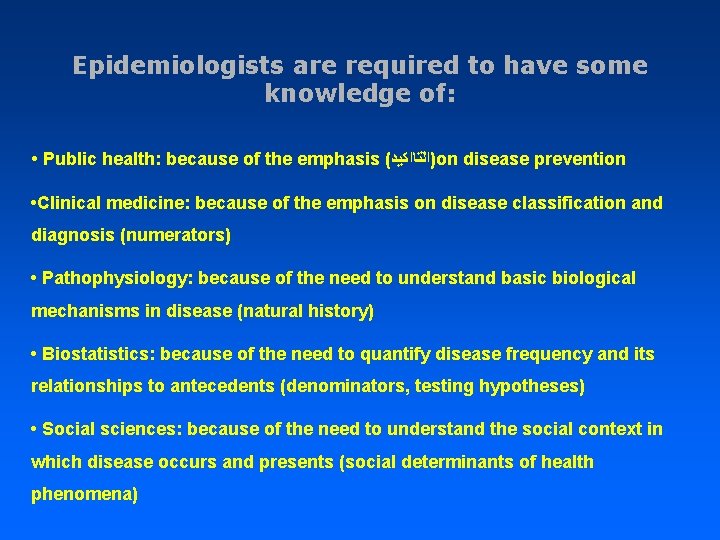
Epidemiologists are required to have some knowledge of: • Public health: because of the emphasis ( )ﺍﻟﺘﺎﺍﻛﻴﺪ on disease prevention • Clinical medicine: because of the emphasis on disease classification and diagnosis (numerators) • Pathophysiology: because of the need to understand basic biological mechanisms in disease (natural history) • Biostatistics: because of the need to quantify disease frequency and its relationships to antecedents (denominators, testing hypotheses) • Social sciences: because of the need to understand the social context in which disease occurs and presents (social determinants of health phenomena)
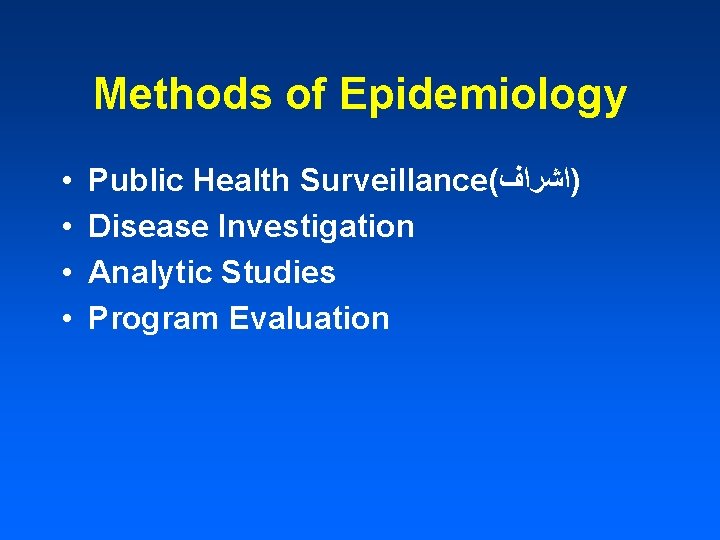
Methods of Epidemiology • • Public Health Surveillance( )ﺍﺷﺮﺍﻑ Disease Investigation Analytic Studies Program Evaluation
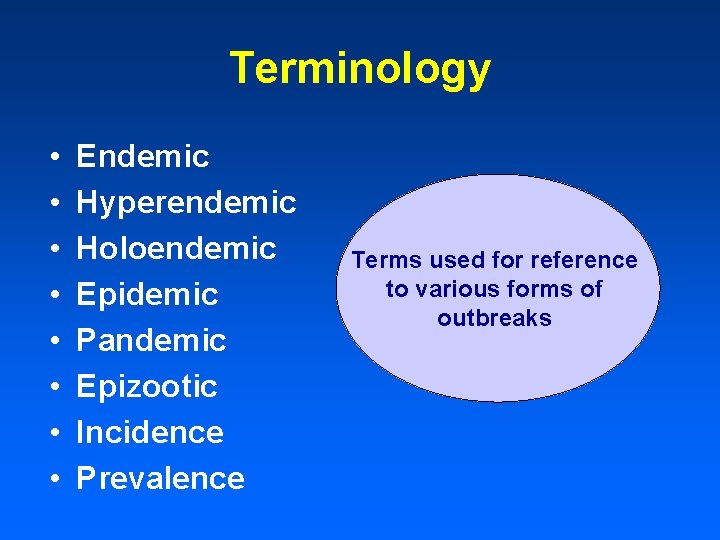
Terminology • • Endemic Hyperendemic Holoendemic Epidemic Pandemic Epizootic Incidence Prevalence Terms used for reference to various forms of outbreaks
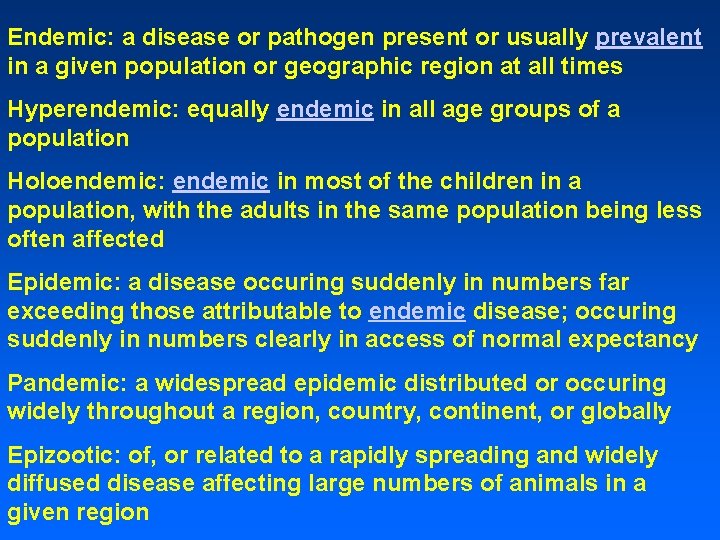
Endemic: a disease or pathogen present or usually prevalent in a given population or geographic region at all times Hyperendemic: equally endemic in all age groups of a population Holoendemic: endemic in most of the children in a population, with the adults in the same population being less often affected Epidemic: a disease occuring suddenly in numbers far exceeding those attributable to endemic disease; occuring suddenly in numbers clearly in access of normal expectancy Pandemic: a widespread epidemic distributed or occuring widely throughout a region, country, continent, or globally Epizootic: of, or related to a rapidly spreading and widely diffused disease affecting large numbers of animals in a given region
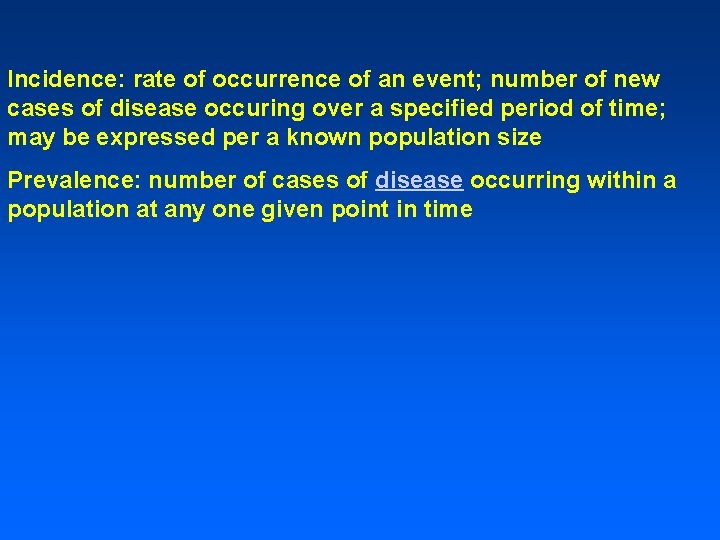
Incidence: rate of occurrence of an event; number of new cases of disease occuring over a specified period of time; may be expressed per a known population size Prevalence: number of cases of disease occurring within a population at any one given point in time
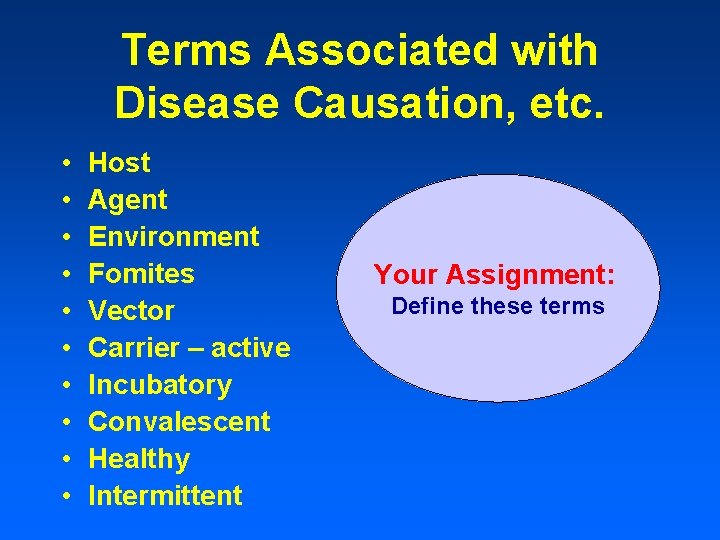
Terms Associated with Disease Causation, etc. • • • Host Agent Environment Fomites Vector Carrier – active Incubatory Convalescent Healthy Intermittent Your Assignment: Define these terms
Broad Types of Epidemiology • 1 -DESCRIPTIVE EPI Examining the distribution of a disease in a population, and observing the basic features of its distribution in terms of time, place, and person. We try to formulate hypothesis, look into associations ? -Typical study design: community health survey (synonyms( )ﺍﻟﻤﺮﺍﺩﻓﺎﺕ : cross-sectional study, descriptive study)
2 - ANALYTIC EPI • Testing a specific hypothesis about the relationship of a disease to a specific cause, by conducting an epidemiologic study that relates the exposure of interest to the outcome of interest (? Cause-effect relationship) Typical study designs: cohort, case-control, experimental design
Descriptive Epidemiology Is A Necessary Antecedent( ﺍﻻﻭﻝ ) of Analytic Epidemiology To undertake an analytic epidemiologic study you must first: • Know where to look • Know what to control for • Be able to formulate / test hypotheses compatible with a-priori lab / field evidence
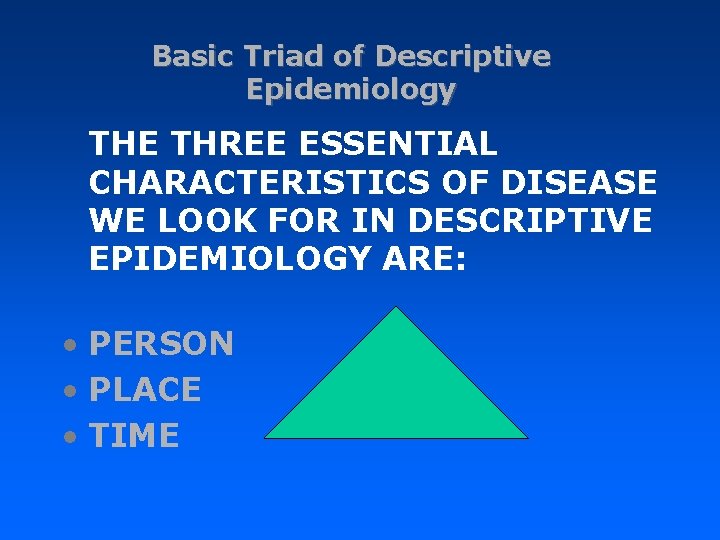
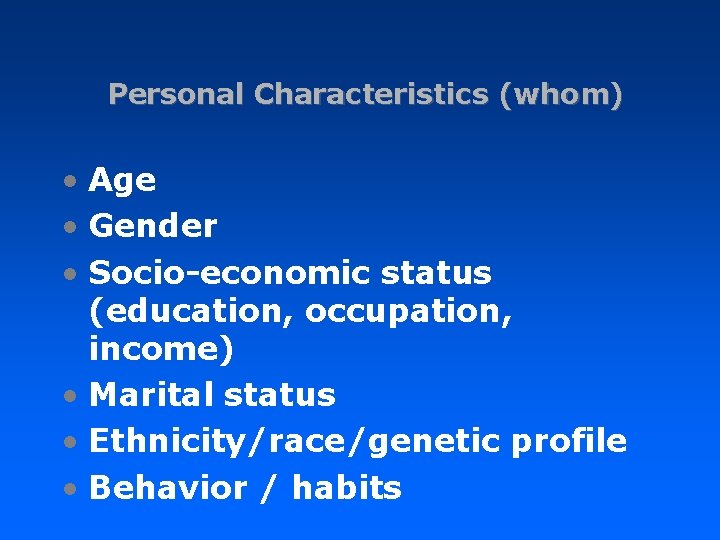
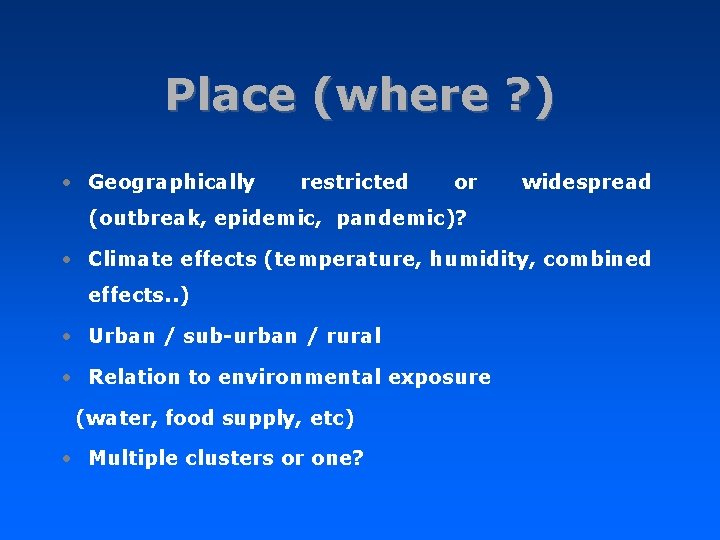
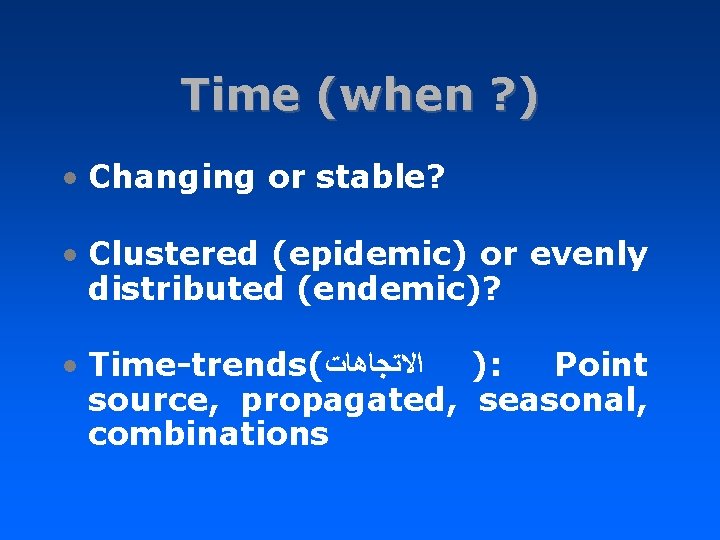
Basic Triad of Descriptive Epidemiology THE THREE ESSENTIAL CHARACTERISTICS OF DISEASE WE LOOK FOR IN DESCRIPTIVE EPIDEMIOLOGY ARE: • PERSON • PLACE • TIME
Personal Characteristics (whom) • Age • Gender • Socio-economic status (education, occupation, income) • Marital status • Ethnicity/race/genetic profile • Behavior / habits
Place (where ? ) • Geographically restricted or widespread (outbreak, epidemic, pandemic)? • Climate effects (temperature, humidity, combined effects. . ) • Urban / sub-urban / rural • Relation to environmental exposure (water, food supply, etc) • Multiple clusters or one?
Time (when ? ) • Changing or stable? • Clustered (epidemic) or evenly distributed (endemic)? • Time-trends( ) ﺍﻻﺗﺠﺎﻫﺎﺕ : Point source, propagated, seasonal, combinations