
Epidemiological Transition HIGHER CDRS THAT FOLLOW THE DTM
- Slides: 8
Epidemiological Transition HIGHER CDRS THAT FOLLOW THE DTM
Objectives �Today we will be able to identify those factors that have lead to higher CDRs in the world at different stages of the DTM.
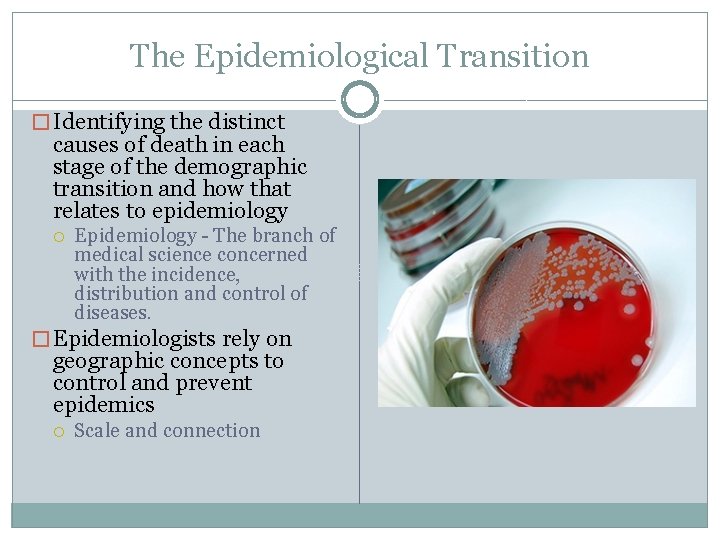
The Epidemiological Transition � Identifying the distinct causes of death in each stage of the demographic transition and how that relates to epidemiology Epidemiology - The branch of medical science concerned with the incidence, distribution and control of diseases. � Epidemiologists rely on geographic concepts to control and prevent epidemics Scale and connection
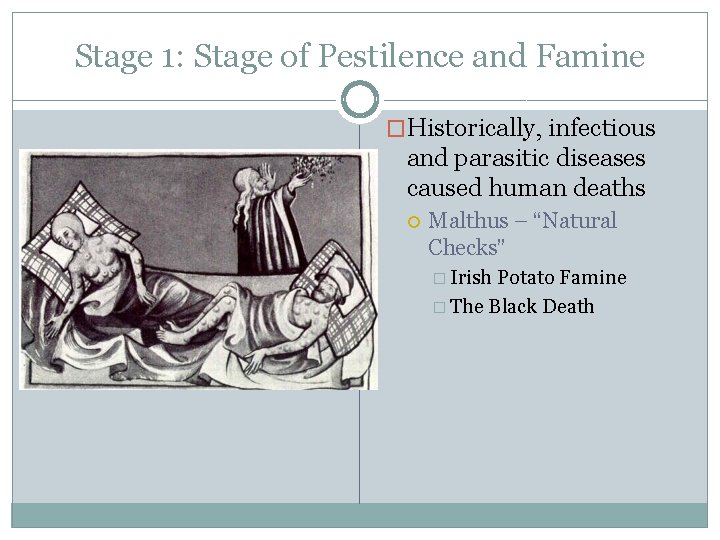
Stage 1: Stage of Pestilence and Famine �Historically, infectious and parasitic diseases caused human deaths Malthus – “Natural Checks” � Irish Potato Famine � The Black Death
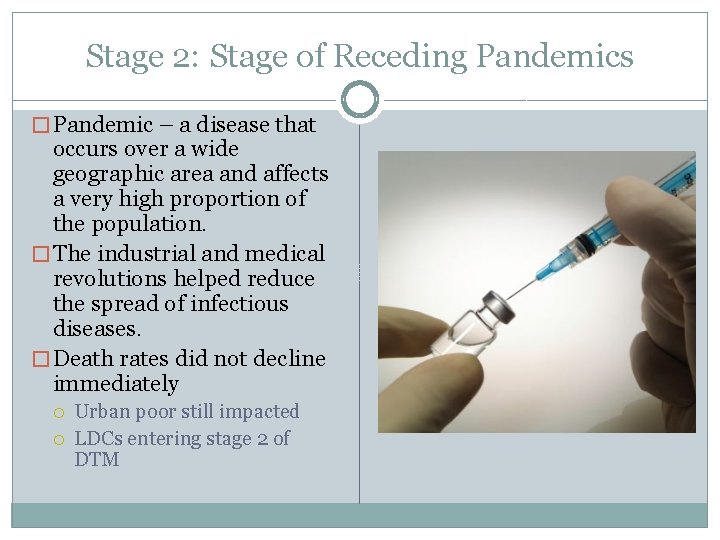
Stage 2: Stage of Receding Pandemics � Pandemic – a disease that occurs over a wide geographic area and affects a very high proportion of the population. � The industrial and medical revolutions helped reduce the spread of infectious diseases. � Death rates did not decline immediately Urban poor still impacted LDCs entering stage 2 of DTM
Stage 3: The Stage of Degenerative and Human Created Diseases �A decrease in deaths from infectious diseases and an increase in chronic disorders associated with aging. Increase in cardiovascular diseases, cancer, etc… Decrease in polio, measles, neonatal tetanus, diphtheria, pertussis
Stage 4: Stage of Delayed Degenerative Diseases �Causes of death in stage 3 still occur, but people live longer Life expectancy of older people increases due to medical advances. Healthier lifestyles
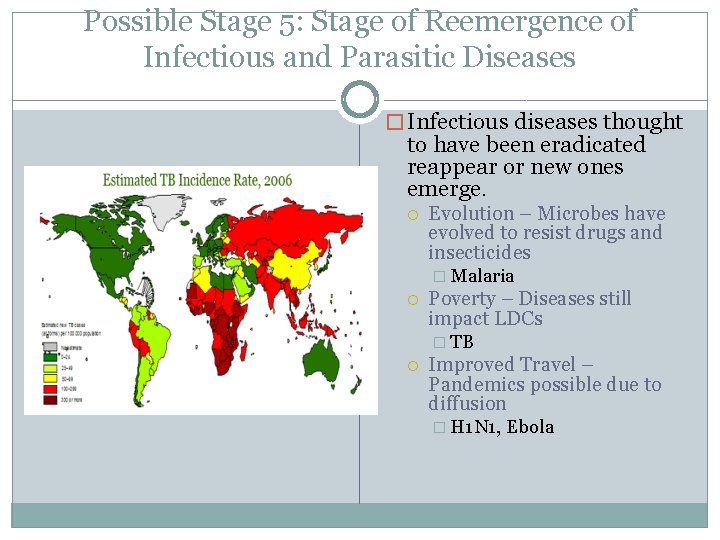
Possible Stage 5: Stage of Reemergence of Infectious and Parasitic Diseases � Infectious diseases thought to have been eradicated reappear or new ones emerge. Evolution – Microbes have evolved to resist drugs and insecticides � Malaria Poverty – Diseases still impact LDCs � TB Improved Travel – Pandemics possible due to diffusion � H 1 N 1, Ebola