
EPIDEMICS OF INJUSTICE Focused Conversations and Consensus Building
EPIDEMICS OF INJUSTICE Focused Conversations and Consensus Building January 2021
Methodology taken from the Institute of Cultural Affairs USA • Core values • • • Inclusive participation Teamwork and collaboration Individual and group creativity Action and ownership Reflection and learning • Lead to the assumption of individual and collective responsibility • Facilitator remains neutral: encourage self-determination, foster mutual respect among participants Images: logos for Institute of Cultural Affairs and Technology of Participation
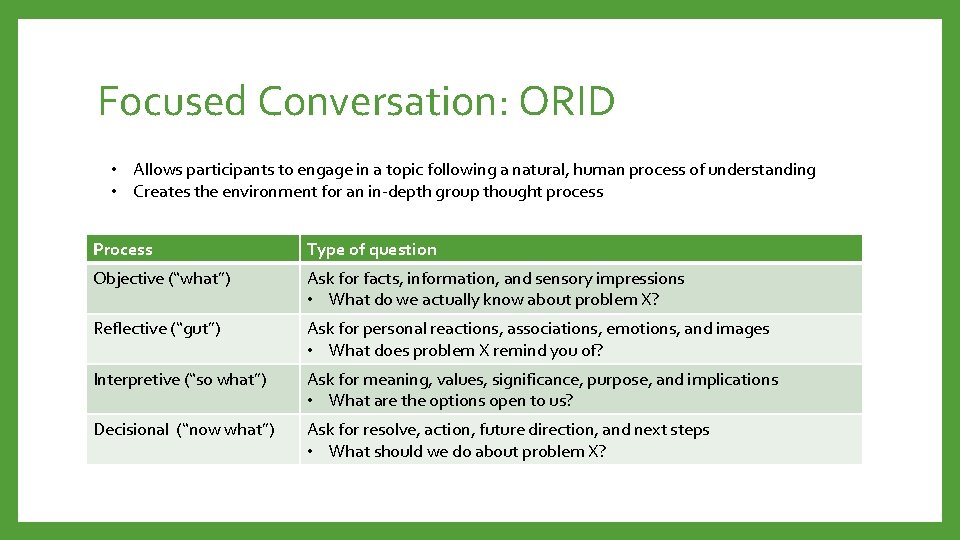
Focused Conversation: ORID • Allows participants to engage in a topic following a natural, human process of understanding • Creates the environment for an in-depth group thought process Process Type of question Objective (“what”) Ask for facts, information, and sensory impressions • What do we actually know about problem X? Reflective (“gut”) Ask for personal reactions, associations, emotions, and images • What does problem X remind you of? Interpretive (“so what”) Ask for meaning, values, significance, purpose, and implications • What are the options open to us? Decisional (“now what”) Ask for resolve, action, future direction, and next steps • What should we do about problem X?
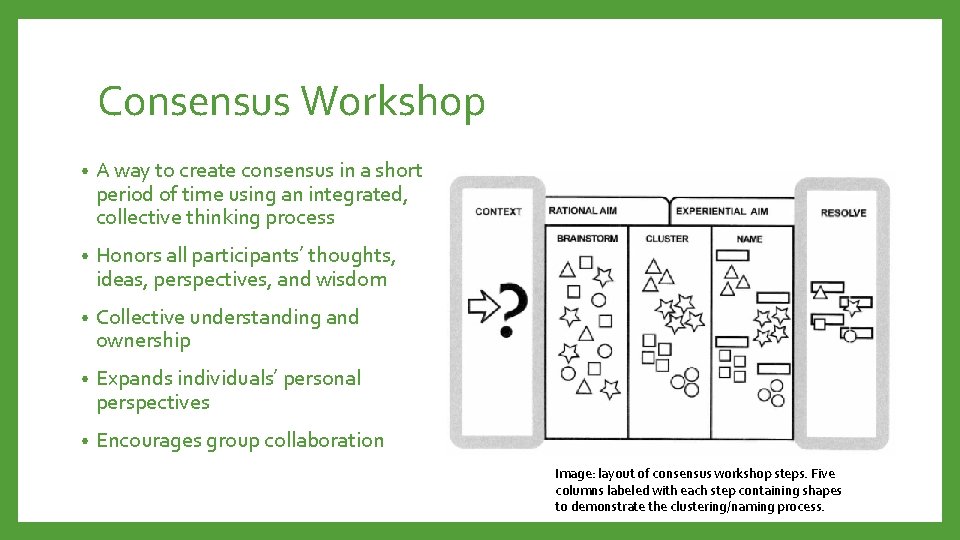
Consensus Workshop • A way to create consensus in a short period of time using an integrated, collective thinking process • Honors all participants’ thoughts, ideas, perspectives, and wisdom • Collective understanding and ownership • Expands individuals’ personal perspectives • Encourages group collaboration Image: layout of consensus workshop steps. Five columns labeled with each step containing shapes to demonstrate the clustering/naming process.
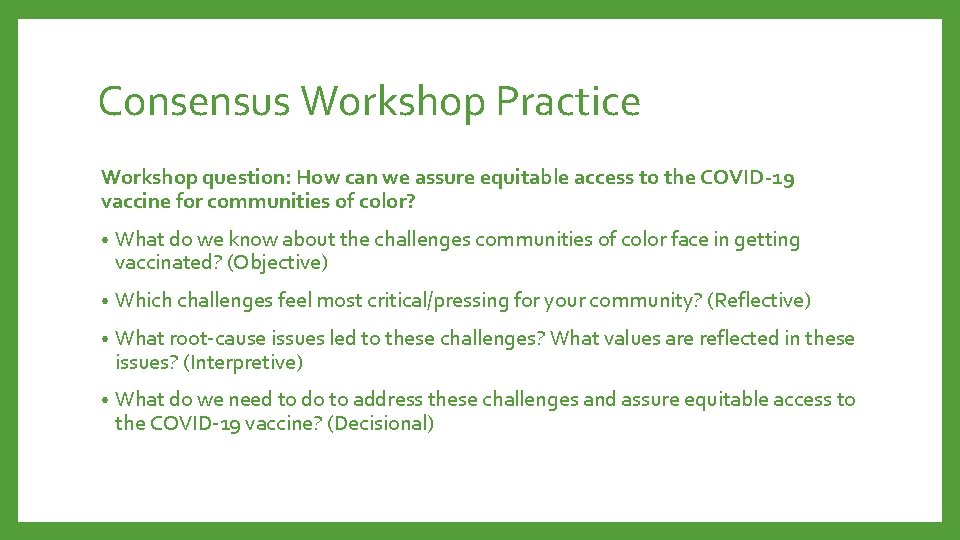
Consensus Workshop Practice Workshop question: How can we assure equitable access to the COVID-19 vaccine for communities of color? • What do we know about the challenges communities of color face in getting vaccinated? (Objective) • Which challenges feel most critical/pressing for your community? (Reflective) • What root-cause issues led to these challenges? What values are reflected in these issues? (Interpretive) • What do we need to do to address these challenges and assure equitable access to the COVID-19 vaccine? (Decisional)
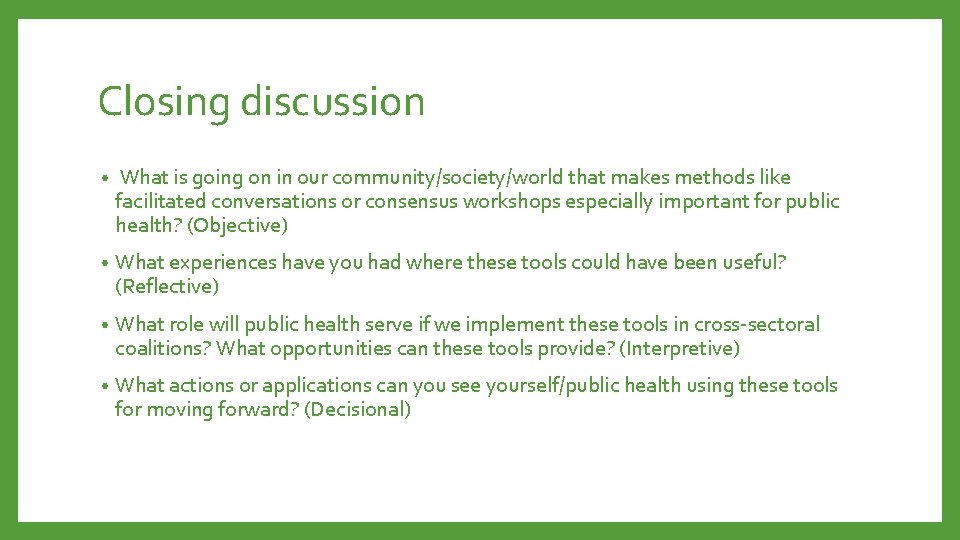
Closing discussion • What is going on in our community/society/world that makes methods like facilitated conversations or consensus workshops especially important for public health? (Objective) • What experiences have you had where these tools could have been useful? (Reflective) • What role will public health serve if we implement these tools in cross-sectoral coalitions? What opportunities can these tools provide? (Interpretive) • What actions or applications can you see yourself/public health using these tools for moving forward? (Decisional)
- Slides: 6