
Epidemic Typhus Maria Salas October 22 2001 Epidemic
Epidemic Typhus Maria Salas October 22, 2001
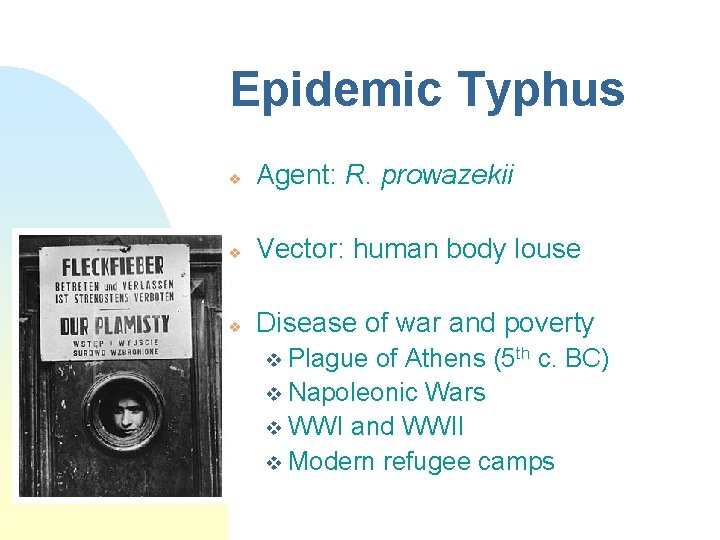
Epidemic Typhus v Agent: R. prowazekii v Vector: human body louse v Disease of war and poverty v Plague of Athens (5 th c. BC) v Napoleonic Wars v WWI and WWII v Modern refugee camps
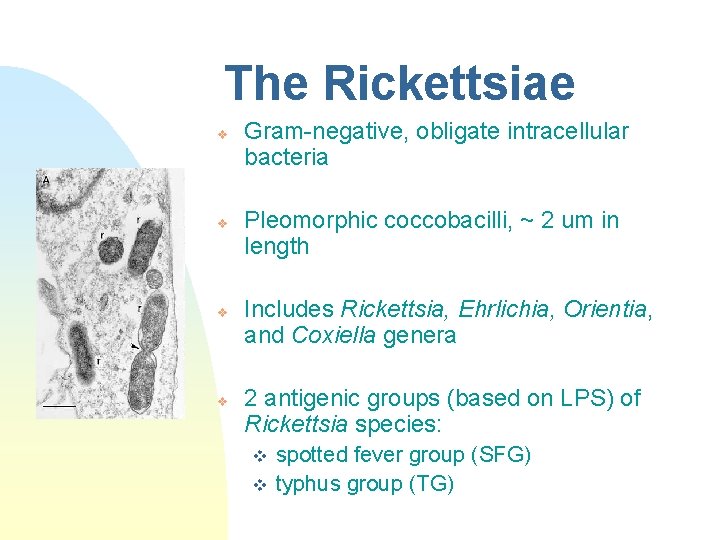
The Rickettsiae v v Gram-negative, obligate intracellular bacteria Pleomorphic coccobacilli, ~ 2 um in length Includes Rickettsia, Ehrlichia, Orientia, and Coxiella genera 2 antigenic groups (based on LPS) of Rickettsia species: v v spotted fever group (SFG) typhus group (TG)
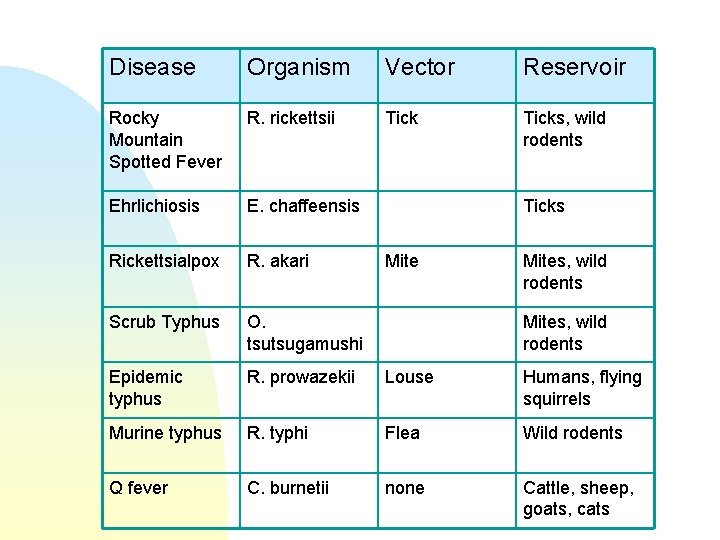
Disease Organism Vector Reservoir Rocky Mountain Spotted Fever R. rickettsii Ticks, wild rodents Ehrlichiosis E. chaffeensis Rickettsialpox R. akari Scrub Typhus O. tsutsugamushi Epidemic typhus R. prowazekii Louse Humans, flying squirrels Murine typhus R. typhi Flea Wild rodents Q fever C. burnetii none Cattle, sheep, goats, cats Ticks Mites, wild rodents
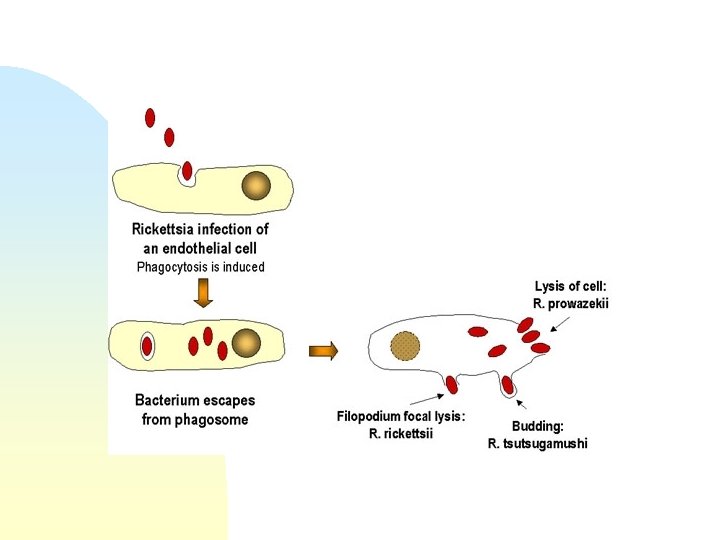
Pathogenesis v v Enter through skin -> bloodstream Infect endothelial cells by inducing phagocytosis and escaping phagolysosome -> replicate in cytosol v v v Can also infect m , PMNs, and fibroblasts in vitro R. prowazekii escapes by cell lysis May lyse cells extracelluarly via phospholipase A production -> increased vascular permeability and hypotension
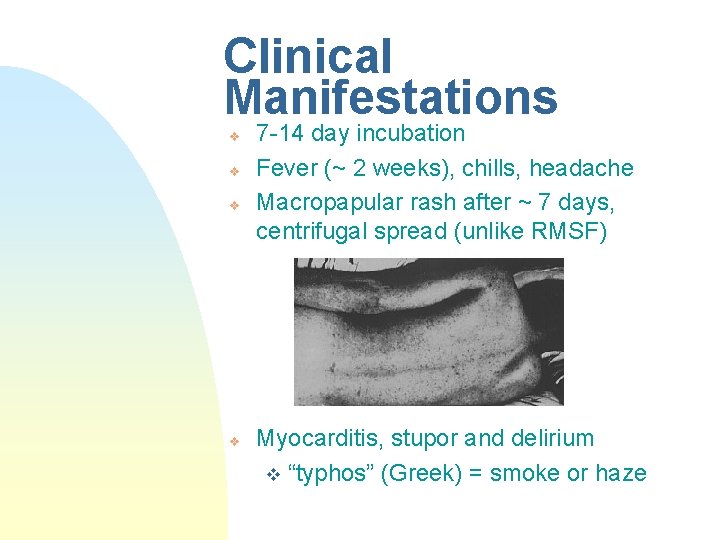
Clinical Manifestations v v 7 -14 day incubation Fever (~ 2 weeks), chills, headache Macropapular rash after ~ 7 days, centrifugal spread (unlike RMSF) Myocarditis, stupor and delirium v “typhos” (Greek) = smoke or haze
Clinical Manifestations v v Both humoral response and CMI crucial to recovery. One attack usually confers long-lasting immunity. There asymptomatic carriers Complications include vascular collapse, pneumonia, encephalitis Mortality up to 70% in epidemics, mortality increasing with age
Brill-Zinsser Disease v Recrudescent epidemic typhus v Establish latency in lymph nodes v v v Occurs in elderly or immunocompromised persons -> malnourishment, poverty, and war! Milder disease (including absence of fever) and lower mortality RESERVOIR FOR NEW TYPHUS EPIDEMICS!
Findings from sequencing the R. prowazekii genome v v v Completed in 1998 in Sweden by Kurland, et al. 1. 1 million bp, 834 genes Toxic polysaccharides may be vaccine targets R. prowazekii has genes similar to those found in yeast nucleus but used by mitochondria -> mitochondrial ancestor “off-loaded” genes to host cell? High percentage of non-functional genes in R. prowazekii
The Vector: Pediculus humanus (body louse) “It was not so long ago, indeed, that [the louse’s] prevalence extended to the highest orders of society, and was accepted as an inevitable part of existence – like baptism, or the smallpox. ” Hans Zinsser Rats, Lice, and History
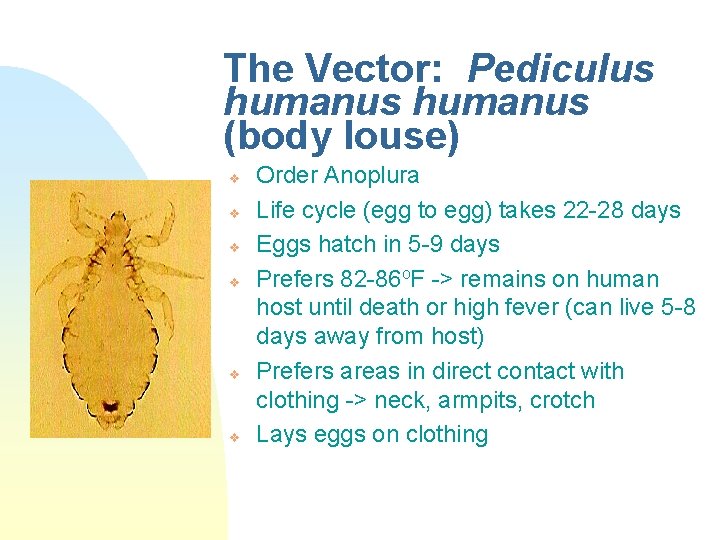
The Vector: Pediculus humanus (body louse) v v v Order Anoplura Life cycle (egg to egg) takes 22 -28 days Eggs hatch in 5 -9 days Prefers 82 -86 o. F -> remains on human host until death or high fever (can live 5 -8 days away from host) Prefers areas in direct contact with clothing -> neck, armpits, crotch Lays eggs on clothing
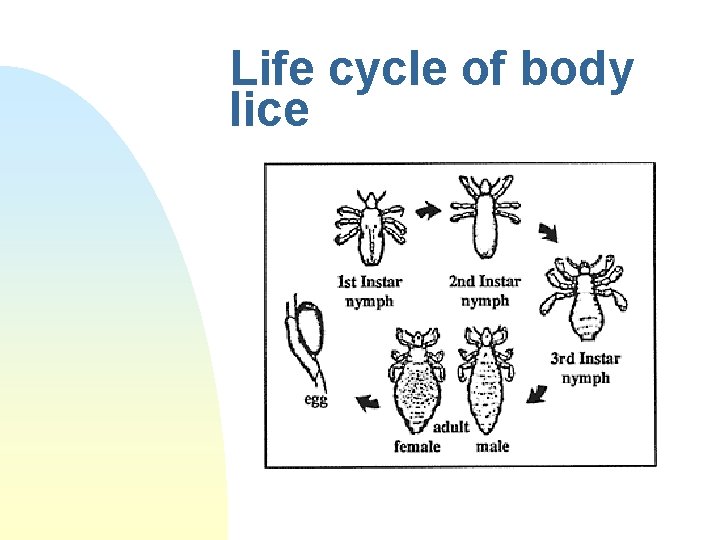
Life cycle of body lice
Transmission v v v Rickettsiae invade and destroy louse gut epithelial cells Rickettsiae released from lysed cells into gut lumen Louse deposits rickettsiae into bite wound via infected feces Louse dies of GI tract disease after ~2 weeks, not significant reservoir for rickettsiae (no transovarial transmission) BZ patients can serve as sources of infection for 1 -5% of feeding lice!
Diagnosis v v v Clinical manifestations often confused with measles, meningococcemia, typhoid fever Weil-Felix reaction: Ig. M cross-reactive with Proteus antigens (doesn’t work for BZ, non-specific, insensitive) Specific serology: IFA Animal inoculation with patient’s blood (yolk sac, guinea pig) Xenodiagnosis (infect previously uninfected vectors) PCR of ticks found in clothing (Raoult, et al)
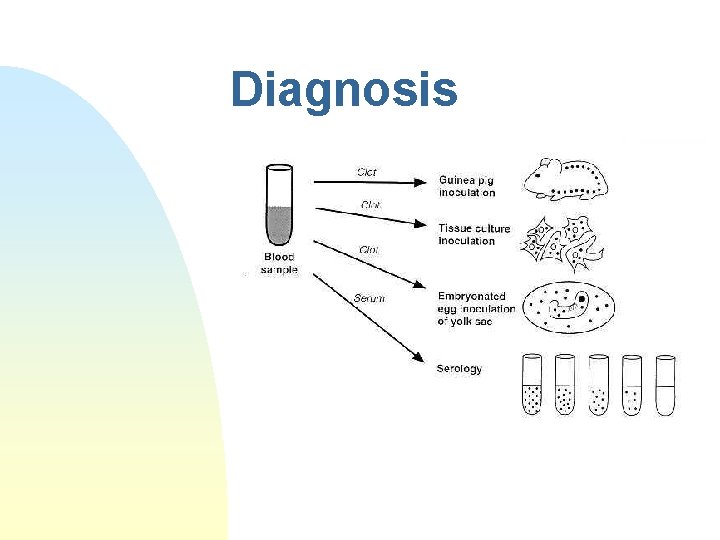
Diagnosis

Treatment Doxycycline, tetracycline, or chloramphenicol are very effective! v Single dose of 200 mg doxycycline
Control and Prevention Sanitation!!! v v Delousing of clothing, bedding with insecticide dust or temperatures >70 o. C for over 1 hour Whole killed vaccine confers imperfect immunity Live attenuated vaccine has been more successful in producing CMI, but has side effects, including mild disease
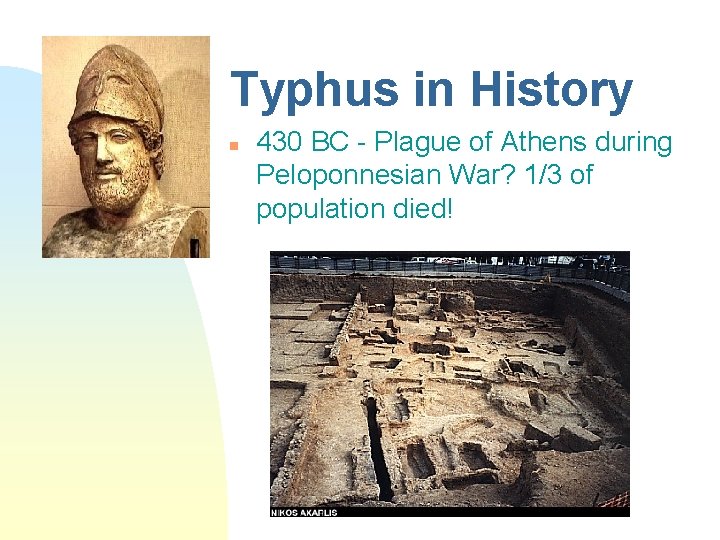
Typhus in History n 430 BC - Plague of Athens during Peloponnesian War? 1/3 of population died!
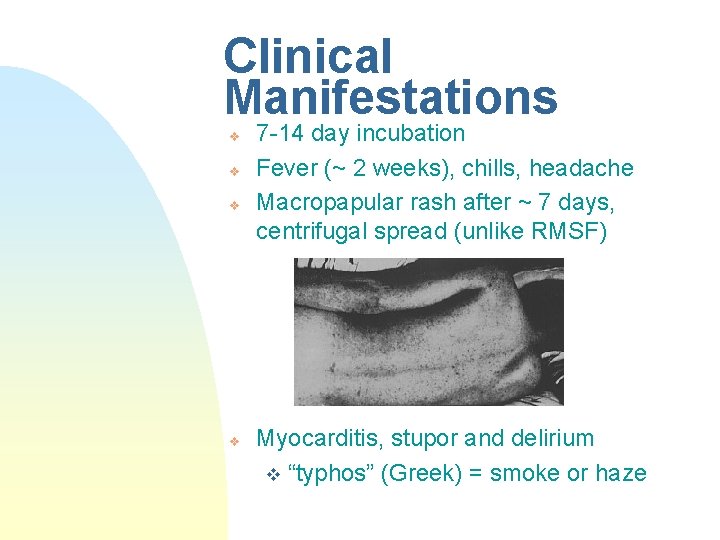
Clinical Manifestations v v 7 -14 day incubation Fever (~ 2 weeks), chills, headache Macropapular rash after ~ 7 days, centrifugal spread (unlike RMSF) Myocarditis, stupor and delirium v “typhos” (Greek) = smoke or haze
Typhus in History v v v Napoleon in Moscow WWI – epidemic in Russia (3 mil. deaths!), Poland, and Balkan States. 1909 – Charles Nicholle shows body louse is sole vector, influences improvements in sanitation during WWI (1928 Nobel Prize)
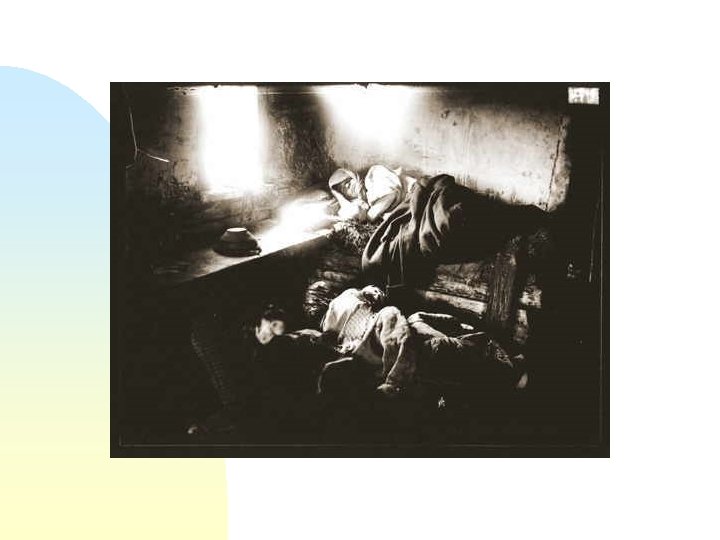
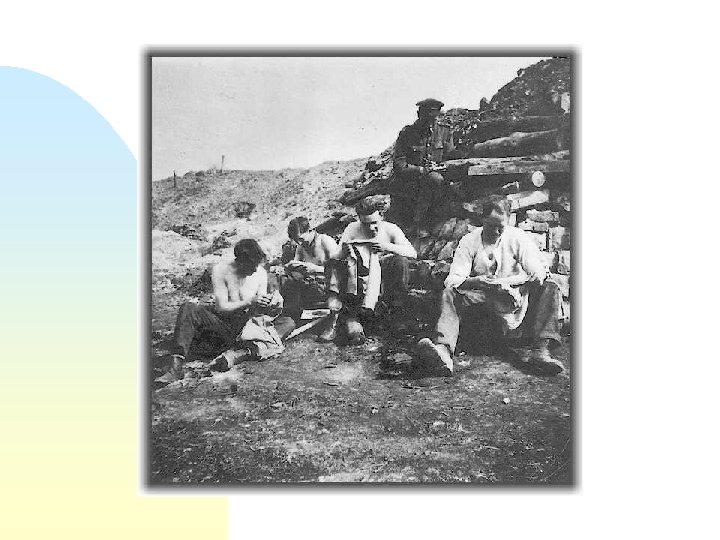
Typhus in History v WWII v Vaccine used in armed forces v Use of DDT significantly decreased prevalence of typhus (1948 Nobel Prize goes to Paul Müller for discover of DDT) v Typhus rampant in concentration camps
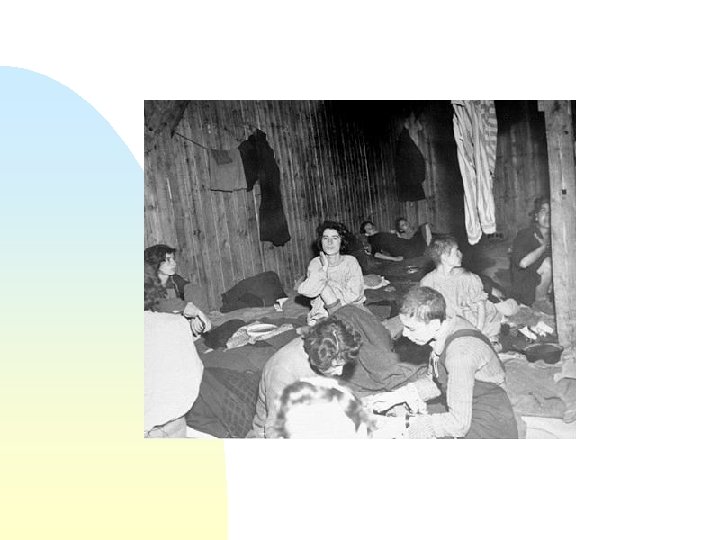
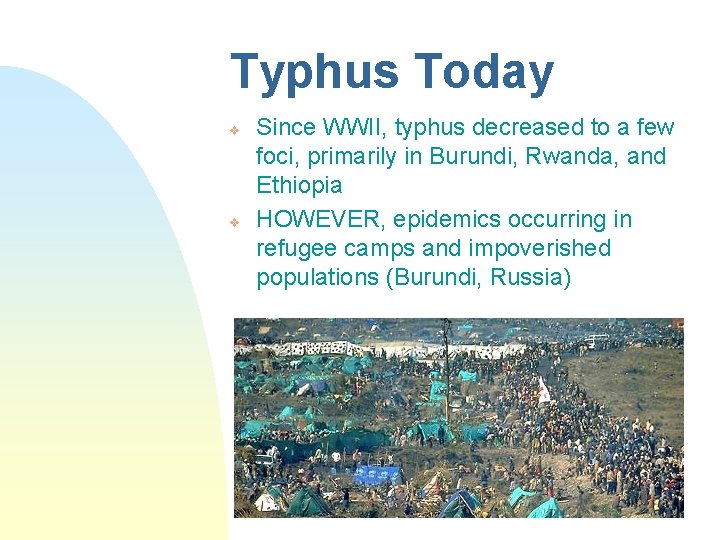
Typhus Today v v Since WWII, typhus decreased to a few foci, primarily in Burundi, Rwanda, and Ethiopia HOWEVER, epidemics occurring in refugee camps and impoverished populations (Burundi, Russia)
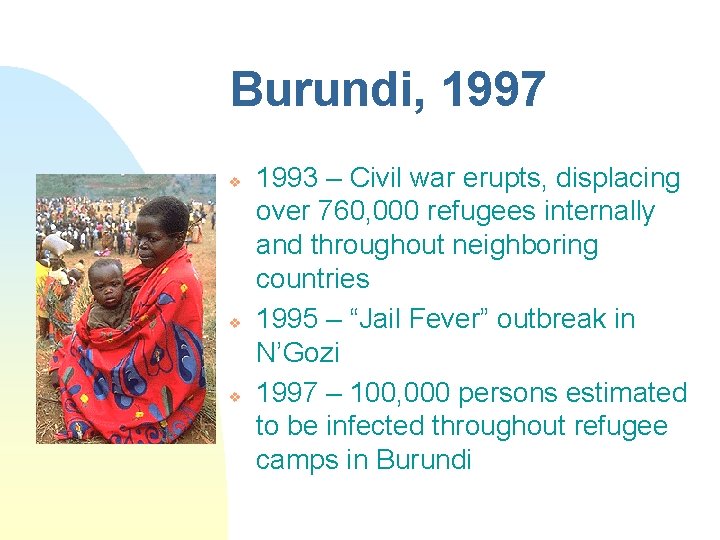
Burundi, 1997 v v v 1993 – Civil war erupts, displacing over 760, 000 refugees internally and throughout neighboring countries 1995 – “Jail Fever” outbreak in N’Gozi 1997 – 100, 000 persons estimated to be infected throughout refugee camps in Burundi
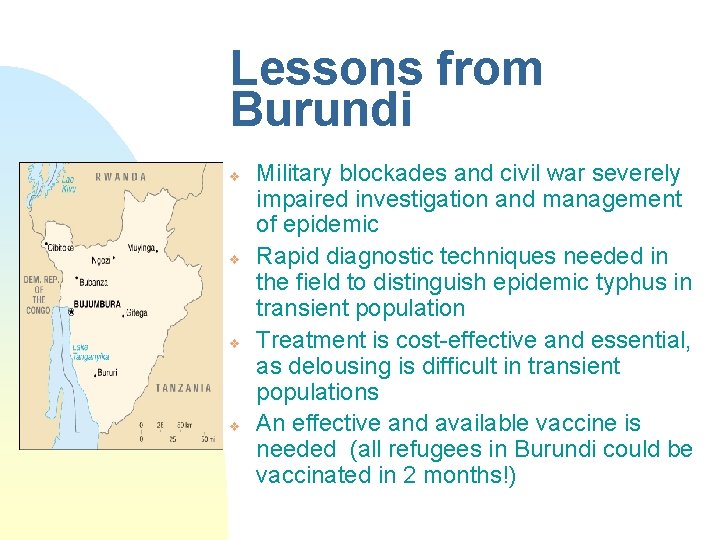
Lessons from Burundi v v Military blockades and civil war severely impaired investigation and management of epidemic Rapid diagnostic techniques needed in the field to distinguish epidemic typhus in transient population Treatment is cost-effective and essential, as delousing is difficult in transient populations An effective and available vaccine is needed (all refugees in Burundi could be vaccinated in 2 months!)

“ Typhus is not dead. It will live on for centuries, and it will continue to break into the open whenever human stupidity and brutality give it a chance, as most likely they occasionally will. ” Hans Zinsser Rats, Lice, and History (1934)
- Slides: 29