
EPF 2 The student will demonstrate knowledge of
- Slides: 73
EPF 2: The student will demonstrate knowledge of the role of producers and consumers in a free enterprise or market economy
EPF 2: The student will demonstrate knowledge of the role of producers and consumers in a free enterprise or market economy Google Classroom Pre-Test
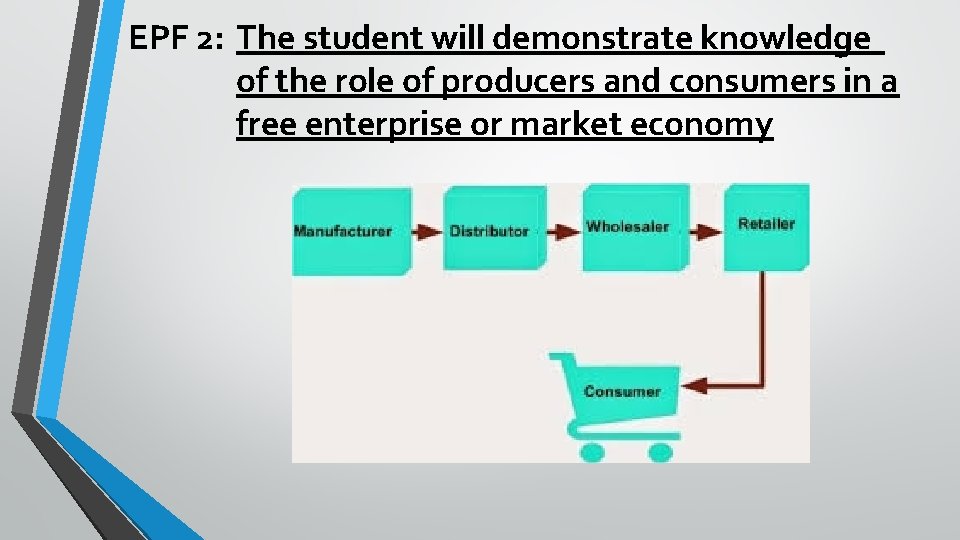
EPF 2: The student will demonstrate knowledge of the role of producers and consumers in a free enterprise or market economy
OBJECTIVE Be able to describe the most important facets of a “Free Enterprise System”
Free Enterprise • Freedom of Choice • Open Mkt. (S & D) • The Profit Motive • Competition • Limit Gov. Control Free Enterprise
OBJECTIVE Be able to identify the freedoms generally allowed in a free enterprise system
OBJECTIVE Be able to identify the freedoms generally allowed in a free enterprise system What Are They?
Freedom of Choice • When to Buy • When to Sell • To Make Profit • To Compete • To Own • Freedom to Decide
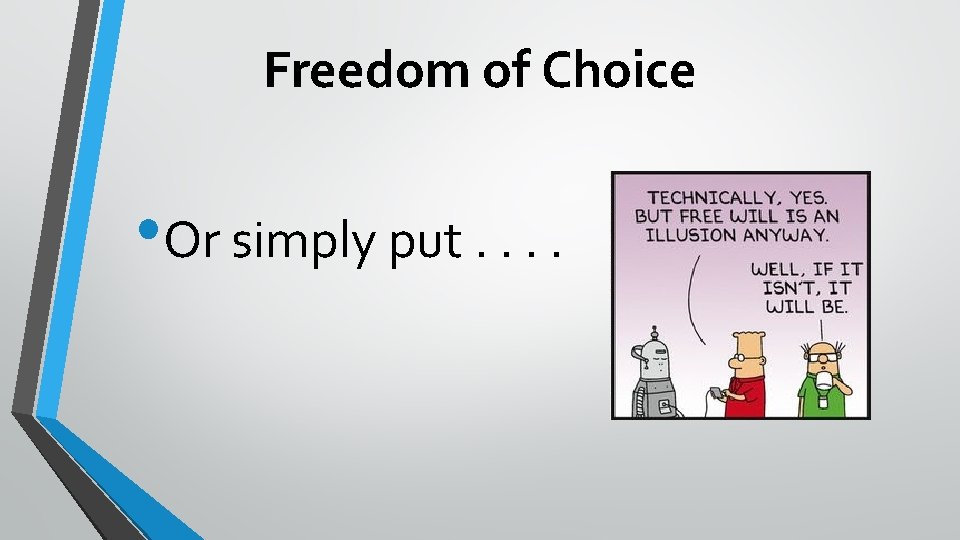
Freedom of Choice • Or simply put. .
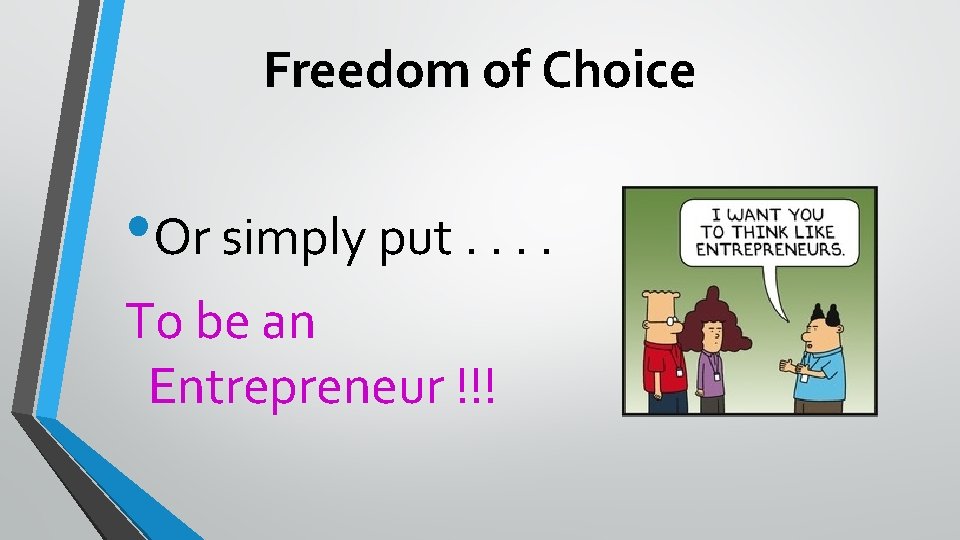
Freedom of Choice • Or simply put. . To be an Entrepreneur !!!
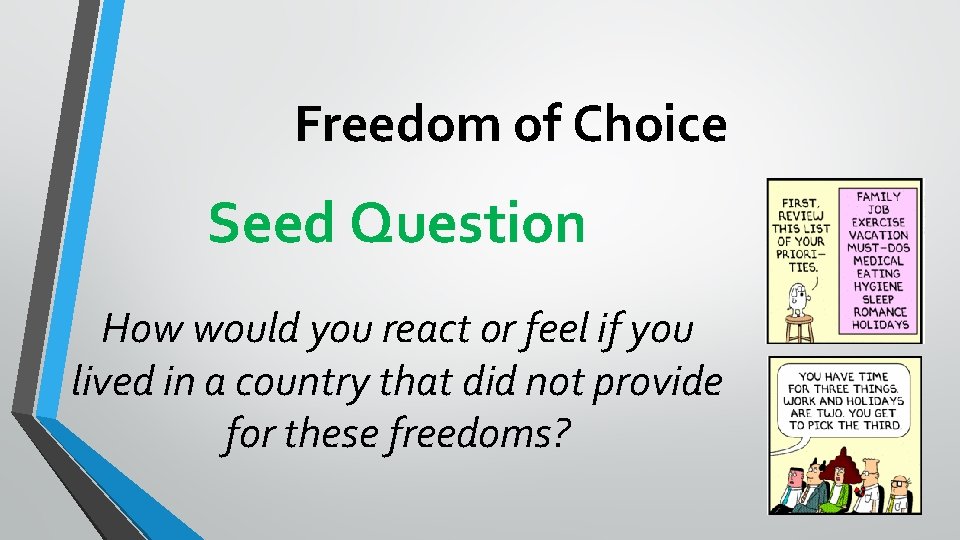
Freedom of Choice Seed Question How would you react or feel if you lived in a country that did not provide for these freedoms?
Freedom of Choice Seed Question How would you react or feel if you lived in a country that did not provide for these freedoms? When to Buy When to Sell To Make Profit To Compete To Own Freedom to Decide
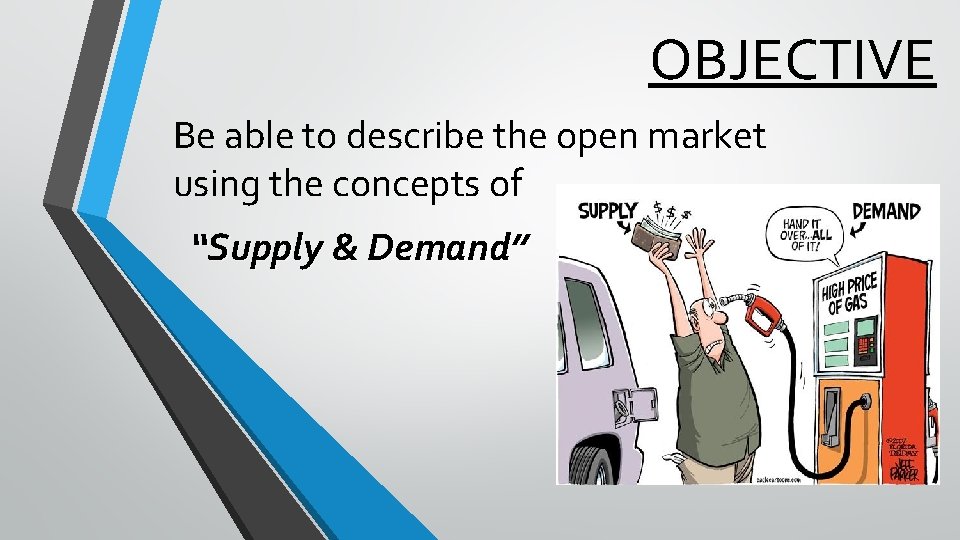
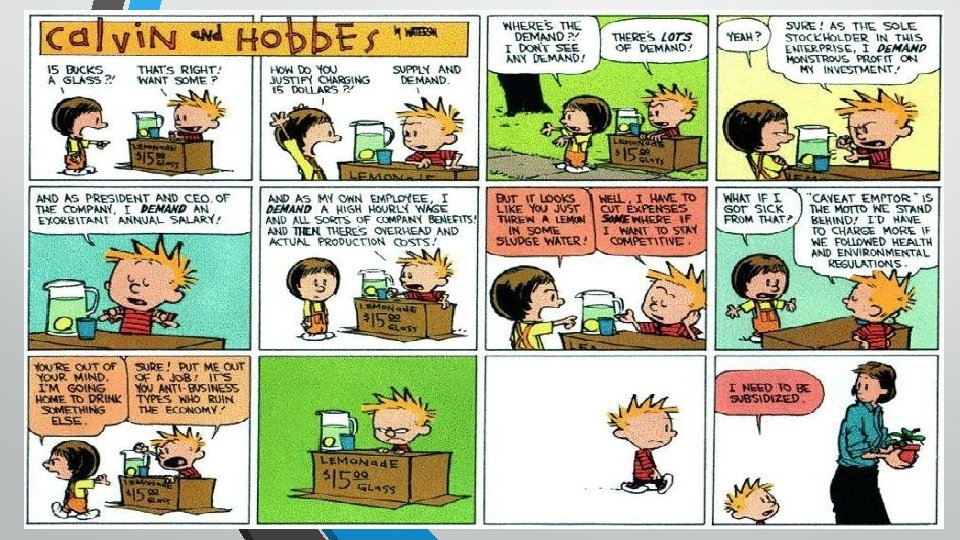
OBJECTIVE Be able to describe the open market using the concepts of “Supply & Demand”
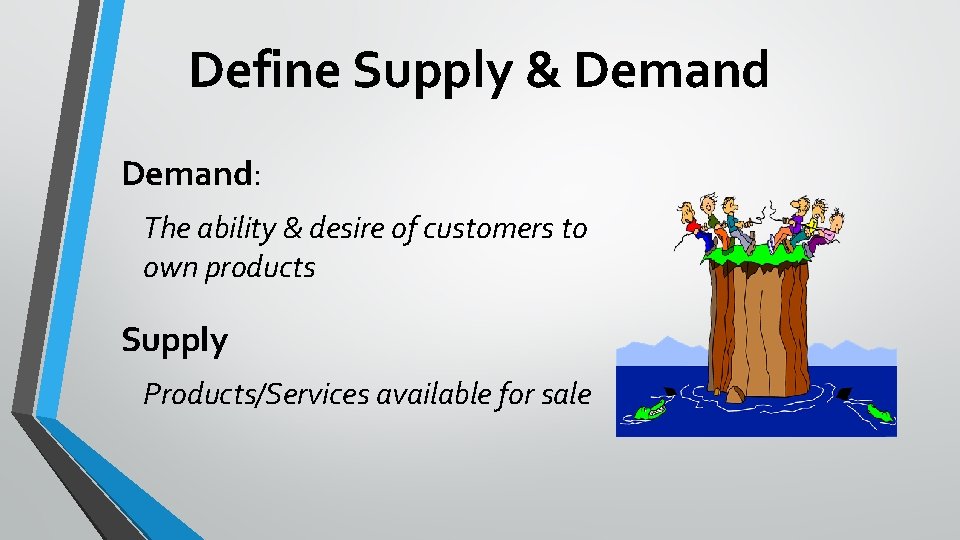
Define Supply & Demand: The ability & desire of customers to own products Supply Products/Services available for sale
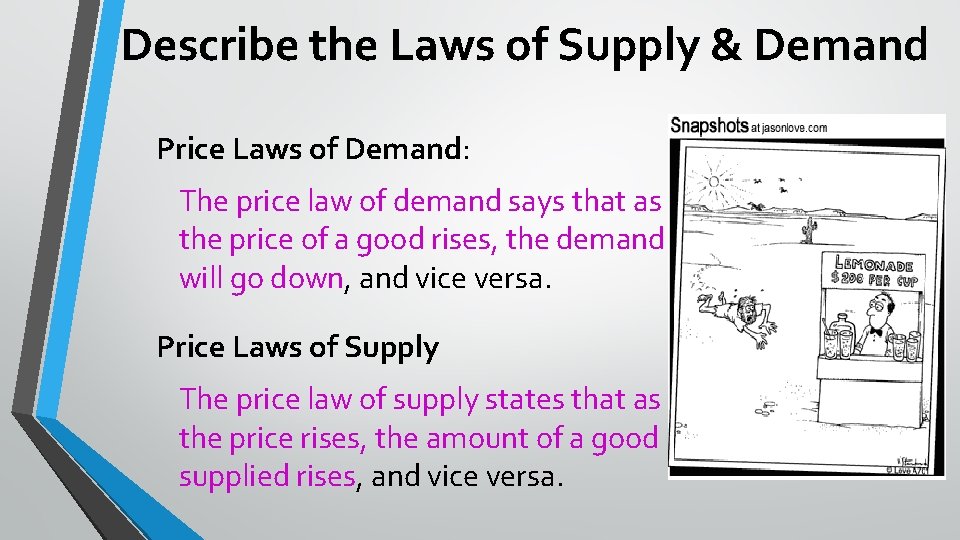
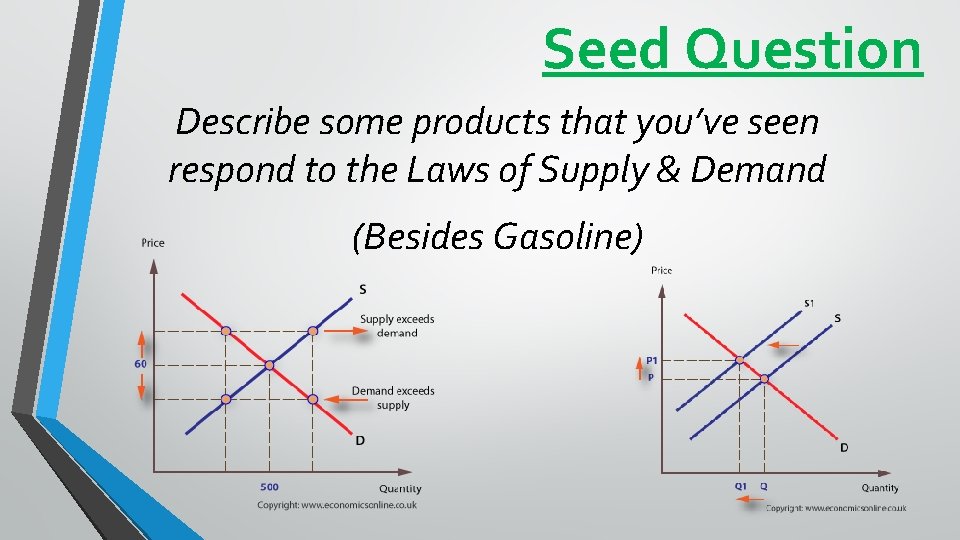
Describe the Laws of Supply & Demand Price Laws of Demand: The price law of demand says that as the price of a good rises, the demand will go down, and vice versa. Price Laws of Supply The price law of supply states that as the price rises, the amount of a good supplied rises, and vice versa.
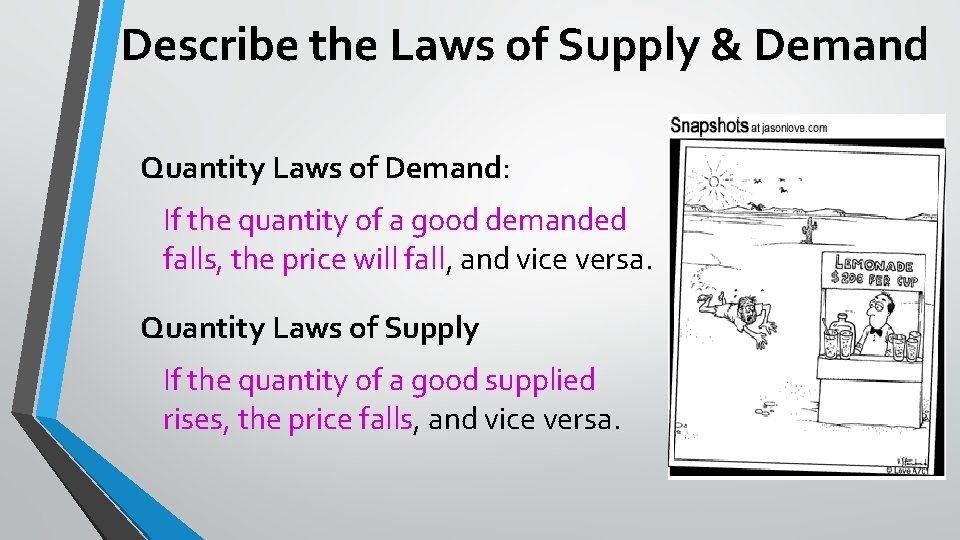
Describe the Laws of Supply & Demand Quantity Laws of Demand: If the quantity of a good demanded falls, the price will fall, and vice versa. Quantity Laws of Supply If the quantity of a good supplied rises, the price falls, and vice versa.
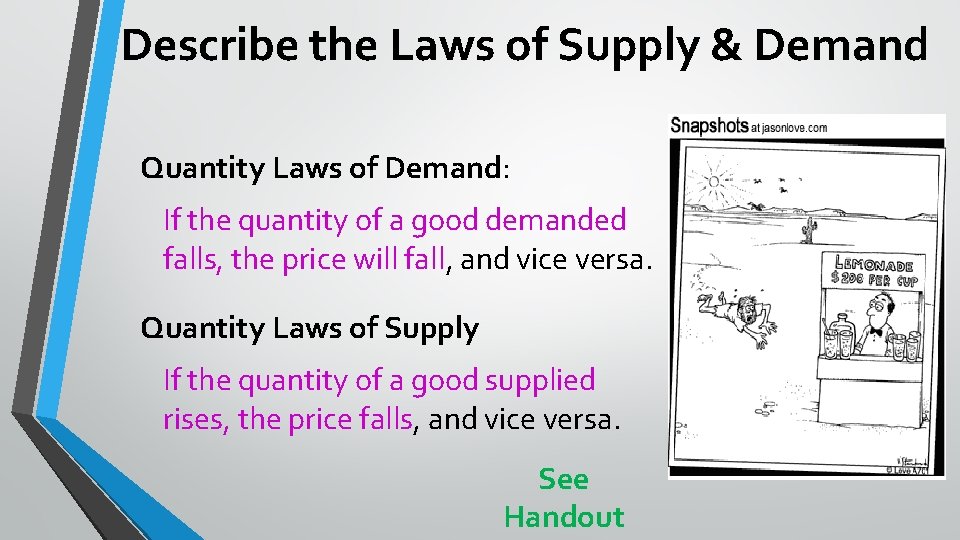
Describe the Laws of Supply & Demand Quantity Laws of Demand: If the quantity of a good demanded falls, the price will fall, and vice versa. Quantity Laws of Supply If the quantity of a good supplied rises, the price falls, and vice versa. See Handout
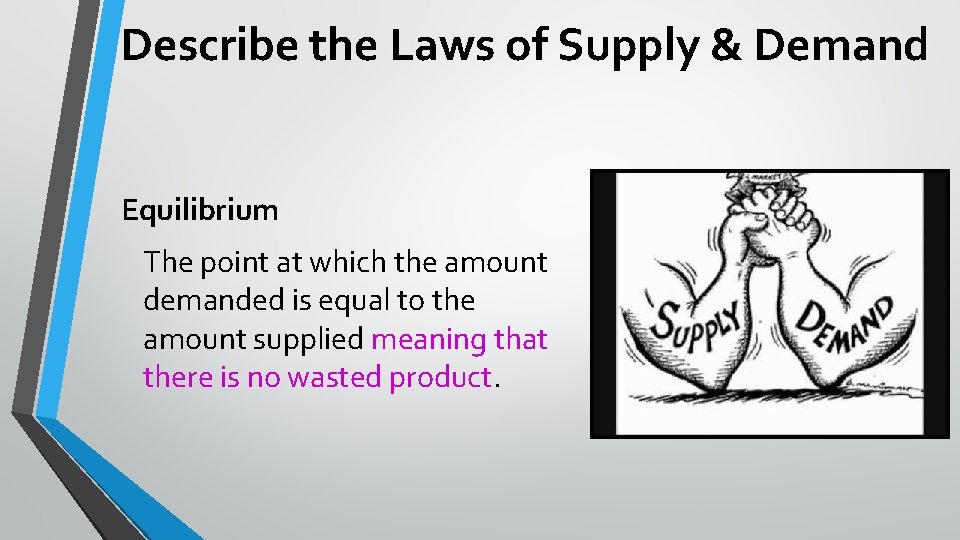
Describe the Laws of Supply & Demand Equilibrium The point at which the amount demanded is equal to the amount supplied meaning that there is no wasted product.
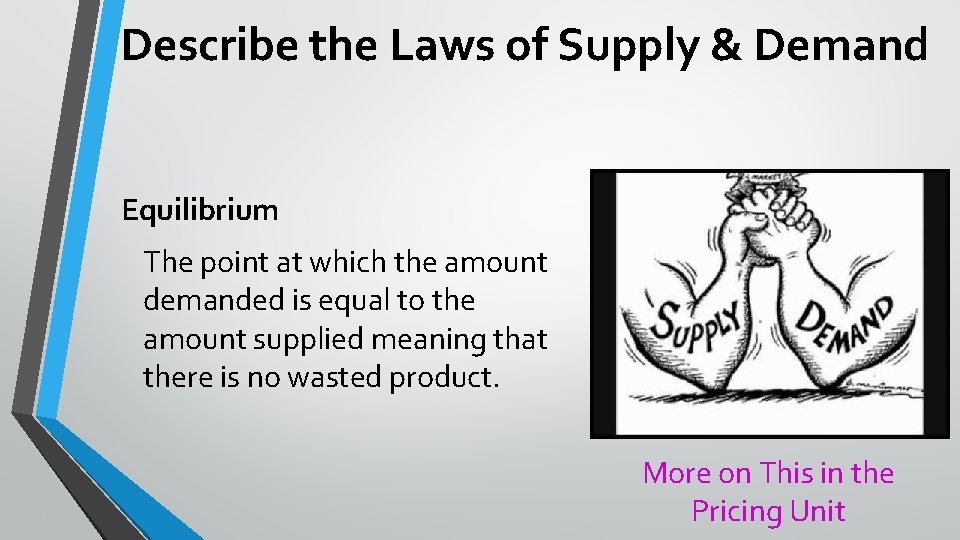
Describe the Laws of Supply & Demand Equilibrium The point at which the amount demanded is equal to the amount supplied meaning that there is no wasted product. More on This in the Pricing Unit
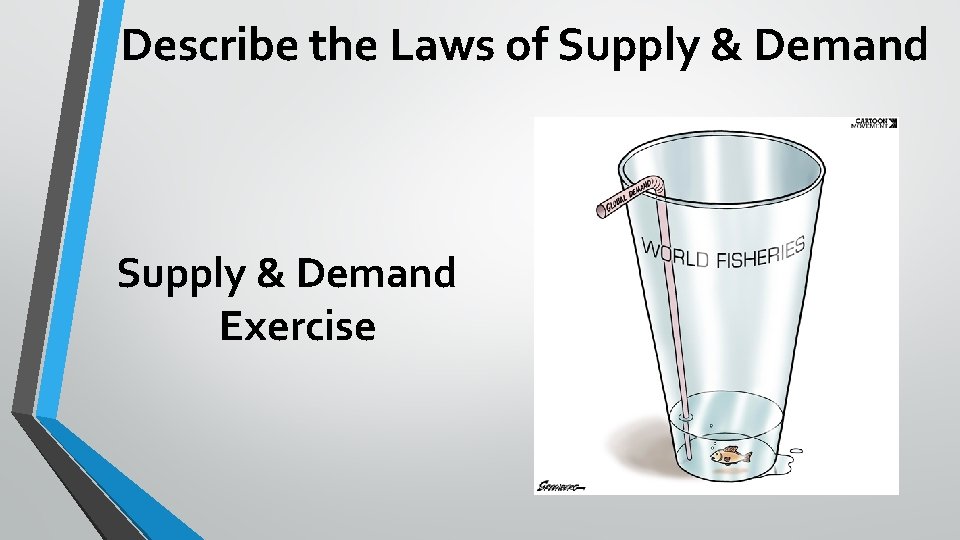
Describe the Laws of Supply & Demand Exercise
Seed Question Describe some products that you’ve seen respond to the Laws of Supply & Demand (Besides Gasoline)
OBJECTIVE Be able to define the following terms associated with the concept of PROFIT: - Income, - Expenses, - Costs, - Gross Profit, - Net Profit, & - Risk
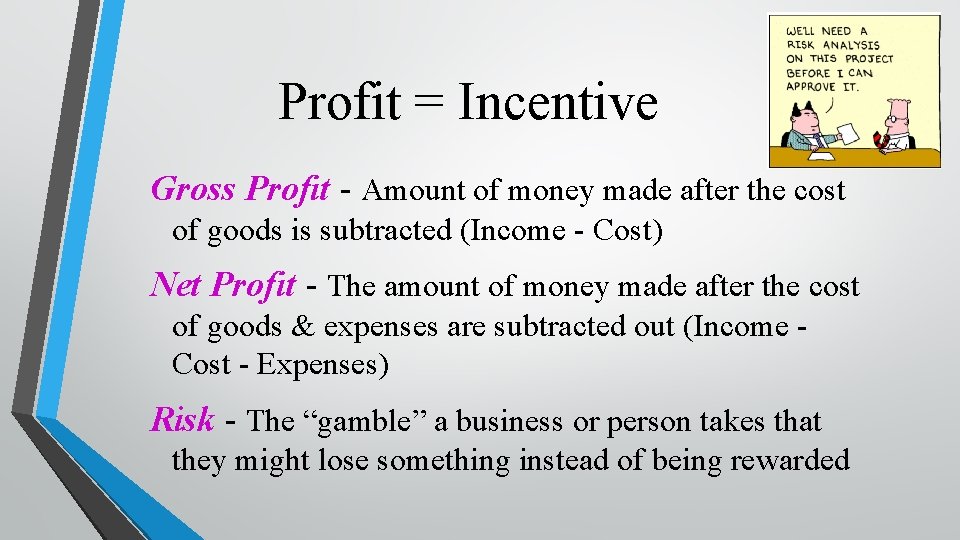
Profit = Incentive Income - the amount of money a business receives from the sales of its goods/services Cost - The amount of money a company spends to get product into the store Expenses - The amount of money a company spends on the operation of the business
Profit = Incentive Gross Profit - Amount of money made after the cost of goods is subtracted (Income - Cost) Net Profit - The amount of money made after the cost of goods & expenses are subtracted out (Income Cost - Expenses) Risk - The “gamble” a business or person takes that they might lose something instead of being rewarded
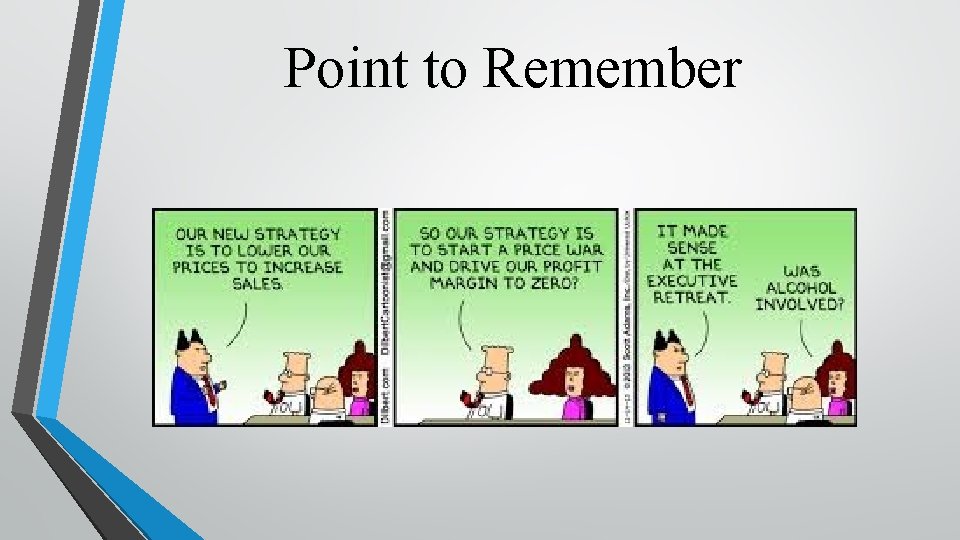
Point to Remember
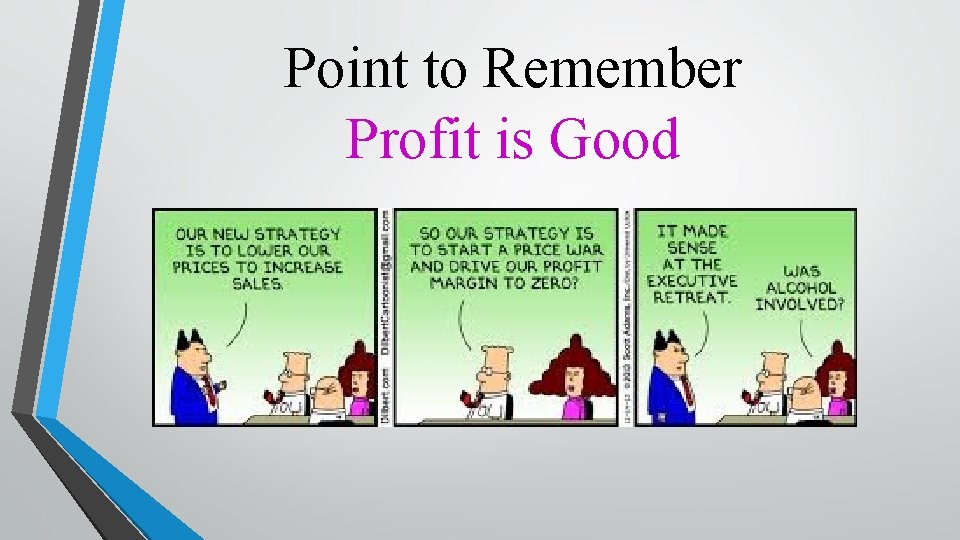
Point to Remember Profit is Good
Profit is Good Seed Question Why is it good?
Profit is Good Seed Question Answer: Motivation, Incentive, Drive, Goals, etc.
Profit is Good Seed Question What are some examples of economics incentives?
Profit is Good Seed Question Answer: Income, Profit, Interest Income, Investment Income, etc. .
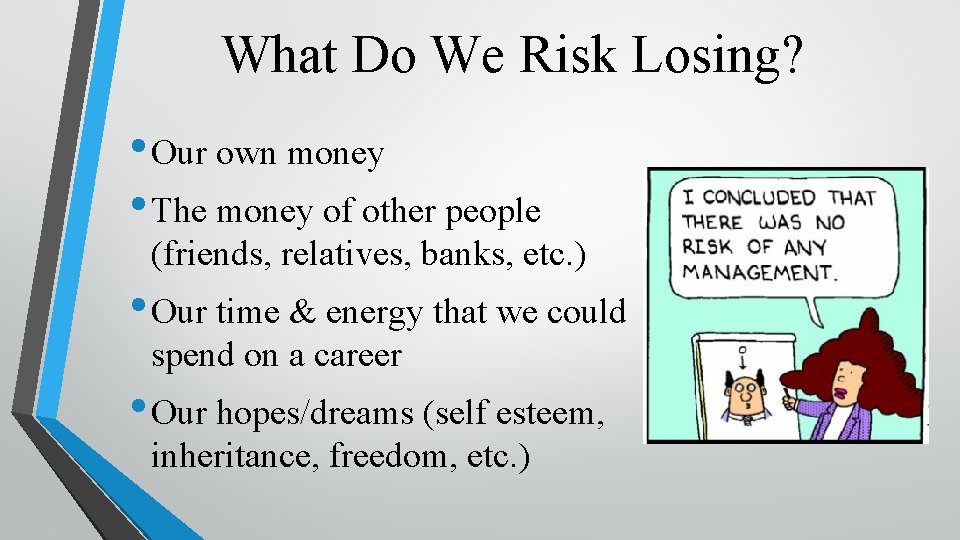
What Do We Risk Losing? • Our own money • The money of other people (friends, relatives, banks, etc. ) • Our time & energy that we could spend on a career • Our hopes/dreams (self esteem, inheritance, freedom, etc. )
OBJECTIVE Be able to discuss ways a business can increase its profits
OBJECTIVE Be able to discuss ways a business can increase its profits Because “Profit is Good”
OBJECTIVE Be able to discuss ways a business can increase its profits Common Sense: How would you increase profits?
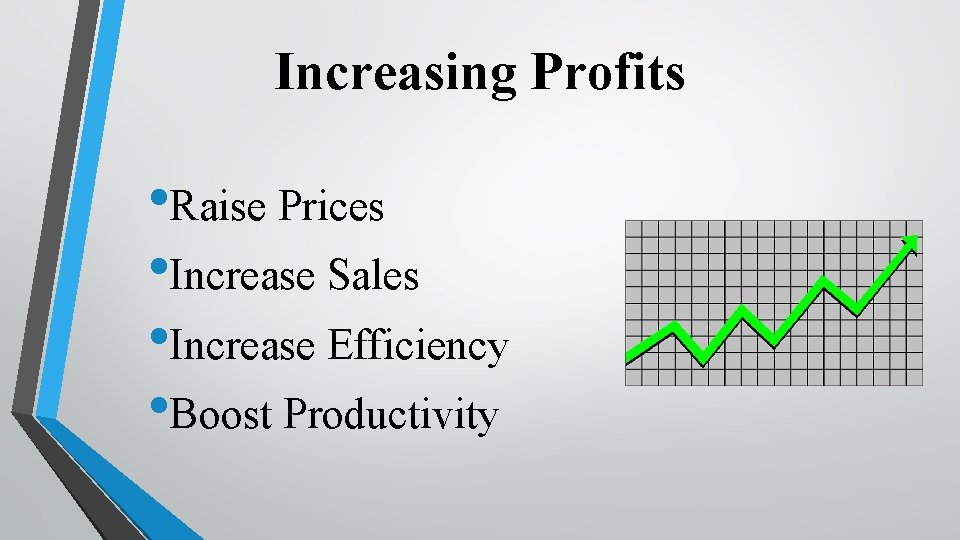
Increasing Profits • Raise Prices • Increase Sales • Increase Efficiency • Boost Productivity
Increasing Profits • Raise Prices ? ? ? ? ? • Increase Sales • Increase Efficiency • Boost Productivity
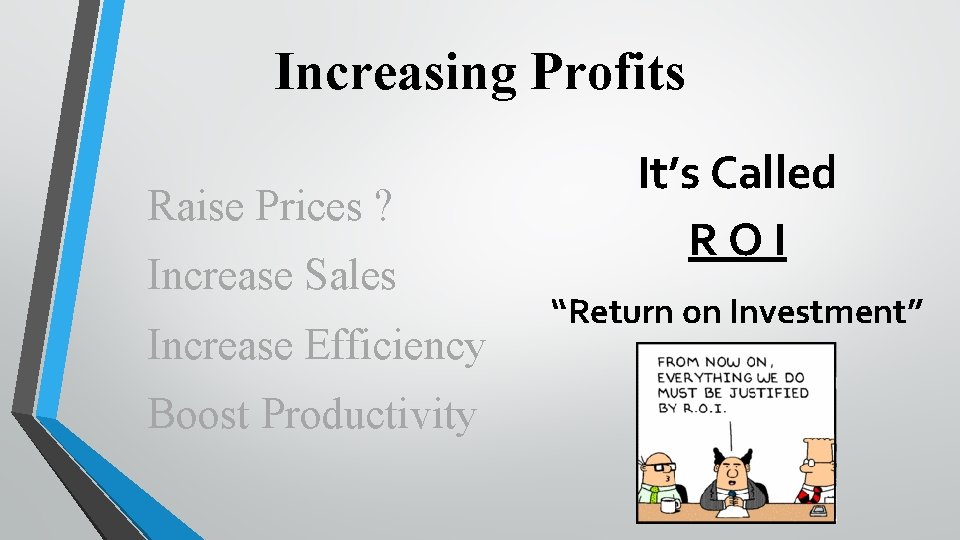
Increasing Profits Raise Prices ? Increase Sales Increase Efficiency Boost Productivity It’s Called ROI “Return on Investment”
th 4 Trait of Free Enterprise
OBJECTIVE Be able to discuss in a short answer question the advantages to competition in our economy
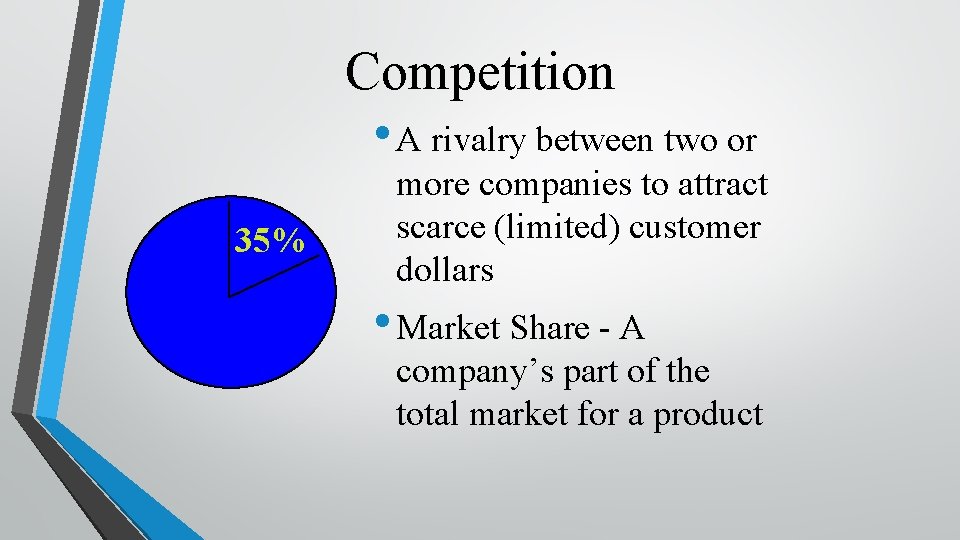
Competition • A rivalry between two or 35% more companies to attract scarce (limited) customer dollars • Market Share - A company’s part of the total market for a product
How to Compete • Lower prices of course.
How to Competition • Prices of course, but how else might I compete with another business?
How to Competition • Lower Prices • Better Quality Products • Better Customer Service • More Convenience • More Variety of Products • Better Marketing
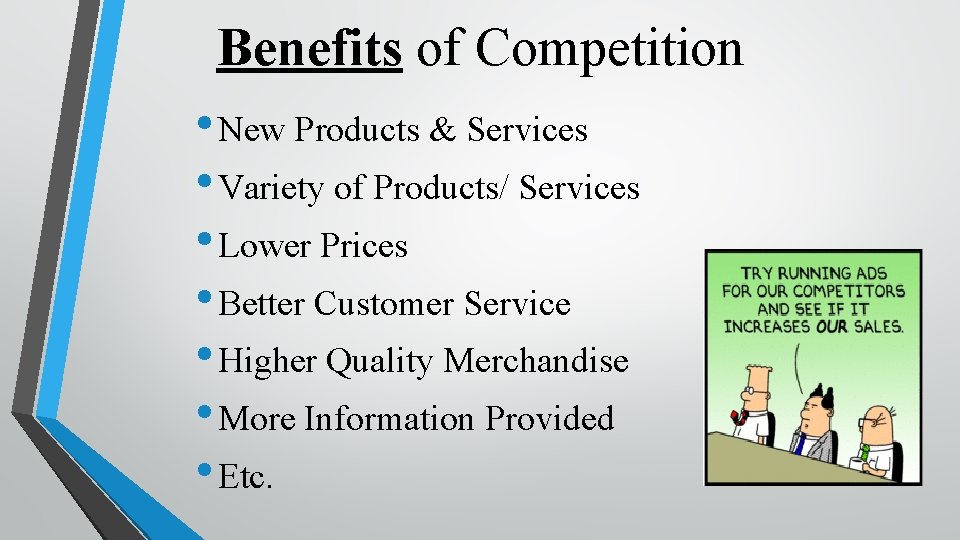
Benefits of Competition • New Products & Services • Variety of Products/ Services • Lower Prices • Better Customer Service • Higher Quality Merchandise • More Information Provided • Etc.
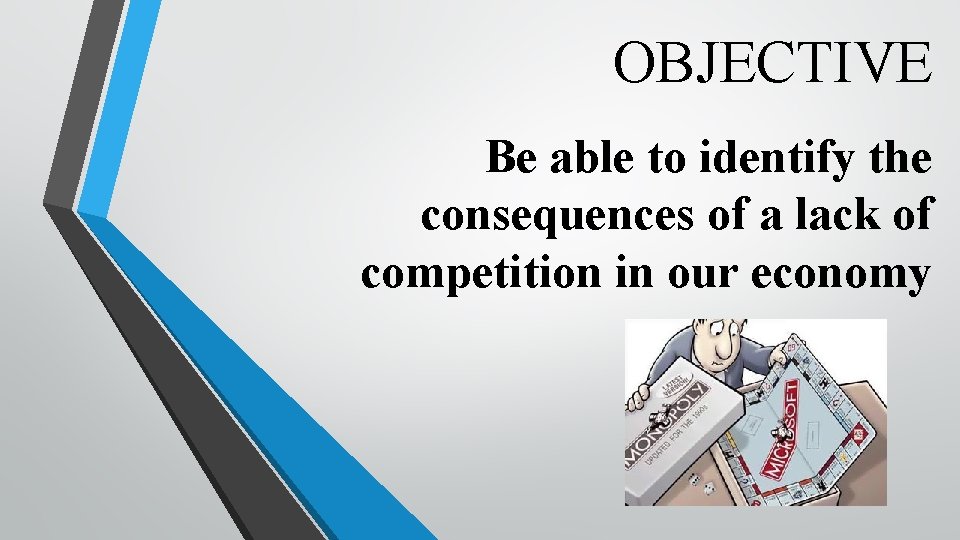
OBJECTIVE Be able to identify the consequences of a lack of competition in our economy
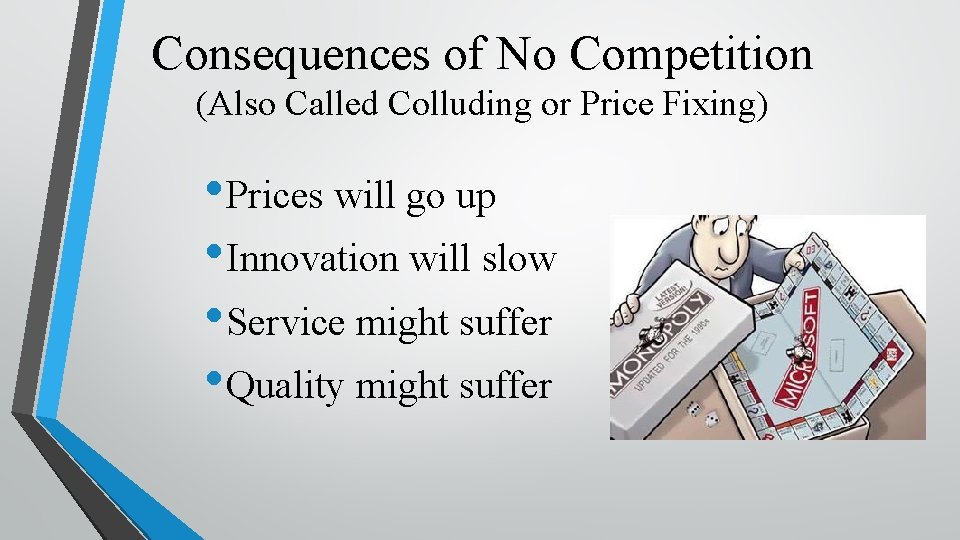
Consequences of No Competition (Also Called Colluding or Price Fixing) • Prices will go up • Innovation will slow • Service might suffer • Quality might suffer
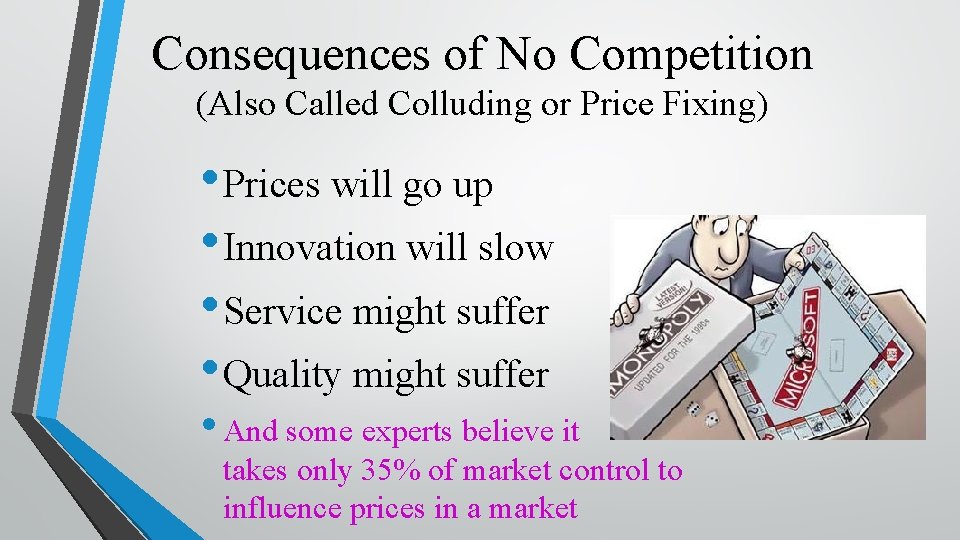
Consequences of No Competition (Also Called Colluding or Price Fixing) • Prices will go up • Innovation will slow • Service might suffer • Quality might suffer • And some experts believe it takes only 35% of market control to influence prices in a market
OBJECTIVE Be able to describe the role of government in a Free Enterprise system
OBJECTIVE Be able to describe the role of government in a Free Enterprise system The role of government in a Free Enterprise economy is limited
OBJECTIVE Be able to describe the role of government in a Free Enterprise system The role of government in a Free Enterprise economy is limited Primarily, the role of government is to protect competition But we’ll talk more about that in EPF 8
Free Enterprise in the USA REVIEW • Freedom of Choice • Open Mkt. (S & D) • The Profit Motive • Competition • Limit Gov. Control Free Enterprise
OBJECTIVE Be able to define the term Producers or “Businesses”
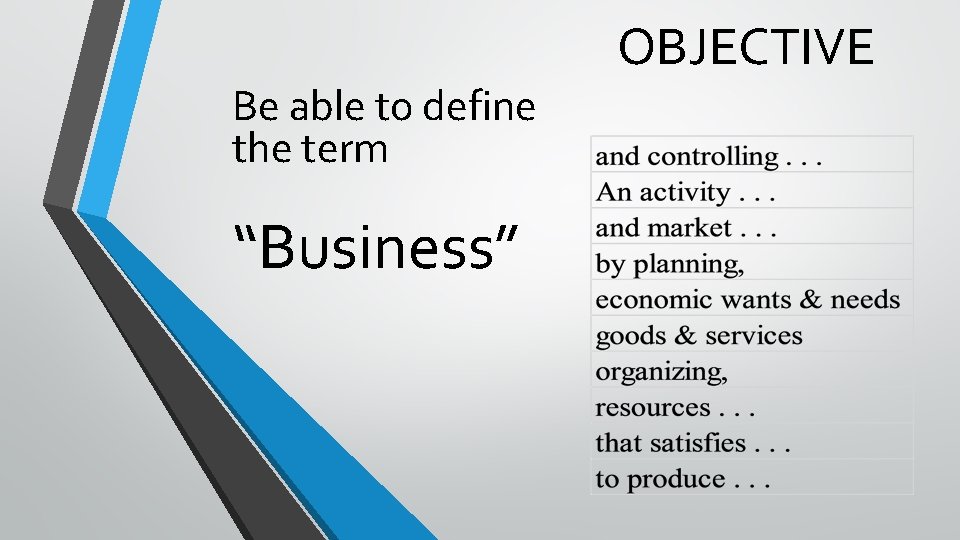
Be able to define the term “Business” OBJECTIVE
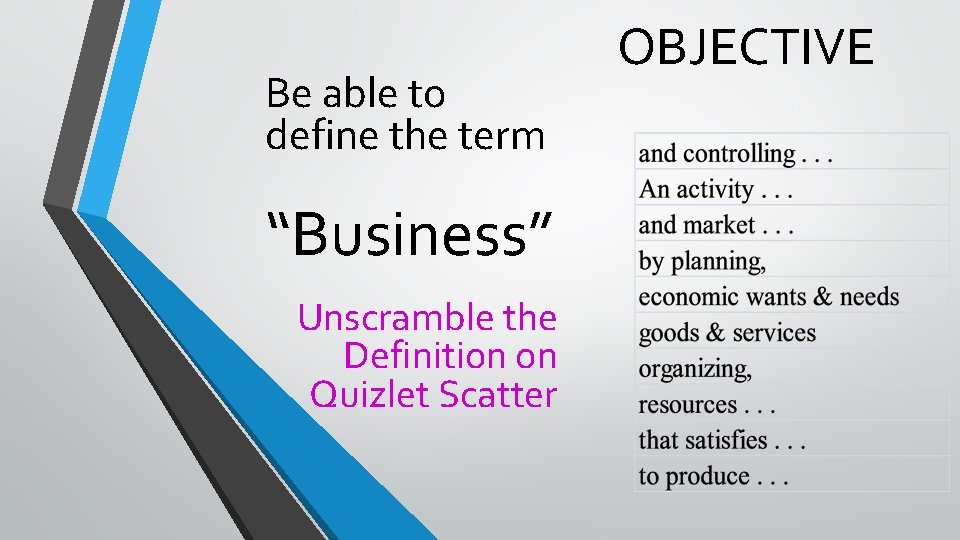
Be able to define the term “Business” Unscramble the Definition on Quizlet Scatter OBJECTIVE
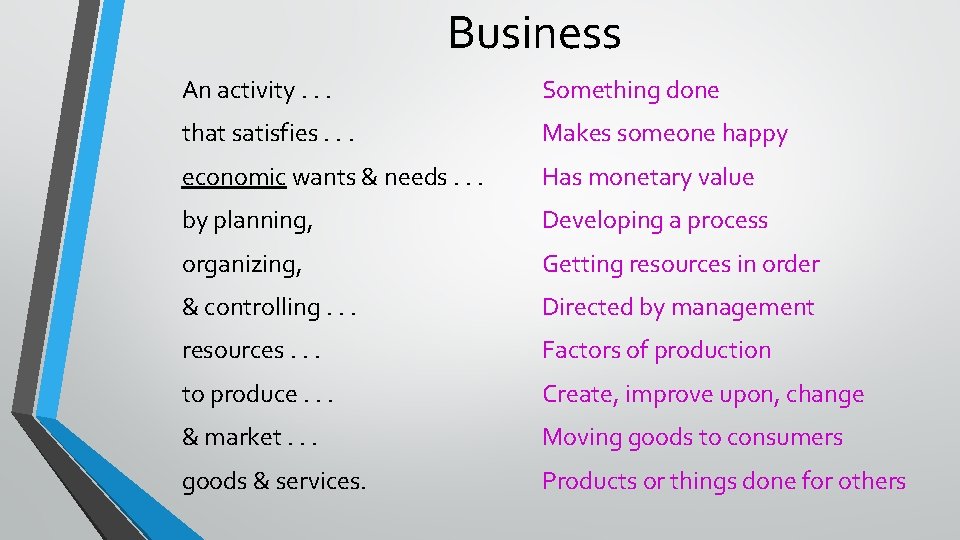
“Business” An activity that satisfies economic needs by planning, organizing, & controlling resources to produce & market goods & services
Business An activity. . . Something done that satisfies. . . Makes someone happy economic wants & needs. . . Has monetary value by planning, Developing a process organizing, Getting resources in order & controlling. . . Directed by management resources. . . Factors of production to produce. . . Create, improve upon, change & market. . . Moving goods to consumers goods & services. Products or things done for others
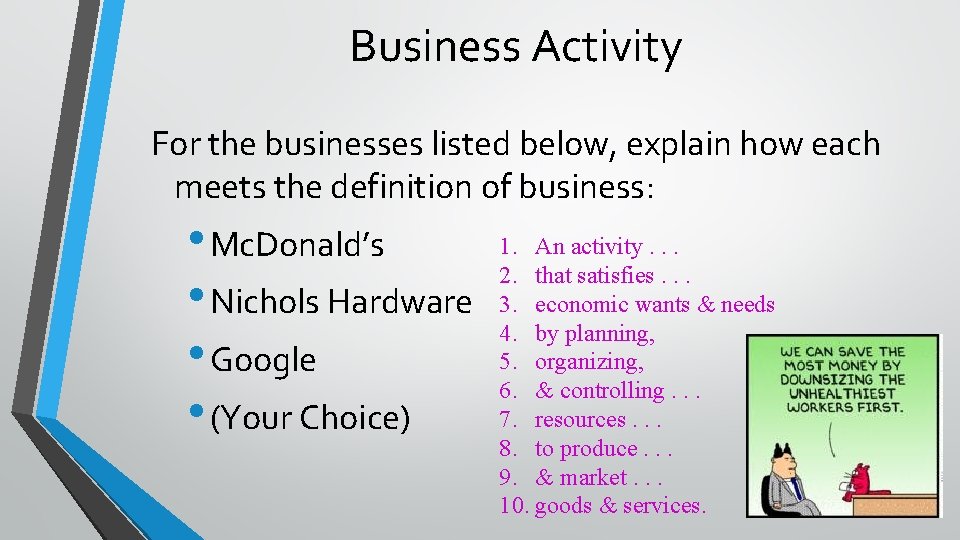
Business Activity For the businesses listed below, explain how each meets the definition of business: • Mc. Donald’s • Nichols Hardware • Google • (Your Choice) 1. An activity. . . 2. that satisfies. . . 3. economic wants & needs 4. by planning, 5. organizing, 6. & controlling. . . 7. resources. . . 8. to produce. . . 9. & market. . . 10. goods & services.
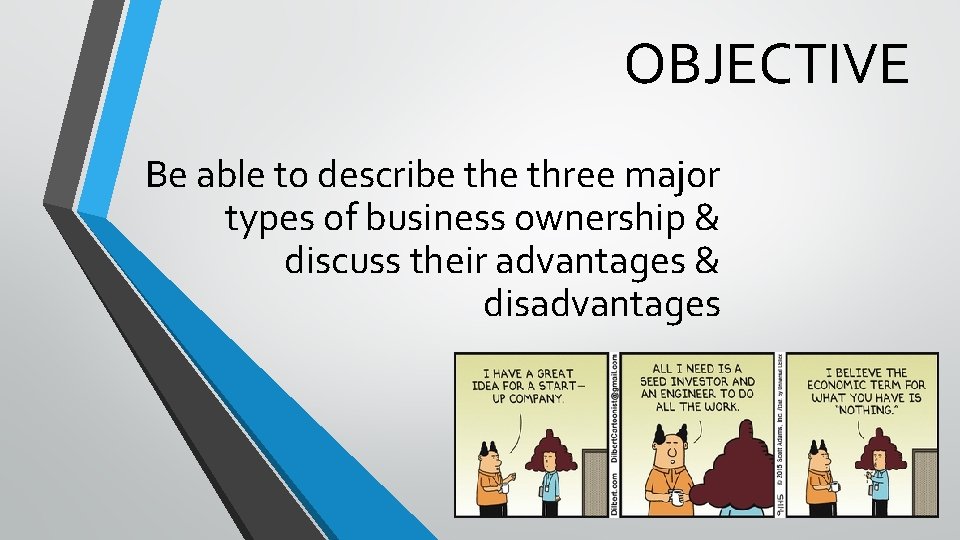
OBJECTIVE Be able to describe three major types of business ownership & discuss their advantages & disadvantages
SOLE PROPRIETORSHIP • Owned & operated by one person (Usually highly skilled) • employs large % of the workforce • examples include plumbers, dentists, beauticians, small shop owners, etc.
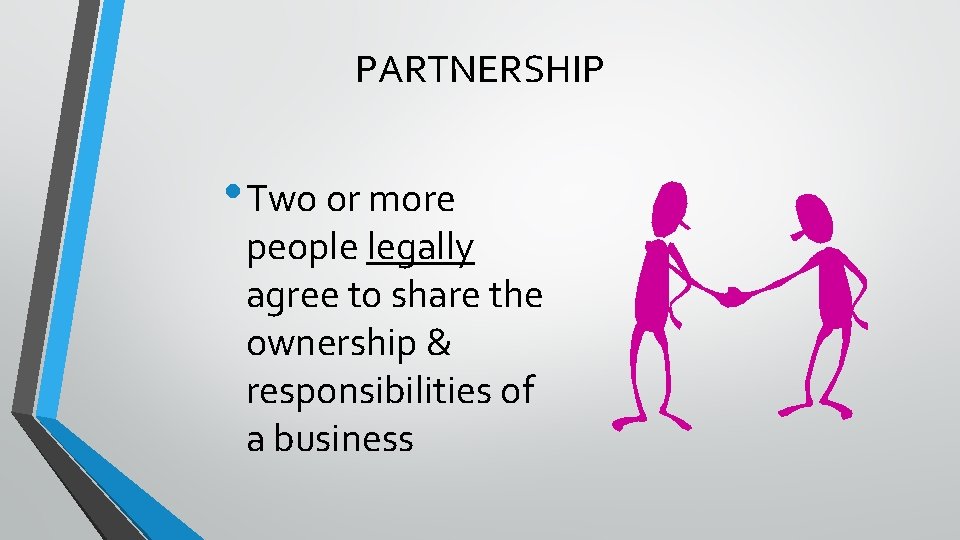
PARTNERSHIP • Two or more people legally agree to share the ownership & responsibilities of a business
CORPORATION • A charted (legal) entity that operates apart from the owners • the corporation will often sell stock • the stockholders will elect a board of directors to run the company
CORPORATIONS (Discussion) Doctors will often incorporate their practice; Why? (Discussion)
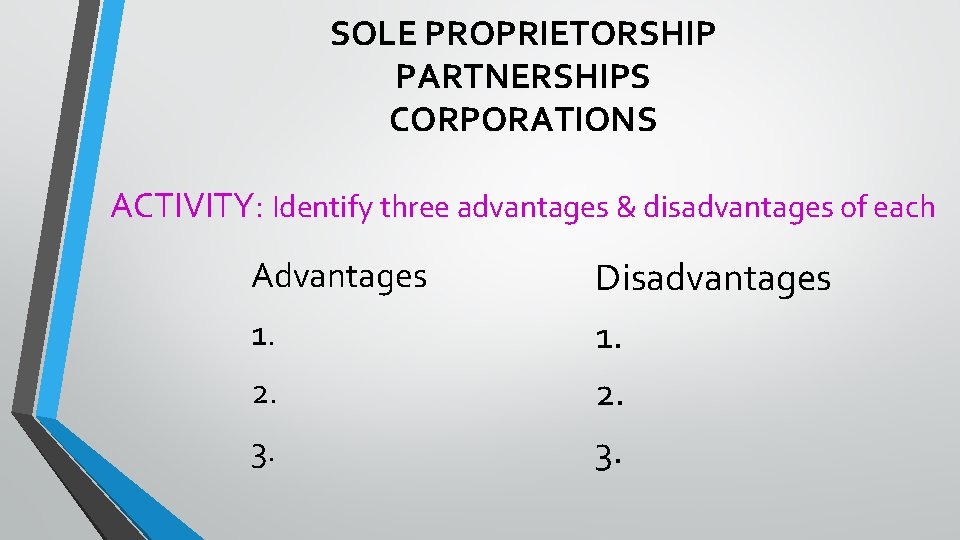
SOLE PROPRIETORSHIP PARTNERSHIPS CORPORATIONS ACTIVITY: Identify three advantages & disadvantages of each Advantages 1. 2. 3. Disadvantages 1. 2. 3.
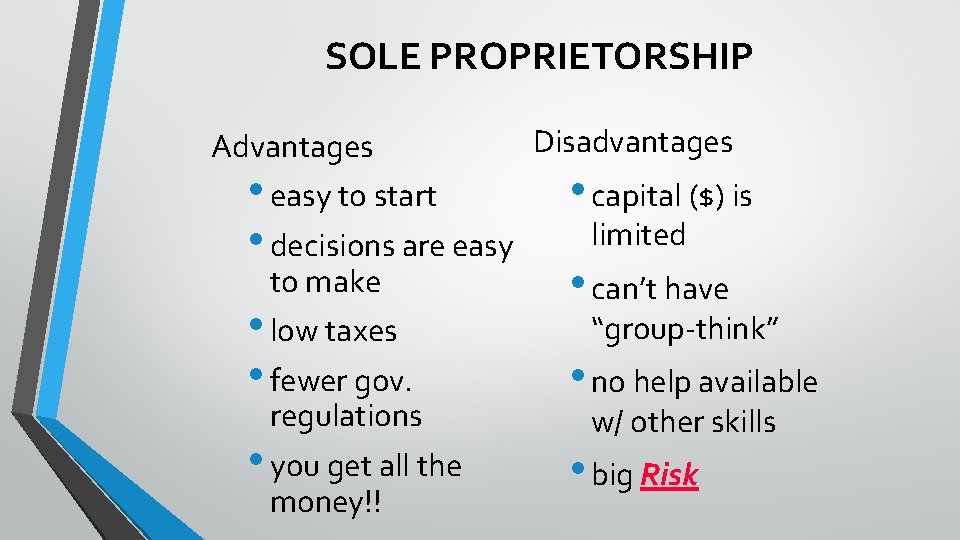
SOLE PROPRIETORSHIP Advantages • easy to start • decisions are easy to make • low taxes • fewer gov. regulations • you get all the money!! Disadvantages • capital ($) is limited • can’t have “group-think” • no help available w/ other skills • big Risk
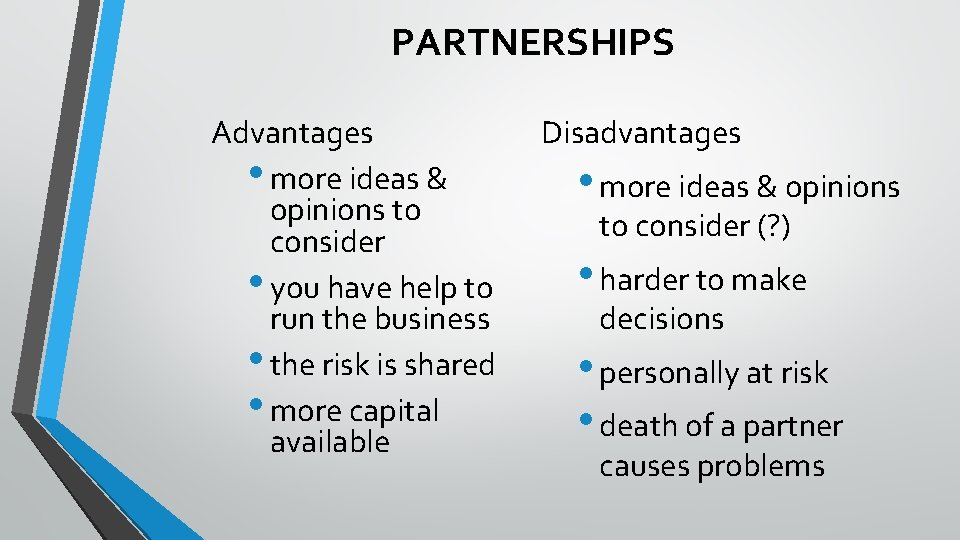
PARTNERSHIPS Advantages • more ideas & opinions to consider • you have help to run the business • the risk is shared • more capital available Disadvantages • more ideas & opinions to consider (? ) • harder to make decisions • personally at risk • death of a partner causes problems
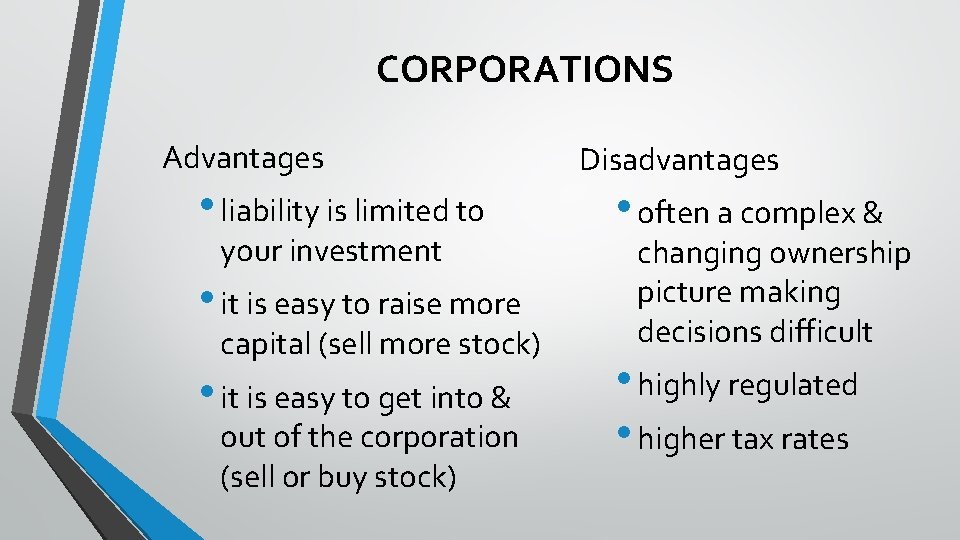
CORPORATIONS Advantages • liability is limited to your investment • it is easy to raise more capital (sell more stock) • it is easy to get into & out of the corporation (sell or buy stock) Disadvantages • often a complex & changing ownership picture making decisions difficult • highly regulated • higher tax rates
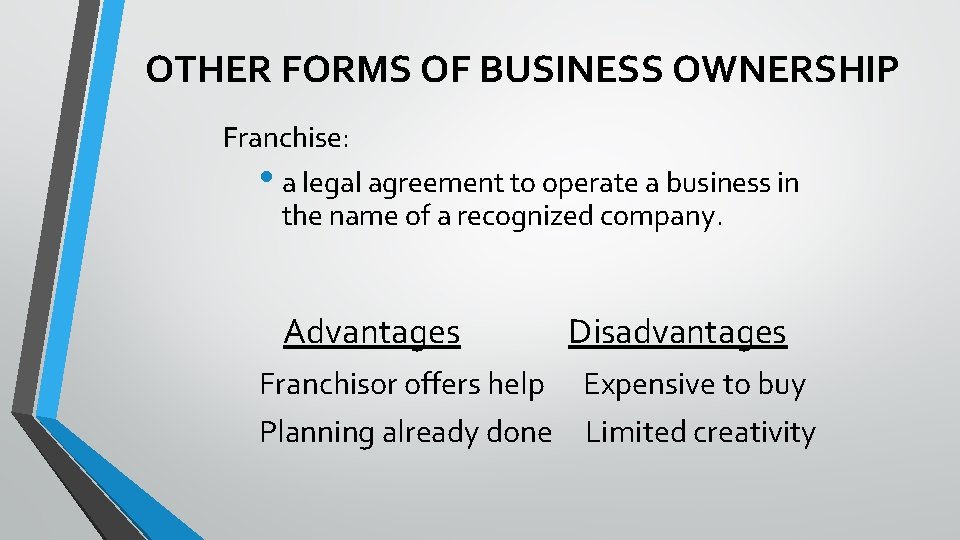
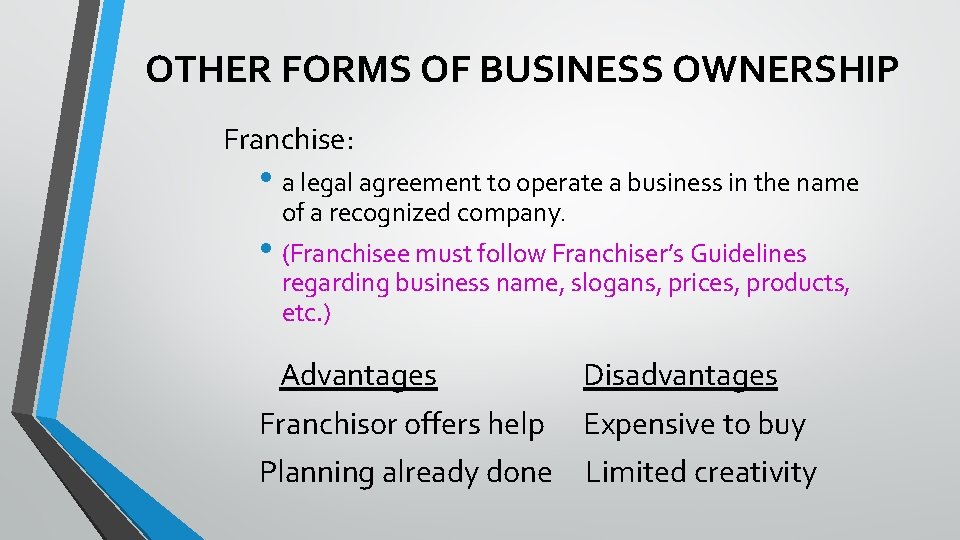
OTHER FORMS OF BUSINESS OWNERSHIP Franchise: • a legal agreement to operate a business in the name of a recognized company. Advantages Disadvantages Franchisor offers help Expensive to buy Planning already done Limited creativity
OTHER FORMS OF BUSINESS OWNERSHIP Franchise: • a legal agreement to operate a business in the name of a recognized company. • (Franchisee must follow Franchiser’s Guidelines regarding business name, slogans, prices, products, etc. ) Advantages Disadvantages Franchisor offers help Expensive to buy Planning already done Limited creativity
OTHER FORMS OF BUSINESS OWNERSHIP Cooperative: • A company owned by the customers of that company. Advantages Disadvantages Customer Support Frequent Ownership Changes Positive Image Disputes Among the Owners Loyal Customers
Complete the EPF Quizlet #2 HOMEWORK
STUDY Complete the EPF 2 Quiz
STUDY Complete the EPF 2 Quiz And Bring Some Cash to Class Next Time