
EPA Hazardous Waste Generator Improvements Rule Will Wyman
- Slides: 34
EPA Hazardous Waste Generator Improvements Rule Will Wyman Industrial and Hazardous Waste Permits Section Ed Minter and Andi Windham Registration and Reporting Section May 17, 2017
EPA Generator Rule: 60+ Changes • Reorganize the rules based on generator status • Clarify areas in the rule where ambiguity existed • Add flexibility for generators managing hazardous wastes under certain conditions • Improve efficiency and effectiveness • Non-compliance rate 10 to 30% 2
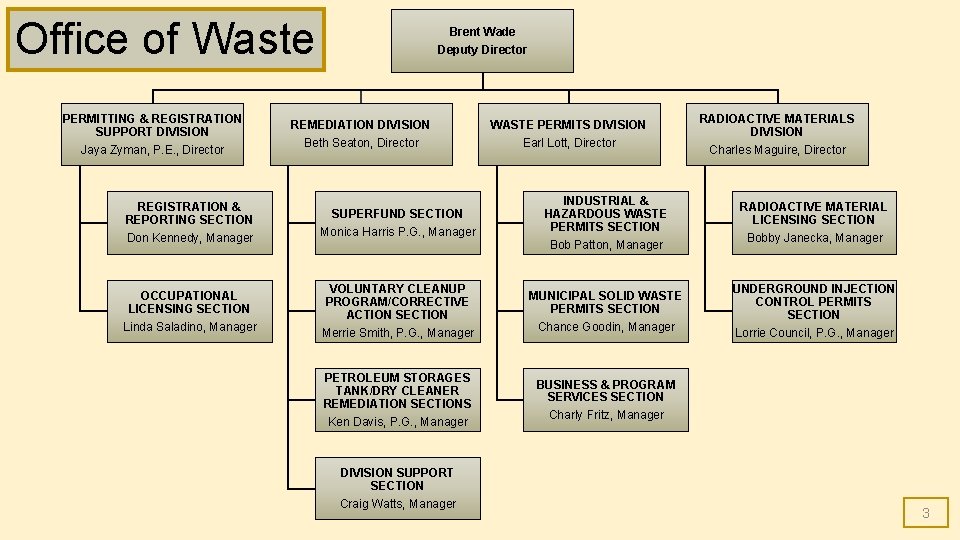
Office of Waste PERMITTING & REGISTRATION SUPPORT DIVISION Jaya Zyman, P. E. , Director Brent Wade Deputy Director REMEDIATION DIVISION WASTE PERMITS DIVISION Beth Seaton, Director Earl Lott, Director RADIOACTIVE MATERIALS DIVISION Charles Maguire, Director [Organizational chart of the Office of Waste] REGISTRATION & REPORTING SECTION Don Kennedy, Manager OCCUPATIONAL LICENSING SECTION Linda Saladino, Manager INDUSTRIAL & HAZARDOUS WASTE PERMITS SECTION Bob Patton, Manager RADIOACTIVE MATERIAL LICENSING SECTION Bobby Janecka, Manager VOLUNTARY CLEANUP PROGRAM/CORRECTIVE ACTION SECTION Merrie Smith, P. G. , Manager MUNICIPAL SOLID WASTE PERMITS SECTION Chance Goodin, Manager UNDERGROUND INJECTION CONTROL PERMITS SECTION Lorrie Council, P. G. , Manager PETROLEUM STORAGES TANK/DRY CLEANER REMEDIATION SECTIONS Ken Davis, P. G. , Manager BUSINESS & PROGRAM SERVICES SECTION Charly Fritz, Manager SUPERFUND SECTION Monica Harris P. G. , Manager DIVISION SUPPORT SECTION Craig Watts, Manager 3
Hazardous Waste Facilities Permits: 181 • Commercial: 53 • Non-Commercial: 128 Registrations: 5, 425 active generators 4
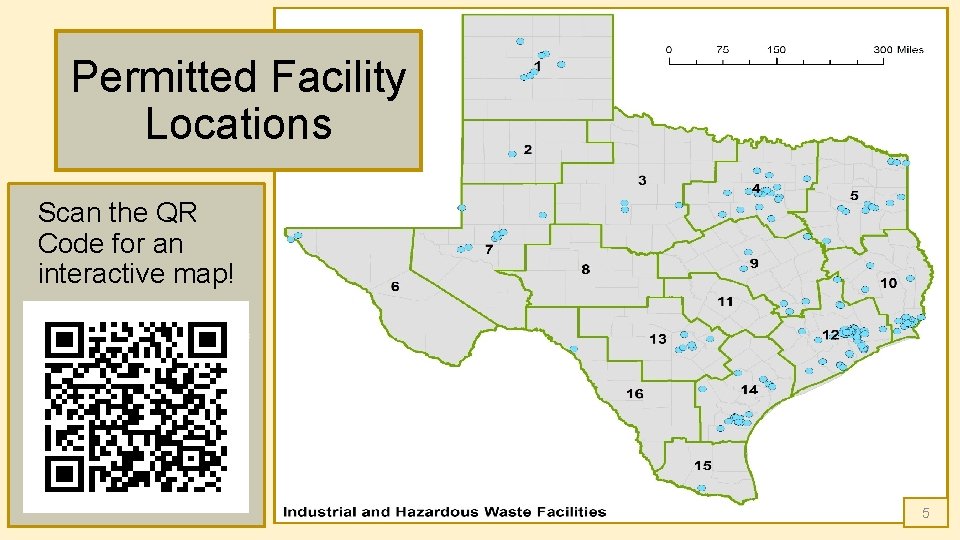
Permitted Facility Locations Scan the QR Code for an interactive map! [Image of a QR code to an interactive Google map with all permitted hazardous waste facilities in Texas. ] [Map of Texas containing outlined Texas counties and TCEQ regions, and locations of IHW Permitted Facilities. ] 5
Final EPA Generator Rule • Proposed September 25, 2015 • Published November 28, 2016 • Effective May 30, 2017 • Authorized states have until July 1, 2018 to adopt the more stringent requirements • Less stringent optional 6
Final EPA Generator Rule • More Stringent • Small Quantity Generator (SQG) Re-notify • Identifying risks of wastes being accumulated and labeling • Closure notification (TCEQ already requires) 7
Final EPA Generator Rule • More Stringent • Biennial reporting for whole year (TCEQ already requires) • Reference guide for contingency plans • Biennial reporting for recyclers who don’t store 8
Final EPA Generator Rule • Less Stringent • Very Small Quantity Generator (VSQG) Consolidation • Episodic Generation • Waiver from 50’ rule • Participating academic labs allowed 12 months of accumulation 9
Other Items in Final EPA Rule • Adds definitions including: • "Large quantity generator – (LQG), " "acute hazardous waste, " "central accumulation area” • Renames conditionally exempt small quantity generators to "very small quantity generators – (VSQG)” 10
Other Items in Final EPA Rule • Emphasis on accurate waste determinations • Difference between proposed and final • Clarifications for Satellite Accumulation Areas (SAAs) • Reorganizes the generator rules 11
Specific Changes 12
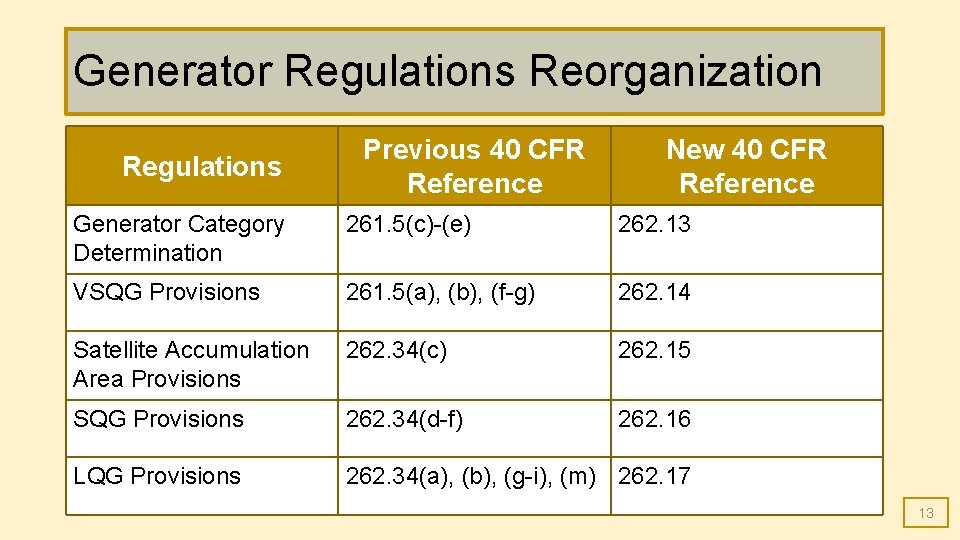
Generator Regulations Reorganization Previous 40 CFR Regulations [Table showing existing and corresponding Reference proposed citations. ] New 40 CFR Reference Generator Category Determination 261. 5(c)-(e) 262. 13 VSQG Provisions 261. 5(a), (b), (f-g) 262. 14 Satellite Accumulation Area Provisions 262. 34(c) 262. 15 SQG Provisions 262. 34(d-f) 262. 16 LQG Provisions 262. 34(a), (b), (g-i), (m) 262. 17 13
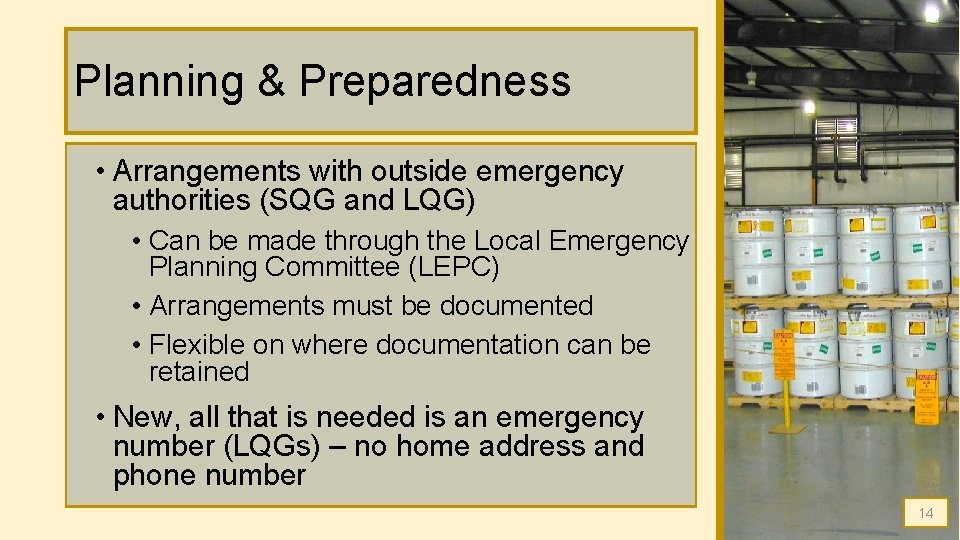
Planning & Preparedness • Arrangements with outside emergency authorities (SQG and LQG) • Can be made through the Local Emergency Planning Committee (LEPC) • Arrangements must be documented • Flexible on where documentation can be retained • New, all that is needed is an emergency number (LQGs) – no home address and phone number 14
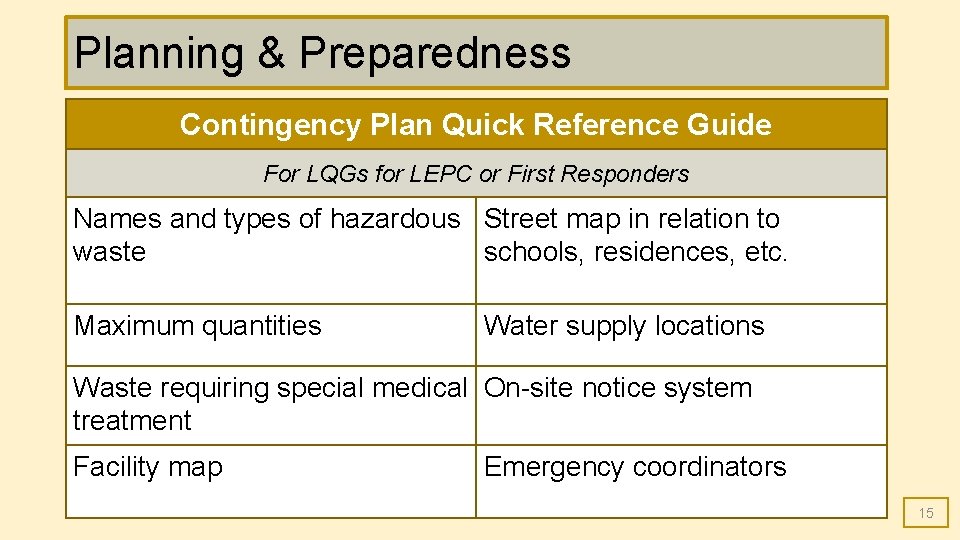
Planning & Preparedness Contingency Plan Quick Reference Guide Foritems LQGsrequired for LEPC in or the First Responders [Table showing Contingency Plans for LQGs, LEPC or Names and types of hazardous Street map in relation to responders. ] waste schools, residences, etc. Maximum quantities Water supply locations Waste requiring special medical On-site notice system treatment Facility map Emergency coordinators 15
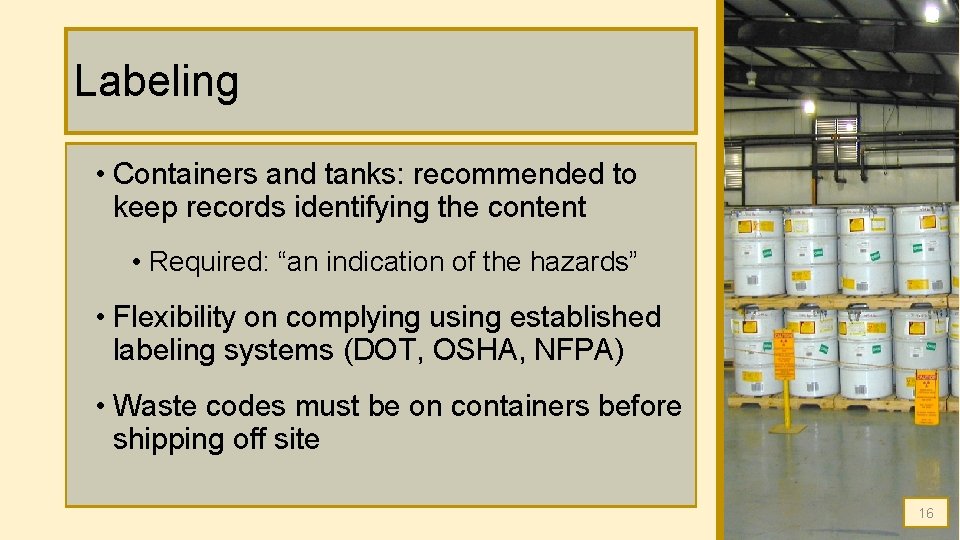
Labeling • Containers and tanks: recommended to keep records identifying the content • Required: “an indication of the hazards” • Flexibility on complying using established labeling systems (DOT, OSHA, NFPA) • Waste codes must be on containers before shipping off site 16
Satellite Accumulation Areas • Marking and labeling same as other storage areas • Reactive wastes now have to be stored at the point of generation • Three days = three consecutive calendar days • Acute – allowed to choose between maximum volume 1 quart for liquids or weight of 1 kg 17
Satellite Accumulation Areas • No mixed wastes or incompatible wastes allowed in containers • Exceptions for leaving containers open when essential for operating equipment • Marked with “hazardous waste” • Subject to preparedness planning (SQG, LQG) 18
Acute Waste • > 1 kg acute generator for hazardous waste = LQG • Defined new terms for acute and nonacute: incorrect definition in prior rule • If acute threshold is exceeded then generator is a LQG for all waste on site • Not just the acute waste 19
Other Changes • Waiver to 50’ requirement for LQGs if fire marshal concurs • Academic Lab rule accumulation time extended from 6 months to 12 months • Clarified RCRA 3004 (c) – liquid waste “land ban” for landfills also applies to hazardous waste generators 20
Recycler Reporting • Biennial reporting for recycling facilities that receive hazardous waste from off site and do not have a RCRA storage permit • 30 TAC 335. 24(g) 21
SQG Re-Notify • The final rule requires SQGs to notify every 4 years unless states have more frequent notice requirements • Electronic reporting allowed • Texas – Annual Waste Summary • https: //www 3. tceq. texas. gov/steers/ 22
Closure Notification • EPA Rule (for LQGs) • Notify states (30 days prior) • Notify states that generator is meeting closure performance standards within 90 days • Can request an extension • TCEQ already requires clean closure prior to inactivating a solid waste registration for all generators per 30 TAC 335. 8 23
Less Stringent 24
VSQG Consolidation • Allows an LQG to consolidate wastes under the same company from VSQG sites • Currently an LQG needs a RCRA permit to receive VSQG wastes • This ensures proper management and more reporting of hazardous waste • Sending hazardous waste to a RCRAdesignated facility is the most environmentally sound option 25
VSQG Consolidation Allows consolidation of hazardous waste at an LQG: VSQG requirements include: • Labels waste containers with Hazardous Waste and identify hazards • Comply with DOT shipping requirements • Manifest not required for VSQG 26
VSQG Consolidation LQG requirements: • Wastes “under control of the same person” • Notifies state (8700 -12) • Identify participating VSQG • Manages consolidated waste as LQG • Reports quantities managed and keeps records (3 years) 27
Episodic Generation • Allows generators to maintain their existing category provided they comply with a streamlined set of requirements • Frequency: Once a calendar year, can petition for a second unplanned event • Notification: 30 days prior to planned event • 72 hours after an unplanned event • 60 days to get waste off-site 28
Episodic Generation Requirements for VSQGs: • Notify and obtain temporary identification number • Manifest waste, use registered transporter, permitted site • Identify an emergency coordinator • Label episodic waste containers • Maintain records associated with the event 29
Episodic Generation • Requirements for SQGs • Notify • Comply with existing SQG regulations • Maintain records associated the event • Texas One-Time Shipment program (form 00757) • SQG’s add waste stream to NOR and report on the AWS 30
Resources • https: //www. epa. gov/hwgenerators/final-rule-hazardouswaste-generator-improvements • Final rule in the Federal Register • Fact sheet • Frequent questions • Webinars from November 30, 2016 and January 9, 2017 31
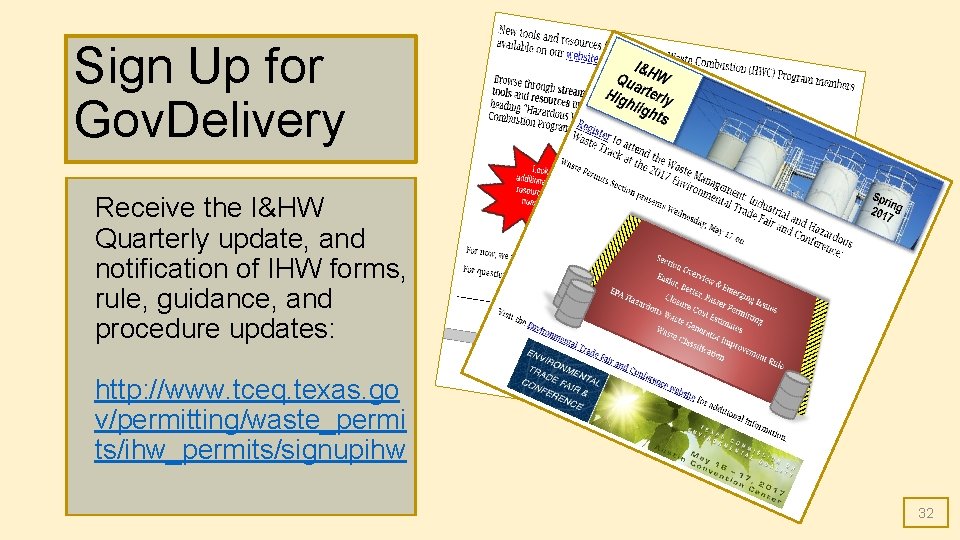
Sign Up for Gov. Delivery [Pictures of the first and second pages of the Spring 2017 I&HW Quarterly Highlights. ] Receive the I&HW Quarterly update, and notification of IHW forms, rule, guidance, and procedure updates: http: //www. tceq. texas. go v/permitting/waste_permi ts/ihw_permits/signupihw 32
Waste Classification Next on i t a t n e s e r P At 3: 4 5 Sheila Meyers Industrial and Hazardous Waste Permits Section
How to Contact Us For Registration and Reporting Andi Windham and Ed Minter Permitting and Registration Support Division (512) 239 -6413 wasteval@tceq. texas. gov For Industrial & Hazardous Waste Permitting Will Wyman Waste Permits Division (512) 239 -2335 ihwper@tceq. texas. gov 34