
EOSC Service management system Introduction to service management
- Slides: 21
EOSC Service management system Introduction to service management and Fit. SM eosc-hub. eu @EOSC_eu Dissemination level: Public Disclosing Party: WP 1 Recipient Party: PMB EOSC-hub receives funding from the European Union’s Horizon 2020 research and innovation programme under grant agreement No. 777536.
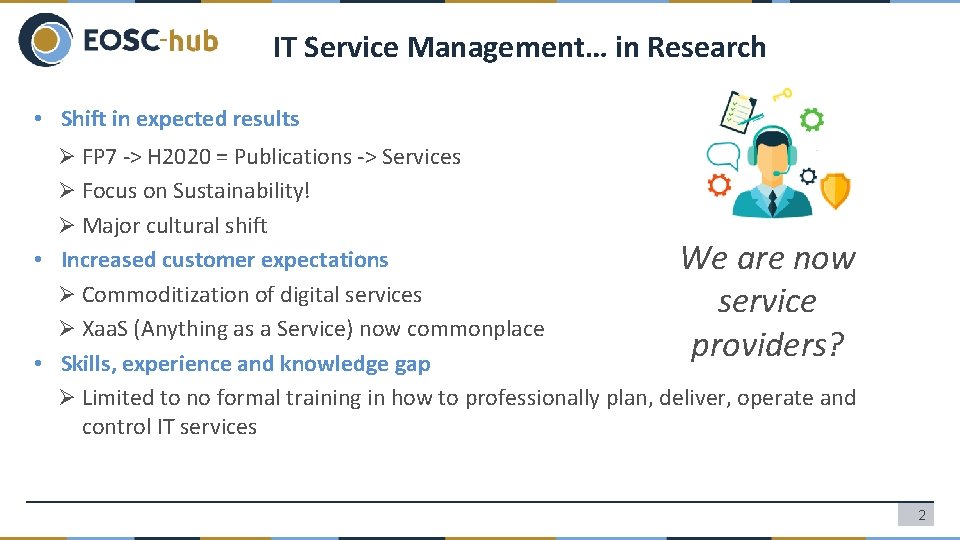
IT Service Management… in Research • Shift in expected results Ø FP 7 -> H 2020 = Publications -> Services Ø Focus on Sustainability! Ø Major cultural shift • Increased customer expectations We are now Ø Commoditization of digital services service Ø Xaa. S (Anything as a Service) now commonplace providers? • Skills, experience and knowledge gap Ø Limited to no formal training in how to professionally plan, deliver, operate and control IT services 2
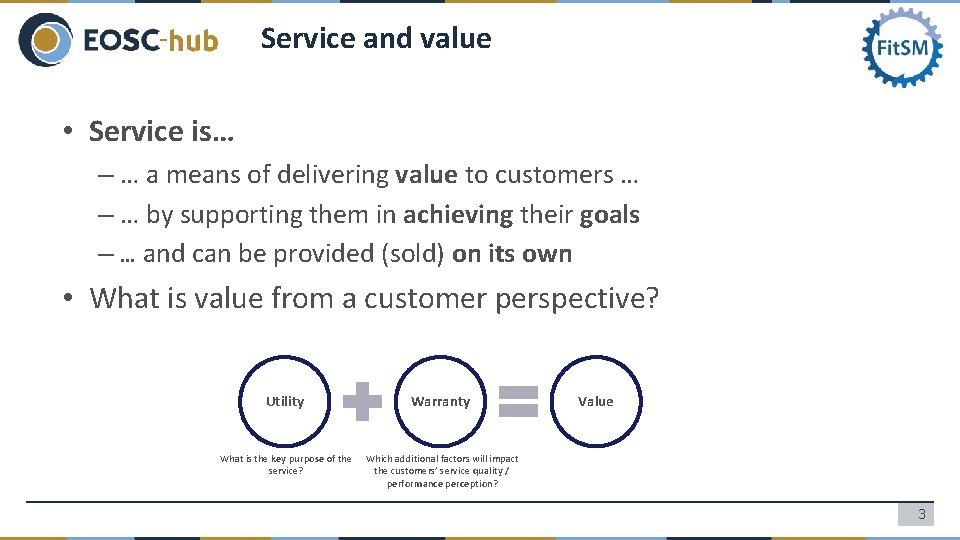
Service and value • Service is… – … a means of delivering value to customers … – … by supporting them in achieving their goals – … and can be provided (sold) on its own • What is value from a customer perspective? Utility Warranty What is the key purpose of the service? Which additional factors will impact the customers’ service quality / performance perception? Value 3
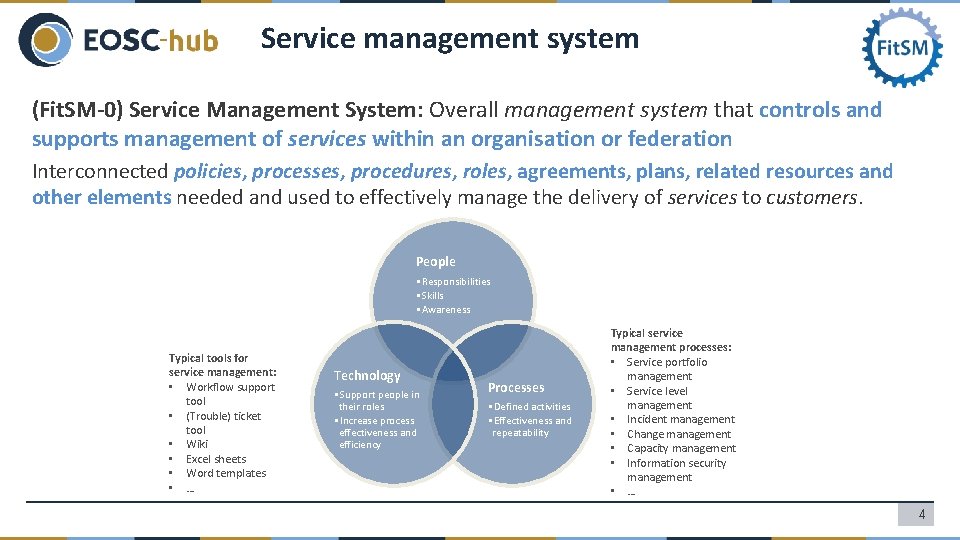
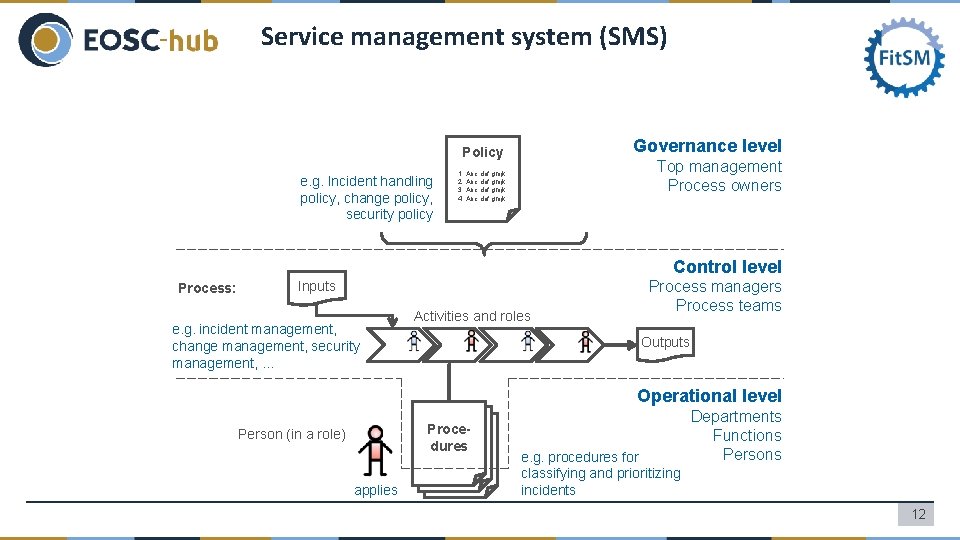
Service management system (Fit. SM-0) Service Management System: Overall management system that controls and supports management of services within an organisation or federation Interconnected policies, processes, procedures, roles, agreements, plans, related resources and other elements needed and used to effectively manage the delivery of services to customers. People • Responsibilities • Skills • Awareness Typical tools for service management: • Workflow support tool • (Trouble) ticket tool • Wiki • Excel sheets • Word templates • … Technology • Support people in their roles • Increase process effectiveness and efficiency Processes • Defined activities • Effectiveness and repeatability Typical service management processes: • Service portfolio management • Service level management • Incident management • Change management • Capacity management • Information security management • … 4
SMS: What benefits does it bring? • It puts in place standard processes, procedures and agreements for managing the infrastructure efficiently and effectively. • Repeatability of desired outputs. • It increased clarity on expectations between partners and also customers • Understanding organization (federation) structure and responsibilities. • It made decision-making clearer between organisations and individual teams. • Reduce organization fragmentation and bringing people together. • Customer focus, alignment of IT and their customers • Improved reputation. 5
What is Fit. SM • • • Standards family for lightweight IT service management Suitable for IT service providers of any type and scale Main design principle: Keep it simple! All Fit. SM parts are freely released under Creative Commons licenses Fit. SM is operated and managed by ITEMO (non-profit) Certification provided by ICO-Cert and APMG International www. fitsm. eu Fit. SM_Standard The development of Fit. SM was originally funded by the European Commission through an EC-FP 7 project "Fed. SM“ 6
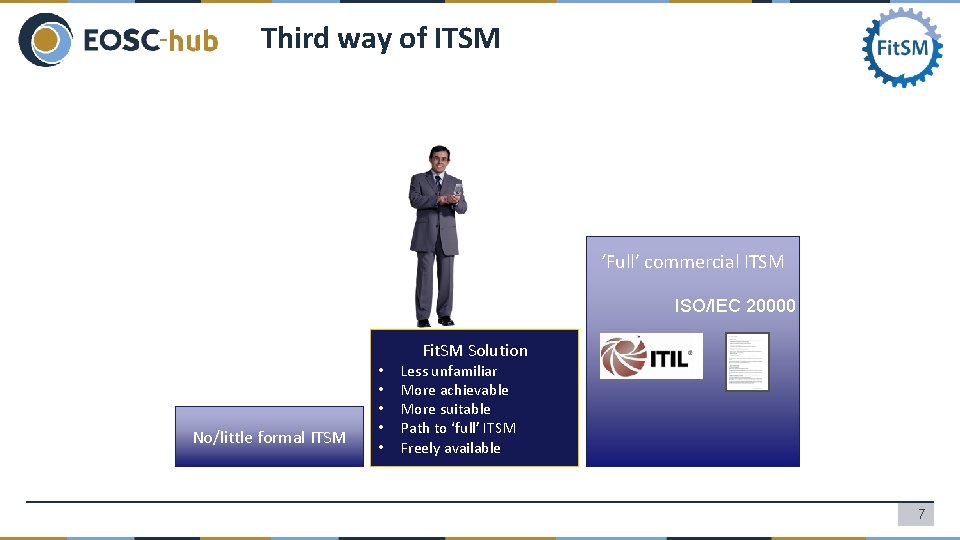
Third way of ITSM ‘Full’ commercial ITSM ISO/IEC 20000 No/little formal ITSM • • • Fit. SM Solution Less unfamiliar More achievable More suitable Path to ‘full’ ITSM Freely available 7
Challenges in federated IT service provisioning • Traditional IT service management (ITSM) practices … - assume single central control over all service management processes by one organisation acting as the service provider - hardly address collaborative approaches to service delivery. • As a result: - Applying ITSM in federated environments may be more difficult, and not all concepts / ideas will work • Important in a federated environment: - Understanding the roles of the federation members (including the roles or “business models” of the federators involved) 8
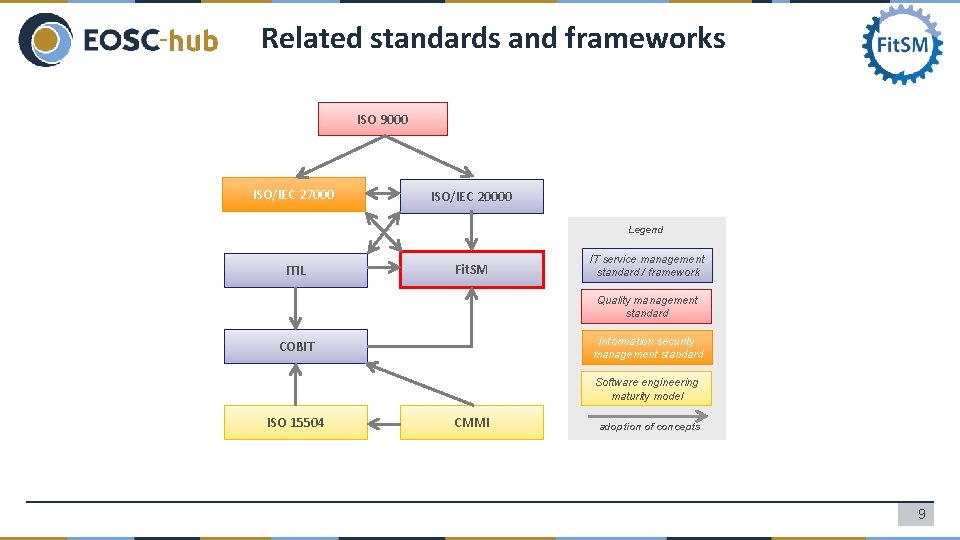
Related standards and frameworks ISO 9000 ISO/IEC 27000 ISO/IEC 20000 Legend ITIL Fit. SM IT service management standard / framework Quality management standard Information security management standard COBIT Software engineering maturity model ISO 15504 CMMI adoption of concepts 9
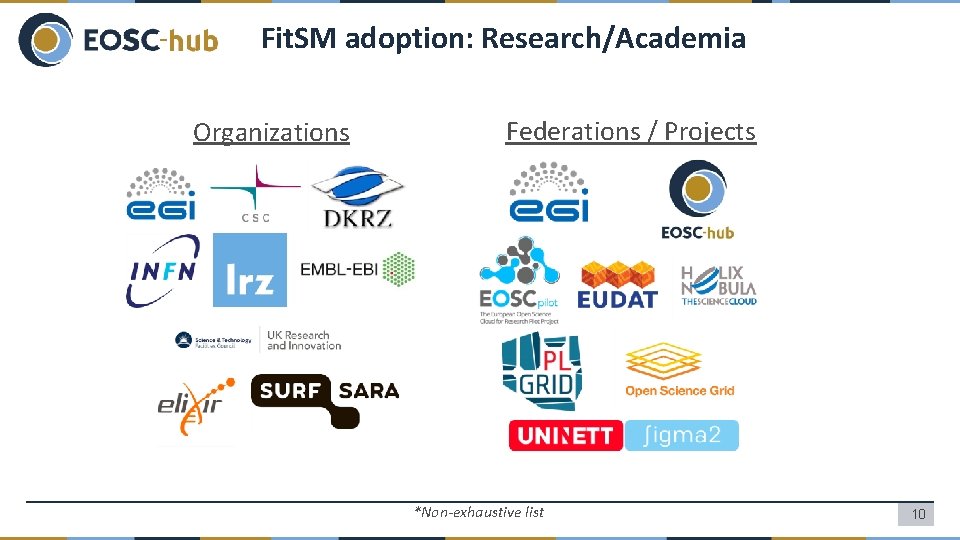
Fit. SM adoption: Research/Academia Organizations Federations / Projects *Non-exhaustive list 10
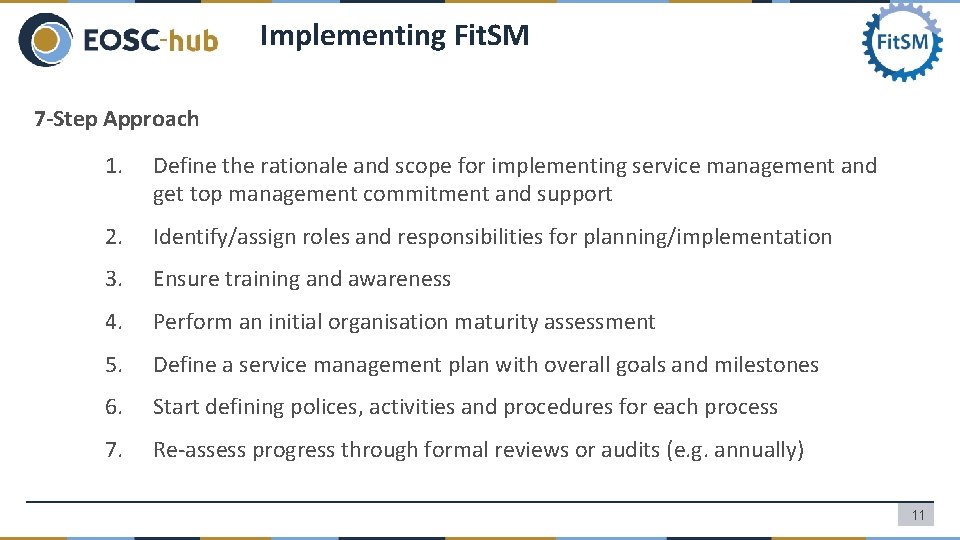
Implementing Fit. SM 7 -Step Approach 1. Define the rationale and scope for implementing service management and get top management commitment and support 2. Identify/assign roles and responsibilities for planning/implementation 3. Ensure training and awareness 4. Perform an initial organisation maturity assessment 5. Define a service management plan with overall goals and milestones 6. Start defining polices, activities and procedures for each process 7. Re-assess progress through formal reviews or audits (e. g. annually) 11
Service management system (SMS) Governance level Policy e. g. Incident handling policy, change policy, security policy Top management Process owners 1. Abc def ghijk. 2. Abc def ghijk. 3. Abc def ghijk. 4. Abc def ghijk. Control level Process: Inputs e. g. incident management, change management, security management, … Activities and roles Process managers Process teams Outputs Operational level Procedures Person (in a role) applies e. g. procedures for classifying and prioritizing incidents Departments Functions Persons 12
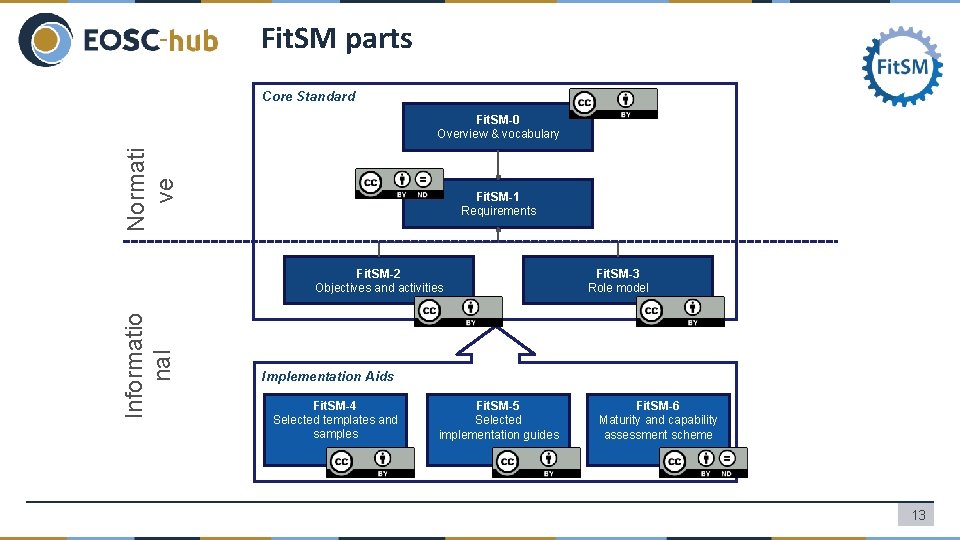
Fit. SM parts Core Standard Normati ve Fit. SM-0 Overview & vocabulary Fit. SM-1 Requirements Informatio nal Fit. SM-2 Objectives and activities Fit. SM-3 Role model Implementation Aids Fit. SM-4 Selected templates and samples Fit. SM-5 Selected implementation guides Fit. SM-6 Maturity and capability assessment scheme 13
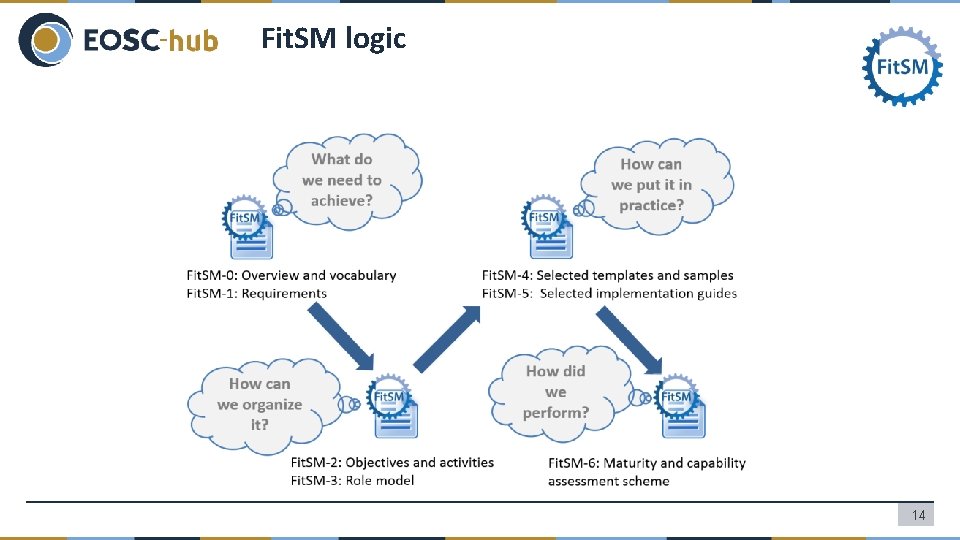
Fit. SM logic 14
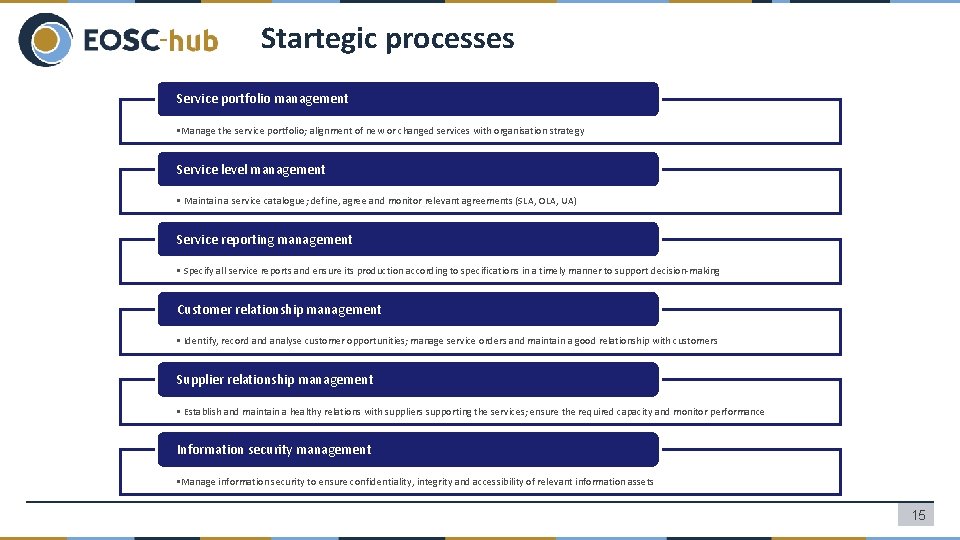
Startegic processes Service portfolio management • Manage the service portfolio; alignment of new or changed services with organisation strategy Service level management • Maintain a service catalogue; define, agree and monitor relevant agreements (SLA, OLA, UA) Service reporting management • Specify all service reports and ensure its production according to specifications in a timely manner to support decision-making Customer relationship management • Identify, record analyse customer opportunities; manage service orders and maintain a good relationship with customers Supplier relationship management • Establish and maintain a healthy relations with suppliers supporting the services; ensure the required capacity and monitor performance Information security management • Manage information security to ensure confidentiality, integrity and accessibility of relevant information assets 15
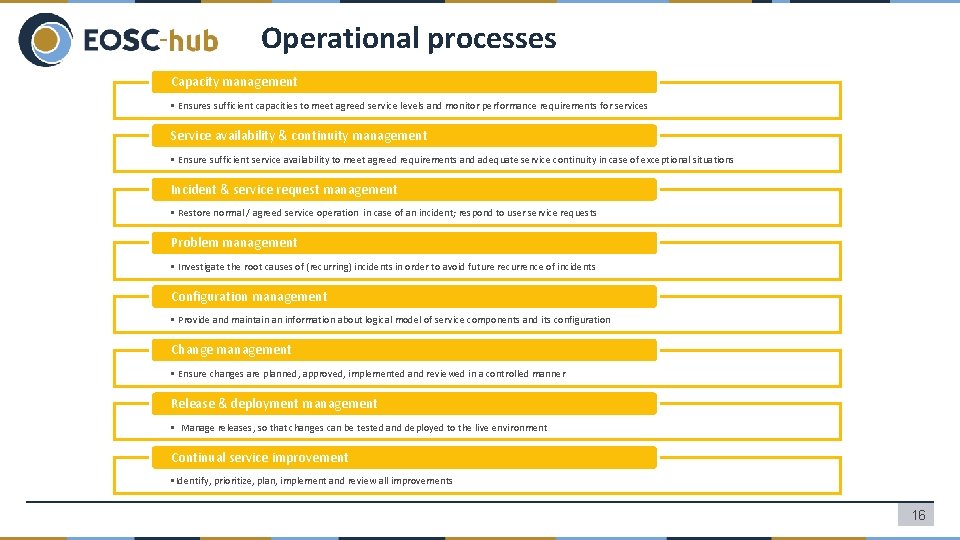
Operational processes Capacity management • Ensures sufficient capacities to meet agreed service levels and monitor performance requirements for services Service availability & continuity management • Ensure sufficient service availability to meet agreed requirements and adequate service continuity in case of exceptional situations Incident & service request management • Restore normal / agreed service operation in case of an incident; respond to user service requests Problem management • Investigate the root causes of (recurring) incidents in order to avoid future recurrence of incidents Configuration management • Provide and maintain an information about logical model of service components and its configuration Change management • Ensure changes are planned, approved, implemented and reviewed in a controlled manner Release & deployment management • Manage releases, so that changes can be tested and deployed to the live environment Continual service improvement • Identify, prioritize, plan, implement and review all improvements 16
Fit. SM process requirements Example
Incident & Service Request Management (ISRM) Objective To restore normal / agreed service operation within the agreed time after the occurrence of an incident, and to respond to user service requests
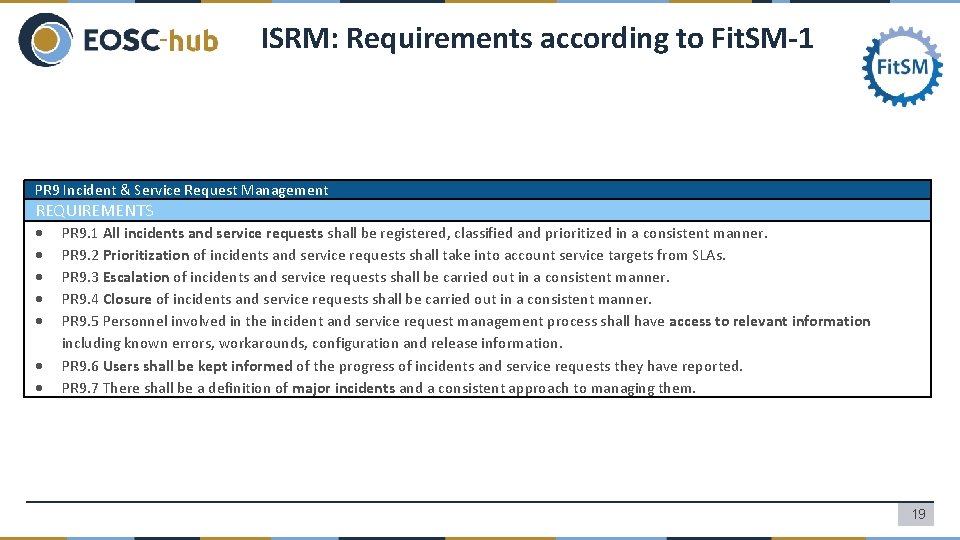
ISRM: Requirements according to Fit. SM-1 PR 9 Incident & Service Request Management REQUIREMENTS PR 9. 1 All incidents and service requests shall be registered, classified and prioritized in a consistent manner. PR 9. 2 Prioritization of incidents and service requests shall take into account service targets from SLAs. PR 9. 3 Escalation of incidents and service requests shall be carried out in a consistent manner. PR 9. 4 Closure of incidents and service requests shall be carried out in a consistent manner. PR 9. 5 Personnel involved in the incident and service request management process shall have access to relevant information including known errors, workarounds, configuration and release information. PR 9. 6 Users shall be kept informed of the progress of incidents and service requests they have reported. PR 9. 7 There shall be a definition of major incidents and a consistent approach to managing them. 19
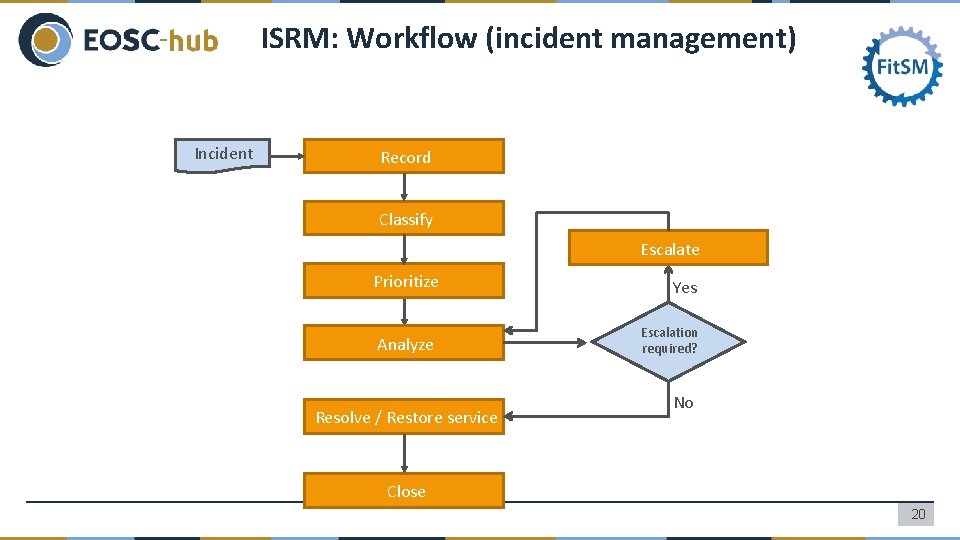
ISRM: Workflow (incident management) Incident Record Classify Escalate Prioritize Analyze Resolve / Restore service Yes Escalation required? No Close 20
Thank you for your attention! Questions? eosc-hub. eu @EOSC_eu