
Enzymes Welcome to a new topic Write down
- Slides: 29
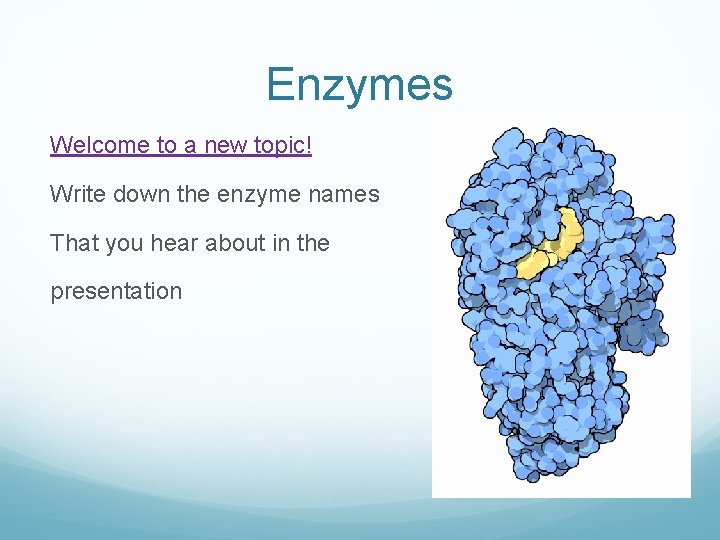
Enzymes Welcome to a new topic! Write down the enzyme names That you hear about in the presentation
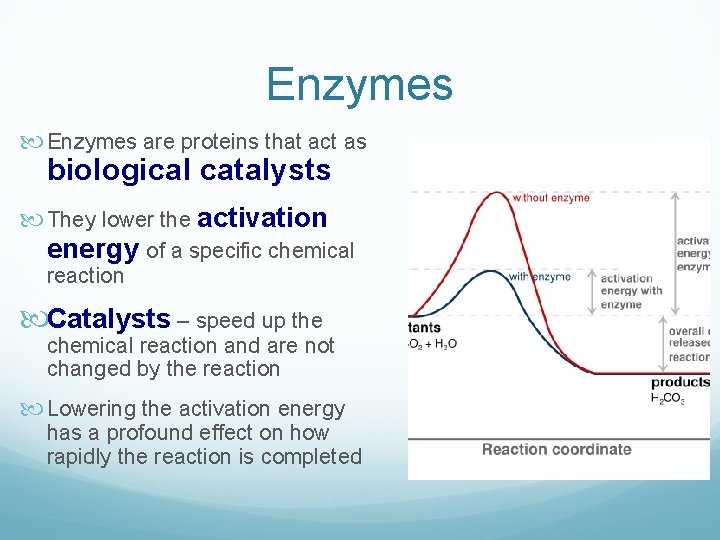
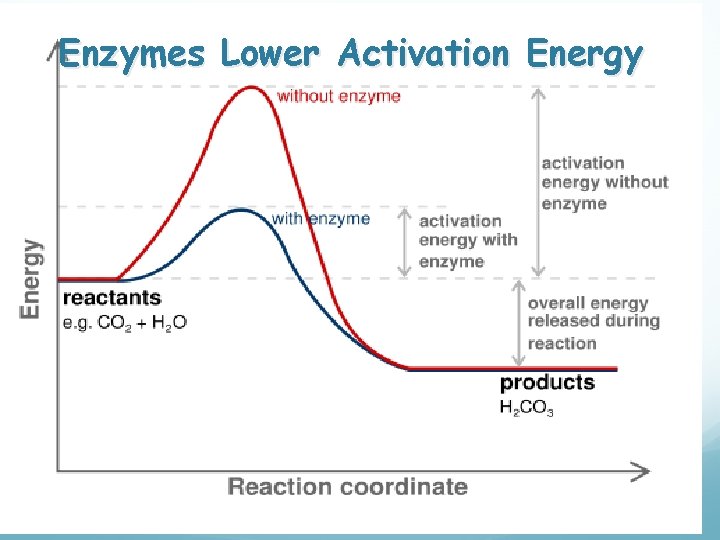
Enzymes are proteins that act as biological catalysts They lower the activation energy of a specific chemical reaction Catalysts – speed up the chemical reaction and are not changed by the reaction Lowering the activation energy has a profound effect on how rapidly the reaction is completed
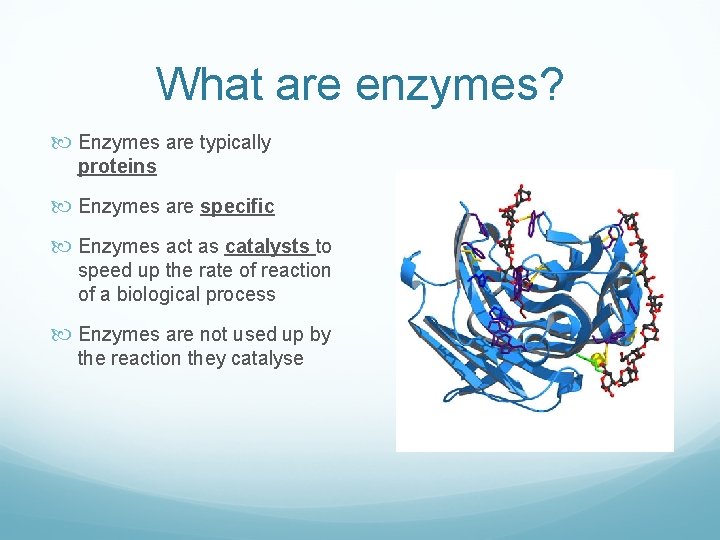
What are enzymes? Enzymes are typically proteins Enzymes are specific Enzymes act as catalysts to speed up the rate of reaction of a biological process Enzymes are not used up by the reaction they catalyse
Enzymes: Vocabulary Check Catalyst: A substance that speeds up a chemical reaction without itself being changed Enzyme: A biological catalyst that is usually a protein Substrate: The reactant(s) upon which an enzyme has its action Product: A substance that results from a chemical reaction
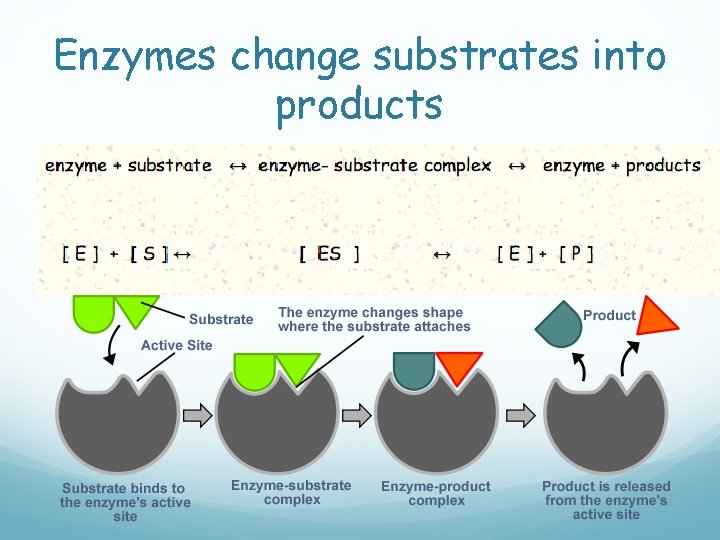
Enzymes change substrates into products
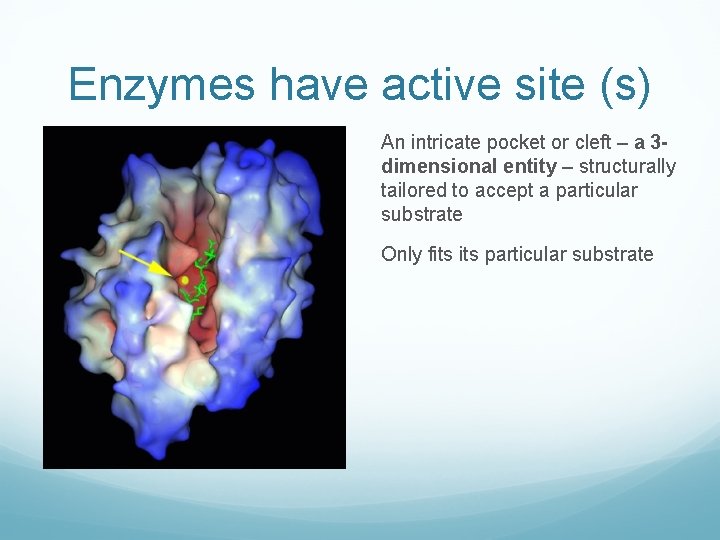
Enzymes have active site (s) An intricate pocket or cleft – a 3 dimensional entity – structurally tailored to accept a particular substrate Only fits particular substrate
How do enzymes work? Substrate specificity Activation energy Induced fit versus Lock and key mechanism Another animated summary of how enzymes work
Enzymes Lower Activation Energy
What are the models used to describe enzyme action?
What are the models used to describe enzyme action? Lock and key mechanism Induced fit mechanism
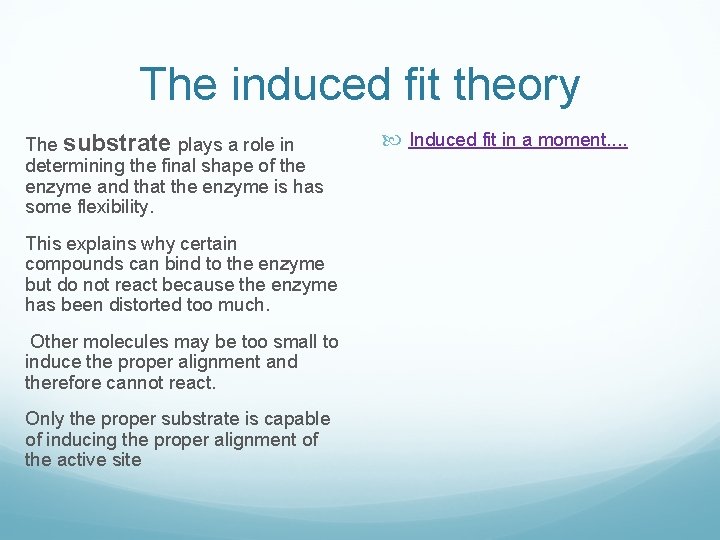
The induced fit theory The substrate plays a role in determining the final shape of the enzyme and that the enzyme is has some flexibility. This explains why certain compounds can bind to the enzyme but do not react because the enzyme has been distorted too much. Other molecules may be too small to induce the proper alignment and therefore cannot react. Only the proper substrate is capable of inducing the proper alignment of the active site Induced fit in a moment. .
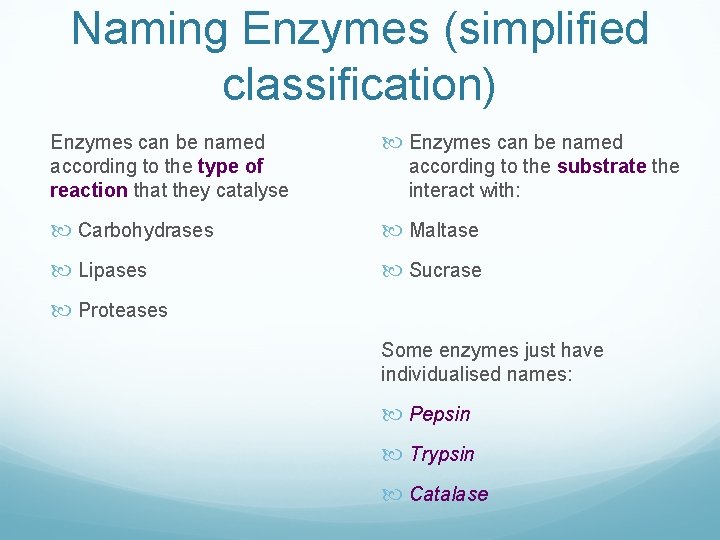
Naming Enzymes (simplified classification) Enzymes can be named according to the type of reaction that they catalyse Enzymes can be named Carbohydrases Maltase Lipases Sucrase according to the substrate the interact with: Proteases Some enzymes just have individualised names: Pepsin Trypsin Catalase
Key properties of enzymes 1. All enzymes are proteins 2. Enzymes are denatured (inactivated) by extreme temperatures 3. Enzymes work best at a particular temperature (which depends on the organism) 4. Enzymes work best at a particular p. H (which depends on the organism) 5. Enzymes are catalysts (not degraded, ccan be used over and over again) 6. Enzymes are specific
Factors affecting Enzymes 1. Temperature 2. p. H 3. Substrate concentration 4. Enzyme concentration
The best way to understand temperature, p. H and substrate concentration effects is through paying with this game. . and here's another. .
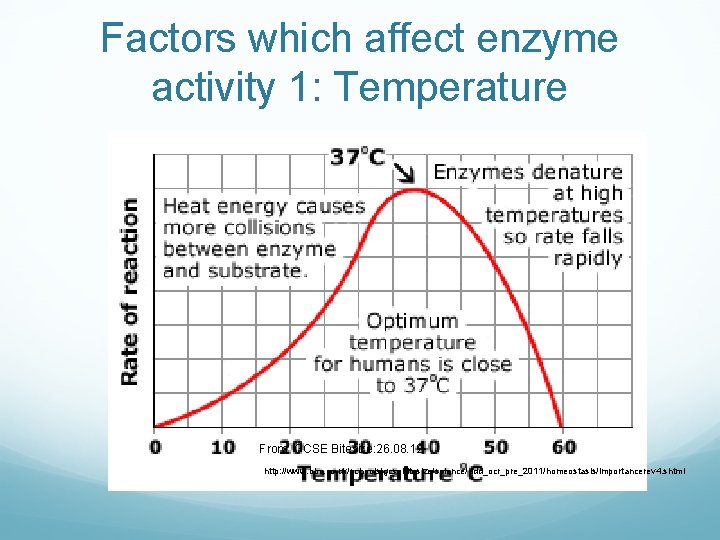
Factors which affect enzyme activity 1: Temperature From: GCSE Bitesize: 26. 08. 12 http: //www. bbc. co. uk/schools/gcsebitesize/science/add_ocr_pre_2011/homeostasis/importancerev 4. shtml
The effect of temperature For most human enzymes the optimum temperature is about 37°C Many are a lot lower. For example, cold water fish can die at 30°C since many of their enzymes denature Many plant enzymes have optimal temperature of 28 – 30 C A few bacteria in hot springs have enzymes that can withstand very high temperatures up to 100°C Most enzymes are fully denatured at 70°C
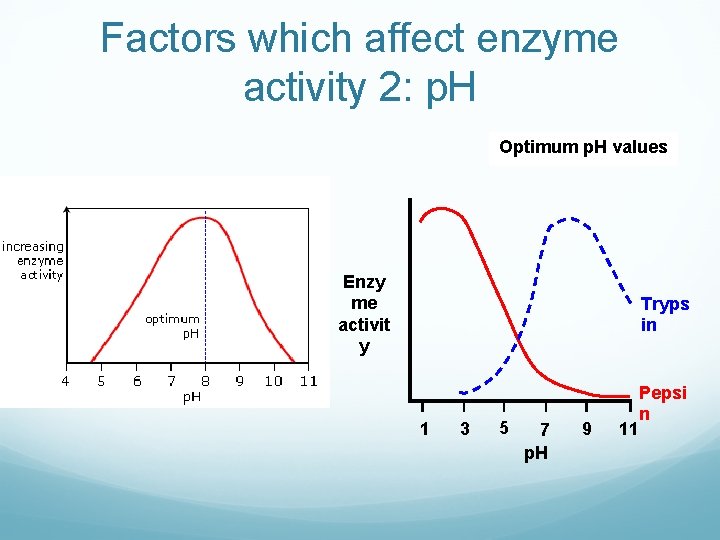
Factors which affect enzyme activity 2: p. H Optimum p. H values Enzy me activit y Tryps in 1 3 5 7 p. H 9 Pepsi n 11
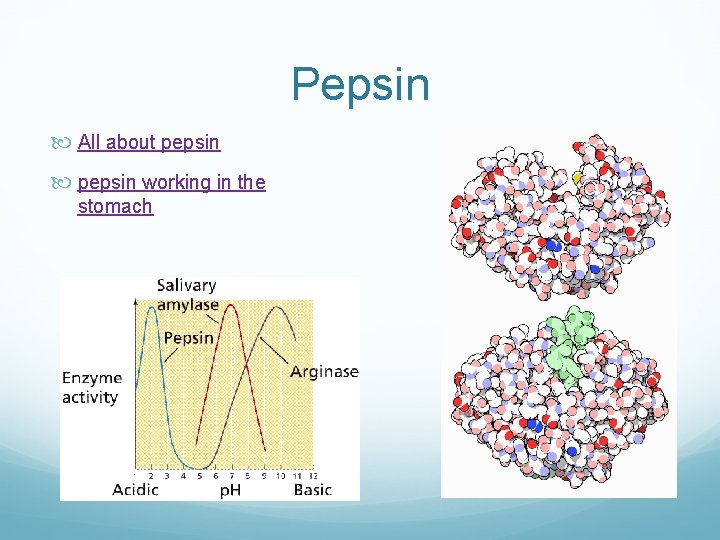
The effect of p. H The p. H of a solution affects the shape of an enzyme At non-ideal p. H values, the active site is distorted and the substrate molecules will no longer fit Extreme p. H levels will produce denaturation Many enzymes have p. H values which are NOT neutral (p. H = 7): e. g. pepson, trypsin in the stomach and gut
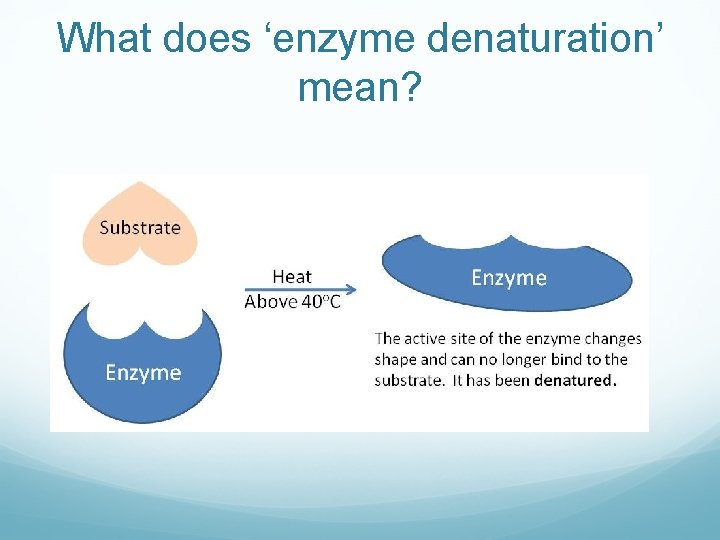
Denaturation is a change in the shape of an enzyme which prevents it from fulfilling its function. Enzymes (and other proteins) can be denatured by heat, p. H changes, or certain chemicals NB: Denaturation is not the same as ‘killing’ – proteins and enzymes are not living things, so can’t be killed!
What does ‘enzyme denaturation’ mean?
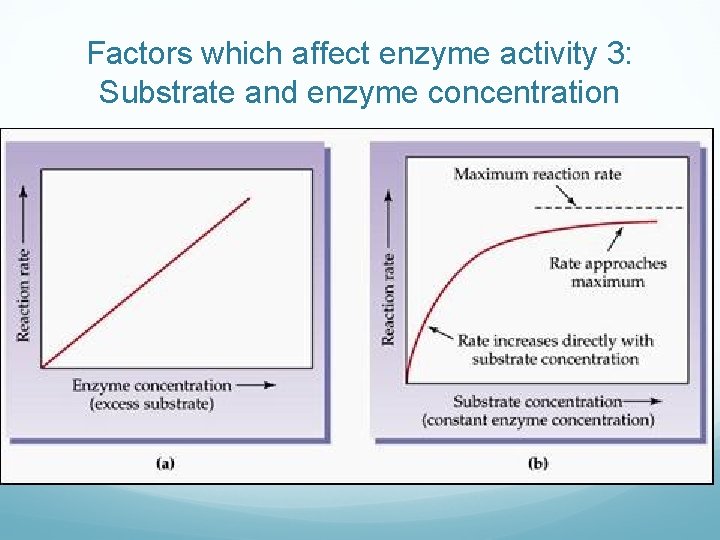
Factors which affect enzyme activity 3: Substrate and enzyme concentration From: http: //www. skinnersbiology. co. uk/enzyme. htm August 26 th 2012
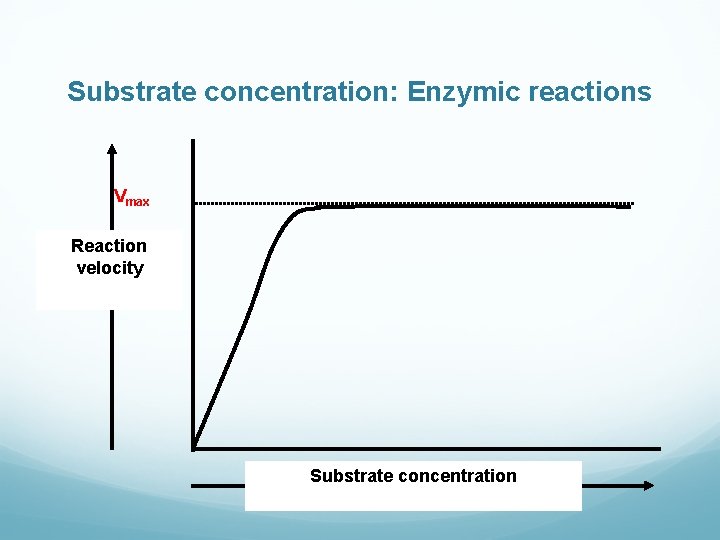
Substrate concentration: Enzymic reactions Vmax Reaction velocity Substrate concentration
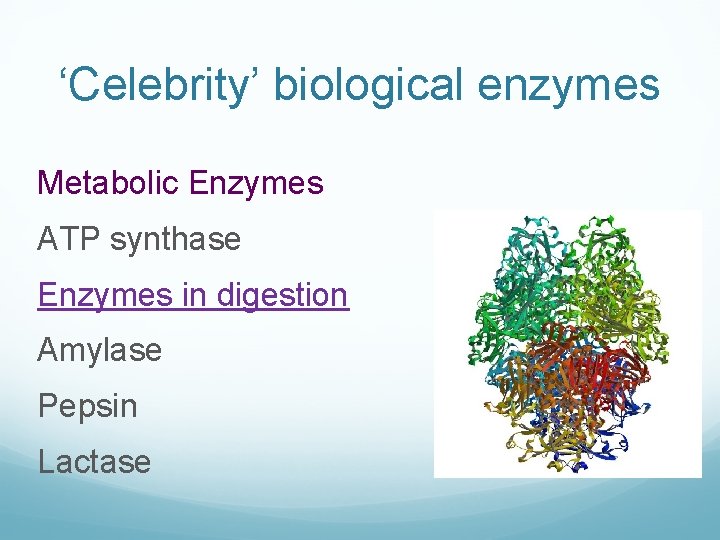
‘Celebrity’ biological enzymes Metabolic Enzymes ATP synthase Enzymes in digestion Amylase Pepsin Lactase
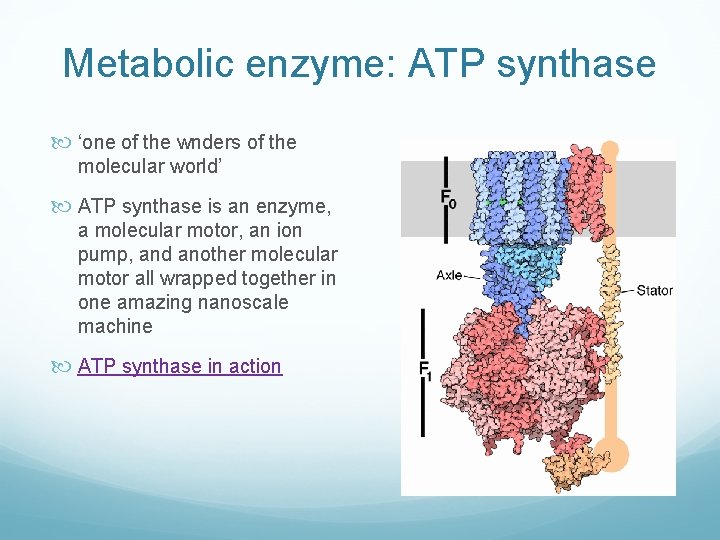
Metabolic enzyme: ATP synthase ‘one of the wnders of the molecular world’ ATP synthase is an enzyme, a molecular motor, an ion pump, and another molecular motor all wrapped together in one amazing nanoscale machine ATP synthase in action
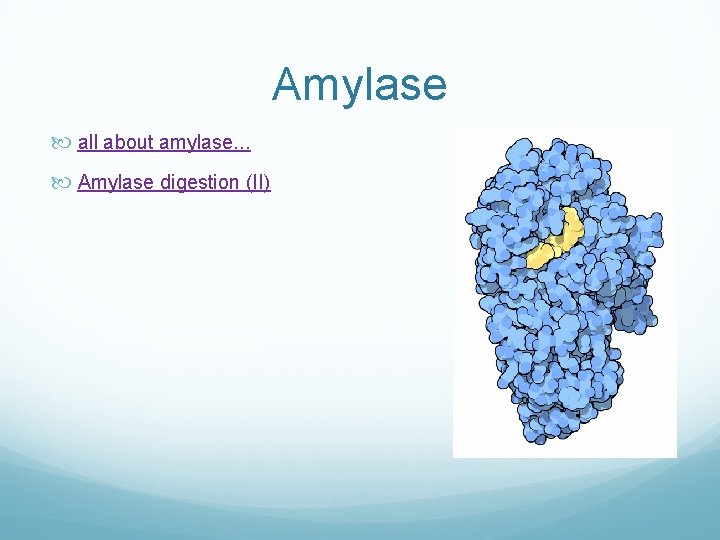
Amylase all about amylase. . . Amylase digestion (II)
Pepsin All about pepsin working in the stomach
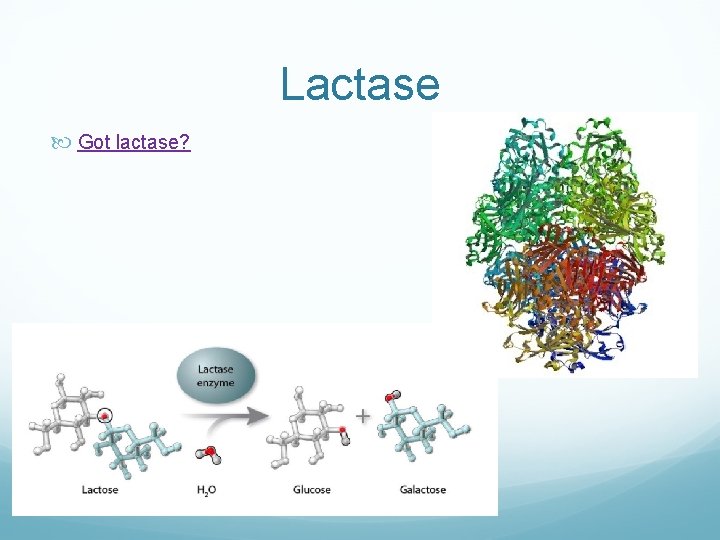
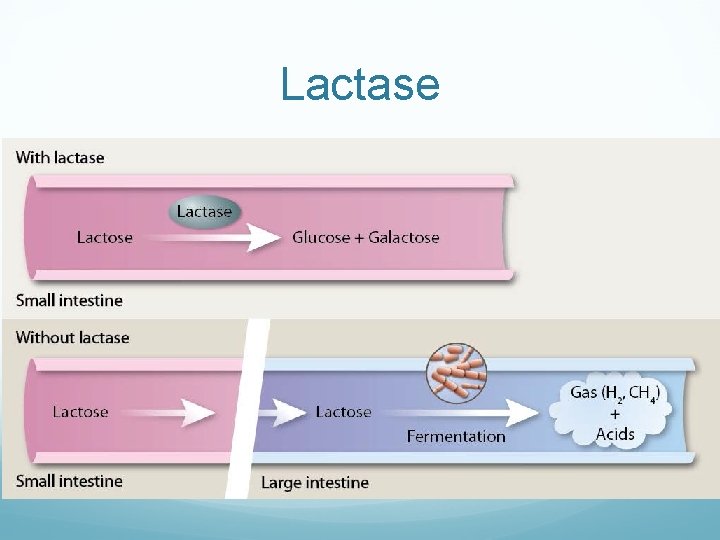
Lactase Got lactase?
Lactase