
Enzymes the proteins in our body that get

Enzymes: the proteins in our body that get the chemical reactions necessary of life done Human catalase
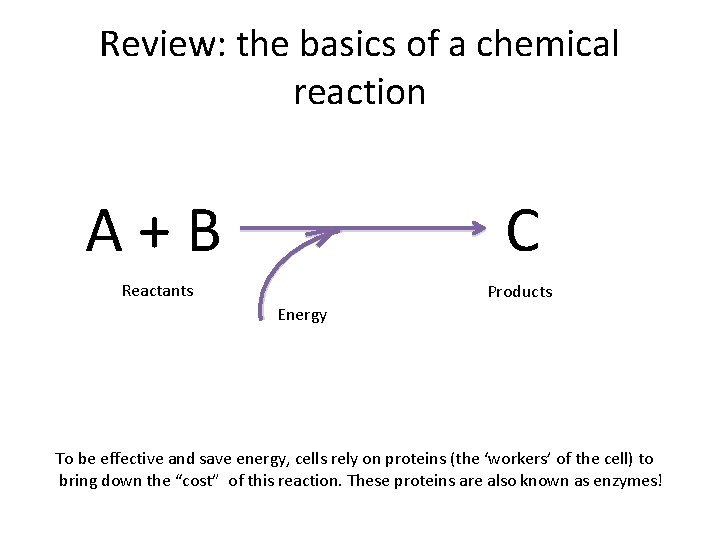
Review: the basics of a chemical reaction A+B C Reactants Products Energy To be effective and save energy, cells rely on proteins (the ‘workers’ of the cell) to bring down the “cost” of this reaction. These proteins are also known as enzymes!
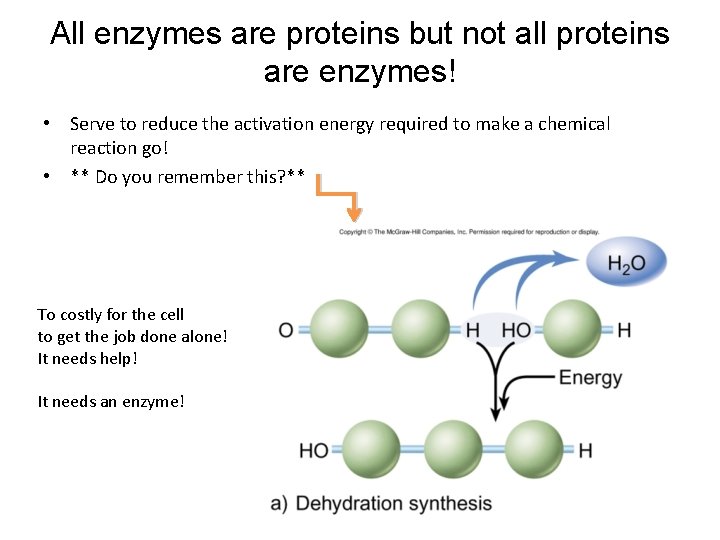
All enzymes are proteins but not all proteins are enzymes! • Serve to reduce the activation energy required to make a chemical reaction go! • ** Do you remember this? ** To costly for the cell to get the job done alone! It needs help! It needs an enzyme!
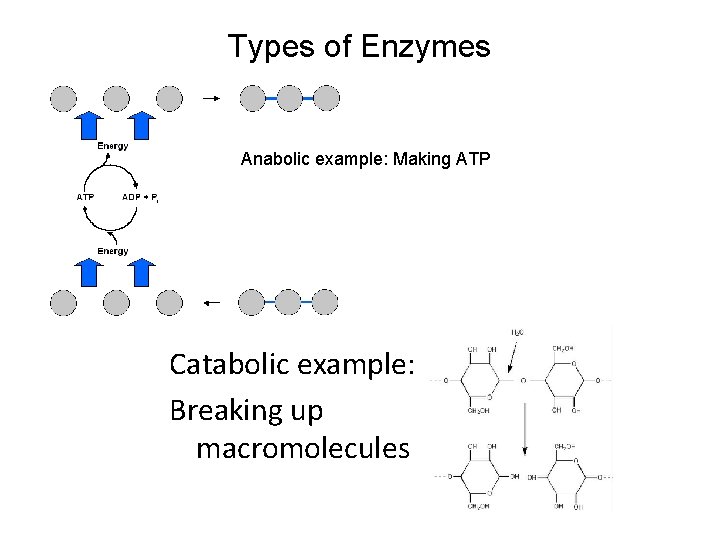
Types of Enzymes Anabolic example: Making ATP Catabolic example: Breaking up macromolecules

Enzymes are catalysts! – enzymes bind specifically to a molecule and stress the bonds to make the reaction more likely to proceed – active site is a site on the surface of the enzyme that binds to a reactant – the site on the reactant where the enzyme binds is called the binding site
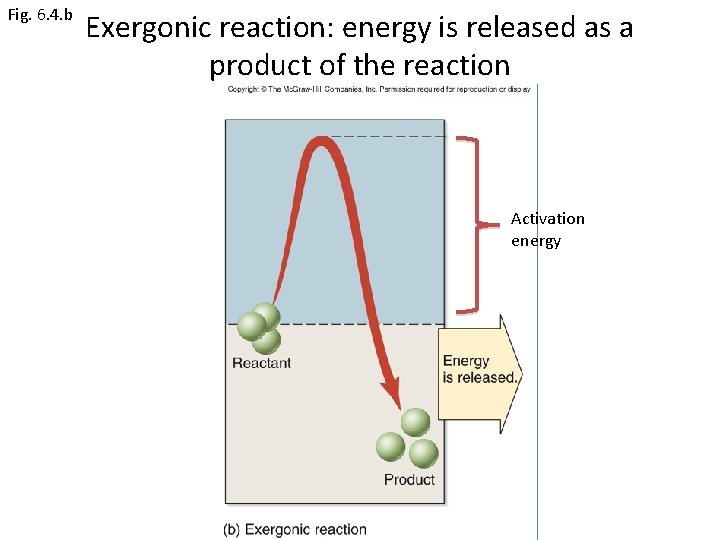
Fig. 6. 4. b Exergonic reaction: energy is released as a product of the reaction Activation energy
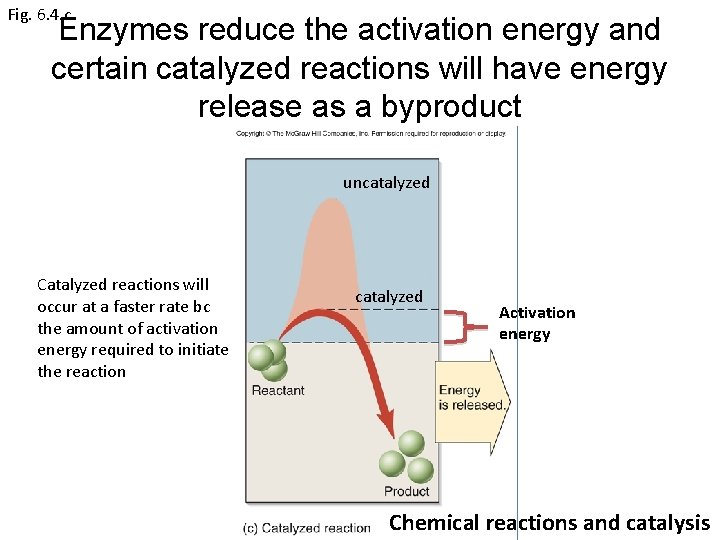
Fig. 6. 4. c Enzymes reduce the activation energy and certain catalyzed reactions will have energy release as a byproduct uncatalyzed Catalyzed reactions will occur at a faster rate bc the amount of activation energy required to initiate the reaction catalyzed Activation energy Chemical reactions and catalysis
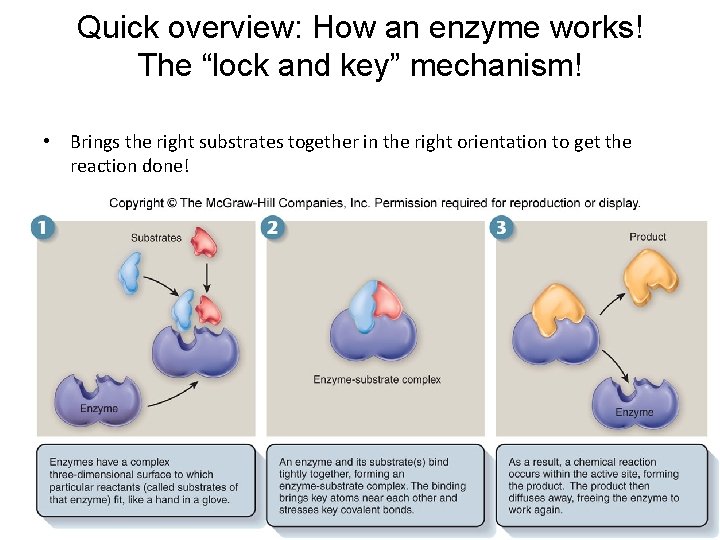
Quick overview: How an enzyme works! The “lock and key” mechanism! • Brings the right substrates together in the right orientation to get the reaction done!
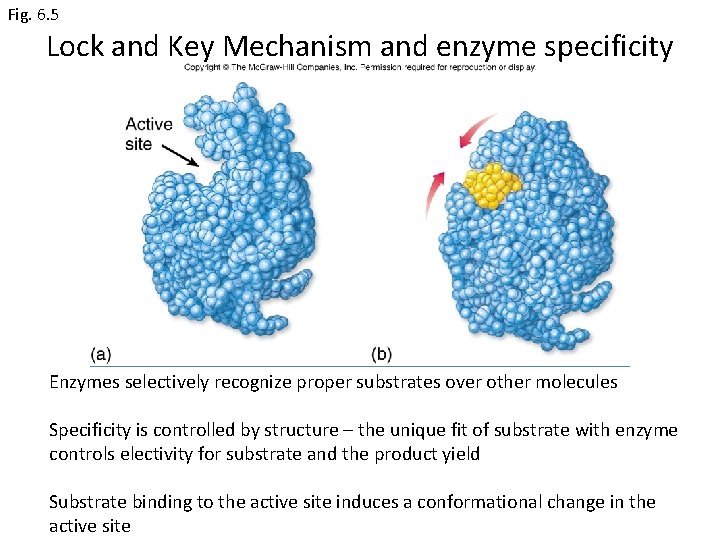
Fig. 6. 5 Lock and Key Mechanism and enzyme specificity Enzymes selectively recognize proper substrates over other molecules Specificity is controlled by structure – the unique fit of substrate with enzyme controls electivity for substrate and the product yield Substrate binding to the active site induces a conformational change in the active site
More on how enzymes work: • In most cases substrates are held in the active site by weak interactions • Catalyze the conversion of substrate to product • A single enzyme molecule can catalyze thousands or more reactions a second • Enzymes are unaffected by the reaction and are reusable
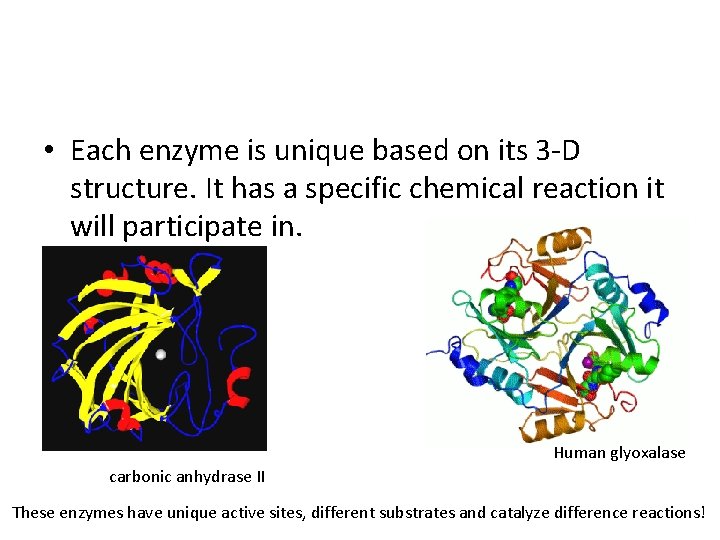
• Each enzyme is unique based on its 3 -D structure. It has a specific chemical reaction it will participate in. Human glyoxalase carbonic anhydrase II These enzymes have unique active sites, different substrates and catalyze difference reactions!
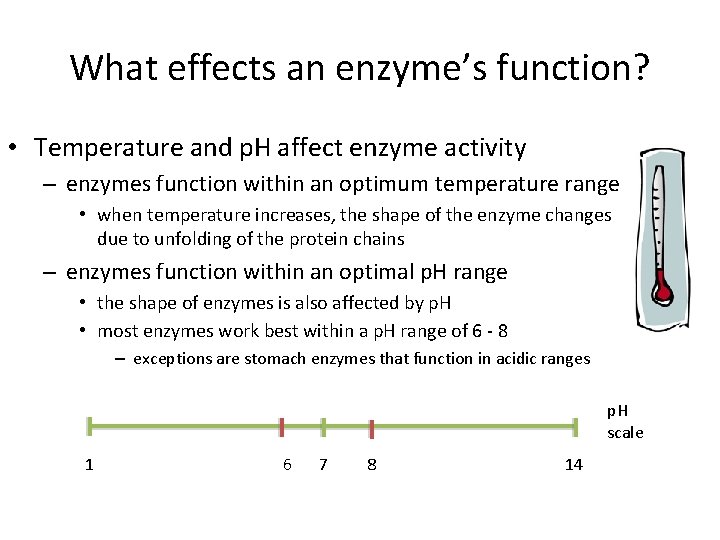
What effects an enzyme’s function? • Temperature and p. H affect enzyme activity – enzymes function within an optimum temperature range • when temperature increases, the shape of the enzyme changes due to unfolding of the protein chains – enzymes function within an optimal p. H range • the shape of enzymes is also affected by p. H • most enzymes work best within a p. H range of 6 - 8 – exceptions are stomach enzymes that function in acidic ranges p. H scale 1 6 7 8 14
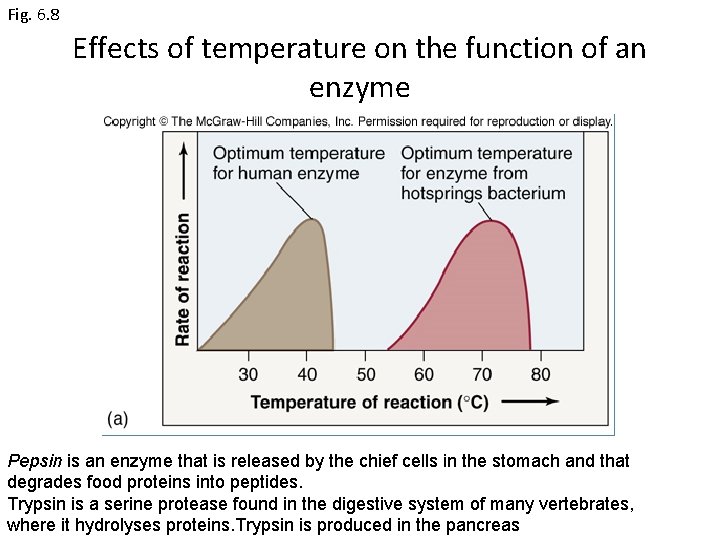
Fig. 6. 8 Effects of temperature on the function of an enzyme Pepsin is an enzyme that is released by the chief cells in the stomach and that degrades food proteins into peptides. Trypsin is a serine protease found in the digestive system of many vertebrates, where it hydrolyses proteins. Trypsin is produced in the pancreas
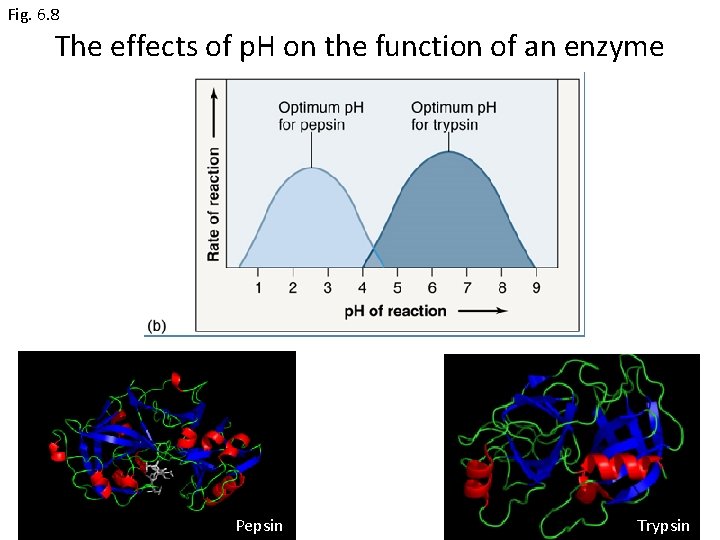
Fig. 6. 8 The effects of p. H on the function of an enzyme Pepsin Trypsin
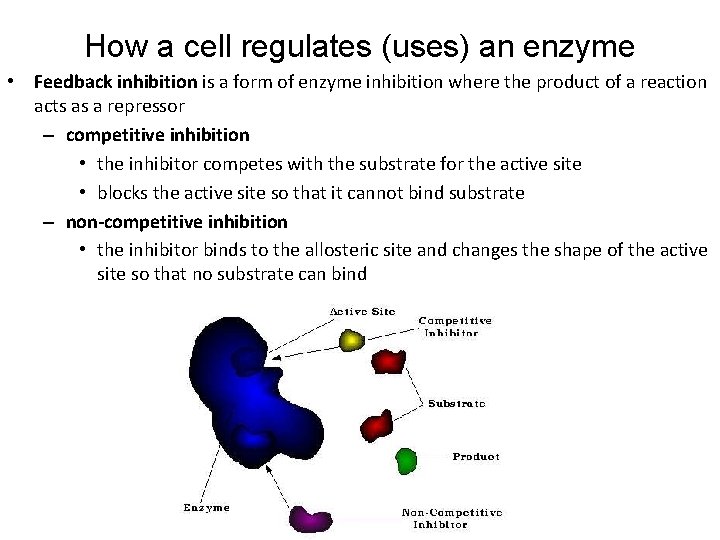
How a cell regulates (uses) an enzyme • Feedback inhibition is a form of enzyme inhibition where the product of a reaction acts as a repressor – competitive inhibition • the inhibitor competes with the substrate for the active site • blocks the active site so that it cannot bind substrate – non-competitive inhibition • the inhibitor binds to the allosteric site and changes the shape of the active site so that no substrate can bind
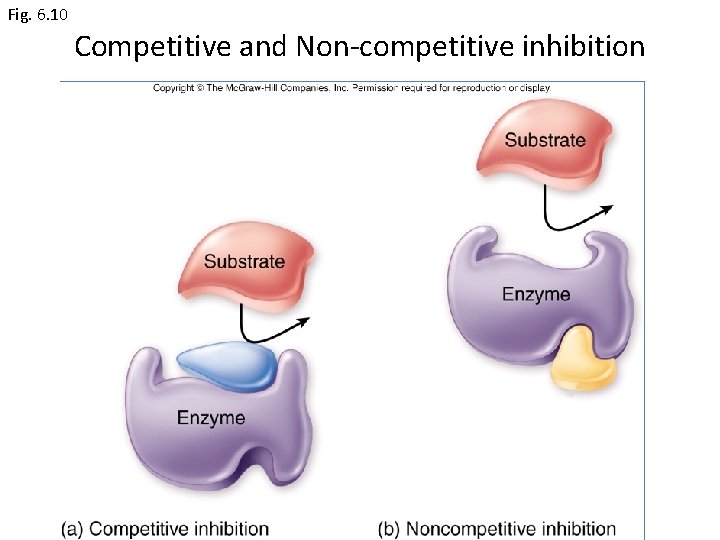
Fig. 6. 10 Competitive and Non-competitive inhibition
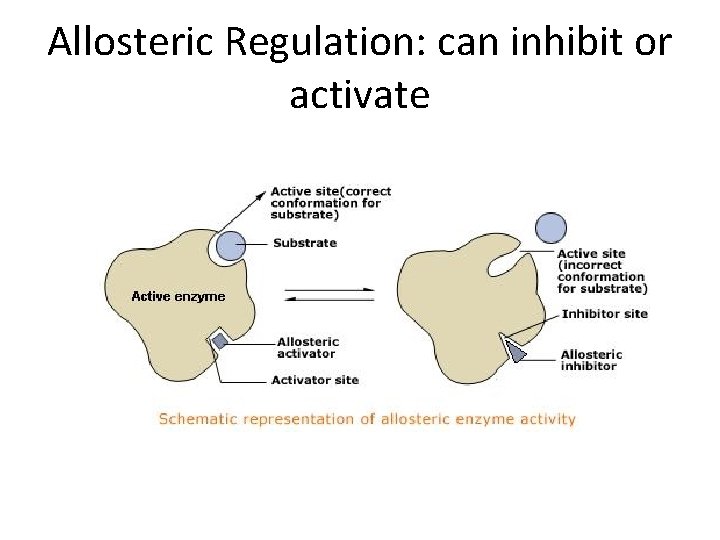
Allosteric Regulation: can inhibit or activate
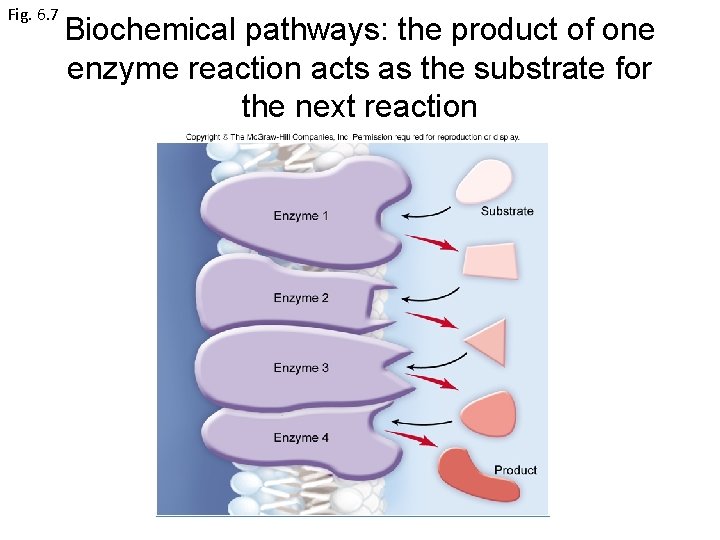
Fig. 6. 7 Biochemical pathways: the product of one enzyme reaction acts as the substrate for the next reaction
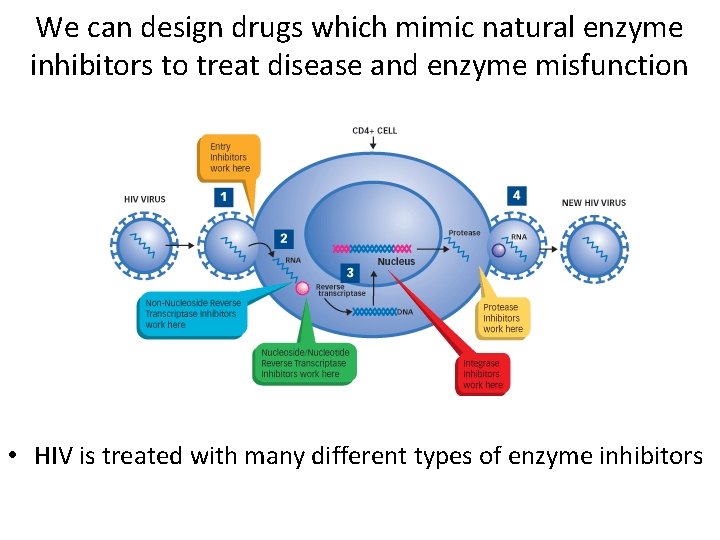
We can design drugs which mimic natural enzyme inhibitors to treat disease and enzyme misfunction • HIV is treated with many different types of enzyme inhibitors
- Slides: 19