
Enzymes Our Key to Biochemical Reactions ENZYMES Proteins
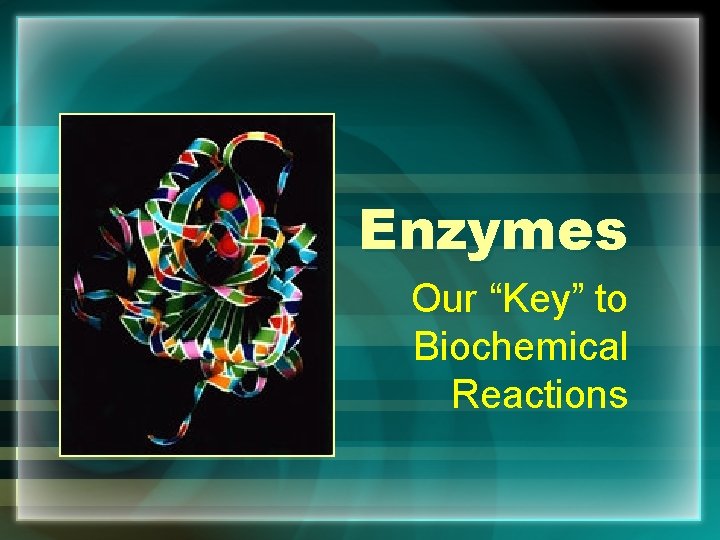
Enzymes Our “Key” to Biochemical Reactions
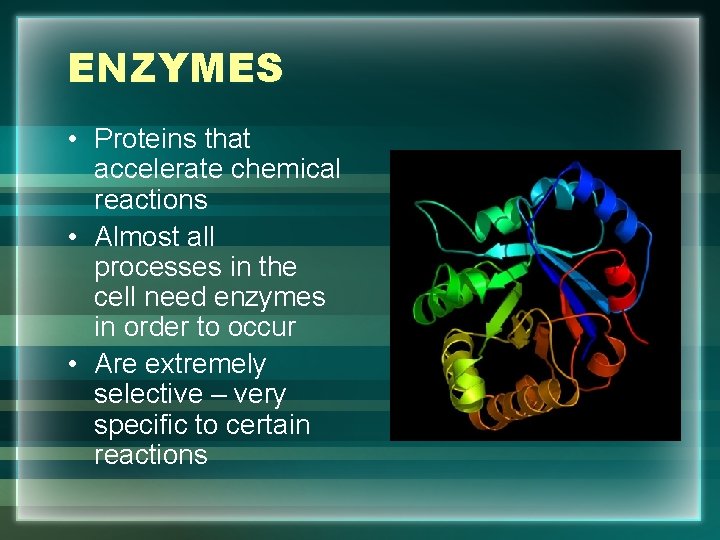
ENZYMES • Proteins that accelerate chemical reactions • Almost all processes in the cell need enzymes in order to occur • Are extremely selective – very specific to certain reactions
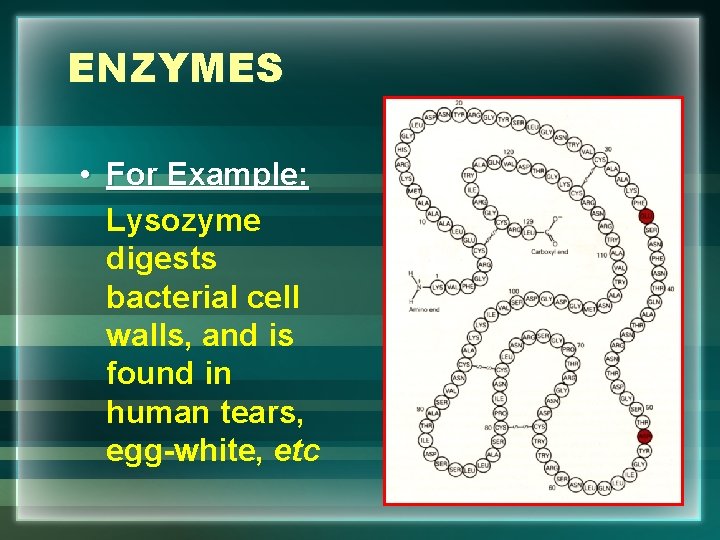
ENZYMES • For Example: Lysozyme digests bacterial cell walls, and is found in human tears, egg-white, etc
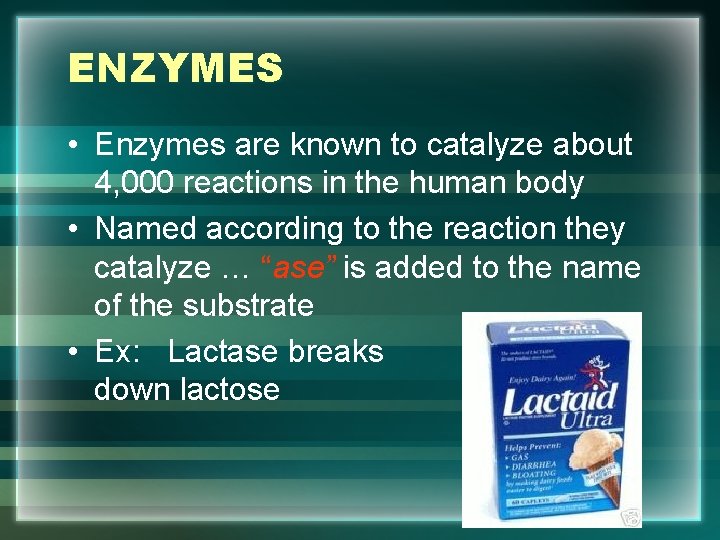
ENZYMES • Enzymes are known to catalyze about 4, 000 reactions in the human body • Named according to the reaction they catalyze … “ase” is added to the name of the substrate • Ex: Lactase breaks down lactose
HOW ENZYMES WORK: • By providing a lower activation energy for a reaction and dramatically accelerating its rate • For example… (Do not copy) – the reaction catalysed by orotidine 5'phosphate decarboxylase will consume half of its substrate in 78 million years if no enzyme is present. However, when the decarboxylase is added, the same process takes just 25 milliseconds
HOW ENZYMES WORK: Enzyme SUBSTRATE Eg: PRODUCT(S) Enzymes help a reaction to occur … without being directly involved!!! Sucrase Sucrose + Water Glucose + Fructose
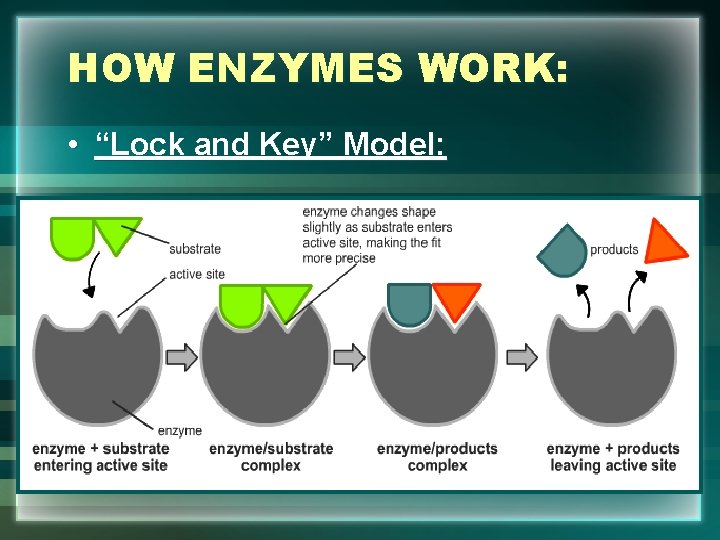
HOW ENZYMES WORK: • “Lock and Key” Model:
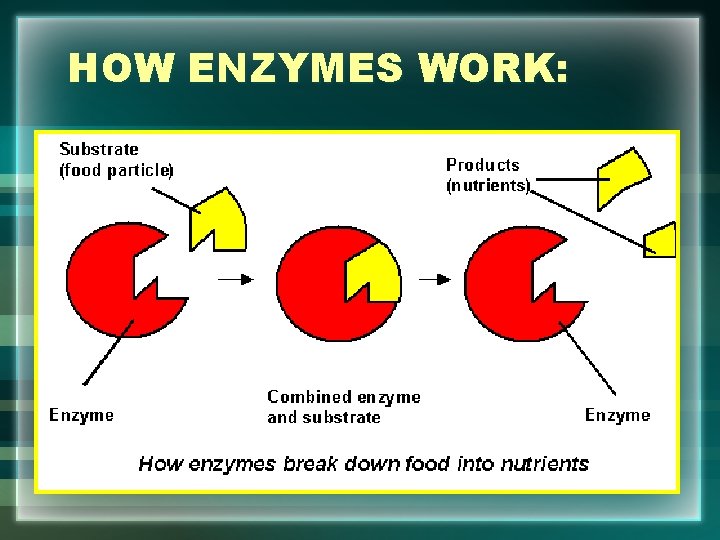
HOW ENZYMES WORK:
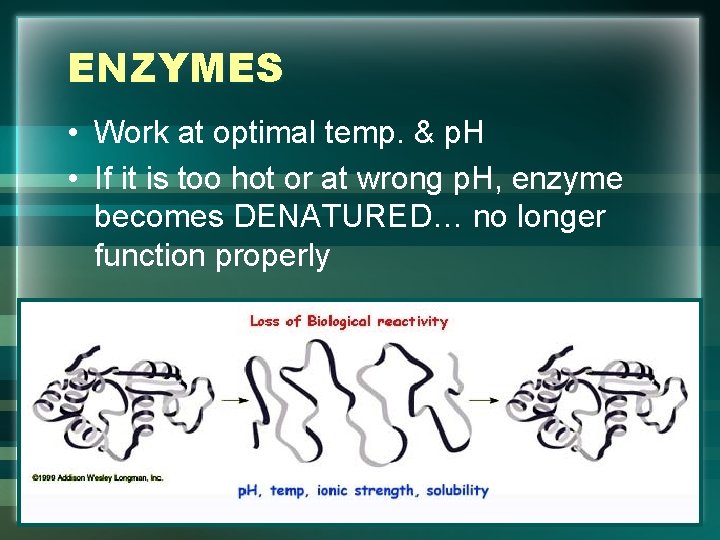
ENZYMES • Work at optimal temp. & p. H • If it is too hot or at wrong p. H, enzyme becomes DENATURED… no longer function properly
ENZYME LAB • Anyone for Liver?

The End!!!
- Slides: 11